
Summer UV
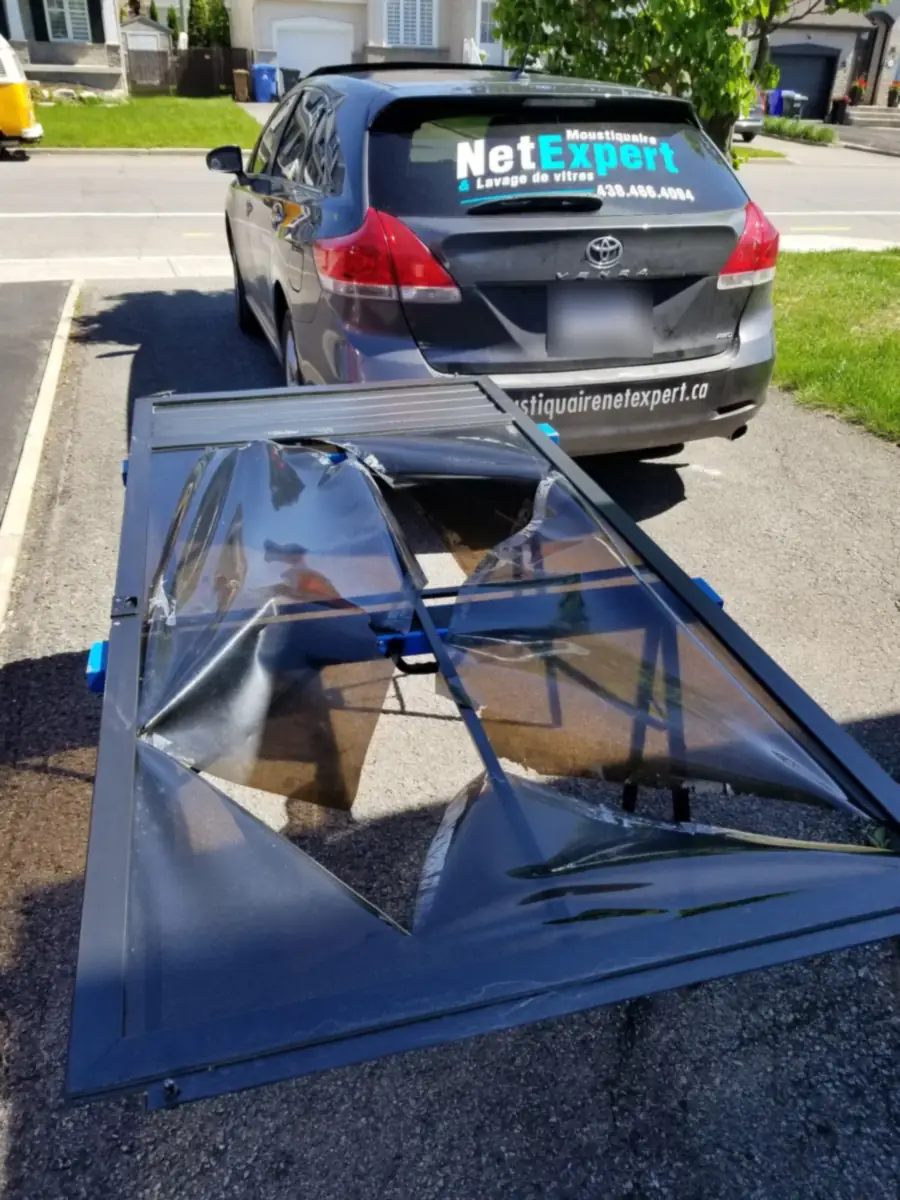
Sun yellows and clouds the vinyl. Film that crackles to the touch is at end of life.
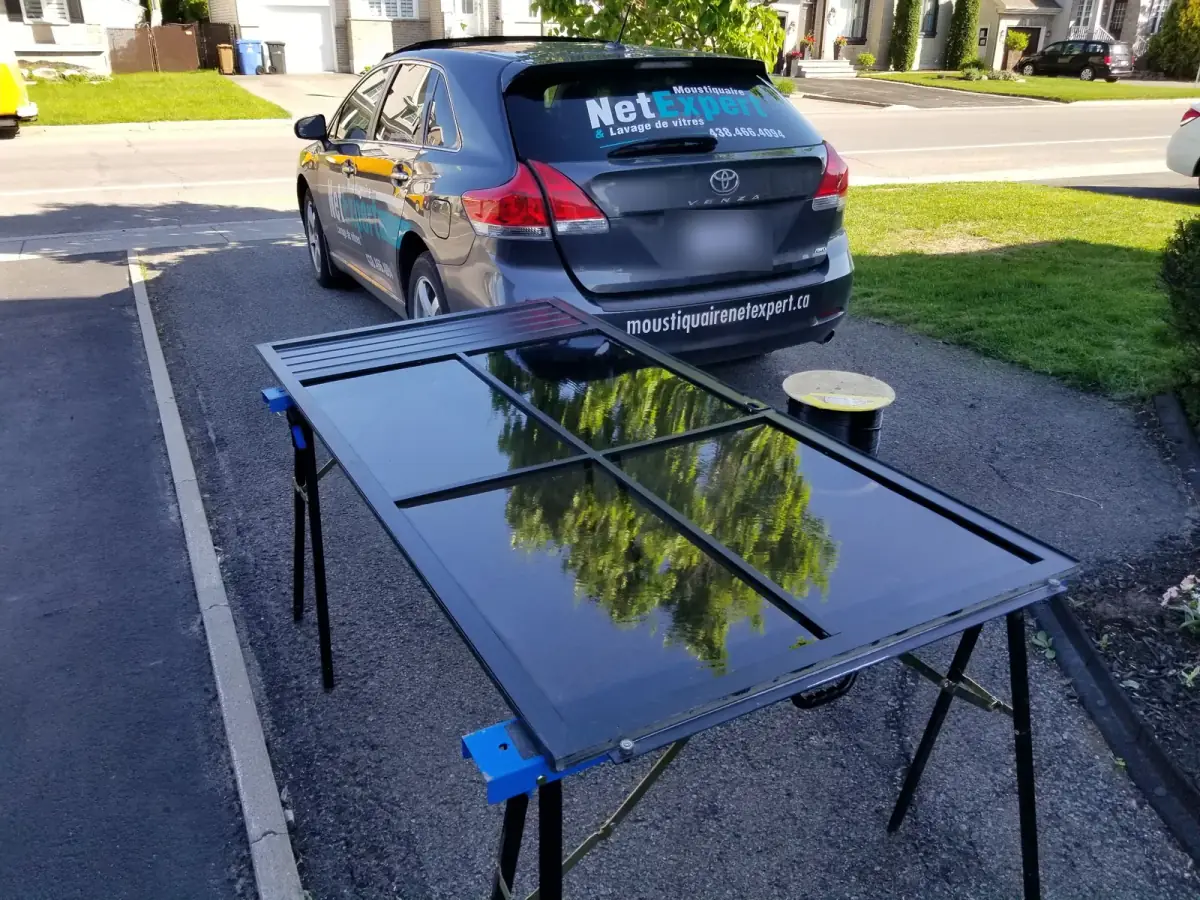
Gazebo and sun shelter specialty
Clear vinyl yellowed or torn? Replaced at your home in Montréal, in the original frames — gazebos and sun shelters.
Three questions are enough to start. The official measurement is taken on site.
Whatever your retailer calls it — MICA film, clear vinyl, clear plastic, sun-shelter transparent fabric — it is the same material, and we replace it in Montréal in your existing panels.
Sun yellows and clouds the vinyl. Film that crackles to the touch is at end of life.
Below freezing, MICA turns brittle — one handling or one gust splits it outright.
Slack vinyl flaps like a sail and eventually tears at the seams.
Montréal is a city of plexes, and a plex has no backyard for a gazebo in the suburban sense: the lot behind a brick triplex from 1900 to 1950 is narrow, often shared between the units, sometimes taken up entirely by a shed or a laneway parking spot. The screened shelter takes other forms there — a pergola with panels on a ground-floor deck, a small retail gazebo anchored to a rooftop terrace, a screen wall closing off the end of a balcony. These setups are compact, made of standard panels or panels cut on site, and they often belong to the tenant rather than the landlord, which decides who calls and what can be changed. The exterior staircase, meanwhile, is the only way to get a panel up or down.
The other two housing stocks are more conventional. The post-war bungalows of the outlying neighbourhoods have the fenced rectangular yard where the retail gazebo is at home: steel or aluminum frame, panels in known sizes, original clear vinyl that has yellowed through several summers and no longer rolls up without cracking. The condo towers downtown offer the reverse: a balcony terrace or a shared rooftop terrace, where a gazebo or a light pergola takes wind the ground never feels, and where the condo board has a say in what shows from the street. What they share stops at the panel: the panel is what gets rebuilt, never what holds it up.
What fails depends on the height. On a roof or a tower balcony, the clear vinyl is the first casualty: it flaps in the wind, strains against its fasteners and splits along one edge, often in a single autumn gust. The screens follow — slack fibreglass that forms a pocket, a spline shaken out of its groove by the vibration. In a bungalow yard, the sun does the work: yellowed, brittle film, weakened mesh that tears at a corner the first time it’s handled. The rule doesn’t change with the floor: the film section is cut from its own measurement, the screen panel is rescreened in its own frame, and it is height — not preference — that decides between fibreglass and aluminum. The gazebo itself — posts, roof, anchors — is never touched.
Each building type sets its own logistics. In a plex, the panels come down the exterior staircase to the mobile workshop parked on the street or in the lane and go back up the same way; the passage has to be clear and the unit in question open. In a tower, a large panel only leaves if it fits the elevator cab: that is the one measurement to take before starting, and it is taken once and for all. In an outlying bungalow, the yard opens through a fence gate and everything happens at the foot of the gazebo. In all three cases, counting the panels and noting whether there is film before the call shortens the visit.
Wind at height is the enemy of Montréal’s clear vinyl: a rooftop terrace or a tower balcony catches gusts the street never feels, and a film that has to spend the winter up there is best put up late and taken down early. For exposed screens, aluminum mesh holds its tension; in a sheltered bungalow yard, fibreglass does the job and it’s the sun that sets the pace for replacing the film. Montréal summer evenings happen on balconies and terraces, and a torn panel lets the mosquitoes in at exactly the hour the shelter is in use. On a balcony that looks onto a lane, the bottom panels take the street dust and the rubbing: rescreening those alone, in a heavier mesh, costs less than redoing the whole set.
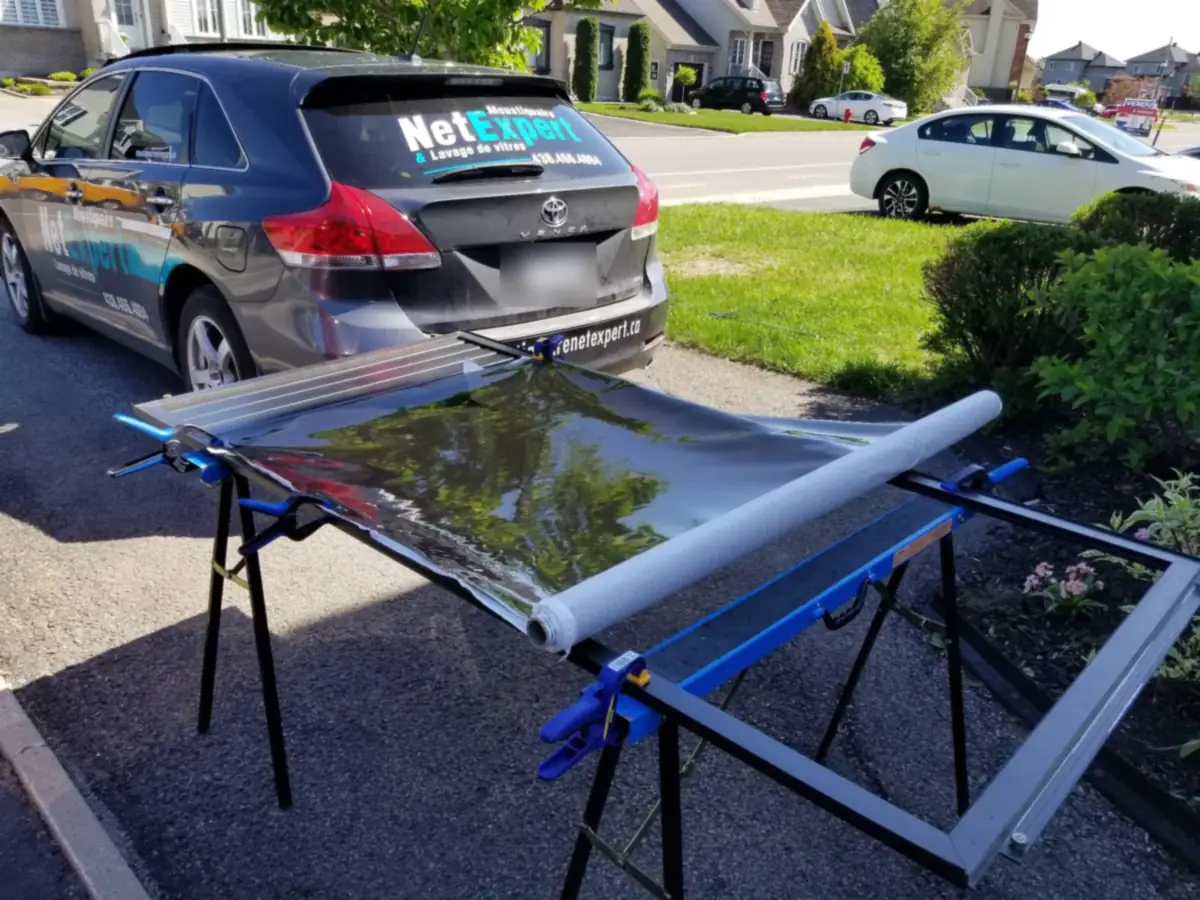
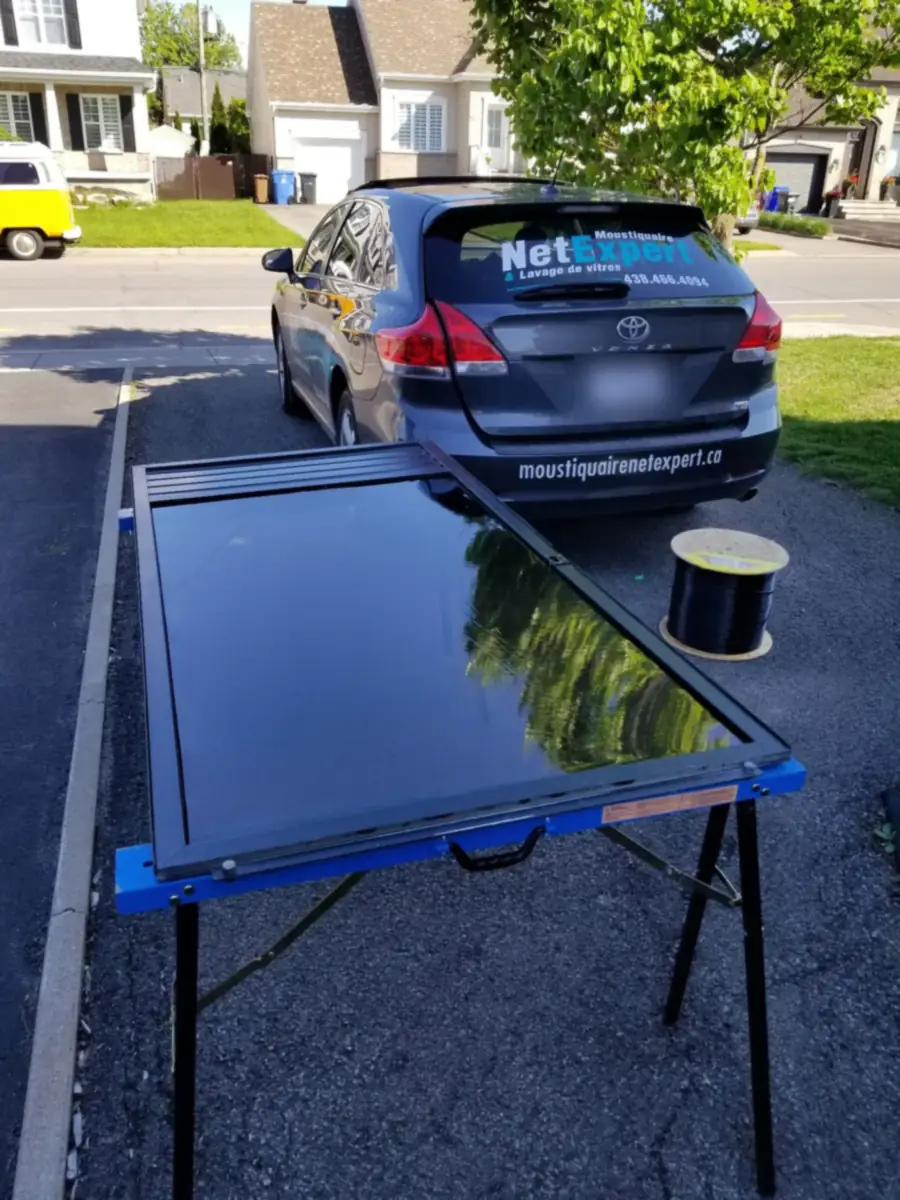
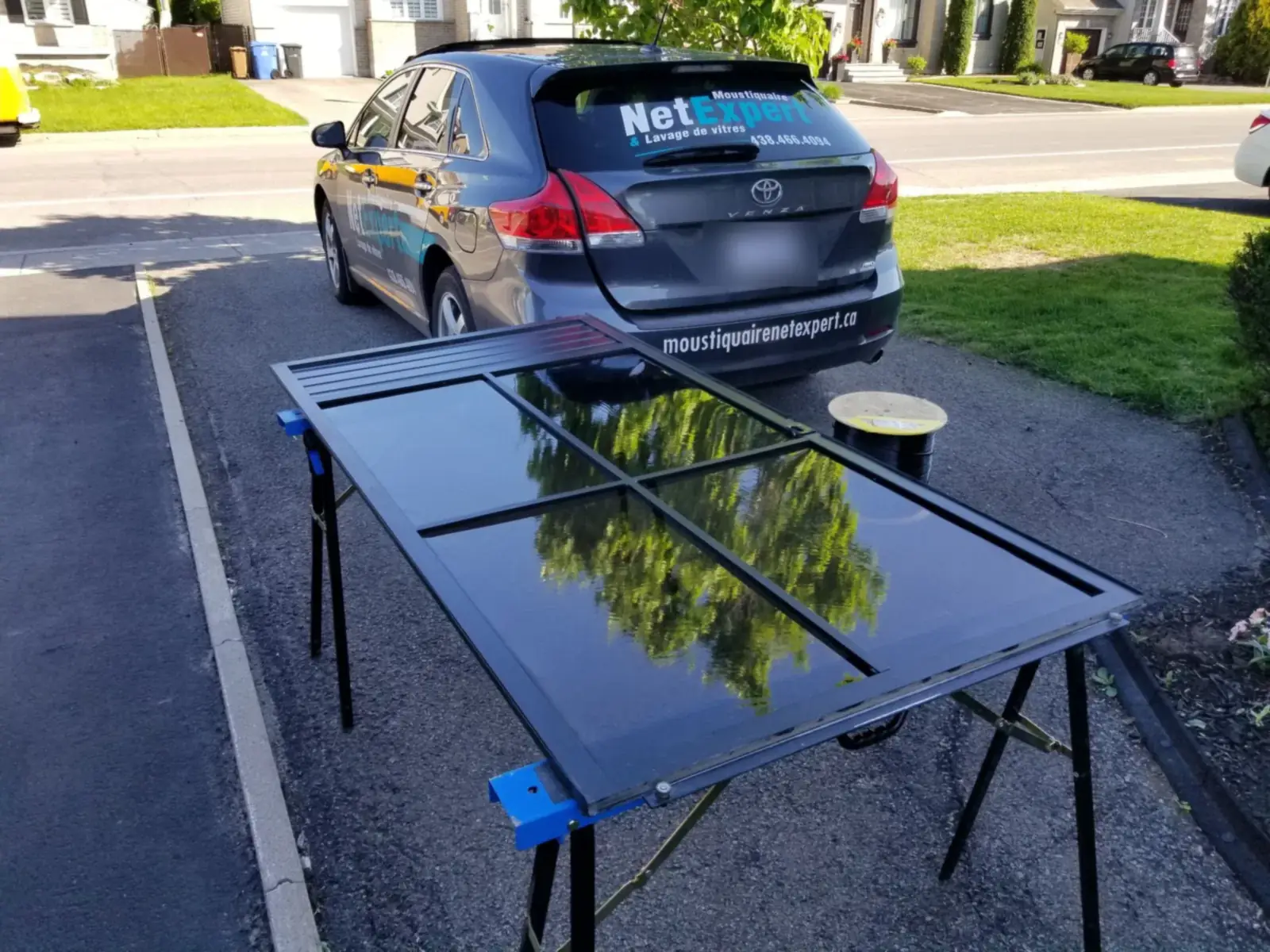
This job was not in Montréal — it shows our method, the same everywhere: panels down, new vinyl pane by pane, panels back up.
« Excellent service. Clear explanations of the work to be done. I really appreciated his dedication: despite the rain he insisted on finishing the job, soaked through and still smiling. The work was very well done. »
« Great service! He was at my neighbour’s and agreed to fix my back screen even though we had no appointment. Very successful repair, and inexpensive! »
« Ludovic replaced my screen in record time. Professional, and with a great sense of humour. I recommend his services — don’t hesitate to contact him, he’ll come to your home and do beautiful work. »
Straight answers
No: the mesh and the film are redone in the existing frames, at the same dimensions, and the structure stays identical. From the street, nothing moves. The only visible choice is the type of mesh — aluminum looks slightly different from fibreglass. If the rules are strict, we keep the same type of mesh as the original.
The gazebo is your property and its panels are rebuilt without touching the building, so the question is mostly about your lease and your arrangement with the landlord, not about the technical side. What does need organizing is the route along the exterior staircase and the balcony on the day of the visit, and access to the unit to put the panels back.
A film cut to the exact size of the section and fastened around its full perimeter in the frame flaps far less than a slack or oversized one. Putting it up once the terrace is no longer in use, and taking it down as soon as the weather turns, spares it months of pointless gusts. On the most exposed panels, an aluminum screen on its own is sometimes the more durable choice.
Yes, at your home. We travel to Montréal, remove the panels, replace the MICA vinyl in the original frames and put everything back — the gazebo structure is never touched. It is one of our specialties.
Yes. Depending on the retailer it is called MICA film, clear vinyl, clear plastic or transparent fabric — the same flexible material that cuts wind and holds warmth. We replace it on gazebos and sun shelters alike.
Yes. The vinyl is replaced pane by pane, in the existing frame — no need to redo the whole panel for one tear. If several panes have yellowed, doing them together gives a uniform result.
On assessment: the price depends on the number of panels and their dimensions. The quote is free, and a photo is often enough to price without a visit. Fabrication and installation guaranteed one year.
Do you manage a building or a business in Montréal?
Borough by borough
Each borough has its own page, written for its housing stock: 17 in all.