
Summer UV
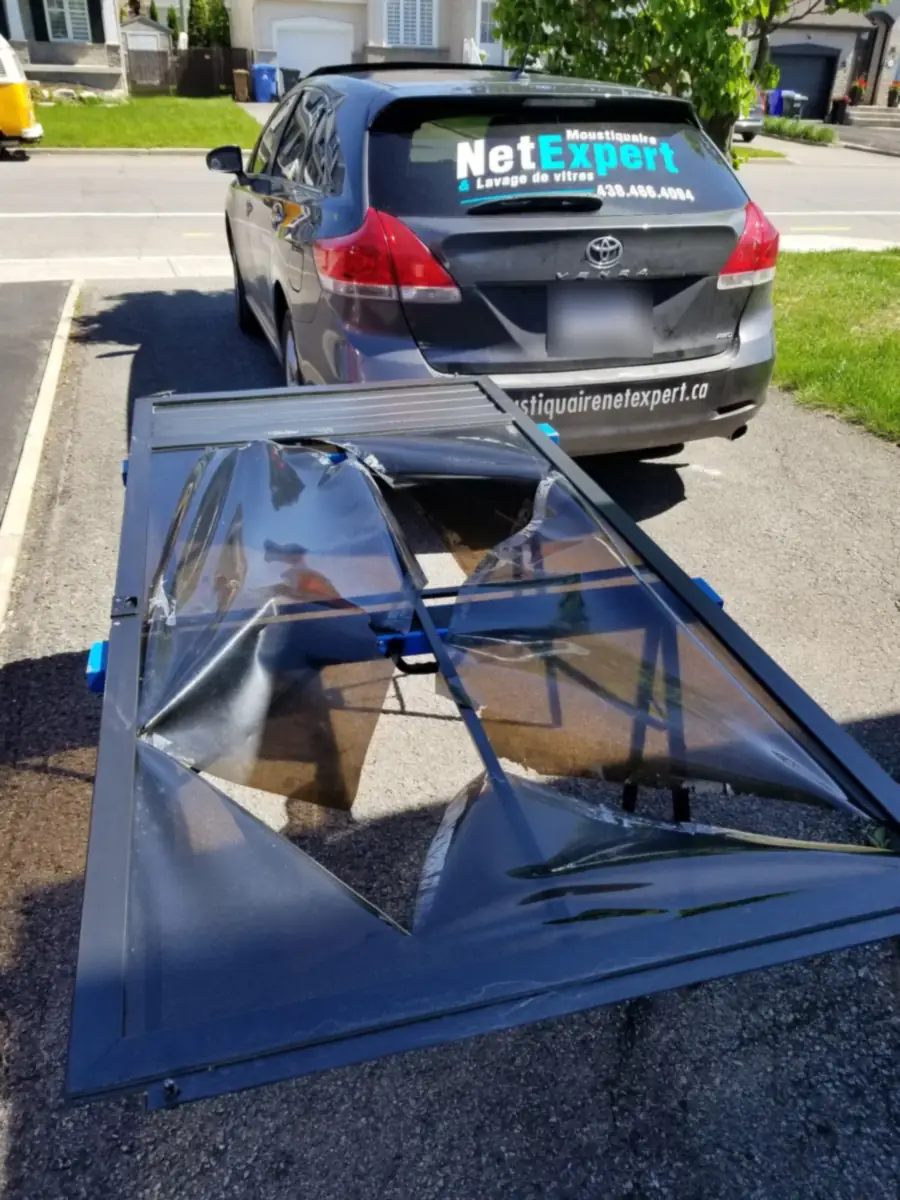
Sun yellows and clouds the vinyl. Film that crackles to the touch is at end of life.
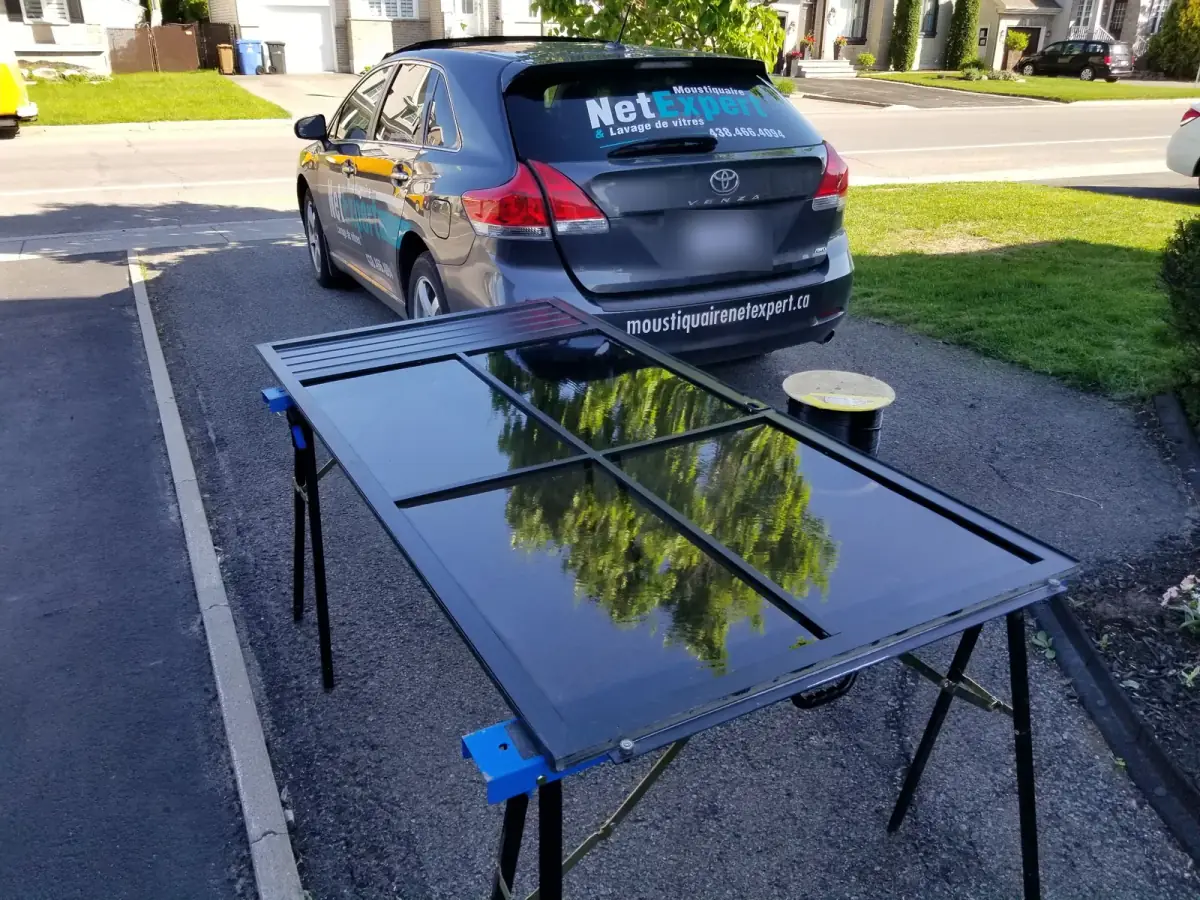
Gazebo and sun shelter specialty
Clear vinyl yellowed or torn? Replaced at your home in Pierrefonds–Roxboro, in the original frames — gazebos and sun shelters.
Three questions are enough to start. The official measurement is taken on site.
Whatever your retailer calls it — MICA film, clear vinyl, clear plastic, sun-shelter transparent fabric — it is the same material, and we replace it in Pierrefonds–Roxboro in your existing panels.
Sun yellows and clouds the vinyl. Film that crackles to the touch is at end of life.
Below freezing, MICA turns brittle — one handling or one gust splits it outright.
Slack vinyl flaps like a sail and eventually tears at the seams.
The backyards of Pierrefonds–Roxboro were practically laid out for it. Between 1955 and 1985, the bungalows, split-levels and semi-detached homes of the West Island were built with a lot out back and a patio door to reach it, and the retail gazebo — aluminum or steel frame, hard or soft top, standard-size screen panels — settled in a generation later. It is the gazebo most common in a suburb of this generation, and the one whose panels age fastest, because they were mass-produced to the model’s dimensions, not the yard’s. When the manufacturer drops the model, replacement panels vanish with it; the frame, though, is still good, and that frame is where we rescreen.
The semi-detached changes the picture. Its yard is narrower than that of a detached bungalow, and the gazebo often sits near the shared fence, in the wind tunnel formed by the two neighbouring houses. Clear vinyl (MICA film) installed there flaps with every gust, and that repeated flapping — far more than the cold — is what eventually splits it. The split-level, meanwhile, often has its patio door half a storey above grade: the gazebo ends up either below, at the bottom of a few steps, or on a raised deck that is more exposed. Either way, the structure is light and the vinyl is the weak point. A gazebo of this generation is redone one panel at a time, without touching its frame.
On a retail gazebo, the screen panels are held by a spline in a thin aluminum frame, and two things let go first: the spline popping out along the bottom rail, where people brush past, and the fibreglass mesh slackening and then tearing at a corner on the sunny side. The original clear vinyl, often shipped with the gazebo and hung by zipper or straps, yellows after a few seasons and stiffens in frost until it cracks in the first winter wind. We rescreen the mesh in the existing aluminum frame, replace the spline, and cut new clear vinyl to the exact size of each pane, fitted into the original frame rather than supplied as a one-size curtain. The panel goes back in without forcing.
A retail gazebo’s structure is light, which makes it easy to dismantle and easy to damage: an aluminum upright bent by vinyl that pulled all winter does not always straighten. So we check the frame before ordering mesh, because a new panel in a warped opening will not close. On a bungalow, the yard is reached at grade along the side of the house or through the patio door; on a semi-detached, often through a single narrow walkway; on a split-level, down a few steps. Panels come out one by one, get redone in the mobile workshop in the driveway, and each goes back before the next one comes off.
A West Island suburban yard is generally open: few tall buildings, direct sun from noon to evening on the gazebo’s west face, and wind funnelling through the gap between houses. On that face, fibreglass is what ages first; aluminum mesh holds tension and sun better, and we recommend it for the most exposed panels. Clear vinyl goes up before the first frosts and comes down in spring; film left up through summer bakes and yellows within a season. For insects, standard fibreglass is enough on most lots in the borough.
Prefer English? We serve you in whichever language you choose, in Pierrefonds–Roxboro as everywhere else.
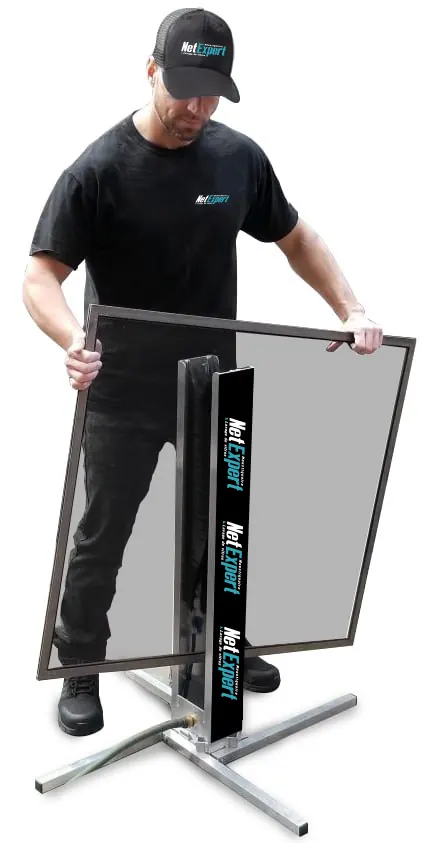
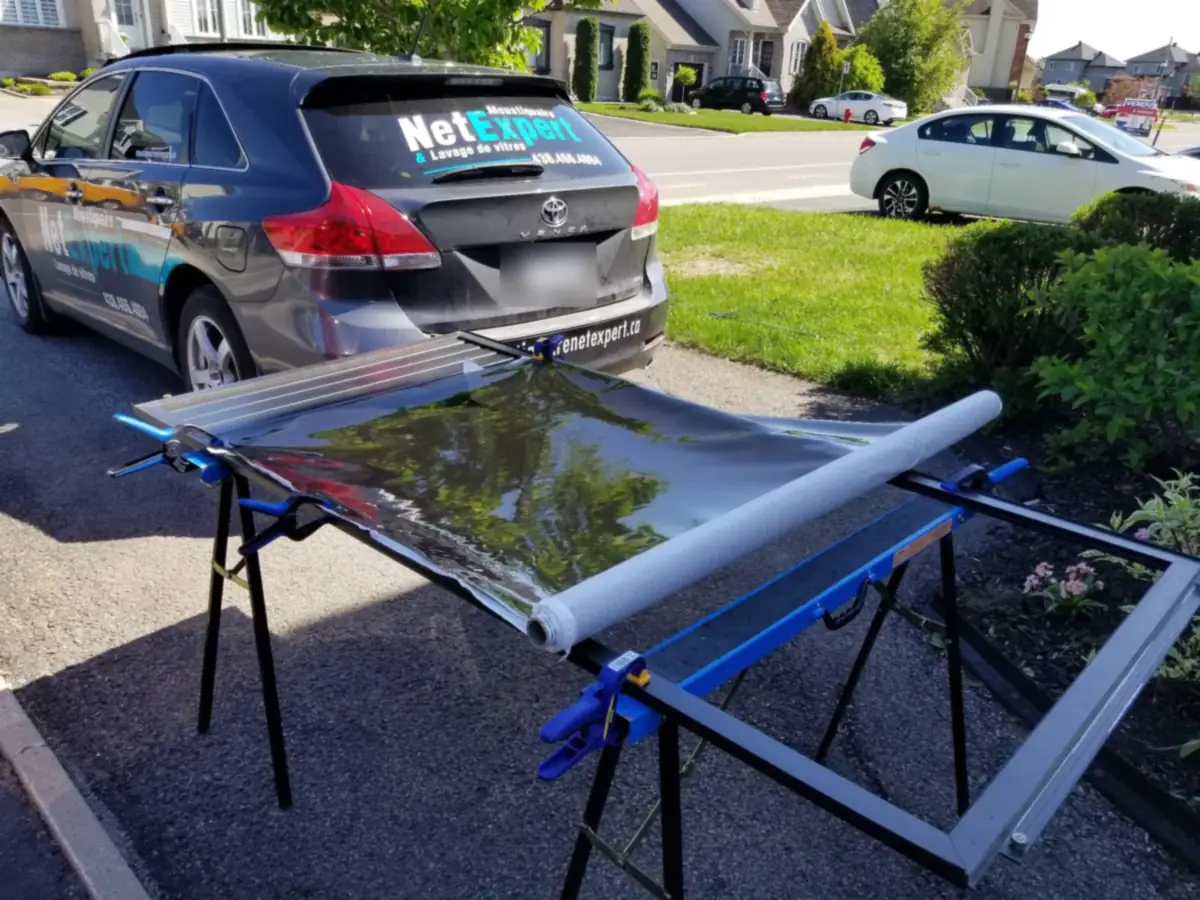
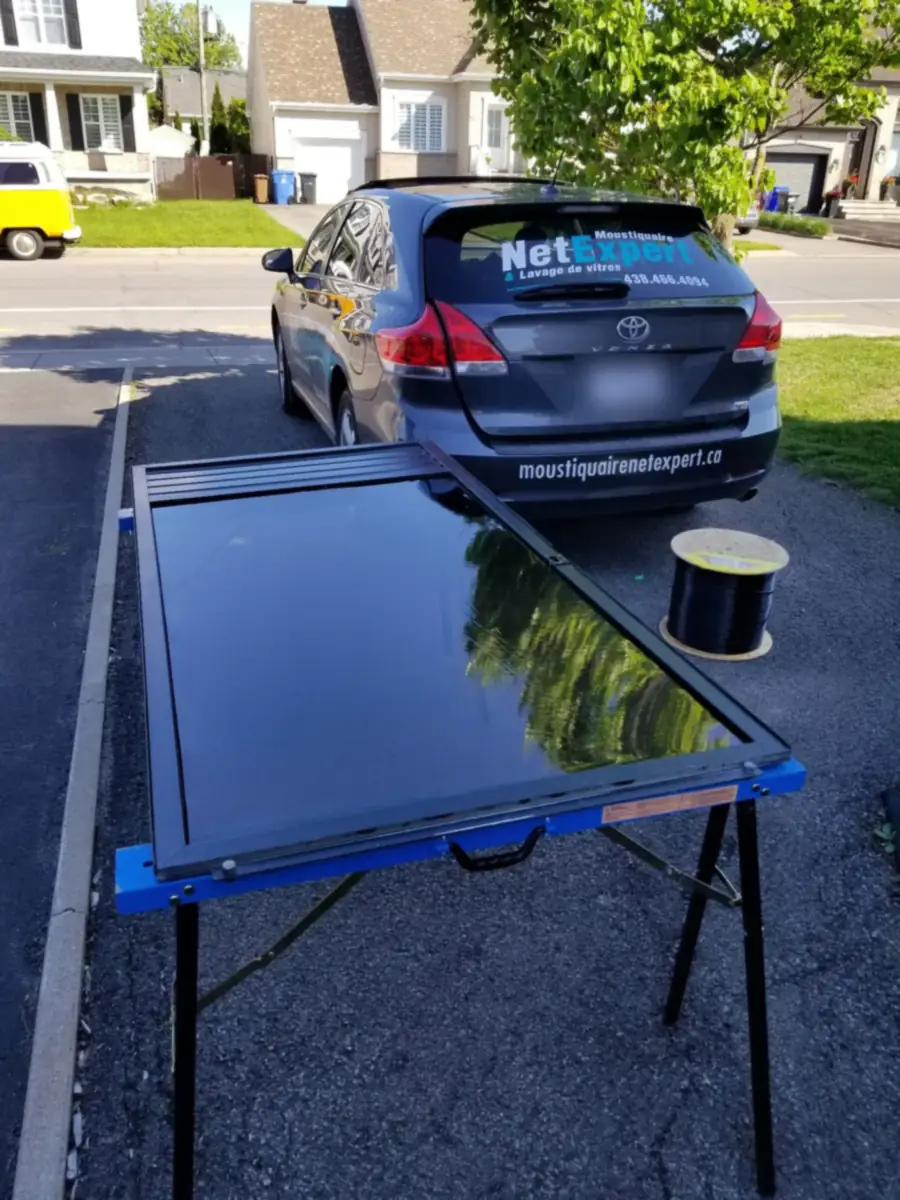
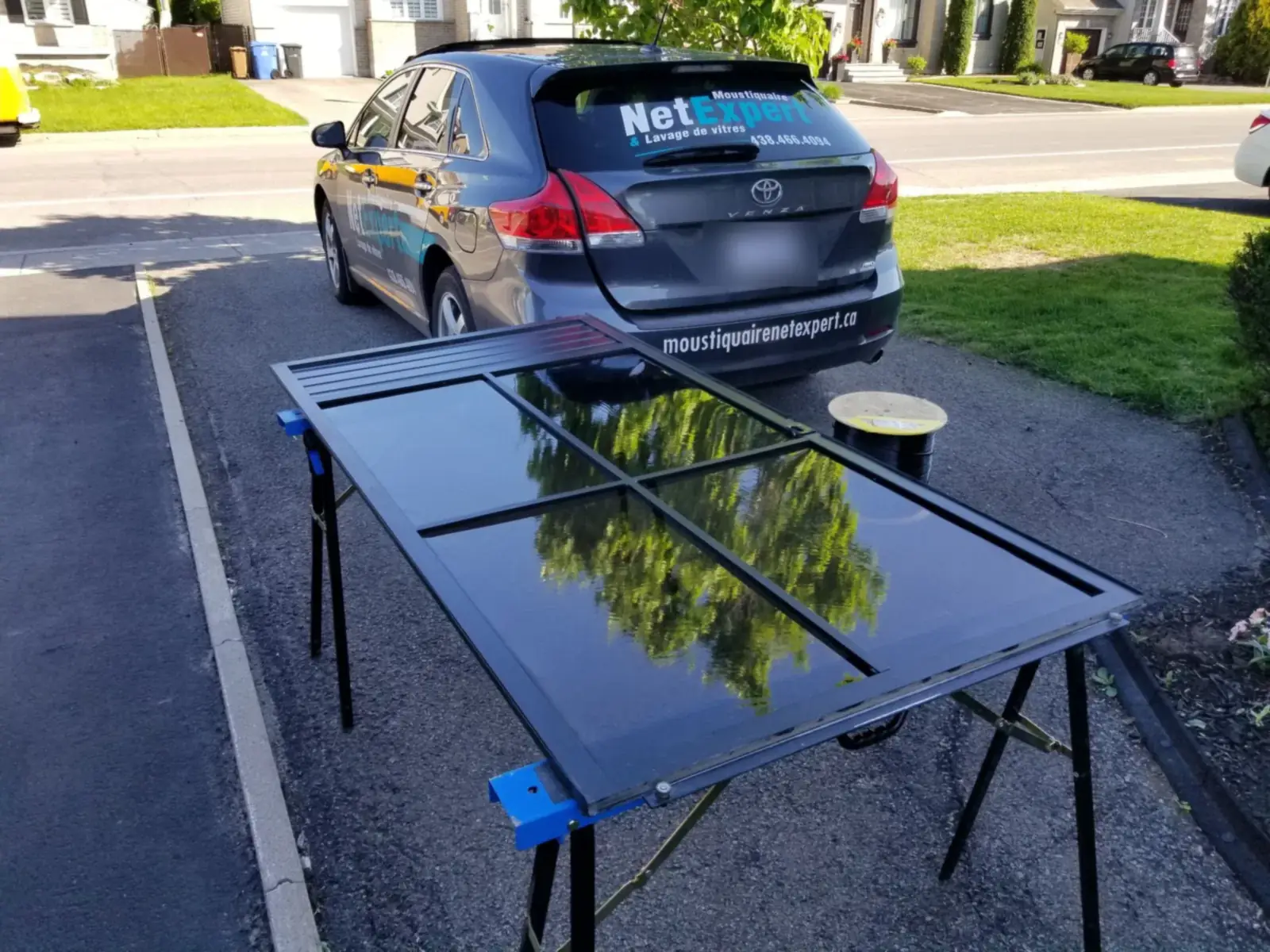
This job was not in Pierrefonds–Roxboro — it shows our method, the same everywhere: panels down, new vinyl pane by pane, panels back up.
« Great service! He was at my neighbour’s and agreed to fix my back screen even though we had no appointment. Very successful repair, and inexpensive! »
« Ludovic replaced my screen in record time. Professional, and with a great sense of humour. I recommend his services — don’t hesitate to contact him, he’ll come to your home and do beautiful work. »
« Excellent service. Clear explanations of the work to be done. I really appreciated his dedication: despite the rain he insisted on finishing the job, soaked through and still smiling. The work was very well done. »
Straight answers
We do not look for them — we rebuild yours. The aluminum frame of a retail panel is almost always still straight when the mesh fails. We strip the worn mesh, clean the groove, stretch new mesh with a fresh spline, and the panel goes back into the original structure. The model may be gone, but the dimensions of your panels are still right there.
Yes, provided it is fitted taut in each panel’s frame rather than hung as a curtain. Vinyl with slack in it flaps in the wind and splits; vinyl cut to the exact size of the pane and locked into the frame moves far less. On the face that catches the wind between the two houses, that detail is what makes the difference.
No. The panels come off one by one and go down the deck stairs or through the house, whichever is shorter. We redo them in the mobile workshop and put each one back as it is finished. The structure stays where it is — we never move a gazebo to work on its panels.
Yes, at your home. We travel to Pierrefonds–Roxboro, remove the panels, replace the MICA vinyl in the original frames and put everything back — the gazebo structure is never touched. It is one of our specialties.
Yes. Depending on the retailer it is called MICA film, clear vinyl, clear plastic or transparent fabric — the same flexible material that cuts wind and holds warmth. We replace it on gazebos and sun shelters alike.
Yes. The vinyl is replaced pane by pane, in the existing frame — no need to redo the whole panel for one tear. If several panes have yellowed, doing them together gives a uniform result.
On assessment: the price depends on the number of panels and their dimensions. The quote is free, and a photo is often enough to price without a visit. Fabrication and installation guaranteed one year.
Do you manage a building or a business in Pierrefonds–Roxboro?