
Summer UV
Sun yellows and clouds the vinyl. Film that crackles to the touch is at end of life.
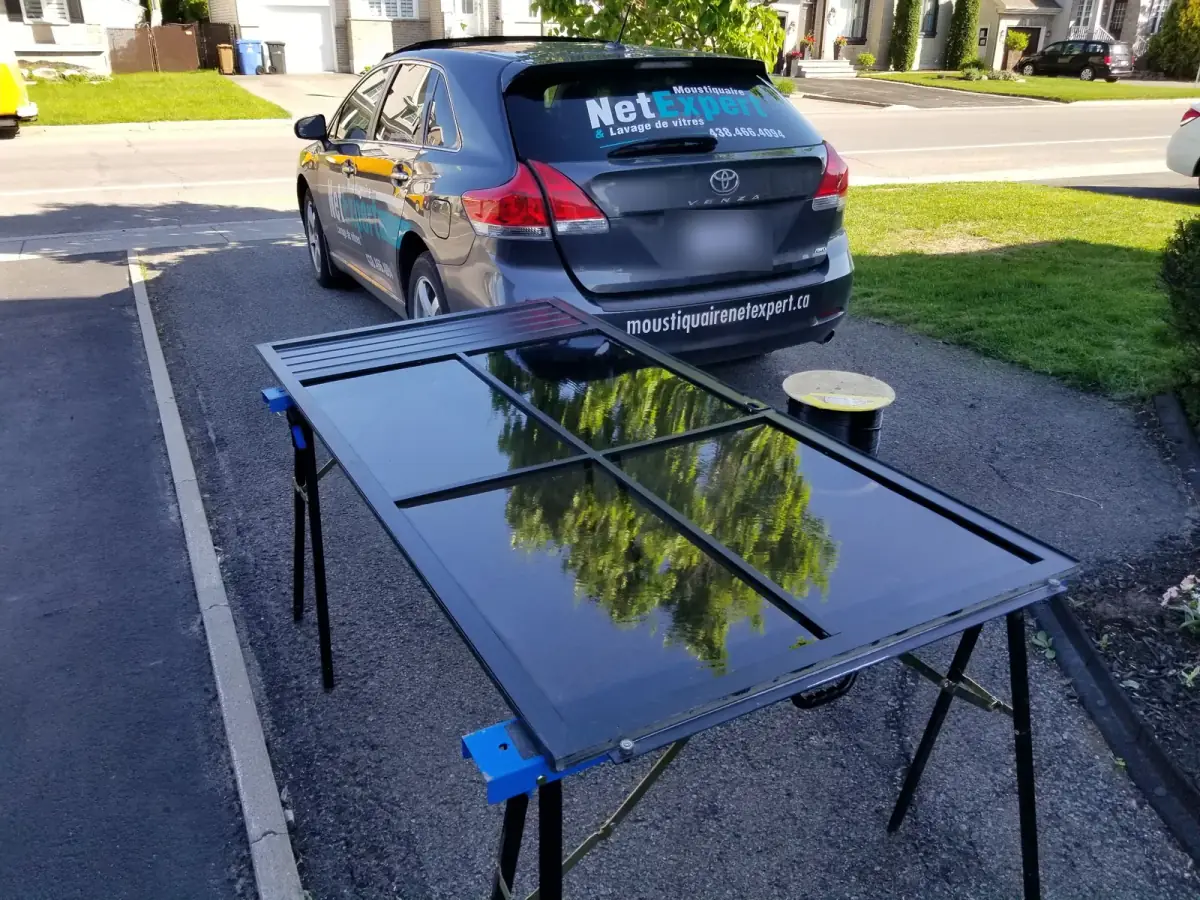
Gazebo and sun shelter specialty
Clear vinyl yellowed or torn? Replaced at your home in Saint-Laurent, in the original frames — gazebos and sun shelters.
Three questions are enough to start. The official measurement is taken on site.
Whatever your retailer calls it — MICA film, clear vinyl, clear plastic, sun-shelter transparent fabric — it is the same material, and we replace it in Saint-Laurent in your existing panels.
Sun yellows and clouds the vinyl. Film that crackles to the touch is at end of life.
Below freezing, MICA turns brittle — one handling or one gust splits it outright.
Slack vinyl flaps like a sail and eventually tears at the seams.
Gazebos do not sit the same way everywhere in Saint-Laurent. Behind the post-war bungalows and duplexes of Norgate, the yard is modest, usually fenced on both sides, and the gazebo that goes in it is almost always a retail model: an aluminum or steel frame, a hard or fabric roof, and four or six screen panels in standard sizes. It is the gazebo that took the place of the old covered porch — bought assembled or in a box, then left outside season after season. Its original panels, both the screening and the clear vinyl (MICA film), are the first parts to show their age, well before the frame does. In a yard like this the gazebo stays within reach: the side passage serves the back, and a panel that comes off has only a few metres to travel.
The large rental blocks of the 1960s and 1970s have next to no gazebos — a slider balcony does not lend itself to one, and the common ground around the towers is seldom laid out for it. The gazebo reappears in Nouveau Saint-Laurent in another form: the small condo-terrace gazebo or pergola, sometimes on a rooftop terrace, chosen for the footprint the condo association allows. These models are compact, light, and far more exposed to wind aloft than anything in a Norgate backyard. Their clear vinyl goes first; the screen panels follow, usually at a corner where the mesh is stapled or held by a spline. In both settings the panels are standard sizes, and the panel is what gets rebuilt — never the structure.
On a retail gazebo that has spent several winters in a Norgate yard, the clear vinyl is nearly always the piece to redo: yellowed by summers, stiffened by cold, it splits along a fold or a fastener in the first strong autumn wind. The screening wears more slowly but predictably — a corner torn by a broom or a chair, fibreglass mesh that has slackened and slaps in its frame, a spline that has worked out of its groove. The vinyl is recut pane by pane in its original frame; on the four- or six-panel models of a Norgate yard that closes the whole gazebo, and the mesh panels are rescreened in their own frames. On a Nouveau Saint-Laurent terrace the logic is identical, with smaller panels and a slightly heavier film if the terrace is exposed to the wind.
On a Norgate retail gazebo each panel unclips or unscrews from the frame, is rebuilt outside and goes back on without the structure ever leaving its slab. In Norgate the backyard is reached by the side passage and the work happens on site. On a condo terrace the constraint is access: panels travel down by elevator or stairwell to the truck, and we need the pane count and sizes before arriving. A rooftop gazebo also calls for a check that the frame is still anchored — new vinyl tensioned over a structure that shifts will not outlast the old. The structure itself is never altered.
No gazebo in the borough backs onto woodland or open water, so the question of a tight weave hardly ever comes up here. What decides the choice is exposure. A Norgate yard, closed in by its shared fences, shelters the gazebo; a high terrace in Nouveau Saint-Laurent takes the wind head-on, and that is where the mesh choice is weighed panel by panel. The clear vinyl goes on before the first cold snaps and comes off in spring if the gazebo is mainly a summer room.
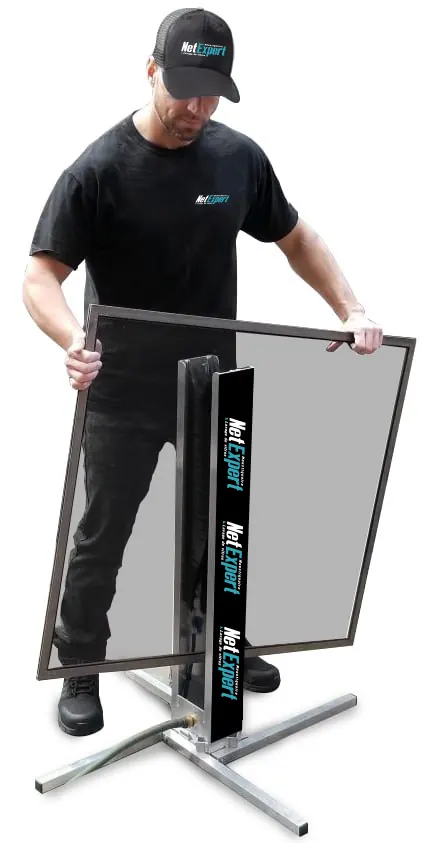
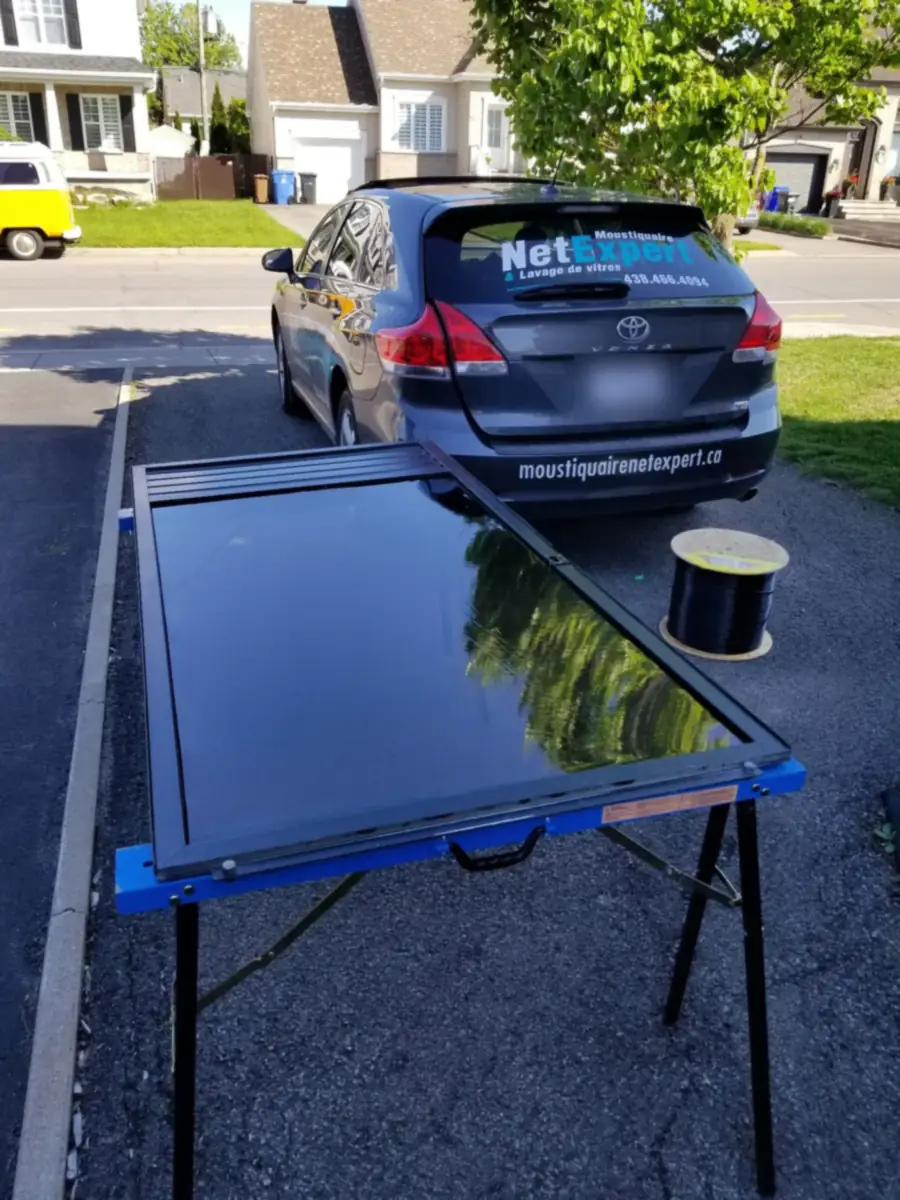
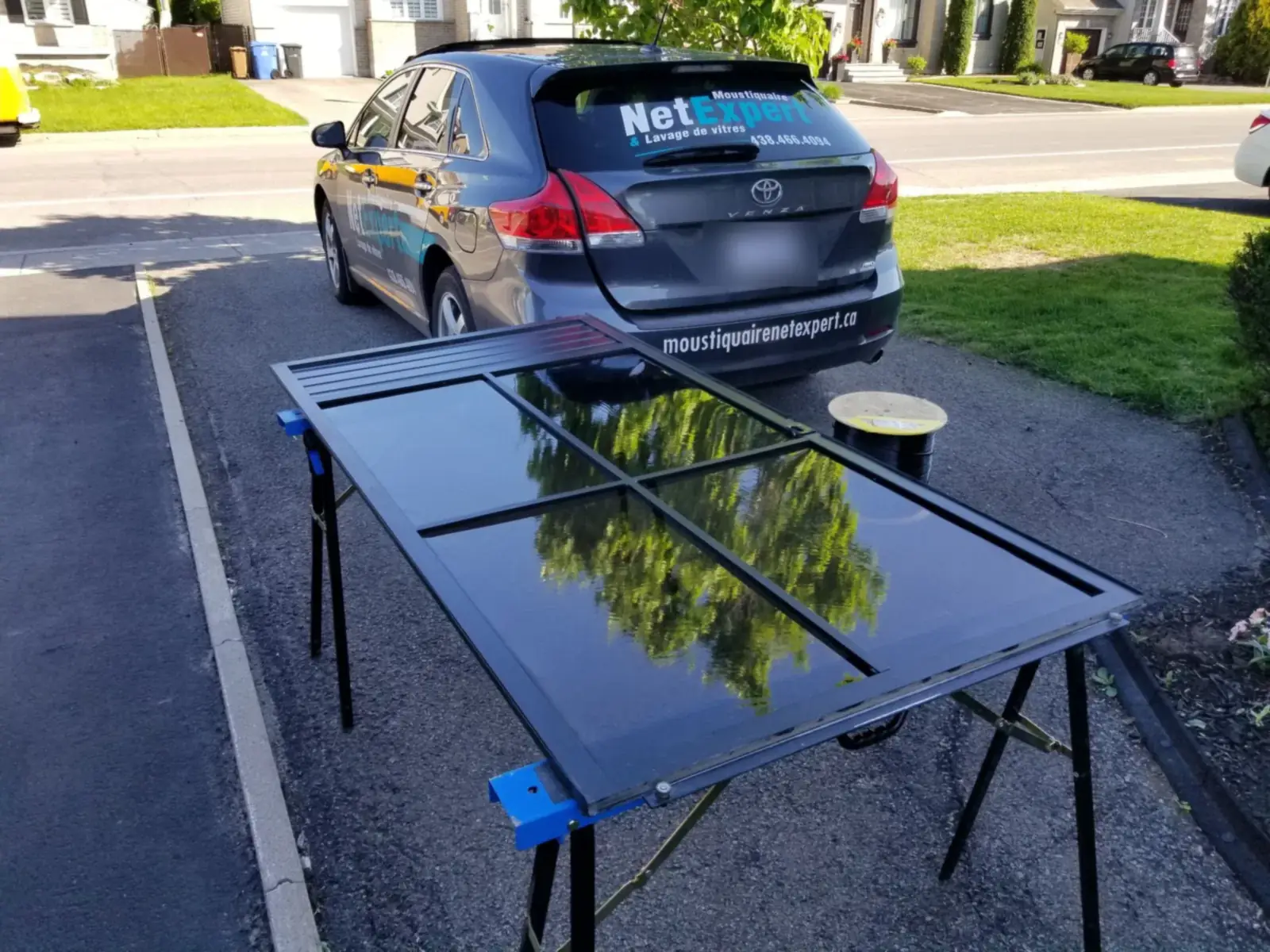
This job was not in Saint-Laurent — it shows our method, the same everywhere: panels down, new vinyl pane by pane, panels back up.
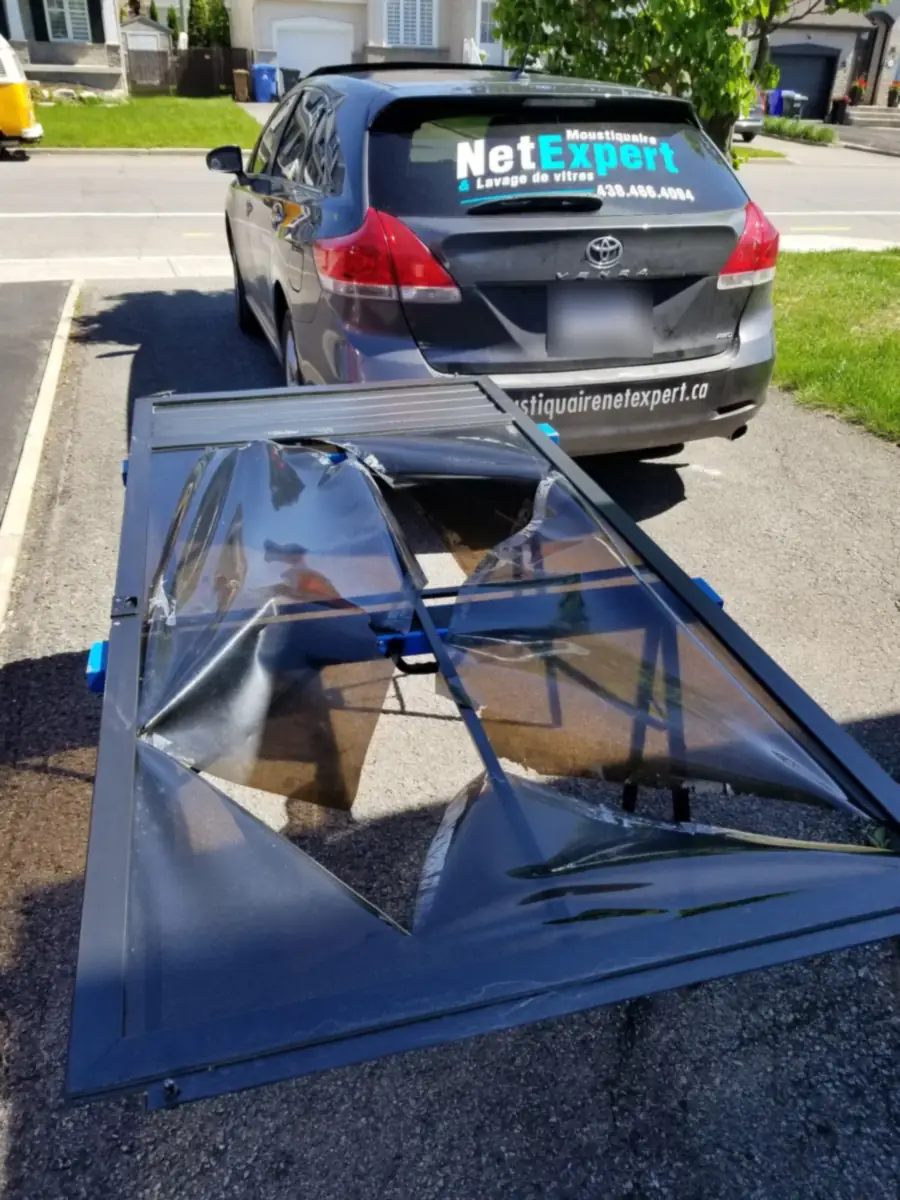
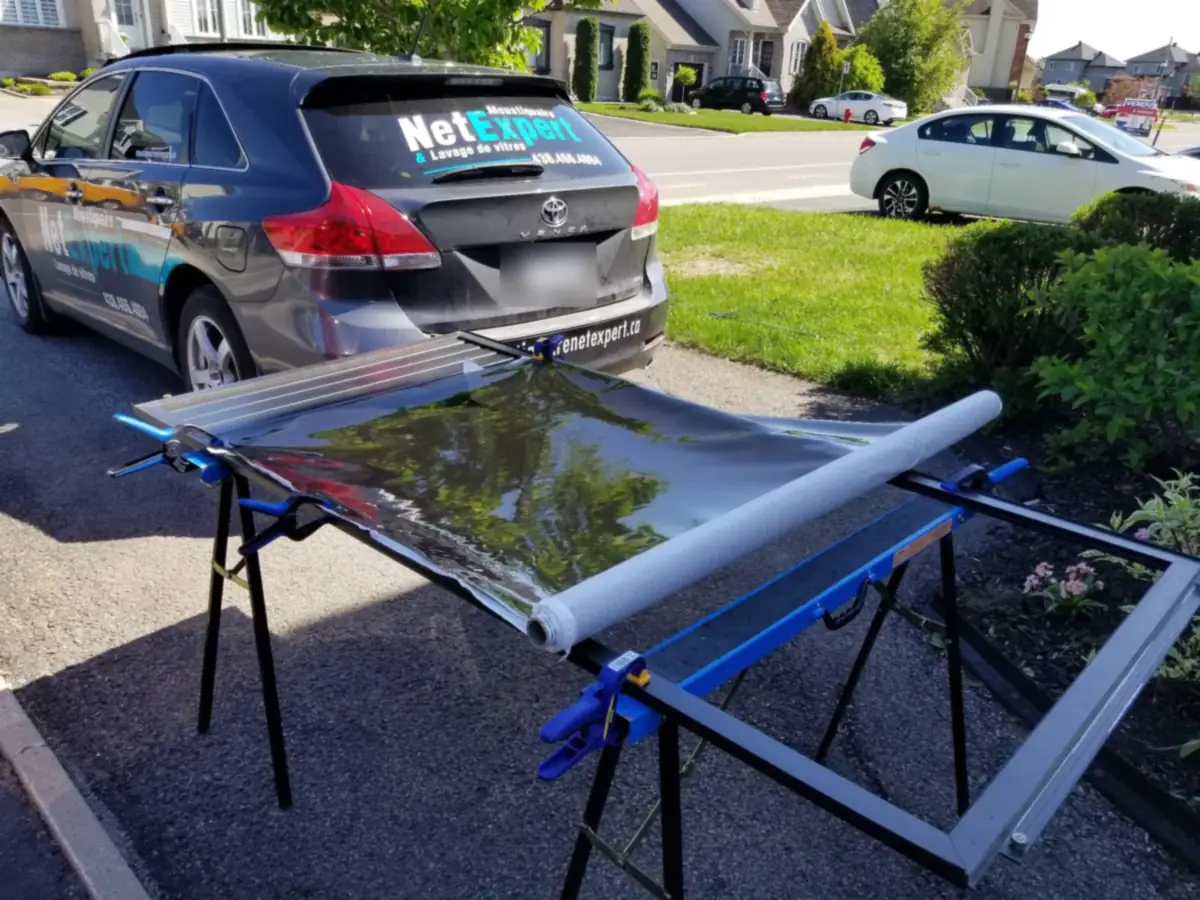
« Great service! He was at my neighbour’s and agreed to fix my back screen even though we had no appointment. Very successful repair, and inexpensive! »
« Ludovic replaced my screen in record time. Professional, and with a great sense of humour. I recommend his services — don’t hesitate to contact him, he’ll come to your home and do beautiful work. »
« Excellent service. Clear explanations of the work to be done. I really appreciated his dedication: despite the rain he insisted on finishing the job, soaked through and still smiling. The work was very well done. »
Straight answers
No. Only the panels being rebuilt leave the structure: they come off one at a time, go down by elevator or stairs, and go back up once rescreened or refitted with clear vinyl. The frame stays in place and anchored. What helps is knowing in advance how many panes are affected and whether the condo bylaws require a particular tint or format.
Yes, and that is the most common case on a retail gazebo: the clear vinyl ages faster than the screening because sun yellows it and cold stiffens it. Each pane is replaced to the exact size of the original frame without touching the screen panels that are still sound. While we are there we check that the spline or the fasteners are still holding.
Yes. A retail gazebo panel is an aluminum or steel frame with mesh or vinyl held inside it; as long as the frame is straight it can be rescreened or refitted regardless of the model’s age. The manufacturer does not need to exist anymore: the screening and the vinyl are cut to the frame’s measurements, not to a catalogue number.
Yes, at your home. We travel to Saint-Laurent, remove the panels, replace the MICA vinyl in the original frames and put everything back — the gazebo structure is never touched. It is one of our specialties.
Yes. Depending on the retailer it is called MICA film, clear vinyl, clear plastic or transparent fabric — the same flexible material that cuts wind and holds warmth. We replace it on gazebos and sun shelters alike.
Yes. The vinyl is replaced pane by pane, in the existing frame — no need to redo the whole panel for one tear. If several panes have yellowed, doing them together gives a uniform result.
On assessment: the price depends on the number of panels and their dimensions. The quote is free, and a photo is often enough to price without a visit. Fabrication and installation guaranteed one year.
Do you manage a building or a business in Saint-Laurent?