
Summer UV
Sun yellows and clouds the vinyl. Film that crackles to the touch is at end of life.
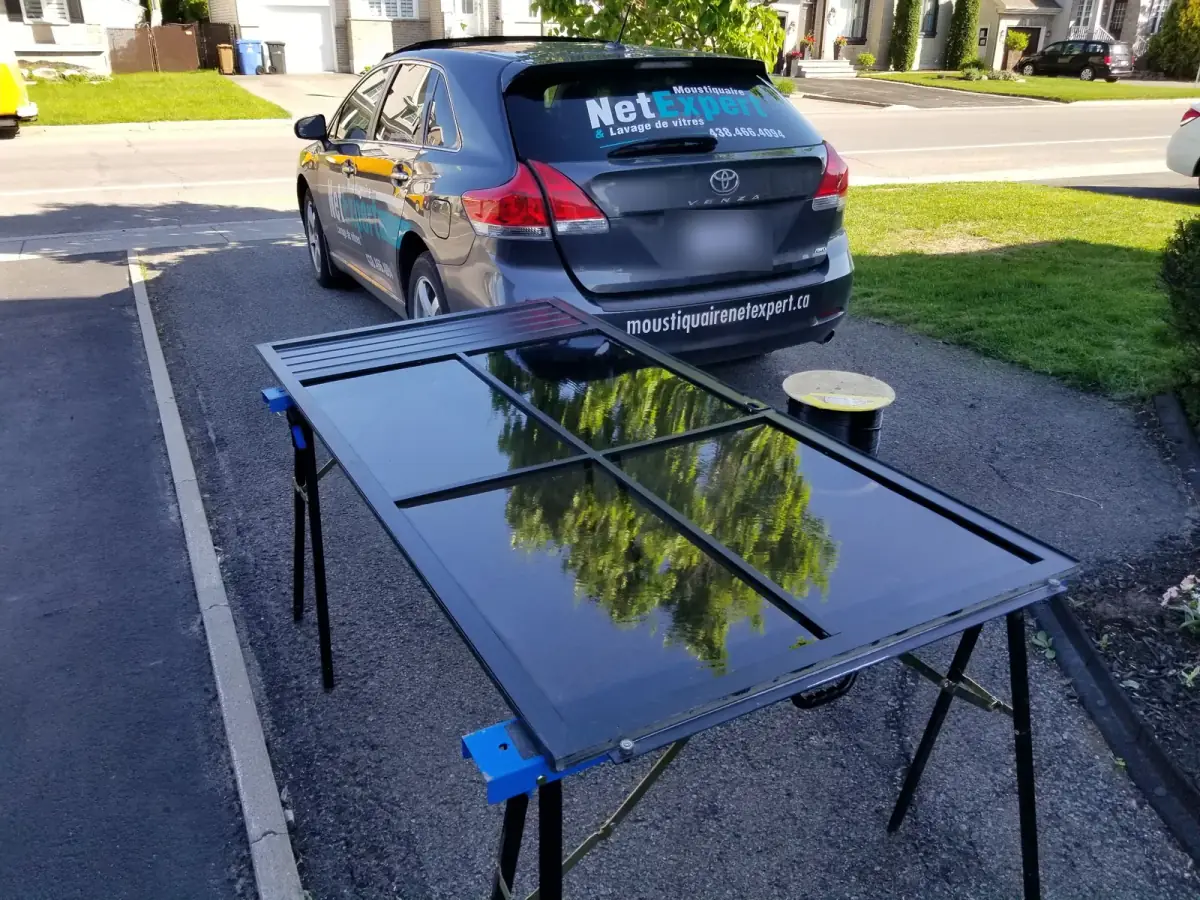
Gazebo and sun shelter specialty
Clear vinyl yellowed or torn? Replaced at your home in Dollard-des-Ormeaux, in the original frames — gazebos and sun shelters.
Three questions are enough to start. The official measurement is taken on site.
Whatever your retailer calls it — MICA film, clear vinyl, clear plastic, sun-shelter transparent fabric — it is the same material, and we replace it in Dollard-des-Ormeaux in your existing panels.
Sun yellows and clouds the vinyl. Film that crackles to the touch is at end of life.
Below freezing, MICA turns brittle — one handling or one gust splits it outright.
Slack vinyl flaps like a sail and eventually tears at the seams.
A backyard in Dollard-des-Ormeaux is, more often than not, a rectangle of lawn behind a bungalow, split-level or brick cottage built between 1960 and 1980, with the patio door in the middle of the wall and the gazebo a few steps beyond it. That kind of subdivision is the natural home of the retail gazebo: an aluminum or steel frame bought in a box, set on the deck or on patio stones, with side panels in standard formats. Yards are mid-sized, usually fenced and hedged decades ago, which blocks part of the wind but keeps shade and dampness on the ground in the evening. The gazebo is where the house extends itself for summer meals.
These gazebos have an age, and it shows in the panels long before it shows in the frame. Painted steel and aluminum last for years; the clear vinyl and the original screen mesh reach the end of their life well ahead of them. When an owner starts looking for a replacement panel, they find the model is gone from the catalogue, their frame dimensions match nothing on the shelf, and the only thing the store offers is a whole new gazebo. That is precisely where rescreening in the existing frame makes sense: the structure is sound, the panel frames are straight, and only the material stretched inside them has worn out.
On a retail gazebo, the clear vinyl (MICA film) fails in a predictable order: it yellows on the sun-facing side, stiffens through the winters, then splits all at once in a gust, usually along a fold or at a corner. The screen mesh, being more flexible, lasts longer but tears at the lower corner where people brush past it on the way in, or slackens until it flaps. On site, each panel comes off the structure, is redone in the mobile workshop — new film cut to the exact size of the pane, or new mesh stretched and the spline pressed back into its groove — and goes back up. We never replace a panel frame that is still straight; we replace what is inside it.
The challenge here is the number of panes, not the access: the yard is at grade, the deck is low, and a retail gazebo comes apart without scaffolding. But a common model has several side panels, each divided into several panes, and two gazebos from the same manufacturer do not always share the same profiles from one production year to the next. So every panel is measured on its own, we note which one carries the zippered or magnetic door, and each frame's profile is recorded before anything is cut: two neighbouring panels on the same gazebo do not always share the same groove.
In a 1960s-to-1980s subdivision, hedges and fences break the wind, but sun exposure depends on how the yard is oriented: a gazebo with two faces toward the southwest yellows its film far faster on that side than on the other. The film goes on before the first frost on the faces that take the wind, and comes off in spring wherever you want the breeze. For the screens, the decision here is mostly one of consistency: all four faces of the gazebo are taken in at a glance from the patio door, and a single face redone in a different shade of mesh stands out as much as a torn panel would.
Prefer English? We serve you in whichever language you choose, in Dollard-des-Ormeaux as everywhere else.
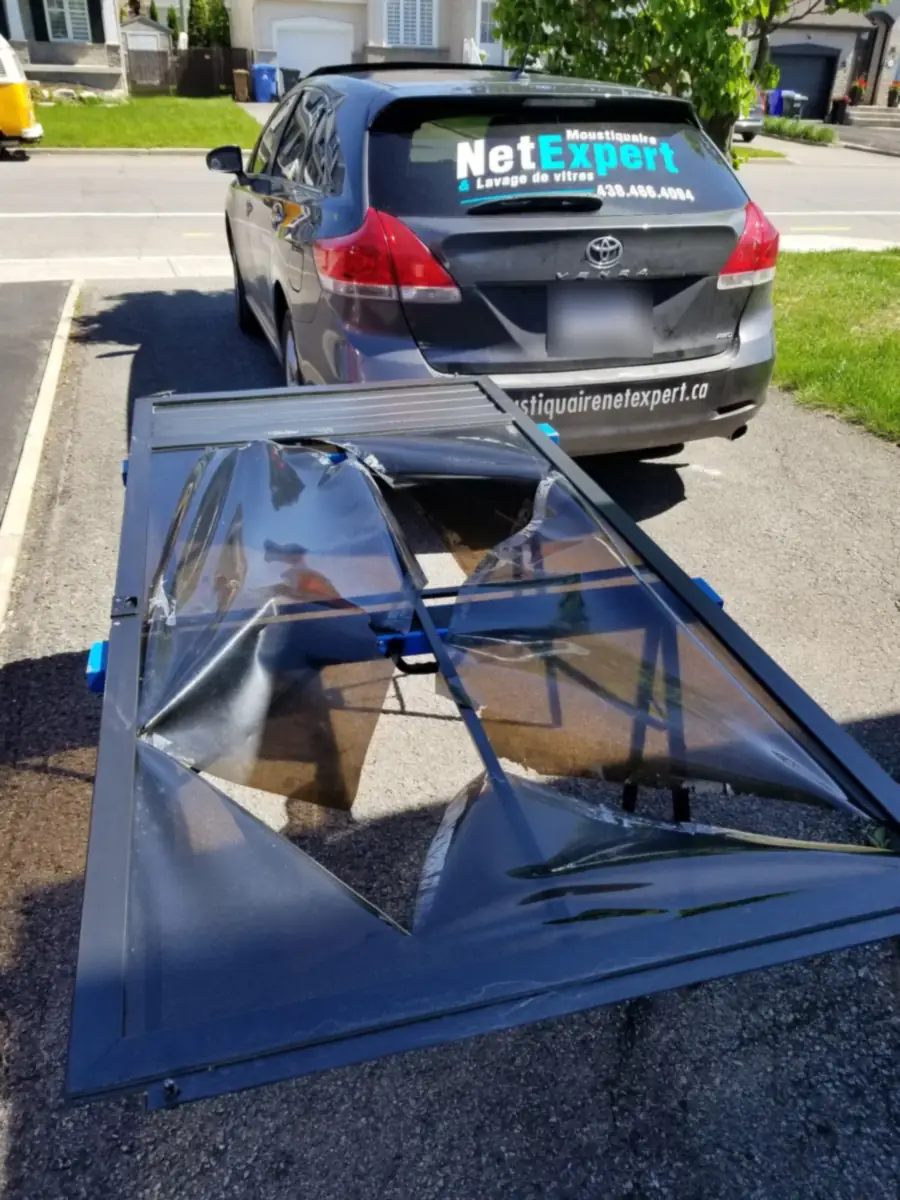
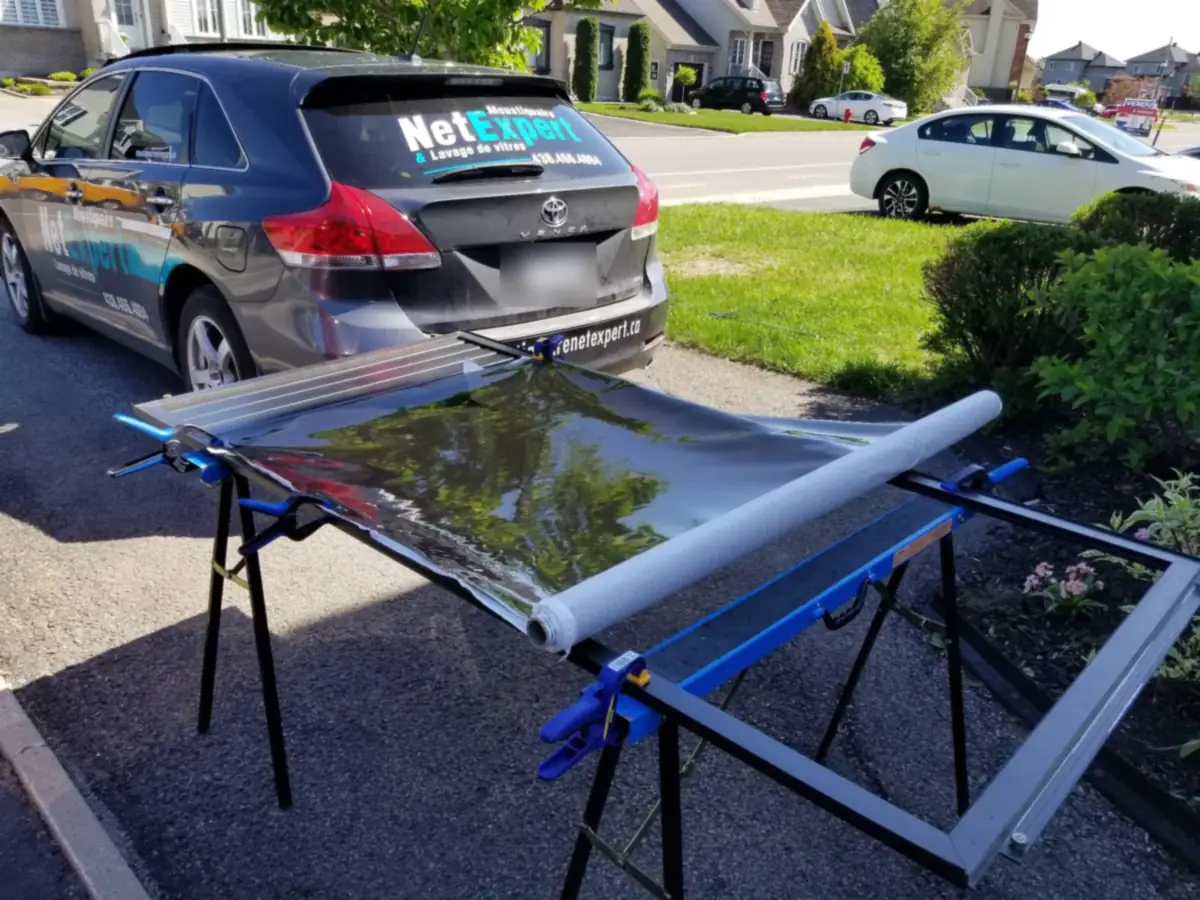
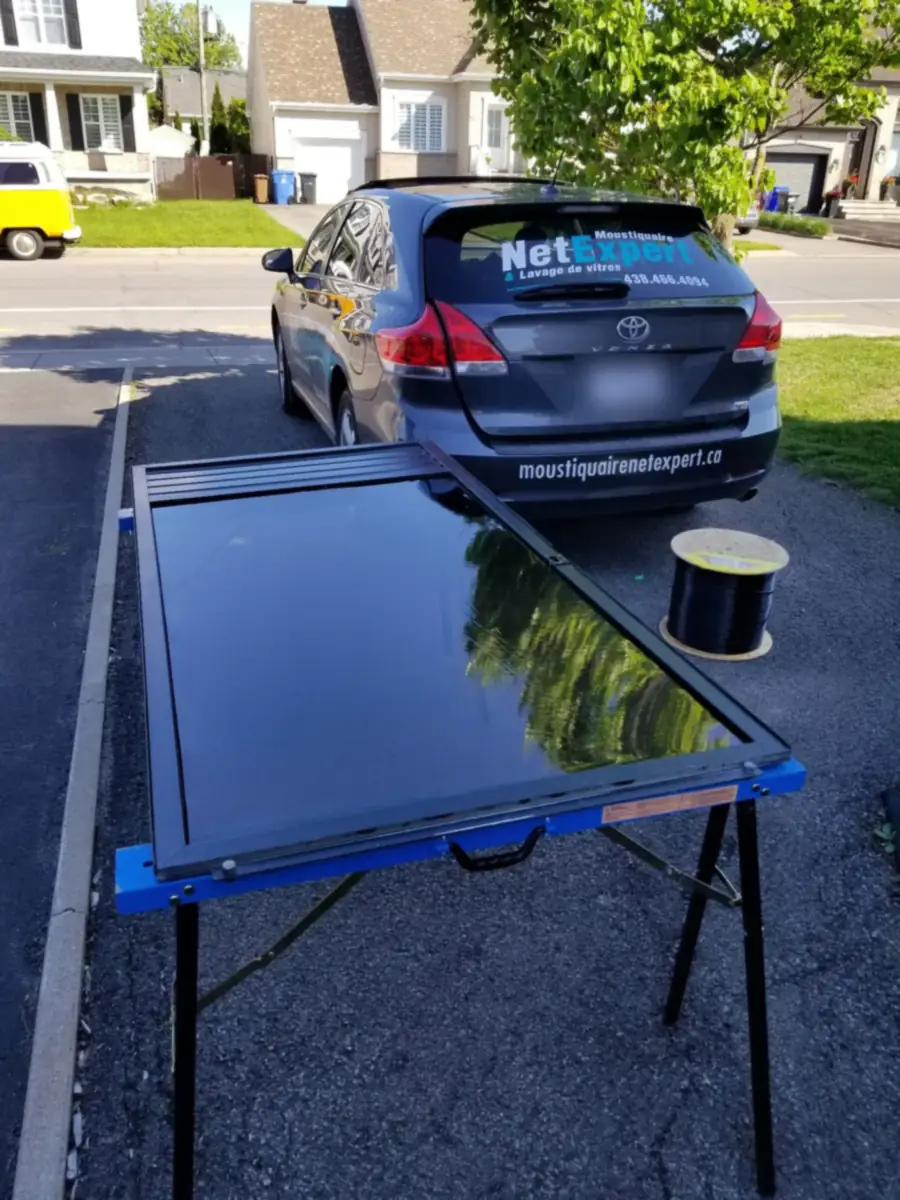
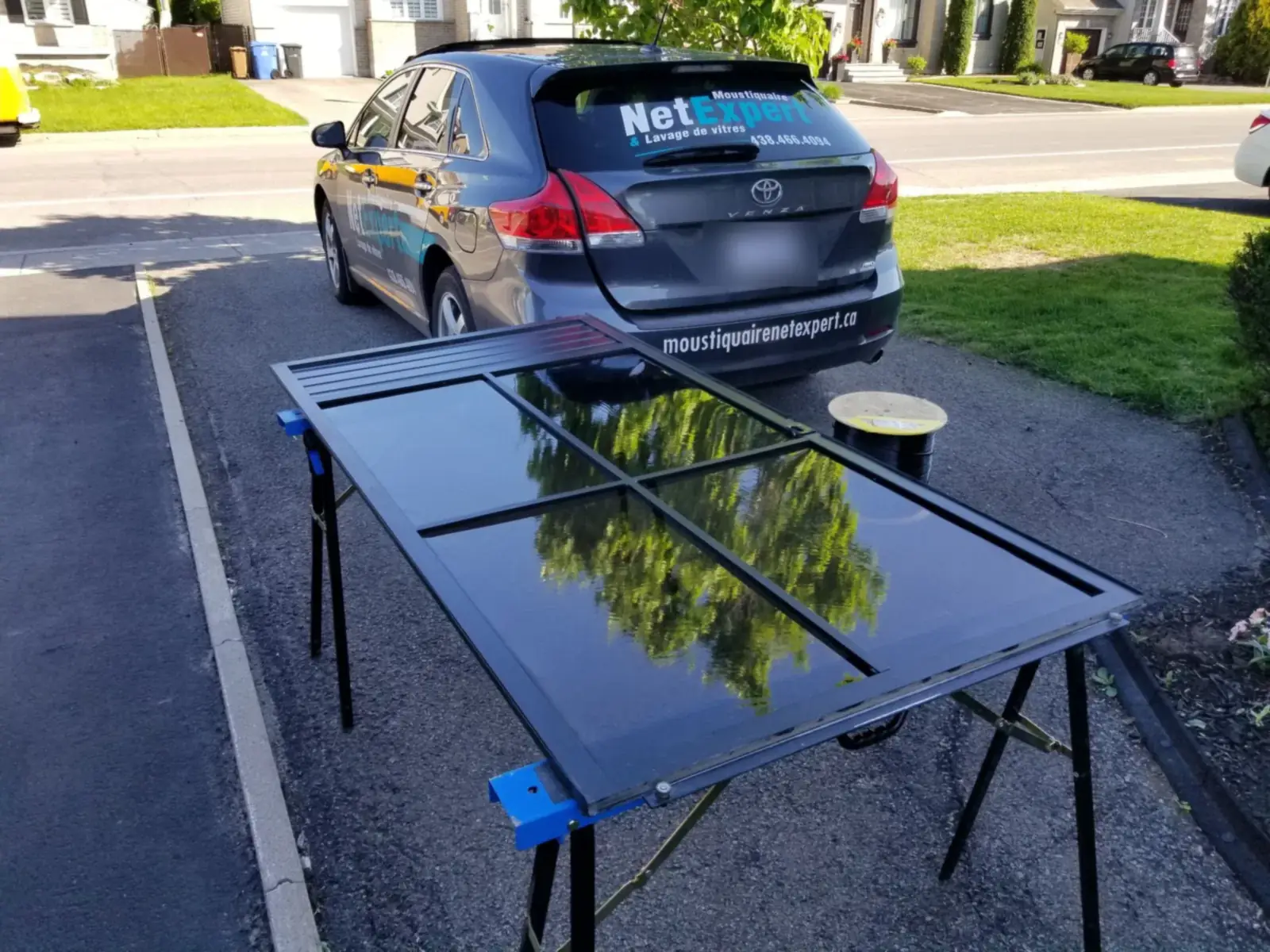
This job was not in Dollard-des-Ormeaux — it shows our method, the same everywhere: panels down, new vinyl pane by pane, panels back up.
« Ludovic replaced my screen in record time. Professional, and with a great sense of humour. I recommend his services — don’t hesitate to contact him, he’ll come to your home and do beautiful work. »
« Excellent service. Clear explanations of the work to be done. I really appreciated his dedication: despite the rain he insisted on finishing the job, soaked through and still smiling. The work was very well done. »
« Great service! He was at my neighbour’s and agreed to fix my back screen even though we had no appointment. Very successful repair, and inexpensive! »
Straight answers
Yes, and it is the most common situation. We are not hunting for a replacement panel: we keep each panel frame, strip out the worn film or mesh, and stretch new material inside it to the exact dimensions measured on site. The aluminum or steel structure is not touched. As long as the frames are straight, the age of the model does not matter.
No. Film is replaced pane by pane, and one side can be done alone. What we check at the same time is the state of the other faces: the one that split is usually the one taking the sun or the yard's prevailing wind, and its yellowed neighbour is not far behind. We tell you, and you decide whether it gets done in the same visit.
Never the structure. Only the panels come out of their tracks or clips, one at a time, and go back once redone in the mobile workshop, in your yard. Roof, posts and beams stay up. In a grade-level yard like those behind the area's bungalows and split-levels, everything happens on the ground, without a ladder.
Yes, at your home. We travel to Dollard-des-Ormeaux, remove the panels, replace the MICA vinyl in the original frames and put everything back — the gazebo structure is never touched. It is one of our specialties.
Yes. Depending on the retailer it is called MICA film, clear vinyl, clear plastic or transparent fabric — the same flexible material that cuts wind and holds warmth. We replace it on gazebos and sun shelters alike.
Yes. The vinyl is replaced pane by pane, in the existing frame — no need to redo the whole panel for one tear. If several panes have yellowed, doing them together gives a uniform result.
On assessment: the price depends on the number of panels and their dimensions. The quote is free, and a photo is often enough to price without a visit. Fabrication and installation guaranteed one year.
Do you manage a building or a business in Dollard-des-Ormeaux?