
Summer UV
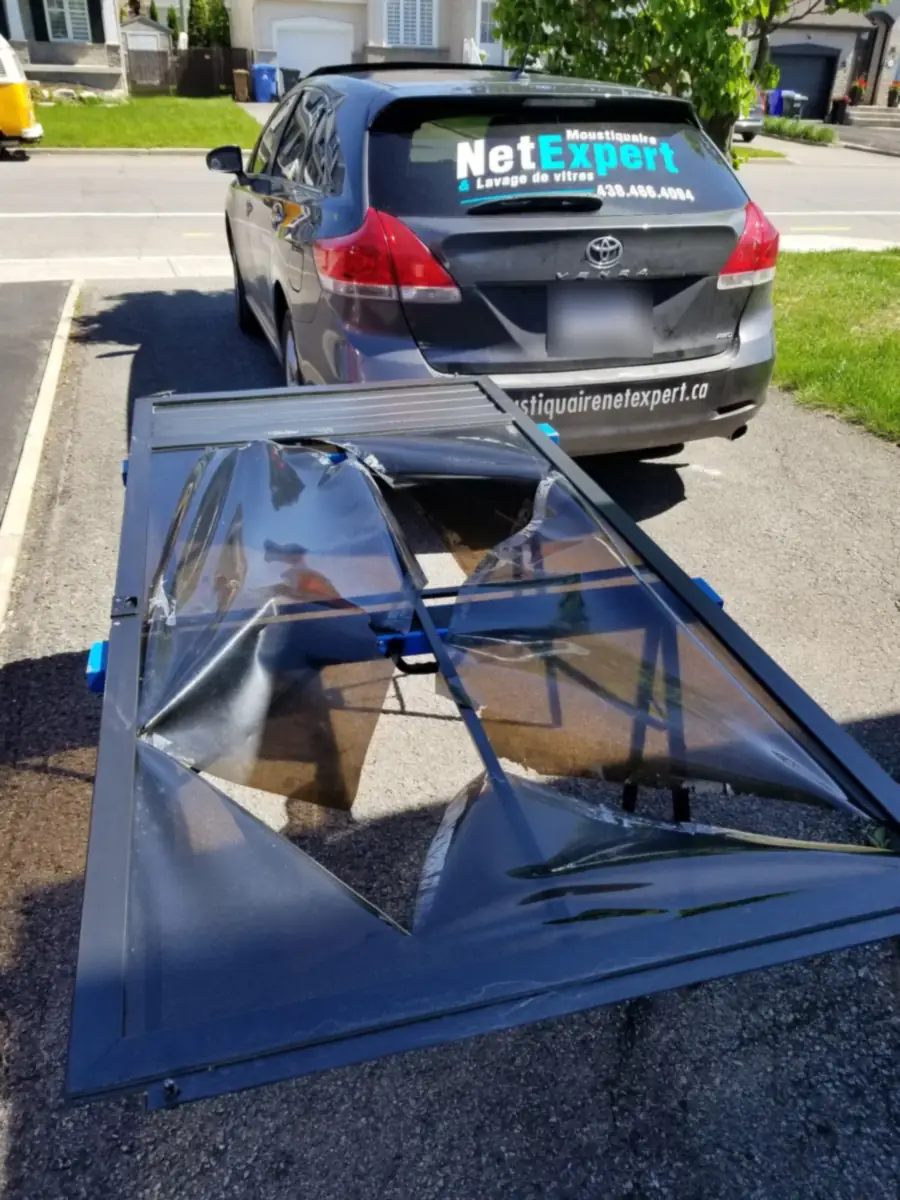
Sun yellows and clouds the vinyl. Film that crackles to the touch is at end of life.
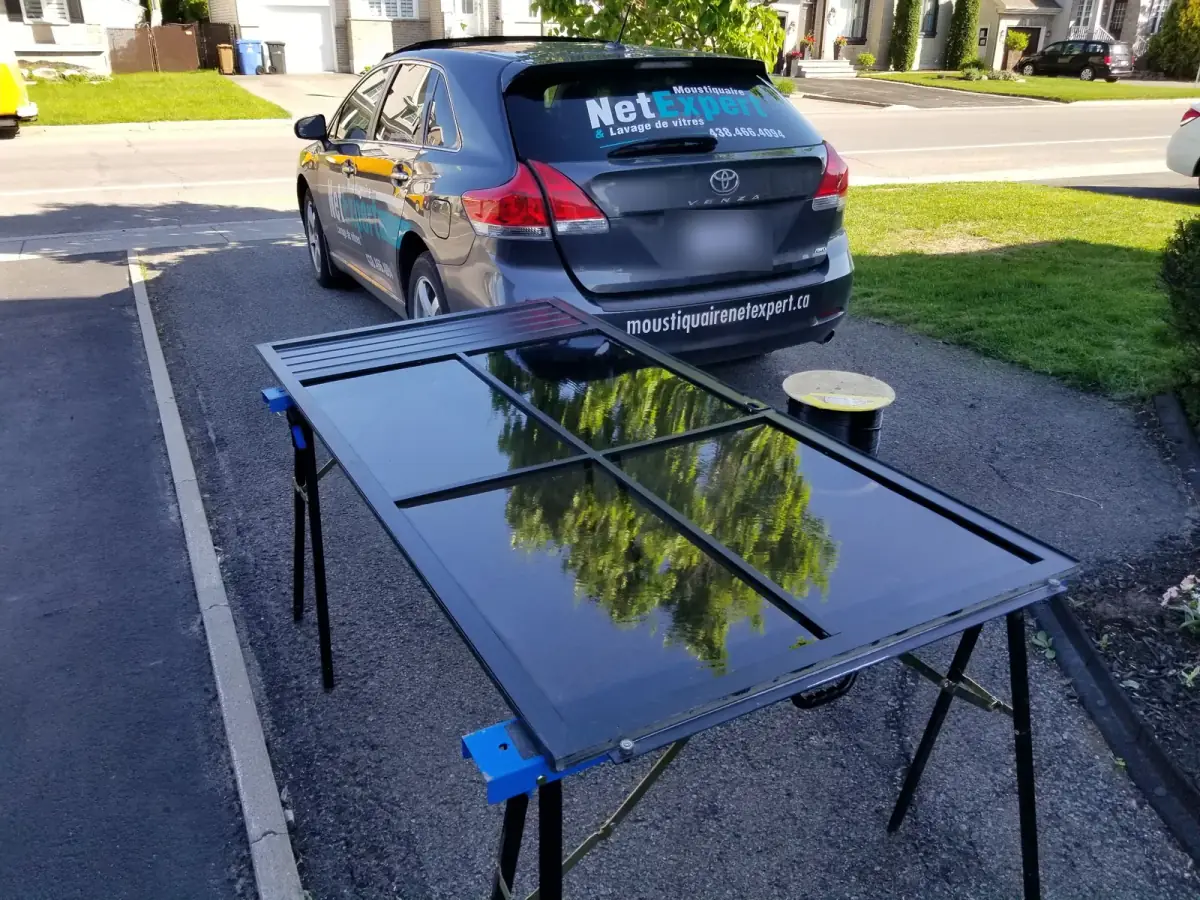
Gazebo and sun shelter specialty
Clear vinyl yellowed or torn? Replaced at your home in Baie-D'Urfé, in the original frames — gazebos and sun shelters.
Three questions are enough to start. The official measurement is taken on site.
Whatever your retailer calls it — MICA film, clear vinyl, clear plastic, sun-shelter transparent fabric — it is the same material, and we replace it in Baie-D'Urfé in your existing panels.
Sun yellows and clouds the vinyl. Film that crackles to the touch is at end of life.
Below freezing, MICA turns brittle — one handling or one gust splits it outright.
Slack vinyl flaps like a sail and eventually tears at the seams.
In Baie-D’Urfé, the gazebo question plays out on very different ground than in the island’s dense neighbourhoods. The ranch houses and split-levels of the 1950s to 1970s sit on large wooded lots, and several run down toward Lake Saint-Louis. On properties of that size, a gazebo is not an accessory wedged between two fences: it has a place of its own, sometimes well away from the house, near the water, a pool or a hot tub. This is the kind of setting where a permanent wood structure, built to measure, takes the place of the retail model — with one-of-a-kind panels, drawn for that spot and no other, by someone who was not working to catalogue sizes.
The house itself dictates part of the choice. A single-storey ranch whose patio doors open toward the lake calls for a gazebo in line with the view, and owners of this kind of home have had sixty years to shape their grounds: a wood structure may have been built there thirty years ago, with its own dimensions and its own joinery. Retail gazebos exist too, on decks attached to the house; on a wooded lot of this size the two turn up side by side, and the method is not the same depending on whether the panels came from a catalogue or from a workshop. A gazebo set in line with the view toward the water takes the wind head-on all year, which decides which face the film will fail on first.
On a permanent wood structure, every panel is its own piece. The frame — wood or aluminum — is fixed into an opening in the framing, and the screen is held in it by a spline or a moulding. What fails: the mesh slackens over humid seasons, tears at a corner once the frame has shifted, or the wood has moved and no longer grips the mesh. Clear vinyl (MICA film), when used on these structures, is cut to measure pane by pane; it yellows and splits like anywhere else, but no store-bought size will replace it. We measure on site, panel in hand, replace the film to exact dimensions and rescreen each mesh panel in its original frame, after first checking that the frame still holds square.
The challenge here is measurement, not quantity. A wood structure built to measure has no two identical panels, and a thirty-year-old frame may have moved with the ground and the humidity. Every opening is measured individually before anything gets cut. Access depends on the property: a gazebo at the water’s edge or at the back of a wooded lot is a long way from the driveway, and the panels make the trip on foot to the mobile workshop. On a retail gazebo set on an attached deck, the work is more direct. Either way, the structure — posts, roof, framing — is never touched.
Lakeshore and tree cover compound each other. Wind coming off the water unobstructed beats a film continuously and wears out loose fibreglass fast; aluminum holds tension better on those exposed panels. The trees, on the other hand, shield the film from the sun, but the moisture they hold works on the frame rather than the vinyl: a swollen wood frame no longer grips the spline, and that is what gets checked before anything is cut. For a gazebo where you want to spend the evening near the water, fine mesh is the right call, at the cost of a little airflow and view. The film goes on before the first cold snap and comes off in spring if the gazebo sees summer use.
Prefer English? We serve you in whichever language you choose, in Baie-D'Urfé as everywhere else.
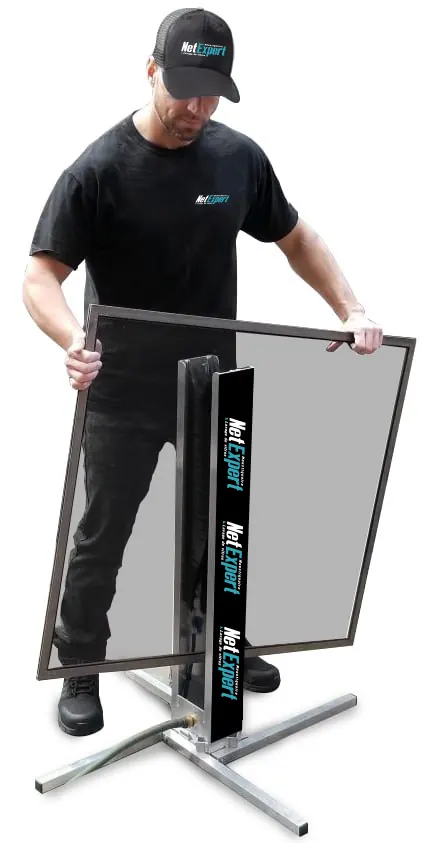
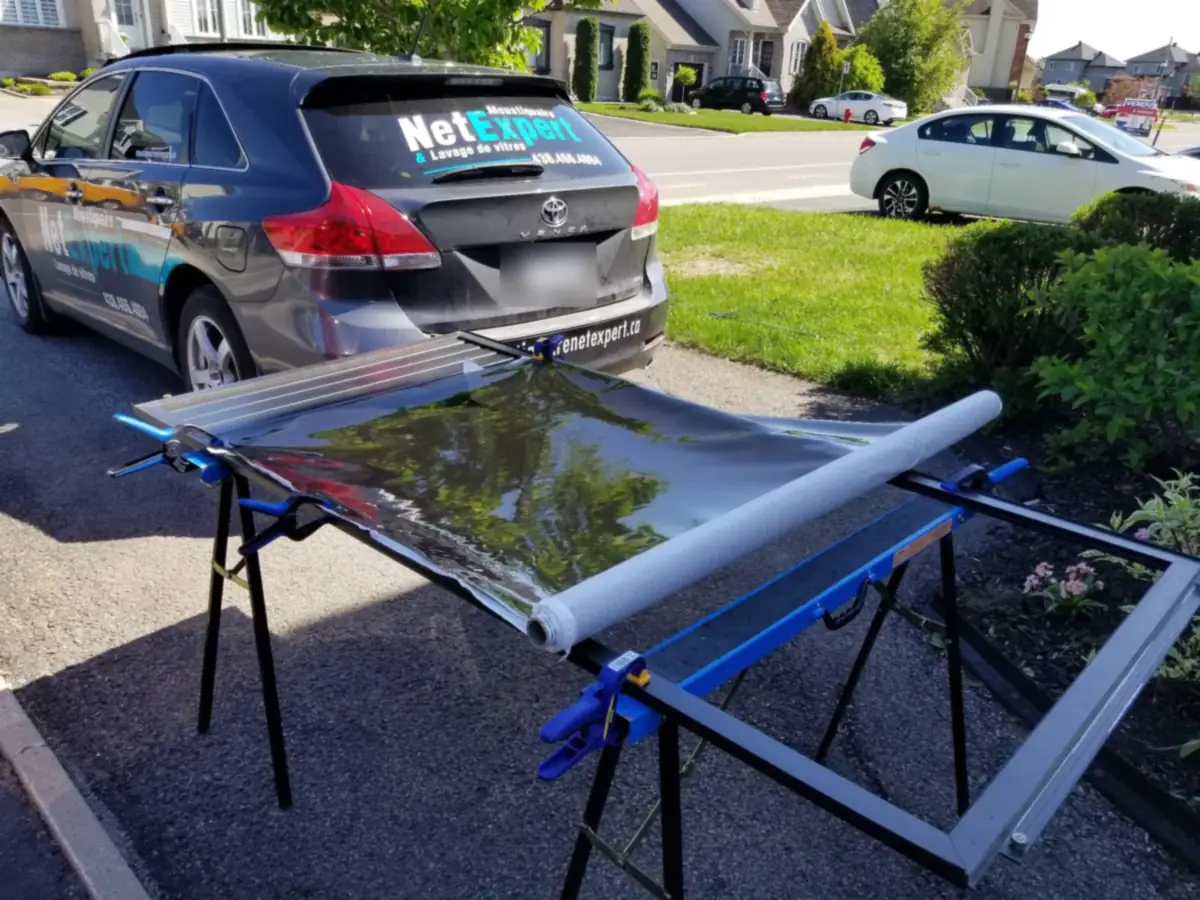
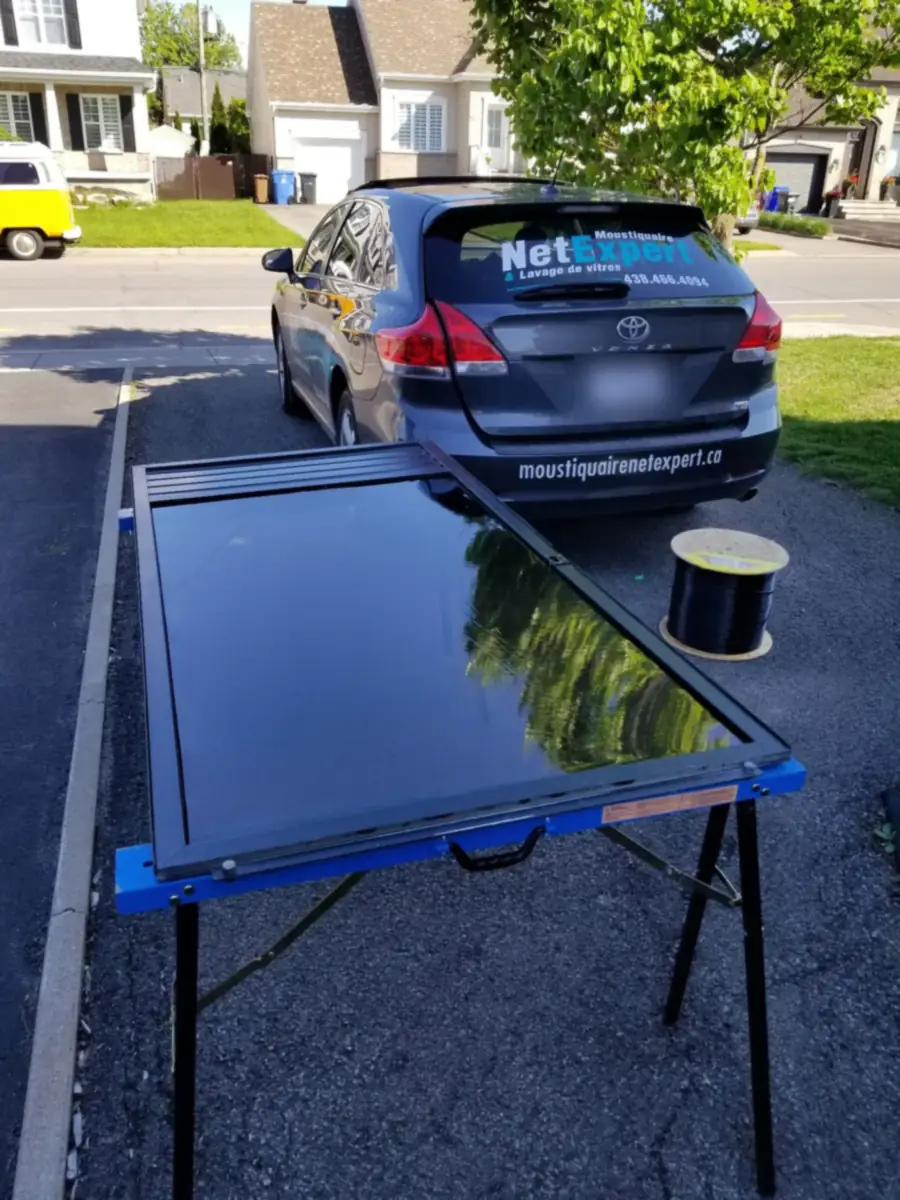
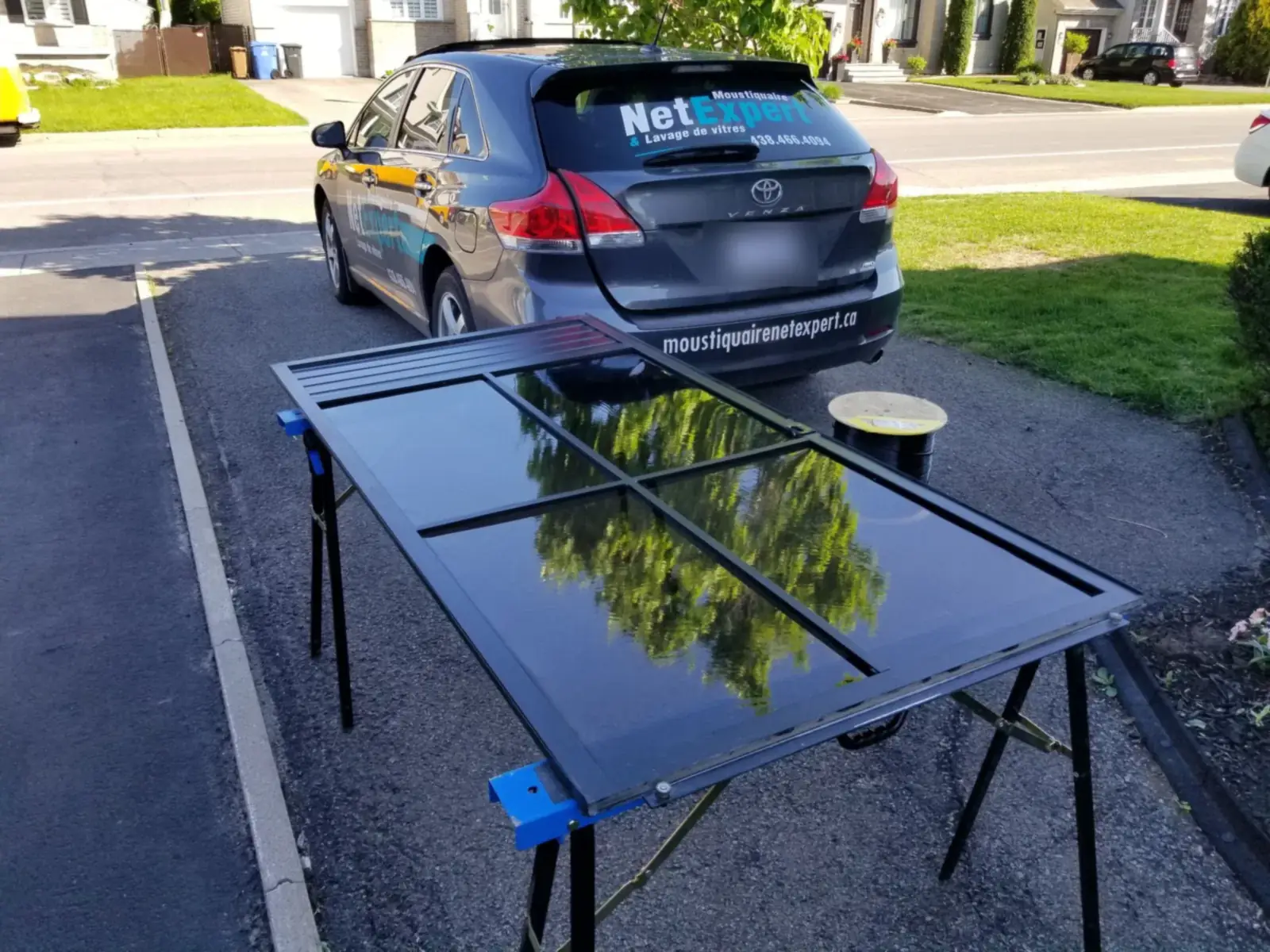
This job was not in Baie-D'Urfé — it shows our method, the same everywhere: panels down, new vinyl pane by pane, panels back up.
« Excellent service. Clear explanations of the work to be done. I really appreciated his dedication: despite the rain he insisted on finishing the job, soaked through and still smiling. The work was very well done. »
« Great service! He was at my neighbour’s and agreed to fix my back screen even though we had no appointment. Very successful repair, and inexpensive! »
« Ludovic replaced my screen in record time. Professional, and with a great sense of humour. I recommend his services — don’t hesitate to contact him, he’ll come to your home and do beautiful work. »
Straight answers
There never were any in a store: each panel was made for its opening. That is exactly why we redo the mesh and the film in the existing frame instead of hunting for a replacement. We measure every opening on site, check that the frame still holds square, and rescreen or recut the film to those measurements. Only a rotted or split frame changes the picture.
No, it just needs planning. The panels come off on site and make the trip on foot to the mobile workshop, where they are redone, then go back the same way. The structure stays put. What really helps is a clear path between the driveway and the gazebo — an open gate, no furniture in the way — and knowing how many panels are to be done.
The mesh choice is not made for the whole gazebo at once. On a structure near the water, fine mesh goes on the two or three faces you actually sit against, and ordinary mesh stays elsewhere for the airflow. That is decided panel by panel at rescreening time, and it changes nothing about the film panes, which take the place of the mesh for winter.
Yes, at your home. We travel to Baie-D'Urfé, remove the panels, replace the MICA vinyl in the original frames and put everything back — the gazebo structure is never touched. It is one of our specialties.
Yes. Depending on the retailer it is called MICA film, clear vinyl, clear plastic or transparent fabric — the same flexible material that cuts wind and holds warmth. We replace it on gazebos and sun shelters alike.
Yes. The vinyl is replaced pane by pane, in the existing frame — no need to redo the whole panel for one tear. If several panes have yellowed, doing them together gives a uniform result.
On assessment: the price depends on the number of panels and their dimensions. The quote is free, and a photo is often enough to price without a visit. Fabrication and installation guaranteed one year.
Do you manage a building or a business in Baie-D'Urfé?