
Slack or torn mesh
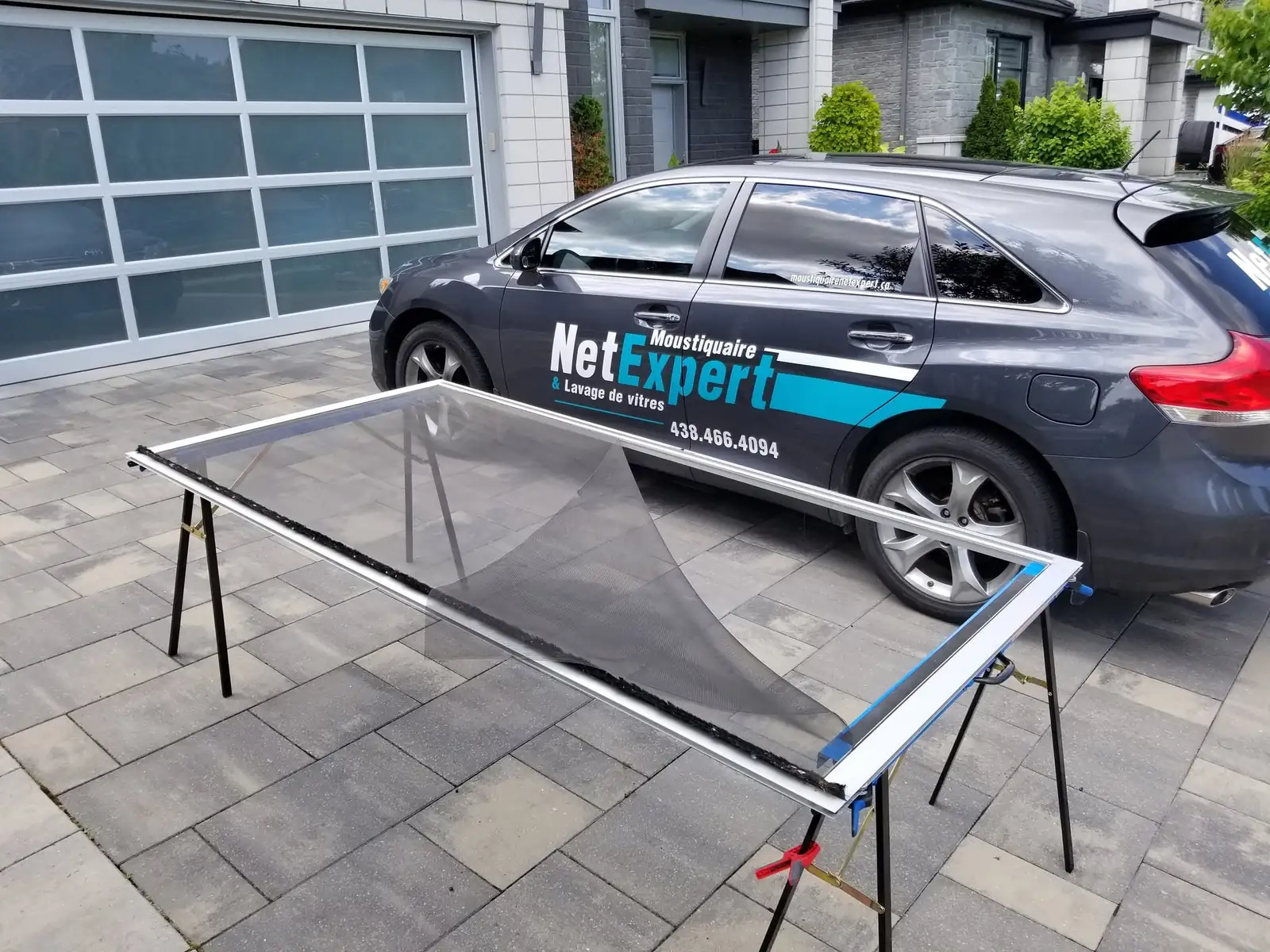
The mesh pulls out of the spline, billows in the wind or tore at the bottom — the classic. Re-meshed in your frame, fibreglass or reinforced.
Patio door screens
Mesh, rollers, track, hardware: your screen door repaired at home in Baie-D'Urfé, usually in a single visit.
Three questions are enough to start. The official measurement is taken on site.
It is the most used screen in the house — opened and closed thousands of times a season. Four failures come up constantly, and all four are repaired on site.
The mesh pulls out of the spline, billows in the wind or tore at the bottom — the classic. Re-meshed in your frame, fibreglass or reinforced.
The door drags, jumps the track or scrapes. We replace the rollers and adjust the height — the most requested repair.
Sand, pet hair and debris jam the rolling. Cleaning, lubrication, light track straightening when needed.
The door no longer locks or the handle hangs loose. Hardware replaced, latch adjusted.
On the ranches and split-levels of Baie-D'Urfé the patio door opens onto the big back lot and it is wide: on houses from 1950 to 1975 built at this scale, a six- or eight-foot door is unremarkable, which puts its screen panel beyond any store size. A door that wide carries a screen panel of roughly four feet, which is a lot of mesh for a thin frame. On a split-level the door may open at grade onto a garden-level terrace, or from the upper level onto a raised wooden deck that makes up for the slope of the lot. Either way it is the true summer door of the house, and the screen panel earns its keep every day.
On houses sixty or seventy years old, the door has probably been replaced once already, sometimes twice, and what may stand behind a 1962 home ranges from the original aluminum- or wood-framed door to a modern PVC or thermally broken aluminum door. The screen panel has not always kept pace: a new door can still carry a screen older than itself, and an original door can be rolling with a rough replacement panel. None of these doors has a dimension anyone could guess: the panel width, the clearance under the top channel and the track profile are all taken panel in hand, door by door.
On a wide patio door the screen panel suffers first from its own span. A frame four feet wide and close to seven feet tall bows in the middle as soon as the mesh loses tension, and it twists slightly when one roller sits lower than the other — the door then scrapes high on one side and low on the other. On the wooded lots here, the outside track collects needles, leaves and pollen rather than sand, and that litter holds moisture: the steel roller axles seize, the wheel stops turning and wears a flat spot. The repair covers the whole assembly: new rollers matched to the track and set level, track cleaned and lubricated, frame straightened and stiffened at the corners, mesh retensioned in the profile or replaced. An original wood frame rotted at the bottom is the one case where the panel gets rebuilt rather than repaired.
Size governs everything here. A four-foot-wide screen panel does not exist as a store size, and building one takes a profile stiff enough not to bow under mesh stretched across that span. On original doors the track itself is sometimes worn hollow by sixty years of rolling, and a new roller only runs true once the track is repaired or capped. On a panel with an original wood frame, the bottom rail decides the rest: a sound stile can be rescreened, a rotted one forces a rebuild. And a new door with an old panel, or the reverse, means two systems that were never designed together — we adjust the panel to the door, never the other way around.
Facing the lake, the patio door takes the wind head-on, and a four-foot fibreglass panel starts bellying and slapping in its frame at every gust, which eventually works the mesh loose from its channel. Aluminum, being stiffer, holds tension across that width and does not move in the wind; it is the mesh we recommend on a large exposed door. If a dog lives on the property, pet-resistant mesh takes priority: it stands up to claws and stays stiff enough for a big panel. On a panel this wide, a very fine weave also adds wind load: that is worth weighing before choosing it for a patio door.
Prefer English? We serve you in whichever language you choose, in Baie-D'Urfé as everywhere else.
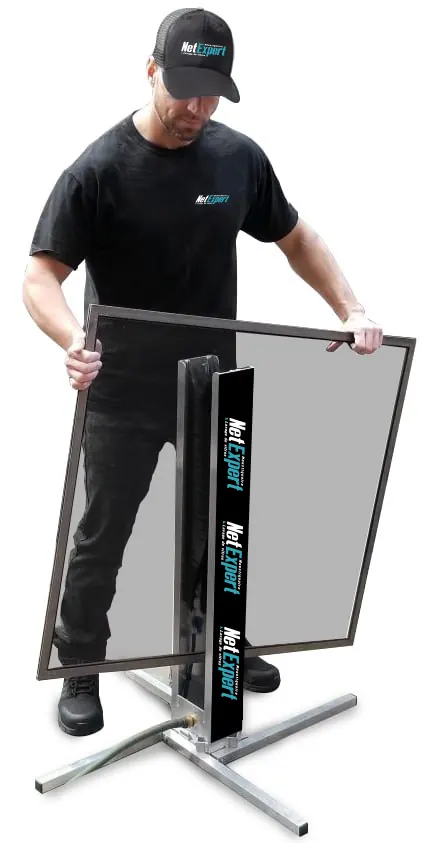
A patio door opens and closes more often than every window in the house combined — and it is the one the dog noses open and the cat climbs. Standard fibreglass mesh suits a lightly used door; for the others, we fit reinforced mesh, about seven times stronger, or pet-resistant mesh built for claws.
The extra cost is measured in tens of dollars; the yearly replacement it prevents, in hundreds. We carry both types in the vehicle — the decision can happen on the spot, with the door off its track in front of you.
Ten kinds of damage, one answer
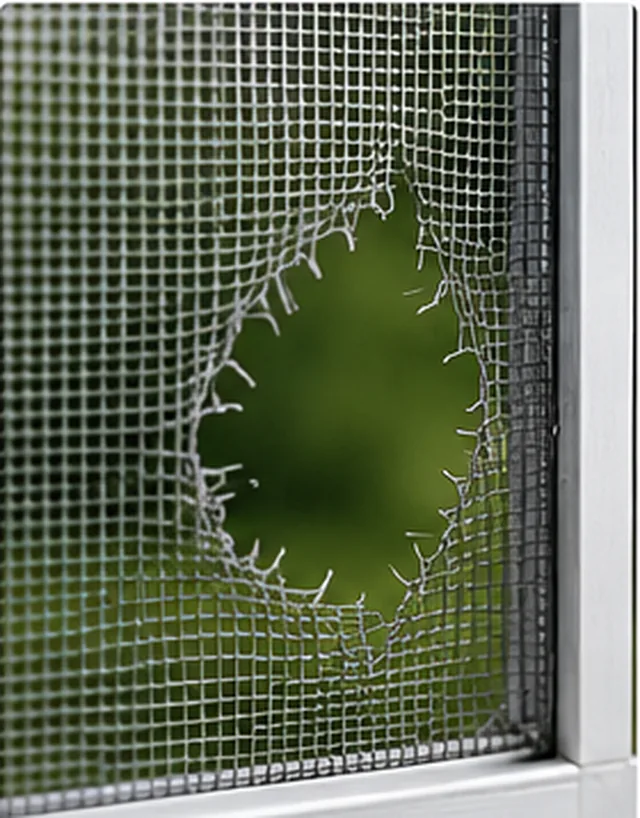
If your screen looks like any of these, it can be repaired. Tap one to request a quote for that exact damage. We rarely replace a whole frame — in most cases only the mesh needs redoing.
 Mesh
Mesh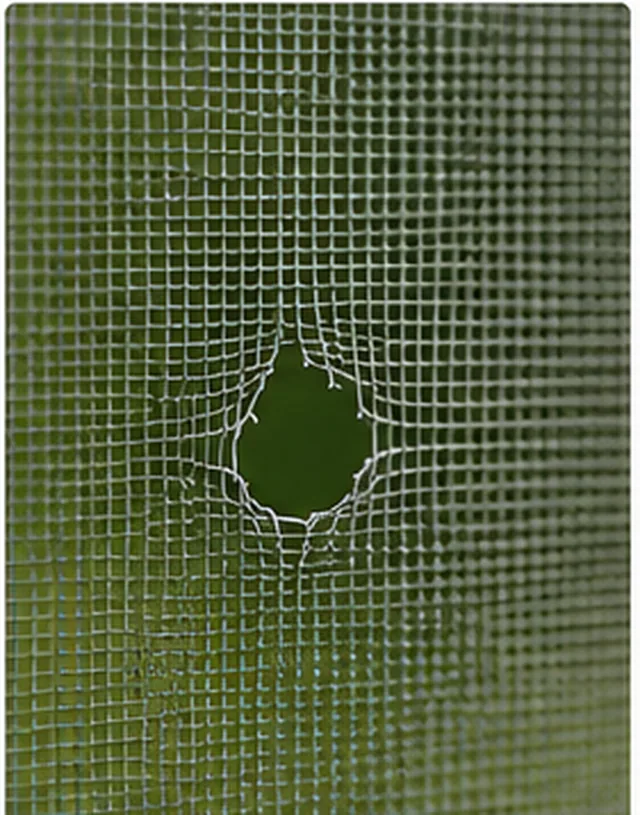 Mesh
Mesh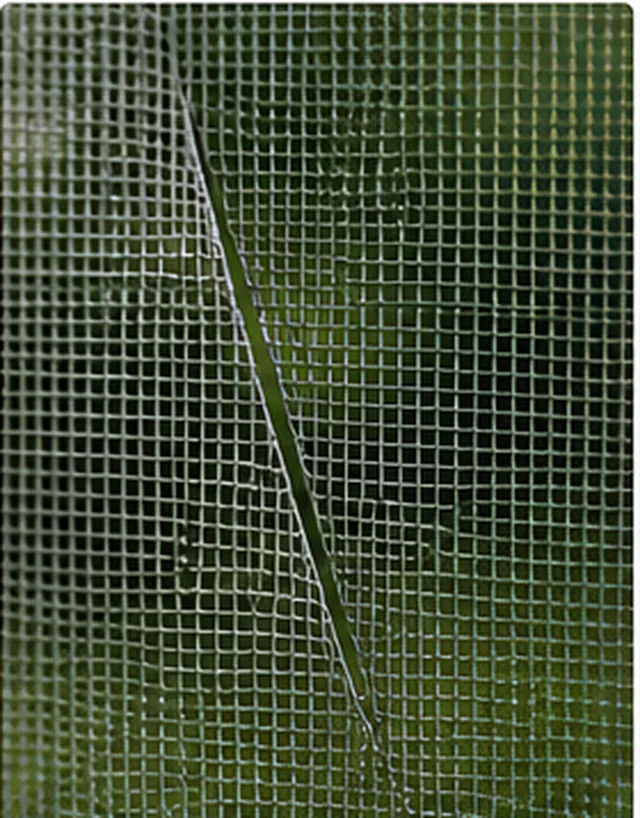 Mesh
Mesh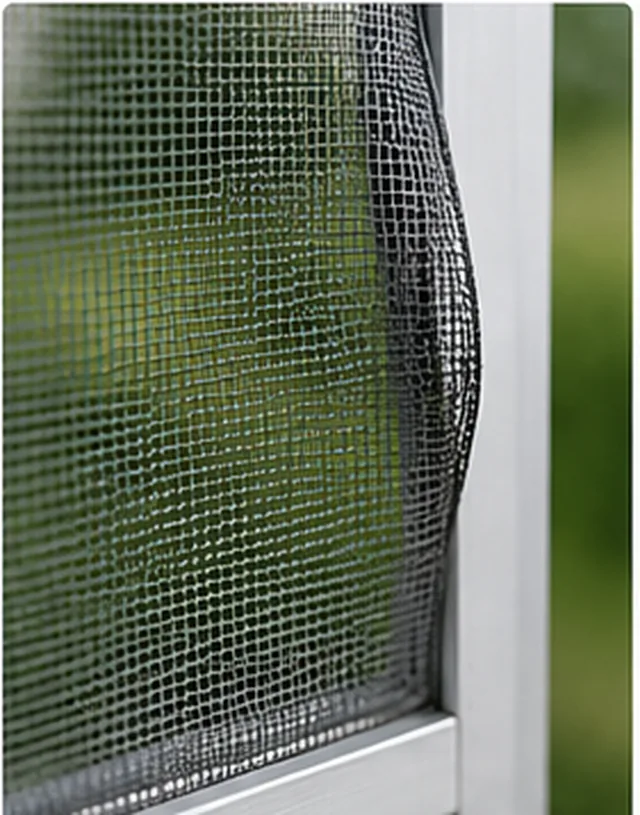 Mesh
Mesh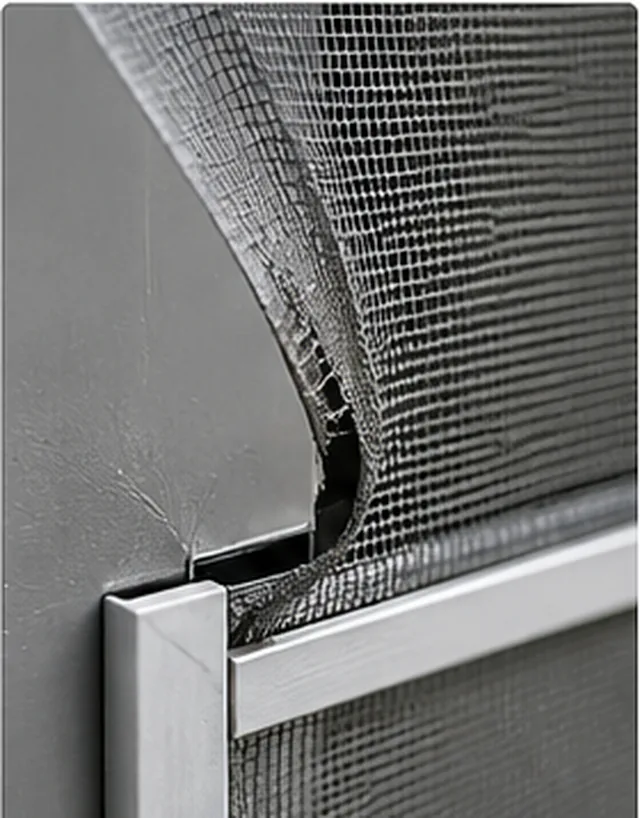 Mesh
Mesh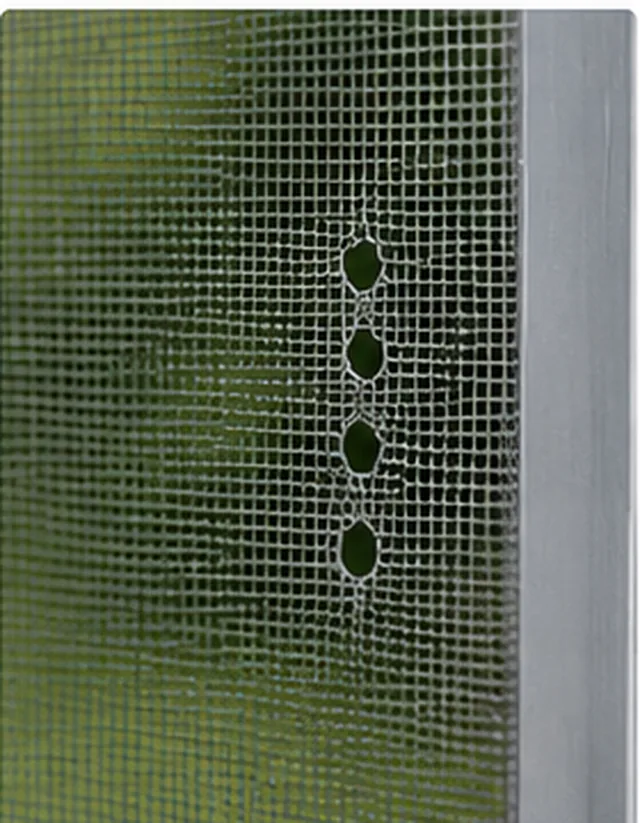 Mesh
Mesh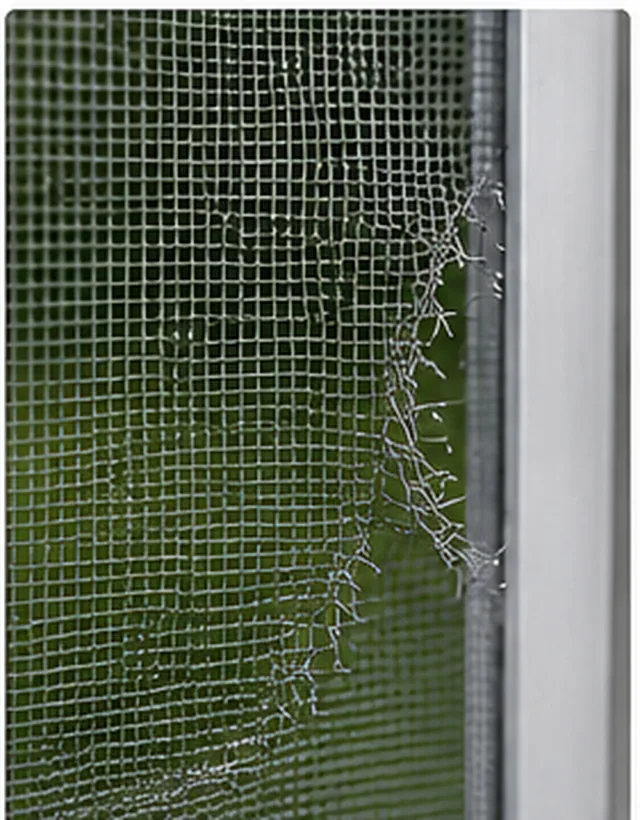 Mesh
Mesh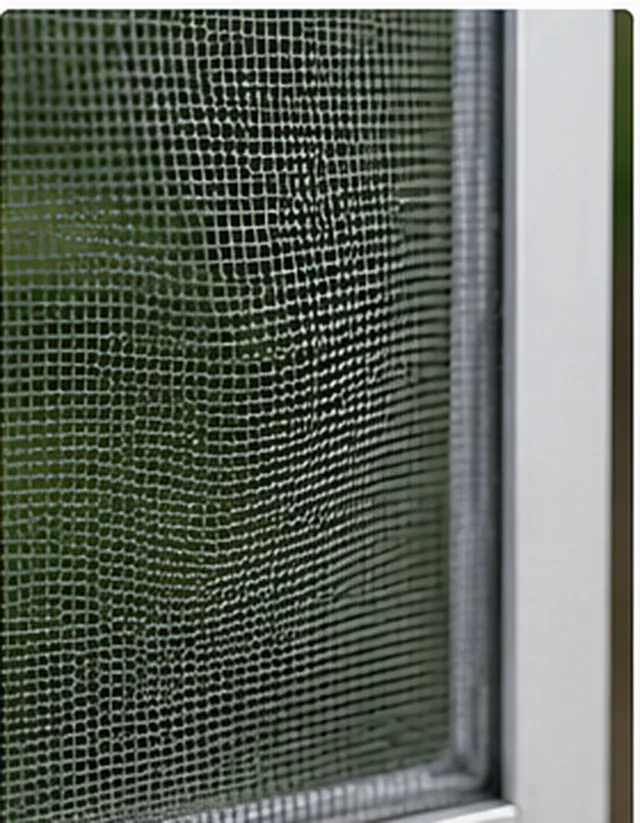 Mesh
Mesh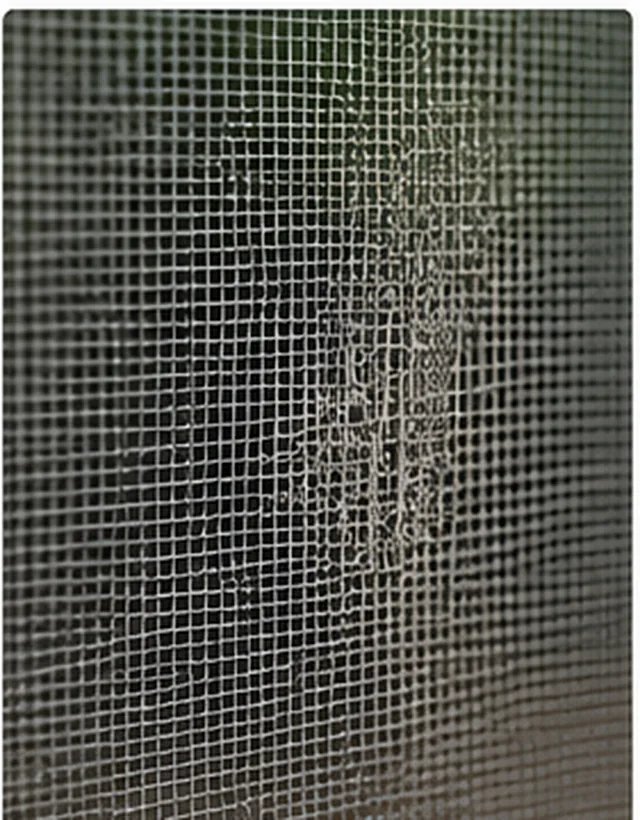 Mesh
Mesh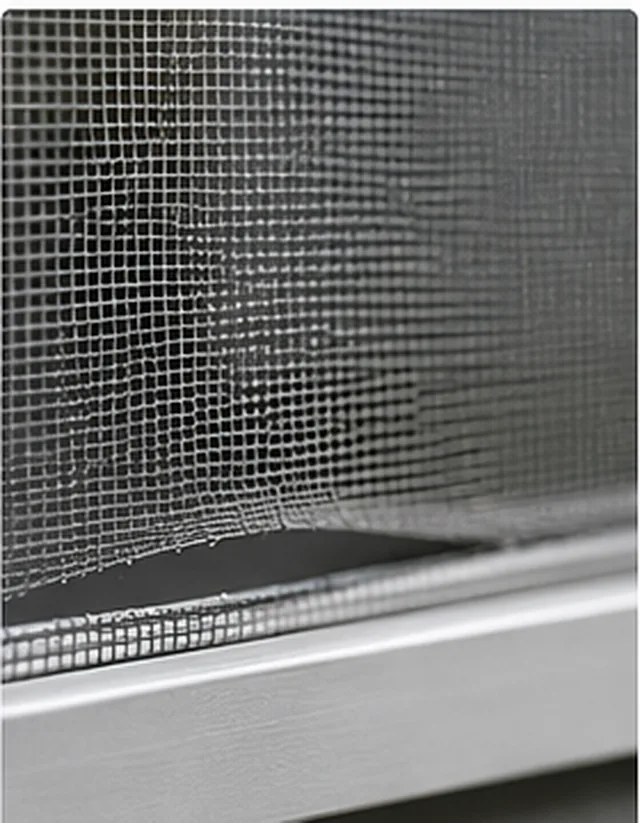 Frame
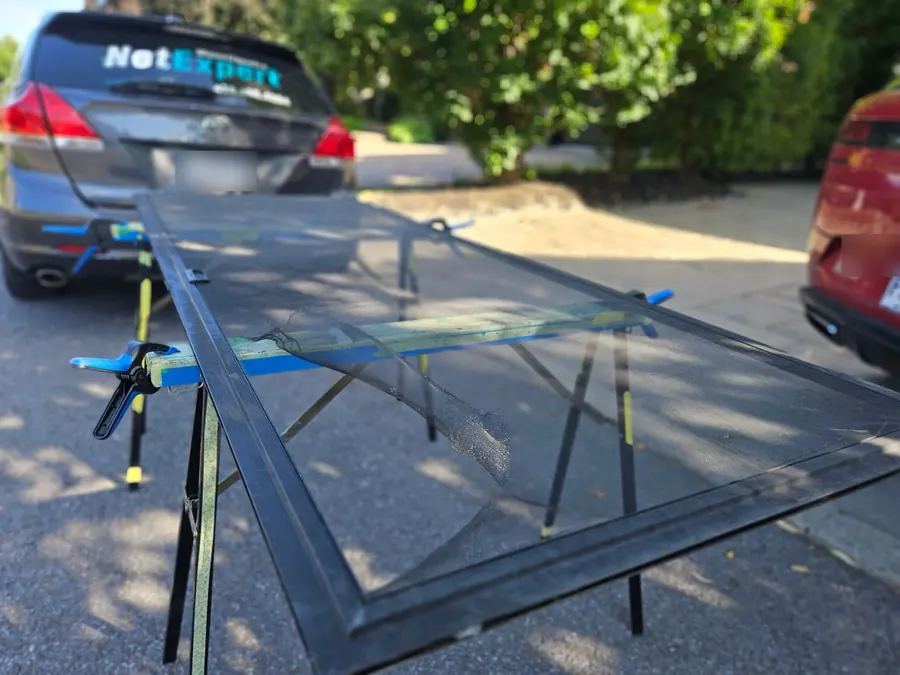
FrameThis job was not in Baie-D'Urfé — it shows our method, the same everywhere: door off its track, new rollers, new mesh, frame squared up.
 1
1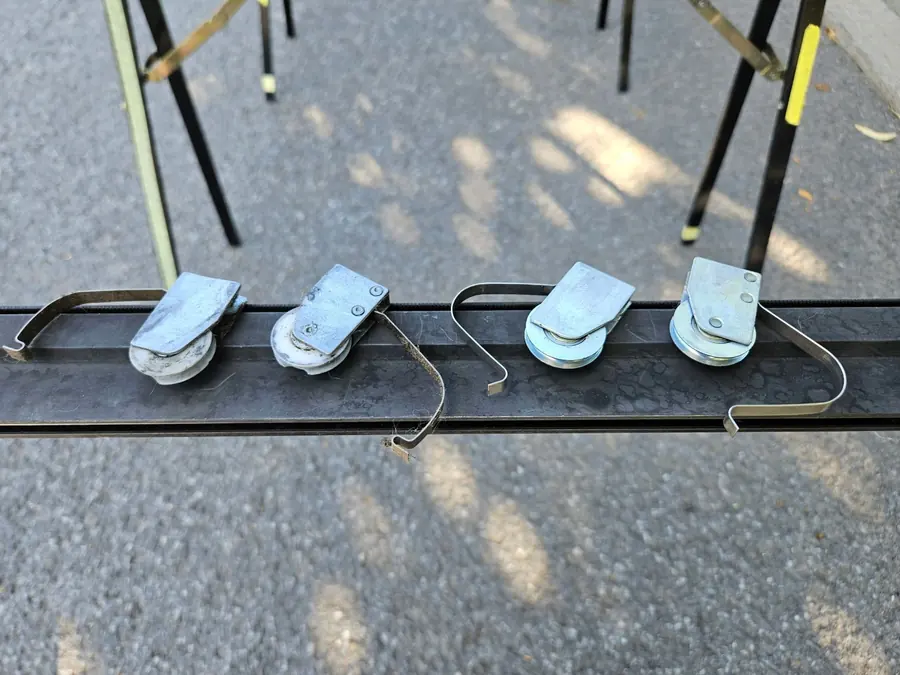 2
2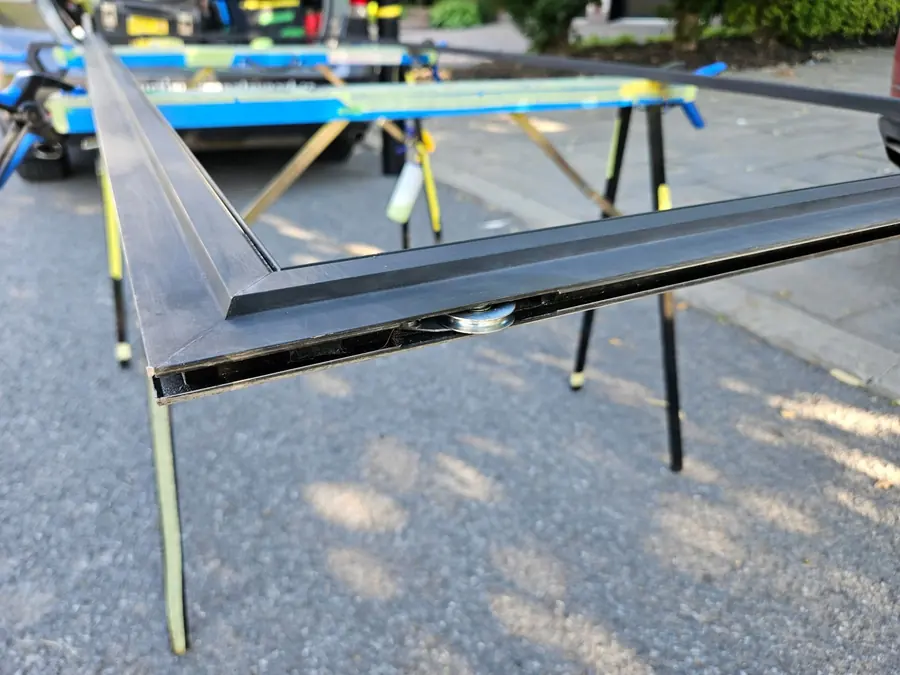 3
3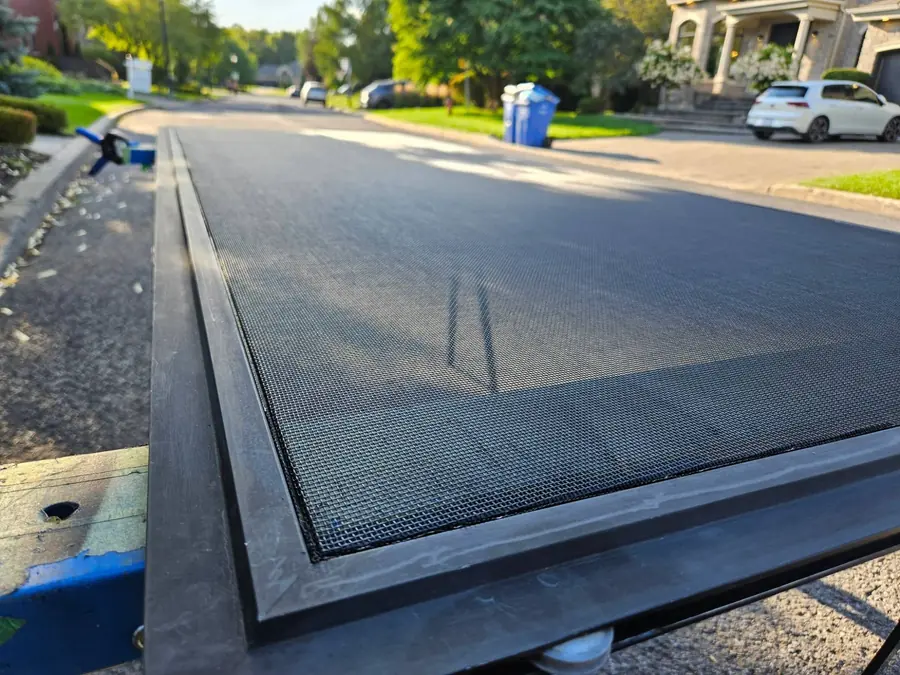 4
4« Ludovic replaced my screen in record time. Professional, and with a great sense of humour. I recommend his services — don’t hesitate to contact him, he’ll come to your home and do beautiful work. »
« Excellent service. Clear explanations of the work to be done. I really appreciated his dedication: despite the rain he insisted on finishing the job, soaked through and still smiling. The work was very well done. »
« Great service! He was at my neighbour’s and agreed to fix my back screen even though we had no appointment. Very successful repair, and inexpensive! »
Straight answers
Not necessarily: on a panel four feet wide, fibreglass always ends up slackening and the wind does the rest. The answer is aluminum mesh, which is stiffer, stretched in a frame that has been squared and stiffened at the corners. If the frame itself flexes in the middle when you press on it, the profile is too light for the span and needs replacing.
Almost always an adjustment problem, not a mesh problem. The rollers are not at the same height, the panel runs slightly askew and the leading edge touches the jamb at the top or the bottom, never along its full height, so the latch misses its keeper. We set both rollers level, check the weather brush on the jamb and line up the keeper.
No. The latch and handle replace independently of the frame; on a panel this wide, a latch that no longer holds also comes from a frame bowing at the centre, which pulls the leading edge away from its keeper. On original doors the mechanism may be unobtainable; we then fit a surface latch or a magnetic catch suited to the profile, without touching the mesh or the frame.
Yes, at your home. We remove the screen door, replace the mesh or rollers on site, clean and lubricate the track, then reinstall it — usually in a single visit to Baie-D'Urfé.
Almost always the rollers: they wear out before the mesh and push the door off its track. We replace them and clean the track in the same intervention — forcing a derailing door eventually bends the frame, a costlier repair.
Rollers and hardware: from $30. A complete custom-built screen door: from $500, depending on format. The mesh alone on a door is priced on quote, from its dimensions. An exact quote is free.
One year on fabrication and installation — mesh, fitted rollers, built frames. Damage caused afterwards, by a pet or an impact, is not covered; for a dog, pet-resistant mesh is the real answer.
Pet-resistant mesh: about seven times stronger than standard fibreglass. On a patio door used daily, it is the difference between replacing the mesh yearly and being done with it for seasons.
Do you manage a building or a business in Baie-D'Urfé?