
Summer UV
Sun yellows and clouds the vinyl. Film that crackles to the touch is at end of life.
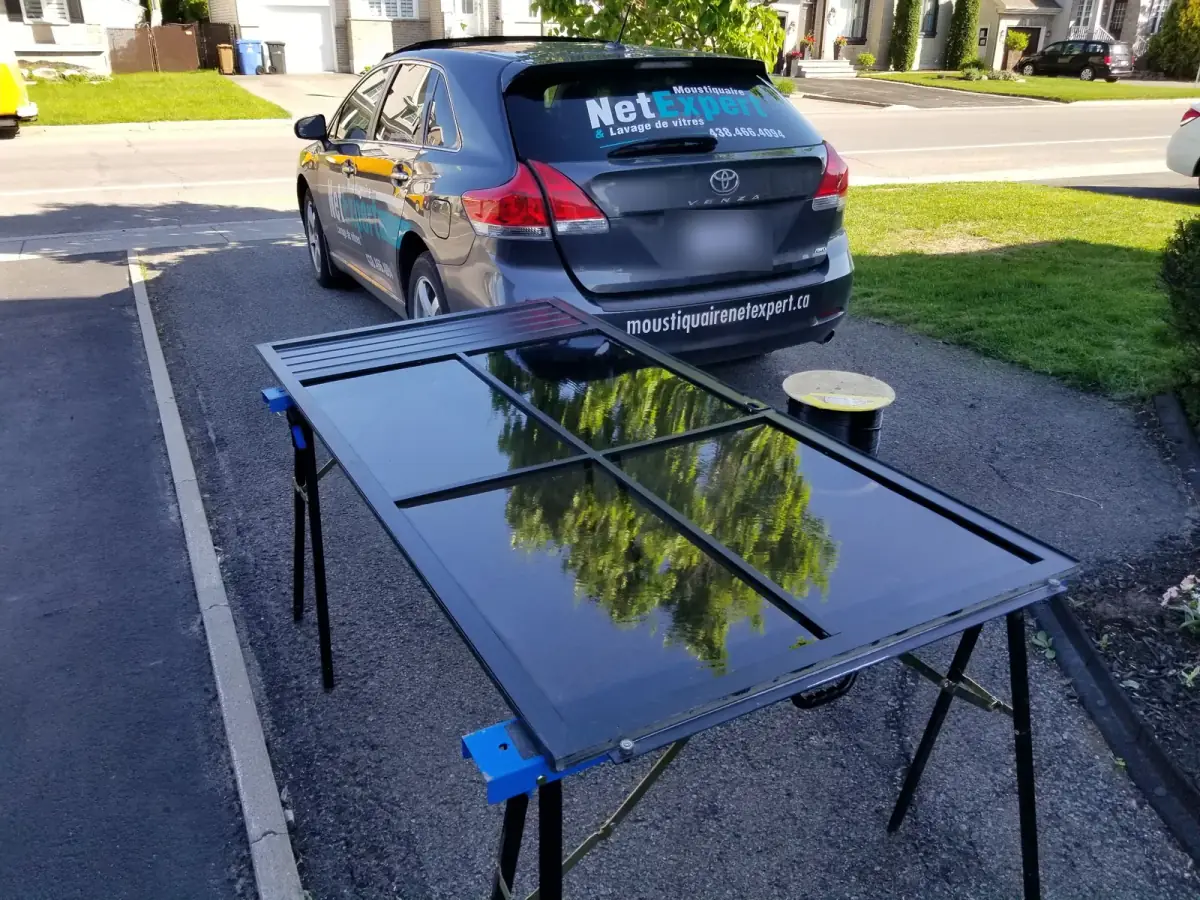
Gazebo and sun shelter specialty
Clear vinyl yellowed or torn? Replaced at your home in Mont-Royal, in the original frames — gazebos and sun shelters.
Three questions are enough to start. The official measurement is taken on site.
Whatever your retailer calls it — MICA film, clear vinyl, clear plastic, sun-shelter transparent fabric — it is the same material, and we replace it in Mont-Royal in your existing panels.
Sun yellows and clouds the vinyl. Film that crackles to the touch is at end of life.
Below freezing, MICA turns brittle — one handling or one gust splits it outright.
Slack vinyl flaps like a sail and eventually tears at the seams.
In a garden city laid out in 1912, the gazebo was never part of the plan. The English cottages and brick Tudor houses of the 1920s to 1950s were designed with a back garden, sometimes a stone terrace, but not with a screened shelter. When a gazebo is there today, it is generally a wood structure a homeowner added, drawn to match the house: painted posts, a pitched roof, screen panels in wood or aluminum frames with dimensions particular to that one shelter. These gazebos live under the big trees of a neighbourhood planted a century ago, which protects them from direct sun and, in exchange, keeps their screens damp long after the rain.
The recent high-end rebuilds change the scale. On a recent rebuild the backyard shelter changes scale: a permanent structure in wood or architectural aluminum, large-format screen panels, sometimes clear vinyl (MICA film) sections. It is those wide spans, not the style of the house, that decide the work. Those big panels demand exact screen tension: over a wide span, slightly loose fibreglass ripples and eventually works out of its spline. Being near the water adds humidity and chlorinated splash, neither of which is kind to wood frames or to film left in place year-round.
On an older wood gazebo in Mont-Royal, what gives first is rarely the mesh across its face: it’s the corner, where the frame has moved with the humidity and the spline is no longer tight. The panel comes off, the frame is squared up, and the screen is re-tensioned in it — keeping the original frame’s dimensions, because nothing standard would replace it. On the recent structures beside a pool, the clear vinyl is the fragile part: left up through summer it yellows and stiffens; taken down and stored folded, it cracks at the crease. Each section is cut from its own measurement: on a structure drawn to match the house, no two of the large frames are twins. The large screens are rescreened with mesh stiff enough to stay taut across the full width.
Access is through the garden, and a Mont-Royal garden is planted: flower beds, clipped hedges, stone paths. Getting a large panel out of a wood structure without damaging the shrubs means preparing the route, and the mobile workshop stays in the driveway. On a custom gazebo, the panels are not interchangeable: each one is tagged as it comes off so it goes back exactly where it belongs, otherwise a frame made for the west opening won’t fit the east one. On a recent permanent structure, the panels are often screwed rather than clipped, and they come off by hand, with nothing forced in expensive millwork.
The garden city’s tree cover spares the film from yellowing, but it packs the frame channels with leaves, and the water they hold attacks a wood frame at its bottom rail — the exact opposite wear to an open yard. Wind is slowed by hedges and houses, which lets fibreglass do for most panels. Around a pool or spa, the constant humidity argues for taking the film down in spring rather than leaving it up all year. Beside a spa it is chlorinated splash, more than wear, that goes after the bottom frames first: rinsing them with clean water at season’s end does as much for the mesh as for the frame.
Prefer English? We serve you in whichever language you choose, in Mont-Royal as everywhere else.
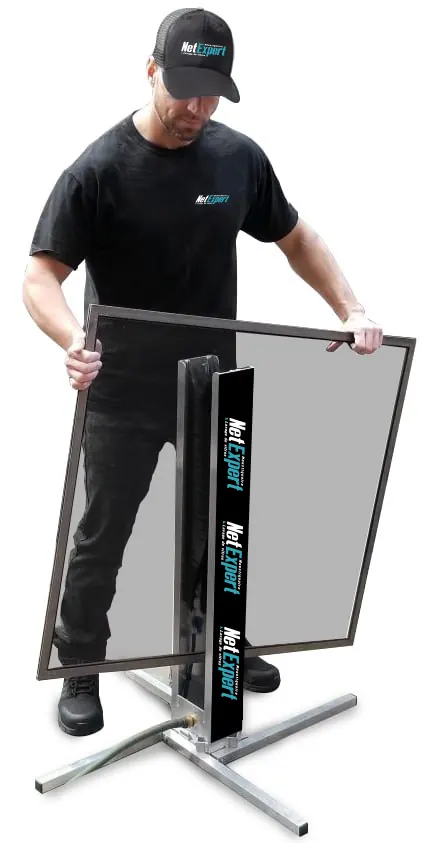
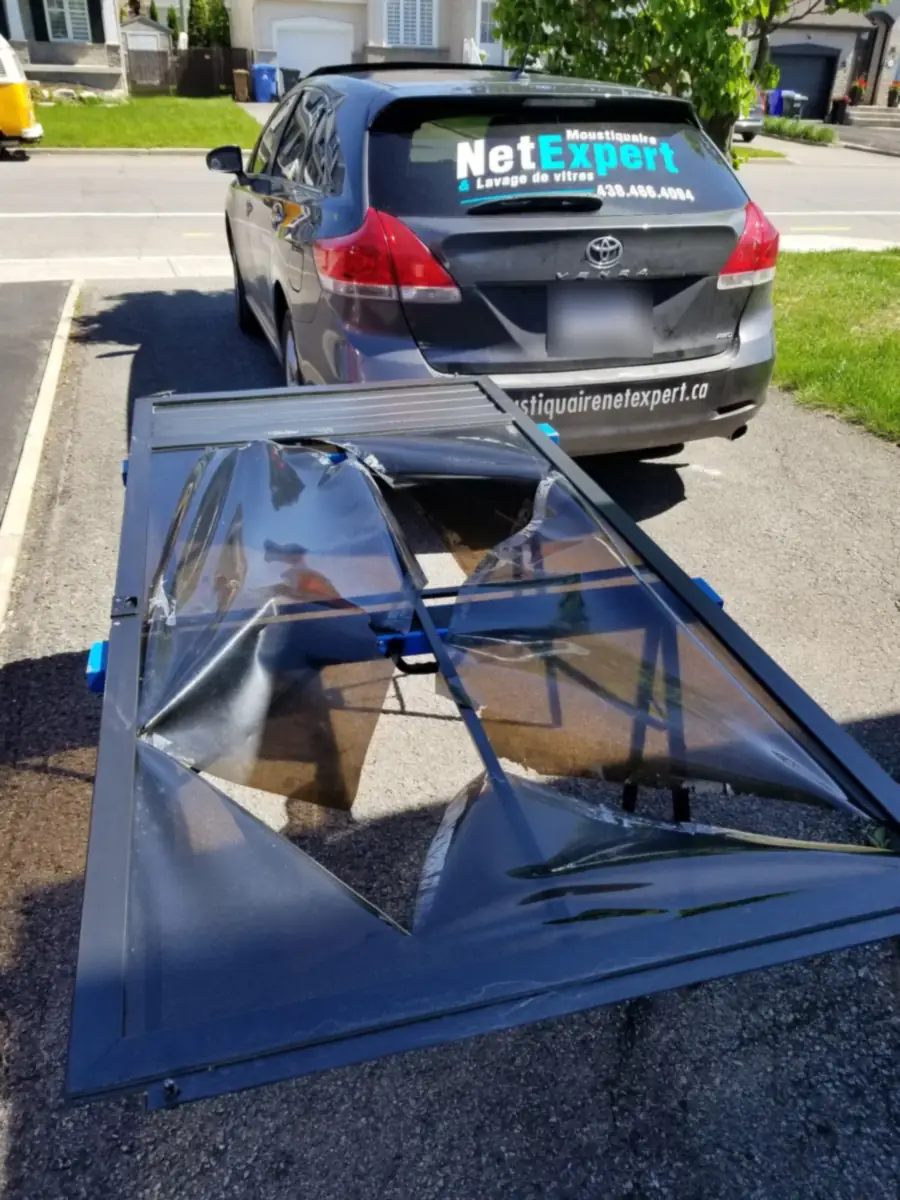
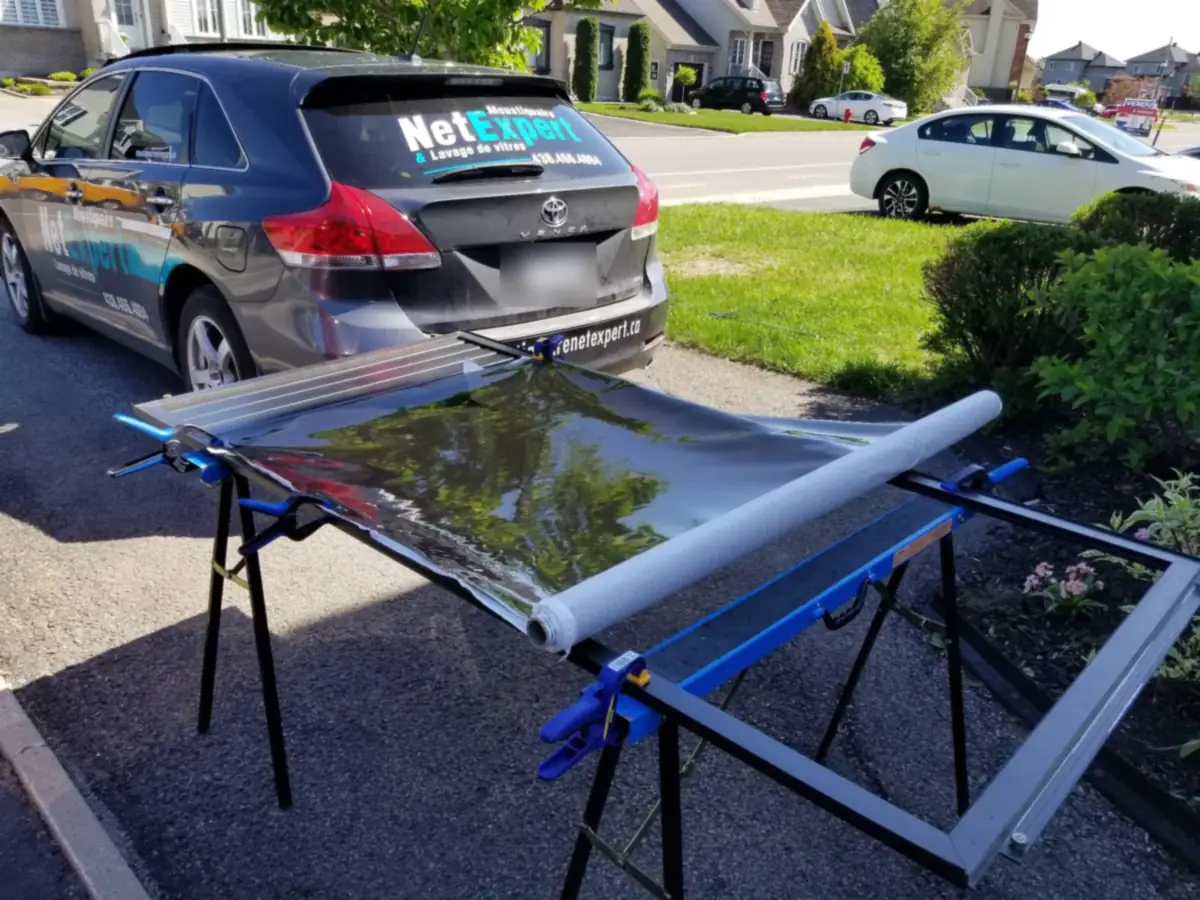
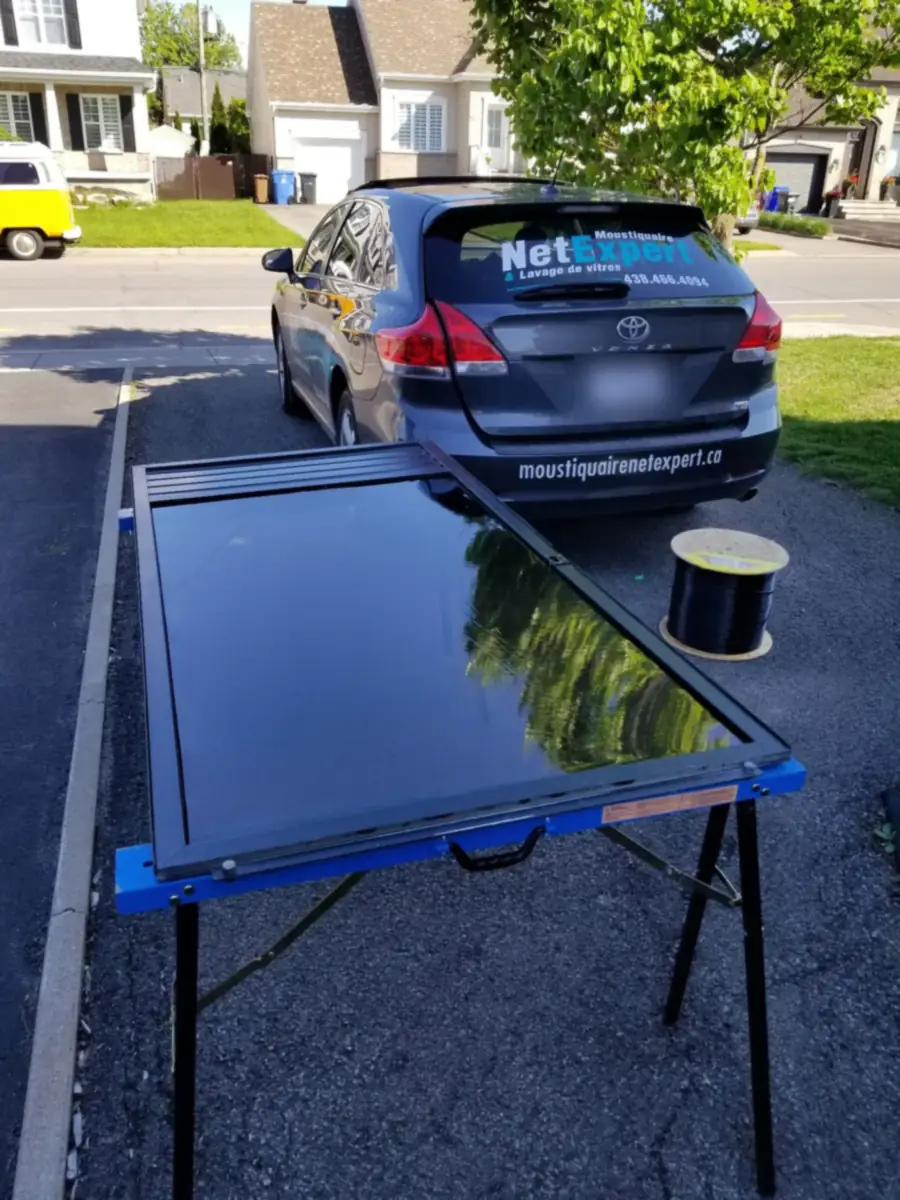
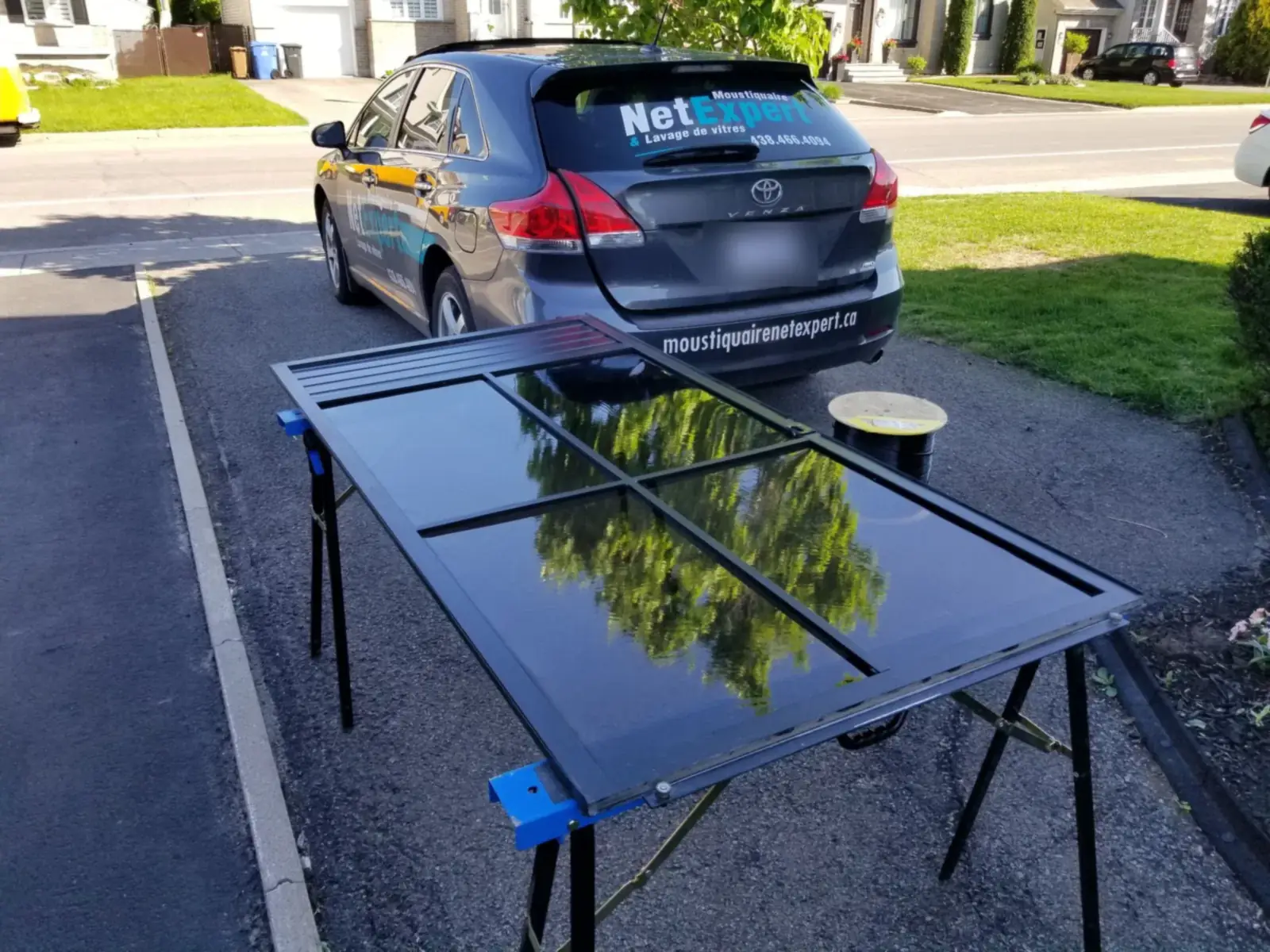
This job was not in Mont-Royal — it shows our method, the same everywhere: panels down, new vinyl pane by pane, panels back up.
« Great service! He was at my neighbour’s and agreed to fix my back screen even though we had no appointment. Very successful repair, and inexpensive! »
« Ludovic replaced my screen in record time. Professional, and with a great sense of humour. I recommend his services — don’t hesitate to contact him, he’ll come to your home and do beautiful work. »
« Excellent service. Clear explanations of the work to be done. I really appreciated his dedication: despite the rain he insisted on finishing the job, soaked through and still smiling. The work was very well done. »
Straight answers
Yes, as long as the frames are sound or salvageable. A wood frame that has opened at the corners is re-glued and squared before it takes new mesh; a warped aluminum frame is straightened. Each panel keeps its original dimensions, which is essential on a custom structure: no retail size would fit. The framing itself is never touched.
That is the best way to make it last. Left up through summer, a film takes the midday sun and the spa’s steam, and it yellows from one season to the next. Taken down and stored flat, never folded tight, it stays supple. A film that has already gone cloudy will not clear up again: a new one is cut from that section’s measurement, and the gazebo frame stays assembled.
For the mesh itself, not much. The problem is what the leaves hold: water, which sits in the frame channels and works the wood or corrodes the aluminum at the corner, right where the spline is seated. Clearing the channels in fall and checking the corners in spring keeps a panel from slackening from the bottom. A screen that gapes at a corner gets re-tensioned before it tears.
Yes, at your home. We travel to Mont-Royal, remove the panels, replace the MICA vinyl in the original frames and put everything back — the gazebo structure is never touched. It is one of our specialties.
Yes. Depending on the retailer it is called MICA film, clear vinyl, clear plastic or transparent fabric — the same flexible material that cuts wind and holds warmth. We replace it on gazebos and sun shelters alike.
Yes. The vinyl is replaced pane by pane, in the existing frame — no need to redo the whole panel for one tear. If several panes have yellowed, doing them together gives a uniform result.
On assessment: the price depends on the number of panels and their dimensions. The quote is free, and a photo is often enough to price without a visit. Fabrication and installation guaranteed one year.
Do you manage a building or a business in Mont-Royal?