
Summer UV
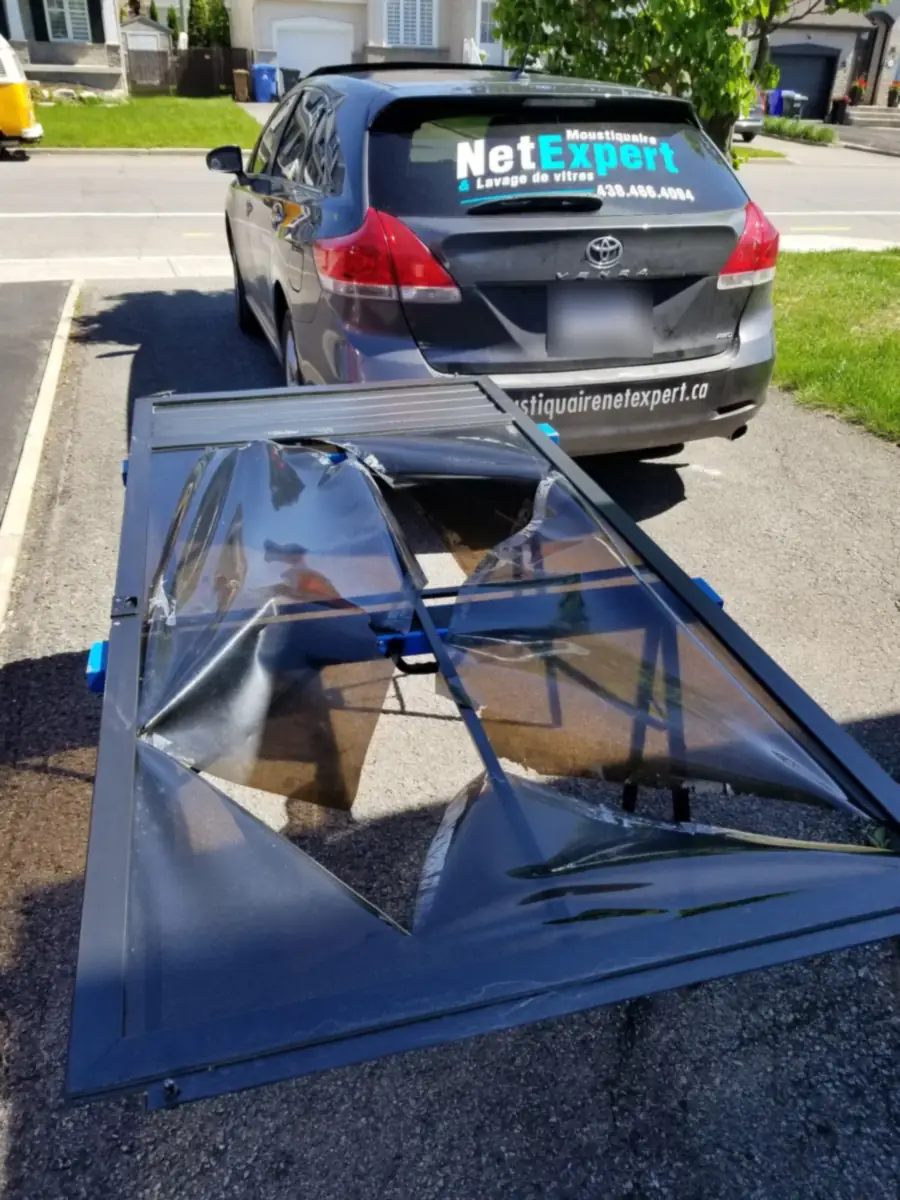
Sun yellows and clouds the vinyl. Film that crackles to the touch is at end of life.
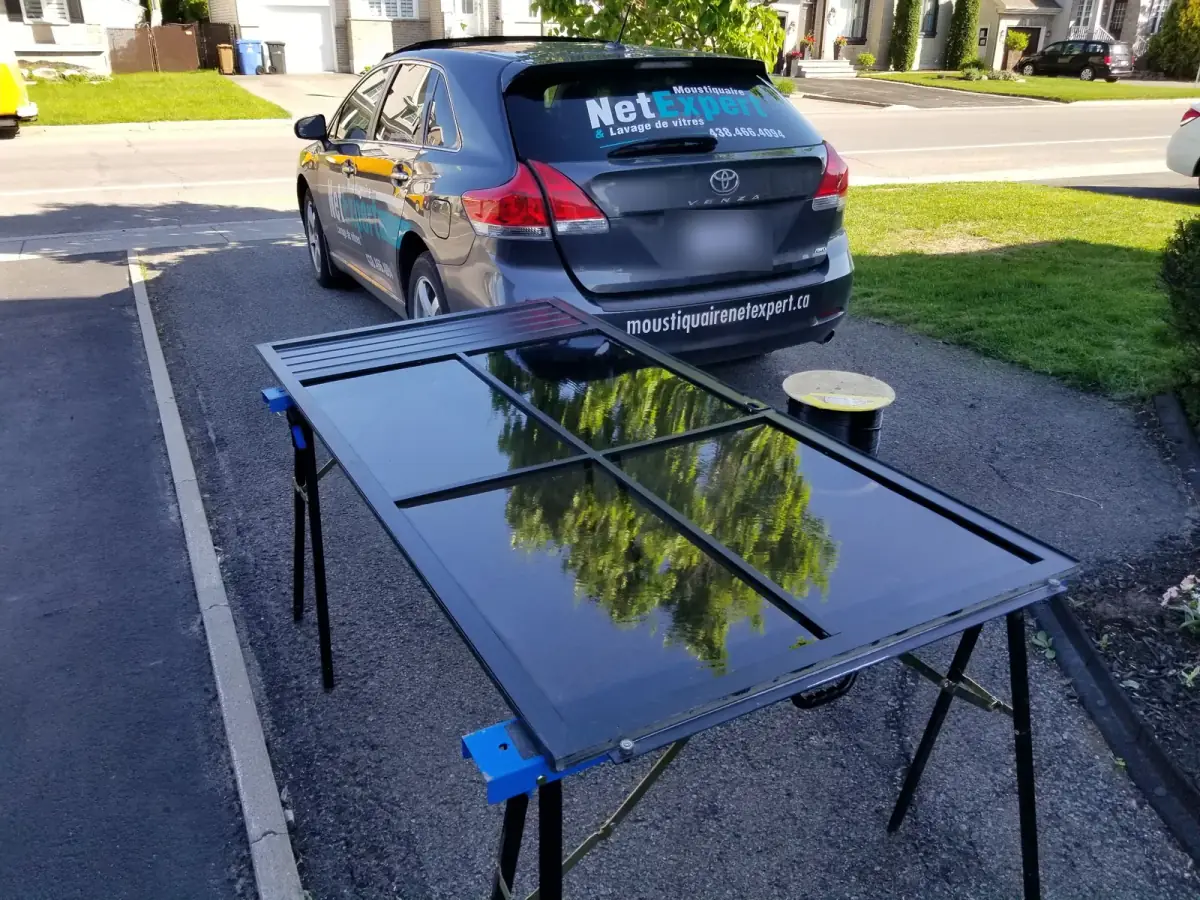
Gazebo and sun shelter specialty
Clear vinyl yellowed or torn? Replaced at your home in Rosemont–La Petite-Patrie, in the original frames — gazebos and sun shelters.
Three questions are enough to start. The official measurement is taken on site.
Whatever your retailer calls it — MICA film, clear vinyl, clear plastic, sun-shelter transparent fabric — it is the same material, and we replace it in Rosemont–La Petite-Patrie in your existing panels.
Sun yellows and clouds the vinyl. Film that crackles to the touch is at end of life.
Below freezing, MICA turns brittle — one handling or one gust splits it outright.
Slack vinyl flaps like a sail and eventually tears at the seams.
In Rosemont–La Petite-Patrie, the gazebo has no yard of its own. The brick duplexes and triplexes built from 1910 to 1950 leave a short strip of ground out back, shared between parking, the ground-floor balcony and the foot of the exterior staircase; when a gazebo is there, it is a small retail model chosen to fit whatever space is left. Higher up, the upper-floor balconies and above all the terraces laid out on flat roofs host the neighbourhood’s other kind of gazebo: a pergola or a light gazebo set on a deck that was never designed for it. The panels are standard sizes, but their route is not: they went up the staircase and they come down the same way.
What changes with height is exposure. A gazebo at ground level, wedged between three brick walls, only feels wind from above and sees sun a few hours a day; its clear vinyl (MICA film) ages slowly but dries poorly. The same gazebo on a rooftop deck gets everything: sun from morning to evening, wind with nothing left to slow it, frost head-on. The vinyl yellows fast and splits in the first badly prepared winter; the fibreglass in the panels turns brittle within a few seasons. That is why two identical gazebos, bought at the same store, do not need the same work depending on whether they sit in the yard or on the roof of the same building.
On these retail gazebos, panels are held by a spline in a thin aluminum frame. What lets go first depends on the floor. At ground level, it is the spline on the lower panels, pushed out by people brushing past in a tight space; the vinyl lasts but stains. On a roof, the vinyl fails first — yellowed, stiffened, split along a zipper by a gust — then the fibreglass on the south side. We rescreen the mesh in the existing frame with a new spline, replace the vinyl, cut to the true size of each opening, and lock it into the frame instead of letting it hang as a curtain. On a roof, aluminum mesh holds tension where fibreglass eventually gapes.
A retail gazebo’s structure is light and comes apart panel by panel, which is fortunate: here, everything goes through a staircase. For a rooftop gazebo, each panel comes down the interior stairs or the exterior spiral staircase, and a six-foot aluminum panel does not turn in a narrow stairwell without being tilted — one at a time, two hands, never in a hurry. At ground level, the yard is reached through the ground-floor unit or along a side passage when there is one. Either way, geometry decides: a six-foot panel has to turn in the stairwell, and it is that clearance — not simply an open door — that settles whether the panels come down the interior stairs or the ones off the yard. The structure stays put.
Two climates in the same building. The backyard is sheltered: little wind, little sun, damp that lingers — vinyl lasts several seasons there but is better taken down in spring so it does not mark. The rooftop deck is an exposed plateau: direct sun that yellows vinyl and weakens fibreglass, wind that beats anything with slack in it, frost that cracks a stiffened film. For a rooftop gazebo’s panels, aluminum mesh is the durable choice, and the vinyl goes on taut, before the first frosts, and comes off as soon as the season for eating outside returns. For a cat that goes out on the deck, pet-resistant mesh on the lower panels saves doing it twice.
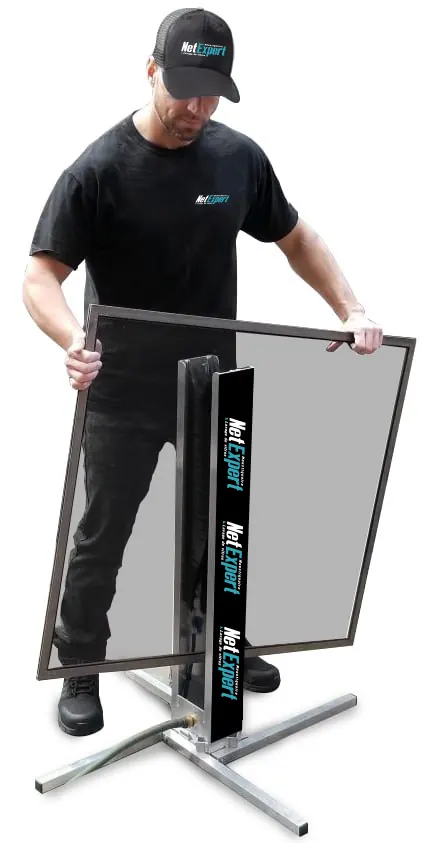
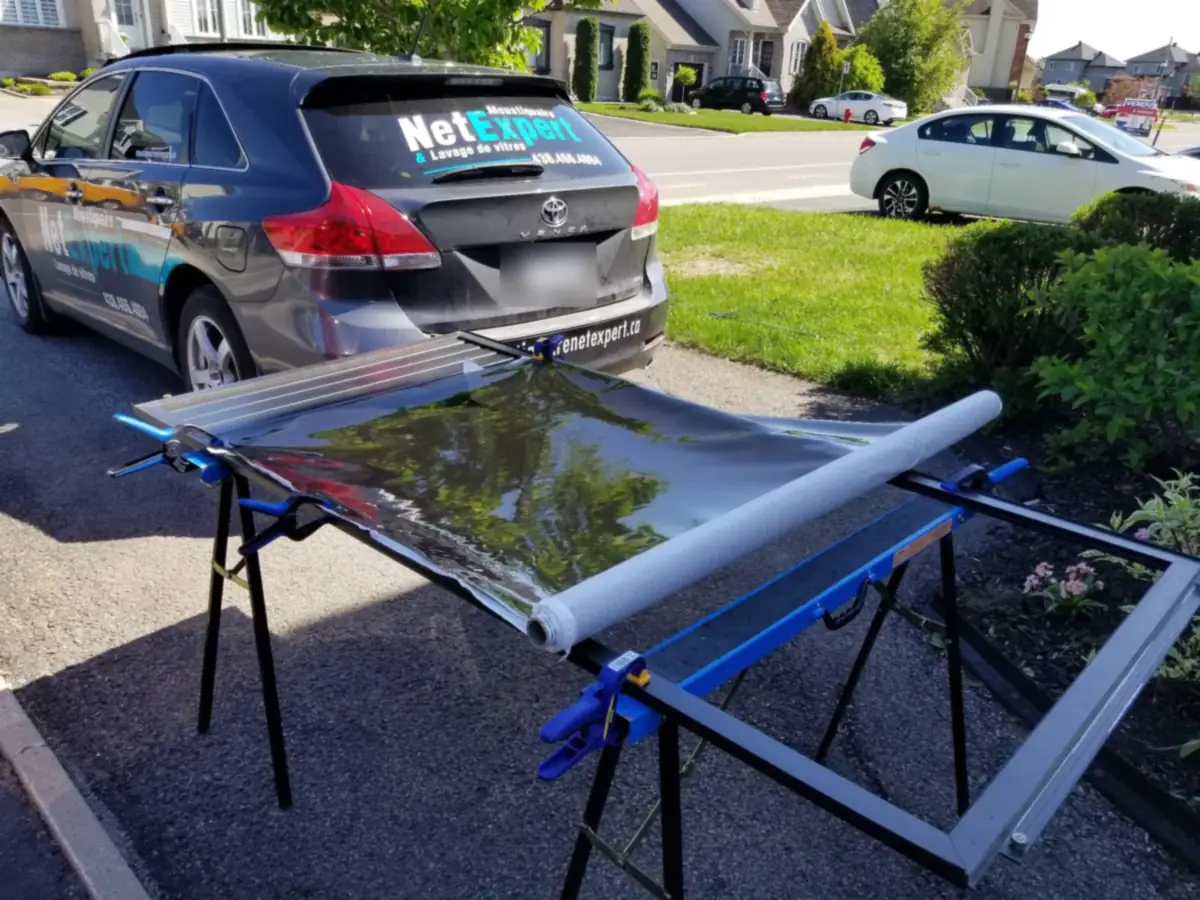
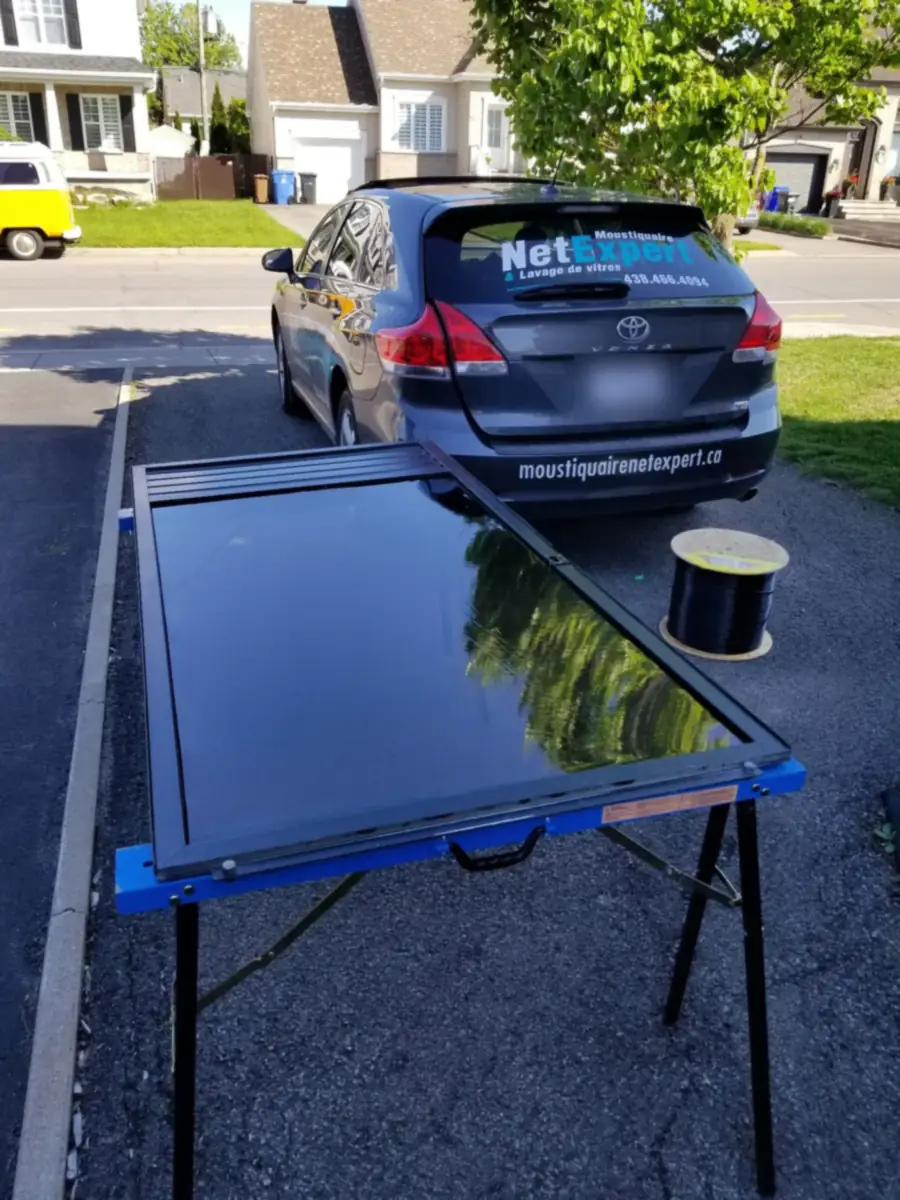
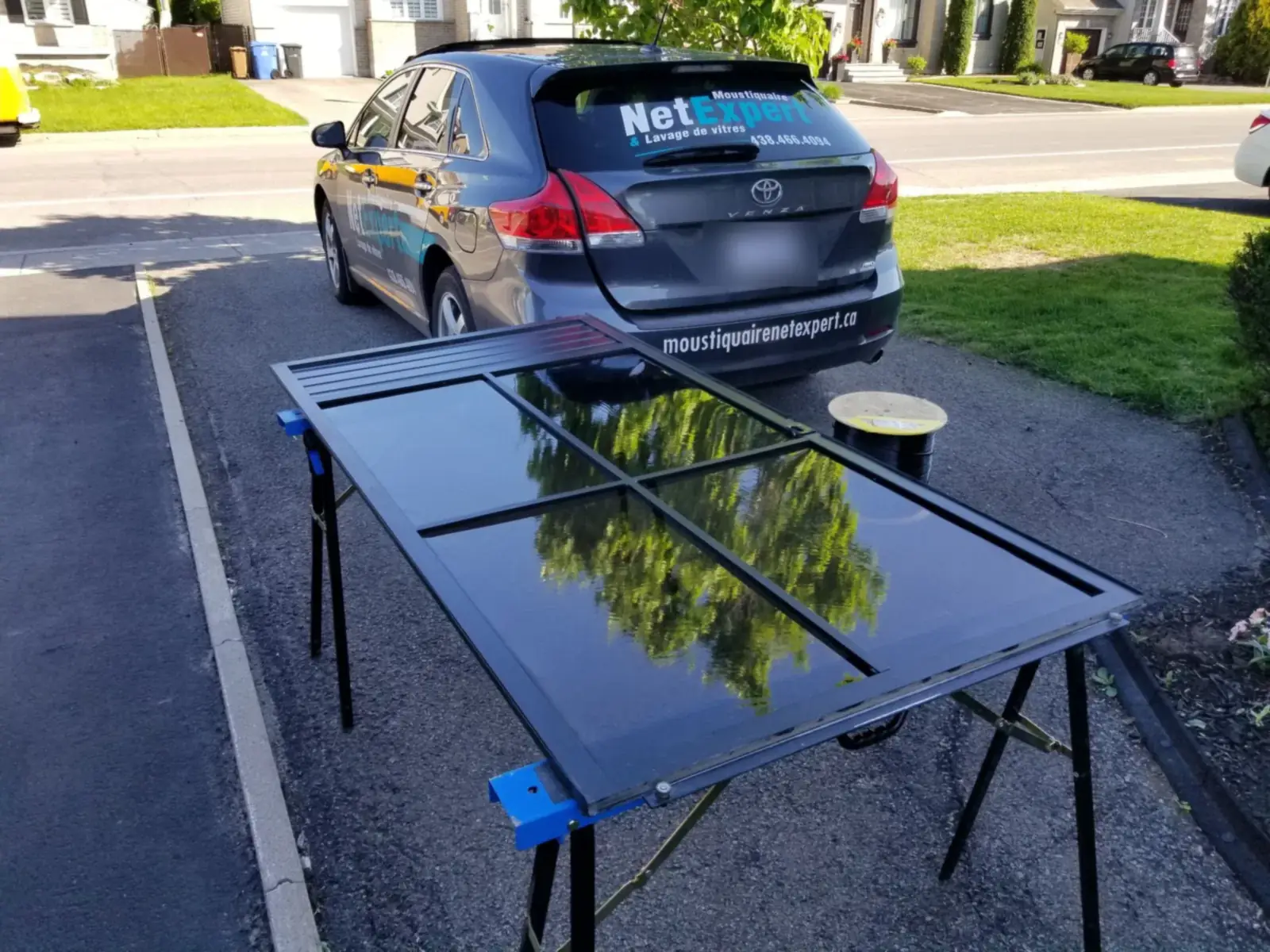
This job was not in Rosemont–La Petite-Patrie — it shows our method, the same everywhere: panels down, new vinyl pane by pane, panels back up.
« Ludovic replaced my screen in record time. Professional, and with a great sense of humour. I recommend his services — don’t hesitate to contact him, he’ll come to your home and do beautiful work. »
« Excellent service. Clear explanations of the work to be done. I really appreciated his dedication: despite the rain he insisted on finishing the job, soaked through and still smiling. The work was very well done. »
« Great service! He was at my neighbour’s and agreed to fix my back screen even though we had no appointment. Very successful repair, and inexpensive! »
Straight answers
Yes, one at a time and tilted. A retail gazebo panel is narrow and light; it comes off the structure and goes down the stairs by hand, then back up the same way once redone. We prefer the interior staircase when there is one, to avoid manoeuvring over the drop. Access to the unit has to be open on the day, which we settle when booking.
Because your gazebo is exposed and theirs is not. Between three walls the film barely flaps and sees sun only a few hours; on a roof it takes wind, sun and frost with nothing to shield it. The answer is vinyl cut to the pane and locked into the frame, plus aluminum mesh on the most exposed panels.
Traffic does that: in a tight space, people brush the lower panels on every trip, and a spline that is too thin or a groove full of grit will not hold. We clean the groove, fit a spline of the right diameter and retension the mesh; if a pet or children lean on those panels, pet-resistant mesh there settles it for good.
Yes, at your home. We travel to Rosemont–La Petite-Patrie, remove the panels, replace the MICA vinyl in the original frames and put everything back — the gazebo structure is never touched. It is one of our specialties.
Yes. Depending on the retailer it is called MICA film, clear vinyl, clear plastic or transparent fabric — the same flexible material that cuts wind and holds warmth. We replace it on gazebos and sun shelters alike.
Yes. The vinyl is replaced pane by pane, in the existing frame — no need to redo the whole panel for one tear. If several panes have yellowed, doing them together gives a uniform result.
On assessment: the price depends on the number of panels and their dimensions. The quote is free, and a photo is often enough to price without a visit. Fabrication and installation guaranteed one year.
Do you manage a building or a business in Rosemont–La Petite-Patrie?