
Summer UV
Sun yellows and clouds the vinyl. Film that crackles to the touch is at end of life.
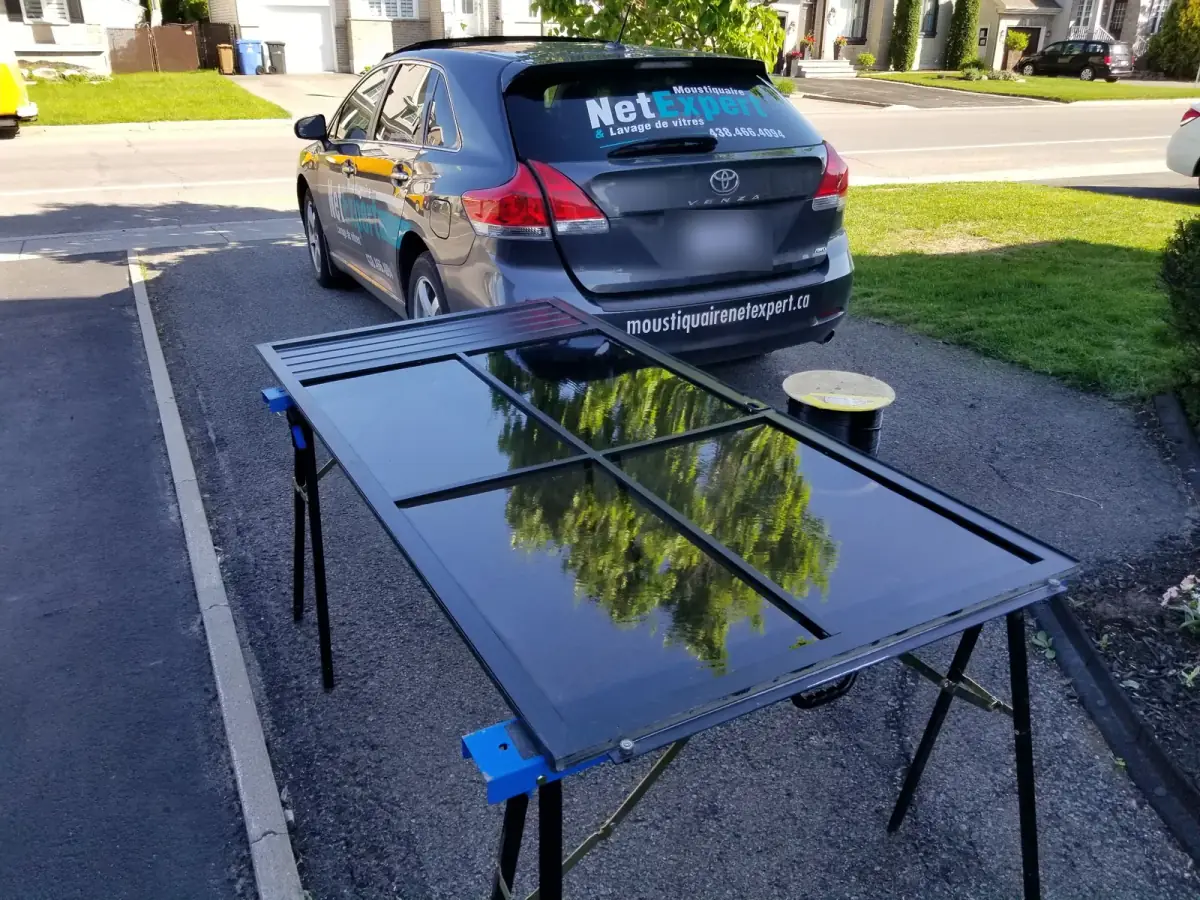
Gazebo and sun shelter specialty
Clear vinyl yellowed or torn? Replaced at your home in Montréal-Nord, in the original frames — gazebos and sun shelters.
Three questions are enough to start. The official measurement is taken on site.
Whatever your retailer calls it — MICA film, clear vinyl, clear plastic, sun-shelter transparent fabric — it is the same material, and we replace it in Montréal-Nord in your existing panels.
Sun yellows and clouds the vinyl. Film that crackles to the touch is at end of life.
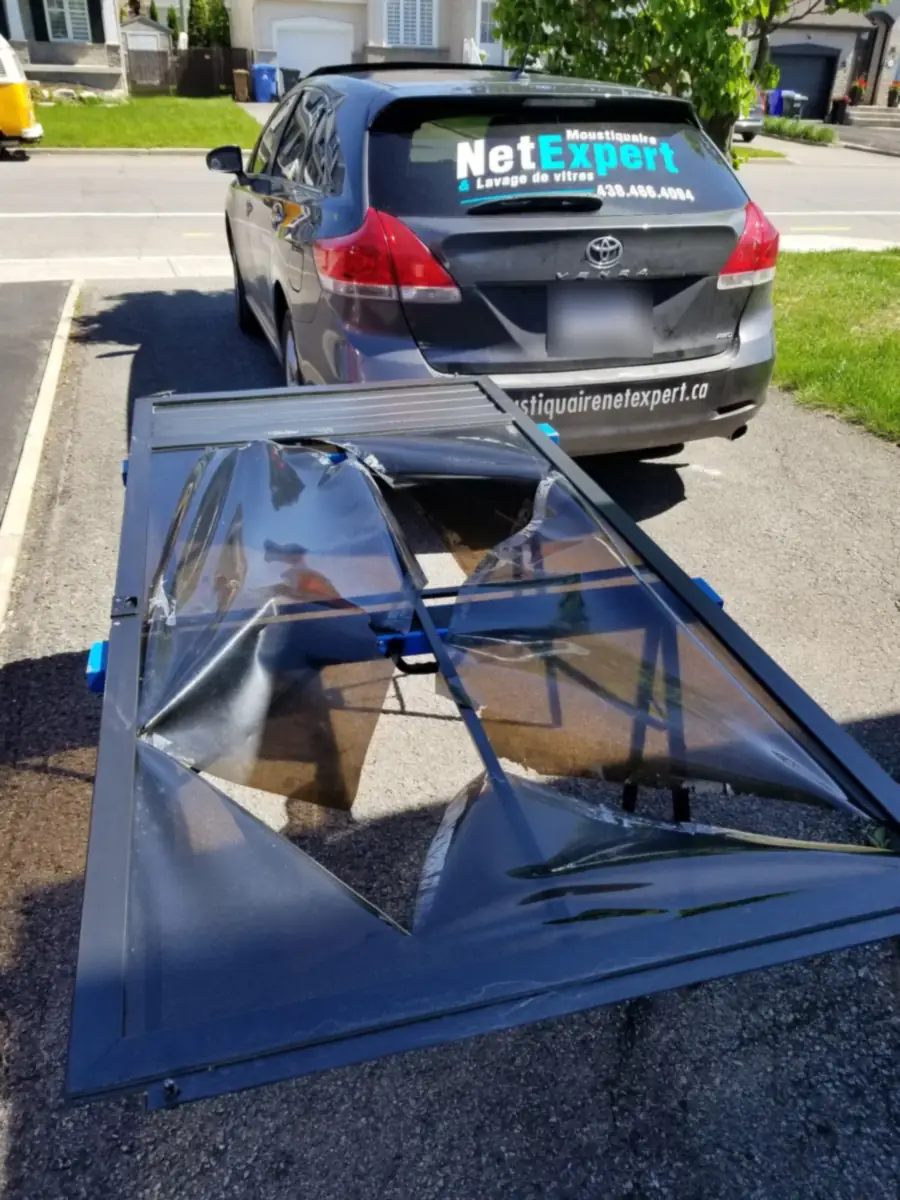
Below freezing, MICA turns brittle — one handling or one gust splits it outright.
Slack vinyl flaps like a sail and eventually tears at the seams.
Montréal-Nord was built tight, between 1950 and 1970, in brick duplexes, triplexes and small apartment buildings. The backyards that came with them are small, often shared between units and hemmed in by the neighbours’ balconies, and the gazebo that goes in is nearly always the retailer’s: a boxed steel or aluminum frame in a compact format, set up on the slab or gravel at the back of the yard. It matters because outdoor space is scarce, and its panels work hard: in a yard a few metres across a panel is also a partition people squeeze past, and the sun thrown back off the neighbouring brick finishes the job. A gazebo in a dense yard ages fast, but it ages in the places we know how to repair.
The borough’s other outdoor space is the balcony, and a balcony on a 1950s–1970s apartment building doesn’t take a gazebo. What you find there instead are screen panels installed to close off the end of a balcony or a small deck over a garage — standard aluminum frames or frames cut to measure — and sometimes a clear vinyl (MICA film) so the corner stays usable at the first cold snap. These setups are the same trade as the gazebo: mesh in a frame, film in a section. In a district where several units stack on top of one another, the wear repeats floor by floor, and a triplex owner can end up with the panels of three balconies to redo in the same year.
On a retail gazebo wedged into a Montréal-Nord yard, the original clear vinyl is thin and, when it wasn’t taken down in spring, it baked in the sun all summer: yellowed and stiff, it splits at the first cold wind or the first attempt to roll it up. Each section is cut from its own measurement and the gazebo stays assembled: in a back-of-lot yard there is no room to take it apart anyway. The screens suffer from something else: proximity. In a narrow yard a panel is as much a partition as a screen: mesh that gets brushed and pushed tears at a corner, goes slack, and the spline works its way out of the groove. The panel comes off, gets rescreened in its frame at the mobile workshop, goes back on. On the low panels that take all the abuse, pet-resistant or aluminum mesh holds up better than the original fibreglass.
Getting into a Montréal-Nord yard means the gap between two buildings or the lane, where there is one, and parking the mobile workshop is negotiated with the street. The panels of a retail gazebo are light and come off at the foot of the structure, but the yard is often too small to work in: they go out one at a time to the vehicle and come back into place. When the panels belong to an upper-floor balcony, they come down the exterior staircase. In an apartment building the occupants need warning: a balcony panel is removed from the balcony, and therefore from inside the unit.
The brick of neighbouring façades and the lack of trees in many dense yards make a Montréal-Nord backyard a hot, sunny place, where clear vinyl yellows quickly if it stays up through summer: better to put it up at the first cold and take it down in spring. Wind, cut off by the surrounding buildings, is not what wears a shelter out here: contact is. A heavier mesh on the bottom frames alone settles most of it, and fibreglass stays fine higher up, out of reach. Balcony and backyard evenings are mosquito hour, and a tear in one corner is enough to make the shelter useless.
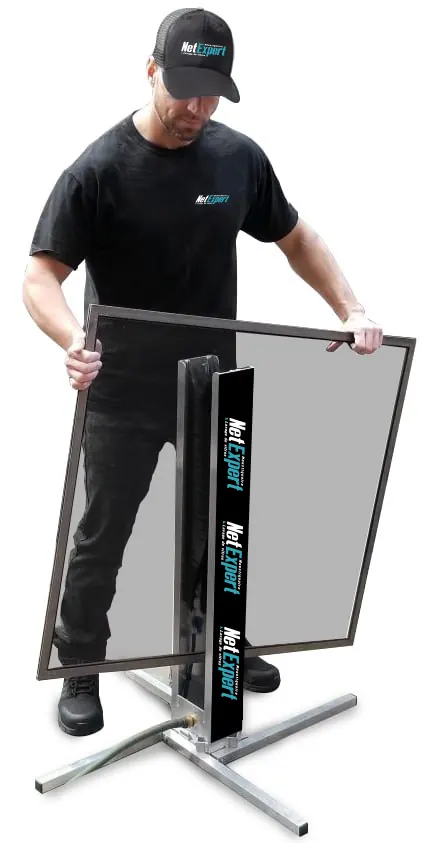
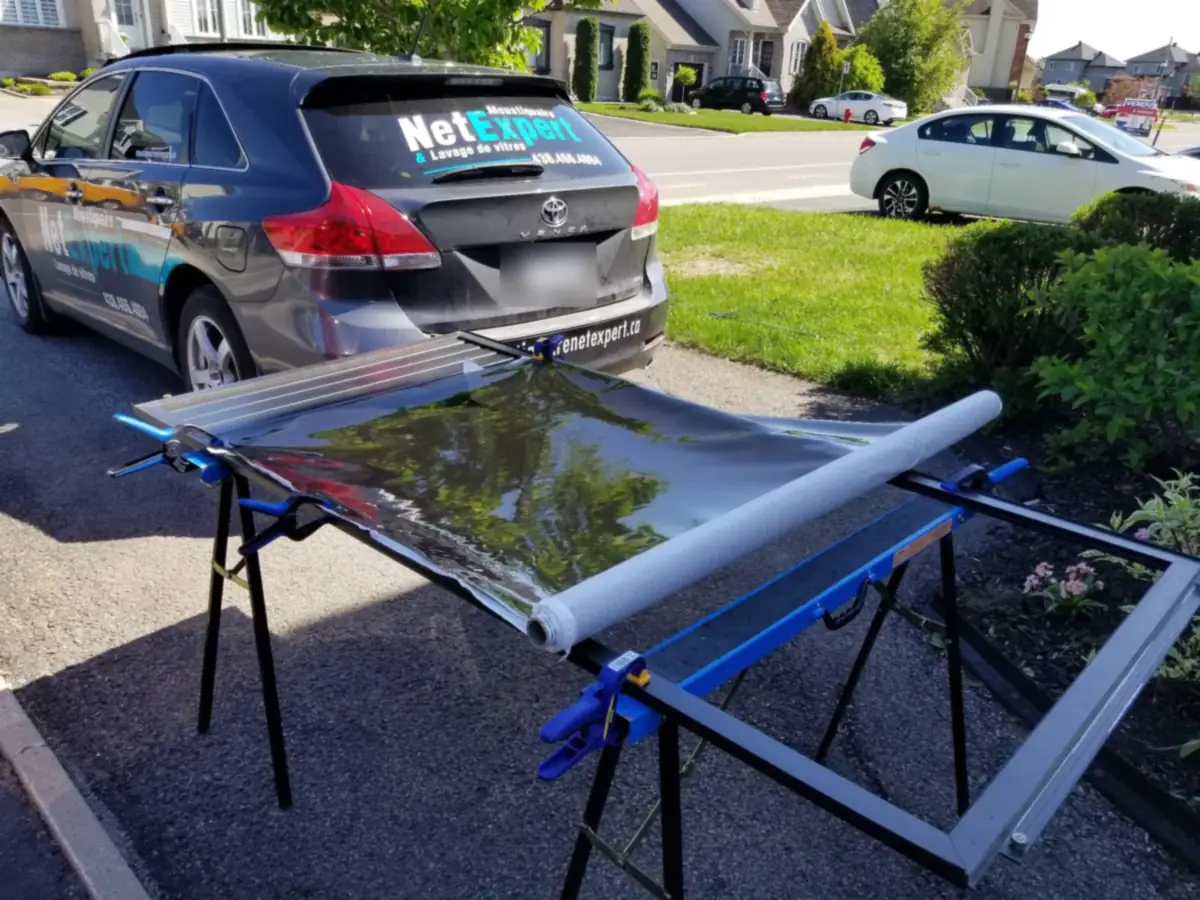
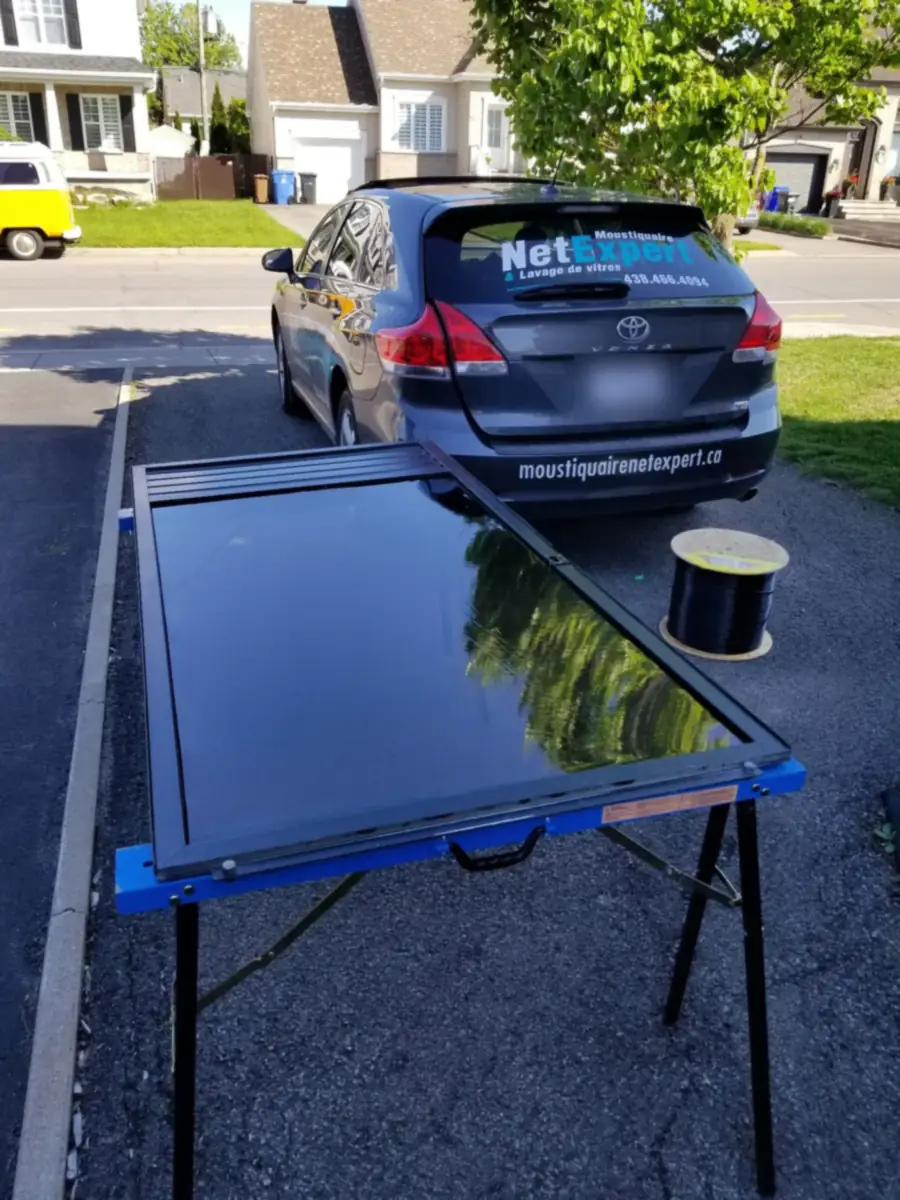
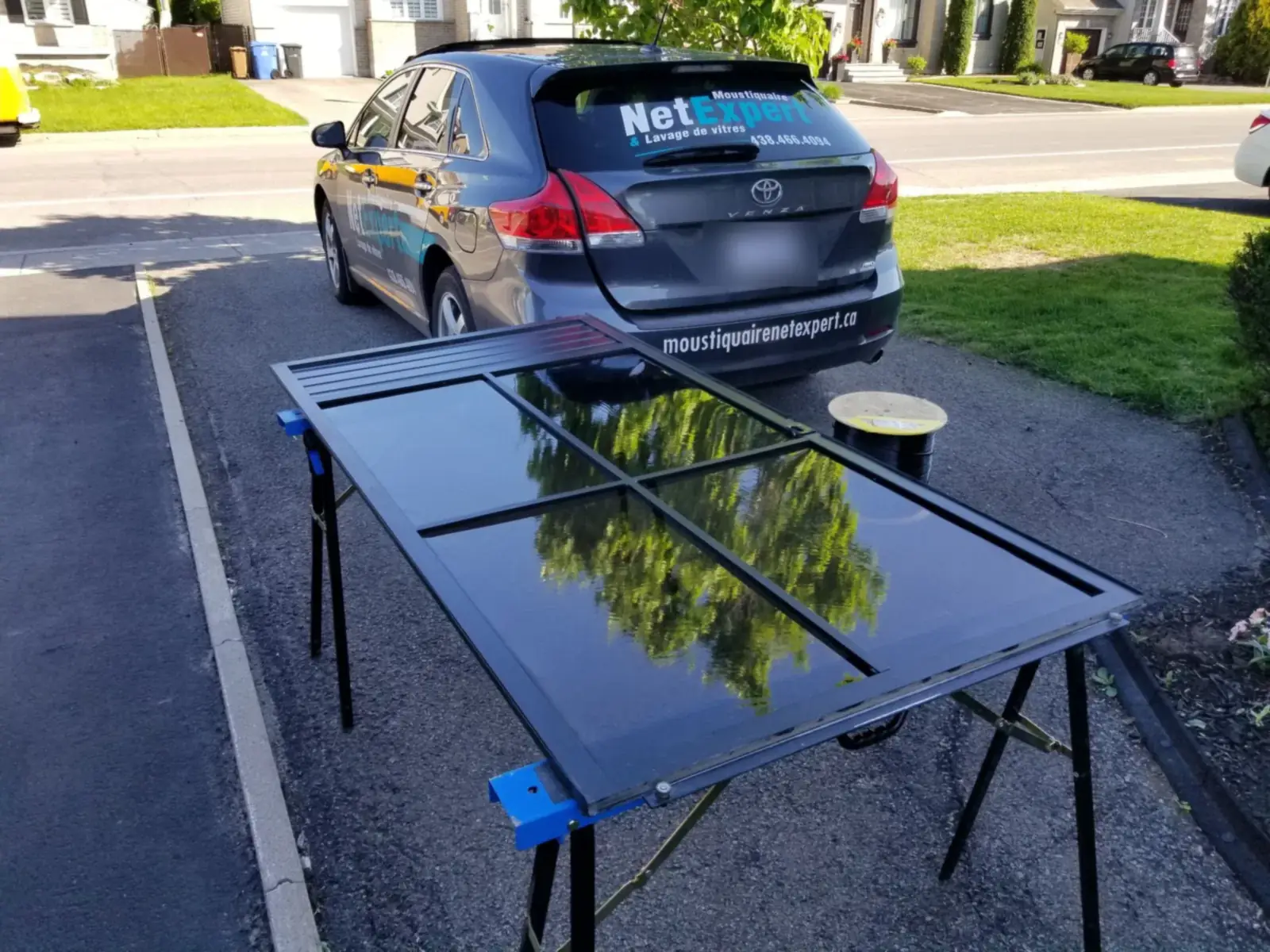
This job was not in Montréal-Nord — it shows our method, the same everywhere: panels down, new vinyl pane by pane, panels back up.
« Ludovic replaced my screen in record time. Professional, and with a great sense of humour. I recommend his services — don’t hesitate to contact him, he’ll come to your home and do beautiful work. »
« Excellent service. Clear explanations of the work to be done. I really appreciated his dedication: despite the rain he insisted on finishing the job, soaked through and still smiling. The work was very well done. »
« Great service! He was at my neighbour’s and agreed to fix my back screen even though we had no appointment. Very successful repair, and inexpensive! »
Straight answers
Yes. The panels of a retail gazebo detach from the structure without moving it, and they are rebuilt at the mobile workshop rather than in the yard. The ones at the back, up against the fence, usually come free from inside the shelter. All that is needed is a clear path to the street to carry them out and back one at a time.
The original fibreglass is what tears fastest under those conditions: a low panel becomes a backrest and a scratching post. Pet-resistant mesh, being thicker, stands up to claws and knees; aluminum mesh, being stiffer, keeps its tension when someone leans on it. You can change only the low panels and keep fibreglass up top, where nobody touches.
Yes: a balcony end panel is taken down from the balcony, which means from inside the unit — no ladder to lean and no façade to reach. Counting the panels per floor, noting which ones have film and which don’t, and giving tenants notice is all the preparation the job needs. The frames stay in place; only the mesh and the film are redone.
Yes, at your home. We travel to Montréal-Nord, remove the panels, replace the MICA vinyl in the original frames and put everything back — the gazebo structure is never touched. It is one of our specialties.
Yes. Depending on the retailer it is called MICA film, clear vinyl, clear plastic or transparent fabric — the same flexible material that cuts wind and holds warmth. We replace it on gazebos and sun shelters alike.
Yes. The vinyl is replaced pane by pane, in the existing frame — no need to redo the whole panel for one tear. If several panes have yellowed, doing them together gives a uniform result.
On assessment: the price depends on the number of panels and their dimensions. The quote is free, and a photo is often enough to price without a visit. Fabrication and installation guaranteed one year.
Do you manage a building or a business in Montréal-Nord?