
Summer UV
Sun yellows and clouds the vinyl. Film that crackles to the touch is at end of life.
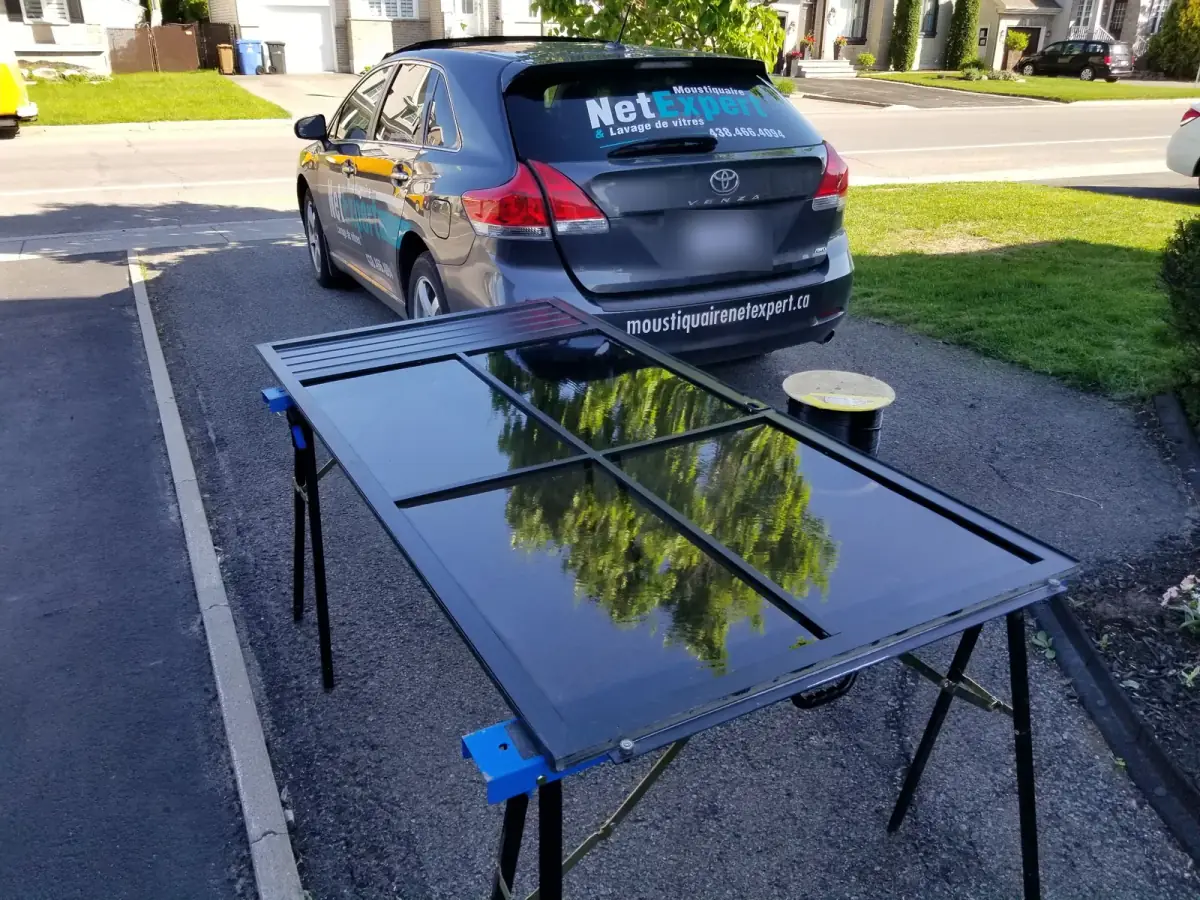
Gazebo and sun shelter specialty
Clear vinyl yellowed or torn? Replaced at your home in Mercier–Hochelaga-Maisonneuve, in the original frames — gazebos and sun shelters.
Three questions are enough to start. The official measurement is taken on site.
Whatever your retailer calls it — MICA film, clear vinyl, clear plastic, sun-shelter transparent fabric — it is the same material, and we replace it in Mercier–Hochelaga-Maisonneuve in your existing panels.
Sun yellows and clouds the vinyl. Film that crackles to the touch is at end of life.
Below freezing, MICA turns brittle — one handling or one gust splits it outright.
Slack vinyl flaps like a sail and eventually tears at the seams.
In the older half of Mercier–Hochelaga-Maisonneuve, the gazebo isn’t in the yard — it’s up in the air. The working-class duplexes and triplexes built between 1900 and 1940 have tiny backyards when they have any at all, and the real outdoor space is the rear balcony, the deck built over a shed, or the rooftop terrace added during a renovation. That’s where a pergola with screen panels or a small retail gazebo ends up, wedged between the railing and the neighbour’s brick wall. A shelter set at that height works under particular conditions: the wind hits it head-on, with no hedge or fence to slow it down, and the light aluminum frame that would be fine in a yard starts to vibrate with every gust. The panels feel it first.
Over in Mercier, the picture changes entirely. The post-war bungalows and plexes have real backyards — rectangular, fenced, with room for a standard-format retail gazebo, the steel or aluminum structure that comes in a box, goes up one Saturday in May and stays put. A gazebo of that generation often still has its original panels: fibreglass screens that have lost their tension and a clear vinyl (MICA film) that has yellowed season after season until it feels like cardboard. A bungalow yard is more sheltered than a rooftop, but it frequently faces due south or due west, and then it’s the sun, more than the wind, that wears the panels out.
On both kinds of gazebo, the clear vinyl gives out before the screening does, but not for the same reason. On a plex rooftop it splits in the first strong autumn wind, often along a fastening strip, because a film that flaps has nowhere to release the tension. In a bungalow yard it yellows and stiffens in the sun until it cracks at the fold when someone tries to roll it up in spring. Either way the section is rebuilt on its own: the fastening strip comes off, the new film is cut from the measurement taken up top, and nothing anchored to the rooftop terrace moves. The screen panels, for their part, tear at a corner, go slack or let their spline pop out of the groove: we rescreen them one by one, and switch to aluminum mesh where the wind stretches fibreglass beyond what it can take.
The real puzzle in a Hochelaga-Maisonneuve triplex is the panel’s route. A gazebo frame sitting on a third-floor terrace went up the exterior staircase — spiral or straight — past landings that were never designed for a large rectangle of aluminum. So the panels come off up top, travel down one at a time to the mobile workshop parked in the lane or on the street, get rebuilt, and go back up the same way. On a Mercier bungalow it’s the opposite: the yard opens through a fence gate and the work happens at the foot of the gazebo, panel after panel, with nothing to move but the patio furniture.
A rooftop shelter takes wind from every side, and it is the fastening, not the material, that sets how long clear vinyl lasts up there: on a plex roof it splits along its strips first, never across its face. For screens exposed to that wind, aluminum mesh holds its tension where fibreglass eventually sags. In the sun-facing yards of Mercier, yellowing alone dictates when the film gets replaced: a fenced bungalow yard breaks enough wind that good-quality fibreglass holds over the full height of the gazebo.
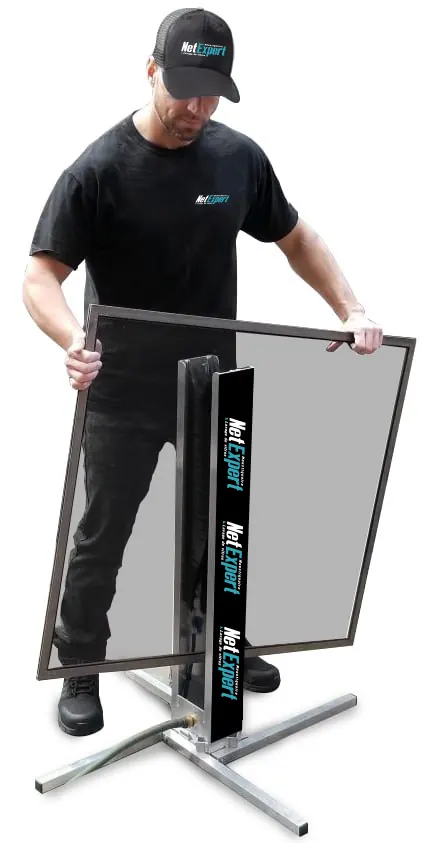
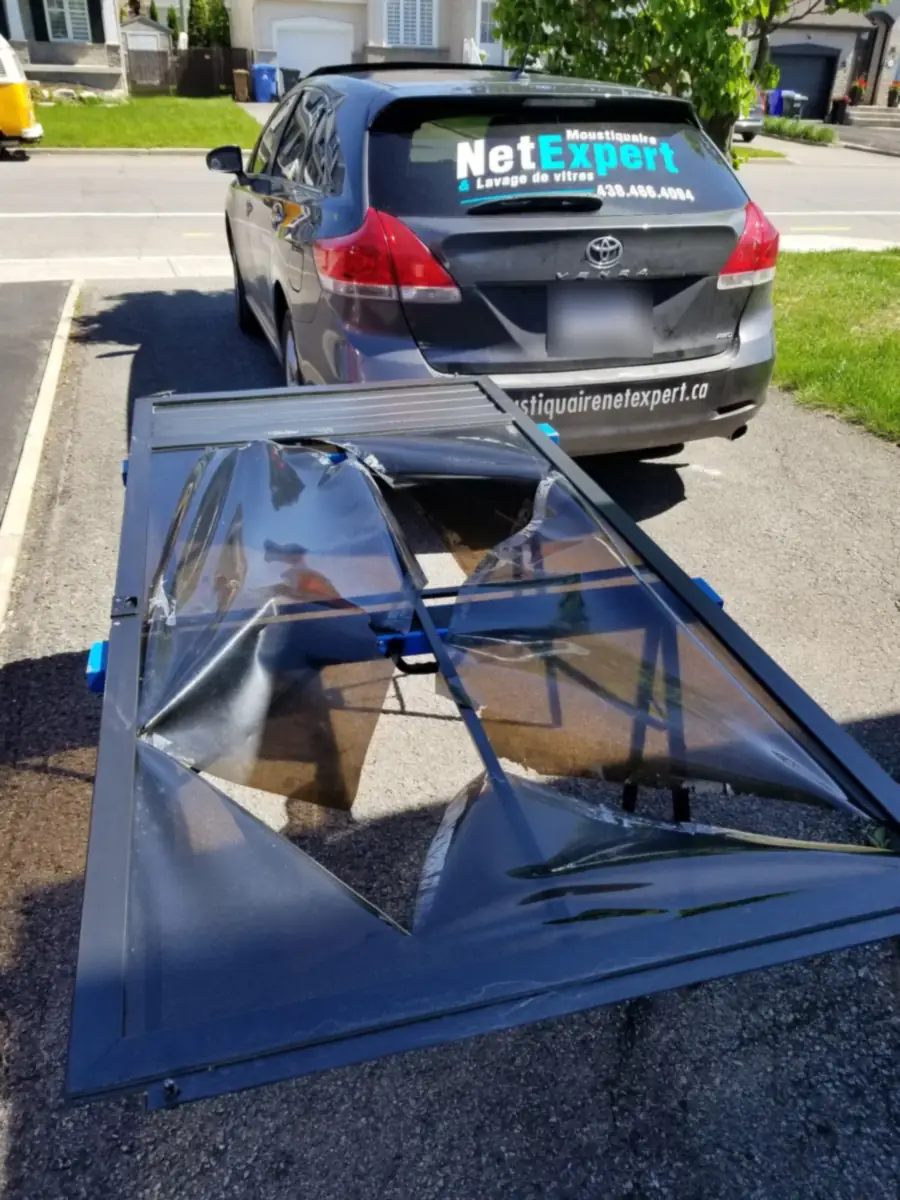
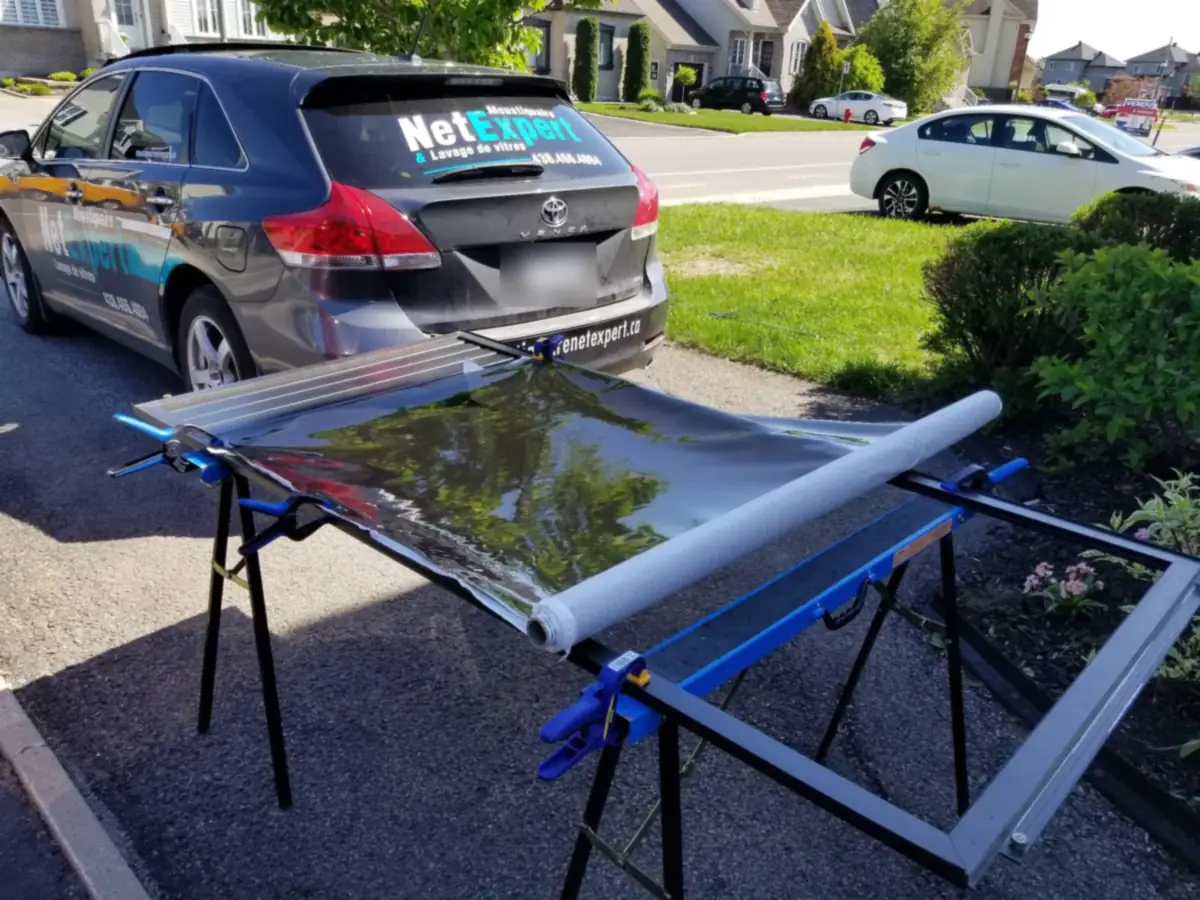
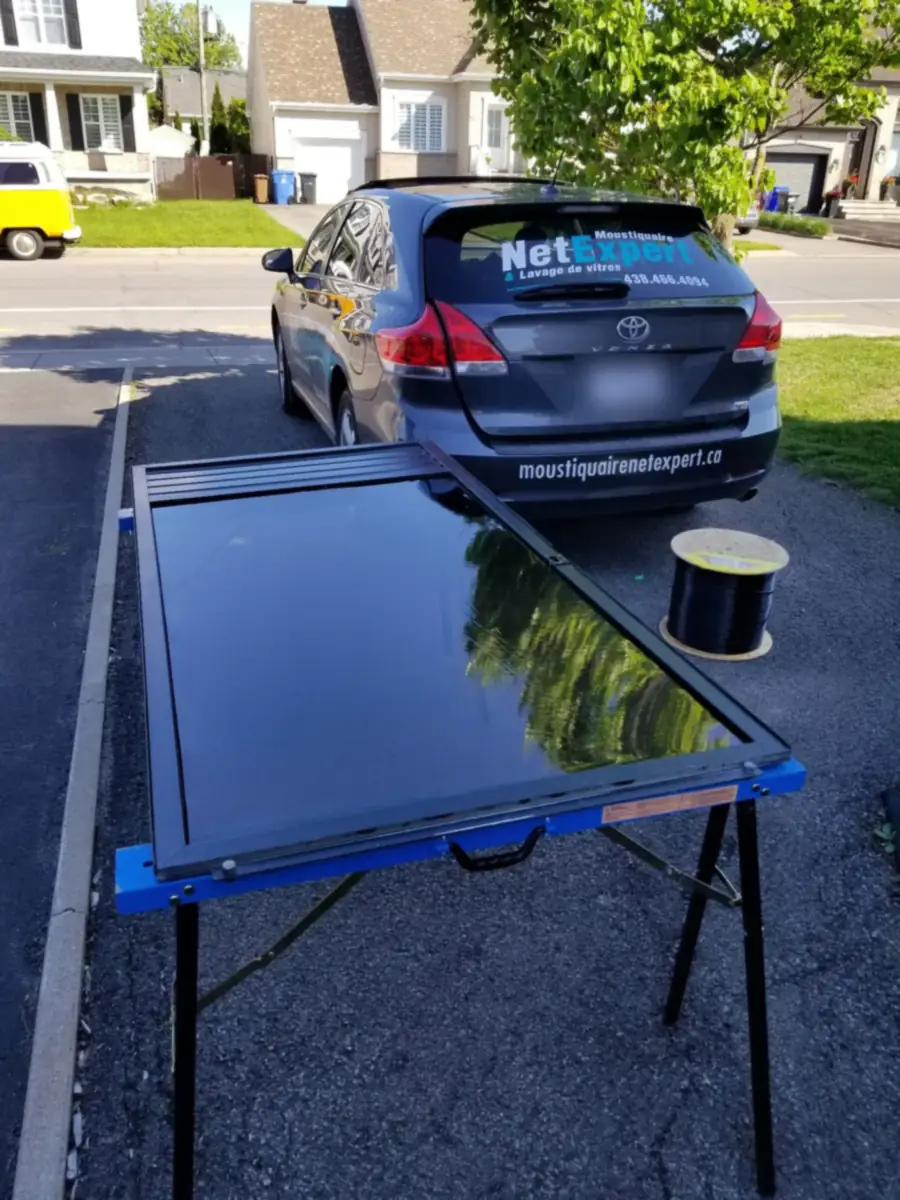
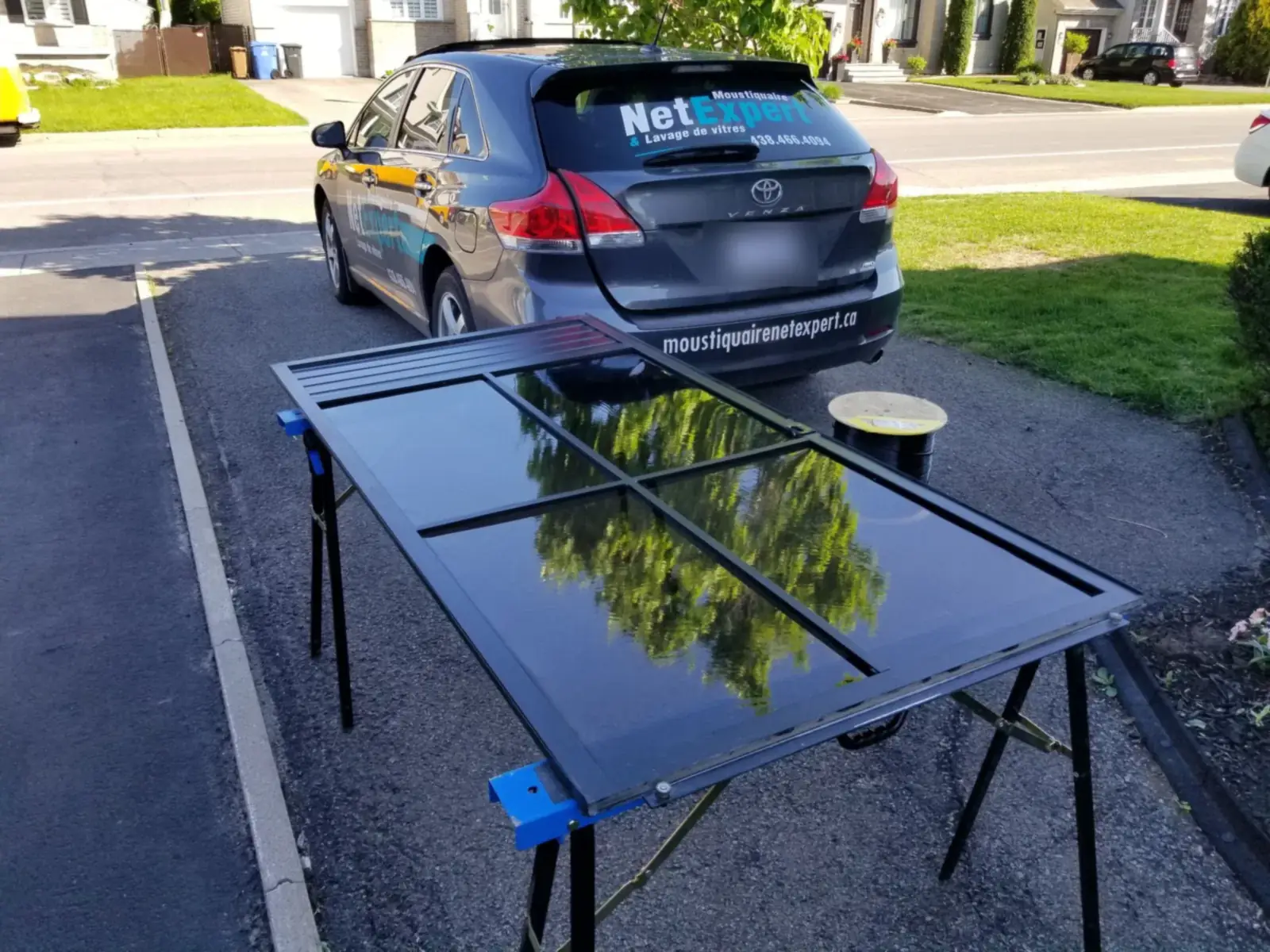
This job was not in Mercier–Hochelaga-Maisonneuve — it shows our method, the same everywhere: panels down, new vinyl pane by pane, panels back up.
« Great service! He was at my neighbour’s and agreed to fix my back screen even though we had no appointment. Very successful repair, and inexpensive! »
« Ludovic replaced my screen in record time. Professional, and with a great sense of humour. I recommend his services — don’t hesitate to contact him, he’ll come to your home and do beautiful work. »
« Excellent service. Clear explanations of the work to be done. I really appreciated his dedication: despite the rain he insisted on finishing the job, soaked through and still smiling. The work was very well done. »
Straight answers
Yes. The structure stays where it is; only the screen panels and the film sections come out of the frame. They go down the exterior staircase to the mobile workshop, get rescreened or fitted with new clear vinyl, then go back up and fasten into the same frame. All that’s needed is a clear path along the stairs and balcony on the day of the visit.
Once sun has yellowed and stiffened a vinyl film, it won’t turn clear again: the yellowing is in the material, not on the surface, and the stiffness is the warning before the split. Replacing it cut to the exact size of the section, in the original frame, brings back a clear view and a film supple enough to roll without cracking. Cleaning only makes sense on a film that’s still clear.
On an exposed shelter, a large panel keeps its tension longer in aluminum mesh: fibreglass hollows into a pocket at mid-span and starts slapping against the frame. Fibreglass is fine for a sheltered yard. In both cases, a spline seated firmly in its groove matters as much as the mesh itself — a panel rescreened without re-seating the spline goes slack again.
Yes, at your home. We travel to Mercier–Hochelaga-Maisonneuve, remove the panels, replace the MICA vinyl in the original frames and put everything back — the gazebo structure is never touched. It is one of our specialties.
Yes. Depending on the retailer it is called MICA film, clear vinyl, clear plastic or transparent fabric — the same flexible material that cuts wind and holds warmth. We replace it on gazebos and sun shelters alike.
Yes. The vinyl is replaced pane by pane, in the existing frame — no need to redo the whole panel for one tear. If several panes have yellowed, doing them together gives a uniform result.
On assessment: the price depends on the number of panels and their dimensions. The quote is free, and a photo is often enough to price without a visit. Fabrication and installation guaranteed one year.
Do you manage a building or a business in Mercier–Hochelaga-Maisonneuve?