
Summer UV
Sun yellows and clouds the vinyl. Film that crackles to the touch is at end of life.
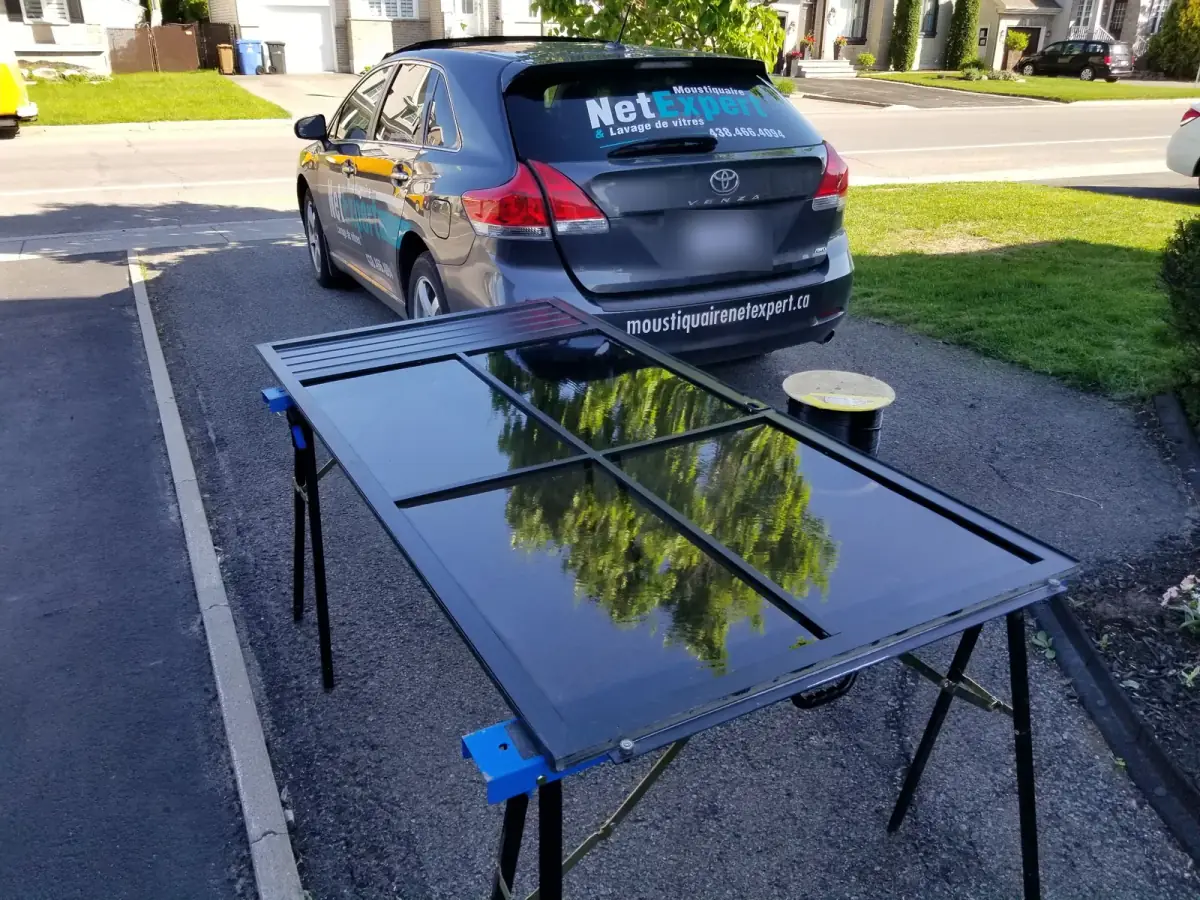
Gazebo and sun shelter specialty
Clear vinyl yellowed or torn? Replaced at your home in Anjou, in the original frames — gazebos and sun shelters.
Three questions are enough to start. The official measurement is taken on site.
Whatever your retailer calls it — MICA film, clear vinyl, clear plastic, sun-shelter transparent fabric — it is the same material, and we replace it in Anjou in your existing panels.
Sun yellows and clouds the vinyl. Film that crackles to the touch is at end of life.
Below freezing, MICA turns brittle — one handling or one gust splits it outright.
Slack vinyl flaps like a sail and eventually tears at the seams.
Anjou may be the most typical retail-gazebo territory on the island. Its brick bungalows, cottages and semi-detached homes went up between 1955 and 1975 with a good-sized backyard, flat and fenced — precisely the lot that big-box aluminum or steel gazebo frames were designed for. The patio door added later at the back, a hallmark of Anjou housing, opens straight onto that yard, and the gazebo tends to sit right in line with it, on a deck or a paver patio, working as one more room of the house through the summer. The walk from the kitchen to the gazebo takes a few steps, which is exactly why it gets so much use.
What matters about these gazebos is their age relative to the house. None of them is original; they arrived in waves as yards were redone, and many still carry their factory panels. On a semi-detached pair, the two yards meet on either side of the shared fence: a gazebo on one side takes exactly the same sun and the same wind as whatever stands on the other. The formats are standard, which simplifies the clear vinyl question: panes are cut to the frame’s dimensions, no guesswork. A permanent wood structure is the exception here — it exists on some larger lots, but a 1960s suburban yard calls first for the retail model.
On the gazebos in these yards, the usual story is clear vinyl (MICA film) left up for too many seasons: yellowed on the south side, stiffened by winter, split across the width of a pane at the first strong gust. The screen ages differently. On a retail aluminum frame, it is the spline that pops out at a corner under wind pressure, or the mesh that slackens and ripples at the slightest breeze. A dog leaning on a low panel eventually pulls it out of its groove too. We replace the film pane by pane in the original frame, and we rescreen each mesh panel in its own. Nothing is redone by eye: every pane gets measured, because two gazebos of the same model have not necessarily aged the same way.
A retail gazebo comes apart panel by panel, and that is its great virtue: the posts and roof are never touched. In a single-storey Anjou yard, access is along the side of the house or through the patio door, and the panels are redone at the mobile workshop in the driveway. The difficulty is not physical. It lies in the model: a gazebo bought fifteen years ago is no longer in the catalogue, and its panels cannot be bought again. Redoing the film and the mesh in the existing frames is therefore often the only option that keeps the structure standing. On a semi-detached, we also confirm which side of the shared fence the work is on.
Anjou is a flat, built-up residential sector; wind hits an open yard head-on with no woodlot to break it, and wind is what decides how long clear vinyl lasts. A gazebo at the back of an open lot takes the autumn gusts full force. Sun is the other factor: a south-facing rear yard with no mature trees yellows film and makes fibreglass brittle. On this kind of yard, aluminum mesh holds its tension better. On mesh choice, it is how the gazebo is used that decides more than the insect: a low panel an animal leans on calls for a reinforced weave; the rest of the structure does not.
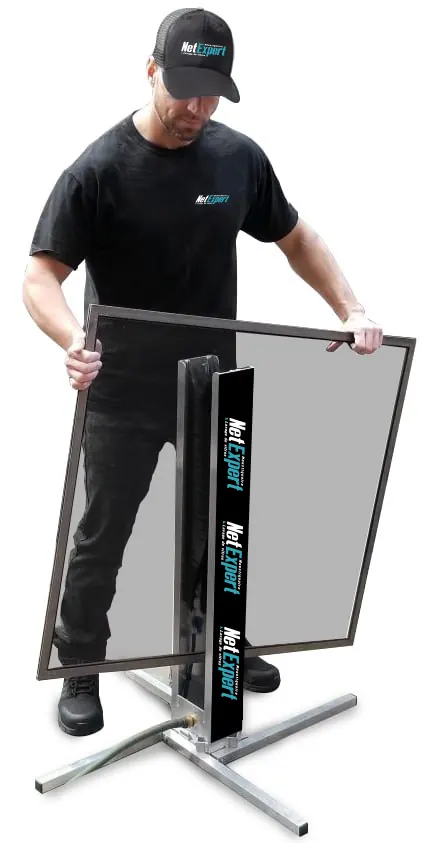
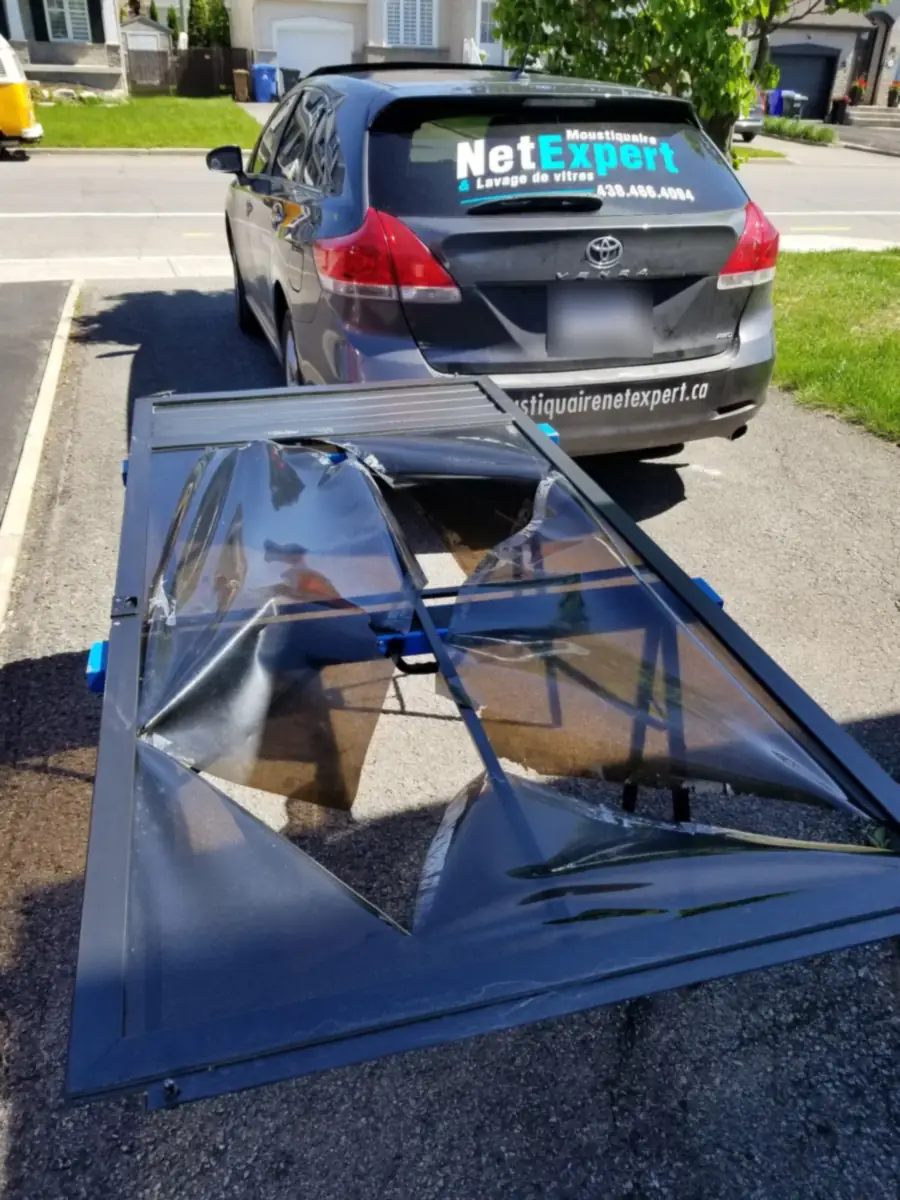
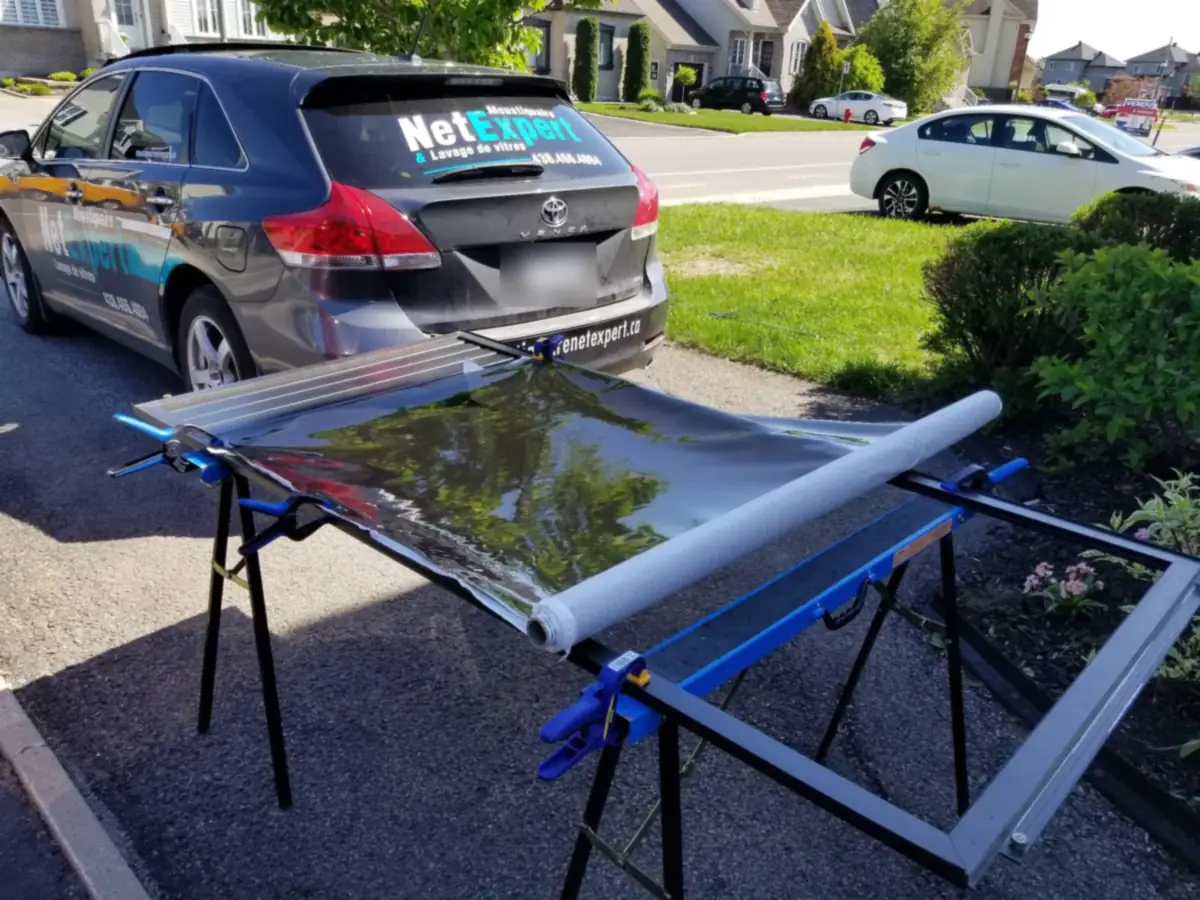
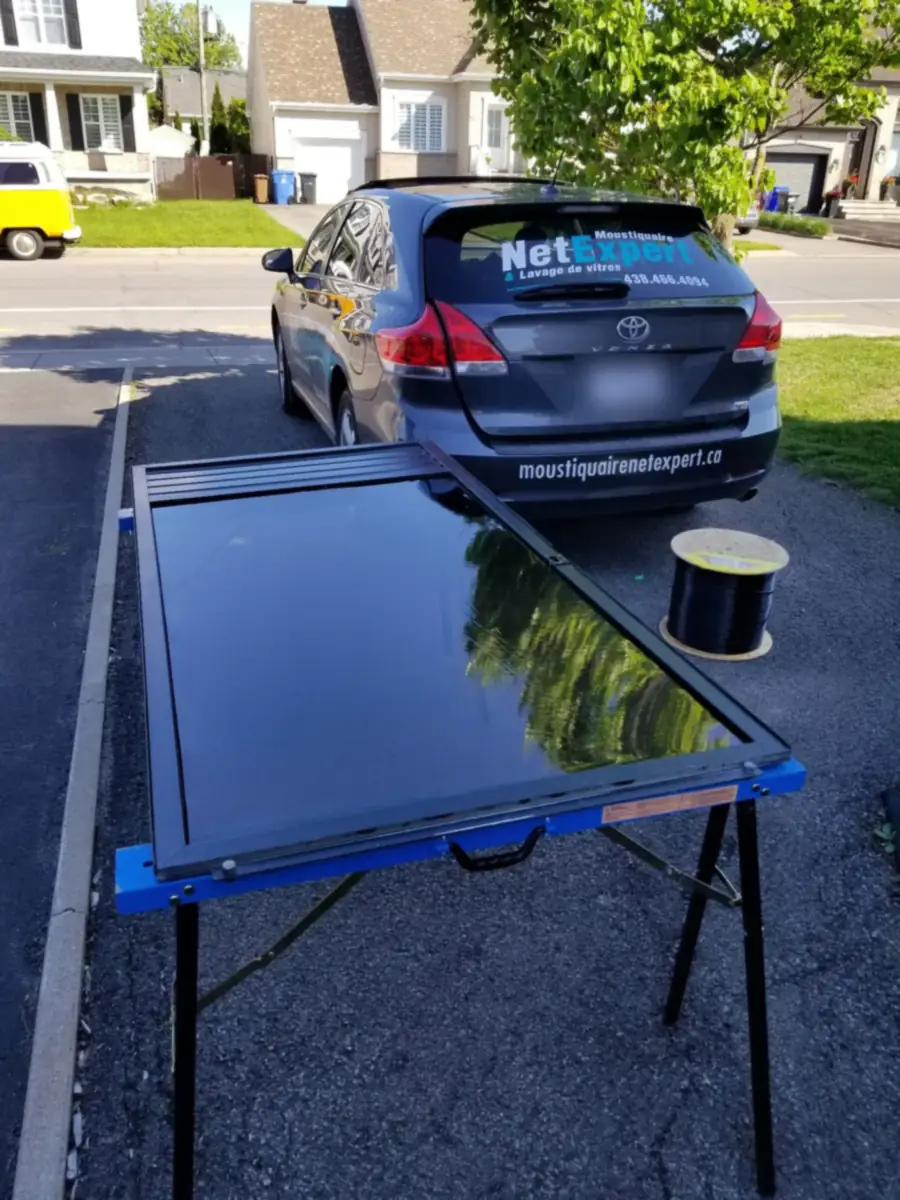
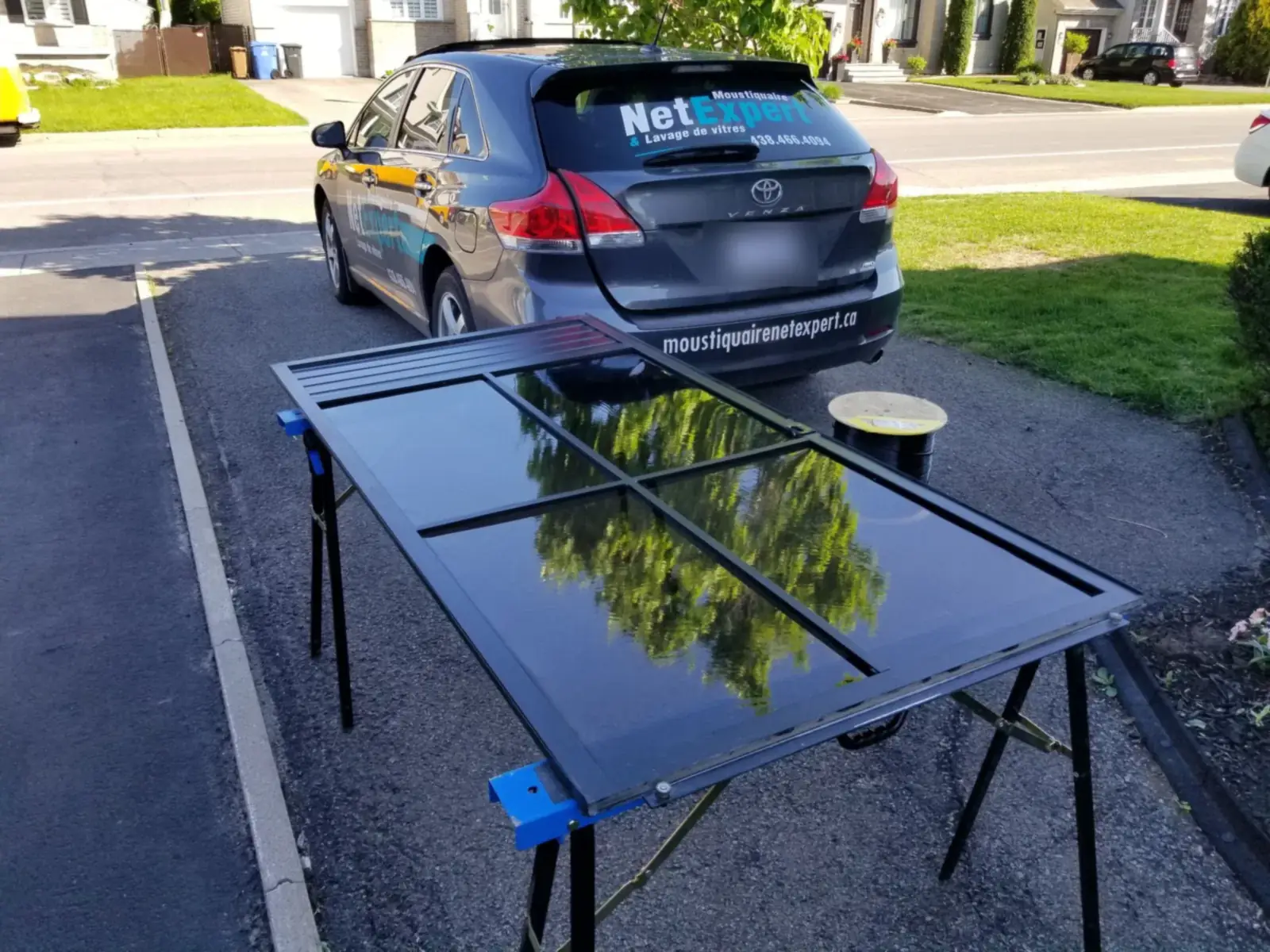
This job was not in Anjou — it shows our method, the same everywhere: panels down, new vinyl pane by pane, panels back up.
« Ludovic replaced my screen in record time. Professional, and with a great sense of humour. I recommend his services — don’t hesitate to contact him, he’ll come to your home and do beautiful work. »
« Excellent service. Clear explanations of the work to be done. I really appreciated his dedication: despite the rain he insisted on finishing the job, soaked through and still smiling. The work was very well done. »
« Great service! He was at my neighbour’s and agreed to fix my back screen even though we had no appointment. Very successful repair, and inexpensive! »
Straight answers
Yes, and it is the most common situation on this kind of structure. The panels cannot be bought again, but their aluminum frames are almost always still straight. We replace the film in them pane by pane, to exact size, and we rescreen the mesh panels in the same frames. The structure does not move. A discontinued gazebo can be kept as long as its frames stay square.
Nothing prevents it, as long as each owner is present or has agreed to access to their yard. Measurements, however, are taken gazebo by gazebo: two identical models have not taken the same wind or the same sun, and a frame that has shifted no longer matches its neighbour’s exact dimensions. Each pane is cut for its own frame.
Yes, but on the lower panels only. That is where the animal leans, and it is the one place on a gazebo where a reinforced weave earns its keep; the upper panels keep ordinary mesh, which lets more air and view through. We put it on the lower panels where the animal leans, and keep standard fibreglass or aluminum on the upper ones for the view and the airflow.
Yes, at your home. We travel to Anjou, remove the panels, replace the MICA vinyl in the original frames and put everything back — the gazebo structure is never touched. It is one of our specialties.
Yes. Depending on the retailer it is called MICA film, clear vinyl, clear plastic or transparent fabric — the same flexible material that cuts wind and holds warmth. We replace it on gazebos and sun shelters alike.
Yes. The vinyl is replaced pane by pane, in the existing frame — no need to redo the whole panel for one tear. If several panes have yellowed, doing them together gives a uniform result.
On assessment: the price depends on the number of panels and their dimensions. The quote is free, and a photo is often enough to price without a visit. Fabrication and installation guaranteed one year.
Do you manage a building or a business in Anjou?