
Slack or torn mesh
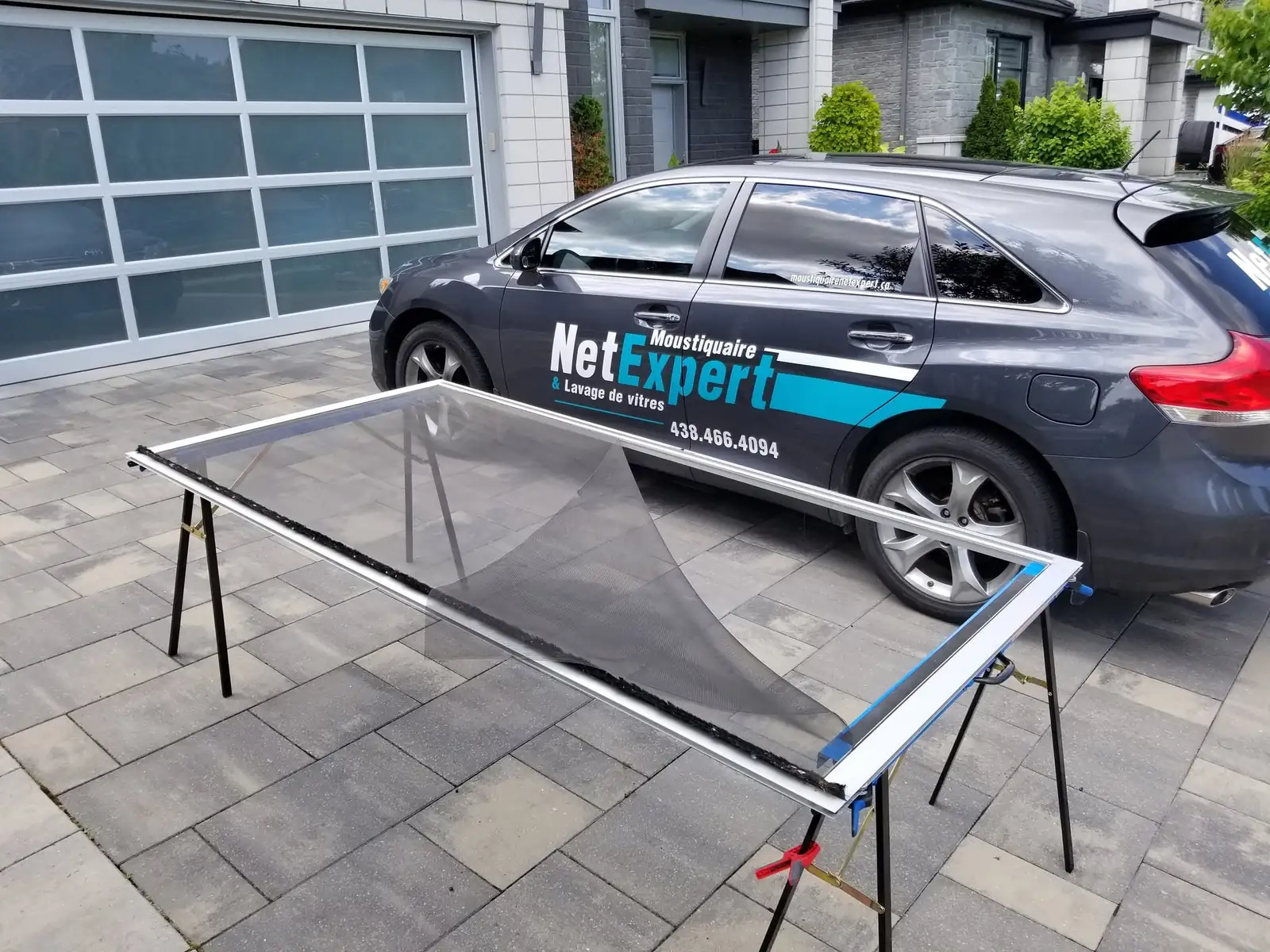
The mesh pulls out of the spline, billows in the wind or tore at the bottom — the classic. Re-meshed in your frame, fibreglass or reinforced.
Patio door screens
Mesh, rollers, track, hardware: your screen door repaired at home in Anjou, usually in a single visit.
Three questions are enough to start. The official measurement is taken on site.
It is the most used screen in the house — opened and closed thousands of times a season. Four failures come up constantly, and all four are repaired on site.
The mesh pulls out of the spline, billows in the wind or tore at the bottom — the classic. Re-meshed in your frame, fibreglass or reinforced.
The door drags, jumps the track or scrapes. We replace the rollers and adjust the height — the most requested repair.
Sand, pet hair and debris jam the rolling. Cleaning, lubrication, light track straightening when needed.
The door no longer locks or the handle hangs loose. Hardware replaced, latch adjusted.
In Anjou the patio door is an afterthought, and you can tell by the way it sits in the wall. The brick bungalows, cottages and semi-detached houses of 1955 to 1975 were delivered without one: the patio door is a later addition at the back. What matters for the screen panel is that its track and hardware date from that addition, not from the house. A door fitted into an opening widened after the fact has one particularity: its sill and track rest on a wall that was never planned for it, and the door is usually a common size of its own era — five or six feet — chosen because it fit, not because it matched any drawing. The screen panel on that door is a product of its own decade, not of the house's.
Depending on when the door was added, two very different families of door are possible. Those from the 1980s are almost always aluminum, with a narrow screen panel that rolls on a low outside track and is guided by a channel at the top; those from the 1990s and 2000s are PVC, heavier, with a wider aluminum-framed screen and rollers adjusted by screws at each end. In a semi-detached, the two halves may have received their doors years apart, from two manufacturers, and nothing about the shared wall makes the panels alike. Because these are single-storey houses with decks at floor level, the door is always within reach — which is exactly why it gets used so much. It is the household's exit all summer long, for everyone, dog included.
On 1980s aluminum doors, the frame corners are a known weak point. The screen frame is held together by plastic or zinc corner keys slid into the profiles, and when a roller seizes and someone forces the panel, those keys are what crack or pull apart: the frame loses its square, the mesh wrinkles on the diagonal and the door rubs on both sides. On the panels of 1990s PVC doors, it is more often the roller adjustment screw that seizes and one wheel that wears on one side, so the panel leans. In both cases we take the panel down on the deck, fit rollers that match the track, reseat or replace the corner keys, clean and lubricate the track, and rescreen while the frame is open. The whole visit happens at ground level, no ladder.
On a door added thirty or forty years ago, the question is not getting the panel down; it is knowing which roller goes back into it. A door added thirty or forty years ago often carries rollers from a manufacturer that no longer exists, and there is no universal roller that runs in every track: the wheel's shape, its height and its spring have to match the track's profile or the panel drags or derails. So the roller housing gets identified before the toolbox opens. Another point: the screen panel has often already been replaced once by a hardware-store 'adjustable' panel, cut a little short, that never rolled properly. We rebuild it to the true dimensions of the track, not to those of the previous stand-in.
When a dog lives in the yard, the patio door is its way through, and the bottom of the mesh is what takes it: claw marks, a corner pulled loose, a nose pushed through. Only pet-resistant mesh holds up there — it is made for that job, not just a denser ordinary fibreglass. Without animals, standard fibreglass does fine on a door shaded by a covered deck or a tree; on a large patio-door panel aluminum holds tension better, because the span is far longer than on any window.
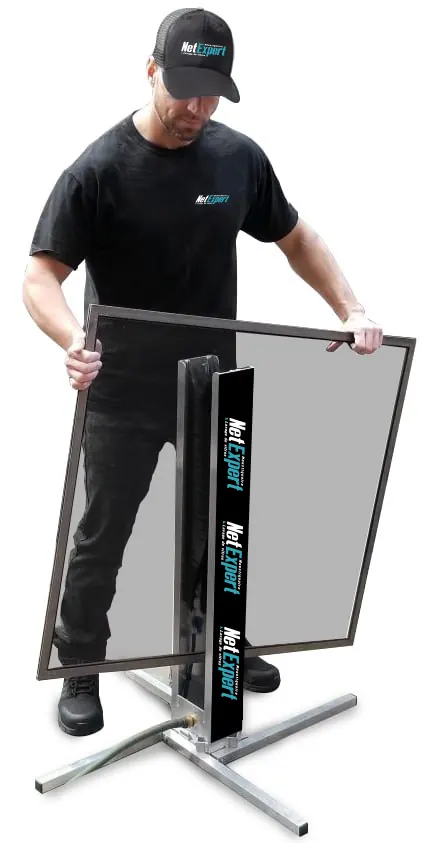
A patio door opens and closes more often than every window in the house combined — and it is the one the dog noses open and the cat climbs. Standard fibreglass mesh suits a lightly used door; for the others, we fit reinforced mesh, about seven times stronger, or pet-resistant mesh built for claws.
The extra cost is measured in tens of dollars; the yearly replacement it prevents, in hundreds. We carry both types in the vehicle — the decision can happen on the spot, with the door off its track in front of you.
Ten kinds of damage, one answer
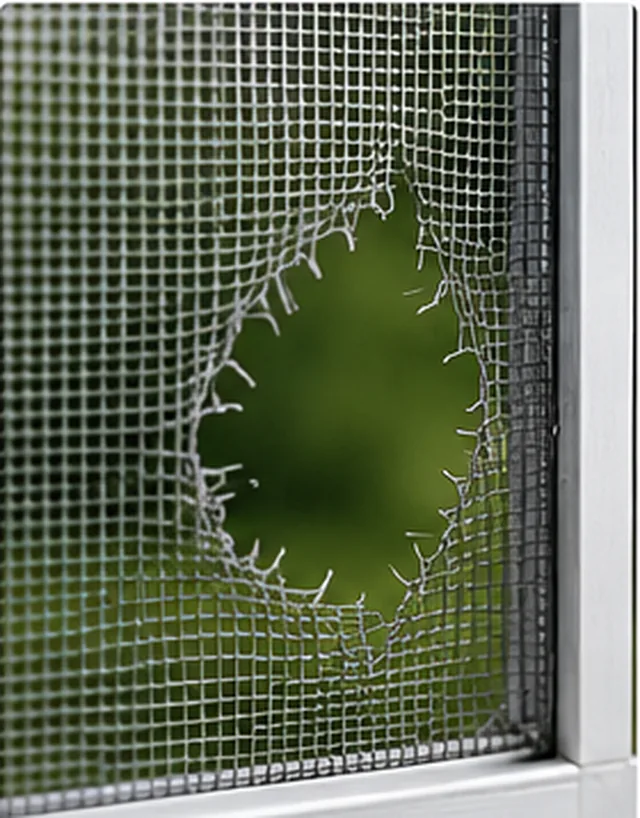
If your screen looks like any of these, it can be repaired. Tap one to request a quote for that exact damage. We rarely replace a whole frame — in most cases only the mesh needs redoing.
 Mesh
Mesh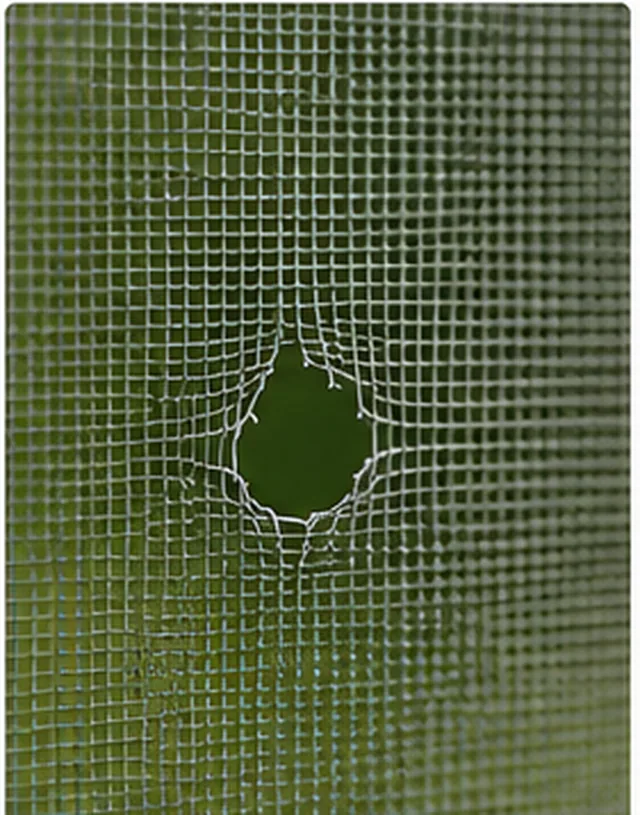 Mesh
Mesh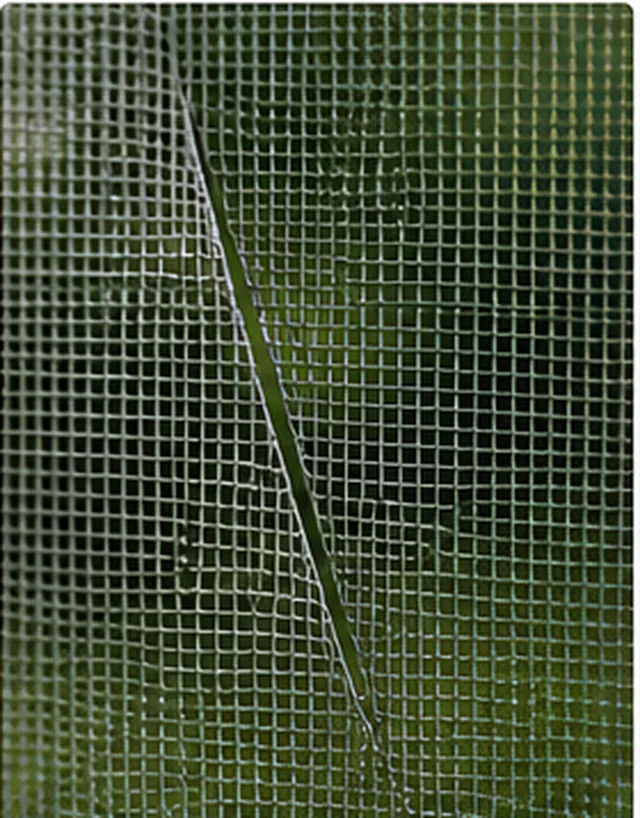 Mesh
Mesh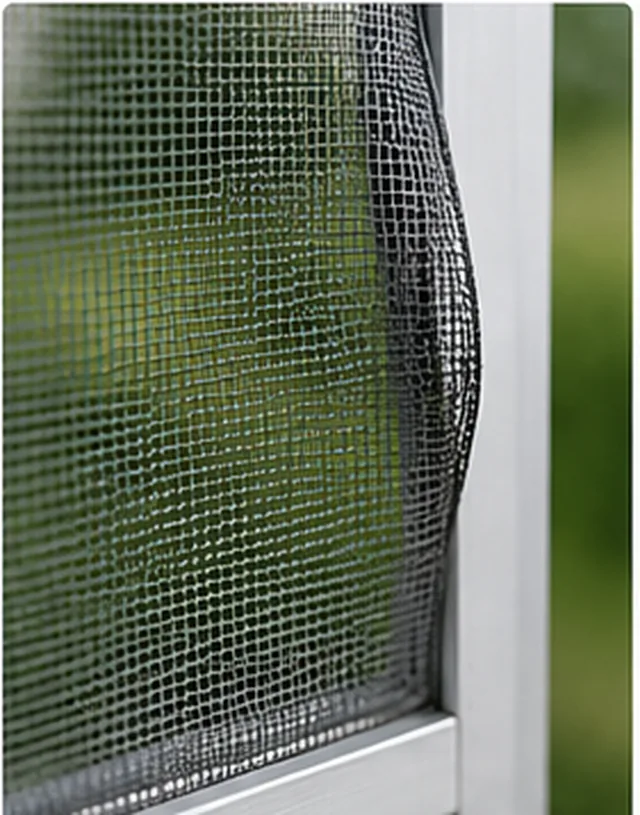 Mesh
Mesh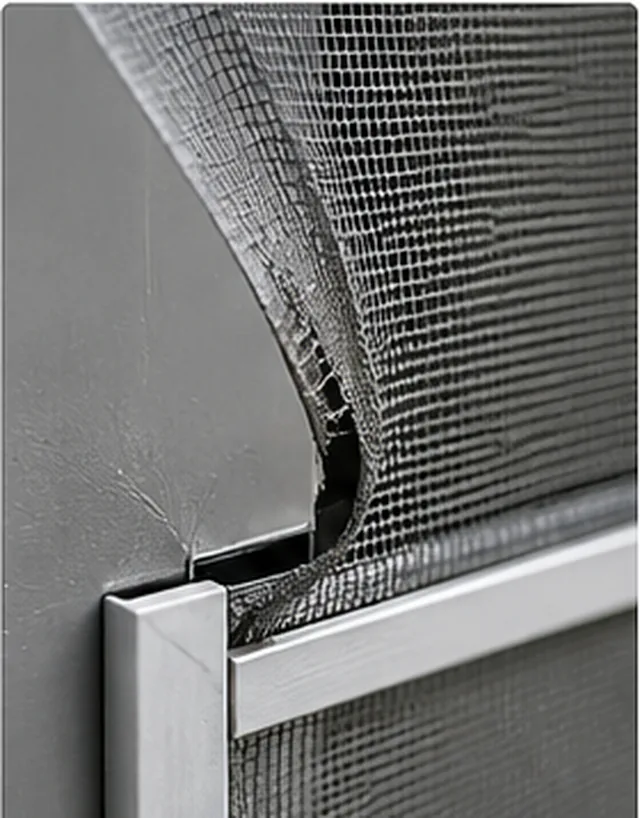 Mesh
Mesh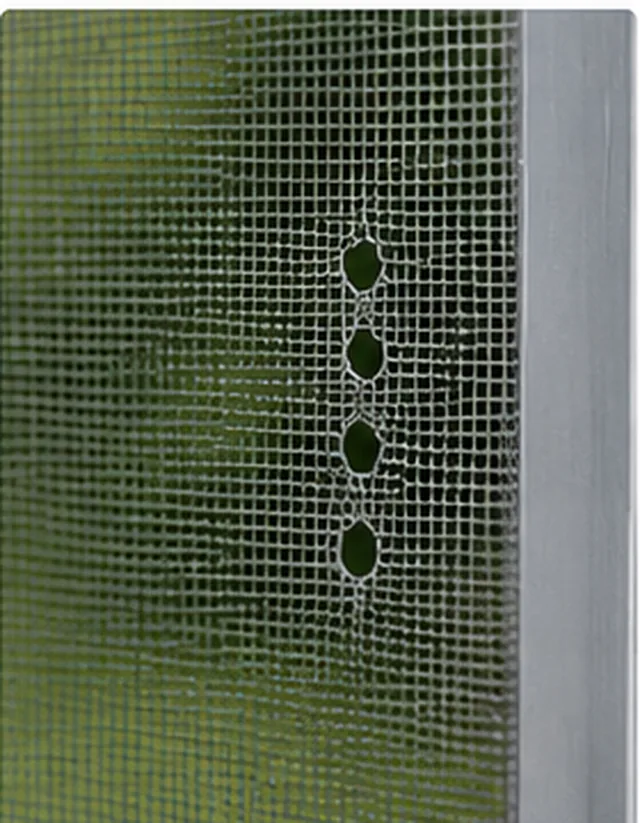 Mesh
Mesh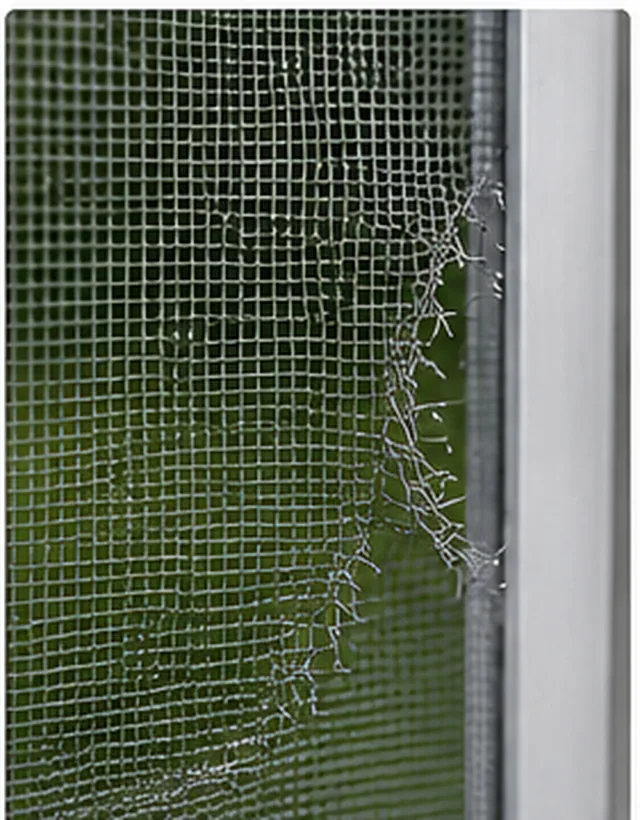 Mesh
Mesh Mesh
Mesh Mesh
Mesh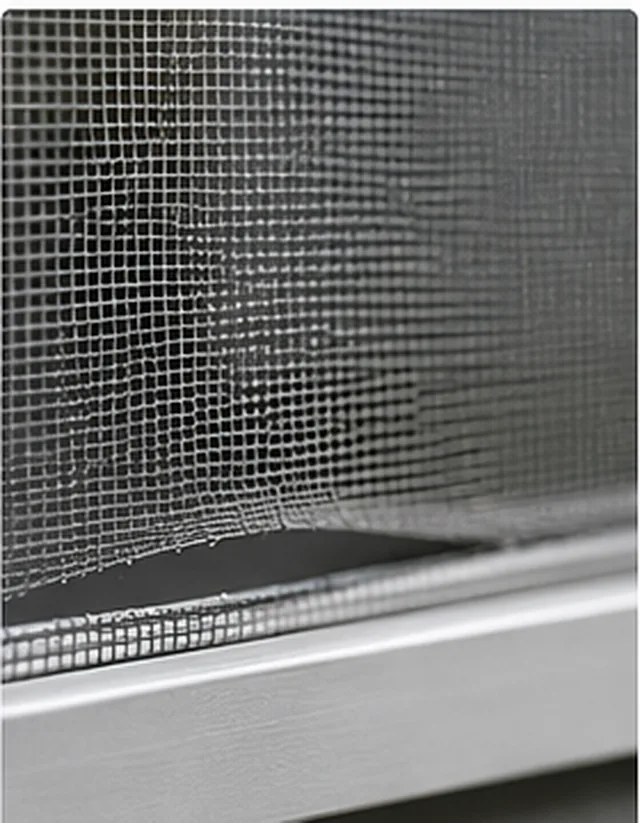 Frame
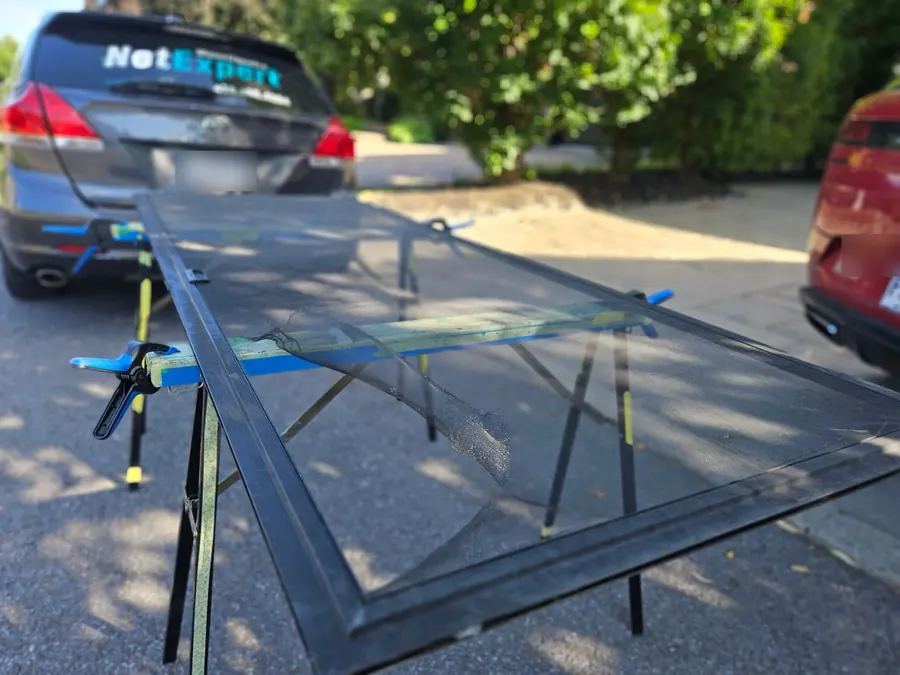
FrameThis job was not in Anjou — it shows our method, the same everywhere: door off its track, new rollers, new mesh, frame squared up.
 1
1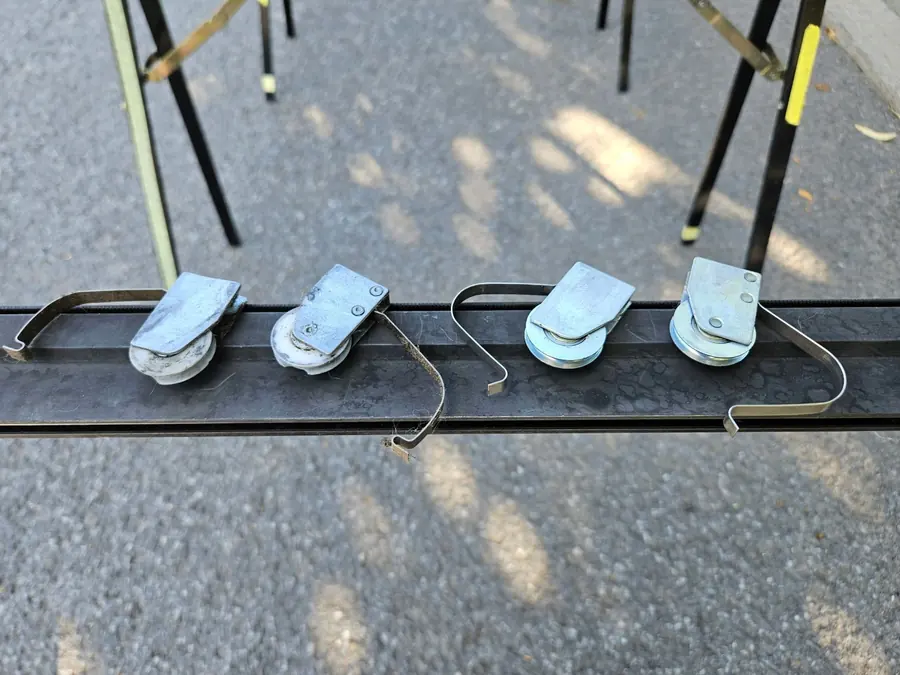 2
2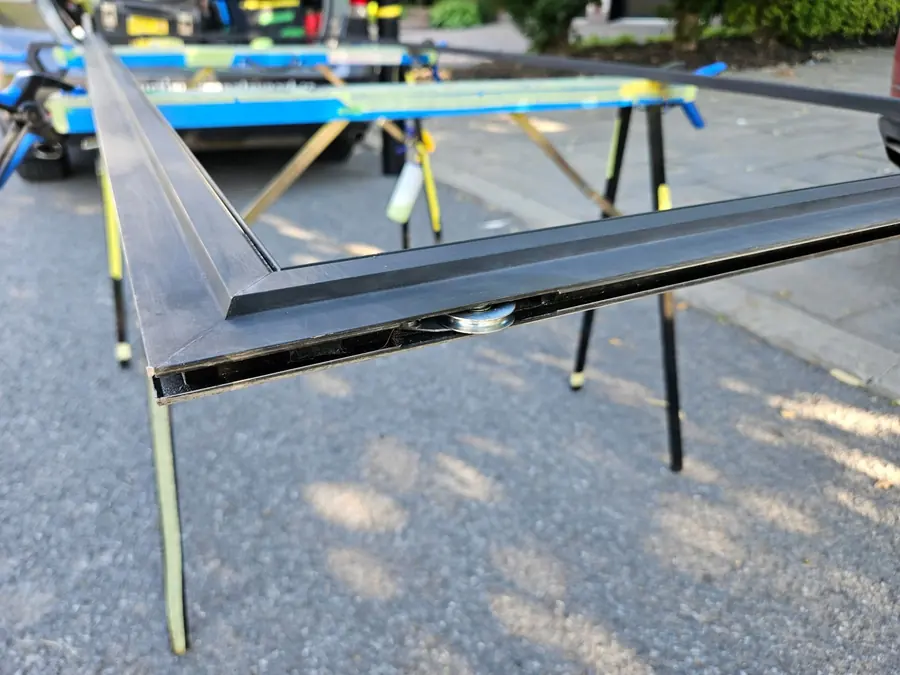 3
3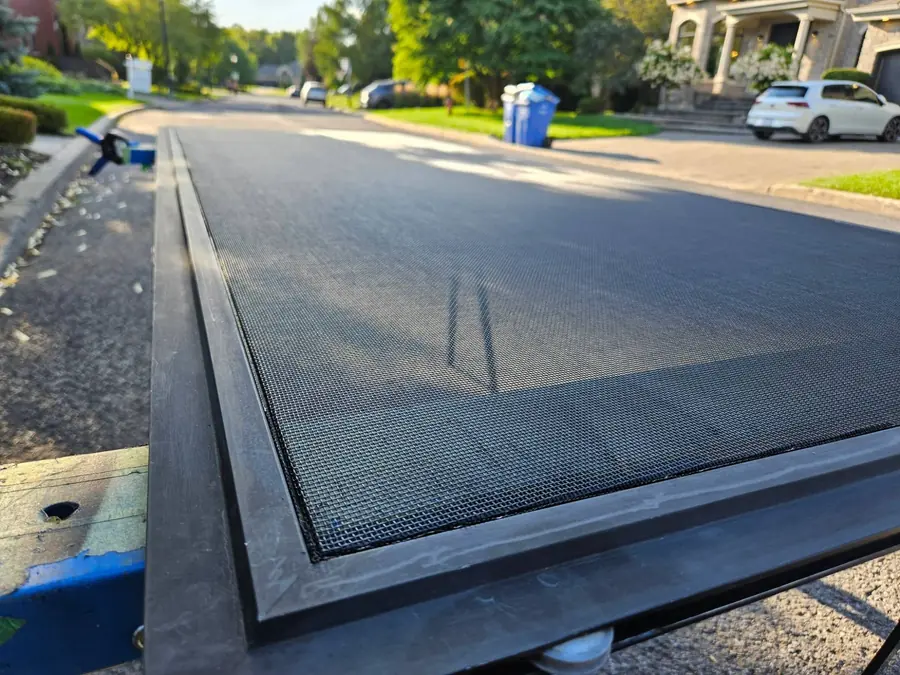 4
4« Great service! He was at my neighbour’s and agreed to fix my back screen even though we had no appointment. Very successful repair, and inexpensive! »
« Ludovic replaced my screen in record time. Professional, and with a great sense of humour. I recommend his services — don’t hesitate to contact him, he’ll come to your home and do beautiful work. »
« Excellent service. Clear explanations of the work to be done. I really appreciated his dedication: despite the rain he insisted on finishing the job, soaked through and still smiling. The work was very well done. »
Straight answers
Often, yes, but not by guessing. We identify the original roller housing — its width, its height, the type of spring and adjustment — and look for the part compatible with the door's track, not a 'universal' roller that will run crooked. When nothing matches, we say so on site and look at what the frame allows us to adapt. The panel itself almost always stays.
So-called adjustable panels are cut to an approximate height and carry generic rollers; in a 1980s or 1990s track the wheel is often too wide or too tall, the panel lifts on one side and the latch never finds its keeper. We measure the track and the top channel, fit the rollers that match them, and correct the panel's height.
Pet-resistant mesh, fitted over the full height of the panel rather than just the bottom, so the tension stays even. Its thick-strand weave takes the claws and nose bumps that fibreglass cannot. We also check the latch while we are at it: a dog pushing on a door that does not lock properly eventually shoves it off the track, and then it is the frame we are repairing.
Yes, at your home. We remove the screen door, replace the mesh or rollers on site, clean and lubricate the track, then reinstall it — usually in a single visit to Anjou.
Almost always the rollers: they wear out before the mesh and push the door off its track. We replace them and clean the track in the same intervention — forcing a derailing door eventually bends the frame, a costlier repair.
Rollers and hardware: from $30. A complete custom-built screen door: from $500, depending on format. The mesh alone on a door is priced on quote, from its dimensions. An exact quote is free.
One year on fabrication and installation — mesh, fitted rollers, built frames. Damage caused afterwards, by a pet or an impact, is not covered; for a dog, pet-resistant mesh is the real answer.
Pet-resistant mesh: about seven times stronger than standard fibreglass. On a patio door used daily, it is the difference between replacing the mesh yearly and being done with it for seasons.
Do you manage a building or a business in Anjou?