
Slack or torn mesh
The mesh pulls out of the spline, billows in the wind or tore at the bottom — the classic. Re-meshed in your frame, fibreglass or reinforced.
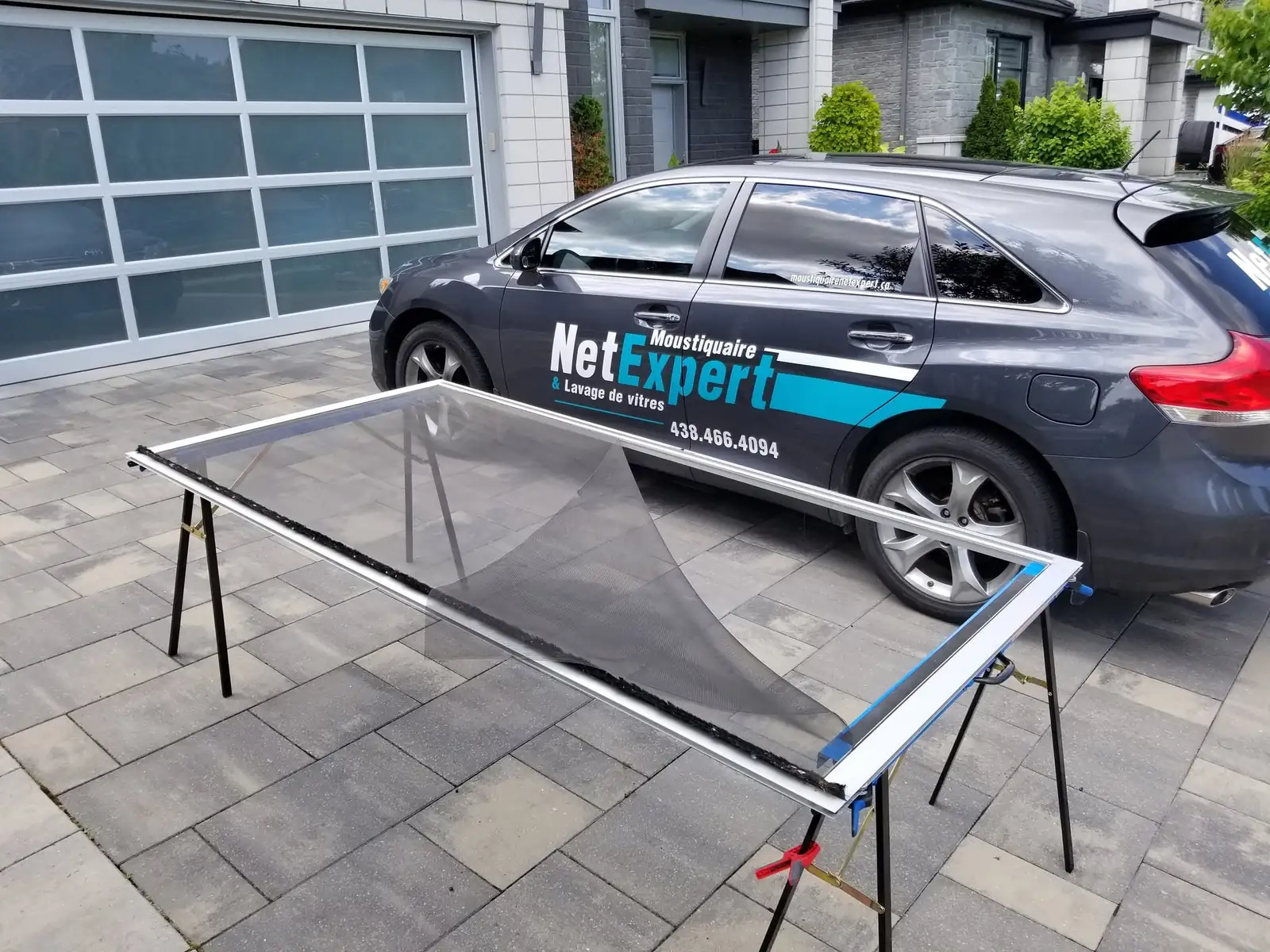
Patio door screens
Mesh, rollers, track, hardware: your screen door repaired at home in Outremont, usually in a single visit.
Three questions are enough to start. The official measurement is taken on site.
It is the most used screen in the house — opened and closed thousands of times a season. Four failures come up constantly, and all four are repaired on site.
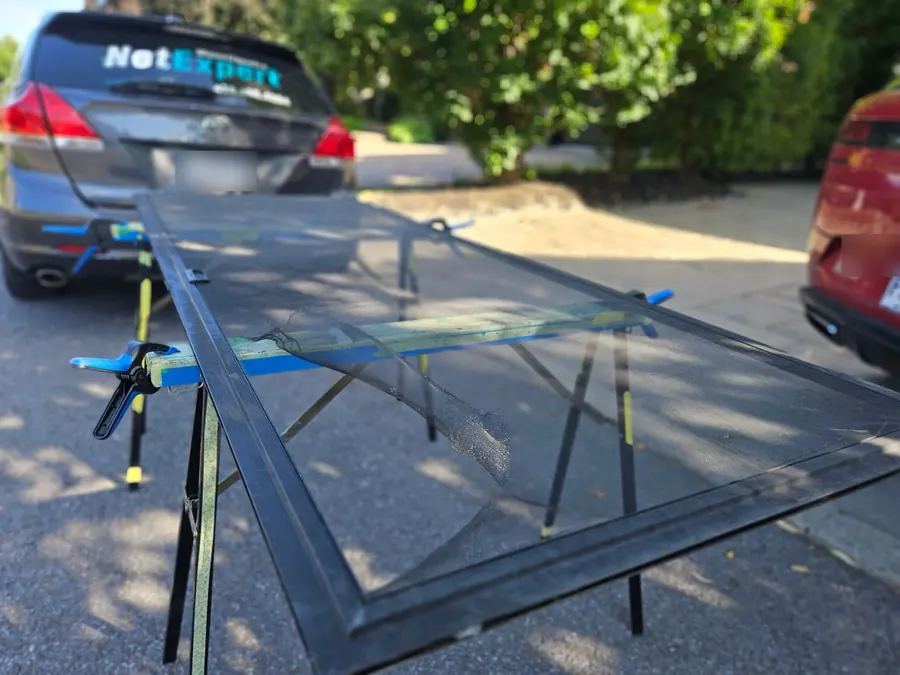
The mesh pulls out of the spline, billows in the wind or tore at the bottom — the classic. Re-meshed in your frame, fibreglass or reinforced.
The door drags, jumps the track or scrapes. We replace the rollers and adjust the height — the most requested repair.
Sand, pet hair and debris jam the rolling. Cleaning, lubrication, light track straightening when needed.
The door no longer locks or the handle hangs loose. Hardware replaced, latch adjusted.
In Outremont, the patio door is almost never original. The housing stock here predates the Second World War, when you stepped into the yard through a solid door or a pair of French doors. The sliding screen door you find at the back of these buildings today came with a renovation: an enlarged kitchen, a glazed extension onto the yard, a terrace built on the flat roof of a triplex. So the screen panel is as old as that renovation, not as old as the house — fifteen years in one case, forty in another — and its size was set by whichever contractor installed it, in an opening cut to suit a stone or solid-brick wall far thicker than anything in the suburbs.
That add-on history has a practical consequence. A patio door set into a ground-level extension onto the yard is handled like any other slider: the panel comes out, gets rescreened on the spot, goes back in. One installed on the upper floor of a duplex, or on a rooftop terrace, can only be worked on by going through the flat. And where the rear door is neither white nor a current size, the screen panel that belongs to it is neither: that is one reason the mesh gets redone in the frame already there rather than sourced elsewhere. Rescreening the existing frame settles the question before it comes up — colour, profile and proportions stay put, only the mesh changes.
On a door that runs from spring to fall, the rollers give out first. On a patio door from a 1980s or 1990s renovation they are a model that has to be identified before anything is ordered — a close-enough roller has the door jumping the track again within weeks. When the panel has derailed and someone forced it back, the frame bows slightly; it gets straightened on site as long as it is neither twisted nor split. The mesh, for its part, goes slack from being pushed with a full hand and eventually gives at the bottom corner, where a foot or a dog’s paw catches it. Both are done in the same visit: new mesh on worn rollers rubs, binds and goes slack all over again. The track comes last, cleaned and lubricated, because city sand and dust settle in it far more than anyone expects.
The constraint on this stock is the upper floor. A patio door opening onto the rear balcony of a duplex or the roof of a triplex comes apart from inside the flat, the panel lifted outward over the drop: we work from the terrace side, never from a ladder, and someone has to let us in. Dimensions are the other point. An opening cut into a 1920 stone wall received whatever door the contractor had that day, and the screen panel is that size and no other; it does not exist in a store. Finally, when the building is a divided co-ownership, rescreening the existing frame changes nothing about the exterior appearance and therefore concerns no one but the owner of the unit.
An Outremont patio door most often opens onto a yard hemmed in by the neighbouring buildings: little wind, but heavy use. Standard fibreglass does the job there and lets the evening air through. If a cat or a dog goes through it several times a day, pet-resistant mesh is the only sensible choice — its thick strand stands up to the claw and the pushing paw. On a rooftop terrace it is the reverse: the wind funnels in and works a large mesh all day long, and aluminum, being stiffer, holds its tension where fibreglass balloons and slaps against the frame.
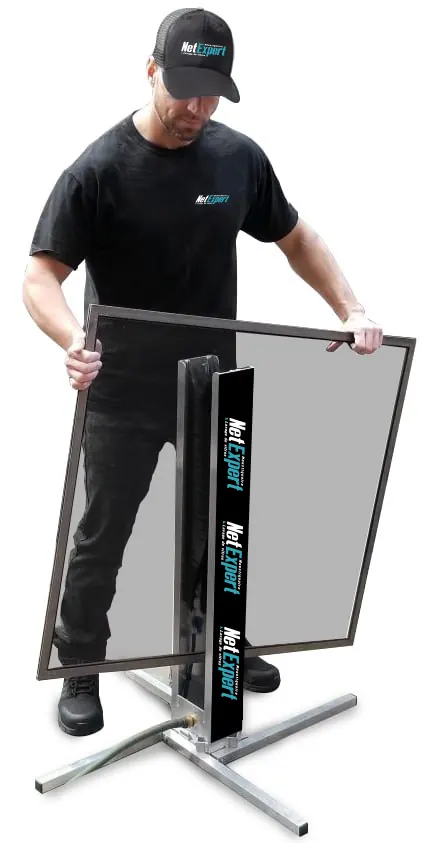
A patio door opens and closes more often than every window in the house combined — and it is the one the dog noses open and the cat climbs. Standard fibreglass mesh suits a lightly used door; for the others, we fit reinforced mesh, about seven times stronger, or pet-resistant mesh built for claws.
The extra cost is measured in tens of dollars; the yearly replacement it prevents, in hundreds. We carry both types in the vehicle — the decision can happen on the spot, with the door off its track in front of you.
Ten kinds of damage, one answer
If your screen looks like any of these, it can be repaired. Tap one to request a quote for that exact damage. We rarely replace a whole frame — in most cases only the mesh needs redoing.
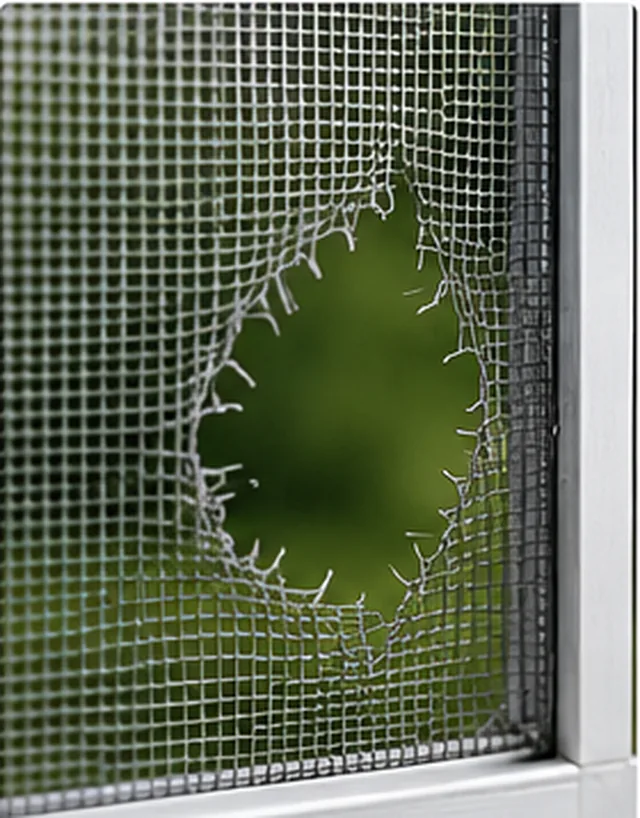 Mesh
Mesh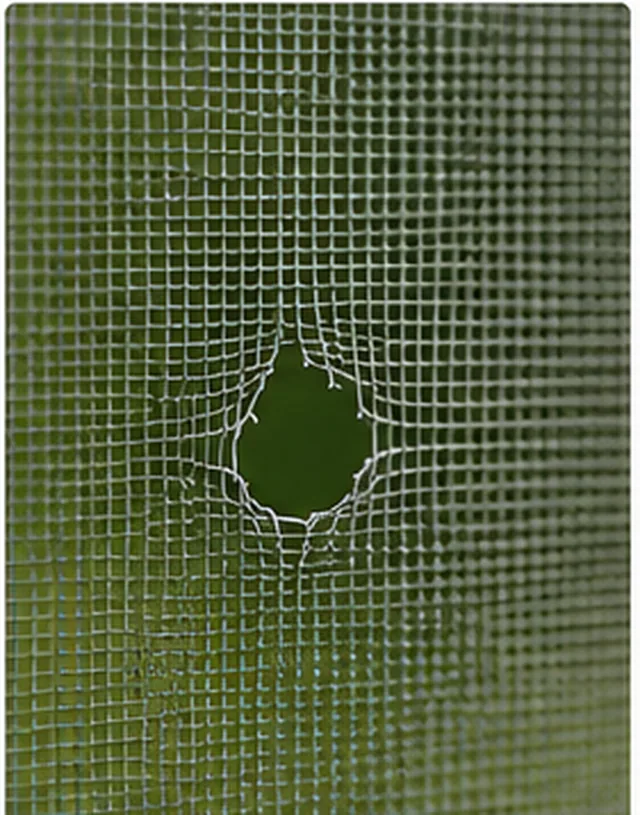 Mesh
Mesh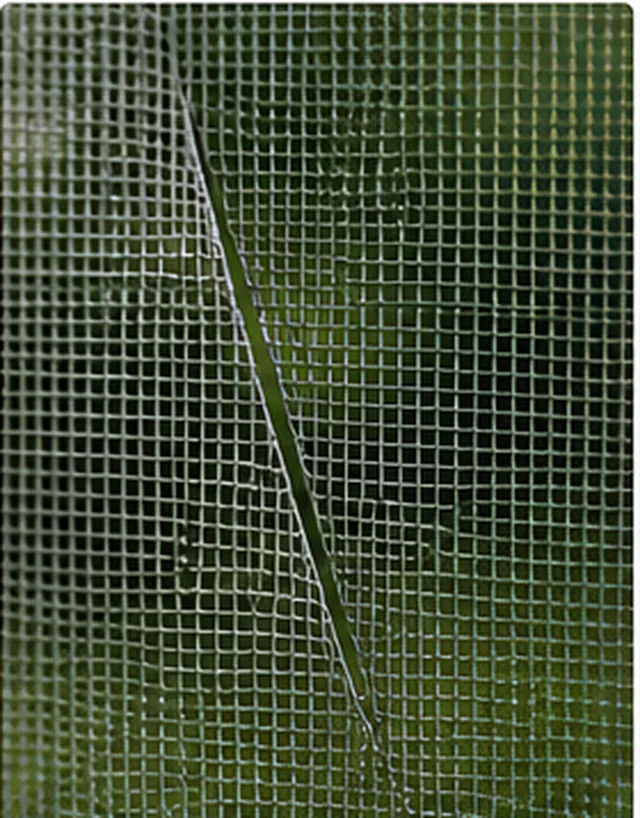 Mesh
Mesh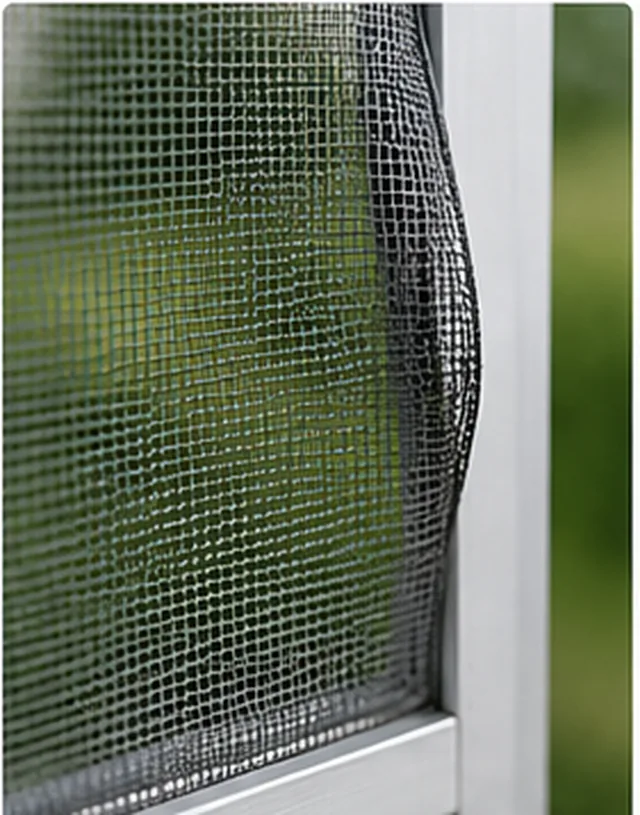 Mesh
Mesh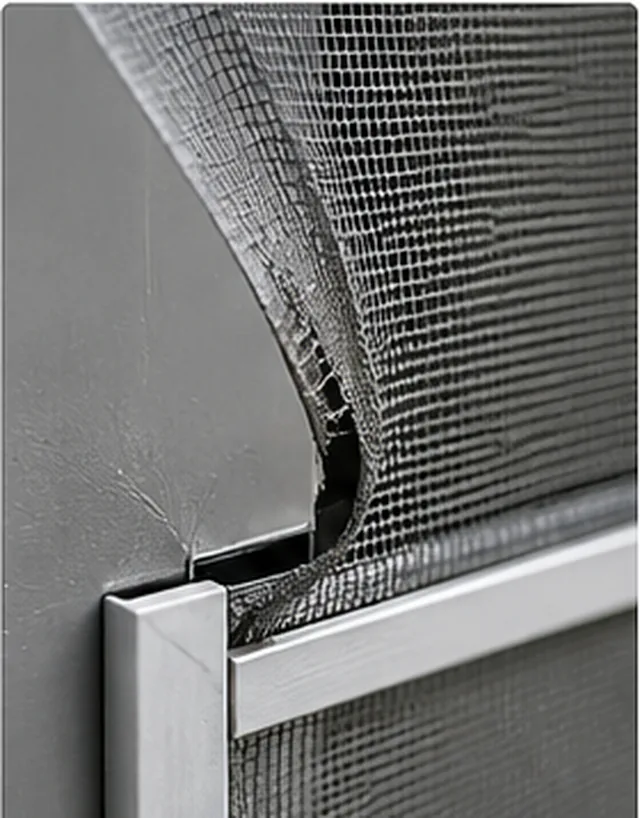 Mesh
Mesh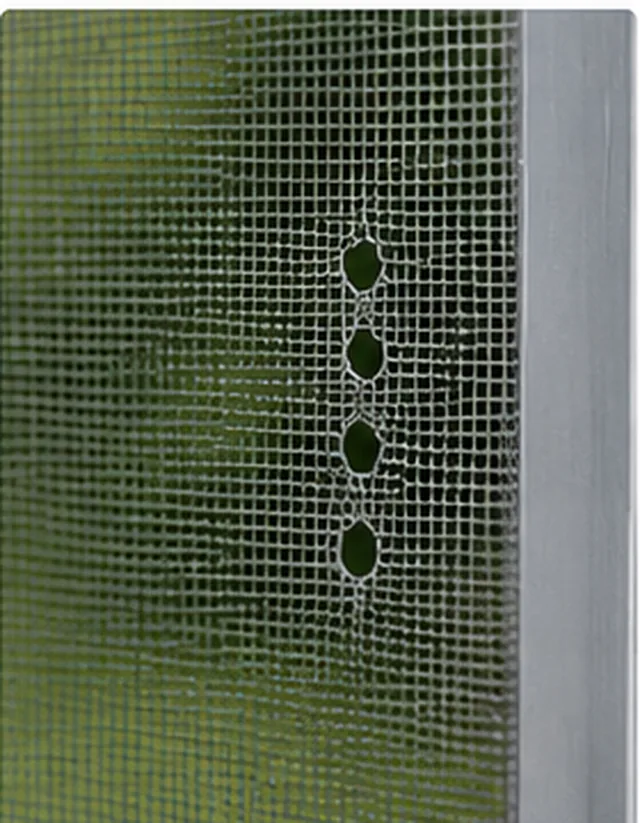 Mesh
Mesh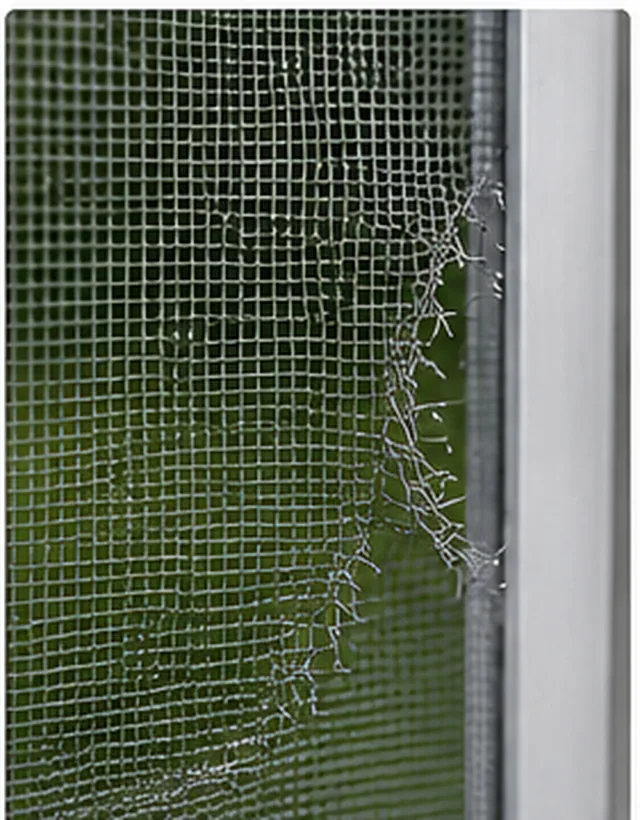 Mesh
Mesh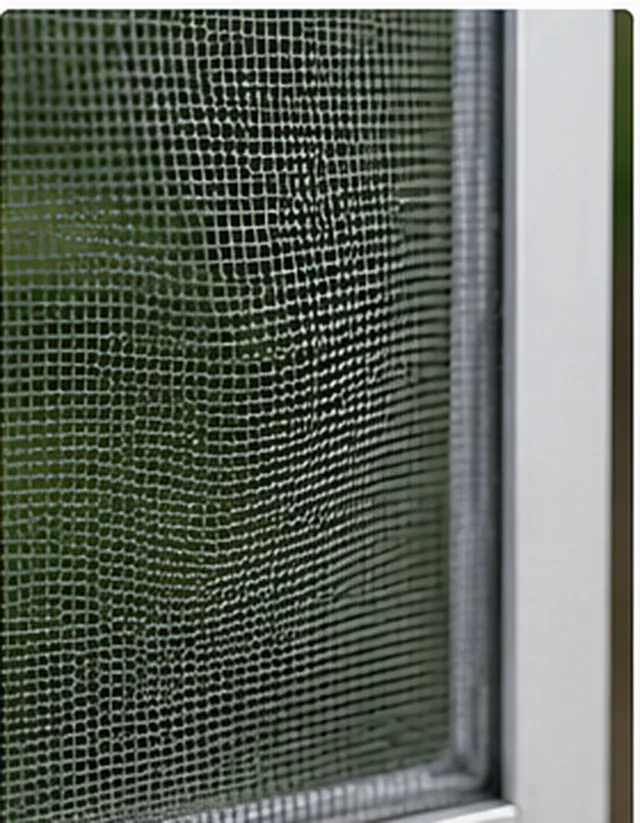 Mesh
Mesh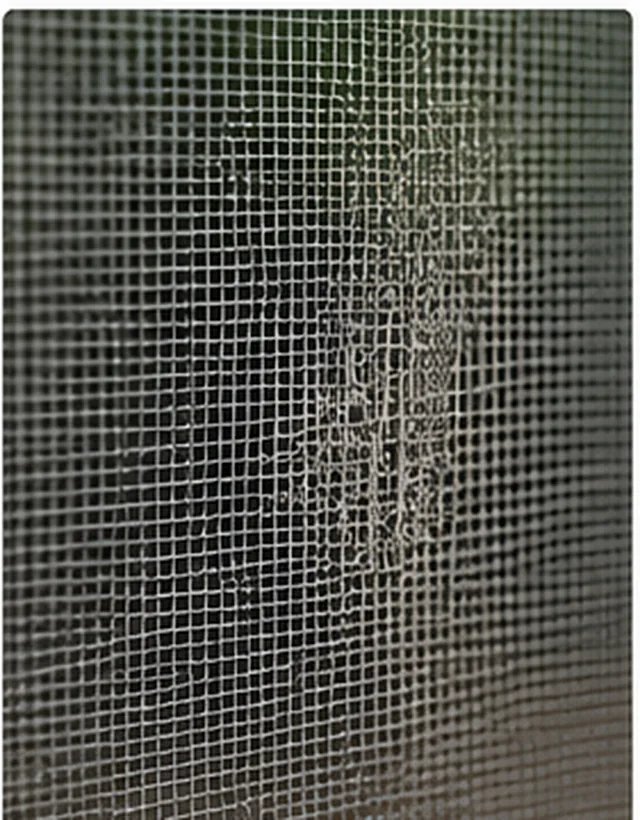 Mesh
Mesh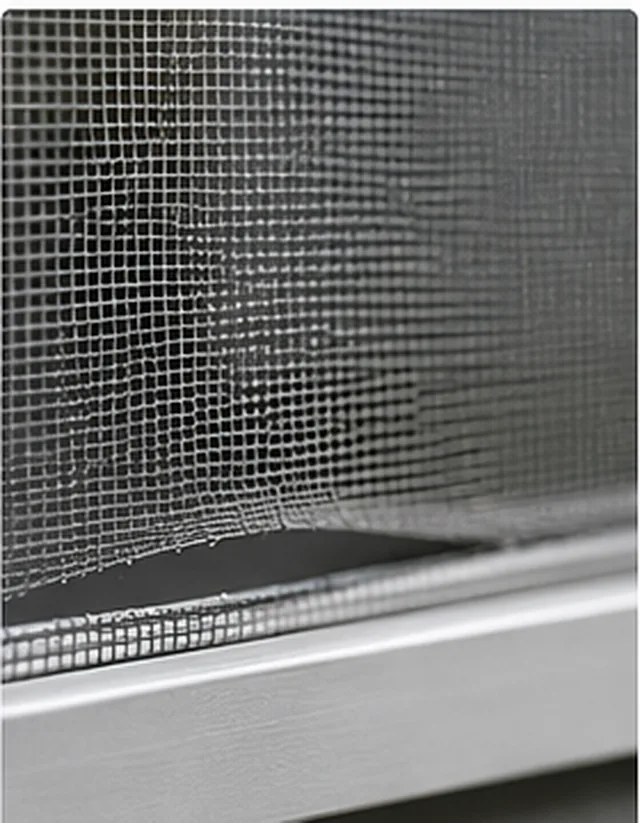 Frame
FrameThis job was not in Outremont — it shows our method, the same everywhere: door off its track, new rollers, new mesh, frame squared up.
 1
1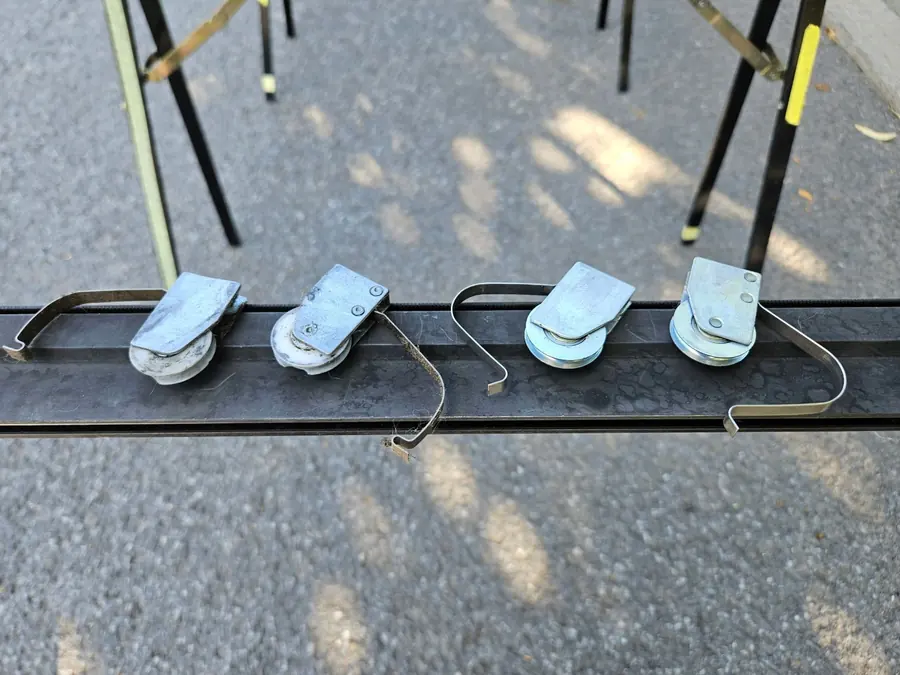 2
2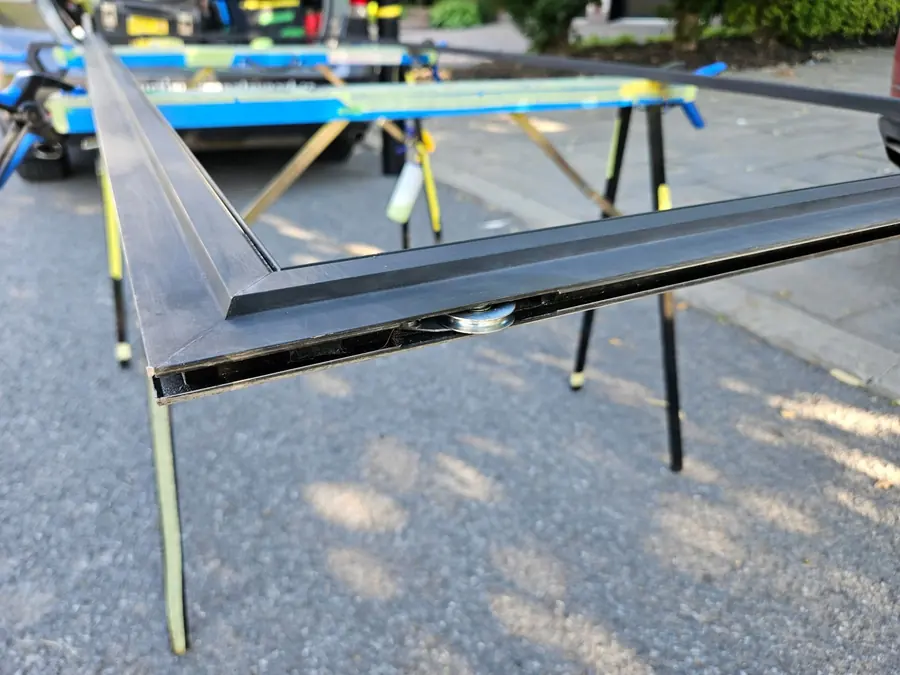 3
3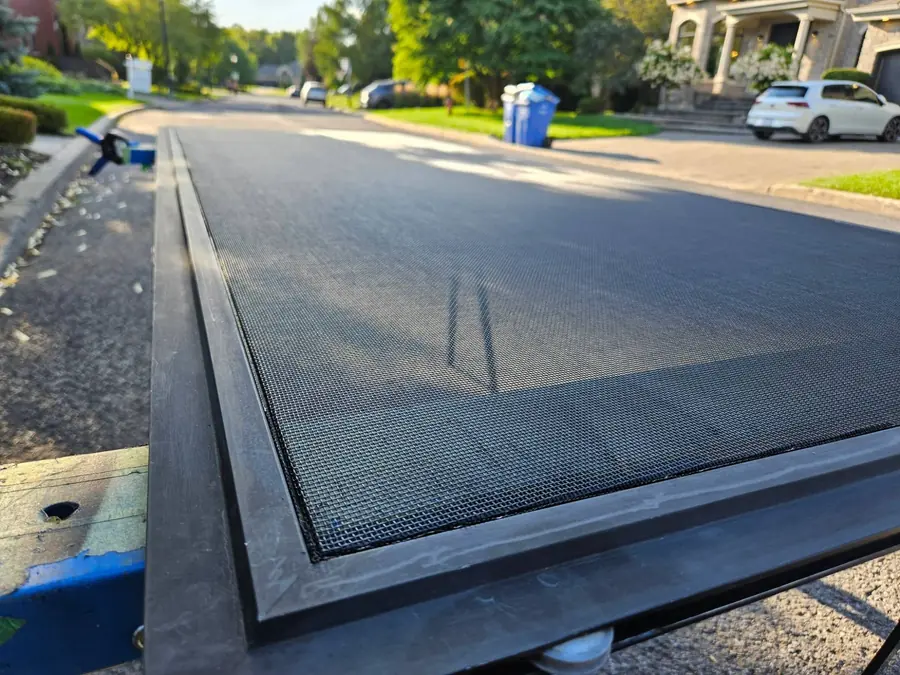 4
4« Ludovic replaced my screen in record time. Professional, and with a great sense of humour. I recommend his services — don’t hesitate to contact him, he’ll come to your home and do beautiful work. »
« Excellent service. Clear explanations of the work to be done. I really appreciated his dedication: despite the rain he insisted on finishing the job, soaked through and still smiling. The work was very well done. »
« Great service! He was at my neighbour’s and agreed to fix my back screen even though we had no appointment. Very successful repair, and inexpensive! »
Straight answers
Rollers, yes, provided the model is identified — we look at the roller in place, its height and how it mounts, before ordering one. Mesh can be redone in any frame that is still straight, whatever its year. What is not replaced like for like is the frame itself: we straighten it if it is bowed, and we only talk about building new if it is split or twisted for good.
We go through the flat and work from the terrace: the panel lifts out of its track, lies flat right there, gets rescreened and goes back in. It never goes down to the street and nobody puts a ladder against a stone façade. The only condition is that an occupant opens the door at the agreed time and that the terrace is clear where the work happens.
Yes, but not off a shelf. A door set into an opening cut through a stone wall is the size of that opening: we measure the track, the clear height and the closing play on site, and the panel is built to those figures. Then comes the choice of rollers, which depends on the track that is there and is settled by looking at it, not from a catalogue.
Yes, at your home. We remove the screen door, replace the mesh or rollers on site, clean and lubricate the track, then reinstall it — usually in a single visit to Outremont.
Almost always the rollers: they wear out before the mesh and push the door off its track. We replace them and clean the track in the same intervention — forcing a derailing door eventually bends the frame, a costlier repair.
Rollers and hardware: from $30. A complete custom-built screen door: from $500, depending on format. The mesh alone on a door is priced on quote, from its dimensions. An exact quote is free.
One year on fabrication and installation — mesh, fitted rollers, built frames. Damage caused afterwards, by a pet or an impact, is not covered; for a dog, pet-resistant mesh is the real answer.
Pet-resistant mesh: about seven times stronger than standard fibreglass. On a patio door used daily, it is the difference between replacing the mesh yearly and being done with it for seasons.
Do you manage a building or a business in Outremont?