
Summer UV
Sun yellows and clouds the vinyl. Film that crackles to the touch is at end of life.
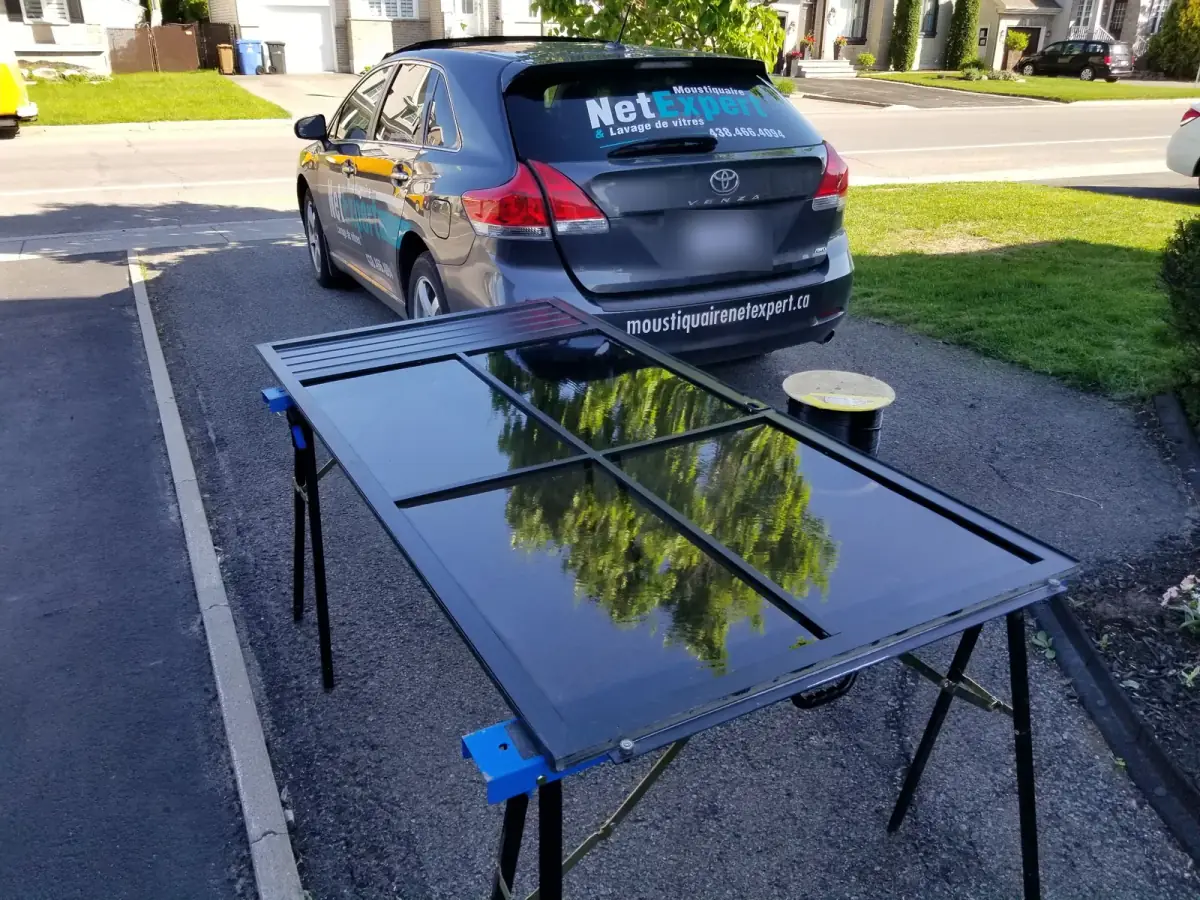
Gazebo and sun shelter specialty
Clear vinyl yellowed or torn? Replaced at your home in Outremont, in the original frames — gazebos and sun shelters.
Three questions are enough to start. The official measurement is taken on site.
Whatever your retailer calls it — MICA film, clear vinyl, clear plastic, sun-shelter transparent fabric — it is the same material, and we replace it in Outremont in your existing panels.
Sun yellows and clouds the vinyl. Film that crackles to the touch is at end of life.
Below freezing, MICA turns brittle — one handling or one gust splits it outright.
Slack vinyl flaps like a sail and eventually tears at the seams.
A gazebo in Outremont is almost never as old as the house behind it. The stone residences, upscale duplexes and triplexes built between 1900 and 1940 came with back gardens meant for planting, not for an aluminum structure from a big-box store. When a gazebo does stand there, it was added later: a permanent wooden structure, built to measure by a carpenter, set against the house or at the far end of the lot, with screen panels cut for that structure and no other. None of those panels can be swapped for a catalogue size. When the mesh or the clear vinyl gives out, the only sound approach is to measure every frame on site and rebuild each panel in its original frame — often wood itself, painted or varnished to match the house.
On the duplexes and triplexes, the yard sometimes gives way to an upper-floor terrace or a rooftop deck, and that is where the neighbourhood’s second kind of gazebo shows up: a pergola or a small retail gazebo, chosen to fit a limited surface. It is more exposed than a gazebo on the ground — nothing breaks the wind at roof height — and its clear vinyl (MICA film) is usually the first thing to suffer. These panels have one practical quirk: they went up by the interior staircase or across the balcony, and they come down the same way, which dictates how they are removed. We handle them one at a time, redo them in the mobile workshop parked out front, and put them back in order. The structure itself, wood or aluminum, never moves.
On a permanent wooden structure, the screen panels are held by a spline pressed into a groove, exactly like a window screen but much larger: a gazebo panel is often as tall as a person, and the mesh works harder for it. The first sign is nearly always a corner letting go, then a mesh that sags instead of staying taut. The clear vinyl, when it was installed to stretch the season, ages differently: it yellows first, then stiffens, and one windy evening finally splits it along an upright. We rescreen the mesh in the existing frame with a new spline, and we replace the vinyl to the exact dimensions of each pane — never cutting one piece for two openings that look alike. On a carpenter-built gazebo, they never quite are.
What makes Outremont particular is the structure itself: wood, custom-built, often old. A panel comes out of a wooden frame by its screws or turn-buttons, and it has to come out without damaging a frame that cannot be bought again. We number every panel as it comes off, because two neighbouring openings differ by a few millimetres and a panel put back in the wrong spot either binds or gaps. When the gazebo sits on a terrace or a roof, the staircase decides everything: the width of the panels, the order of removal, the route through the unit. Access is agreed with the occupant beforehand — without it, nothing comes down.
An Outremont backyard is most often boxed in by the neighbouring buildings, which cuts the wind but also holds shade and damp. For a gazebo at ground level, that means clear vinyl that barely flaps but dries slowly and can stain if it stays up into spring: we suggest taking it down once the cold is over. On a rooftop deck it is the reverse — full sun and full wind — and vinyl yellows fast; aluminum mesh, which holds tension better than fibreglass, is a defensible choice up there. For evening mosquitoes in a shaded yard, standard fibreglass does the job in most cases.
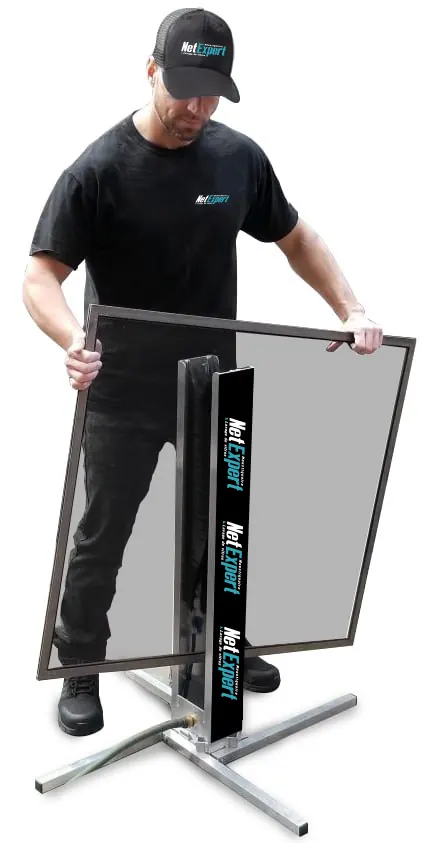
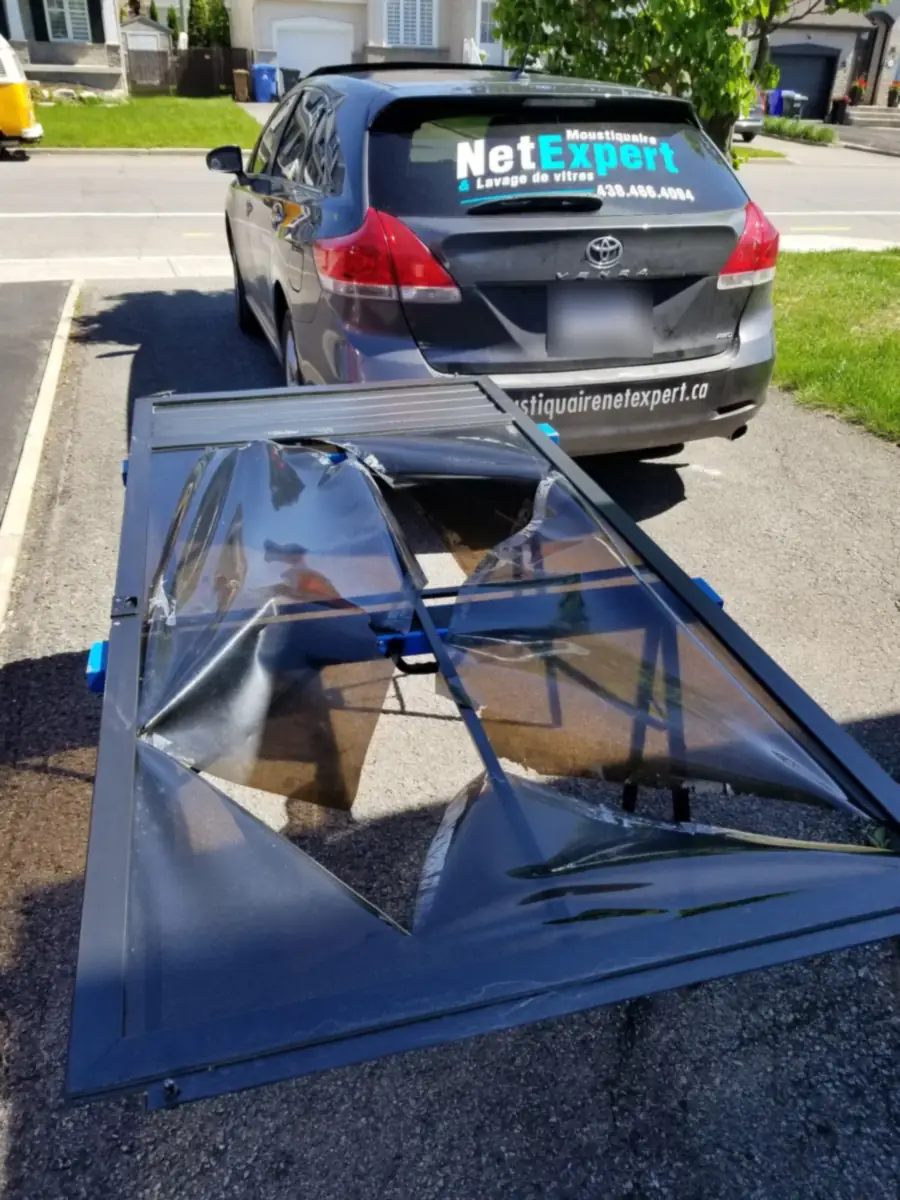
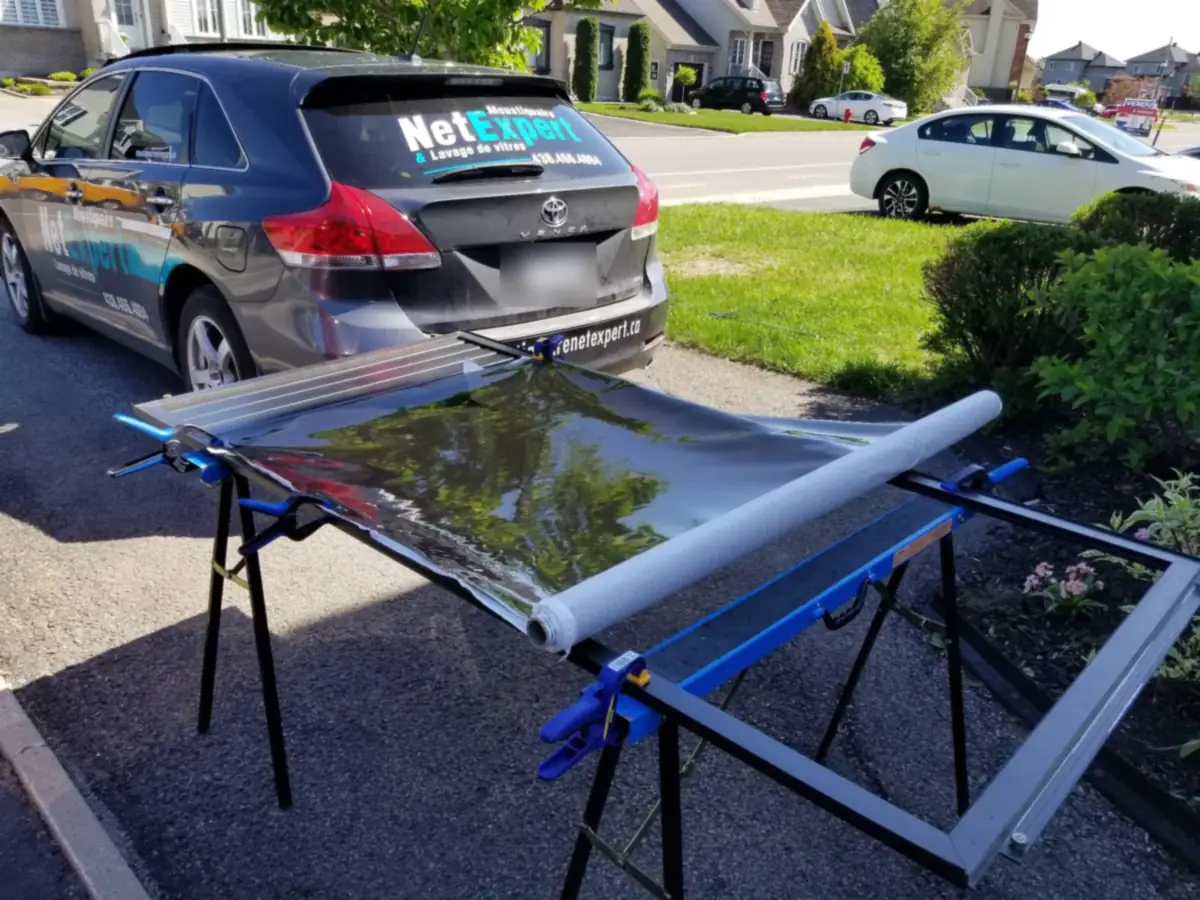
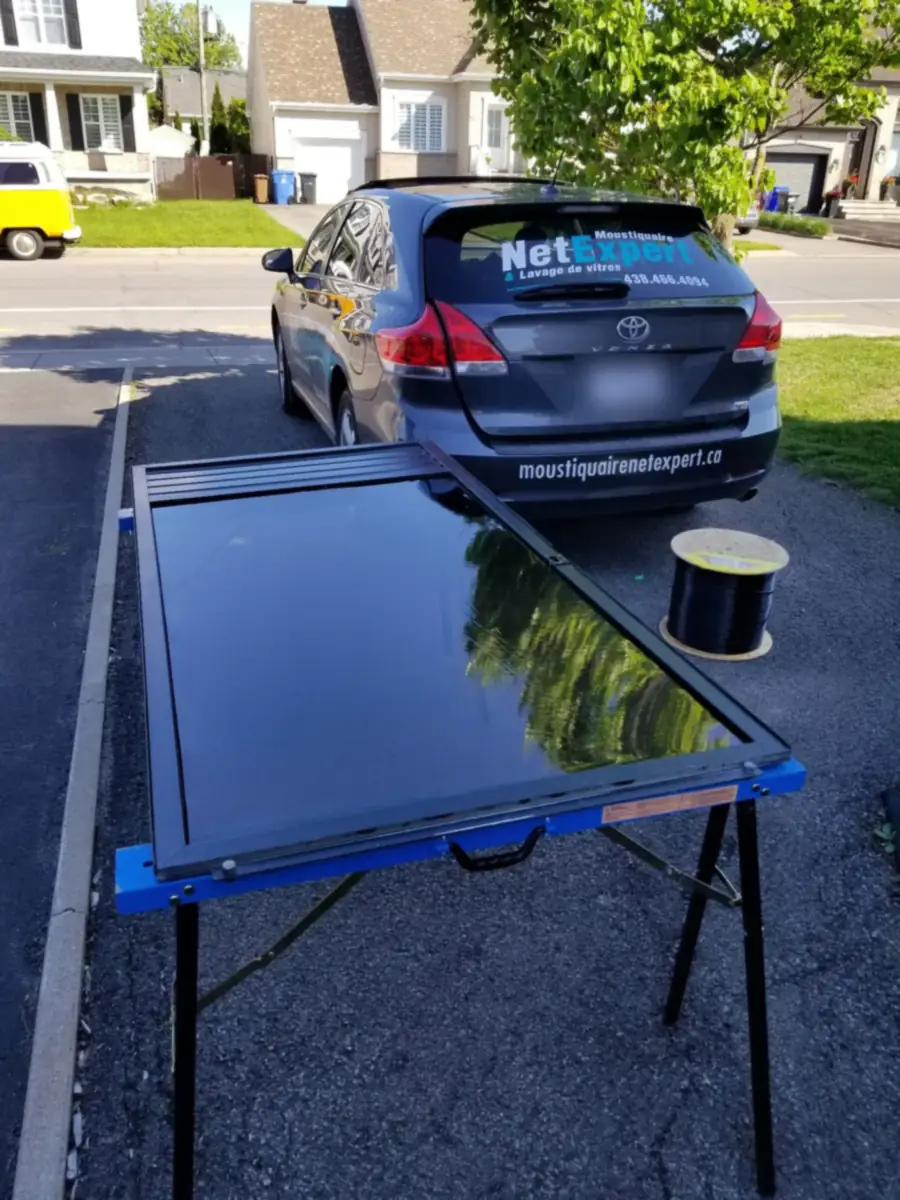
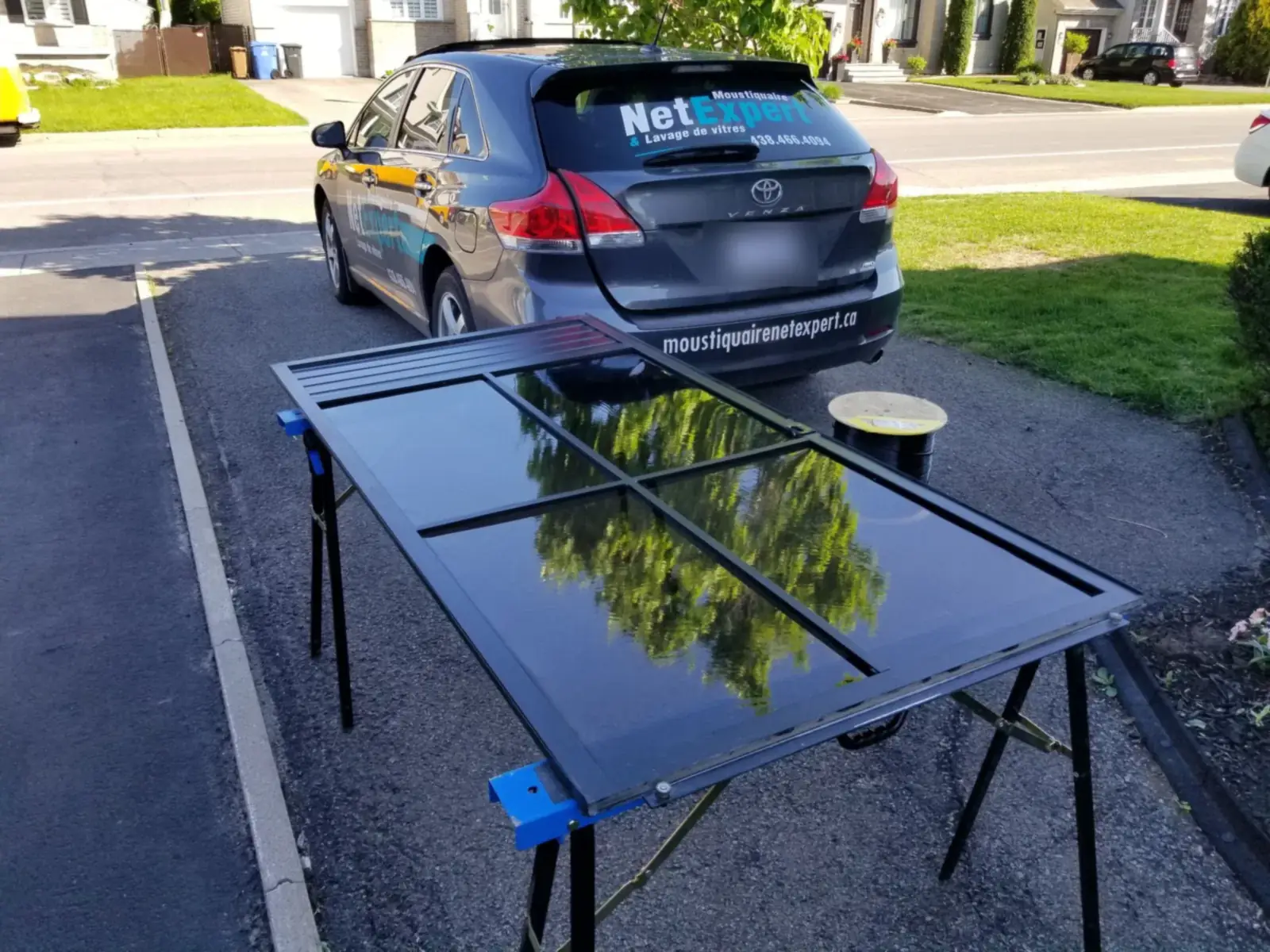
This job was not in Outremont — it shows our method, the same everywhere: panels down, new vinyl pane by pane, panels back up.
« Excellent service. Clear explanations of the work to be done. I really appreciated his dedication: despite the rain he insisted on finishing the job, soaked through and still smiling. The work was very well done. »
« Great service! He was at my neighbour’s and agreed to fix my back screen even though we had no appointment. Very successful repair, and inexpensive! »
« Ludovic replaced my screen in record time. Professional, and with a great sense of humour. I recommend his services — don’t hesitate to contact him, he’ll come to your home and do beautiful work. »
Straight answers
Yes — and that is exactly the case that justifies working in the original frames. We measure each opening on site, remove the panels one by one, rescreen the mesh or replace the clear vinyl to the exact dimensions measured, and put every panel back where it came from. The wood of the structure and the frames is left alone; only the mesh and the spline change.
The same way they went up: the interior staircase or the balcony. We take them down one at a time, carry them to the mobile workshop parked in front of the building, redo them, then bring them back up in the same order. Access to the unit has to stay open during the visit, and that is settled when the appointment is booked.
No. The frame is almost always sound; it is the vinyl that has aged through sun and frost. We strip the old film, clean the groove and fit new clear vinyl, pane by pane, stretched into the original frame. If the screen mesh in the same panel is still good, we keep it; if not, we redo it during the same visit.
Yes, at your home. We travel to Outremont, remove the panels, replace the MICA vinyl in the original frames and put everything back — the gazebo structure is never touched. It is one of our specialties.
Yes. Depending on the retailer it is called MICA film, clear vinyl, clear plastic or transparent fabric — the same flexible material that cuts wind and holds warmth. We replace it on gazebos and sun shelters alike.
Yes. The vinyl is replaced pane by pane, in the existing frame — no need to redo the whole panel for one tear. If several panes have yellowed, doing them together gives a uniform result.
On assessment: the price depends on the number of panels and their dimensions. The quote is free, and a photo is often enough to price without a visit. Fabrication and installation guaranteed one year.
Do you manage a building or a business in Outremont?