
Summer UV
Sun yellows and clouds the vinyl. Film that crackles to the touch is at end of life.
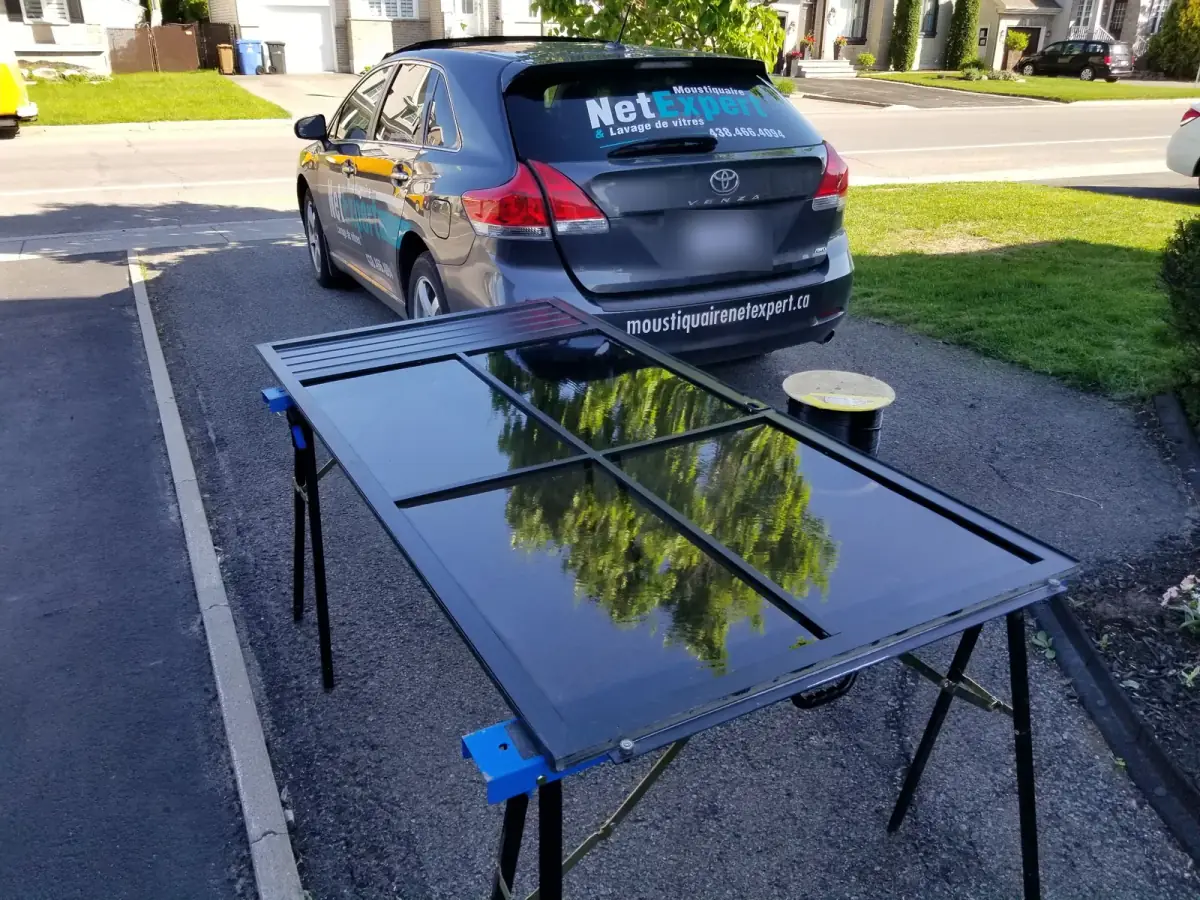
Gazebo and sun shelter specialty
Clear vinyl yellowed or torn? Replaced at your home in Rivière-des-Prairies–Pointe-aux-Trembles, in the original frames — gazebos and sun shelters.
Three questions are enough to start. The official measurement is taken on site.
Whatever your retailer calls it — MICA film, clear vinyl, clear plastic, sun-shelter transparent fabric — it is the same material, and we replace it in Rivière-des-Prairies–Pointe-aux-Trembles in your existing panels.
Sun yellows and clouds the vinyl. Film that crackles to the touch is at end of life.
Below freezing, MICA turns brittle — one handling or one gust splits it outright.
Slack vinyl flaps like a sail and eventually tears at the seams.
In Rivière-des-Prairies–Pointe-aux-Trembles, the lot makes the difference. The bungalows, cottages and semi-detached homes built from 1960 to 1990 sit on wide lots, and the retail gazebo there is rarely up against the house: it stands farther out in the yard, beside the pool when there is one, fully in the open. A gazebo standing alone in the middle of a big lot takes wind from every side, and its clear vinyl (MICA film) pays first — it balloons, slaps and splits along an upright long before the screen mesh shows a sign. These aluminum or steel structures use standard-size panels, but the retailer changes models every few years, and the panel you are looking for no longer exists. So we rebuild it in its frame.
At the two ends of the borough, along the St. Lawrence and the Rivière des Prairies, the old village cores tell a different story. The houses are older there, and the gazebo, when there is one, was built on site in wood to enjoy the water: a permanent structure with its own dimensions, and panels that match nothing a store sells. Being near the water adds two constraints you do not meet in the middle of the territory: wind arriving unobstructed from the shore, and insects that ordinary fibreglass does not stop. The panels on these structures are measured on site and rebuilt in their wooden frames; they are not swapped for a mass-produced product.
On the retail gazebos of the wide lots, what fails is predictable: the clear vinyl first, yellowed then stiff, split by a November or March gust; next the spline on the lower panels, pushed out of its groove by people coming and going; finally the fibreglass, slackened on the sunny side until a corner tears. We rescreen the mesh in the original aluminum frame, fit a new spline, and cut the vinyl to fit each opening rather than supplying one floating curtain. On the wooden structures by the water the panes are bigger and tension matters more: vinyl properly locked in its frame holds where loose film does not make it through the winter.
A retail gazebo set well out in a wide yard is easy to take apart — access is at grade — but we start by checking that the frame is still square: one winter of wind on stiff vinyl is enough to throw a light upright out of true, and no new mesh will make a panel close in a twisted frame. On the wooden structures in the village cores, panels are screwed in or held by turn-buttons, and each is unique: each gets a mark on the way out and goes back exactly where it belonged. Either way, the panels go to the mobile workshop one at a time and go back as each is finished; the structure does not move.
Two shorelines, a wide territory in between, and wind with little to stop it across the big lots: that combination wears out clear vinyl faster here than elsewhere. On a gazebo standing alone in a yard or facing the water, aluminum mesh keeps its tension better than fibreglass, and we recommend it for exposed panels. Near the river or the St. Lawrence, the vinyl takes the wind head-on once the trees are bare: that is where it goes on last and comes off first. Vinyl goes up before the first frosts; left up through summer on an open lot, it yellows in a single season.
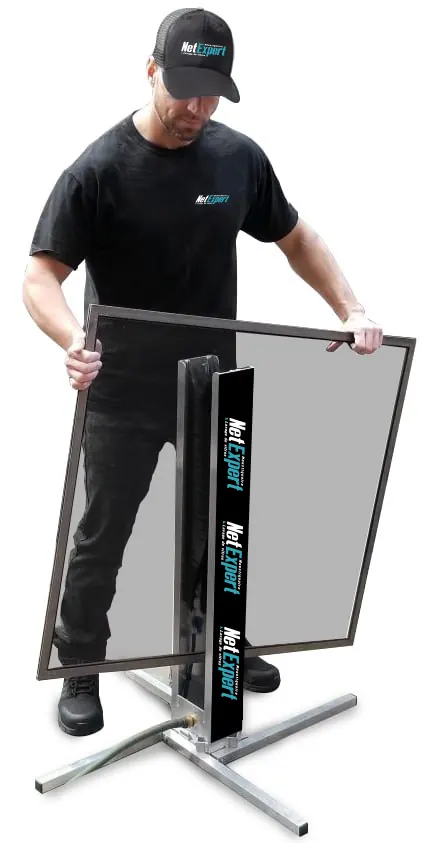
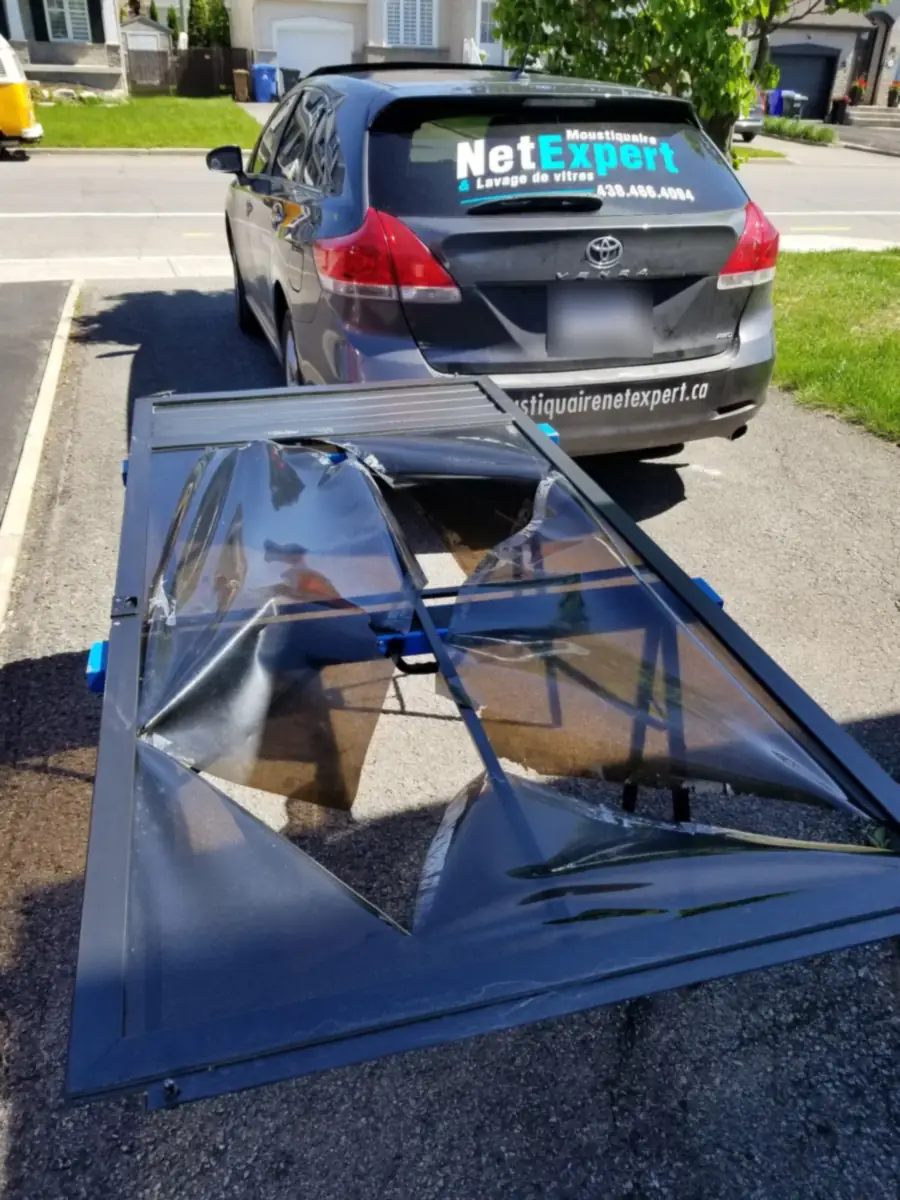
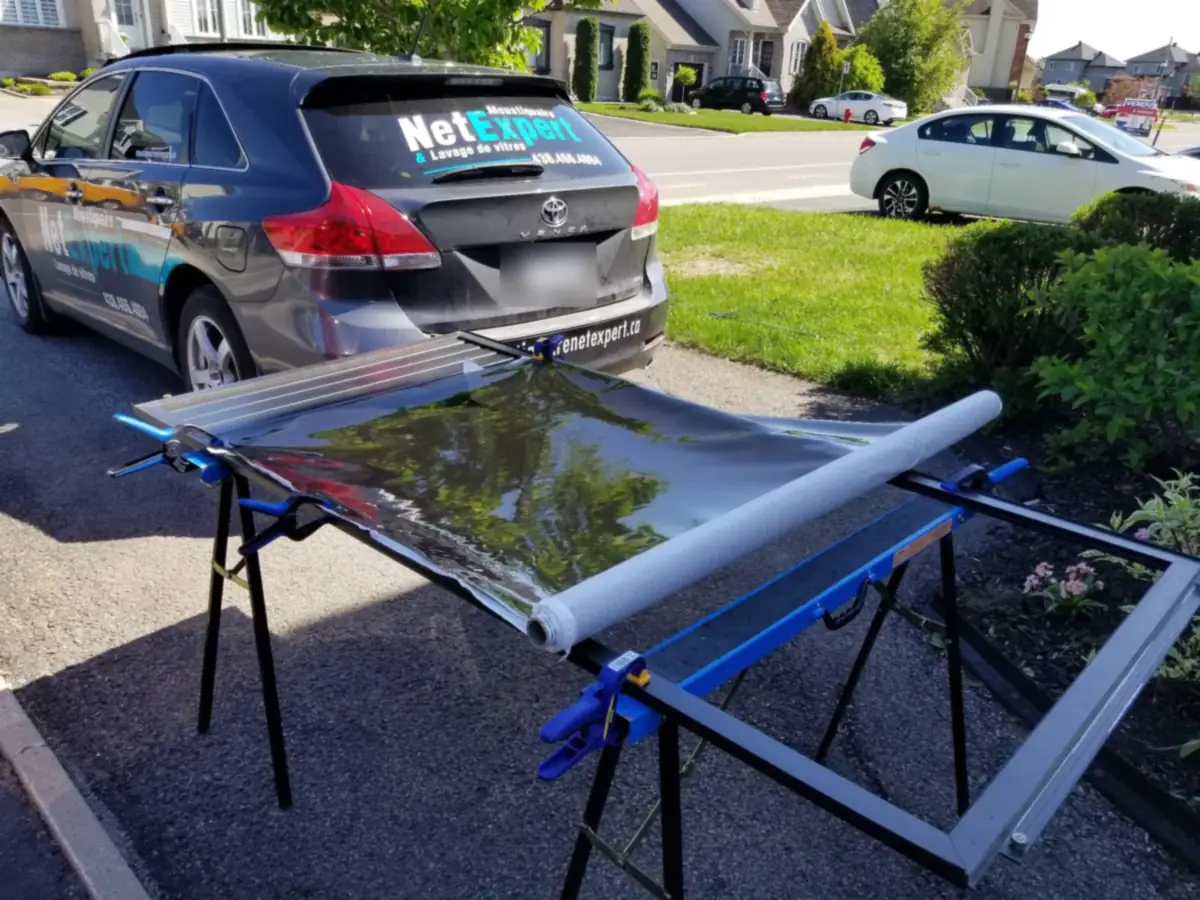
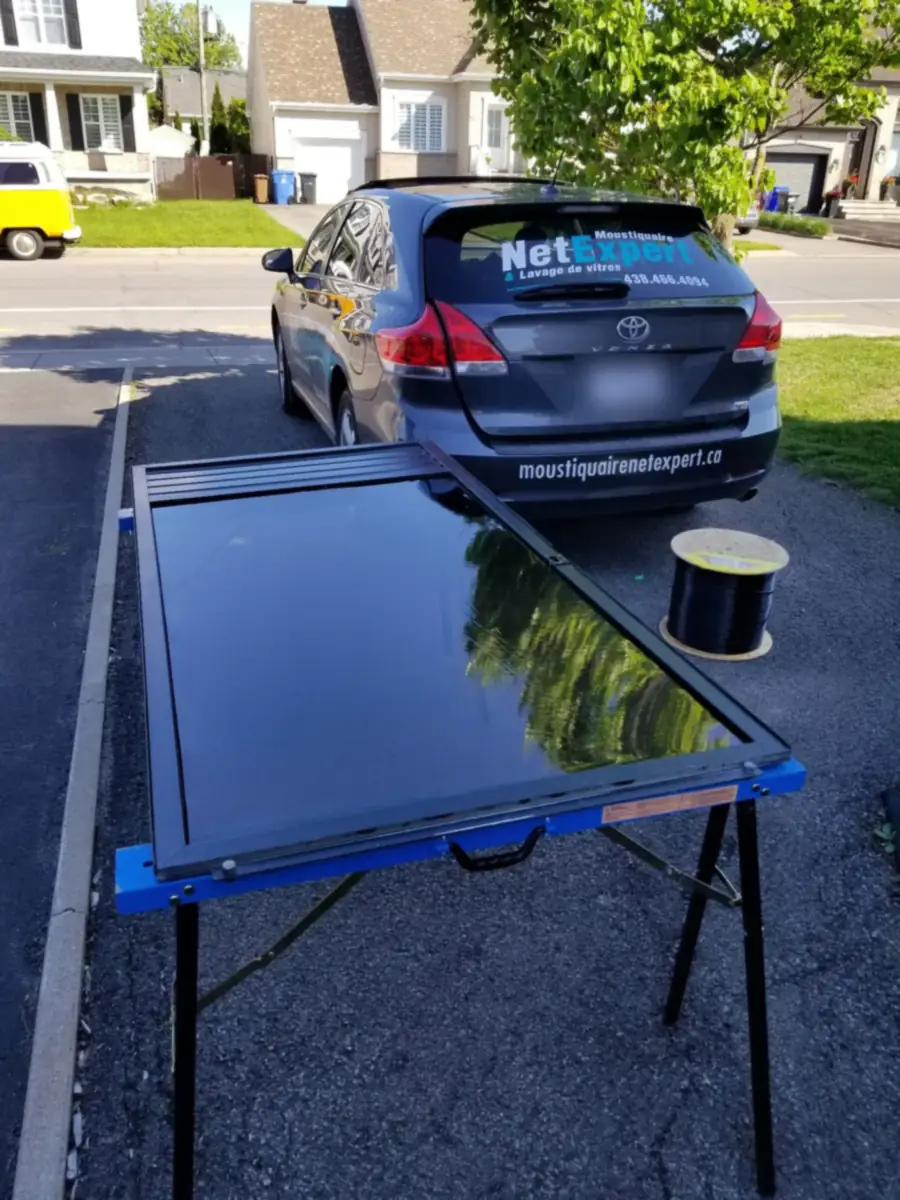
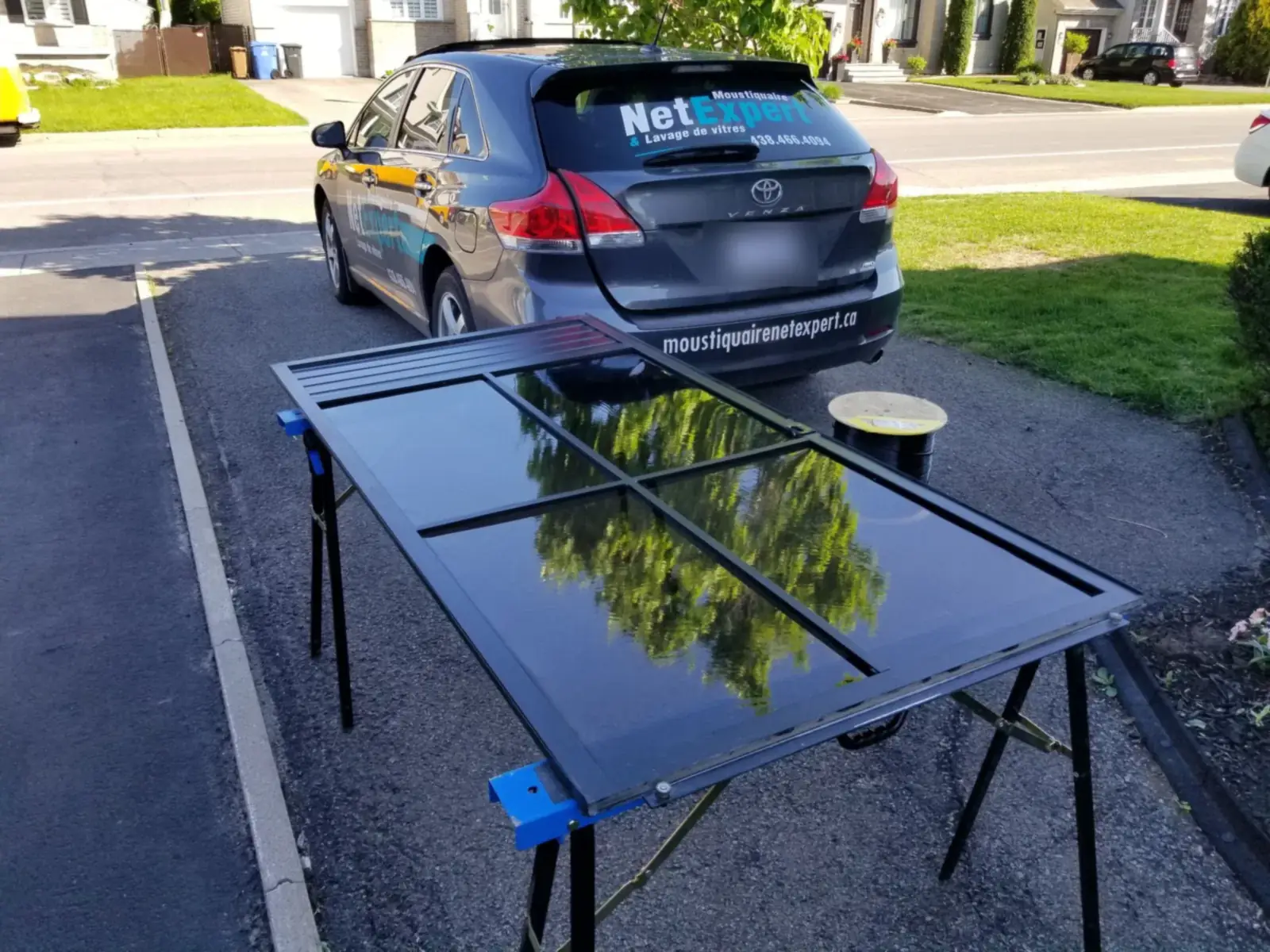
This job was not in Rivière-des-Prairies–Pointe-aux-Trembles — it shows our method, the same everywhere: panels down, new vinyl pane by pane, panels back up.
« Ludovic replaced my screen in record time. Professional, and with a great sense of humour. I recommend his services — don’t hesitate to contact him, he’ll come to your home and do beautiful work. »
« Excellent service. Clear explanations of the work to be done. I really appreciated his dedication: despite the rain he insisted on finishing the job, soaked through and still smiling. The work was very well done. »
« Great service! He was at my neighbour’s and agreed to fix my back screen even though we had no appointment. Very successful repair, and inexpensive! »
Straight answers
Usually the installation. Vinyl delivered in one piece and hung rather than tensioned always keeps some slack; on a gazebo with nothing to shelter it, that slack becomes a snap with every gust, and the crack starts where it folds. Cut to fit each pane and held by the panel frame, the same vinyl has nothing left to snap. We also check that the uprights were not bent by the previous winter.
Yes, in their wooden frames. We measure each opening on site, because no panel on a carpenter-built structure has a twin, then rescreen the mesh or replace the clear vinyl to the measured dimensions and return every panel to its original spot. The structure is left alone. Near the water we suggest a tight-weave mesh for the insects ordinary screening lets through.
Two causes stacking up. On a wide lot, sand and soil from the yard settle into the groove and stop the spline from seating; and the lower panels of a gazebo people walk through several times a day take a hand or a shoulder at exactly that height. We clear the groove to the bottom, seat a spline of the right diameter — one that is too thin pops out at the first push — and retension the mesh in the frame.
Yes, at your home. We travel to Rivière-des-Prairies–Pointe-aux-Trembles, remove the panels, replace the MICA vinyl in the original frames and put everything back — the gazebo structure is never touched. It is one of our specialties.
Yes. Depending on the retailer it is called MICA film, clear vinyl, clear plastic or transparent fabric — the same flexible material that cuts wind and holds warmth. We replace it on gazebos and sun shelters alike.
Yes. The vinyl is replaced pane by pane, in the existing frame — no need to redo the whole panel for one tear. If several panes have yellowed, doing them together gives a uniform result.
On assessment: the price depends on the number of panels and their dimensions. The quote is free, and a photo is often enough to price without a visit. Fabrication and installation guaranteed one year.
Do you manage a building or a business in Rivière-des-Prairies–Pointe-aux-Trembles?