
Summer UV
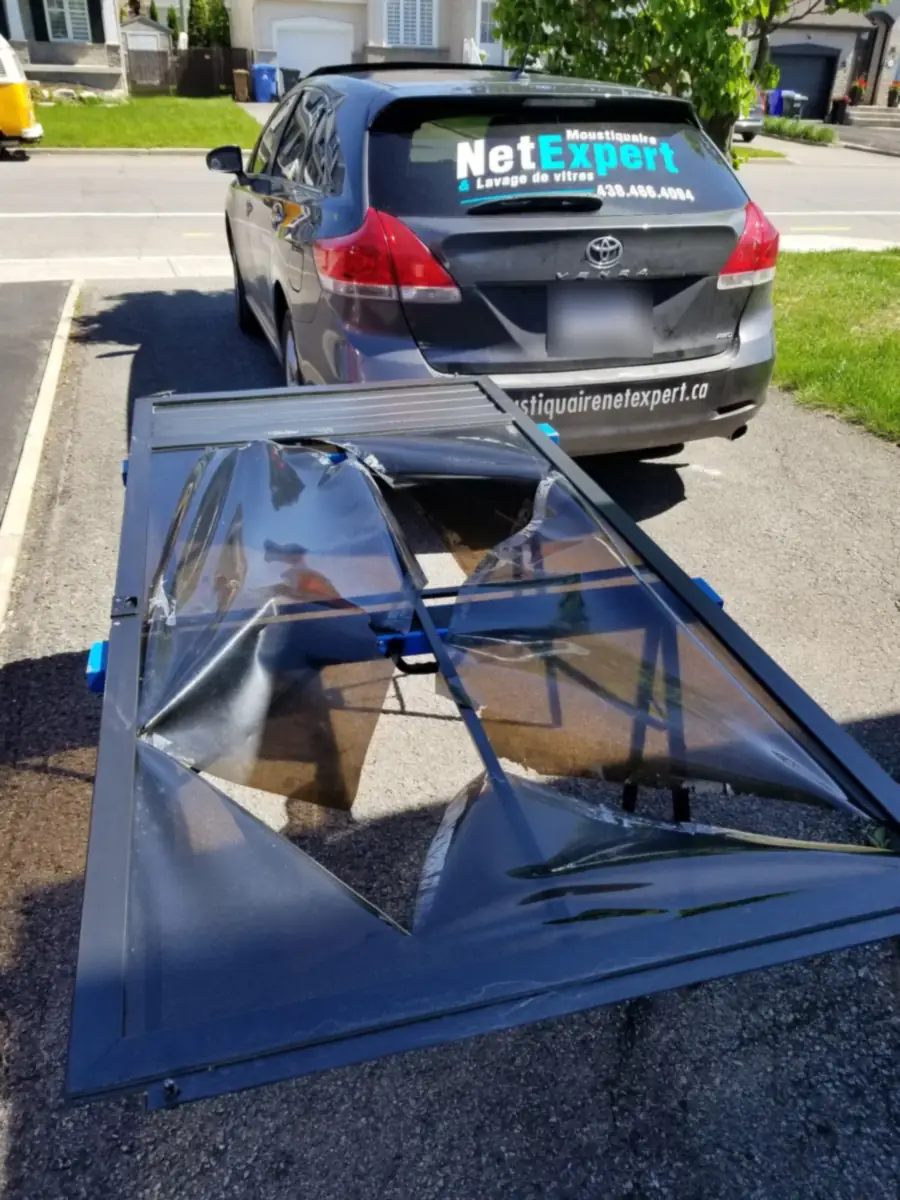
Sun yellows and clouds the vinyl. Film that crackles to the touch is at end of life.
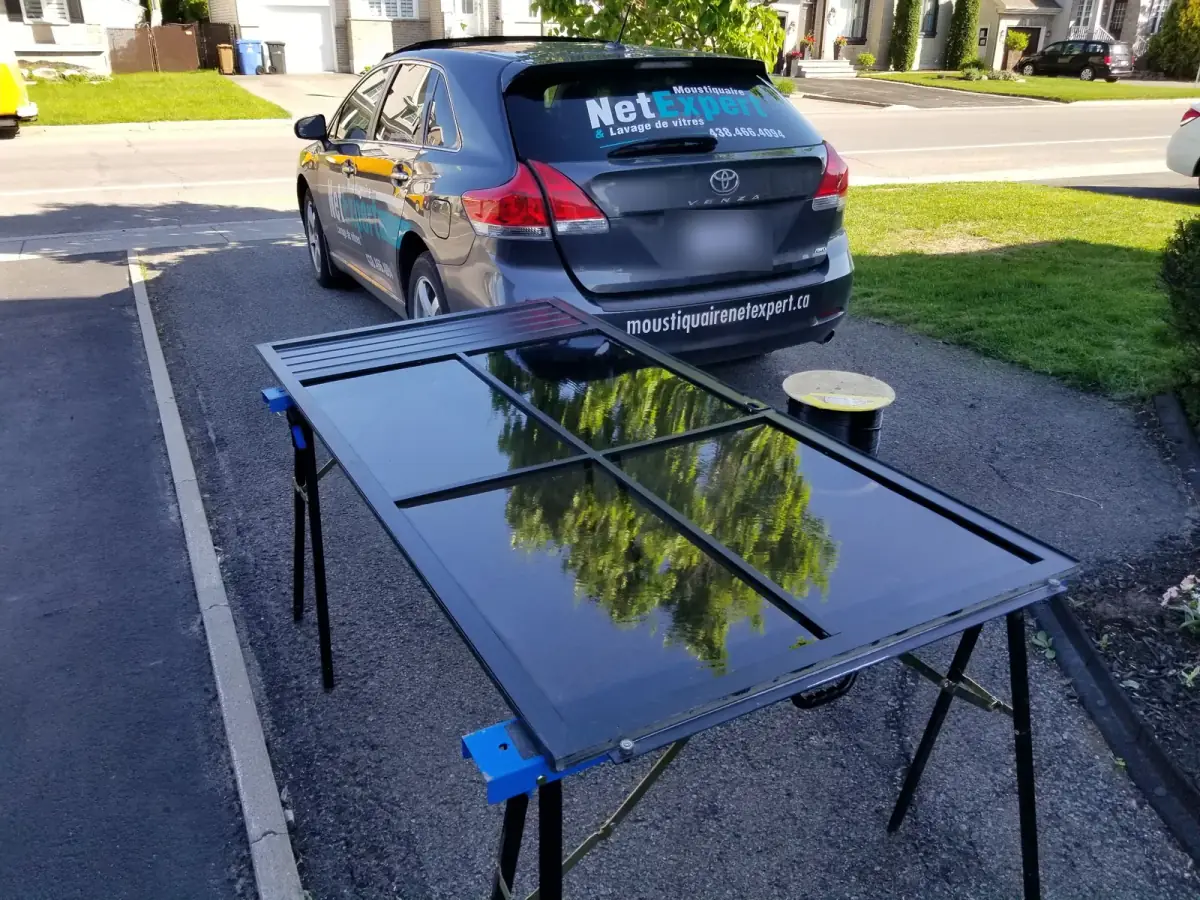
Gazebo and sun shelter specialty
Clear vinyl yellowed or torn? Replaced at your home in Laval, in the original frames — gazebos and sun shelters.
Three questions are enough to start. The official measurement is taken on site.
Whatever your retailer calls it — MICA film, clear vinyl, clear plastic, sun-shelter transparent fabric — it is the same material, and we replace it in Laval in your existing panels.
Sun yellows and clouds the vinyl. Film that crackles to the touch is at end of life.
Below freezing, MICA turns brittle — one handling or one gust splits it outright.
Slack vinyl flaps like a sail and eventually tears at the seams.
If one city in Greater Montreal had to be called the capital of the retail gazebo, it would be Laval. The huge sectors of bungalows and cottages built between 1960 and 1980 in Chomedey, Duvernay and Vimont line up thousands of regular backyards, easily big enough for a ten-by-twelve aluminum or steel structure with its standard-sized panels. Those yards are deep enough that the gazebo becomes the summer room of the house rather than a shelter tucked into a corner of the lot. A good number of these structures went up a decade ago or more; their original panels — film and screening — are what is failing now, not the frame.
At the two ends of the spectrum, two other gazebos. In the old village cores of Sainte-Rose and Saint-Vincent-de-Paul, the older homes sit on irregular, tree-covered lots; the gazebo there is seldom a store product, more often a permanent wooden structure built for the spot, with panels no catalogue can replace. In the recent townhouse and condo developments, the yard is a narrow rectangle between two fences and the gazebo is small — eight by ten, sometimes less — with short panels that the neighbours’ wind sets flapping. Across a territory this large, the question to settle on the phone is simple: what kind of structure, and in which neighbourhood.
On Chomedey, Duvernay or Vimont gazebos past the ten-year mark, the failures nearly always come in the same order: the clear vinyl (MICA film) first — yellowed by summers of full sun, stiffened by winters, split by the first strong April wind — then the screening, which goes slack, opens at a corner or lets go of its spline, often on the panel facing the pool, the one handled most. We replace the film with new clear vinyl cut to the exact size of each pane, in the original frame, and rescreen the mesh panels in theirs. The aluminum frames on these structures are almost always reusable. On a wooden structure in Sainte-Rose, each frame is measured on site and remade to its own dimensions.
A retail gazebo comes apart by hand: panels unclipped from the uprights, redone at the mobile workshop in the driveway, then put back. The panels of one gazebo are all the same age: the one that failed announces the next, and doing them together means taking the structure apart only once, film and screening alike. In townhouse yards there is no room to lay a panel flat, and the work is done in the vehicle. On a permanent wooden structure in an old village core, the panels are screwed or set in mouldings; we free them without forcing, and the structure is never modified.
A Laval cottage yard is generally open and sunny, especially around a pool where nothing casts shade: the film yellows fast and fibreglass weakens. Aluminum screening earns its place on the panels most exposed to wind, and pet-resistant screening on the lower panels of a yard where a dog or cat roams. In the tree-covered yards of the old cores, shade protects the film but brings more evening insects; a tight mesh makes a difference there. The film goes on before the first cold, while the gazebo still serves on fall evenings.
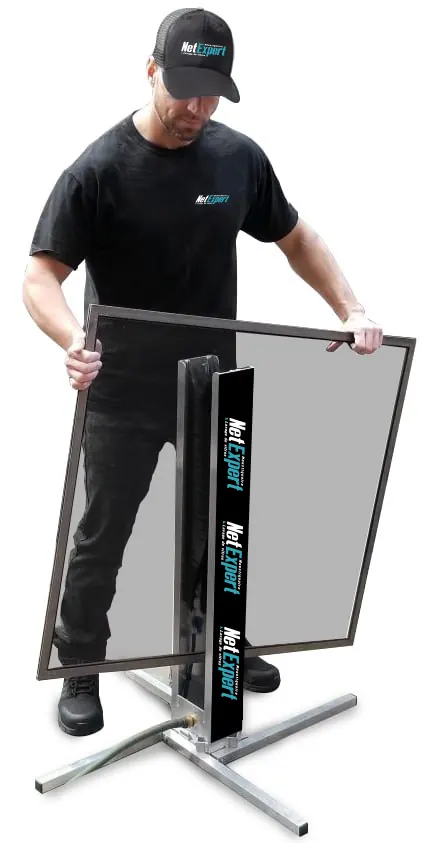
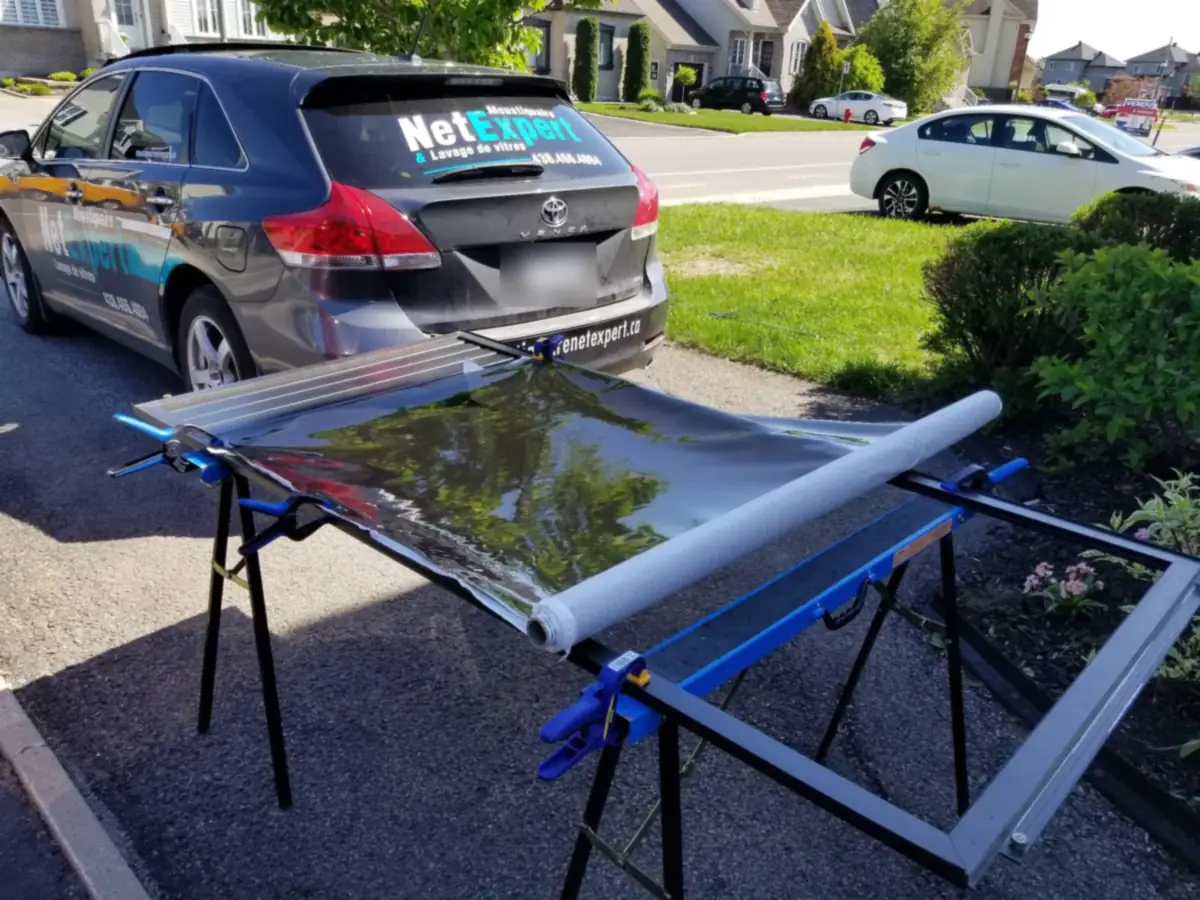
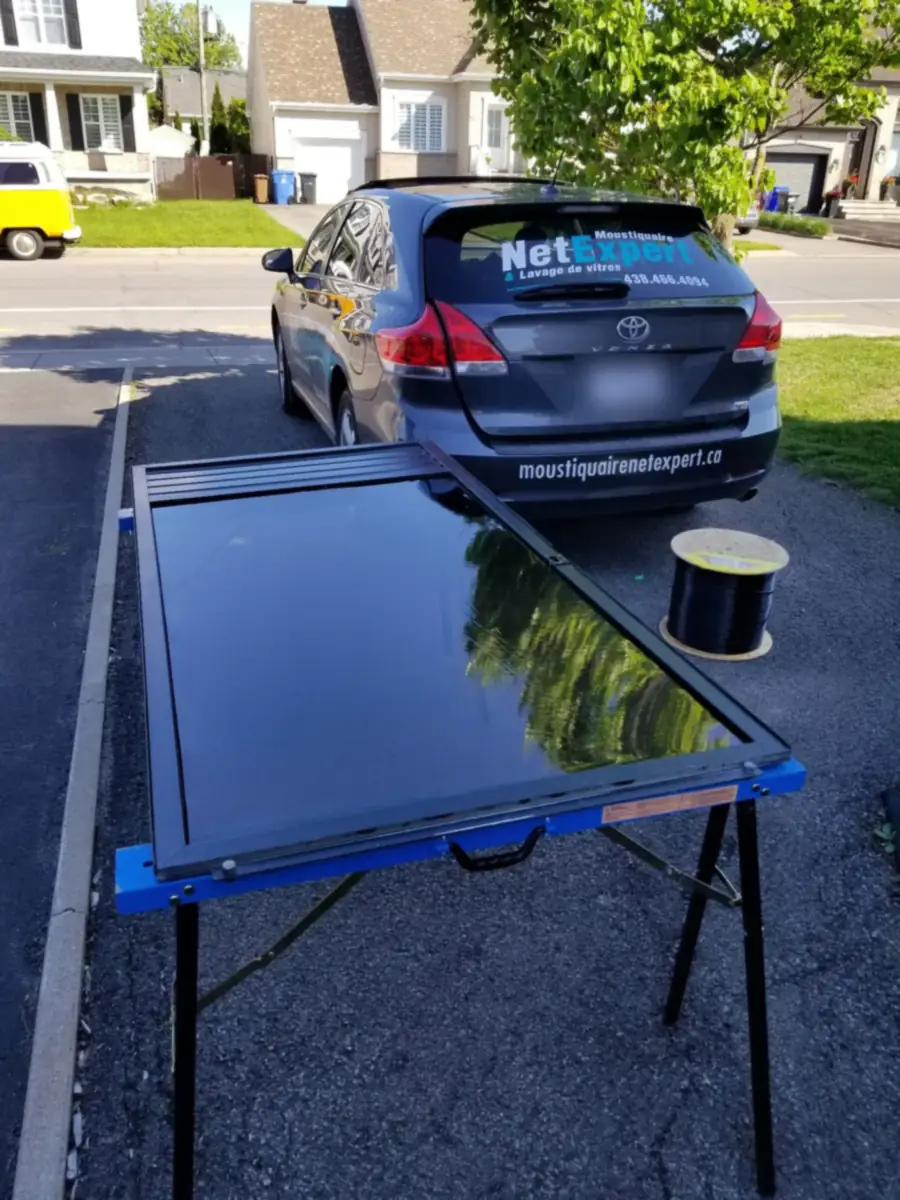
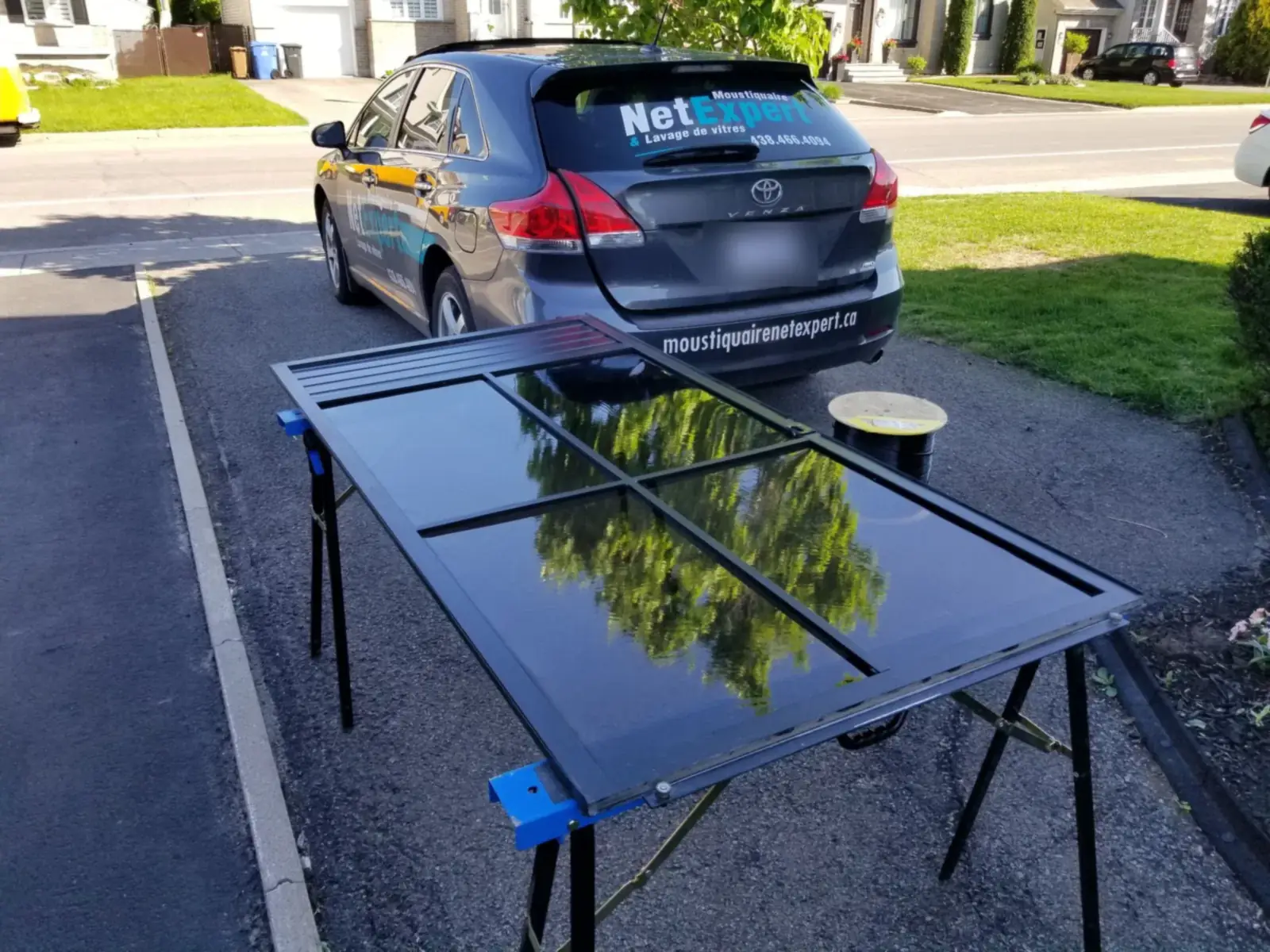
This job was not in Laval — it shows our method, the same everywhere: panels down, new vinyl pane by pane, panels back up.
« Great service! He was at my neighbour’s and agreed to fix my back screen even though we had no appointment. Very successful repair, and inexpensive! »
« Ludovic replaced my screen in record time. Professional, and with a great sense of humour. I recommend his services — don’t hesitate to contact him, he’ll come to your home and do beautiful work. »
« Excellent service. Clear explanations of the work to be done. I really appreciated his dedication: despite the rain he insisted on finishing the job, soaked through and still smiling. The work was very well done. »
Straight answers
No. The film is replaced in the existing frame, pane by pane, cut to exact dimensions. The maker does not come into it: what matters is that the aluminum frames are straight, and they are in the great majority of structures this age. The frame of the gazebo itself is left alone.
Two things matter: direct sun, which weakens fibreglass, and handling, since the poolside panels are the ones opened most. Aluminum screening or reinforced fibreglass holds up better under those conditions, and a pet-resistant mesh is worth considering on the lower panels if a dog runs the yard. Panels on the shaded side, opened less often, can keep standard mesh.
For the panels, no: they are redone in their frames just like on a large structure. For the wind, yes: between two attached houses the air speeds up and film flaps more. On these small gazebos, closing only the sheltered sides with film and keeping screening toward the wind corridor is often the best compromise.
Yes, at your home. We travel to Laval, remove the panels, replace the MICA vinyl in the original frames and put everything back — the gazebo structure is never touched. It is one of our specialties.
Yes. Depending on the retailer it is called MICA film, clear vinyl, clear plastic or transparent fabric — the same flexible material that cuts wind and holds warmth. We replace it on gazebos and sun shelters alike.
Yes. The vinyl is replaced pane by pane, in the existing frame — no need to redo the whole panel for one tear. If several panes have yellowed, doing them together gives a uniform result.
On assessment: the price depends on the number of panels and their dimensions. The quote is free, and a photo is often enough to price without a visit. Fabrication and installation guaranteed one year.
Do you manage a building or a business in Laval?