
Summer UV
Sun yellows and clouds the vinyl. Film that crackles to the touch is at end of life.
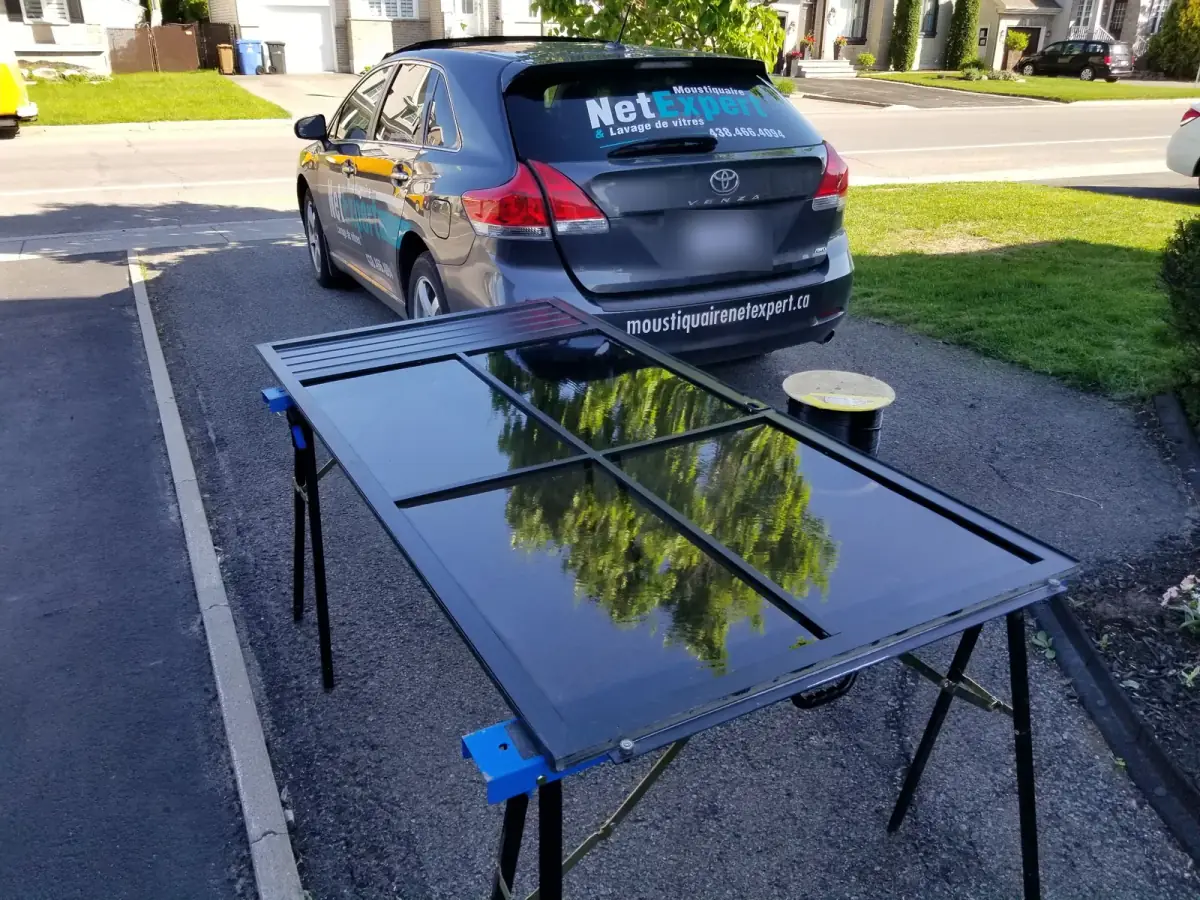
Gazebo and sun shelter specialty
Clear vinyl yellowed or torn? Replaced at your home in Sainte-Thérèse, in the original frames — gazebos and sun shelters.
Three questions are enough to start. The official measurement is taken on site.
Whatever your retailer calls it — MICA film, clear vinyl, clear plastic, sun-shelter transparent fabric — it is the same material, and we replace it in Sainte-Thérèse in your existing panels.
Sun yellows and clouds the vinyl. Film that crackles to the touch is at end of life.
Below freezing, MICA turns brittle — one handling or one gust splits it outright.
Slack vinyl flaps like a sail and eventually tears at the seams.
In Sainte-Thérèse the gazebo changes character from one neighbourhood to the next. Around rue Blainville, the old houses of the village core have no original gazebo — where one exists, it is a wooden structure added behind the house, often on a lot with more shade than the newer neighbourhoods get, with custom-made screen panels in wooden frames and clear vinyl (MICA film) laid over them in the fall. In the post-war neighbourhoods, the bungalow’s backyard holds the classic retail gazebo: aluminum or steel frame, standard-size panels, original vinyl often at the end of its life. Two very different objects, a few streets apart, calling for two ways of measuring and working.
Near the train station, the high share of rental housing, duplexes and condos changes the picture again. The gazebo there is smaller, or gives way to a terrace pergola; sometimes it sits on a balcony, sometimes on a roof terrace, and it belongs to a tenant or a co-owner rather than to the owner of the land. Its standard-size panels are exposed to wind aloft and travel by stairwell when they need rebuilding. From the wooden gazebo of a shaded village lot to the little terrace gazebo of a condo by the station, the panel is rebuilt neither the same way nor from the same measurements.
On the wooden structure behind a house in the old core, shade keeps the damp in: the frame dries badly, the fasteners give out before the mesh, and the panel ends up hanging in its opening. We rescreen each panel in its original frame with new fasteners and cut the clear vinyl to the real shape of each opening — no two alike on a hand-built structure. On the retail gazebos behind the bungalows the order is reversed: the vinyl goes first, yellowed and stiff, then split by a gust; the screening follows, slack or torn low down where people pass. The vinyl is replaced pane by pane in the original frame, and the panels are rescreened in their frames. The structure, in both cases, is left alone.
In the old core the house is close to the street and the lot is reached through a narrow passage or through the house: the panels of a wooden structure unscrew one at a time and are rebuilt in the mobile workshop, parked wherever the street allows. In the post-war neighbourhoods the bungalow’s yard is reached along the side and the retail gazebo comes apart by panel. Near the station the constraint is twofold: access to the terrace or balcony runs through the unit or a shared stairwell, and the gazebo sometimes falls under condo bylaws or the lease. Better to know before the visit who decides and which way the panels travel. The structure itself stays as it is.
Lots in the old core are generally shadier than those in the post-war neighbourhoods, and that changes the failure: in shade, vinyl yellows more slowly, but the damp that lingers under trees works the wooden frames and slackens the mesh; in the sun of a bungalow yard, it is the vinyl that stiffens and splits and the fibreglass that turns brittle. Near the station, high terraces catch the wind, and aluminum mesh holds its tension there better than fibreglass. Insects stay ordinary in town, except on a lot backing onto a woodlot, where a tight weave is worth discussing. In the shade of the old core the vinyl is mostly there to cut the wind; in an open bungalow yard it is there first of all to stretch the season.
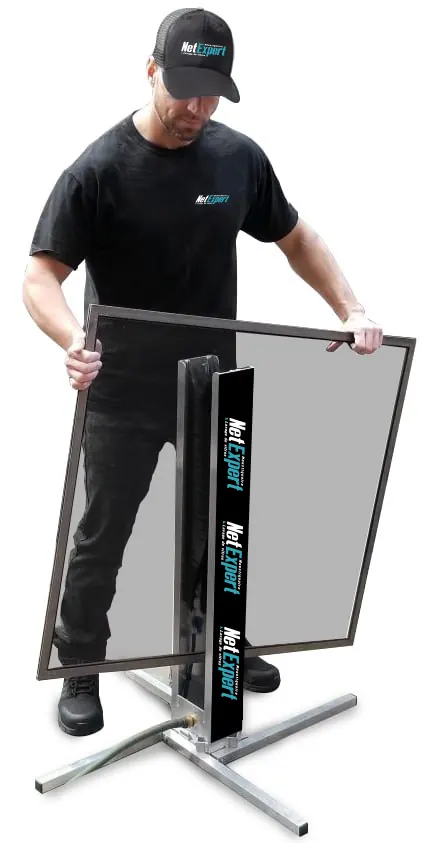
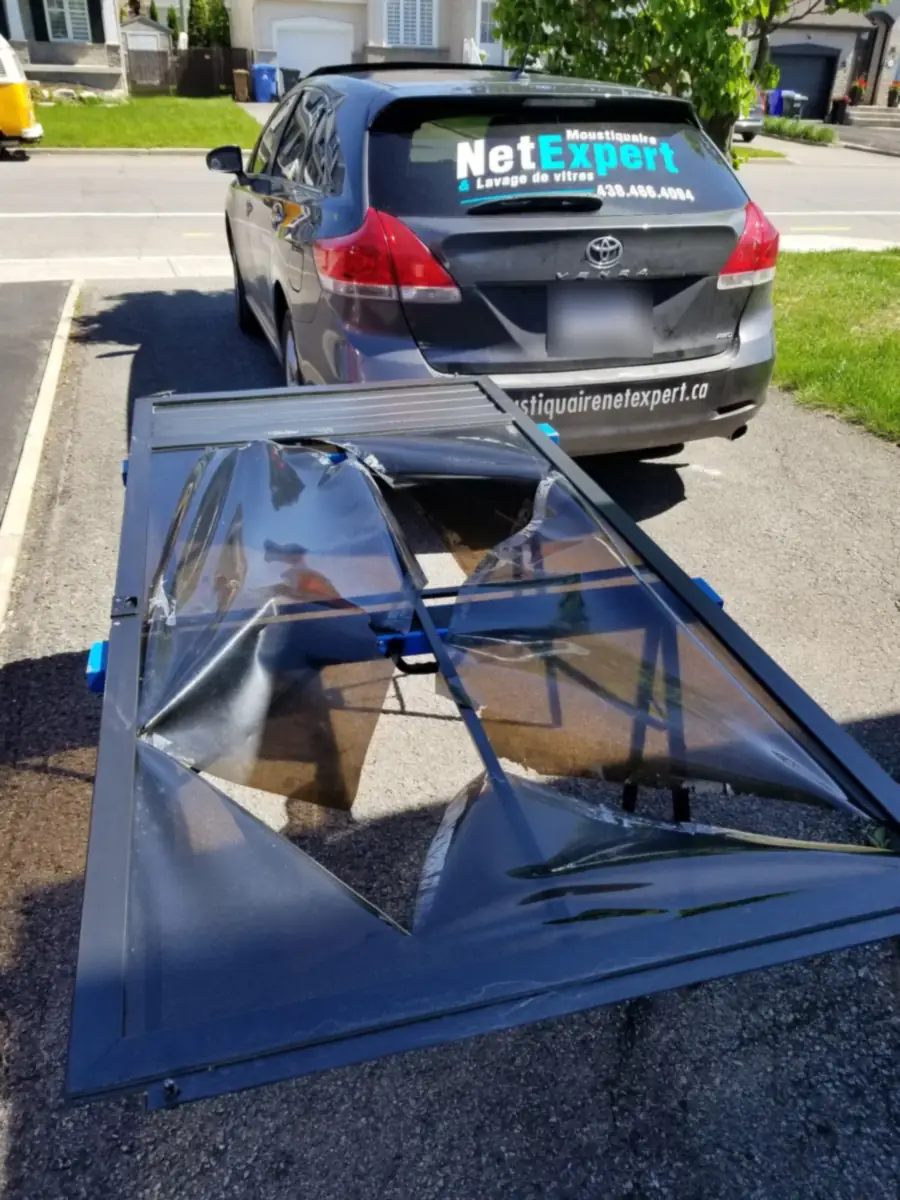
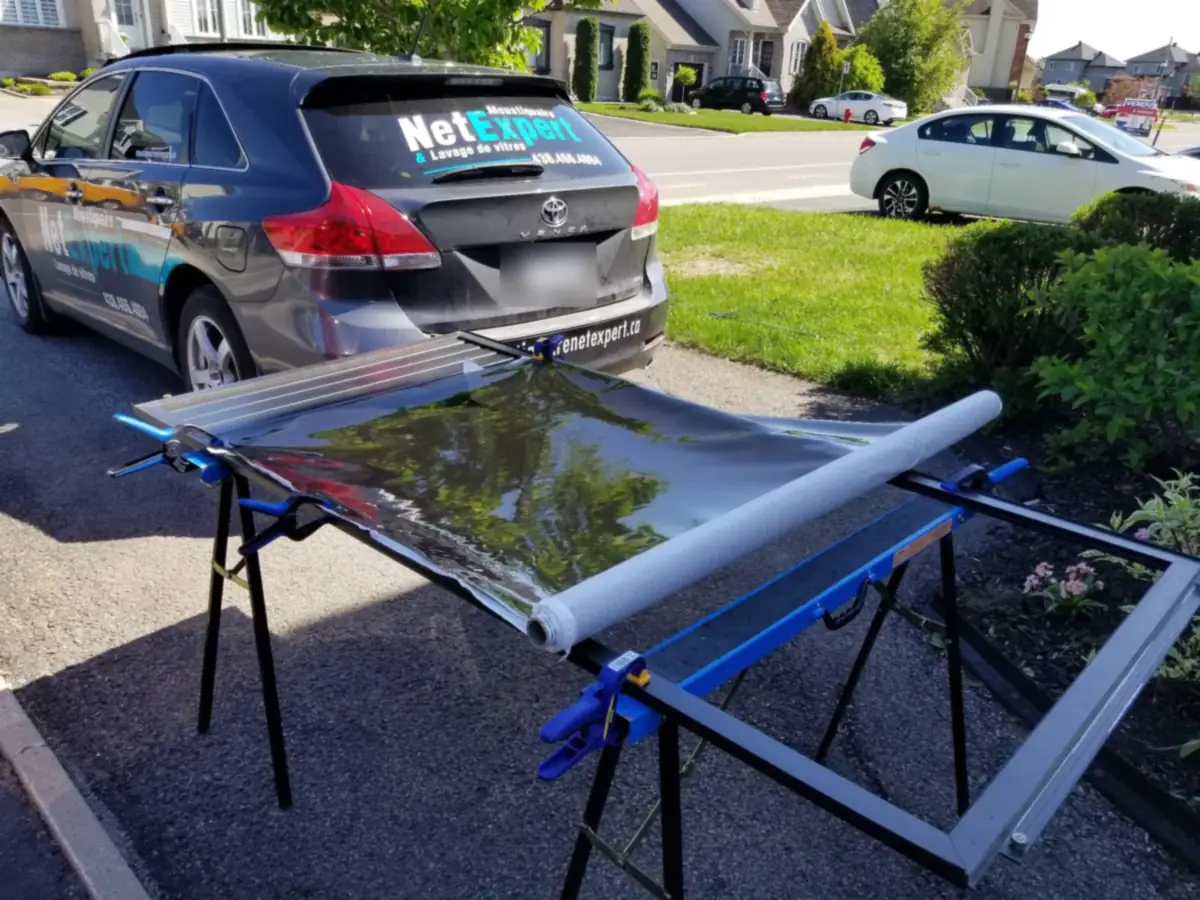
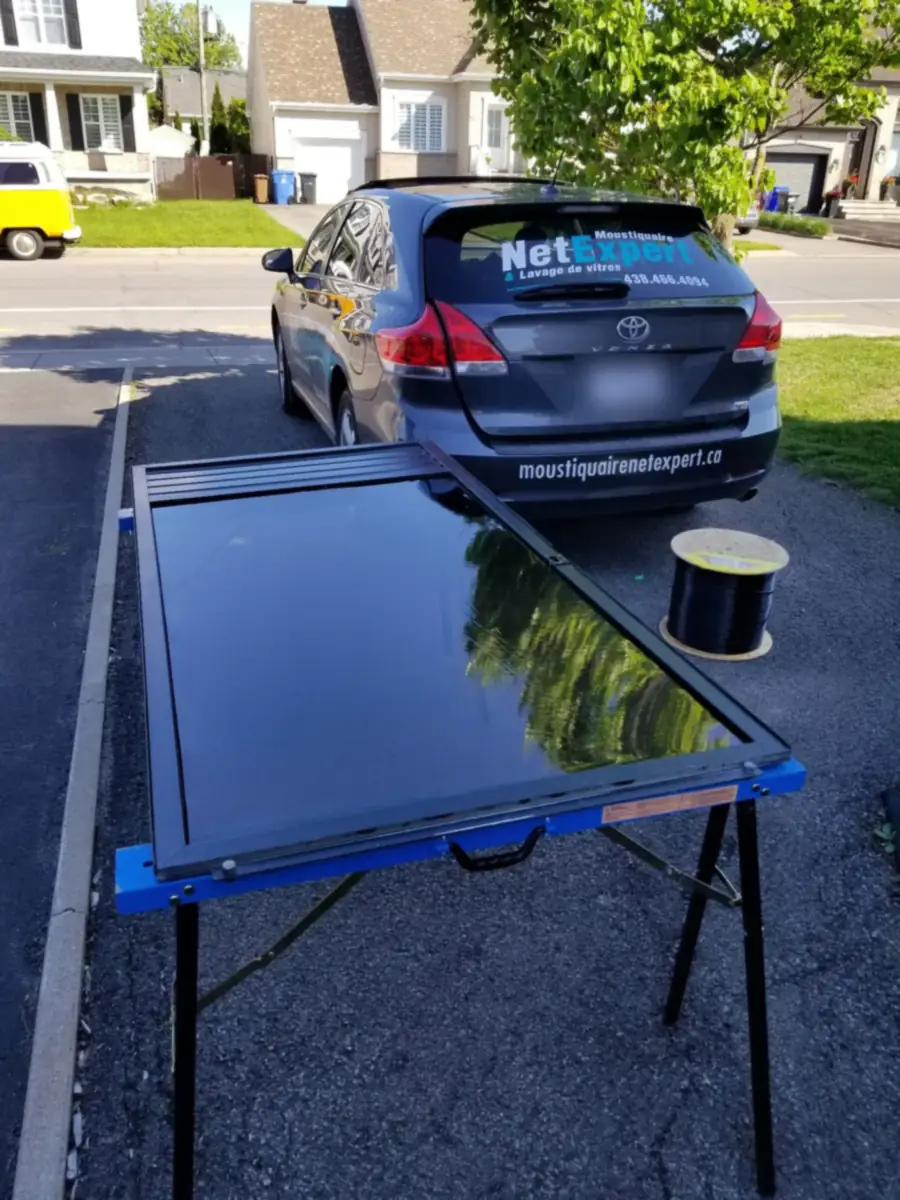
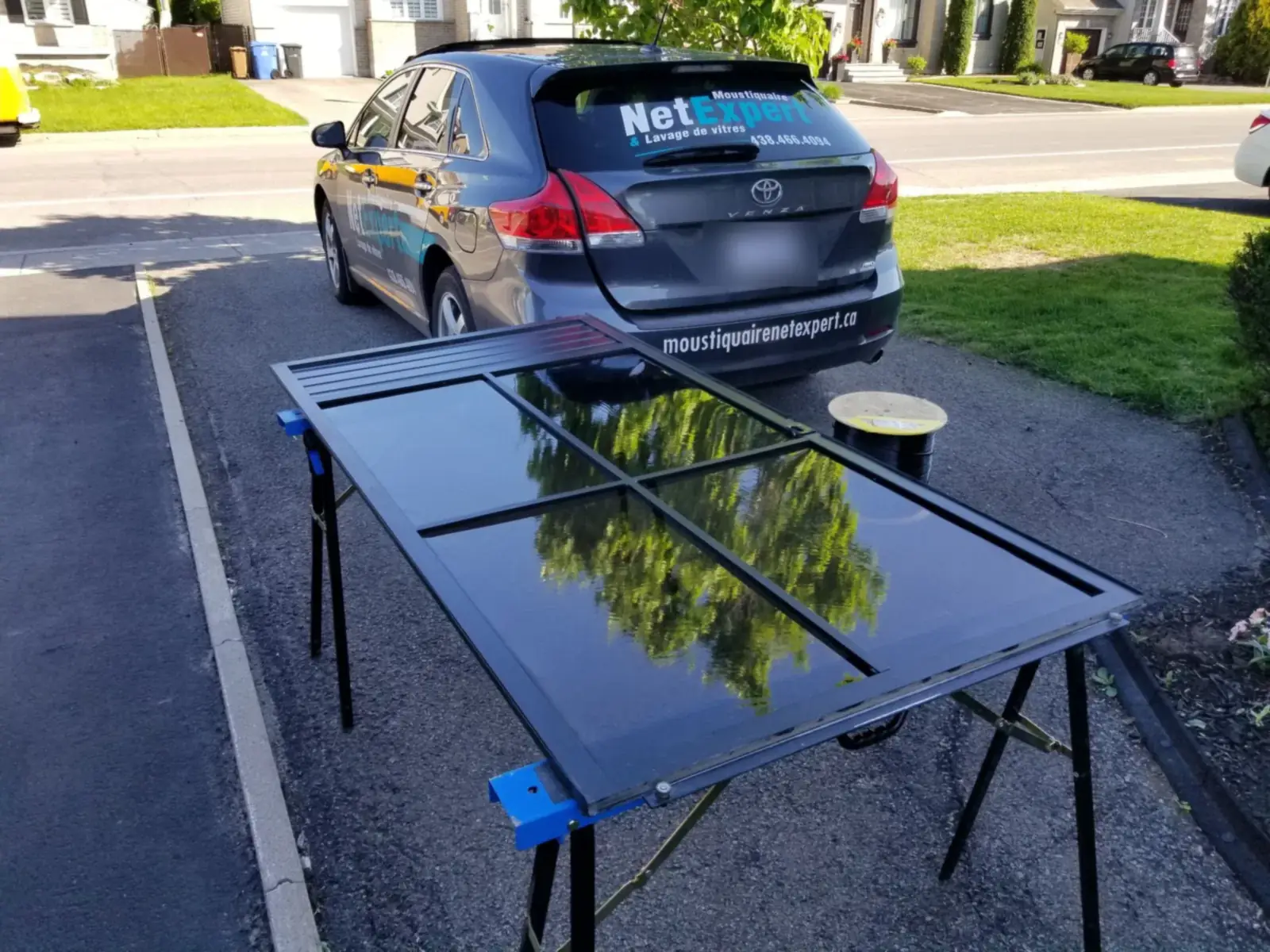
This job was not in Sainte-Thérèse — it shows our method, the same everywhere: panels down, new vinyl pane by pane, panels back up.
« Great service! He was at my neighbour’s and agreed to fix my back screen even though we had no appointment. Very successful repair, and inexpensive! »
« Ludovic replaced my screen in record time. Professional, and with a great sense of humour. I recommend his services — don’t hesitate to contact him, he’ll come to your home and do beautiful work. »
« Excellent service. Clear explanations of the work to be done. I really appreciated his dedication: despite the rain he insisted on finishing the job, soaked through and still smiling. The work was very well done. »
Straight answers
By measuring each one on site. On a hand-built structure the openings are neither the same size nor always square; each panel is removed, measured at its true dimensions, rescreened in its wooden frame with new fasteners, then put back exactly where it was. The clear vinyl is cut the same way, to the real shape of each opening, never from a stock size.
On a high terrace the vinyl flaps because nothing breaks the wind. Two things help: a heavier film, tensioned and fixed in the frame rather than simply hooked on, and, on the most exposed sides, aluminum mesh if the gazebo is mainly a summer room. The structure should also be checked for anchoring — a frame that shifts wears out any vinyl.
Not necessarily, but they need to know: the gazebo is your furniture, the yard is theirs, and we come along the side of the building or through the rear entrance to reach the panels. The work is done outside, in the mobile workshop, without entering the unit. If the lease says anything about yard installations, this is the time to reread it.
Yes, at your home. We travel to Sainte-Thérèse, remove the panels, replace the MICA vinyl in the original frames and put everything back — the gazebo structure is never touched. It is one of our specialties.
Yes. Depending on the retailer it is called MICA film, clear vinyl, clear plastic or transparent fabric — the same flexible material that cuts wind and holds warmth. We replace it on gazebos and sun shelters alike.
Yes. The vinyl is replaced pane by pane, in the existing frame — no need to redo the whole panel for one tear. If several panes have yellowed, doing them together gives a uniform result.
On assessment: the price depends on the number of panels and their dimensions. The quote is free, and a photo is often enough to price without a visit. Fabrication and installation guaranteed one year.
Do you manage a building or a business in Sainte-Thérèse?