
Summer UV
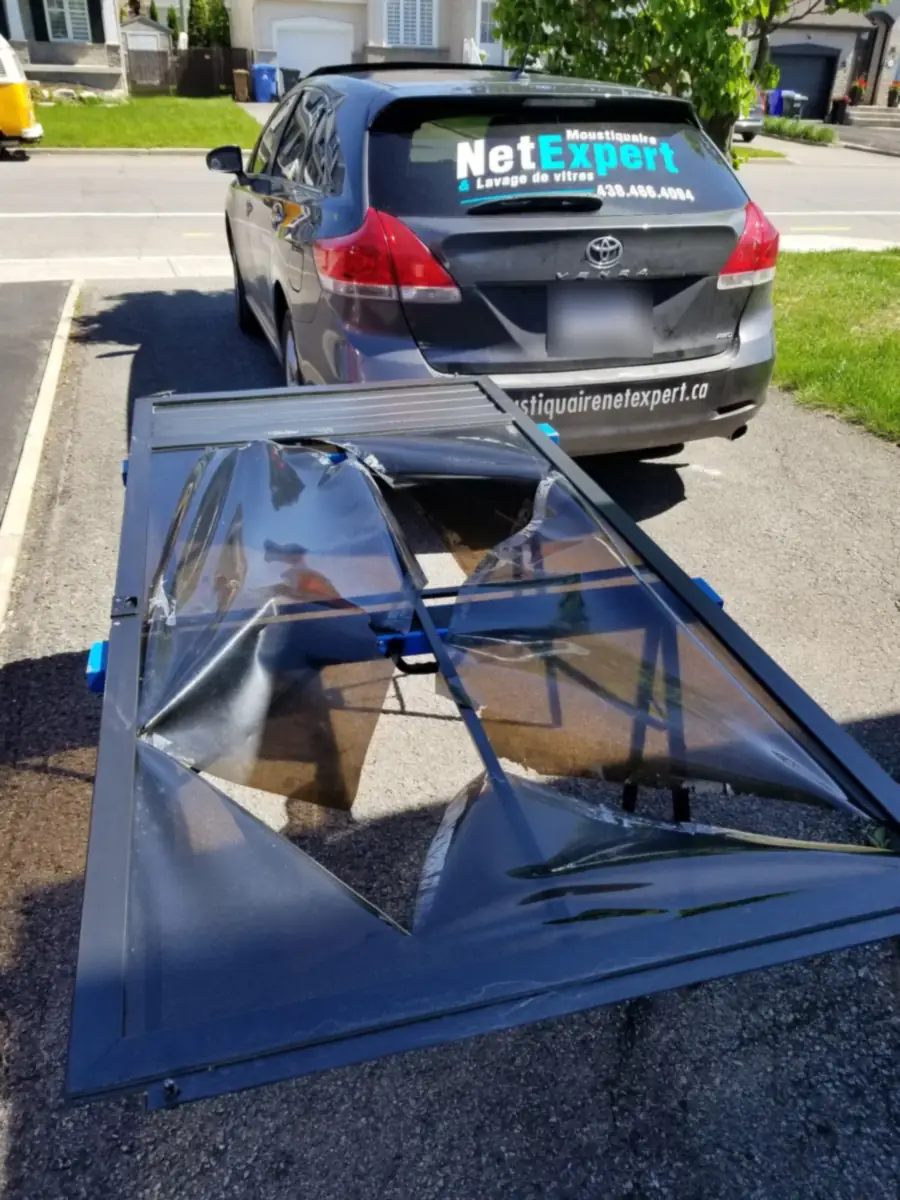
Sun yellows and clouds the vinyl. Film that crackles to the touch is at end of life.
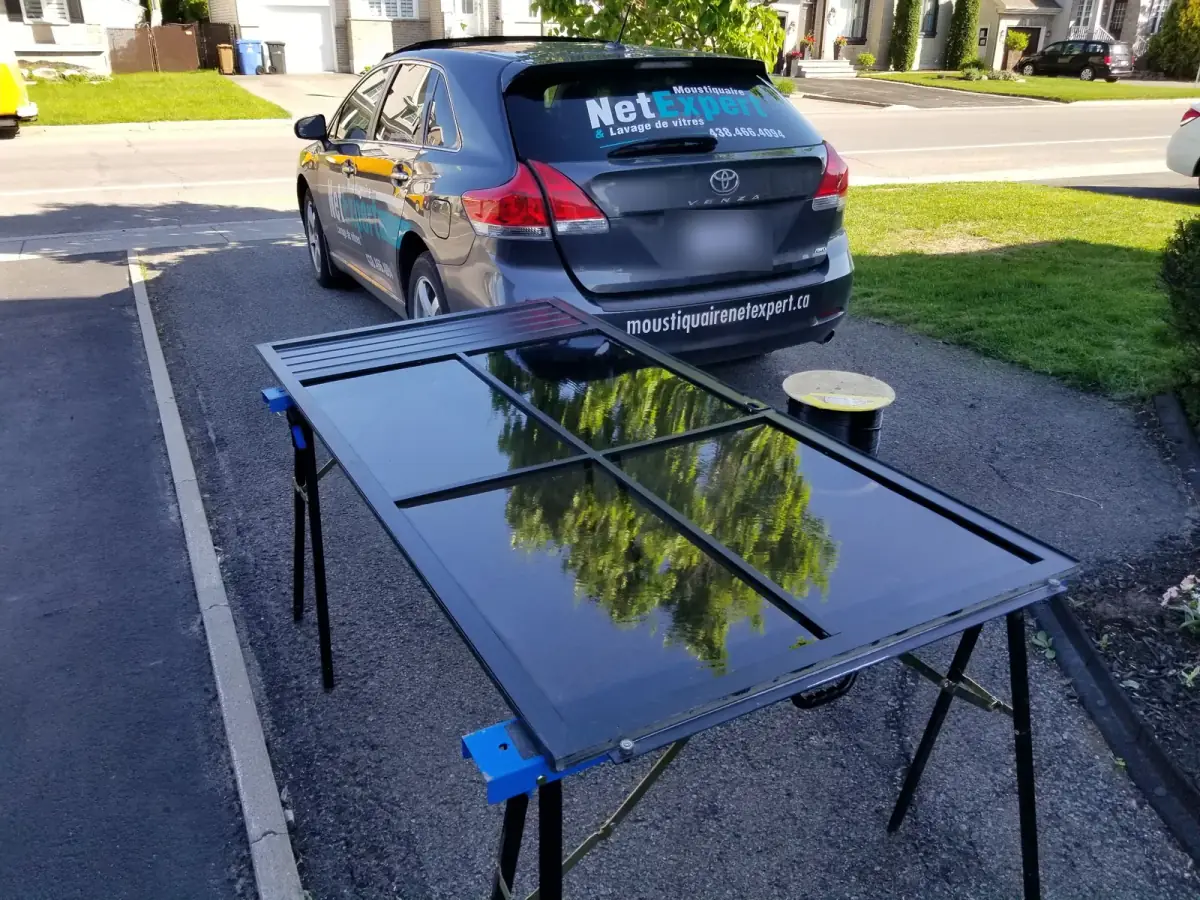
Gazebo and sun shelter specialty
Clear vinyl yellowed or torn? Replaced at your home in Blainville, in the original frames — gazebos and sun shelters.
Three questions are enough to start. The official measurement is taken on site.
Whatever your retailer calls it — MICA film, clear vinyl, clear plastic, sun-shelter transparent fabric — it is the same material, and we replace it in Blainville in your existing panels.
Sun yellows and clouds the vinyl. Film that crackles to the touch is at end of life.
Below freezing, MICA turns brittle — one handling or one gust splits it outright.
Slack vinyl flaps like a sail and eventually tears at the seams.
Blainville is a young suburb, and its yards are young too. The two-storey cottages and townhouses built from the 1990s to today have yards laid out for a retail gazebo: a deck or paver patio in line with the big sliding patio door, a PVC or wood fence, and few trees tall enough to cast shade. The aluminum or steel structure with standard-format panels is close to the norm here. The rows of townhouses tighten the picture further: narrow yards, lined up, separated by only a few feet, all oriented the same way.
Permanent wood structures do exist, on the town’s larger lots, but they remain the exception in a housing stock where everything is recent, gazebos included. What matters, in a suburb still growing, is that the gazebo’s original panels are not the age of the house: a 2005 cottage may have received its gazebo ten years later, and its clear vinyl is now at the end of its life while the house itself shows nothing. With growth that has not stopped, the new, open yard is what this housing stock produces, and it is what governs how a gazebo is approached here.
The clear vinyl (MICA film) on a retail gazebo in an exposed yard lasts a few winters. With no shade to protect it, it yellows fast, stiffens in frost, and the wind that sweeps through the narrow yards of a townhouse row makes it beat until a pane splits. The screen follows later: the spline pops out at a corner under the gusts, or the mesh slackens and floats. We replace each pane of film to the exact dimensions of the original frame, and rescreen the mesh panels in their frames. On these so-called standard models, the panels still get measured one by one: the version sold one year does not always match the next year’s, even under the same name.
Access is no issue on a cottage whose yard is reached along the side: the patio door or the side passage leads to the deck. On a row townhouse it is different: the yard can only be reached through the house or through a narrow gap between two fences, and the panels travel through the house to the mobile workshop. Retail gazebos come apart panel by panel, with no contact with posts or roof. The real trap is the pace of the catalogues: a model sold one year is gone the next, so a panel can never be ordered by its name. Redoing film and mesh in the existing frame keeps the gazebo whole.
In a new suburb, wind meets few obstacles: no mature trees, low fences and, in the townhouse rows, a corridor between yards that speeds up the gusts. That is the film’s first enemy here. The second is direct sun on shadeless yards, which yellows the vinyl and weakens fibreglass; aluminum mesh holds its tension better on these panels. As for insects, a gazebo bordering a field or a woodlot gets whatever standard mesh lets through, and fine mesh is the answer there; elsewhere, standard fibreglass does the job. The film goes up once the cold evenings have settled in and the yard is no longer in use: vinyl fitted too early spends the autumn beating for nothing.
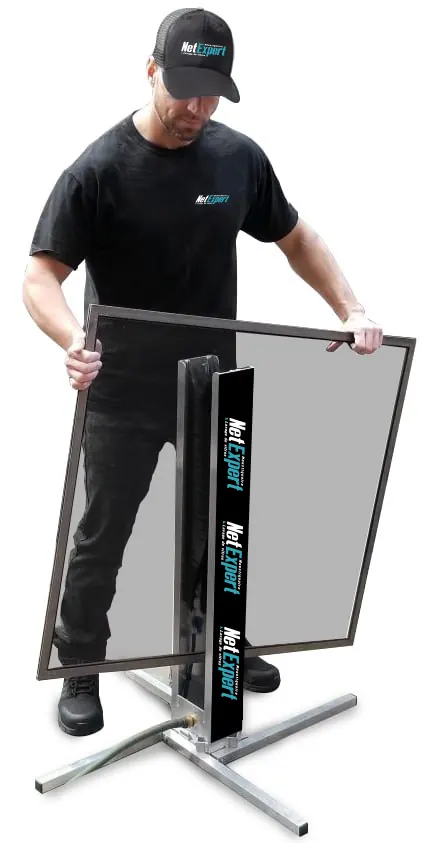
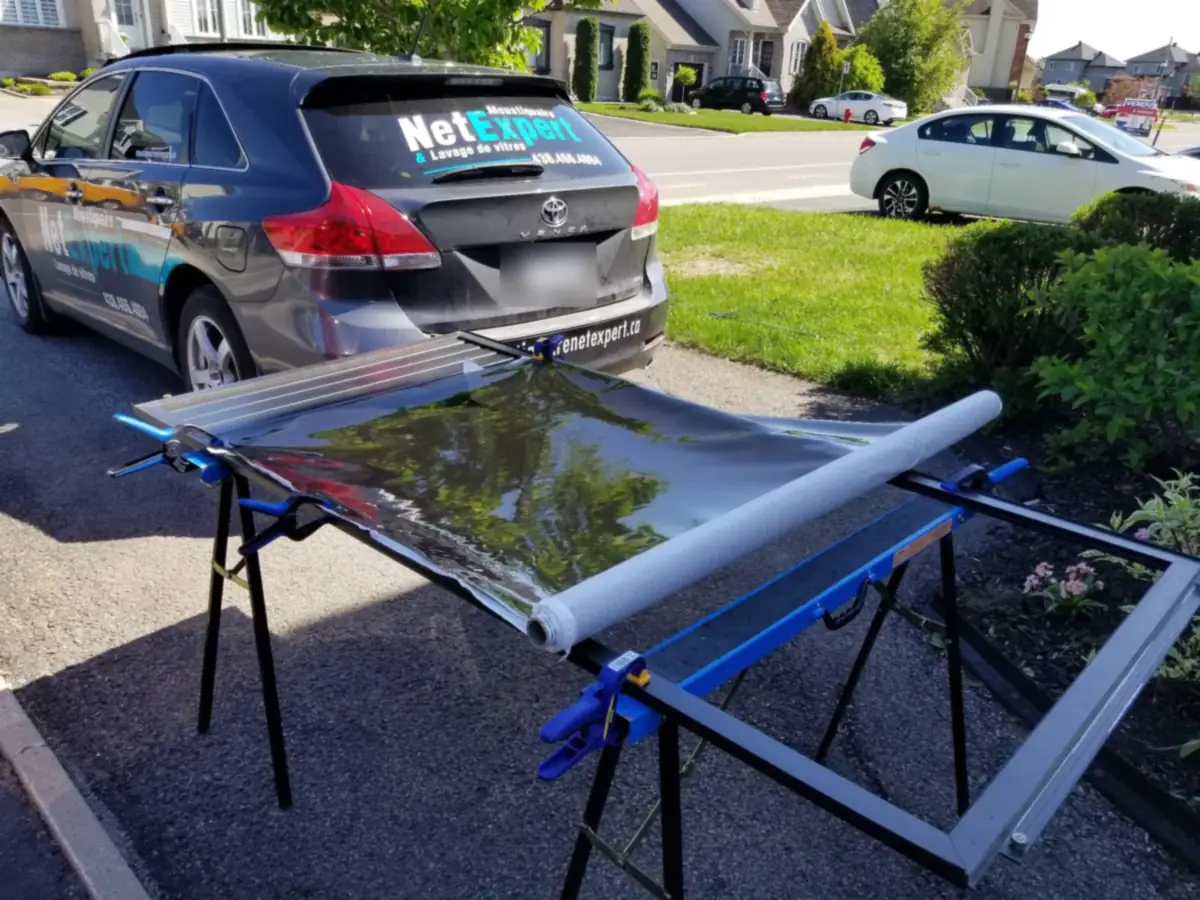
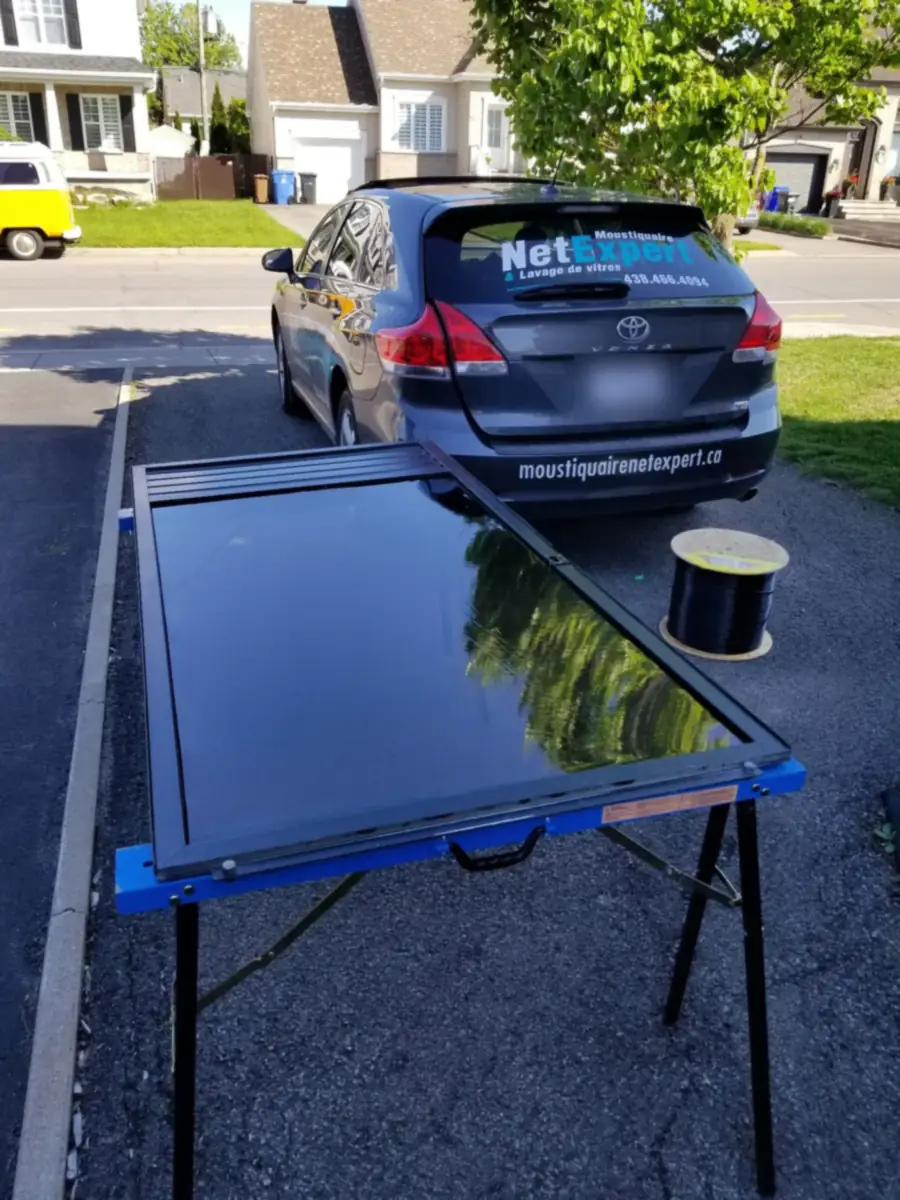
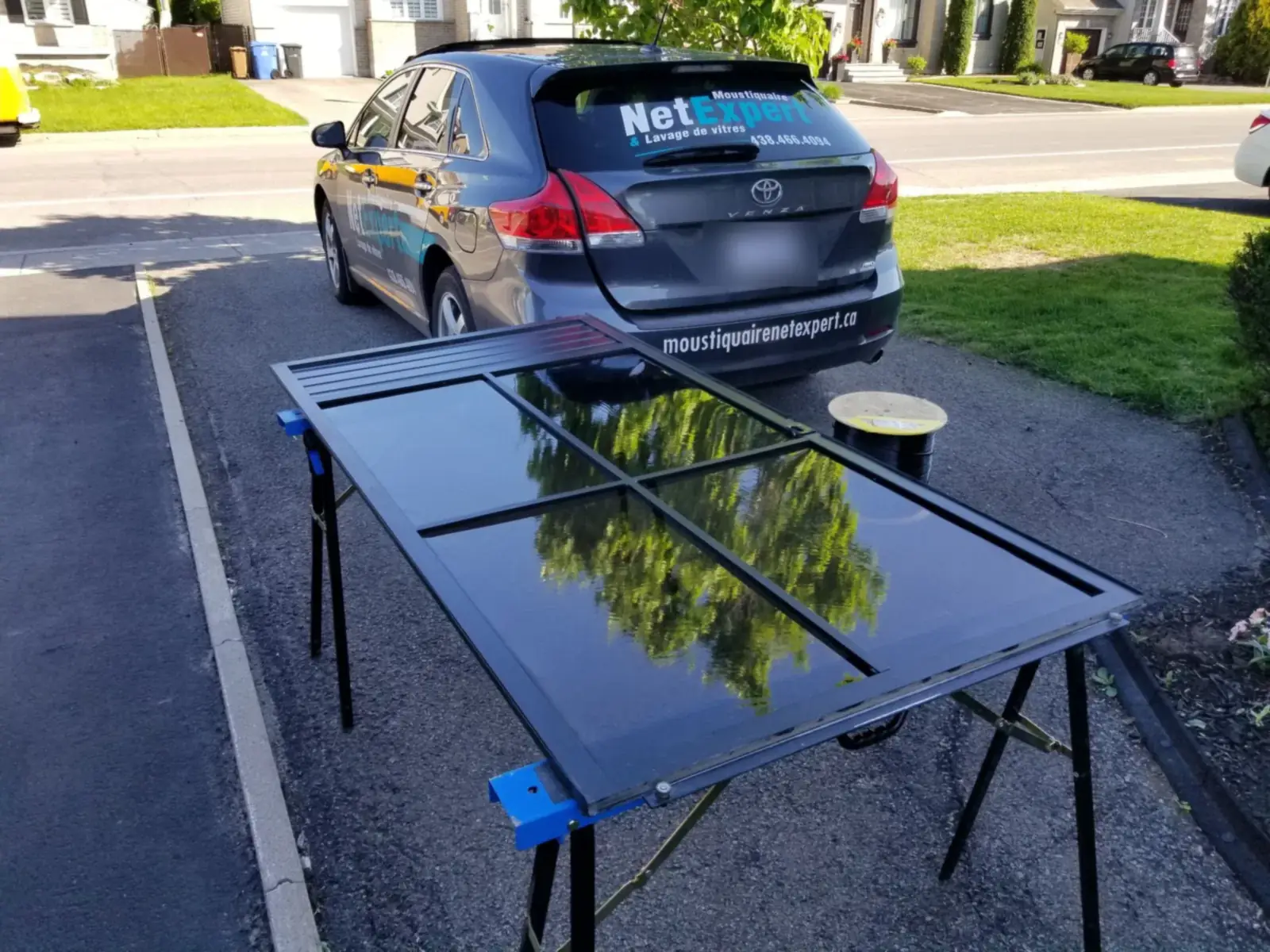
This job was not in Blainville — it shows our method, the same everywhere: panels down, new vinyl pane by pane, panels back up.
« Ludovic replaced my screen in record time. Professional, and with a great sense of humour. I recommend his services — don’t hesitate to contact him, he’ll come to your home and do beautiful work. »
« Excellent service. Clear explanations of the work to be done. I really appreciated his dedication: despite the rain he insisted on finishing the job, soaked through and still smiling. The work was very well done. »
« Great service! He was at my neighbour’s and agreed to fix my back screen even though we had no appointment. Very successful repair, and inexpensive! »
Straight answers
It changes the method, not the result. When there is no room around the structure, the panels come off one at a time and each one travels through the house or the side passage to the mobile workshop, then comes back. All it takes is a clear path through the house and the option of leaving the gazebo open on one side for the duration of the work.
Film that slaps is film that is loosely fitted or whose frame has developed play. Recut to the exact size of the pane and seated properly in its groove, it beats far less. In a wind corridor between two rows, another option is to keep aluminum mesh on the most exposed side and reserve the film for the sheltered faces.
Yes. What decides is not the model but the state of the frames: if they are straight and the structure is sound, the film is recut pane by pane and the mesh redone panel by panel inside them. In a row-house yard, where wind works on the structure all year, checking the frames is what takes the time, not the replacement itself.
Yes, at your home. We travel to Blainville, remove the panels, replace the MICA vinyl in the original frames and put everything back — the gazebo structure is never touched. It is one of our specialties.
Yes. Depending on the retailer it is called MICA film, clear vinyl, clear plastic or transparent fabric — the same flexible material that cuts wind and holds warmth. We replace it on gazebos and sun shelters alike.
Yes. The vinyl is replaced pane by pane, in the existing frame — no need to redo the whole panel for one tear. If several panes have yellowed, doing them together gives a uniform result.
On assessment: the price depends on the number of panels and their dimensions. The quote is free, and a photo is often enough to price without a visit. Fabrication and installation guaranteed one year.
Do you manage a building or a business in Blainville?