
Summer UV
Sun yellows and clouds the vinyl. Film that crackles to the touch is at end of life.
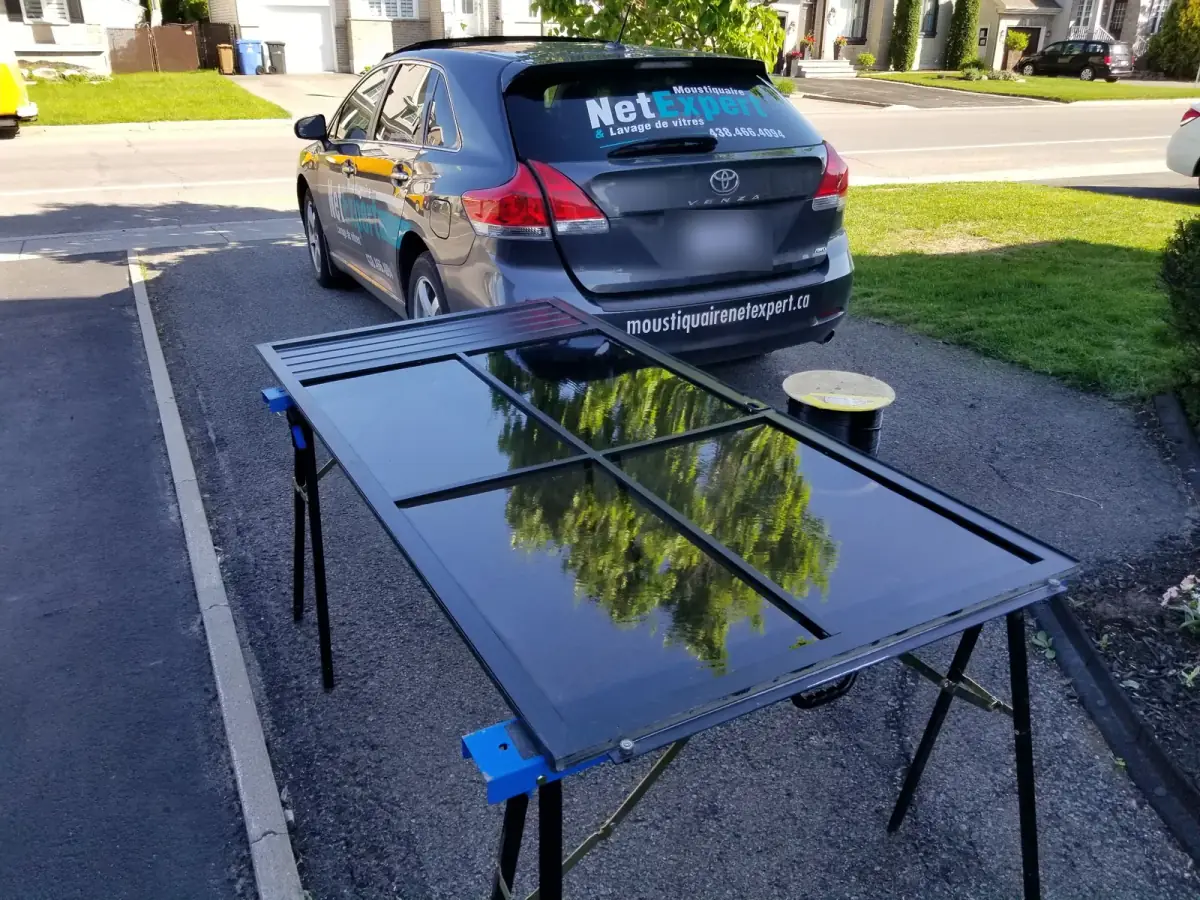
Gazebo and sun shelter specialty
Clear vinyl yellowed or torn? Replaced at your home in Bois-des-Filion, in the original frames — gazebos and sun shelters.
Three questions are enough to start. The official measurement is taken on site.
Whatever your retailer calls it — MICA film, clear vinyl, clear plastic, sun-shelter transparent fabric — it is the same material, and we replace it in Bois-des-Filion in your existing panels.
Sun yellows and clouds the vinyl. Film that crackles to the touch is at end of life.
Below freezing, MICA turns brittle — one handling or one gust splits it outright.
Slack vinyl flaps like a sail and eventually tears at the seams.
Bois-des-Filion stretches along the Mille Îles river, and the former riverside cottages that became year-round homes keep a particular relationship with the yard: it was the part laid out first, often before the house became a house. On these lots the shelter is rarely a store model. It is more often a wooden structure built in place, extended or rebuilt over the years the way the building itself was, with bays of different sizes depending on when each section went up. Nothing on it is interchangeable, and film cannot be ordered by size: every opening is measured bay by bay, on site.
The 1970s to 1990s bungalows make up the other half of the picture, and there the retailer gazebo dominates: aluminum or steel structure, repeating panels, planted in the middle of a flat yard. The recent semi-detached neighbourhoods give the scaled-down version — small standard shelters, narrow yards, close neighbours, and a wind corridor between the buildings that shakes the film more than you would expect on so small a lot. Three situations, one thing in common: the side of the lot facing the water or the open ground takes wind, reflected sun and damp that the other faces never see, so that is the face surveyed first.
On the panels facing the water, clear film fails in a recognizable order: it clouds and loses its transparency, it hardens in the cold, then a gust splits it out of a corner or along a line of fasteners. The rest of the shelter can still be fine while that one face is done, so we replace the bays that call for it, to exact size, in their own frames. On the screen side the wear is slower and sneakier: the mesh loses its tension, balloons outward at the slightest gust, and the spline eventually works out of its groove along a whole edge. It is replaced in the frame, tensioned evenly on all four sides, and the panel goes back up.
A riverside lot mostly complicates moving around. The yard often slopes toward the water, genuinely flat ground is limited, and a panel that has just come off is awkward to lay down where you would like to. On a former cottage that has been added to, the shelter is sometimes tight against a sunroom or an annex, and the order the panels come out in has to be worked out before forcing the first one. On the recent semi-detached lots it is the opposite: simple structure, standard panels, but a narrow yard where you still need room to manoeuvre a long bay. Either way, we look at the route before reaching for a tool.
Water and tree cover keep the lower panels damp: mesh that never dries out fully stains and turns brittle, and film put away damp in autumn comes back out marked in spring. River wind is the other factor, and it works against the film: fitted with slack it snaps and splits, fitted tight it takes the hit. On the face looking at the water it is tension, not material, that gives first: mesh pulled evenly on all four sides bellies far later than mesh set tight on one side and slack on the other. Sun reflected off the water then adds its share to the yellowing of the vinyl on that side.
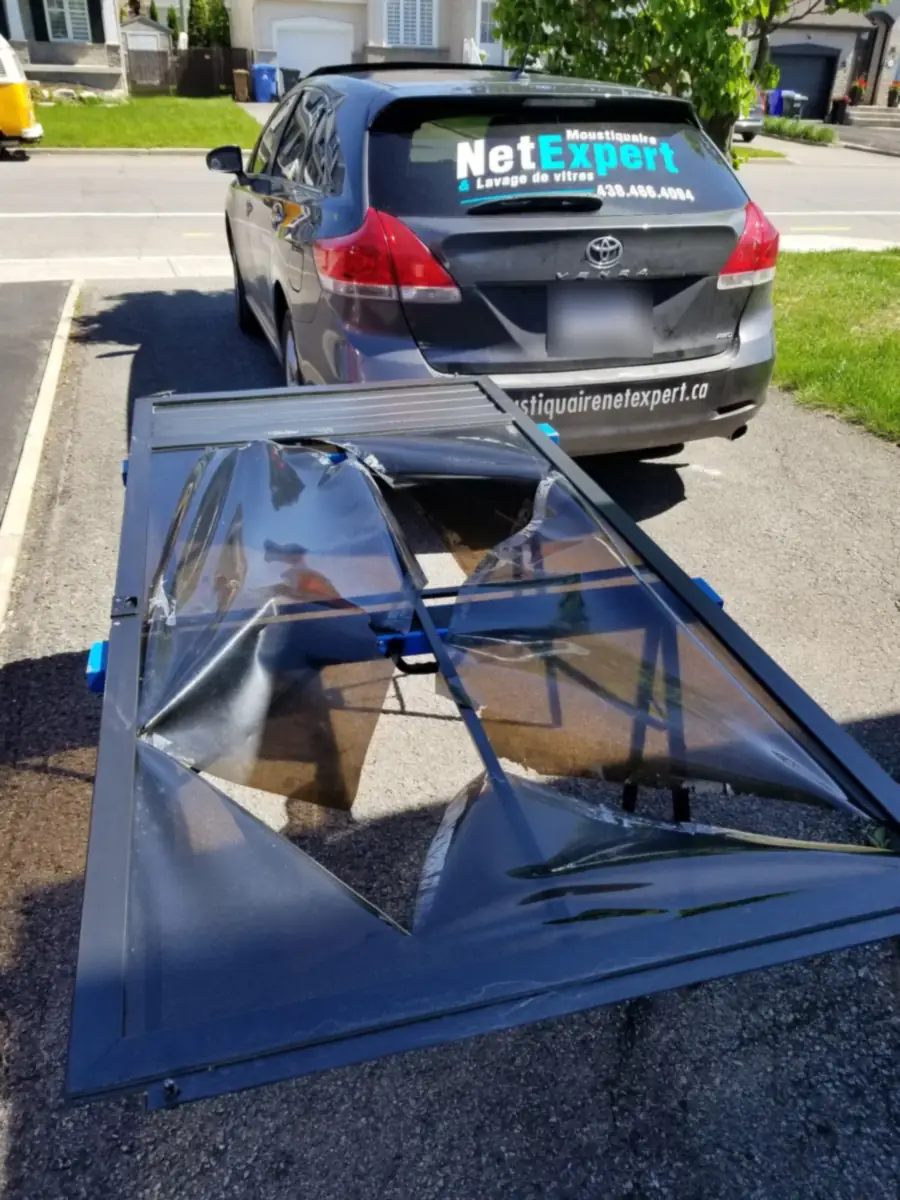
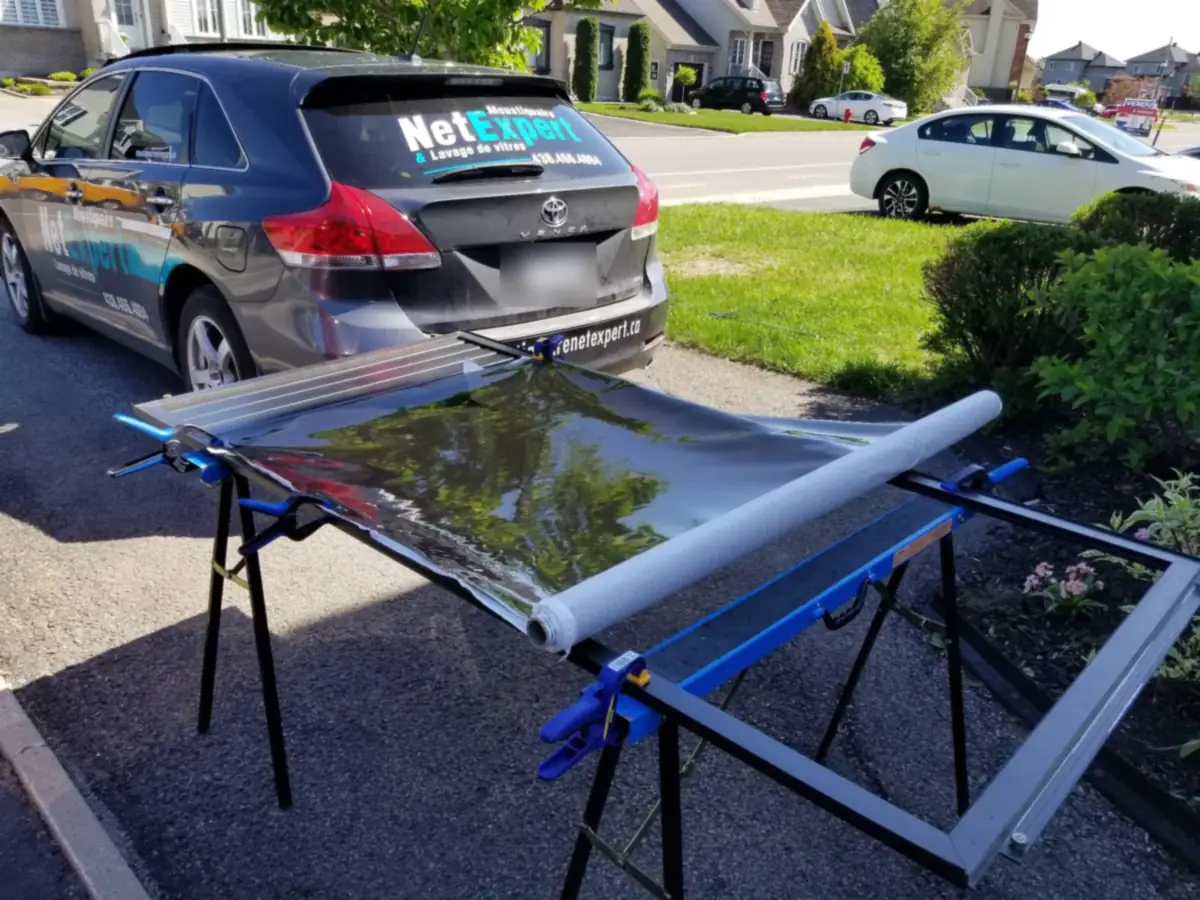
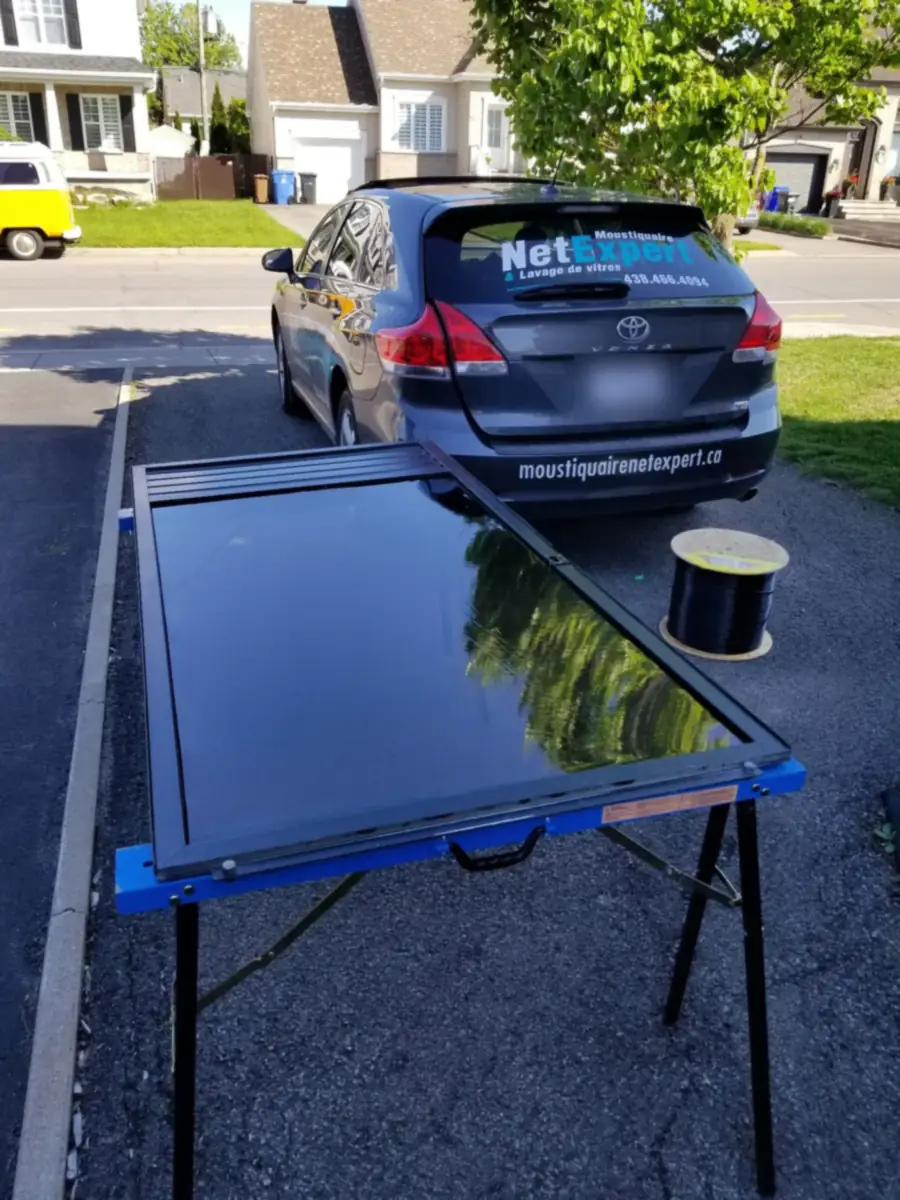
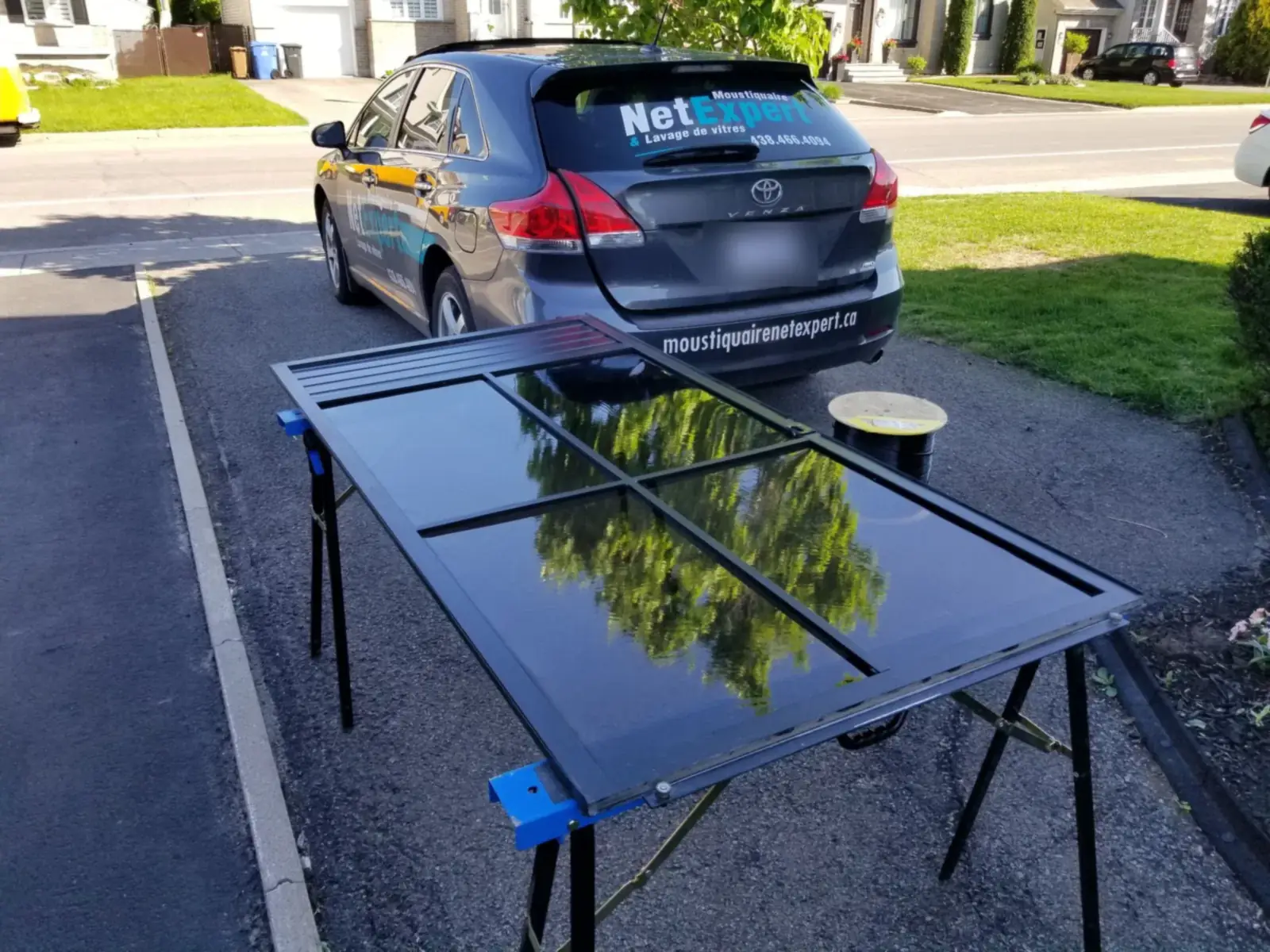
This job was not in Bois-des-Filion — it shows our method, the same everywhere: panels down, new vinyl pane by pane, panels back up.
« Excellent service. Clear explanations of the work to be done. I really appreciated his dedication: despite the rain he insisted on finishing the job, soaked through and still smiling. The work was very well done. »
« Great service! He was at my neighbour’s and agreed to fix my back screen even though we had no appointment. Very successful repair, and inexpensive! »
« Ludovic replaced my screen in record time. Professional, and with a great sense of humour. I recommend his services — don’t hesitate to contact him, he’ll come to your home and do beautiful work. »
Straight answers
Not necessarily. A face taking wind, river damp and reflected sun wears in a way the sheltered faces never do, so it is normal for it to be finished while the rest still holds. We redo the bays that call for it and note the condition of the others. There is also nothing stopping us from putting aluminum mesh on the exposed face and keeping fibreglass elsewhere.
That is expected where the shelter followed the extensions to the building. An added section did not copy the dimensions of the one before it, and the wood of an outdoor structure does not keep its angles. Every bay is therefore measured on its own, at all four corners, and every panel is labelled as it comes off so it goes back exactly where it came from. It takes longer than a retailer shelter with repeating sizes, but it is the only way to get pieces that close.
That is the spline letting go, and it almost always lets go because the mesh had gone slack first. Pushing the spline back into slack mesh does not hold: it will come out again at the first gust. The panel is fully rescreened in its frame, with even tension on all four sides and new spline of the right diameter. On a face taking wind off the river, aluminum holds better.
Yes, at your home. We travel to Bois-des-Filion, remove the panels, replace the MICA vinyl in the original frames and put everything back — the gazebo structure is never touched. It is one of our specialties.
Yes. Depending on the retailer it is called MICA film, clear vinyl, clear plastic or transparent fabric — the same flexible material that cuts wind and holds warmth. We replace it on gazebos and sun shelters alike.
Yes. The vinyl is replaced pane by pane, in the existing frame — no need to redo the whole panel for one tear. If several panes have yellowed, doing them together gives a uniform result.
On assessment: the price depends on the number of panels and their dimensions. The quote is free, and a photo is often enough to price without a visit. Fabrication and installation guaranteed one year.
Do you manage a building or a business in Bois-des-Filion?