
Summer UV
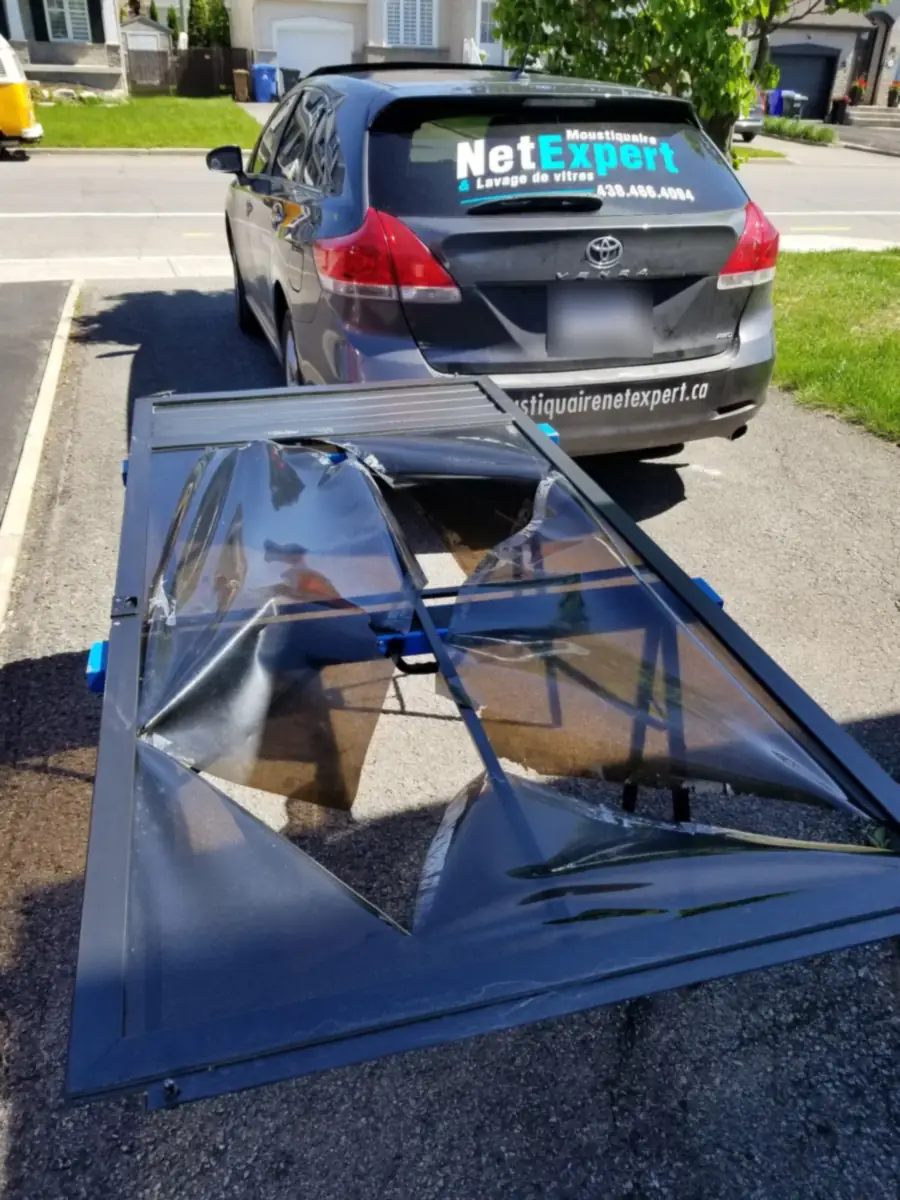
Sun yellows and clouds the vinyl. Film that crackles to the touch is at end of life.
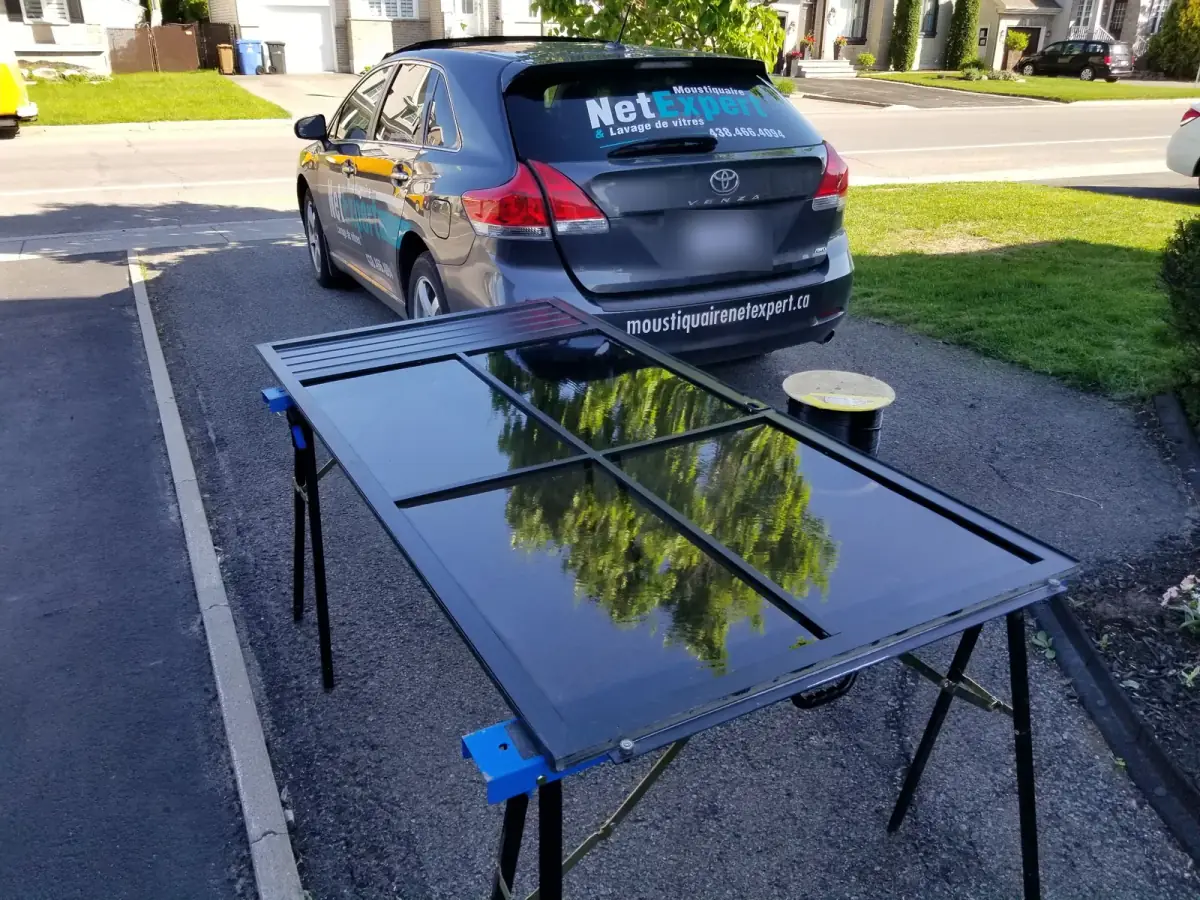
Gazebo and sun shelter specialty
Clear vinyl yellowed or torn? Replaced at your home in Oka, in the original frames — gazebos and sun shelters.
Three questions are enough to start. The official measurement is taken on site.
Whatever your retailer calls it — MICA film, clear vinyl, clear plastic, sun-shelter transparent fabric — it is the same material, and we replace it in Oka in your existing panels.
Sun yellows and clouds the vinyl. Film that crackles to the touch is at end of life.
Below freezing, MICA turns brittle — one handling or one gust splits it outright.
Slack vinyl flaps like a sail and eventually tears at the seams.
In Oka, the yard depends on which side of the road you are on. Along the shore of Lac des Deux Montagnes the lots run long and open onto the water, and the covered space faces that way: a retailer gazebo planted at the end of the lawn, or, on properties that have been redone, a permanent wood structure raised beside the house or on a deck. In the farming sectors bordering the national park, buildings sit far apart and the gazebo often ends up at the edge of the tree cover, in shade for part of the day. In the old village core the gazebo has to stay out of sight from the street: it ends up at the back of the yard, often against a shed, and the sides that show are the ones that have been used least.
That third category deserves a qualifier. An older building was not designed with a gazebo: the one you find there went up long afterwards, often in wood so it stays discreet from the street, sometimes a retailer model tucked behind the house. Neither has panes at off-the-shelf sizes once you measure them. On the shore it is a different matter: the gazebo stands in the front line facing the lake with nothing ahead of it, and the clear vinyl (MICA film) serves as much to cut the wind as to extend the use of the space. Three very different settings — and it is the setting, far more than the model, that decides what failed first.
On a gazebo exposed to the lake, the order of failure is almost always the same. The film yellows first — full sun over water, glare included — then it stiffens at the first cold, then a gust splits it, usually starting at a grommet or a corner. It gets replaced pane by pane, at the frame's actual dimensions, without touching the structure. The screening follows later: a tear at an angle, slack mesh that hums in the wind, spline lifting out of its groove. It is rescreened in the same frame, and on the sides taking wind off open water, aluminum holds tension better than fibreglass. Under tree cover the wear is different in kind: less sun, more trapped moisture, more debris on the upper panels.
A custom wood structure first has to be understood: how was it closed in? Panels screwed into a wood frame, slid into a rabbet, held by turn buttons — the way it comes apart follows the way it went together, not one fixed method, and a large pane is a two-person lift. On a waterfront lot there is also the question of where the mobile workshop sits: the vehicle does not always reach the far end of the property, so the panels make the trip on foot. On a narrow lot in the old core, the passage between the house and the fence sets the order of operations. In every case the structure stays standing and only the panels move.
The lake delivers two things to the same spot: wind with nothing in front of it, and no-see-ums. The wind goes after the film — a loosely tensioned pane beats, creases, then splits — and argues for aluminum on the larger screen panels, which hold tension better. The second problem is not solved by mesh alone: on a gazebo facing the water the low sides take the evening damp, and that is where a tight weave counts most — standard mesh can stay on the sheltered side to keep the air moving. Toward the farmland and the wooded edge, the spring black flies raise the same question.
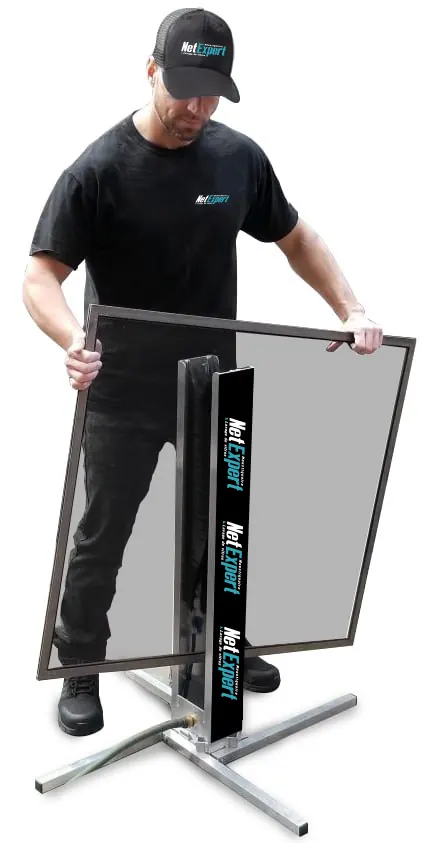
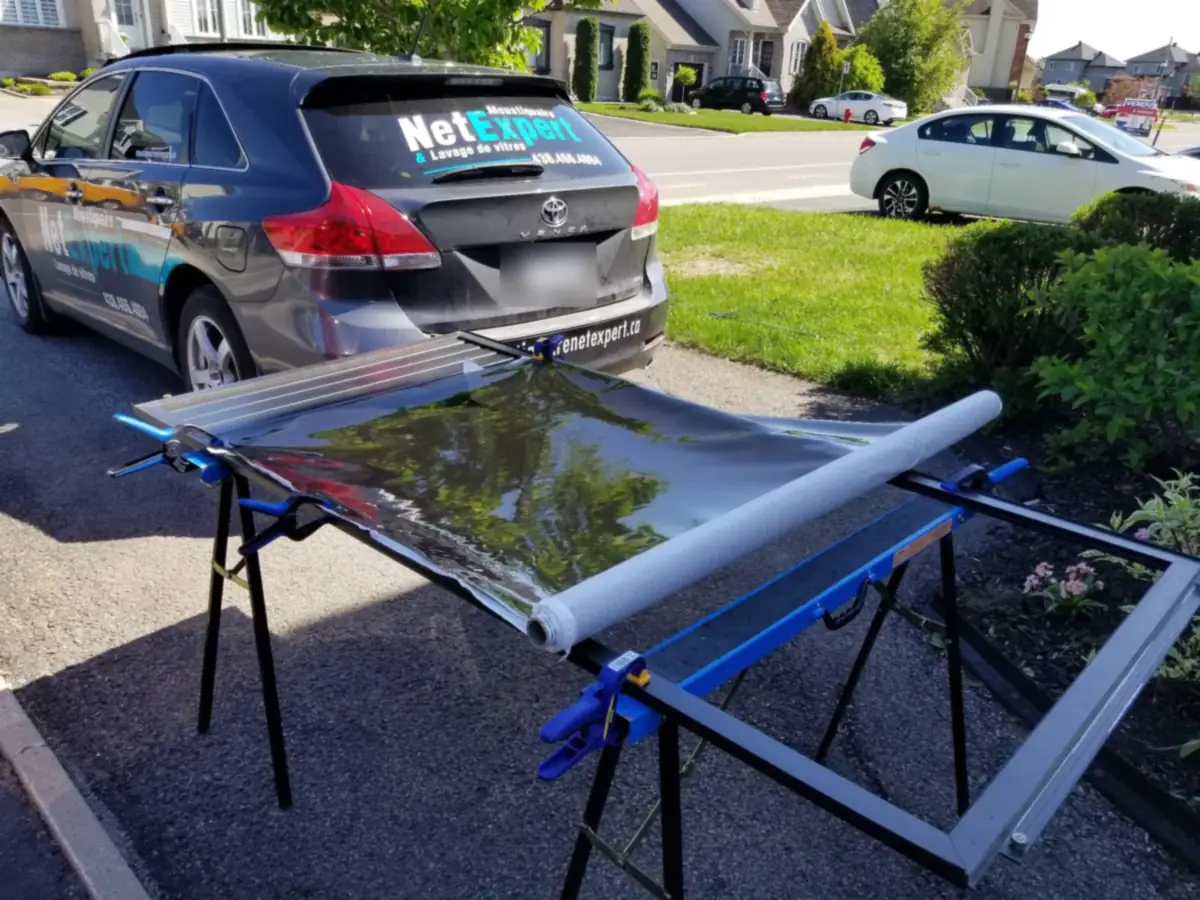
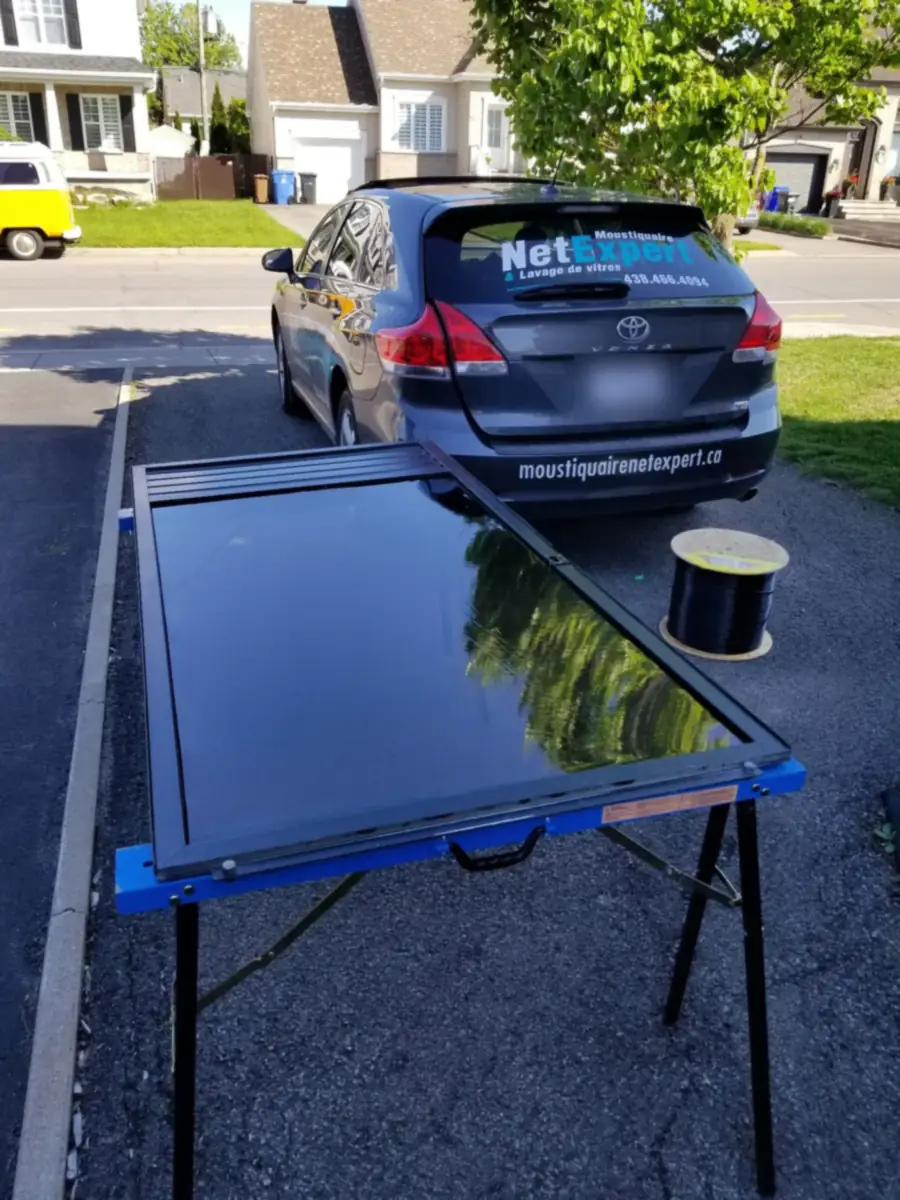
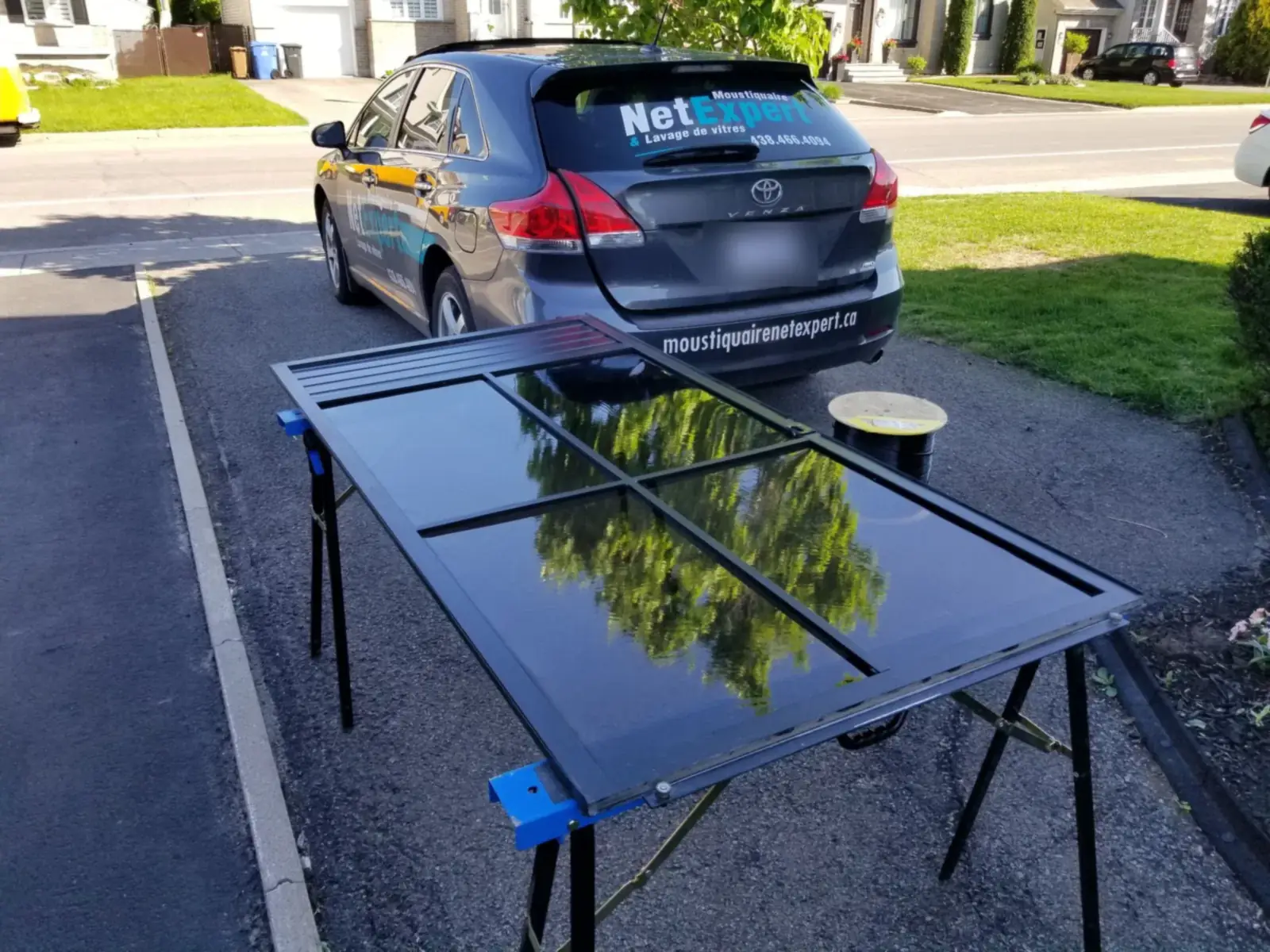
This job was not in Oka — it shows our method, the same everywhere: panels down, new vinyl pane by pane, panels back up.
« Great service! He was at my neighbour’s and agreed to fix my back screen even though we had no appointment. Very successful repair, and inexpensive! »
« Ludovic replaced my screen in record time. Professional, and with a great sense of humour. I recommend his services — don’t hesitate to contact him, he’ll come to your home and do beautiful work. »
« Excellent service. Clear explanations of the work to be done. I really appreciated his dedication: despite the rain he insisted on finishing the job, soaked through and still smiling. The work was very well done. »
Straight answers
No, it only changes the logistics. The mobile workshop sets up wherever the vehicle can park, and the panels make the trip one at a time on foot — a large pane as a two-person carry. What is worth arranging is a workable path between the gazebo and the vehicle: a soaked lawn or a steep slope can be crossed, but it slows everything down.
Stiff vinyl has lost its flexibility, and that is what finishes it: it no longer gives when the wind pushes on it, so it cracks along a fold. Film in that state can survive a calm stretch and then split at the first real blow. On a wall facing the lake, with nothing in front of it, rebuilding it while it is still whole beats having to do it in a hurry.
That is expected, and it is not what we set out to do anyway. The pane is measured on site, in the frame it lives in, and the film or screening is cut to that dimension to be fitted into that frame. It is also the sounder answer on an older structure, since no standard panel would match an opening closed in by hand years ago.
Yes, at your home. We travel to Oka, remove the panels, replace the MICA vinyl in the original frames and put everything back — the gazebo structure is never touched. It is one of our specialties.
Yes. Depending on the retailer it is called MICA film, clear vinyl, clear plastic or transparent fabric — the same flexible material that cuts wind and holds warmth. We replace it on gazebos and sun shelters alike.
Yes. The vinyl is replaced pane by pane, in the existing frame — no need to redo the whole panel for one tear. If several panes have yellowed, doing them together gives a uniform result.
On assessment: the price depends on the number of panels and their dimensions. The quote is free, and a photo is often enough to price without a visit. Fabrication and installation guaranteed one year.
Do you manage a building or a business in Oka?