
Summer UV
Sun yellows and clouds the vinyl. Film that crackles to the touch is at end of life.
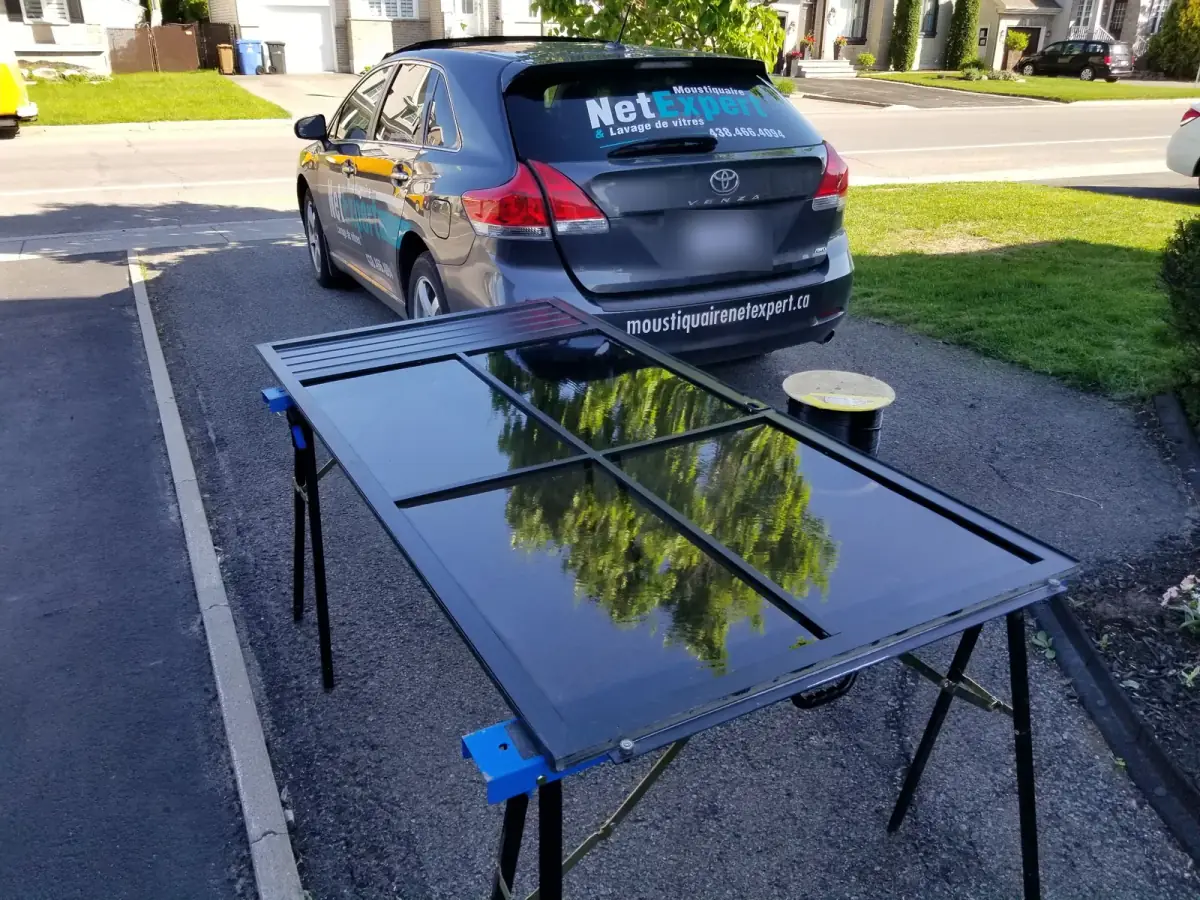
Gazebo and sun shelter specialty
Clear vinyl yellowed or torn? Replaced at your home in Pointe-Calumet, in the original frames — gazebos and sun shelters.
Three questions are enough to start. The official measurement is taken on site.
Whatever your retailer calls it — MICA film, clear vinyl, clear plastic, sun-shelter transparent fabric — it is the same material, and we replace it in Pointe-Calumet in your existing panels.
Sun yellows and clouds the vinyl. Film that crackles to the touch is at end of life.
Below freezing, MICA turns brittle — one handling or one gust splits it outright.
Slack vinyl flaps like a sail and eventually tears at the seams.
In Pointe-Calumet, the yard tells you more than the house does. The old cottage area on Lac des Deux Montagnes turned into year-round housing, and the summer living space often ended up away from the house rather than tight against the back wall. On lots like these, a gazebo is rarely an impulse purchase: it sits in a chosen spot, often at the far end of the yard, sometimes on a platform built at the same time as an addition. The cottages that became year-round homes were reworked in stages, and the yard followed the same path as the building — one addition at a time, with no master plan.
So three kinds of yard live side by side here. The former vacation lots tend to carry permanent wood structures, built to fit, where every panel opening has its own dimensions. The 1970s bungalows offer a flat, open back yard: that is retailer-gazebo country, aluminum or steel framing with panel sizes repeated from one model to the next. The newer houses on small lots get compact models instead, set a few feet from the fence and squeezed between two buildings. The size of a panel therefore depends on which family the structure belongs to, and that is what gets settled before any tape comes out.
On these gazebos, the clear vinyl (MICA film) almost always goes first. A clear panel takes July sun, January frost and everything gusting in between: it yellows, it stiffens, and then a strong wind finds a tired corner and the split runs the full height. Screen panels fail differently — a torn corner, mesh that slackens and ripples, a spline pushed out of its groove so the panel gapes along one edge. Either way the work happens inside the original frame: film replaced pane by pane to dimensions taken on site, screen panels rescreened and brought back to tension. The gazebo structure itself is never touched.
The first sorting is structural. A retailer gazebo comes apart panel by panel, with sizes that repeat; a custom wood structure means measuring every opening on its own, because two neighbouring panes are almost never identical. Then comes access: on a deep lot the gazebo may sit well back from the driveway, and panels travel by hand to the mobile shop. On the smaller new lots it is the opposite — everything is within reach, but room has to be cleared to lay a panel flat. Panels come out, get rebuilt, and go back in.
Open water nearby changes two things. Wind arrives with nothing in its way and sets the film flapping: on exposed faces, aluminum mesh holds tension better than fibreglass, and film properly stretched in its frame moves far less. Waterside insects, for their part, call for a tighter weave if evenings are actually spent in the gazebo. Add the direct sun of the newer yards, with no mature tree to filter it, and that is what yellows the vinyl. Film goes on before the first hard cold, once the screen has finished its season.
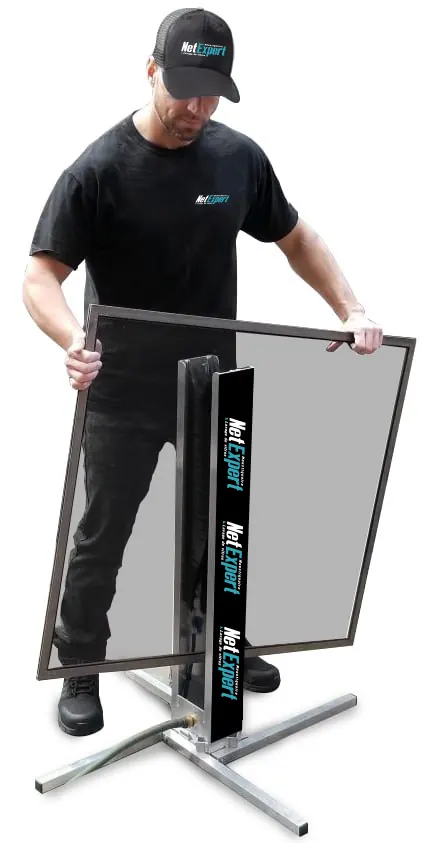
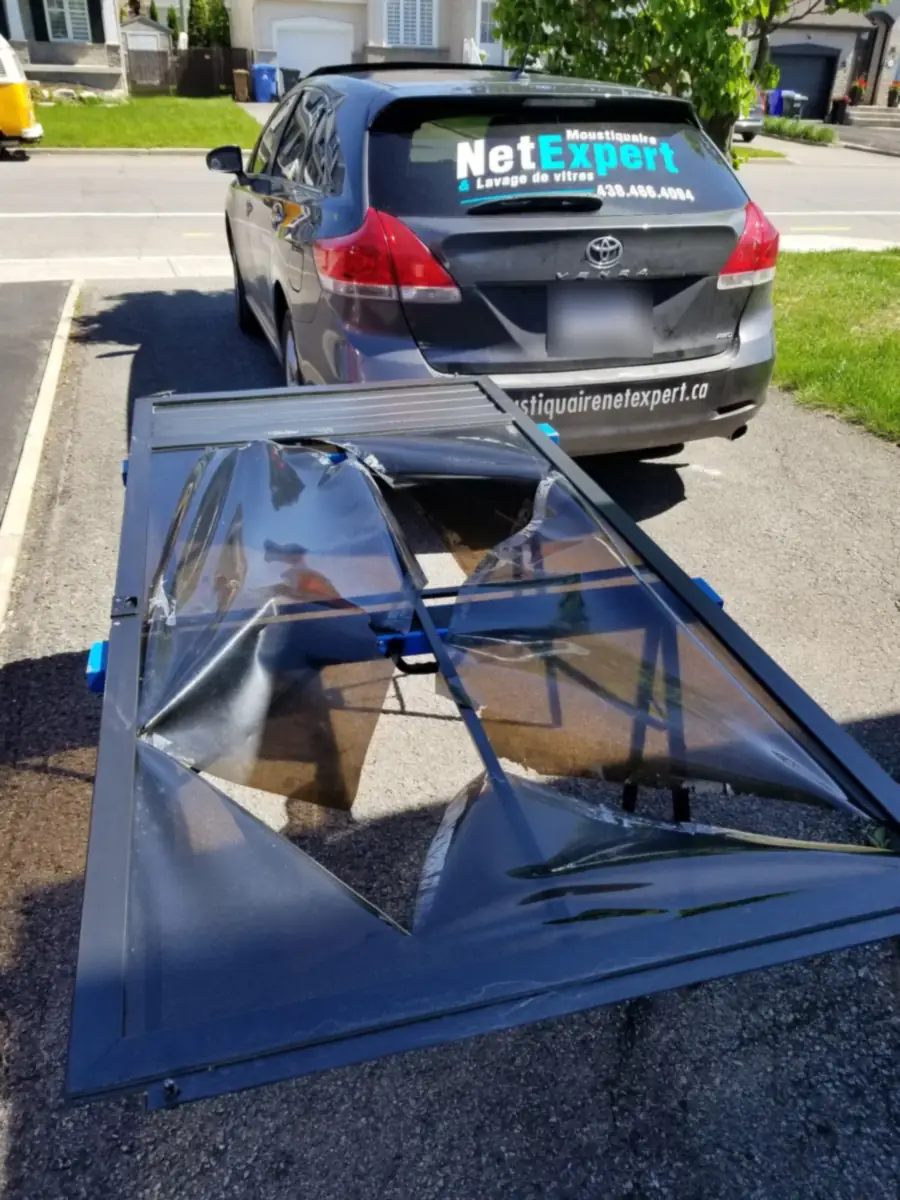
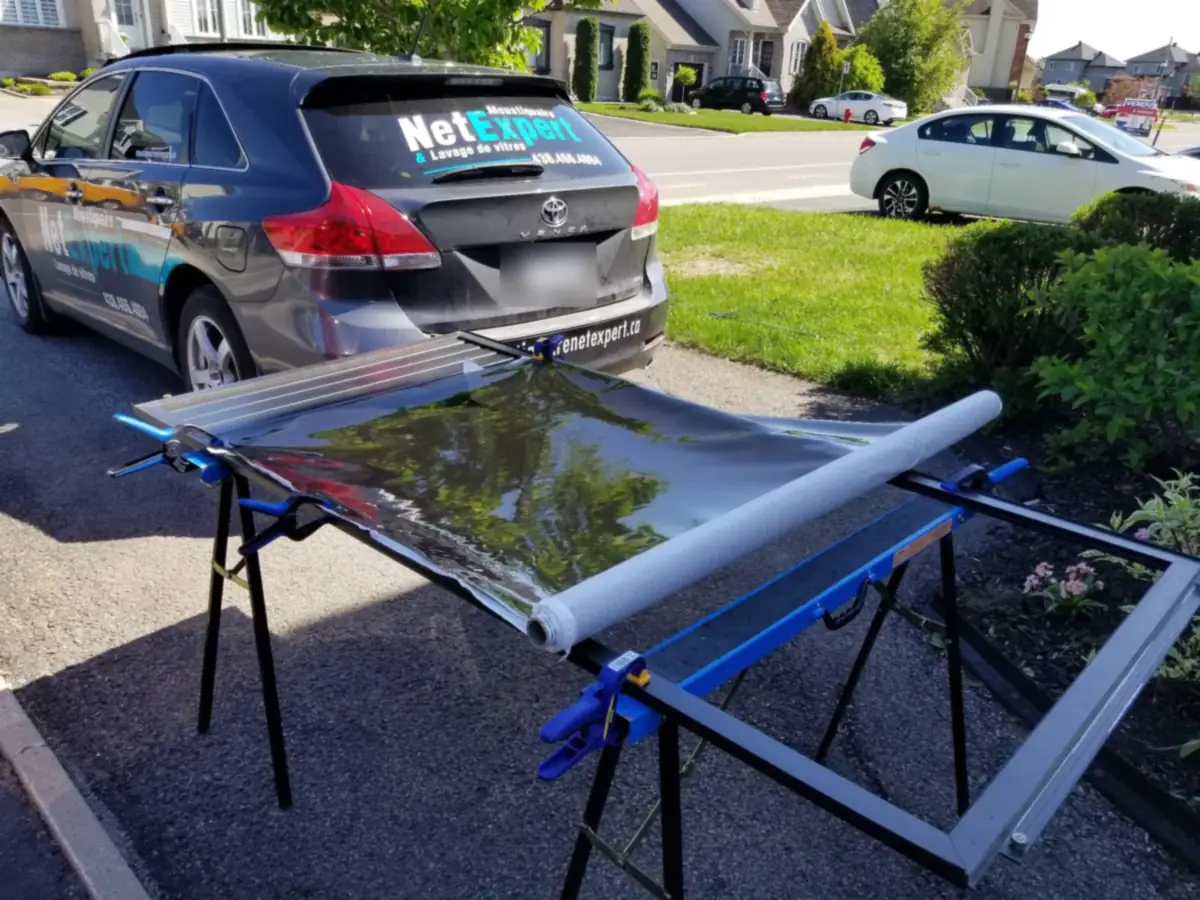
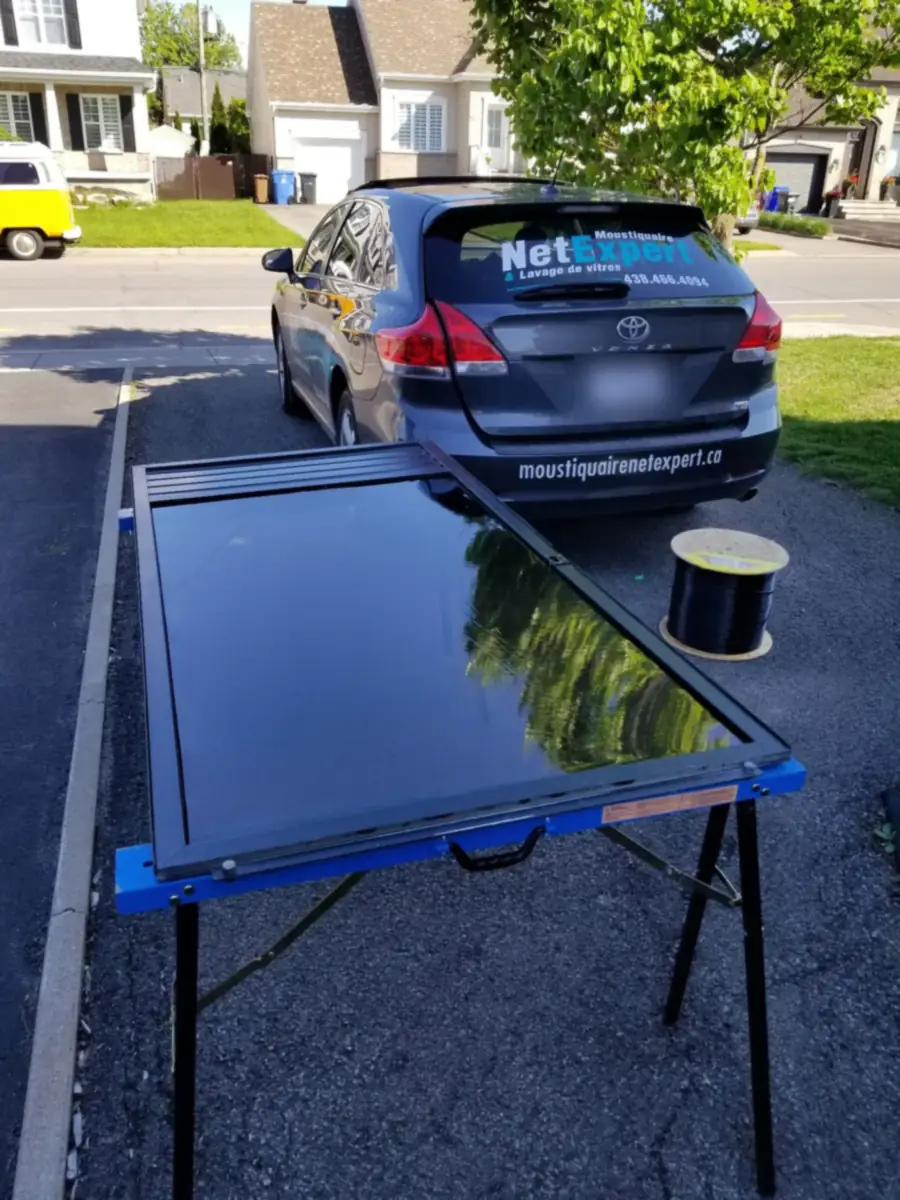
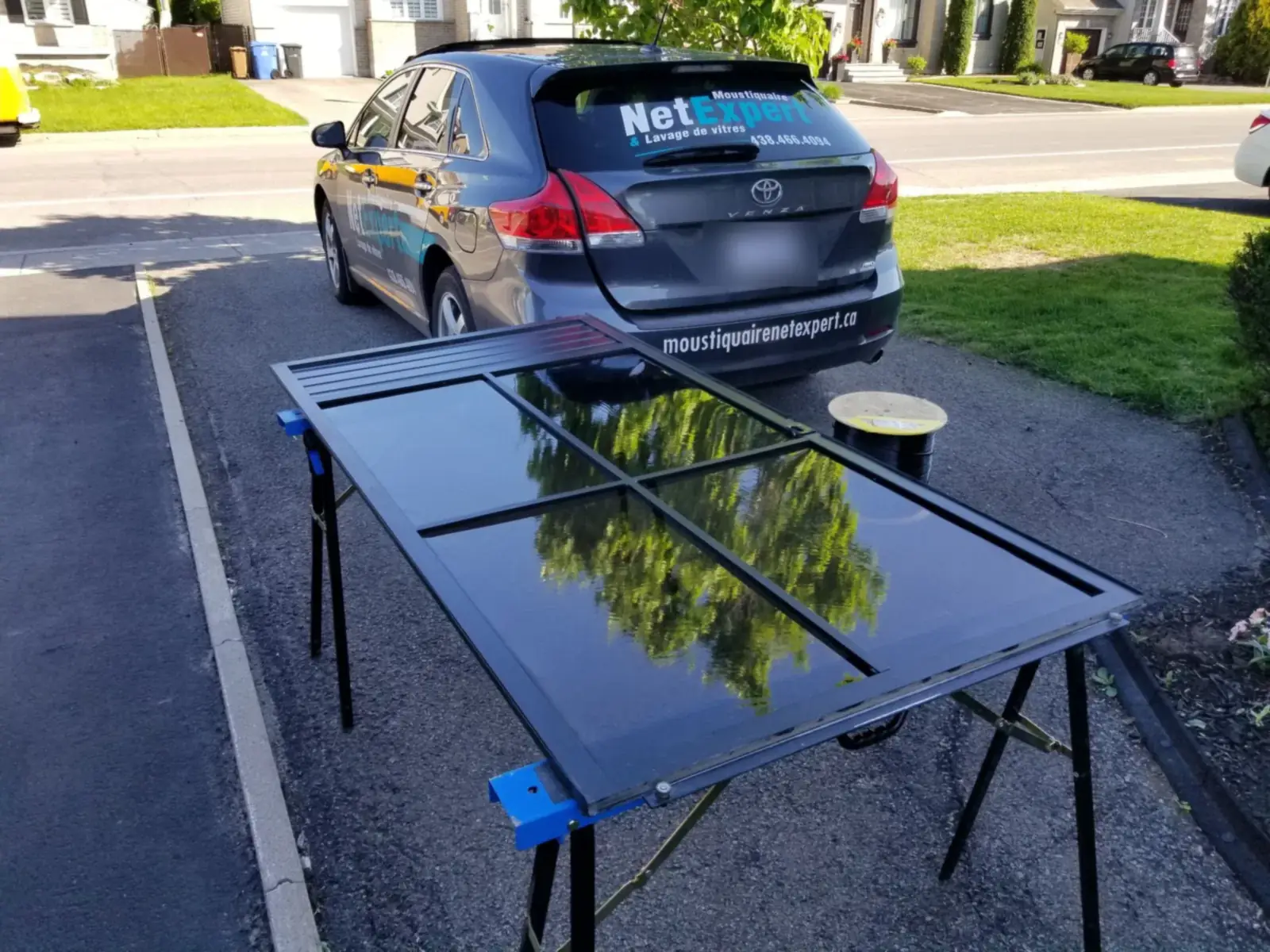
This job was not in Pointe-Calumet — it shows our method, the same everywhere: panels down, new vinyl pane by pane, panels back up.
« Great service! He was at my neighbour’s and agreed to fix my back screen even though we had no appointment. Very successful repair, and inexpensive! »
« Ludovic replaced my screen in record time. Professional, and with a great sense of humour. I recommend his services — don’t hesitate to contact him, he’ll come to your home and do beautiful work. »
« Excellent service. Clear explanations of the work to be done. I really appreciated his dedication: despite the rain he insisted on finishing the job, soaked through and still smiling. The work was very well done. »
Straight answers
Yes, because we are not hunting for a manufacturer's part: we work inside the frame you already own. The panel comes off, gets measured, and receives new mesh or film cut to its exact dimensions. The only condition is that the frame itself still holds — if it is bent or cracked, we say so before starting.
One at a time, on site, with every panel marked so it returns to its own opening. On a structure built to fit, a few millimetres of variation from one face to the next is normal — which is exactly why nothing can be ordered in advance. The full set of measurements is taken in one visit, before a single panel leaves.
No. Panels come off on site, travel flat to the mobile shop, and go back in the same order. A deep lot mostly adds walking, not work. What we check on arrival is the route: a narrow passage or a change in grade gets planned before anything is unscrewed.
Yes, at your home. We travel to Pointe-Calumet, remove the panels, replace the MICA vinyl in the original frames and put everything back — the gazebo structure is never touched. It is one of our specialties.
Yes. Depending on the retailer it is called MICA film, clear vinyl, clear plastic or transparent fabric — the same flexible material that cuts wind and holds warmth. We replace it on gazebos and sun shelters alike.
Yes. The vinyl is replaced pane by pane, in the existing frame — no need to redo the whole panel for one tear. If several panes have yellowed, doing them together gives a uniform result.
On assessment: the price depends on the number of panels and their dimensions. The quote is free, and a photo is often enough to price without a visit. Fabrication and installation guaranteed one year.
Do you manage a building or a business in Pointe-Calumet?