
Summer UV
Sun yellows and clouds the vinyl. Film that crackles to the touch is at end of life.
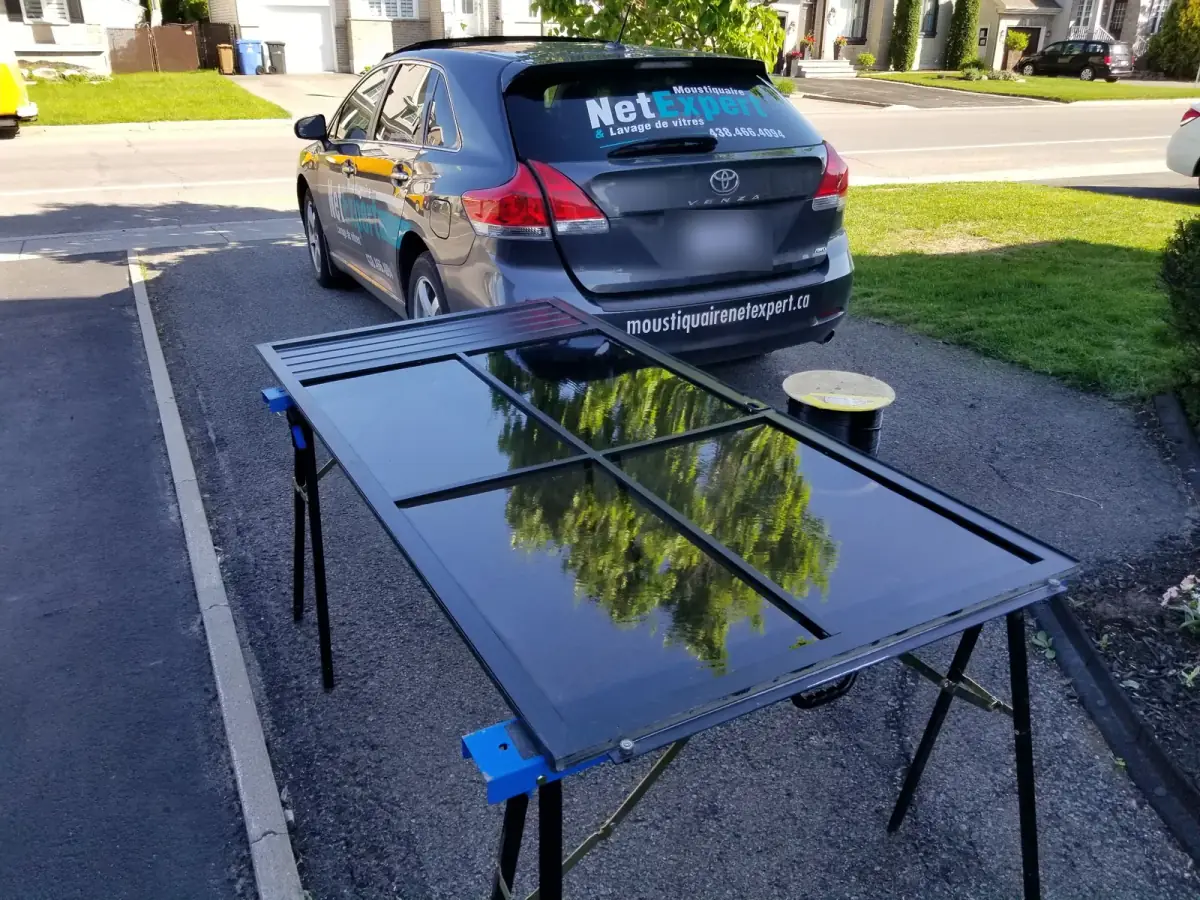
Gazebo and sun shelter specialty
Clear vinyl yellowed or torn? Replaced at your home in Saint-Colomban, in the original frames — gazebos and sun shelters.
Three questions are enough to start. The official measurement is taken on site.
Whatever your retailer calls it — MICA film, clear vinyl, clear plastic, sun-shelter transparent fabric — it is the same material, and we replace it in Saint-Colomban in your existing panels.
Sun yellows and clouds the vinyl. Film that crackles to the touch is at end of life.
Below freezing, MICA turns brittle — one handling or one gust splits it outright.
Slack vinyl flaps like a sail and eventually tears at the seams.
Saint-Colomban is a town of woods and large lots, and you see it first in the yards. On a detached single-family home built between 1990 and 2020, the gazebo is set back, on a slab or a deck, away from the house and, on a wooded lot, under tree cover. Most of them are retailer structures: an aluminum or steel frame, standard-sized panels, screen panels and clear vinyl (MICA film) supplied with the model. The surrounding woods change what those panels endure. Less direct sun, so film that yellows more slowly — but also needles, sap, small branches, and snow sliding off the trees at thaw.
The former lakeside cottages converted into year-round homes tell another story altogether. There the structure was often framed in wood, then enlarged or rebuilt over the years, with openings that do not repeat from one side to the other. And position changes everything: open toward the water, the gazebo takes unfiltered sun and the wind that runs across the lake, while one set under the trees a few hundred metres away is sheltered from both. Two neighbouring properties in the same town therefore wear out their film at different rates, in different ways, and on different faces.
Under the trees the film gets scratched and grimy before it yellows: sap works its way in, a fallen branch punches clean through the vinyl, and the panel stays clear everywhere except where it is holed. On open ground it is the classic sequence — yellowing, stiffening, then a split with the first strong wind. Screen panels tear at the corner and go slack, and the spline eventually creeps out of its groove. In every case the work is on the panel: film replaced to exact dimensions, panel by panel, in the original frame; mesh redone in its own frame; out, mobile workshop, back in. The gazebo structure is not touched.
The property itself is the real constraint here. Long driveways, a gazebo set well away from the house, sometimes at the end of a path or down a slope: the panels are carried by hand over a distance that has nothing in common with a suburban yard. On the former cottages, add a hand-built wood structure whose hardware is standard nowhere and whose every opening has its own dimensions. Disassembly there is done by marking the panels one by one, because none is interchangeable with its neighbour.
Tree cover stretches the insect hour well past sundown, and on a gazebo — a room with no solid wall, used at exactly those hours — tight weave is the default rather than an option. The lower openings of a gazebo sit at animal height, and standard mesh does not survive claws there: reinforced mesh goes into those frames only, the upper openings keeping whatever weave was chosen for insects. On ground open toward the water, wind decides instead, and aluminum holds its tension better.
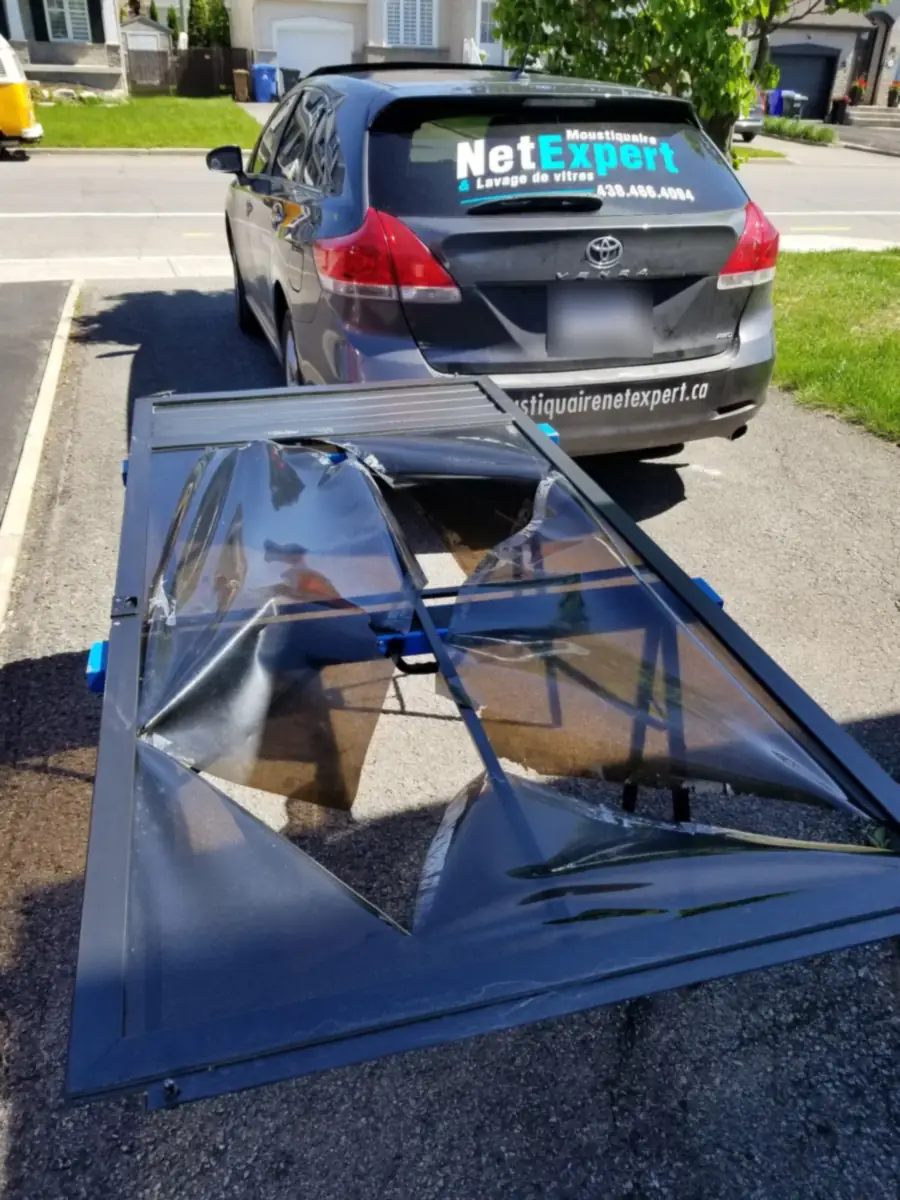
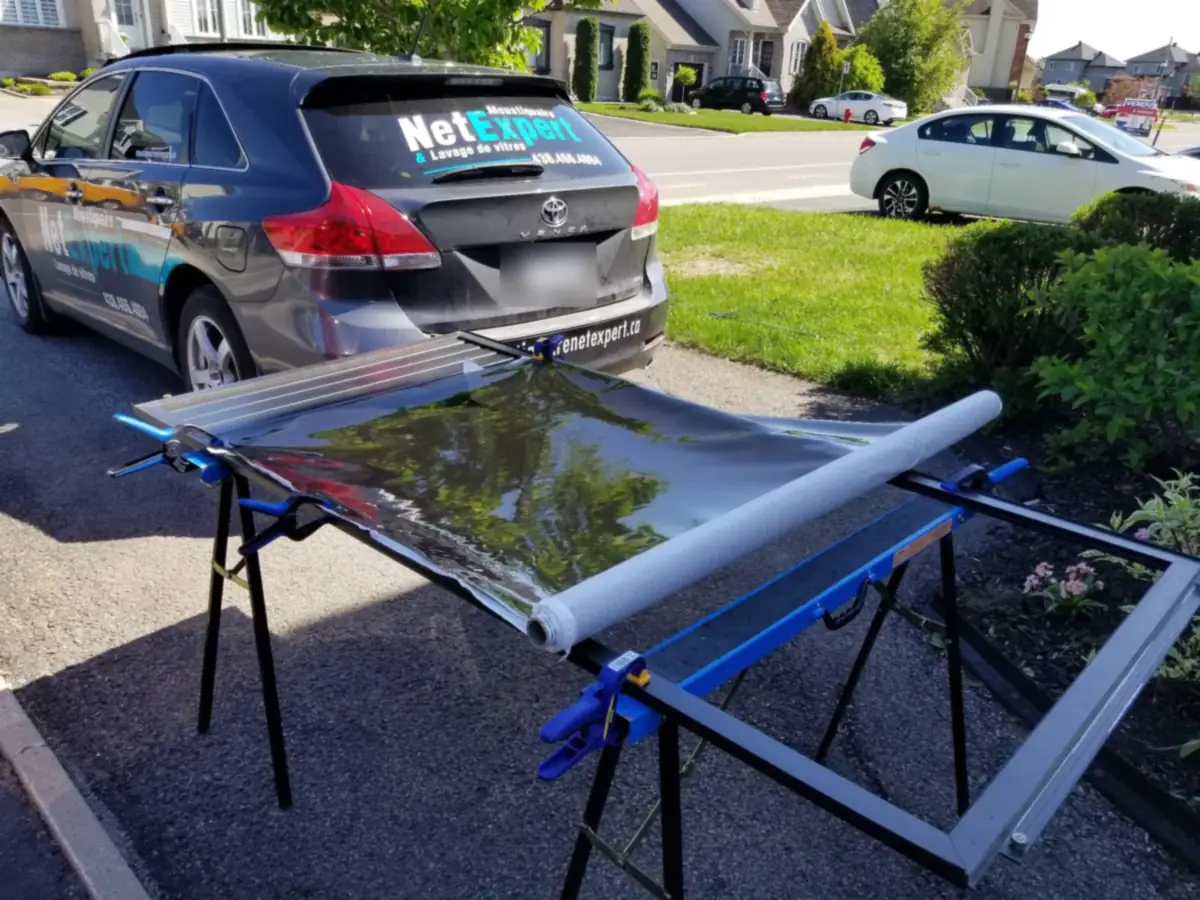
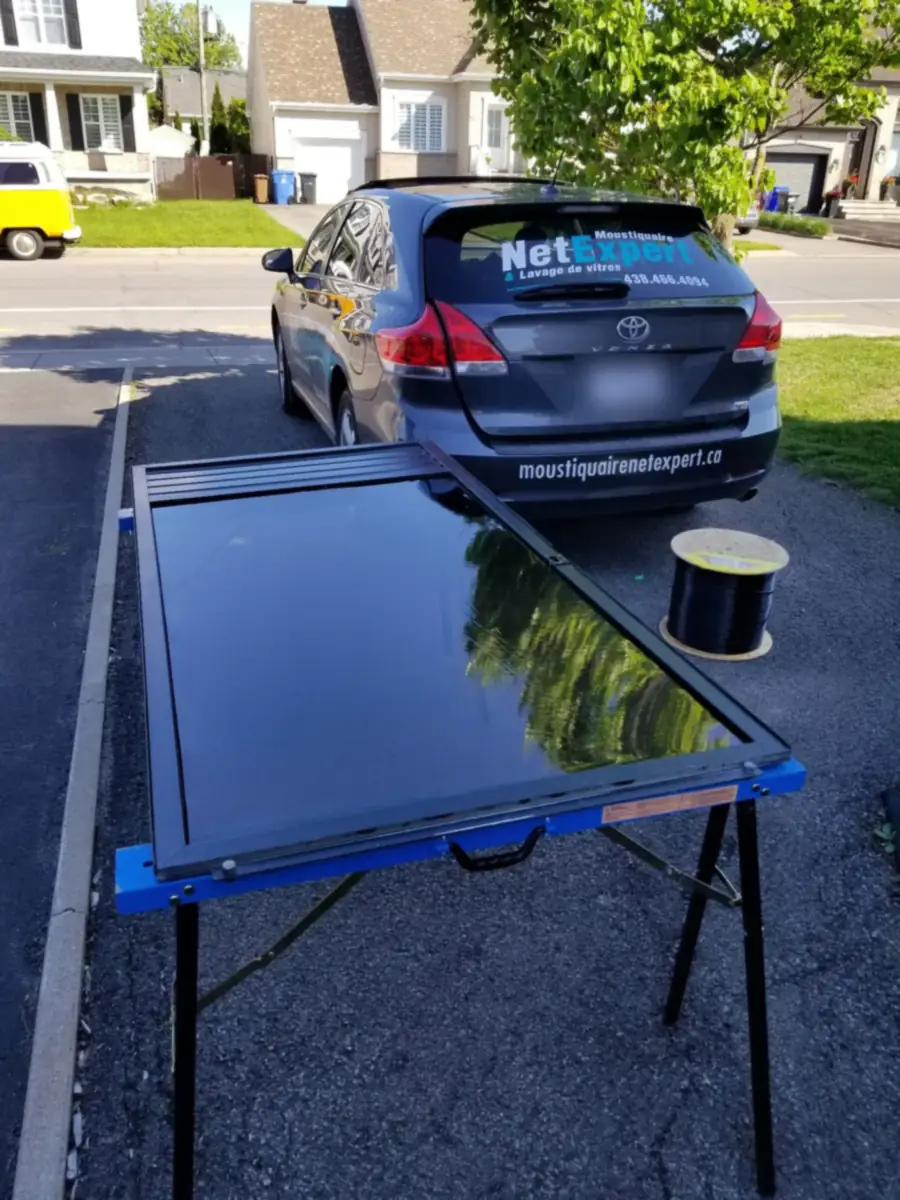
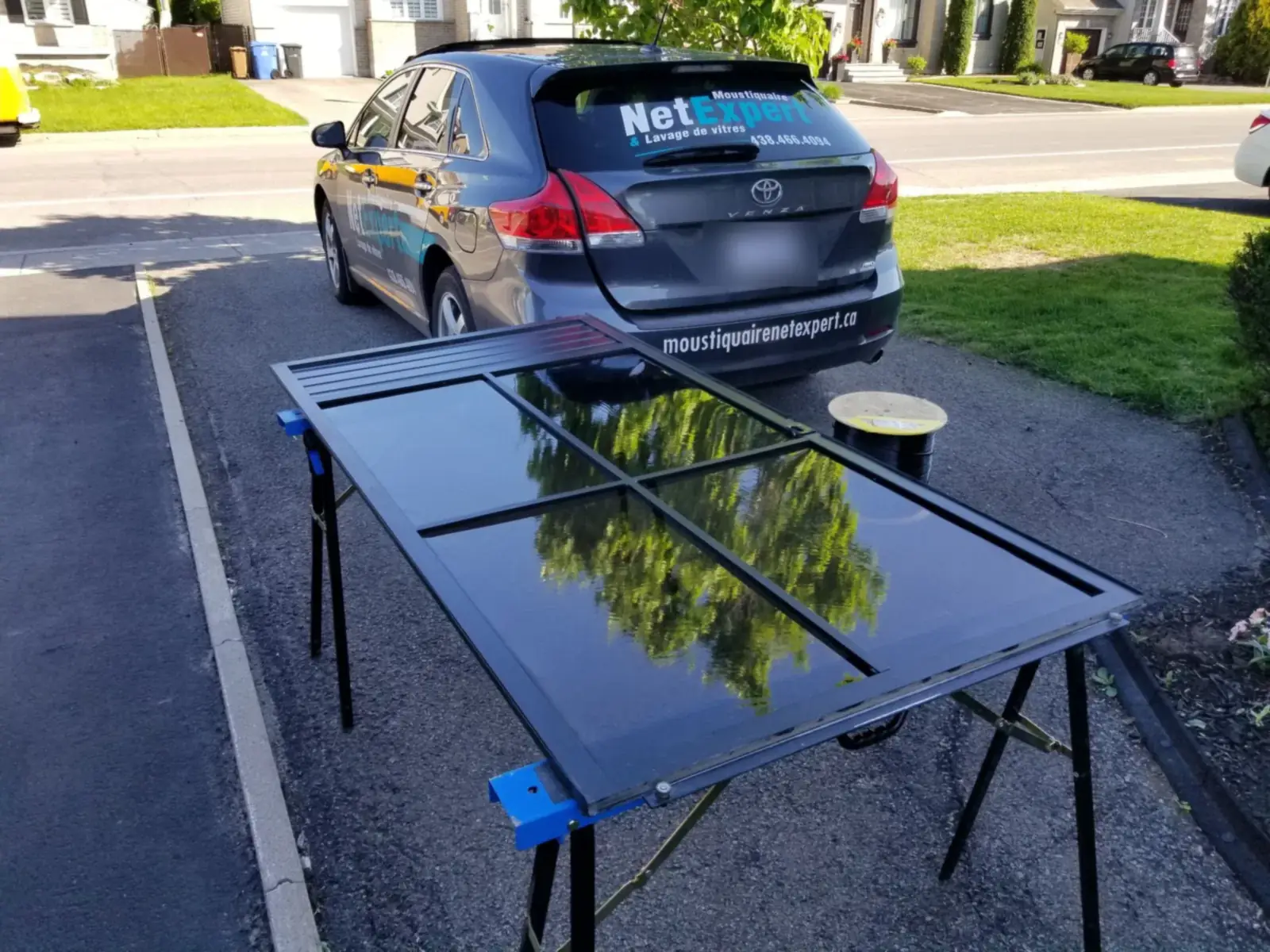
This job was not in Saint-Colomban — it shows our method, the same everywhere: panels down, new vinyl pane by pane, panels back up.
« Excellent service. Clear explanations of the work to be done. I really appreciated his dedication: despite the rain he insisted on finishing the job, soaked through and still smiling. The work was very well done. »
« Great service! He was at my neighbour’s and agreed to fix my back screen even though we had no appointment. Very successful repair, and inexpensive! »
« Ludovic replaced my screen in record time. Professional, and with a great sense of humour. I recommend his services — don’t hesitate to contact him, he’ll come to your home and do beautiful work. »
Straight answers
Deeply scratched or punctured film cannot be recovered: vinyl does not polish back, and a hole grows in the wind. What can be done is panel-by-panel replacement — only the panels that are genuinely gone get redone, and the rest stay in place as long as they are clear and supple.
Yes, there is a reinforced mesh made for that. It fits into the existing frame, and it does not need to go everywhere: the lower panels are enough, the ones at animal height. The upper openings can keep standard or tight-weave mesh, depending on the insect pressure.
One at a time, on site, without assuming one side matches another. That is the normal way to handle a hand-built structure: each opening gets its own film or its own mesh, cut to its real dimensions, and the panels are marked as they come out so each returns to precisely its own opening.
Yes, at your home. We travel to Saint-Colomban, remove the panels, replace the MICA vinyl in the original frames and put everything back — the gazebo structure is never touched. It is one of our specialties.
Yes. Depending on the retailer it is called MICA film, clear vinyl, clear plastic or transparent fabric — the same flexible material that cuts wind and holds warmth. We replace it on gazebos and sun shelters alike.
Yes. The vinyl is replaced pane by pane, in the existing frame — no need to redo the whole panel for one tear. If several panes have yellowed, doing them together gives a uniform result.
On assessment: the price depends on the number of panels and their dimensions. The quote is free, and a photo is often enough to price without a visit. Fabrication and installation guaranteed one year.
Do you manage a building or a business in Saint-Colomban?