
Summer UV
Sun yellows and clouds the vinyl. Film that crackles to the touch is at end of life.
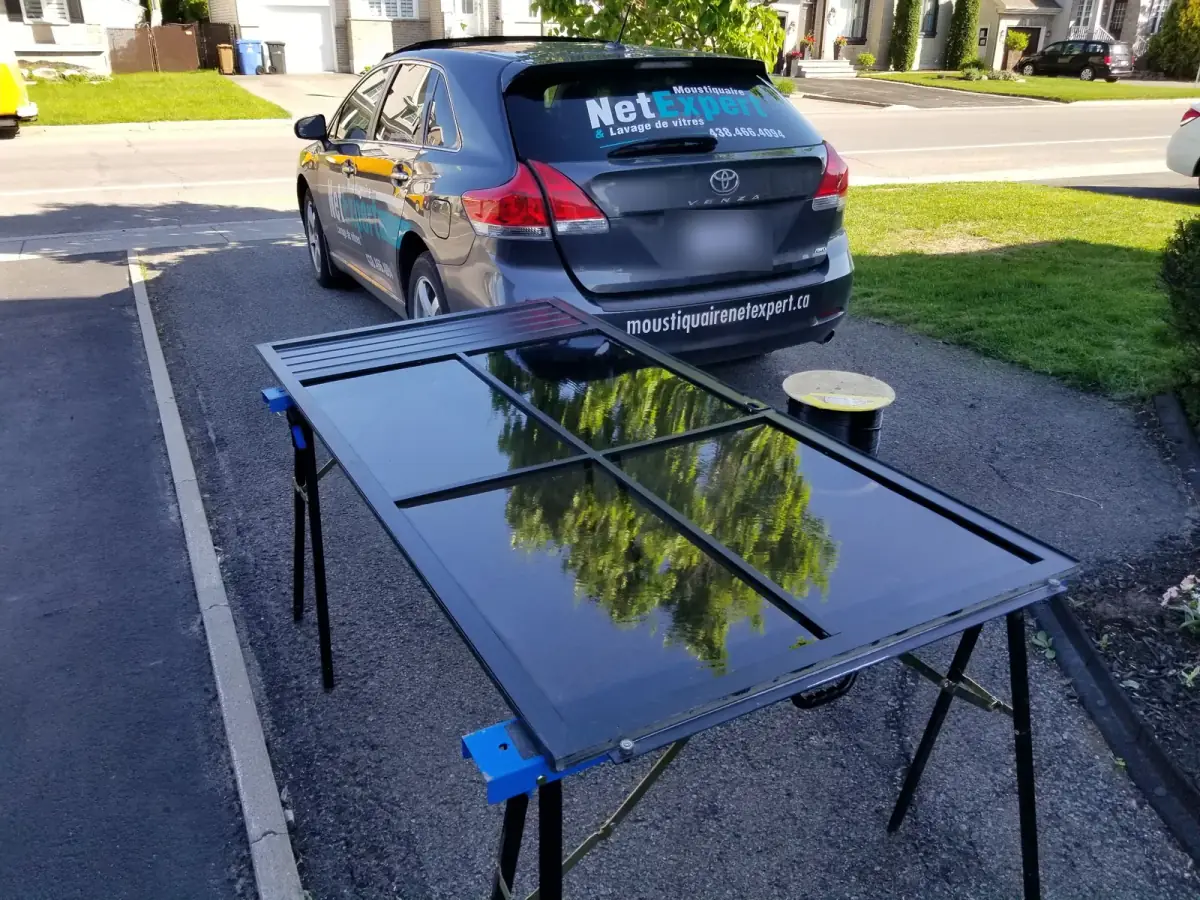
Gazebo and sun shelter specialty
Clear vinyl yellowed or torn? Replaced at your home in Saint-Eustache, in the original frames — gazebos and sun shelters.
Three questions are enough to start. The official measurement is taken on site.
Whatever your retailer calls it — MICA film, clear vinyl, clear plastic, sun-shelter transparent fabric — it is the same material, and we replace it in Saint-Eustache in your existing panels.
Sun yellows and clouds the vinyl. Film that crackles to the touch is at end of life.
Below freezing, MICA turns brittle — one handling or one gust splits it outright.
Slack vinyl flaps like a sail and eventually tears at the seams.
In Saint-Eustache, the bungalow and cottage neighbourhoods built between 1970 and 1995 cover a good part of the city, and nearly every house opens at the back through a patio door onto a generously sized yard. That is the natural home of the retail gazebo: an aluminum or steel frame set in line with the patio door, standard-size screen panels, and clear vinyl (MICA film) slid into the same channels for cool evenings. Because these neighbourhoods went up over a short span, the gazebos in them are likely of similar ages and ageing at the same pace: a film yellowing in one yard is usually a preview of the neighbour’s, exposed to the same sun and the same wind.
The old heritage core near the rivière du Chêne calls for a different product altogether. Around a stone house the yard is old, often planted with tall trees, and nothing sold in a box really belongs in that setting. A gazebo in a yard like that is more likely to be a structure built in place than one sold in a box: one-of-a-kind screen panels held by mouldings rather than clips, where standard formats would sit badly in the setting. The river adds its share: dampness at ground level, insects all summer long, and wood that moves from one season to the next, which eventually throws the panel frames slightly out of true.
On the retail gazebos of the 1970–1995 neighbourhoods, the film is the first thing to need attention: yellowed by the summers, it stiffens, splits along the fasteners and lets in the very wind it was meant to block. We remake it pane by pane, cut to exact size and set back into the original frame. The screen panels follow: a torn corner, slack mesh that balloons at the slightest breeze, spline working loose. We rescreen them on site in their own frames. On a wooden structure in the old core, the mesh is often stapled under a moulding: we lift the moulding, tension new mesh, and refit the moulding — and if the frame has moved with the damp, we fit the mesh to the frame as it is today, not as it was built.
A retail gazebo comes apart easily as long as its aluminum channels are straight; bend one with a gust or a branch and the panel will not seat again until the channel is trued. On a wooden structure near the river the difficulty lies elsewhere: the panels are large, sometimes taller than a person, and taking them down takes two hands and a set order so no old moulding splits. The ground around a stone house may also slope or be cut by old low walls, which limits where a panel can be laid flat. Everything is rebuilt in the mobile workshop, and the framing is never touched.
The rivière du Chêne changes the choice of mesh for anything near it. What sets a gazebo apart from a window is how long you stay in it: a whole evening seated, not the moment it takes to open a sash. That is why a finer weave earns its place first on the lower panels, the ones right in front of you, before it goes on all four sides. In the bungalow neighbourhoods, farther from the water, the issue is more the sun on open yards and the wind catching a tired film. Aluminum mesh for tension, film put up before the cold stiffens it, and taken down in spring if the gazebo faces due south.
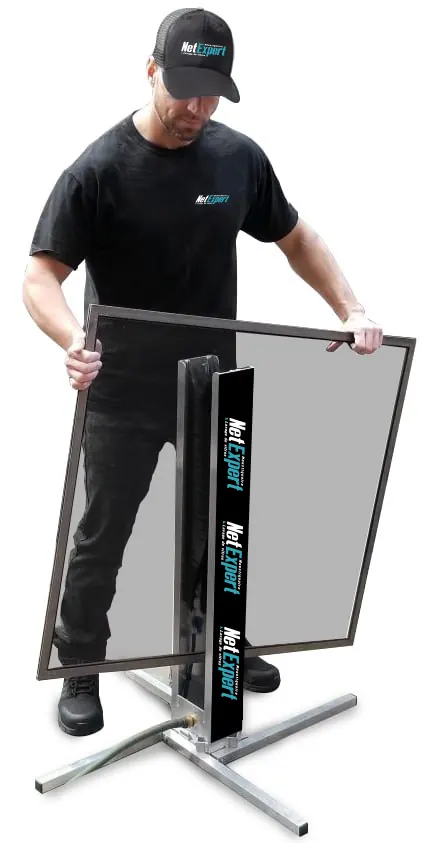
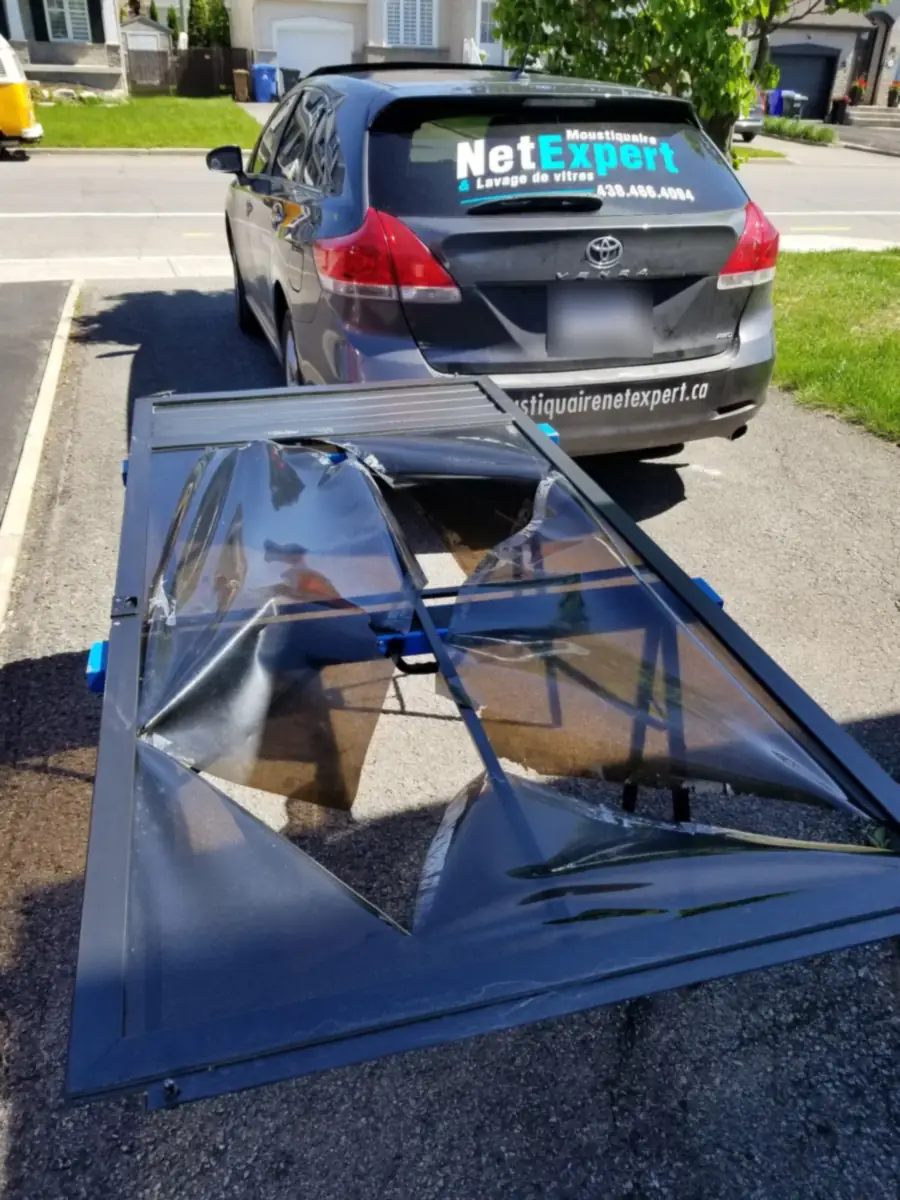
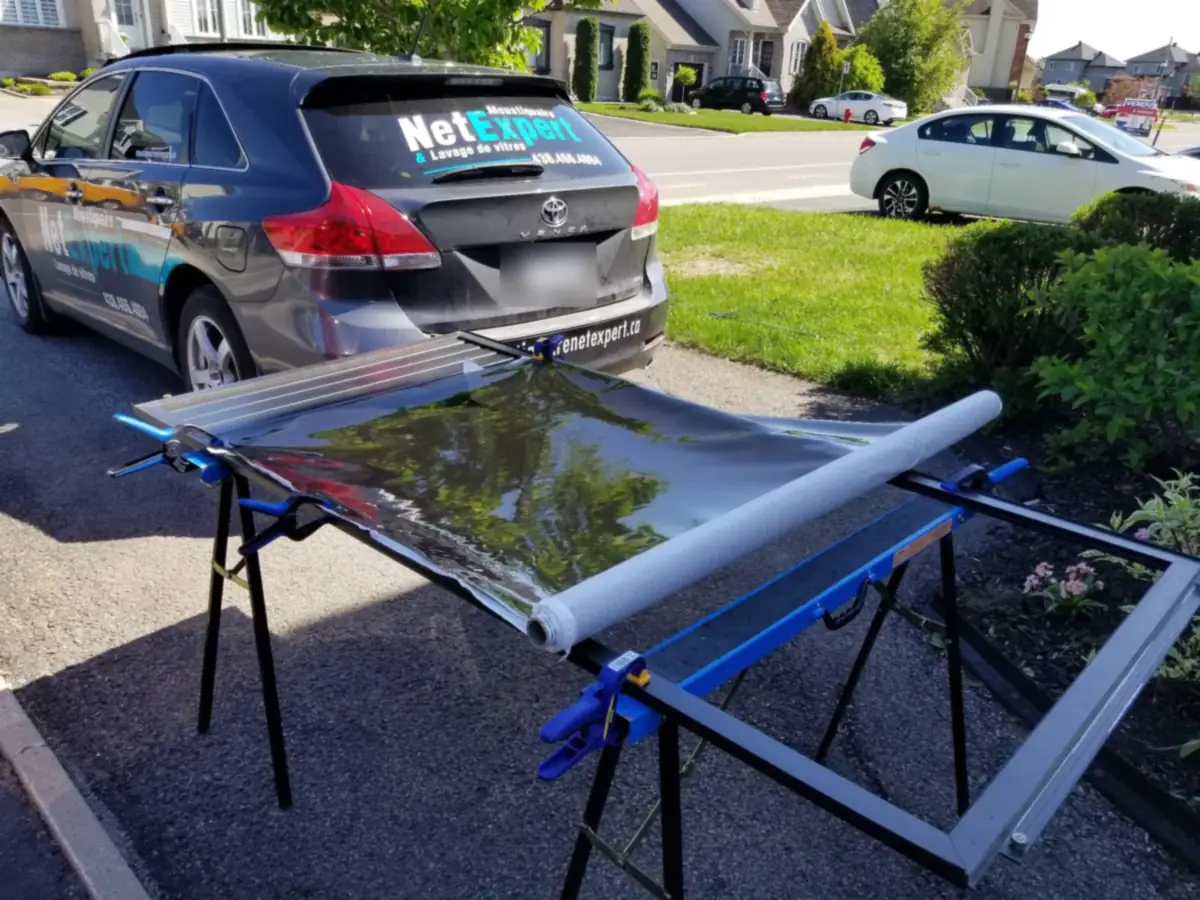
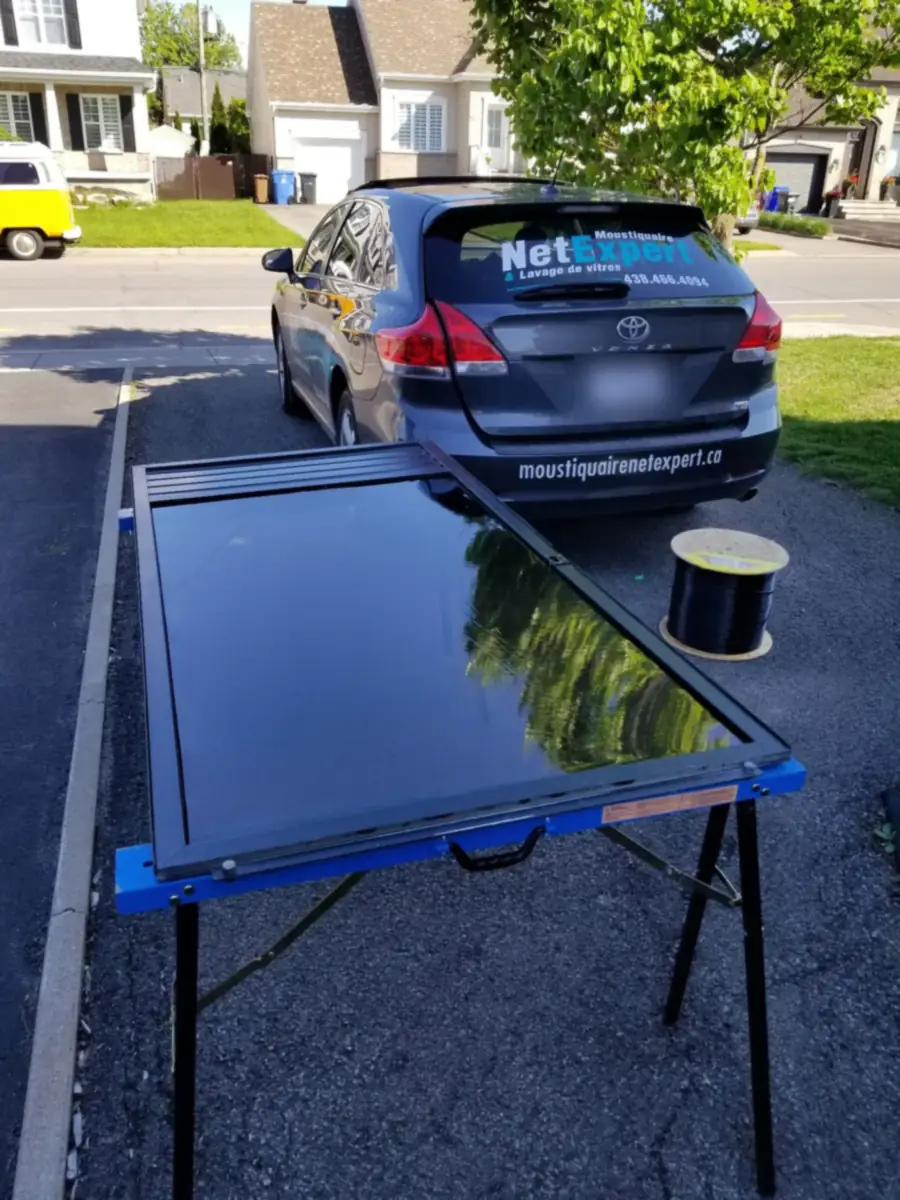
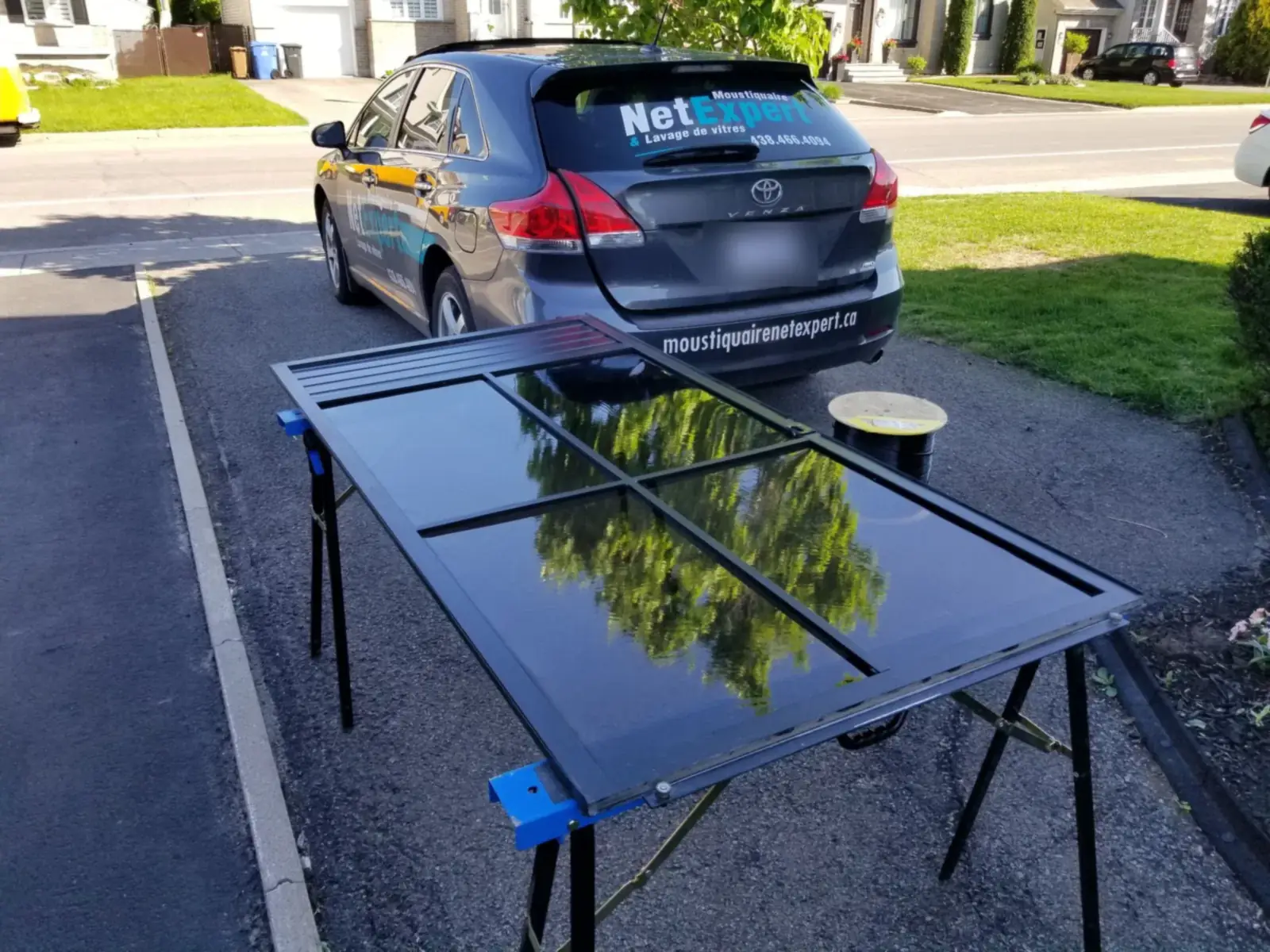
This job was not in Saint-Eustache — it shows our method, the same everywhere: panels down, new vinyl pane by pane, panels back up.
« Great service! He was at my neighbour’s and agreed to fix my back screen even though we had no appointment. Very successful repair, and inexpensive! »
« Ludovic replaced my screen in record time. Professional, and with a great sense of humour. I recommend his services — don’t hesitate to contact him, he’ll come to your home and do beautiful work. »
« Excellent service. Clear explanations of the work to be done. I really appreciated his dedication: despite the rain he insisted on finishing the job, soaked through and still smiling. The work was very well done. »
Straight answers
Yes, and that is the normal case for a permanent gazebo: each panel was made for its spot. We measure every frame on site, allowing for wood that has moved with the damp, lift the moulding that holds the mesh, tension new mesh and refit the moulding. The framing is left alone, and the result fits the frame as it is.
No. Film and screening age separately, and the film almost always goes first. We can remake only the film panes, cut to exact size, and leave the screen panels in place if they are still taut and their spline holds. We check the corners at the same time, because that is where mesh lets go first.
Probably not: a standard weave lets no-see-ums through — that is its limit, not a defect. Near the rivière du Chêne, the answer is tight-weave mesh on the gazebo panels, which also stops black flies. It cuts slightly more air and light, which matters less in a gazebo, where shade is the whole point.
Yes, at your home. We travel to Saint-Eustache, remove the panels, replace the MICA vinyl in the original frames and put everything back — the gazebo structure is never touched. It is one of our specialties.
Yes. Depending on the retailer it is called MICA film, clear vinyl, clear plastic or transparent fabric — the same flexible material that cuts wind and holds warmth. We replace it on gazebos and sun shelters alike.
Yes. The vinyl is replaced pane by pane, in the existing frame — no need to redo the whole panel for one tear. If several panes have yellowed, doing them together gives a uniform result.
On assessment: the price depends on the number of panels and their dimensions. The quote is free, and a photo is often enough to price without a visit. Fabrication and installation guaranteed one year.
Do you manage a building or a business in Saint-Eustache?