
Summer UV
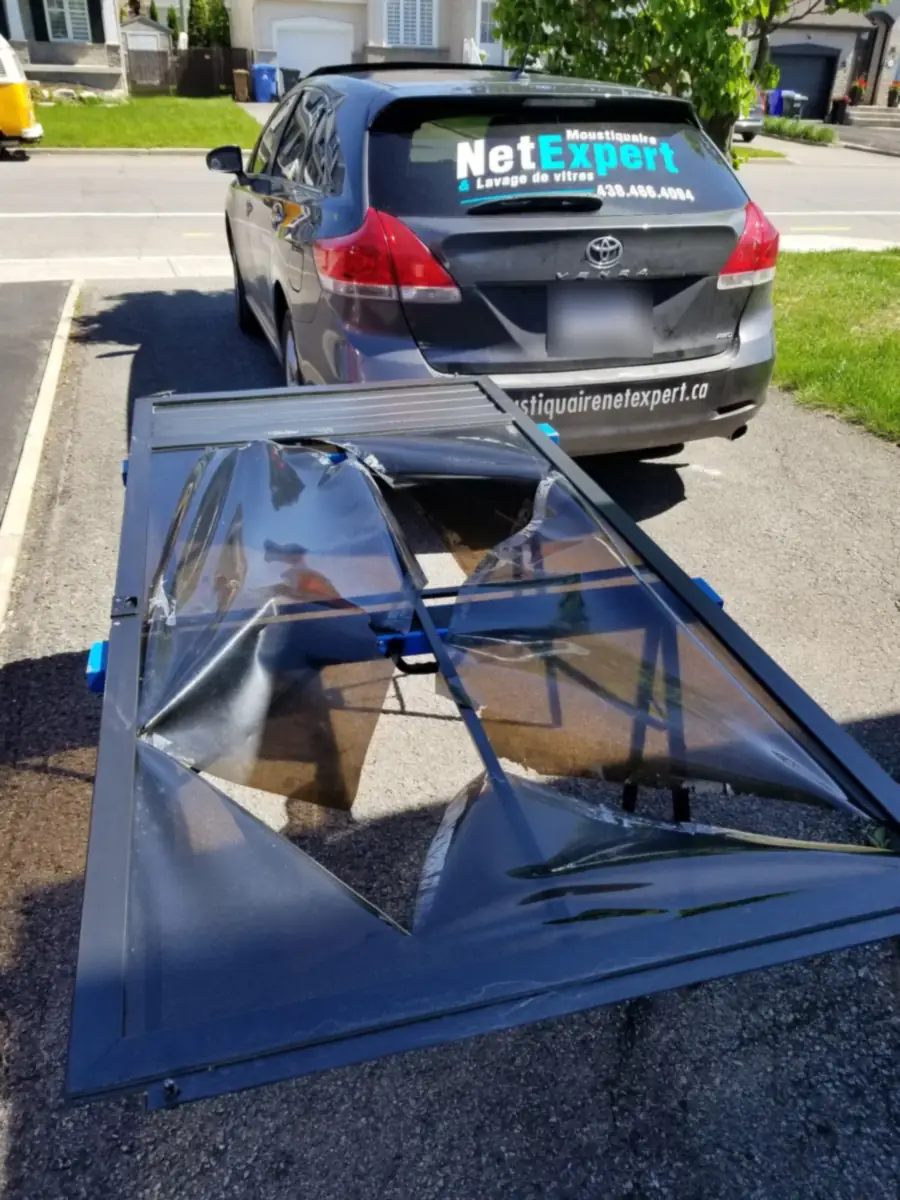
Sun yellows and clouds the vinyl. Film that crackles to the touch is at end of life.
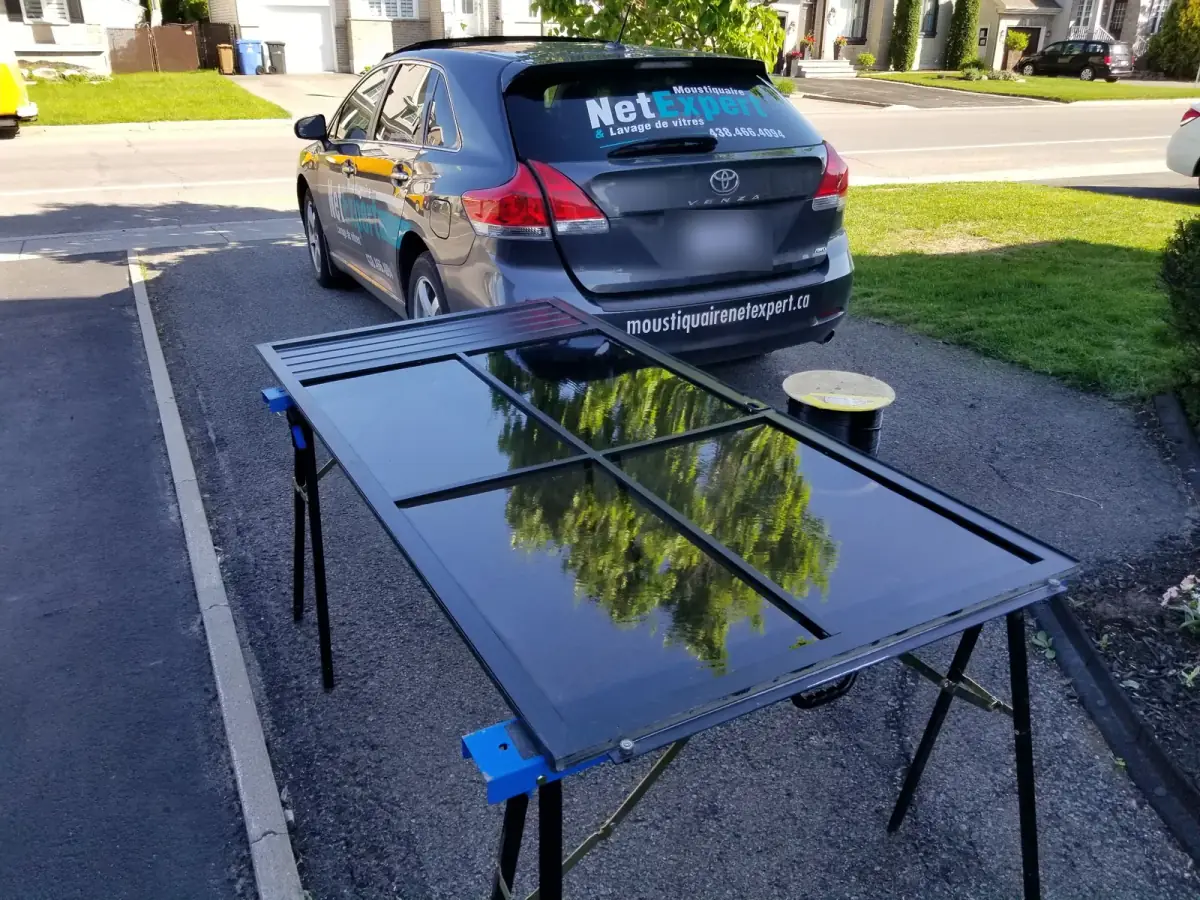
Gazebo and sun shelter specialty
Clear vinyl yellowed or torn? Replaced at your home in Gore, in the original frames — gazebos and sun shelters.
Three questions are enough to start. The official measurement is taken on site.
Whatever your retailer calls it — MICA film, clear vinyl, clear plastic, sun-shelter transparent fabric — it is the same material, and we replace it in Gore in your existing panels.
Sun yellows and clouds the vinyl. Film that crackles to the touch is at end of life.
Below freezing, MICA turns brittle — one handling or one gust splits it outright.
Slack vinyl flaps like a sail and eventually tears at the seams.
Gore does not have suburban yards: it has land. Detached houses on large wooded lots, former lake cottages turned into year-round homes, long driveways and ground that is rarely level — in that setting a gazebo is not an accessory sitting on the lawn, it is often the summer room of the house. Many are permanent wooden structures built on site, sometimes on posts to take up the slope, with one-off pane sizes that do not repeat from one face to the next. Others are retailer models set on a deck, in whatever part of the lot was cleared. Both families coexist, sometimes on the same property.
The woods change everything else. A gazebo surrounded by trees takes less direct wind than one in the open, but it takes more damp shade, more plant debris and far more insects. Overhanging branches drop their share of sap, needles and twigs onto the roof and against the panels, and whatever collects at the bottom of a pane holds moisture there all fall. Conversely, a gazebo placed on a cleared rise — the view often being the reason for the spot — ends up exposed on every side, with no tree to slow the air. Two gazebos in the same township, two completely different regimes.
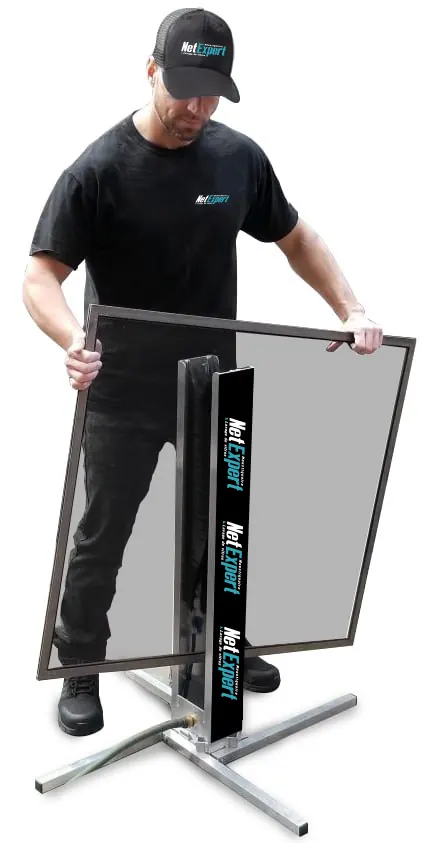
Clear vinyl (MICA film) is the part that ages fastest on a country gazebo, because it is often left up well past the season it was installed for. It yellows, it stiffens, and once stiff a single gust is enough to split it from a corner or a fastening point. We redo it new, cut to measurements taken pane by pane, inside the original frame. The screen panels slacken, catch at the corner and lose their spline. They come down, get rescreened in the mobile workshop and go back up. The gazebo structure — posts, roof, framing — is never touched.
On a wooden structure built on site, the panes are held by mouldings that have to come off one at a time without splitting, and measuring is done opening by opening, diagonals included: a few winters on township ground are enough to pull a frame out of square. Then there is access to the land itself. A gazebo set away from the house, at the bottom of a slope or along a path, is handled by bringing the workshop as close as possible and taking down every panel to be redone in one go rather than making repeated trips. Walking the whole gazebo before calling avoids forgetting a pane at the back.
On wooded ground the enemy is not the gust, it is insects and damp. On wooded ground a gazebo takes less wind than one in the open, and that is what settles the split: the faces under the trees stay in mesh, the ones facing the clearing get closed in with film. On a cleared, elevated spot the calculation reverses — wind becomes the dominant factor, the film has to be tensioned and held along its full height, and aluminum mesh holds its tension better than fibreglass season after season.
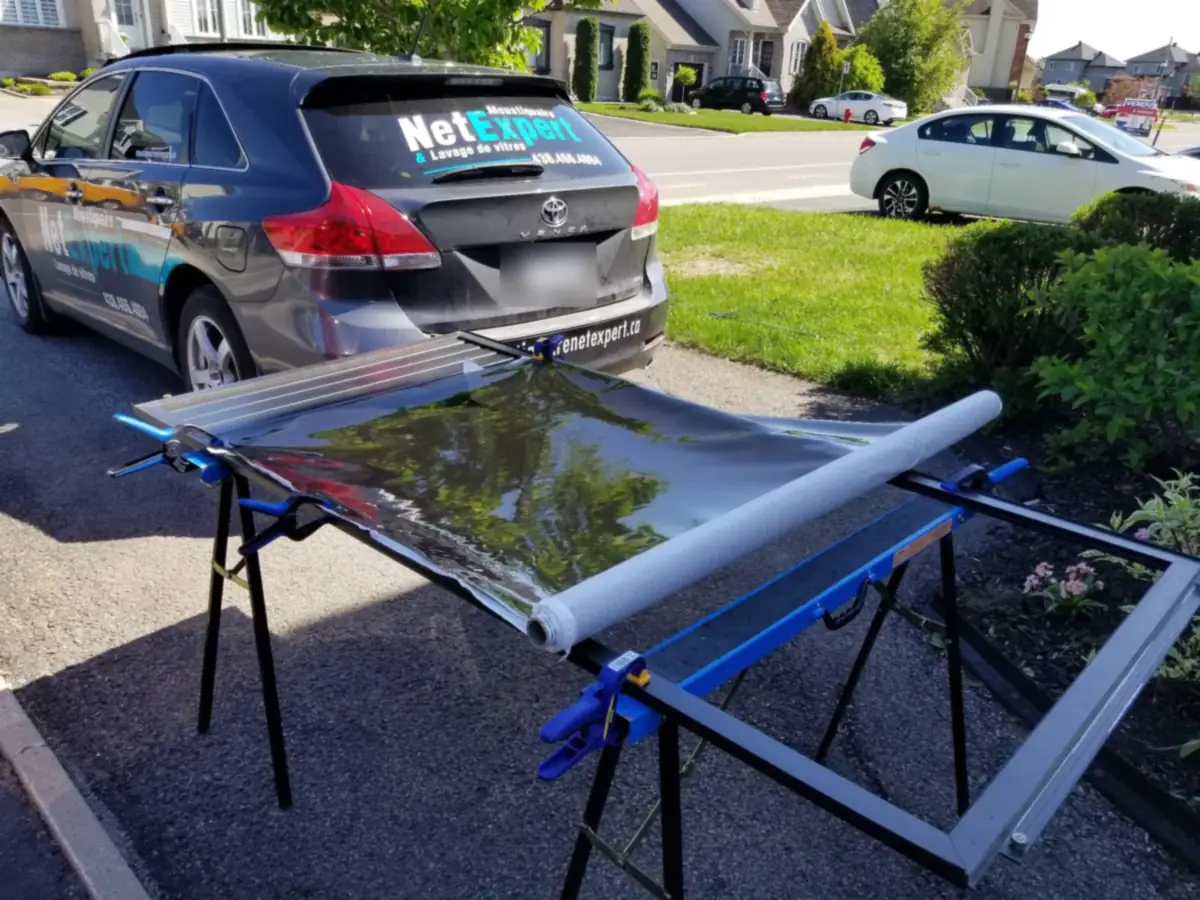
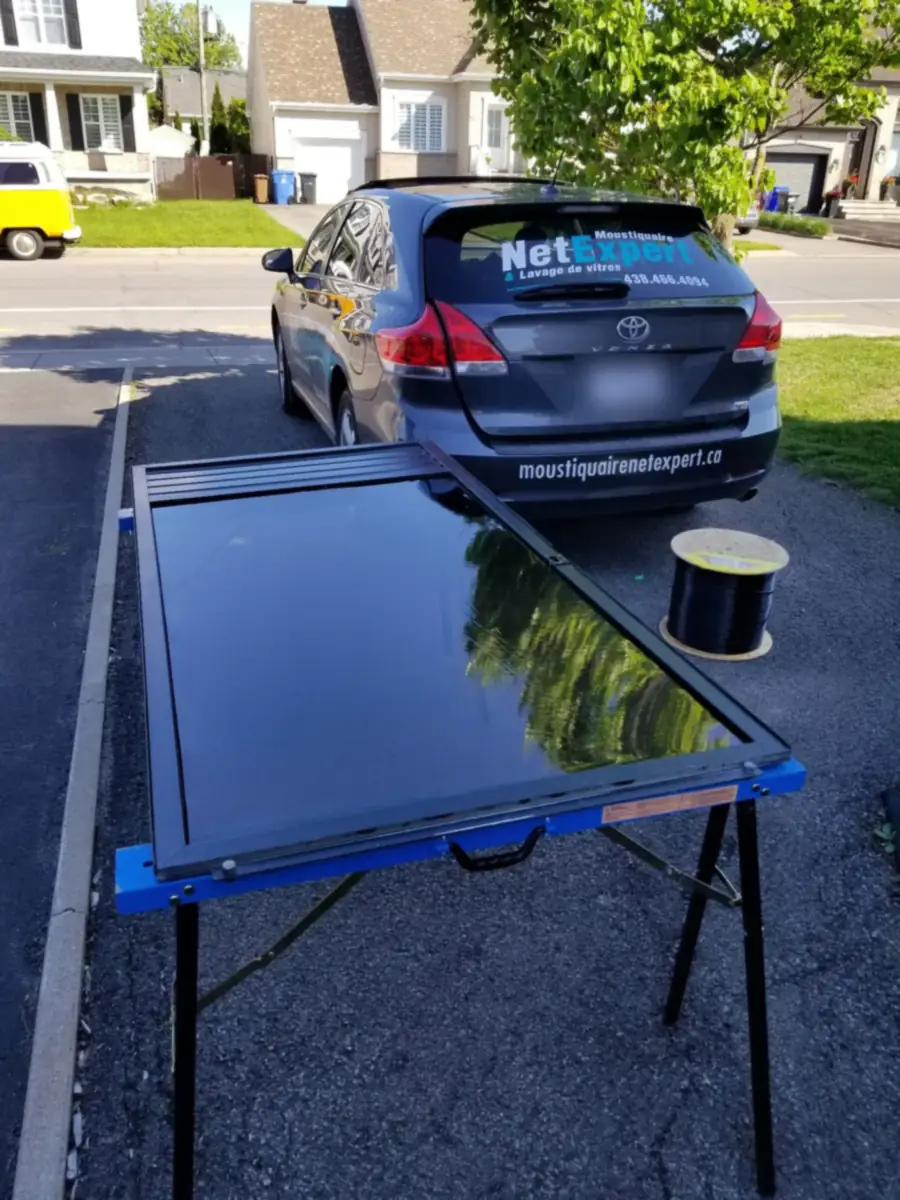
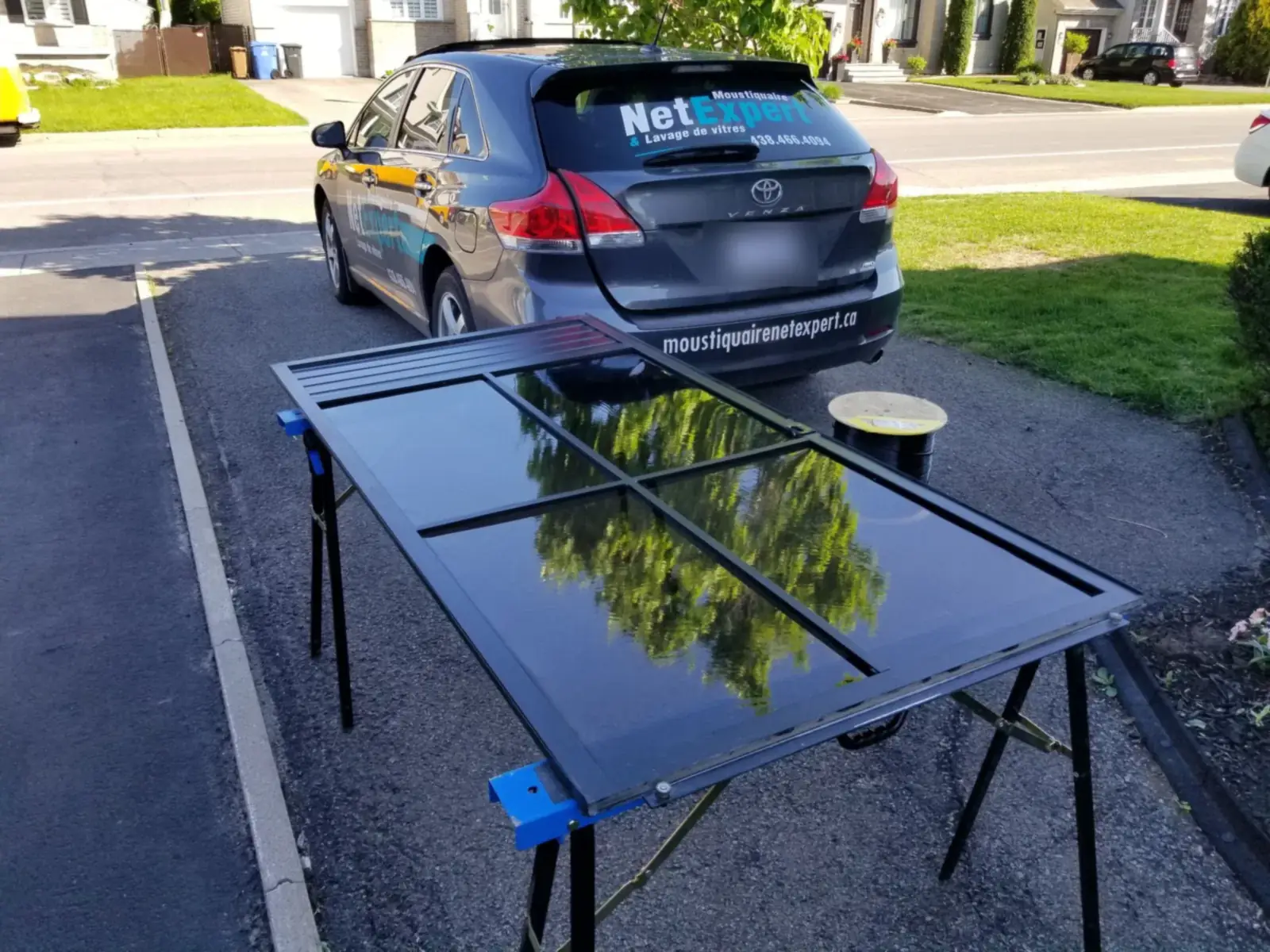
This job was not in Gore — it shows our method, the same everywhere: panels down, new vinyl pane by pane, panels back up.
« Great service! He was at my neighbour’s and agreed to fix my back screen even though we had no appointment. Very successful repair, and inexpensive! »
« Ludovic replaced my screen in record time. Professional, and with a great sense of humour. I recommend his services — don’t hesitate to contact him, he’ll come to your home and do beautiful work. »
« Excellent service. Clear explanations of the work to be done. I really appreciated his dedication: despite the rain he insisted on finishing the job, soaked through and still smiling. The work was very well done. »
Straight answers
It just needs planning. We bring what is needed as close to the gazebo as possible and take down all the panels to be redone in one go, rather than walking back and forth to the vehicle. A passable route nearby helps a great deal; failing that, we work on site with what can be carried by hand.
What does the damage is the moisture that debris holds against the bottom of the pane all fall. The wooden frame moves, the mesh clogs, and the spline eventually stops holding in a swollen groove. Clearing the bottom of the panels before winter is the highest-value bit of upkeep on a wooded lot.
Yes, as long as the pane's frame can accept it — which is true of most wooden structures with mouldings and of many retailer models. The film is cut to the exact dimensions of each pane; on a structure built on site, that means a full set of measurements before anything is cut.
Yes, at your home. We travel to Gore, remove the panels, replace the MICA vinyl in the original frames and put everything back — the gazebo structure is never touched. It is one of our specialties.
Yes. Depending on the retailer it is called MICA film, clear vinyl, clear plastic or transparent fabric — the same flexible material that cuts wind and holds warmth. We replace it on gazebos and sun shelters alike.
Yes. The vinyl is replaced pane by pane, in the existing frame — no need to redo the whole panel for one tear. If several panes have yellowed, doing them together gives a uniform result.
On assessment: the price depends on the number of panels and their dimensions. The quote is free, and a photo is often enough to price without a visit. Fabrication and installation guaranteed one year.
Do you manage a building or a business in Gore?