
Summer UV
Sun yellows and clouds the vinyl. Film that crackles to the touch is at end of life.
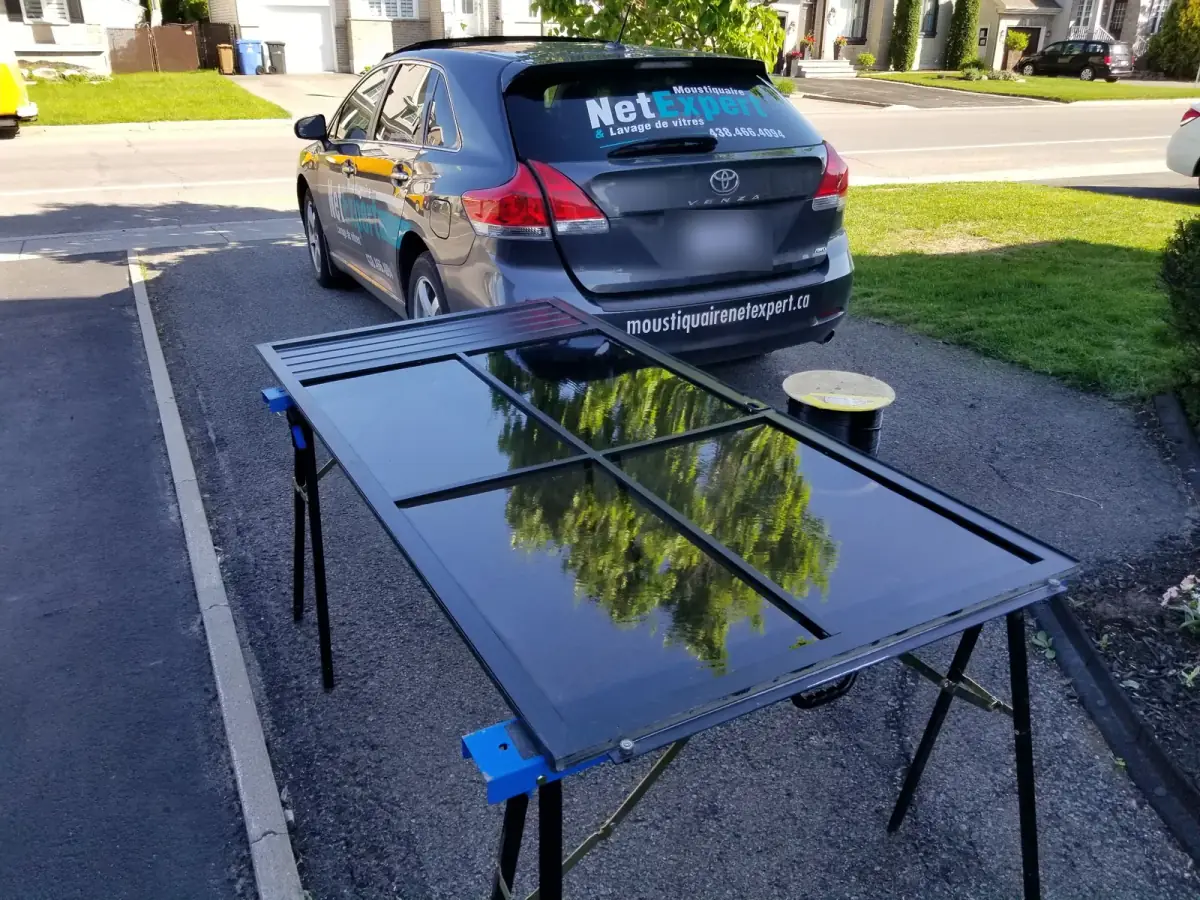
Gazebo and sun shelter specialty
Clear vinyl yellowed or torn? Replaced at your home in Saint-Jérôme, in the original frames — gazebos and sun shelters.
Three questions are enough to start. The official measurement is taken on site.
Whatever your retailer calls it — MICA film, clear vinyl, clear plastic, sun-shelter transparent fabric — it is the same material, and we replace it in Saint-Jérôme in your existing panels.
Sun yellows and clouds the vinyl. Film that crackles to the touch is at end of life.
Below freezing, MICA turns brittle — one handling or one gust splits it outright.
Slack vinyl flaps like a sail and eventually tears at the seams.
In the Bellefeuille and Lafontaine sectors, the bungalows and cottages built after 1960 have backyards deep enough to set a gazebo well away from the house — which is exactly what exposes it: nothing shelters it from the wind, and nothing holds back the snow that leans on its low sides until April. But Saint-Jérôme is already in the Laurentians, and a gazebo feels it. Winter comes earlier and stays longer than by the river, snow piles on the roof and against the sides, and the film stays cold-stiffened for months. Vinyl forced into place in the dead of winter cracks at the corners; film put up in the fall, while still supple, comes through winter far better.
The old heart around the cathedral has no such yards. The workers’ houses and the plexes with outdoor staircases have at best a strip of ground, a deck or a balcony, and the gazebo there takes a more modest form: a small retail model on a wooden deck, or a pergola with panels. When those panels need redoing, they come down the outdoor staircase — the very one that gives the neighbourhood its look. On a workers’ house with a real yard, the gazebo is never original; it is usually a wooden structure added by an owner, with one-of-a-kind panels measured on site and remade one by one.
On the retail gazebos of Bellefeuille and Lafontaine, the film is what fails first, and the Laurentian winter is the reason: yellowed in summer, stiffened by frost, it splits along a fold or a fastener when the wind hits it while still cold. We replace it pane after pane, to the dimension of each original frame. The screen panels age more slowly, but they tear at a corner, go slack or lose their spline; we rescreen them in their frames, with aluminum mesh when the gazebo is exposed to wind. On the pergolas and small gazebos of the old quarter, the panels are often narrow and numerous; they get counted before anything starts, because their number sets the length of the visit, and the structure does not move.
In a plex with an outdoor staircase, the challenge is logistics: the panels of an upstairs deck come down the stairs one at a time and go back up the same way, which means arranging access and a bit of room at the bottom. In Bellefeuille and Lafontaine the retail gazebo comes apart easily, but a frame that has carried several winters of snow sometimes has a slightly sagged channel, and a panel remade to exact size will not seat until the channel is trued. On a wooden structure added behind a workers’ house, the panels are held under mouldings that are removed with care. We redo panels, never framing.
Two things drive the choice of materials here: the length of the winter and what surrounds the lot. The film has to be in place before the first frosts and go on without forcing; aluminum mesh keeps its tension despite snow leaning against the low sides. Mesh is chosen panel by panel rather than for the whole gazebo: the low sides, the ones in front of you when seated, are where a finer weave earns its place, and they are also the ones that take the snow — two reasons not to fit them with the same mesh as the top. The bottom panels take everything that moves at ground level — pushed snow, branches, claws — and they are the one place on a gazebo where heavier mesh is worth fitting from the start.
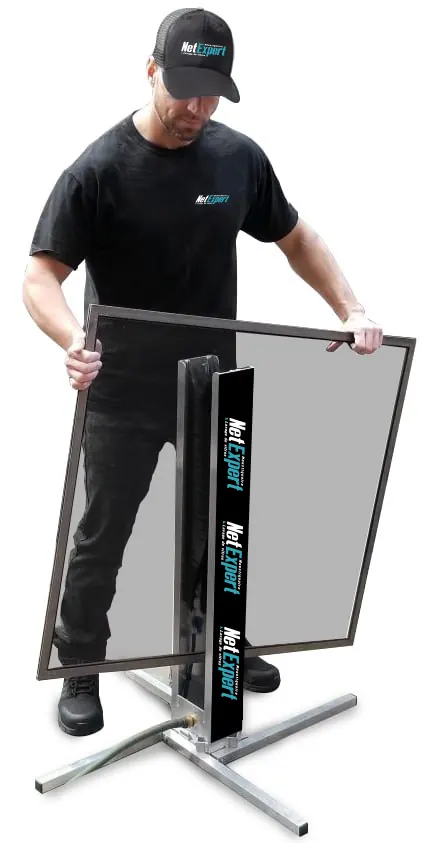
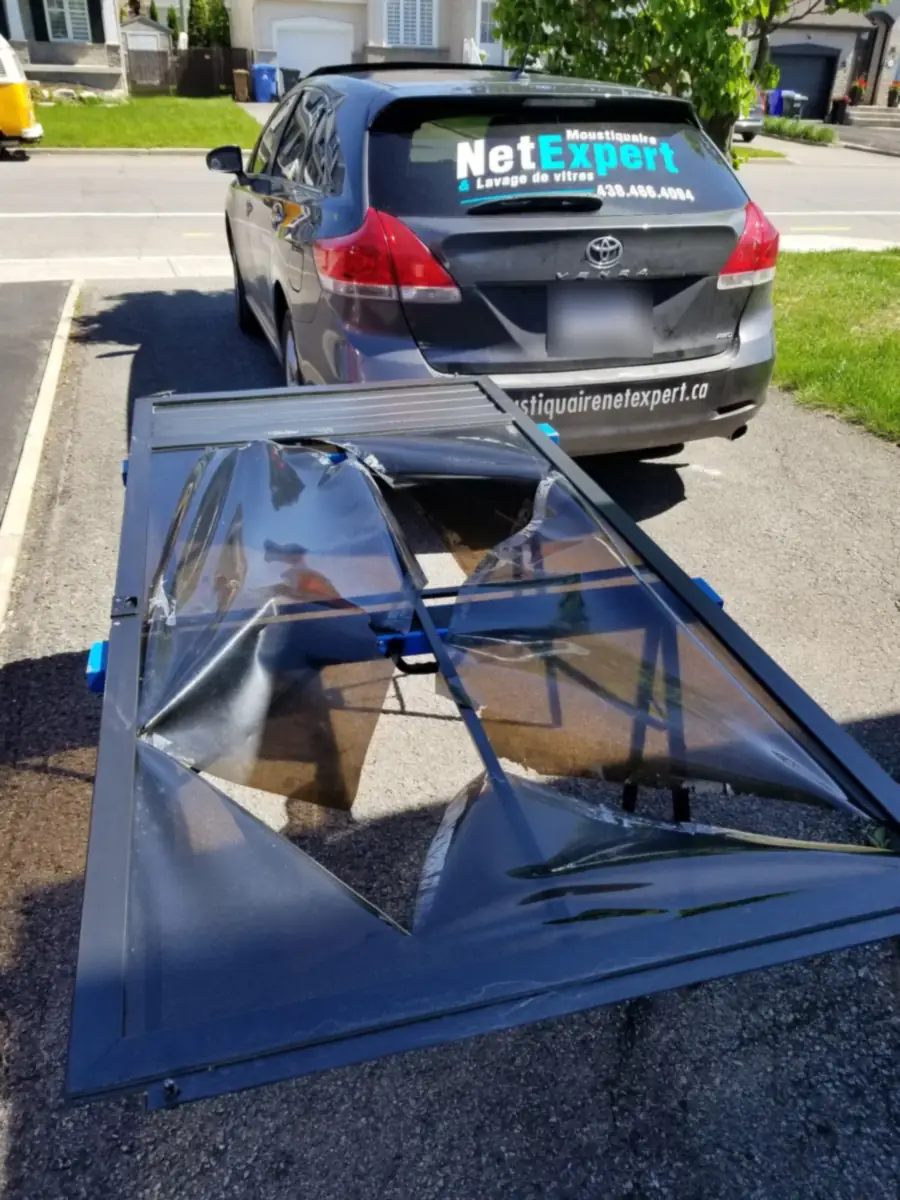
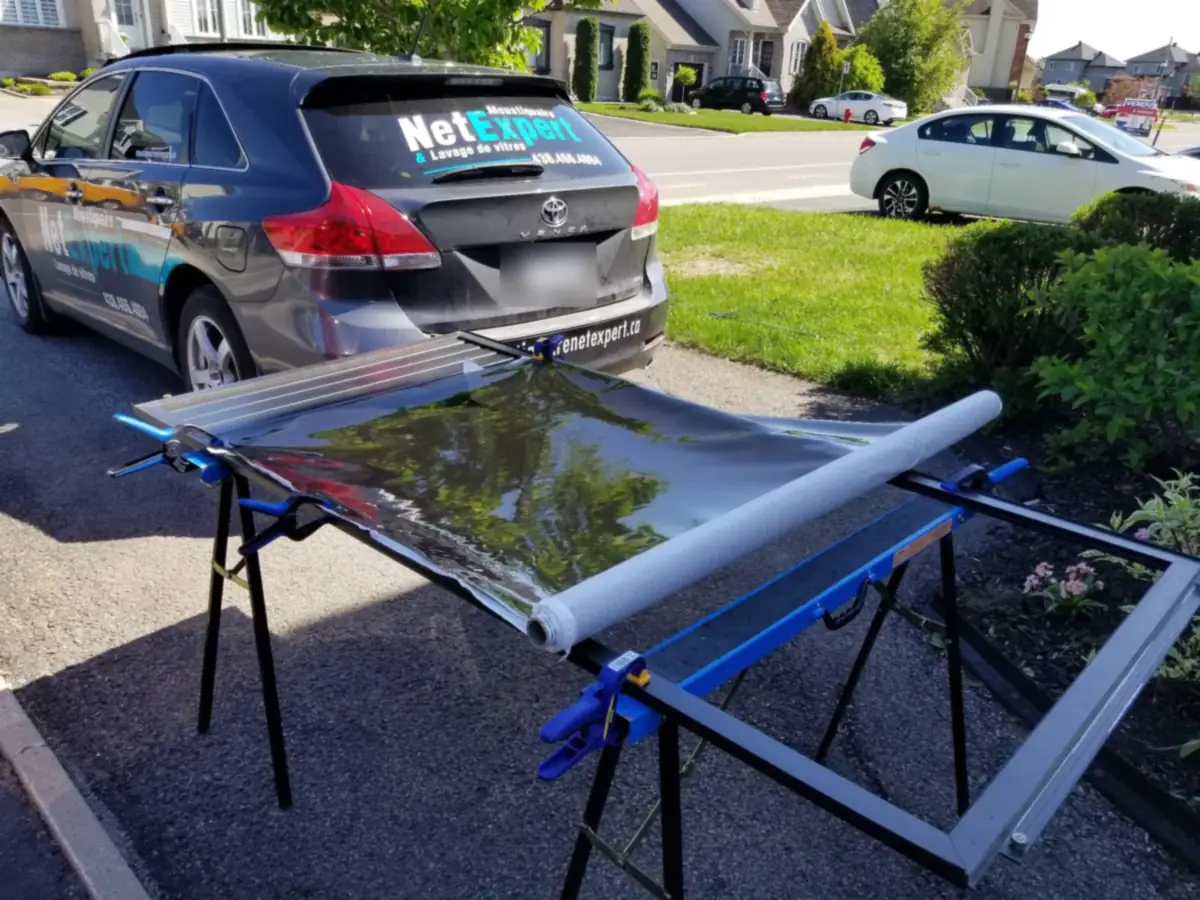
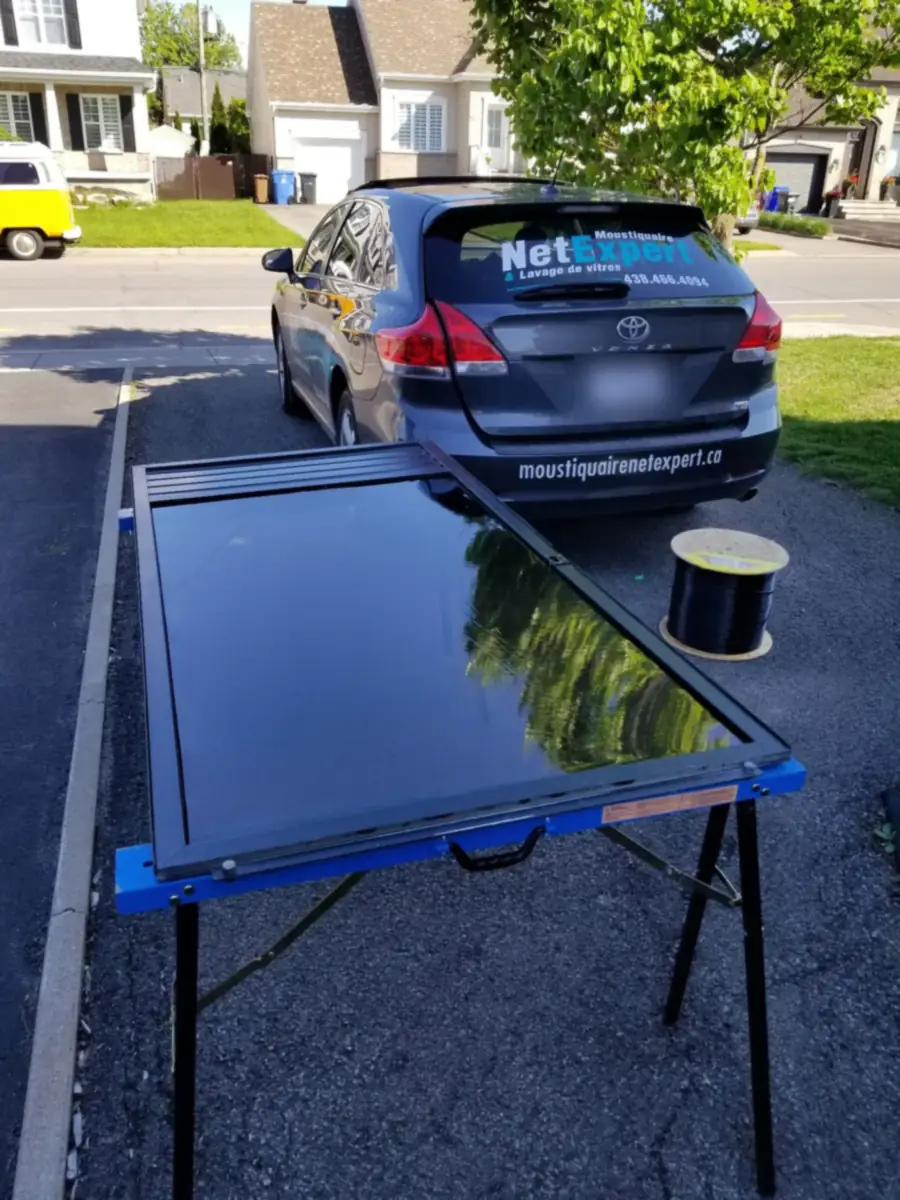
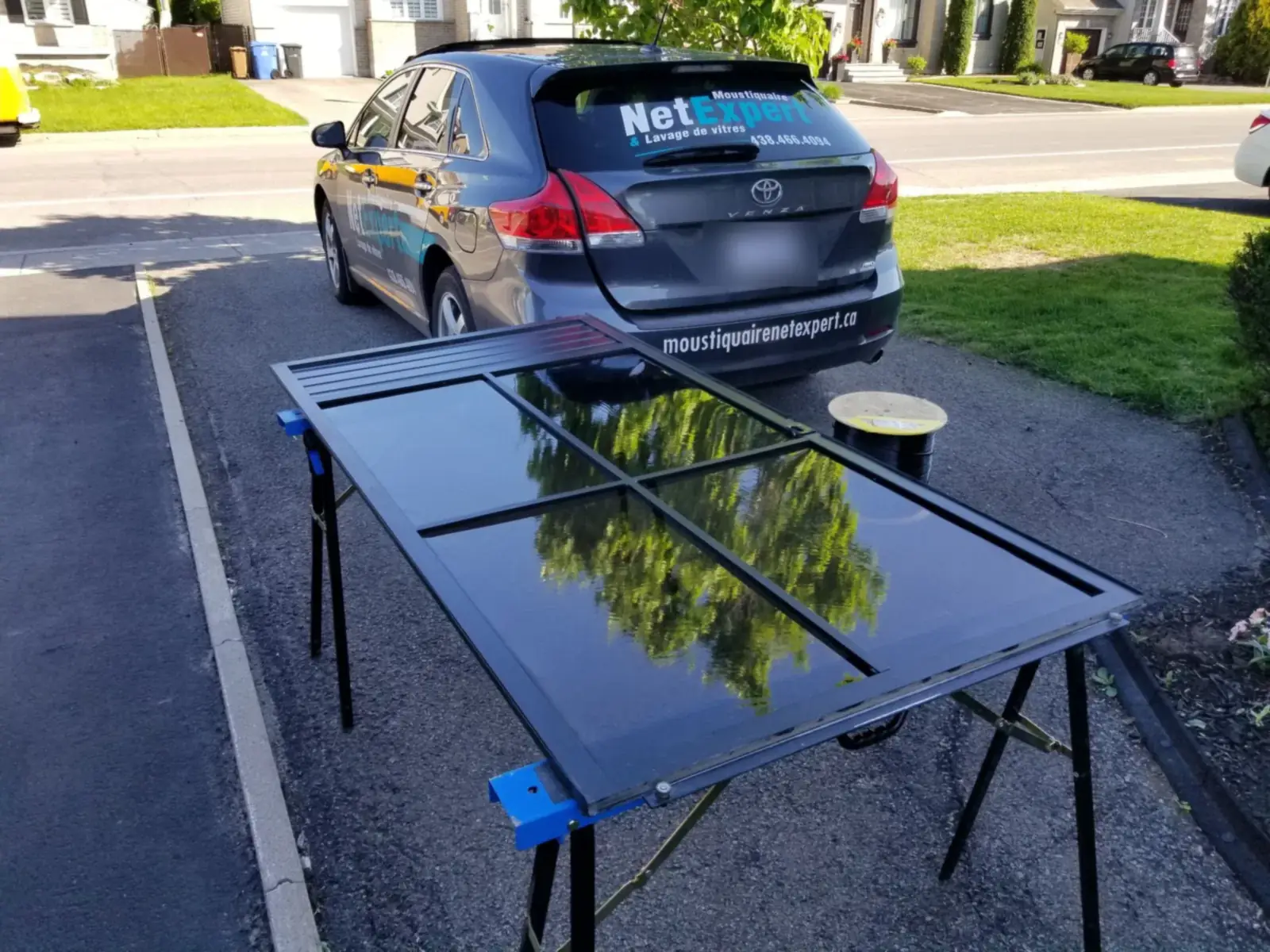
This job was not in Saint-Jérôme — it shows our method, the same everywhere: panels down, new vinyl pane by pane, panels back up.
« Excellent service. Clear explanations of the work to be done. I really appreciated his dedication: despite the rain he insisted on finishing the job, soaked through and still smiling. The work was very well done. »
« Great service! He was at my neighbour’s and agreed to fix my back screen even though we had no appointment. Very successful repair, and inexpensive! »
« Ludovic replaced my screen in record time. Professional, and with a great sense of humour. I recommend his services — don’t hesitate to contact him, he’ll come to your home and do beautiful work. »
Straight answers
Snow presses on the film and pushes it into its frame, which is harmless if the vinyl is still supple and well tensioned. The trouble comes from film that is already stiff and yellowed, which splits under the pressure instead of flexing. Redoing tired panes in the fall, to exact size, and clearing snow from the low sides through the winter is what makes it last.
Yes, one at a time, down the outdoor staircase, and back up the same way once remade in the mobile workshop in front of the building. Pergola panels are usually narrow, which helps on a staircase. Access to the deck needs arranging when the appointment is set and, if the staircase serves other units, the neighbours should know we will be using it.
Yes. The frame’s groove accepts either; only the spline is matched to the thickness of the mesh. Aluminum earns its place on a gazebo exposed to wind or on the low panels that take the snow, because it keeps its tension instead of bellying out. It does crease if bent, though; once fitted and tensioned in the frame, it keeps its shape instead of bellying out.
Yes, at your home. We travel to Saint-Jérôme, remove the panels, replace the MICA vinyl in the original frames and put everything back — the gazebo structure is never touched. It is one of our specialties.
Yes. Depending on the retailer it is called MICA film, clear vinyl, clear plastic or transparent fabric — the same flexible material that cuts wind and holds warmth. We replace it on gazebos and sun shelters alike.
Yes. The vinyl is replaced pane by pane, in the existing frame — no need to redo the whole panel for one tear. If several panes have yellowed, doing them together gives a uniform result.
On assessment: the price depends on the number of panels and their dimensions. The quote is free, and a photo is often enough to price without a visit. Fabrication and installation guaranteed one year.
Do you manage a building or a business in Saint-Jérôme?