
Summer UV
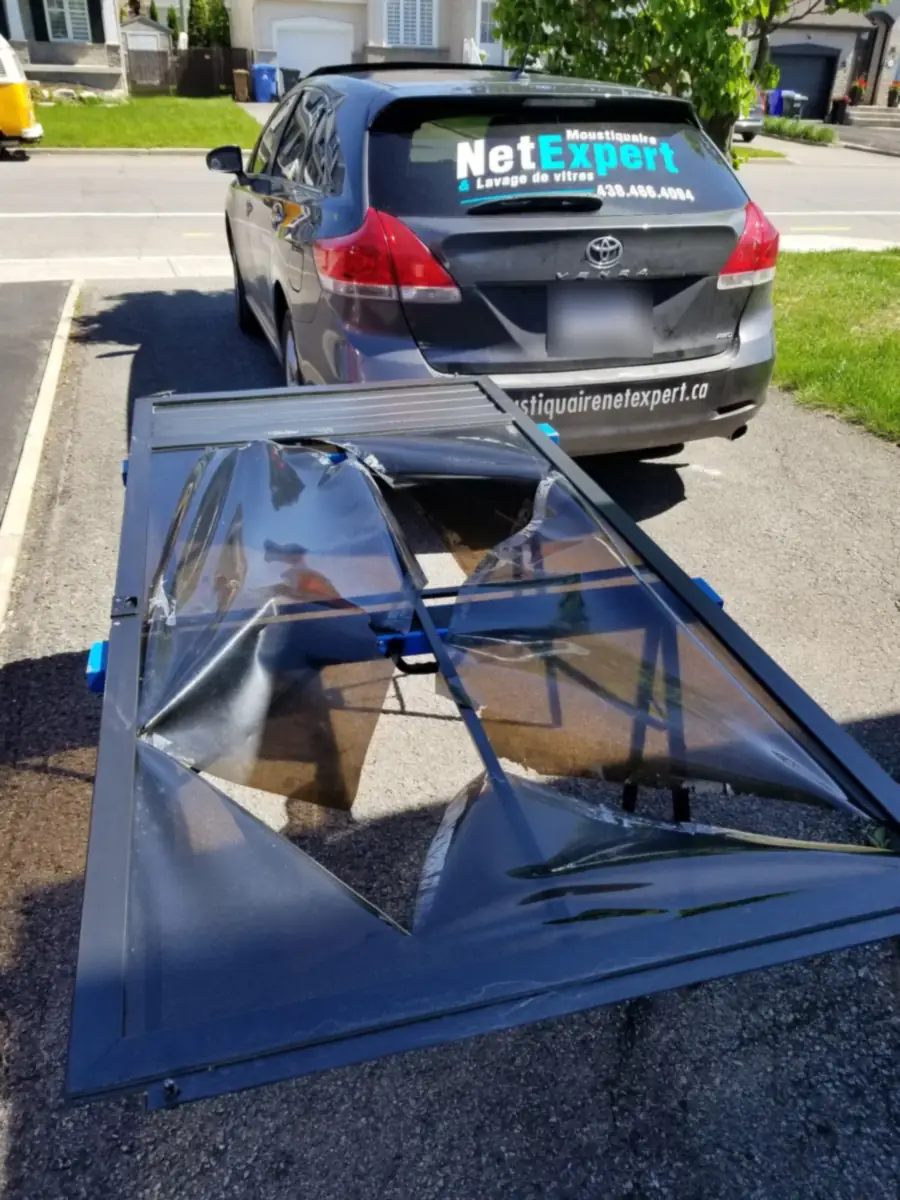
Sun yellows and clouds the vinyl. Film that crackles to the touch is at end of life.
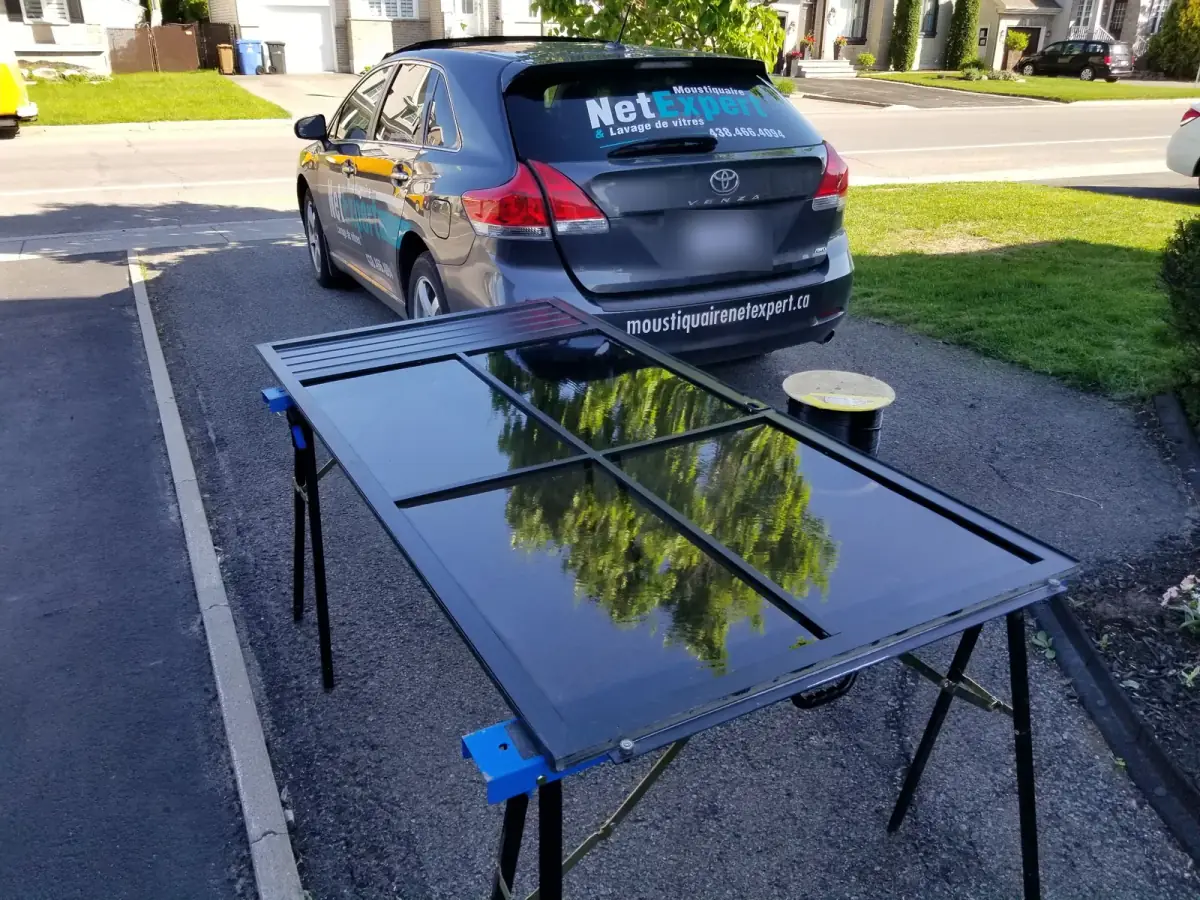
Gazebo and sun shelter specialty
Clear vinyl yellowed or torn? Replaced at your home in Rosemère, in the original frames — gazebos and sun shelters.
Three questions are enough to start. The official measurement is taken on site.
Whatever your retailer calls it — MICA film, clear vinyl, clear plastic, sun-shelter transparent fabric — it is the same material, and we replace it in Rosemère in your existing panels.
Sun yellows and clouds the vinyl. Film that crackles to the touch is at end of life.
Below freezing, MICA turns brittle — one handling or one gust splits it outright.
Slack vinyl flaps like a sail and eventually tears at the seams.
Rosemère is a town of large wooded lots, and that changes everything for a gazebo. On ground planted with mature trees, the structure is rarely set tight against the house: it takes a clearing, a corner of lawn off to one side, sometimes the end of a path. Shade is near-permanent there, which slows the yellowing of the film but keeps everything damp longer after rain. The 1960s-to-1985 bungalows and cottages that make up most of the housing stock have yards big enough to take either a retailer model or a wood structure built on site.
The riverfront sector along the Rivière des Mille Îles works differently. The enlarged former cottages there have yards open toward the water, a thinner tree canopy and a draft that follows the river. That is where the permanent wood structures mostly are, built to fit as the houses grew, with panes that do not repeat from one face to the next. Between the two profiles — big wooded lots on one side, the riverfront strip on the other — there is no single Rosemère gazebo, which is why we measure before talking about materials.
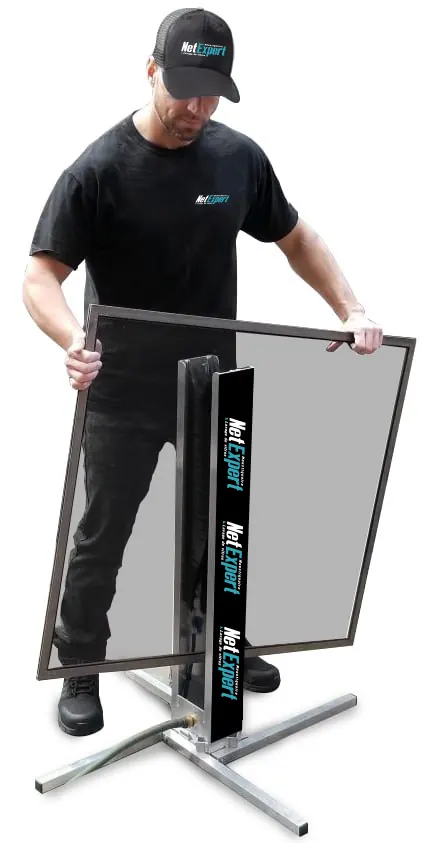
Under trees, panels age in their own way. The screen takes whatever falls: twigs, small branches, needles, and sap that works into the mesh and stiffens it; one branch with any weight to it opens a clean tear in the middle of a panel. The film, sheltered from direct sun, lasts longer, then stiffens anyway over a few winters and splits in the first strong wind. We rescreen panels inside their original frames, redo the film pane by pane to dimensions taken on site, and the structure — wood or aluminum — is never taken further apart than it takes to free the panels.
On a large wooded lot, the first difficulty is simply moving. The gazebo may sit well back from the driveway, over uneven ground, roots, and a narrow gap between trunks: every panel comes out flat, by hand, to the mobile shop. Then comes the structure. Retailer framing unscrews in the order the manufacturer intended; a custom wood structure is recorded opening by opening, because two neighbouring panes almost never share a dimension. Both get redone, just not at the same pace.
Under a tree canopy, a gazebo panel stays damp long after rain, and mesh that dries poorly holds dust and sap in place instead of passing air. A tighter weave is easier to justify here than almost anywhere. Toward the river, wind takes over: on exposed faces, aluminum mesh holds tension where fibreglass ripples, and film reset to true dimensions stops flapping. And a panel under trees needs cleaning more often — clogged mesh passes less air than people expect.
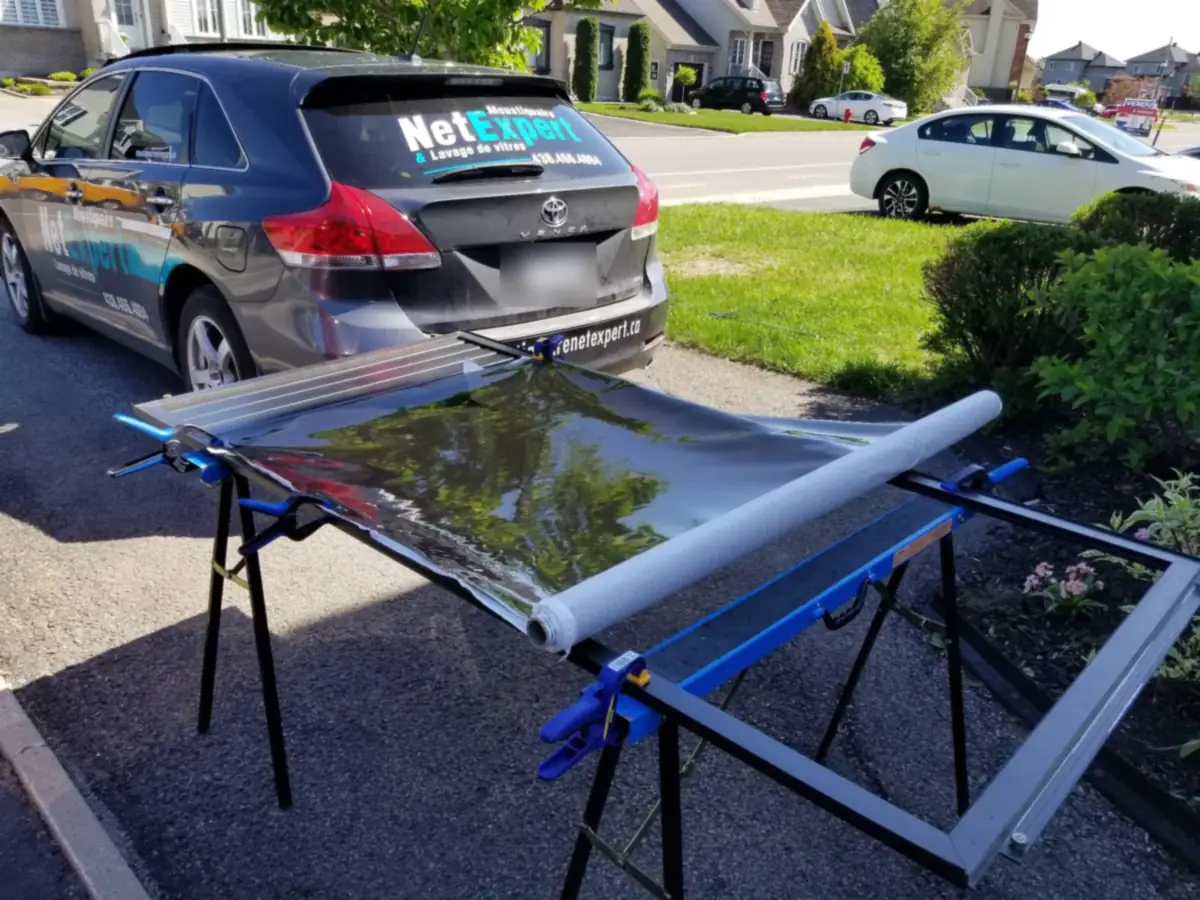
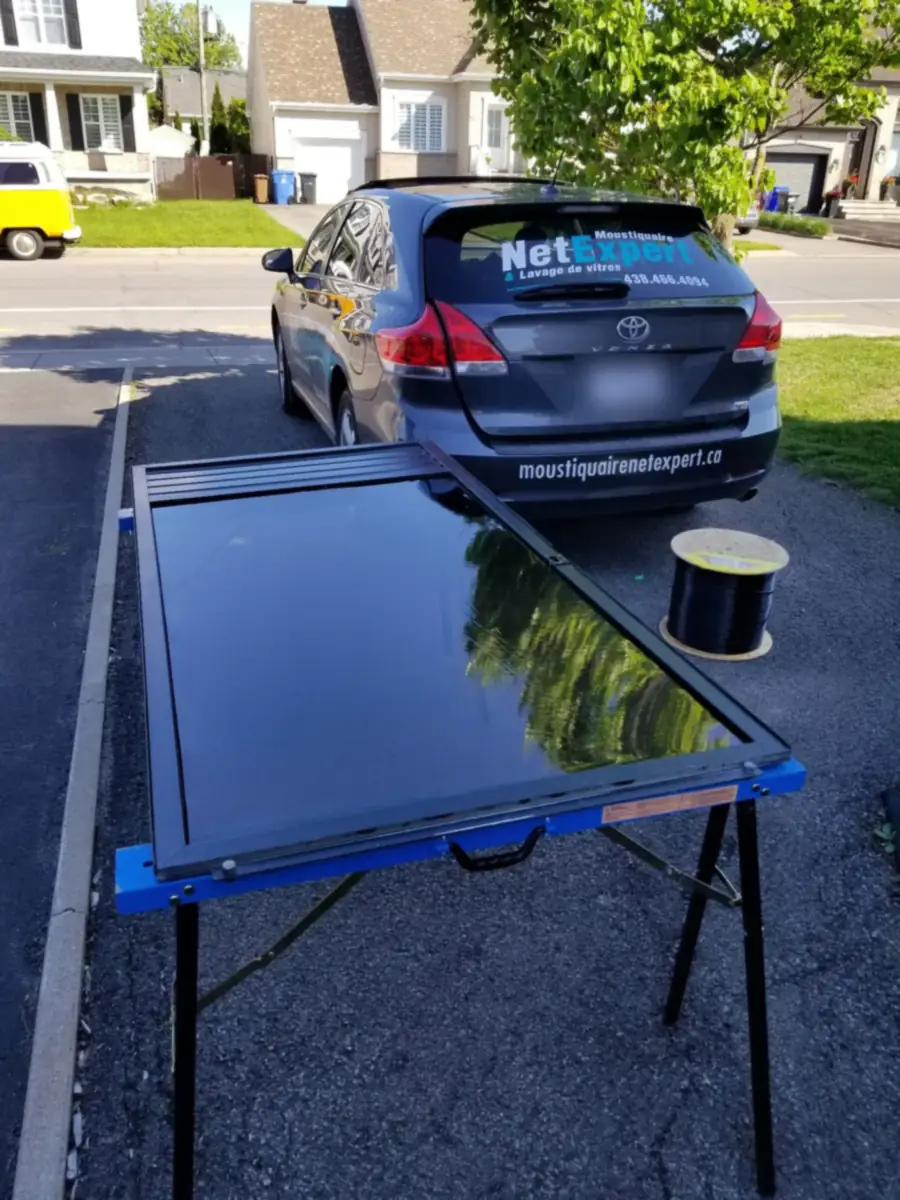
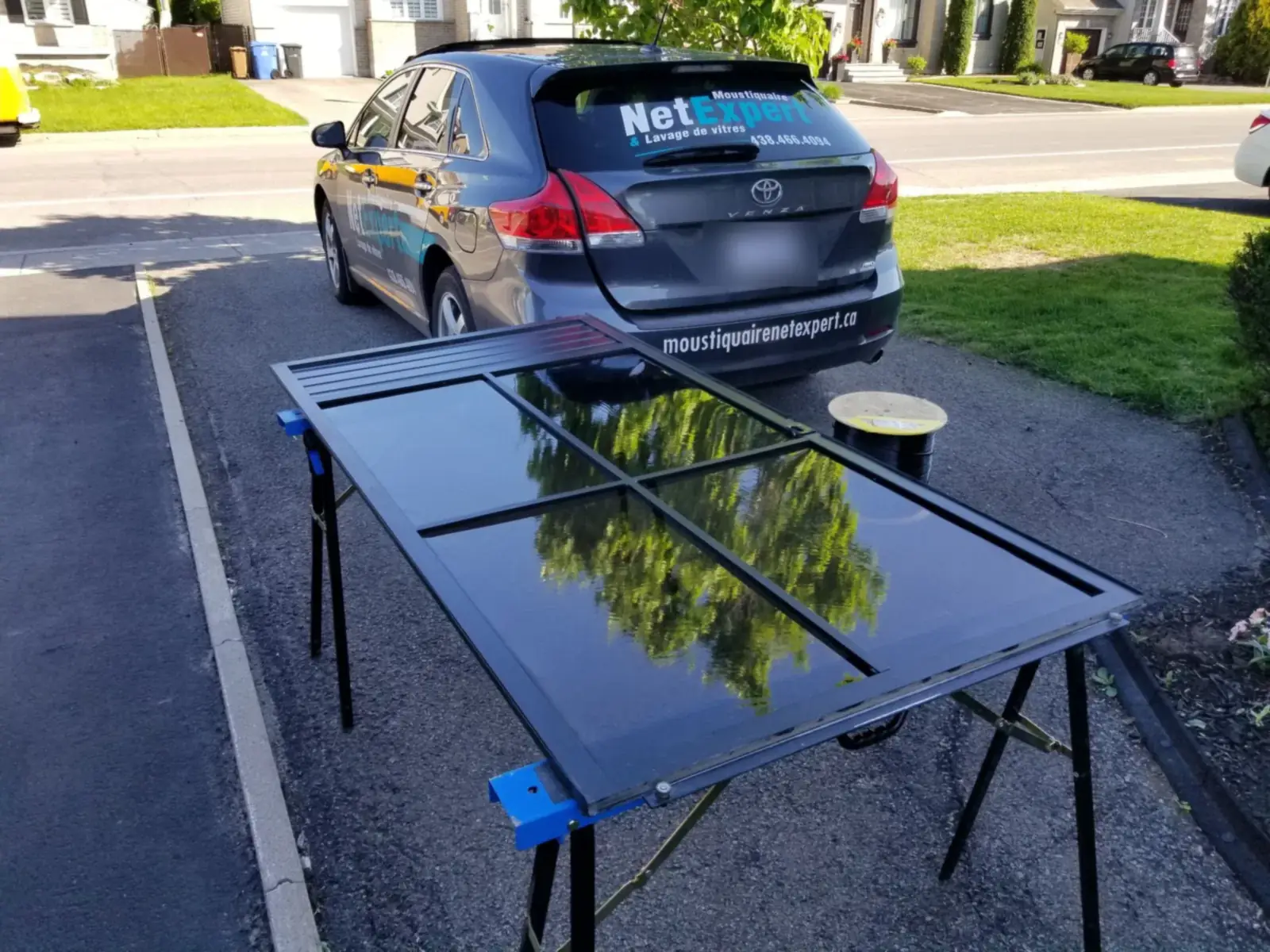
This job was not in Rosemère — it shows our method, the same everywhere: panels down, new vinyl pane by pane, panels back up.
« Excellent service. Clear explanations of the work to be done. I really appreciated his dedication: despite the rain he insisted on finishing the job, soaked through and still smiling. The work was very well done. »
« Great service! He was at my neighbour’s and agreed to fix my back screen even though we had no appointment. Very successful repair, and inexpensive! »
« Ludovic replaced my screen in record time. Professional, and with a great sense of humour. I recommend his services — don’t hesitate to contact him, he’ll come to your home and do beautiful work. »
Straight answers
Both happen, and the state of the mesh settles it. Mesh that is still supple and merely dirty washes clean and gets its airflow back. Mesh that has gone brittle, holds crease marks and splits when you retension it cannot be saved: it gets replaced inside the original frame rather than reinstalled tired.
Because sun is only one of three causes. Cold stiffens vinyl every winter, and stiffened material does not forgive a gust. Shade delays yellowing, but it prevents neither the loss of flexibility nor the fatigue around the fastening points. Film in the shade lasts longer — it does not last indefinitely.
We scout the route first: roots, grade, the width of the gap between trees. Panels then come out one at a time, carried flat, to the mobile shop. What matters is not the distance but the handling — a panel carried on edge over uneven ground twists, and a twisted frame will not go back in square.
Yes, at your home. We travel to Rosemère, remove the panels, replace the MICA vinyl in the original frames and put everything back — the gazebo structure is never touched. It is one of our specialties.
Yes. Depending on the retailer it is called MICA film, clear vinyl, clear plastic or transparent fabric — the same flexible material that cuts wind and holds warmth. We replace it on gazebos and sun shelters alike.
Yes. The vinyl is replaced pane by pane, in the existing frame — no need to redo the whole panel for one tear. If several panes have yellowed, doing them together gives a uniform result.
On assessment: the price depends on the number of panels and their dimensions. The quote is free, and a photo is often enough to price without a visit. Fabrication and installation guaranteed one year.
Do you manage a building or a business in Rosemère?