
Slack or torn mesh
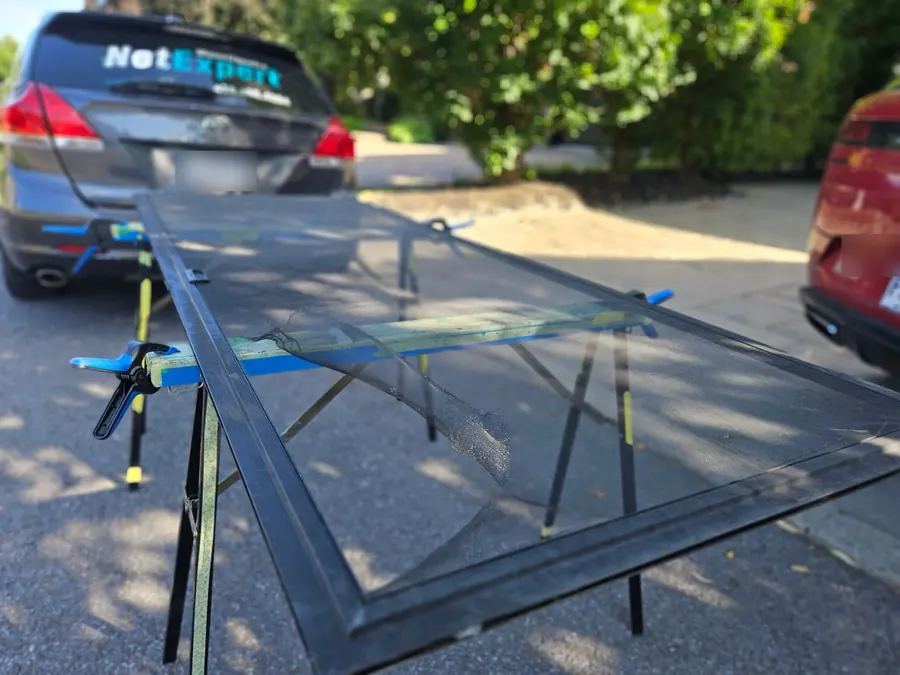
The mesh pulls out of the spline, billows in the wind or tore at the bottom — the classic. Re-meshed in your frame, fibreglass or reinforced.
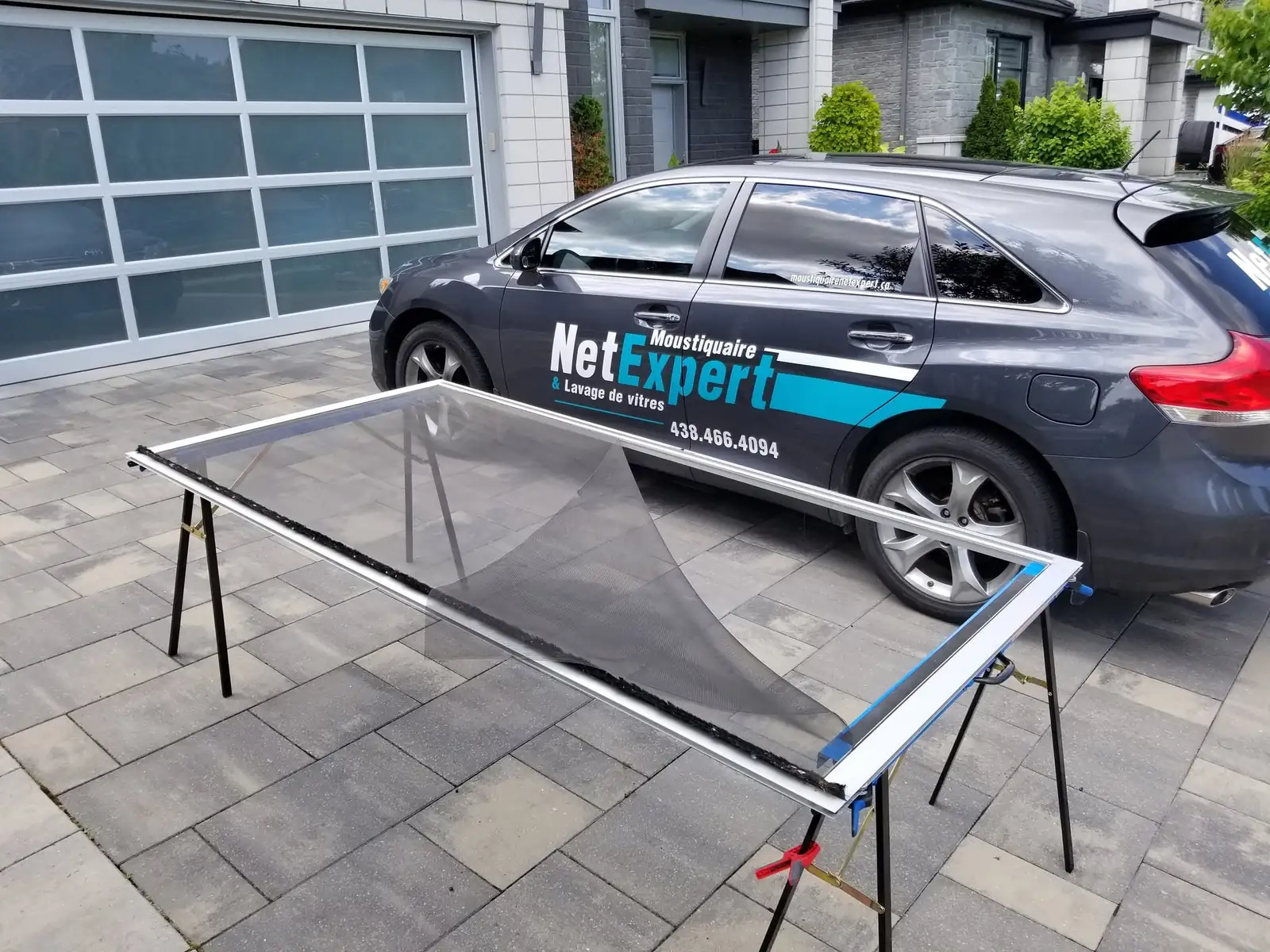
Patio door screens
Mesh, rollers, track, hardware: your screen door repaired at home in Oka, usually in a single visit.
Three questions are enough to start. The official measurement is taken on site.
It is the most used screen in the house — opened and closed thousands of times a season. Four failures come up constantly, and all four are repaired on site.
The mesh pulls out of the spline, billows in the wind or tore at the bottom — the classic. Re-meshed in your frame, fibreglass or reinforced.
The door drags, jumps the track or scrapes. We replace the rollers and adjust the height — the most requested repair.
Sand, pet hair and debris jam the rolling. Cleaning, lubrication, light track straightening when needed.
The door no longer locks or the handle hangs loose. Hardware replaced, latch adjusted.
Oka faces Lac des Deux Montagnes, and so do its patio doors. Along the shoreline strip of homes and former waterfront cottages, the sliding glass door is almost always the opening onto the deck and the view: it is where people go out, come in, send the kids and the pet through, and it is the one left open for the breeze off the lake. A patio door screen in that setting never gets a season off. Some days it is handled several times an hour, it takes the wind off open water when closed, and its track fills with the sand and grit a waterfront lot carries in underfoot.
The village core and the farming sectors around the national park give a different picture. On a house in the heritage core, the patio door was cut into a wall carrying more than a century of adjustments, and that wall answers frost and damp differently from the aluminum frame set into it. A jamb set plumb at the time of that work is not necessarily plumb today. On the farming side, what counts is spacing and open ground: a large door with nothing in front of it takes the full push of the wind, and field dust settles in its run. Three situations, three diagnoses — and it is the panel, once out, that decides, never the address.
A patio door's wear sequence is predictable, and you read it on the roller. A wheel that has run through sand develops a flat spot; the panel drops a few millimetres, touches the track, binds, and the reflex — lifting with one hand while pulling with the other — slowly racks it. Once the panel is out and the diagonals are measured, the discrepancy is obvious. A merely racked frame is straightened; a twisted or split one is rebuilt to the measured dimensions. The handle matters too: broken, it turns every opening into a pull on one corner. We take on the track, the rollers and the mesh together, because a door where only one of the three is renewed returns to the same state within two seasons.
Two constraints cross here. On the shore side, the deck often stands above ground that falls away toward the water, and the panel — two metres tall, light but awkward — clears toward the inside of the house rather than over a railing. In the old village core, appearance carries weight: a door added at the back is invisible from the street, but on the side elevation of a heritage house a wide, bright frame profile shows. Rescreening the existing frame is then the most discreet answer, and often the least expensive.
Facing open water, a large door takes wind with nothing to slow it, and standard fibreglass bellies out and then pulls free of its groove. Aluminum holds tension on a panel that size, and it has another advantage here: brushed clean each spring, after a winter of whatever stuck to it, it does not dish under your hand the way a soft mesh does. If a cat or dog crosses the door, pet-resistant mesh comes ahead of every other consideration. Standard fibreglass suits sheltered doors, at the back or on the field side.
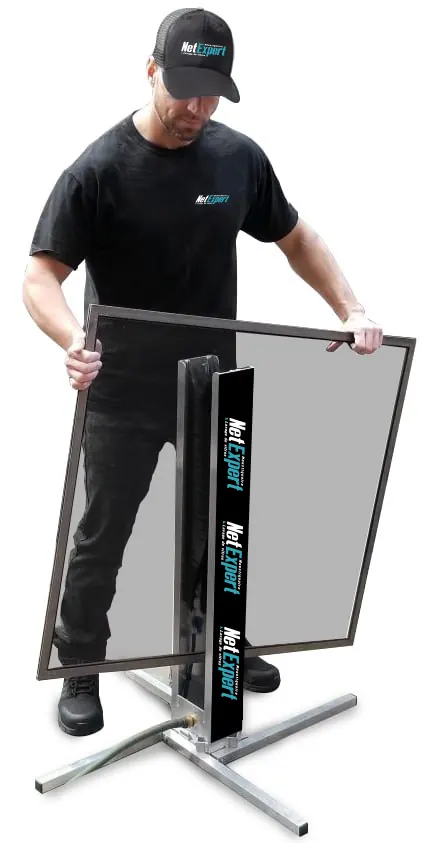
A patio door opens and closes more often than every window in the house combined — and it is the one the dog noses open and the cat climbs. Standard fibreglass mesh suits a lightly used door; for the others, we fit reinforced mesh, about seven times stronger, or pet-resistant mesh built for claws.
The extra cost is measured in tens of dollars; the yearly replacement it prevents, in hundreds. We carry both types in the vehicle — the decision can happen on the spot, with the door off its track in front of you.
Ten kinds of damage, one answer
If your screen looks like any of these, it can be repaired. Tap one to request a quote for that exact damage. We rarely replace a whole frame — in most cases only the mesh needs redoing.
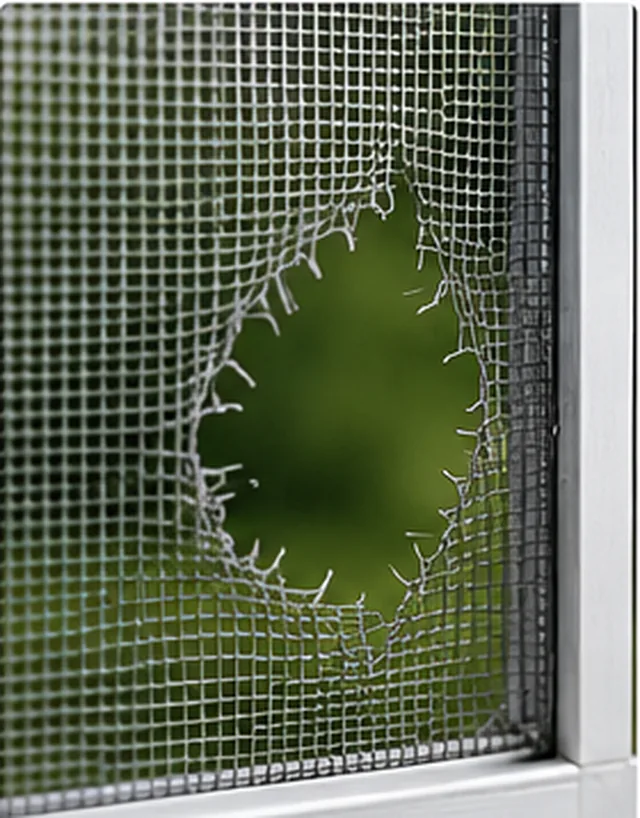 Mesh
Mesh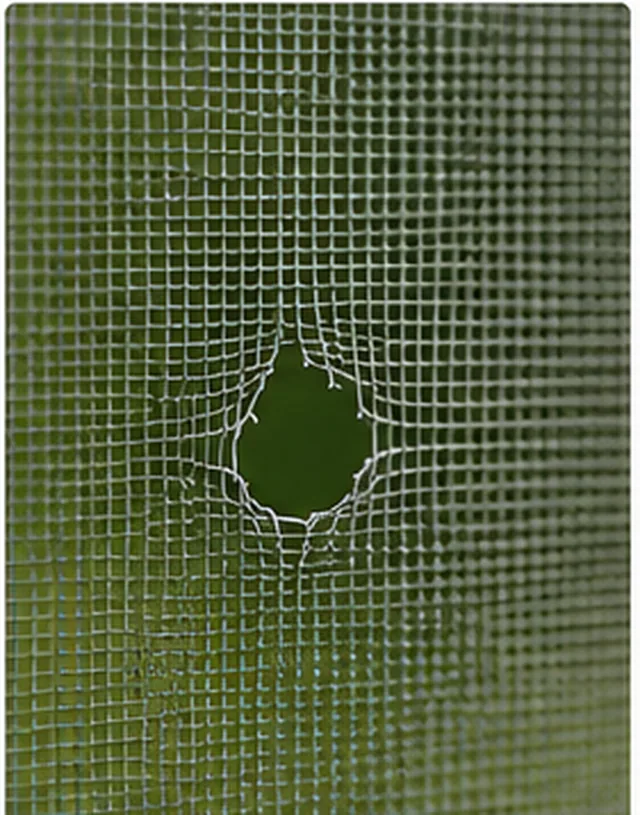 Mesh
Mesh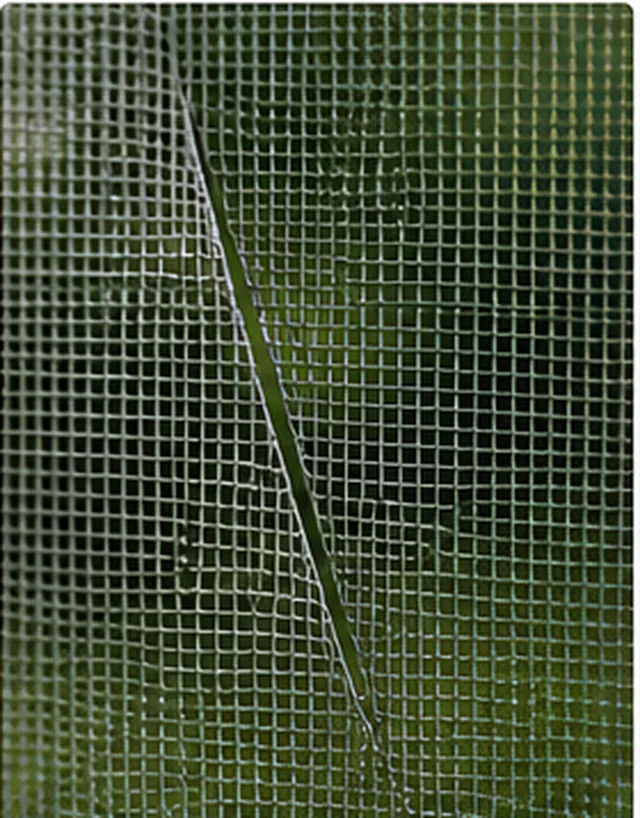 Mesh
Mesh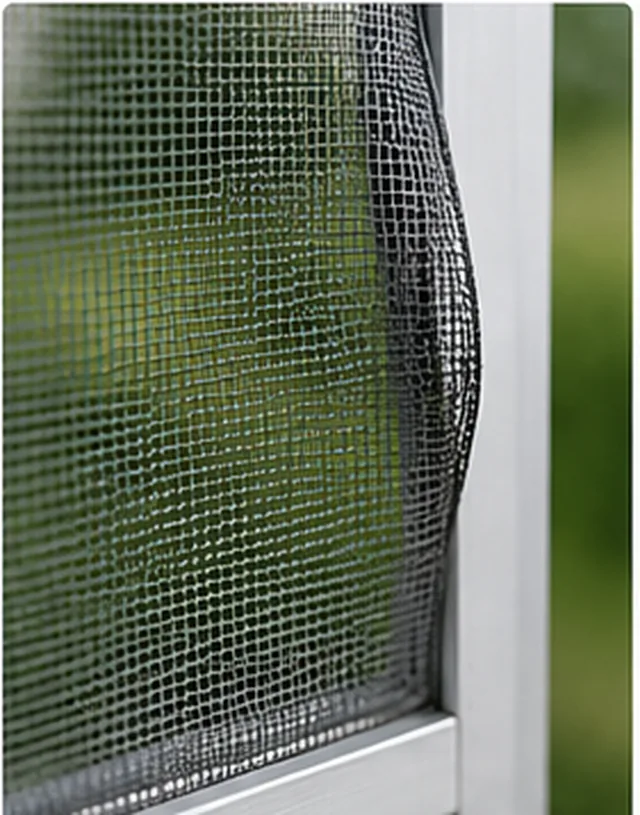 Mesh
Mesh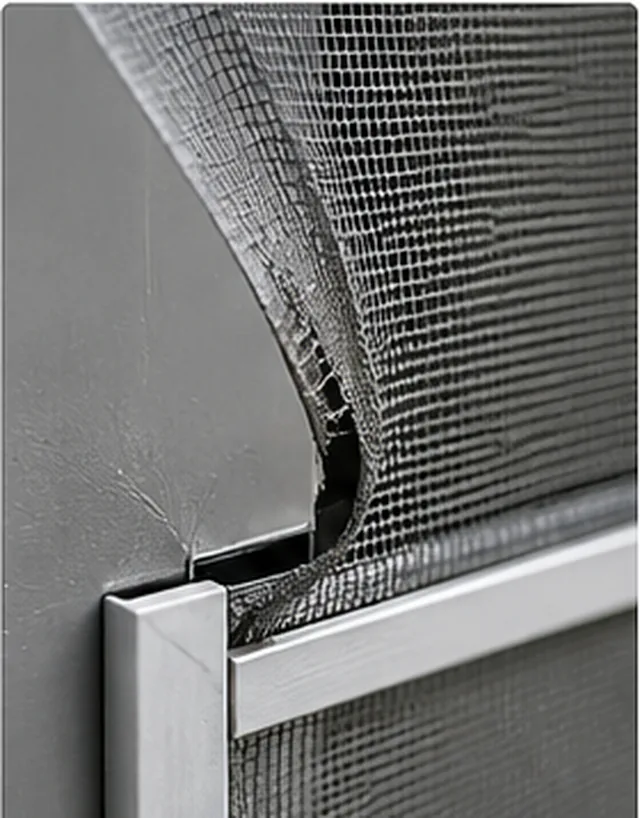 Mesh
Mesh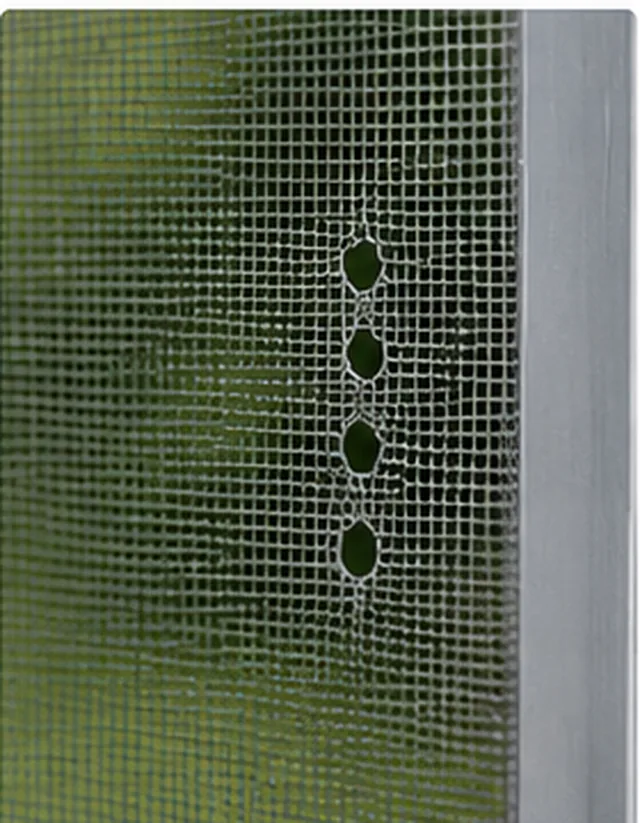 Mesh
Mesh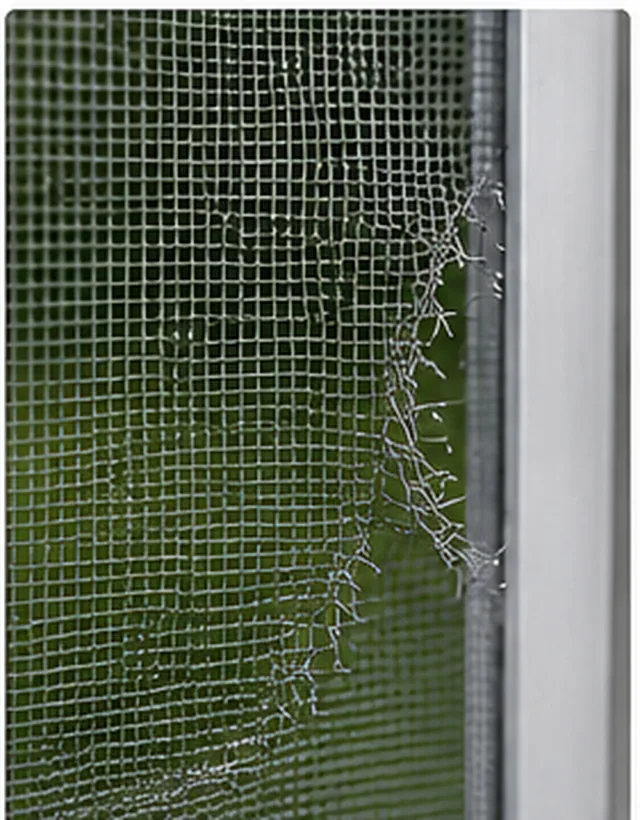 Mesh
Mesh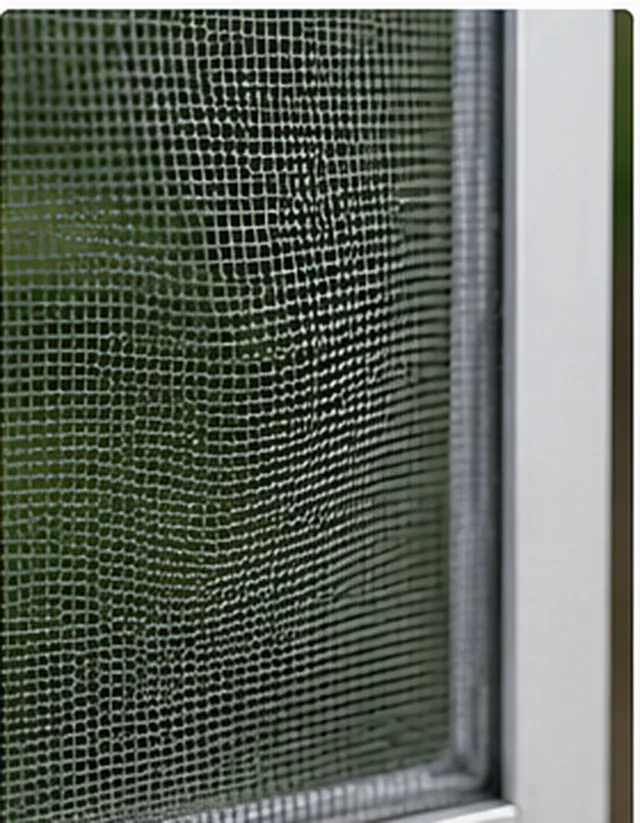 Mesh
Mesh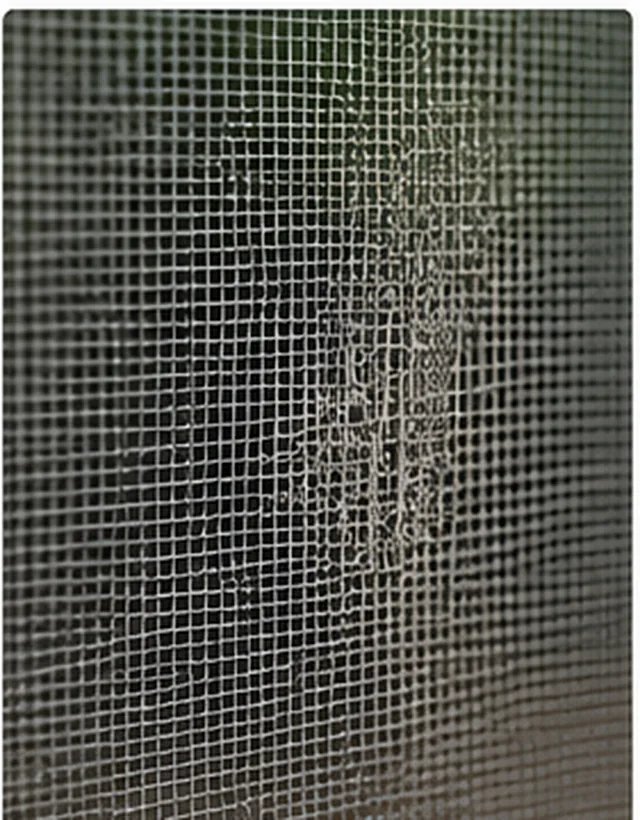 Mesh
Mesh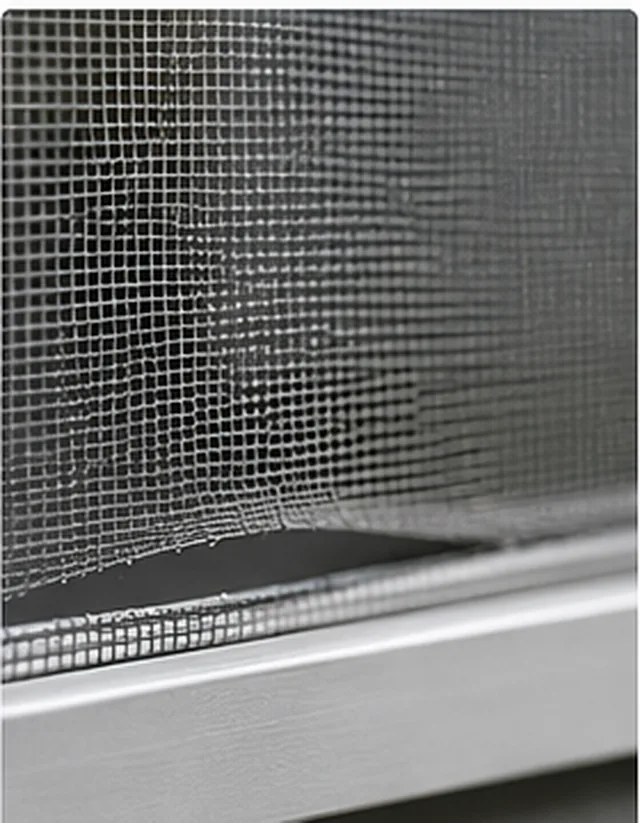 Frame
FrameThis job was not in Oka — it shows our method, the same everywhere: door off its track, new rollers, new mesh, frame squared up.
 1
1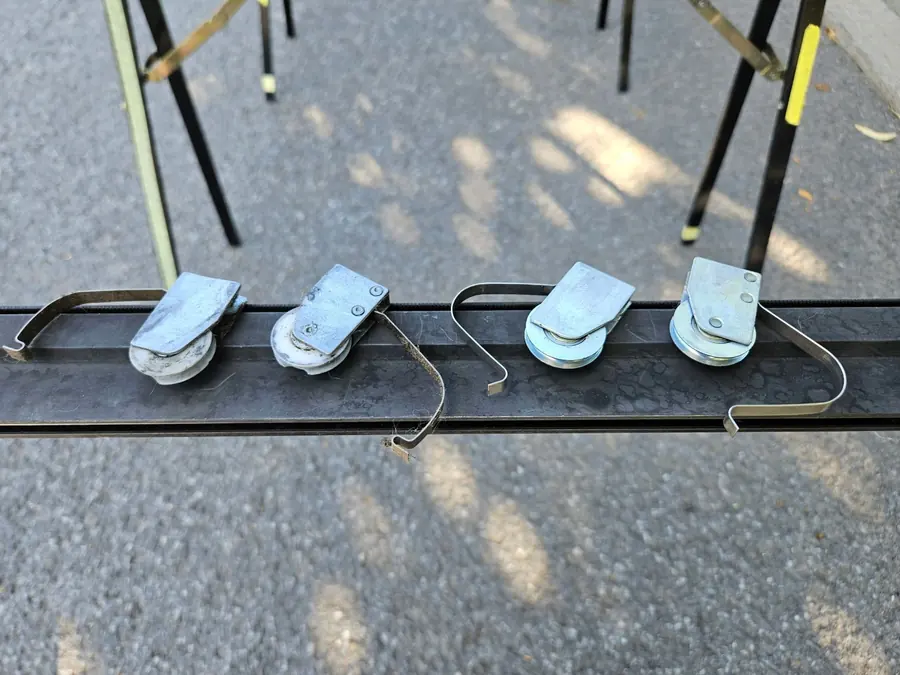 2
2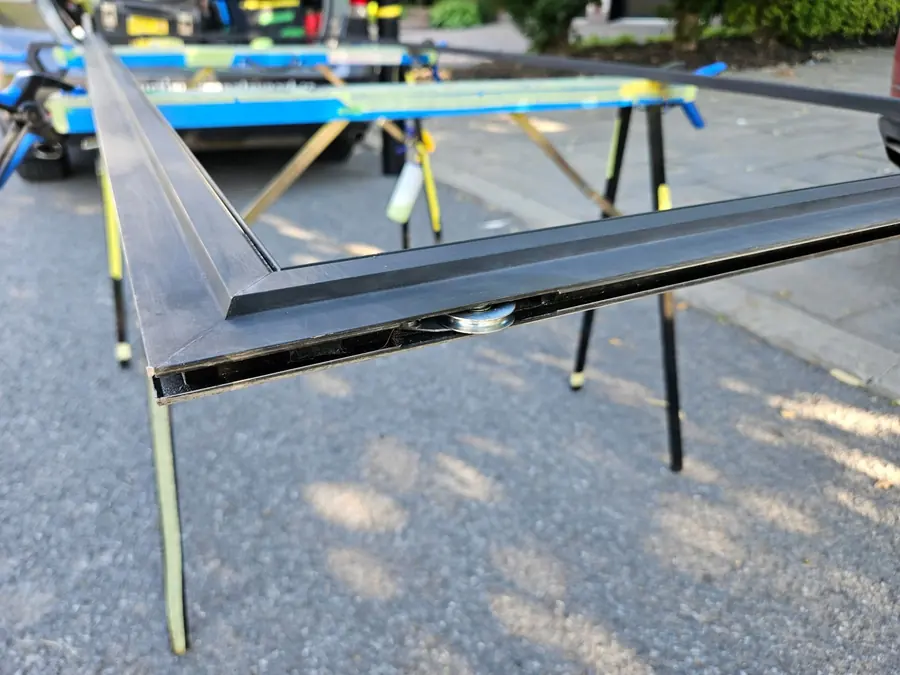 3
3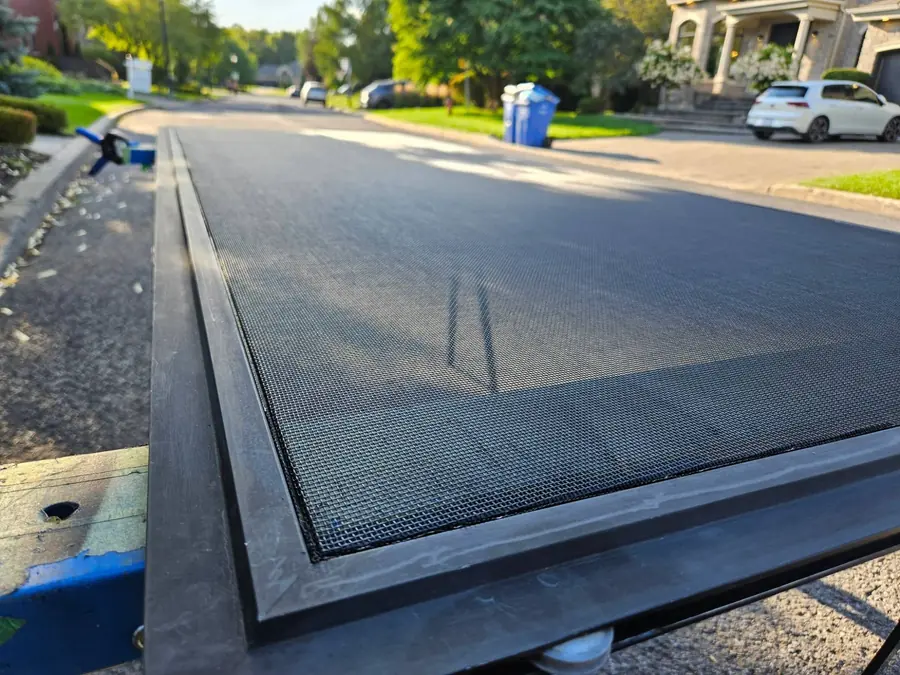 4
4« Excellent service. Clear explanations of the work to be done. I really appreciated his dedication: despite the rain he insisted on finishing the job, soaked through and still smiling. The work was very well done. »
« Great service! He was at my neighbour’s and agreed to fix my back screen even though we had no appointment. Very successful repair, and inexpensive! »
« Ludovic replaced my screen in record time. Professional, and with a great sense of humour. I recommend his services — don’t hesitate to contact him, he’ll come to your home and do beautiful work. »
Straight answers
That is how standard fibreglass behaves on a large exposed surface: it is flexible, and a patio door is a long span. It eventually pulls free of its groove at a corner and the panel stops closing cleanly. Aluminum, being stiffer, keeps its shape at the same dimension. The change is made in the existing frame, without touching the door itself.
Two things need separating: the panel frame and the opening. A racked panel gets straightened and finds its run again. An opening that has lost its plumb is not corrected by changing the screen — in that case we take the real dimensions, diagonals included, and build a panel that follows the jamb's geometry rather than a theoretical rectangle.
On a waterfront lot, yes, they are worth a look while the panel is out. The sand tracked in underfoot works on the wheel long before you hear it. Checking them costs only the time of a panel already removed, whereas coming back later means repeating the whole removal for a part worth a few dollars.
Yes, at your home. We remove the screen door, replace the mesh or rollers on site, clean and lubricate the track, then reinstall it — usually in a single visit to Oka.
Almost always the rollers: they wear out before the mesh and push the door off its track. We replace them and clean the track in the same intervention — forcing a derailing door eventually bends the frame, a costlier repair.
Rollers and hardware: from $30. A complete custom-built screen door: from $500, depending on format. The mesh alone on a door is priced on quote, from its dimensions. An exact quote is free.
One year on fabrication and installation — mesh, fitted rollers, built frames. Damage caused afterwards, by a pet or an impact, is not covered; for a dog, pet-resistant mesh is the real answer.
Pet-resistant mesh: about seven times stronger than standard fibreglass. On a patio door used daily, it is the difference between replacing the mesh yearly and being done with it for seasons.
Do you manage a building or a business in Oka?