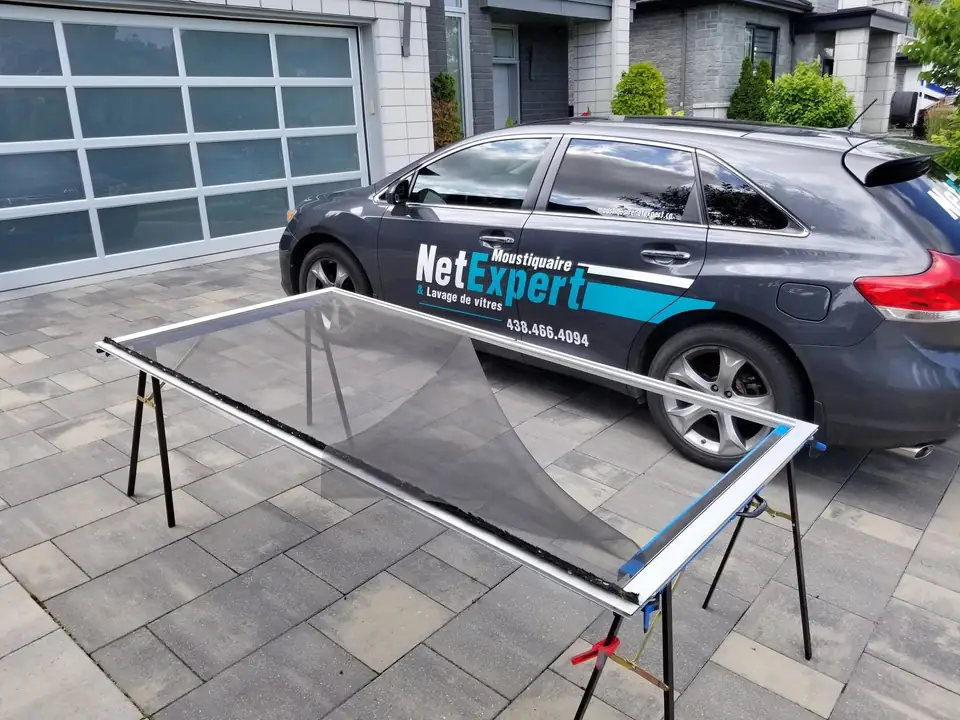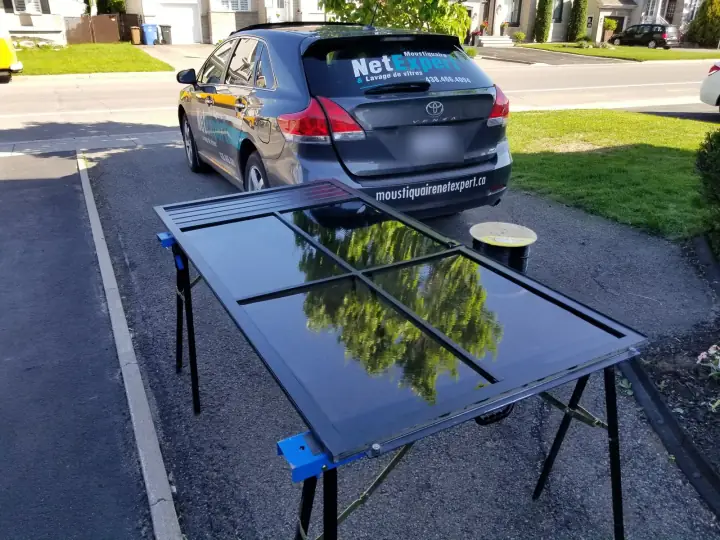
Screen rescreening (window)
From$30per screen
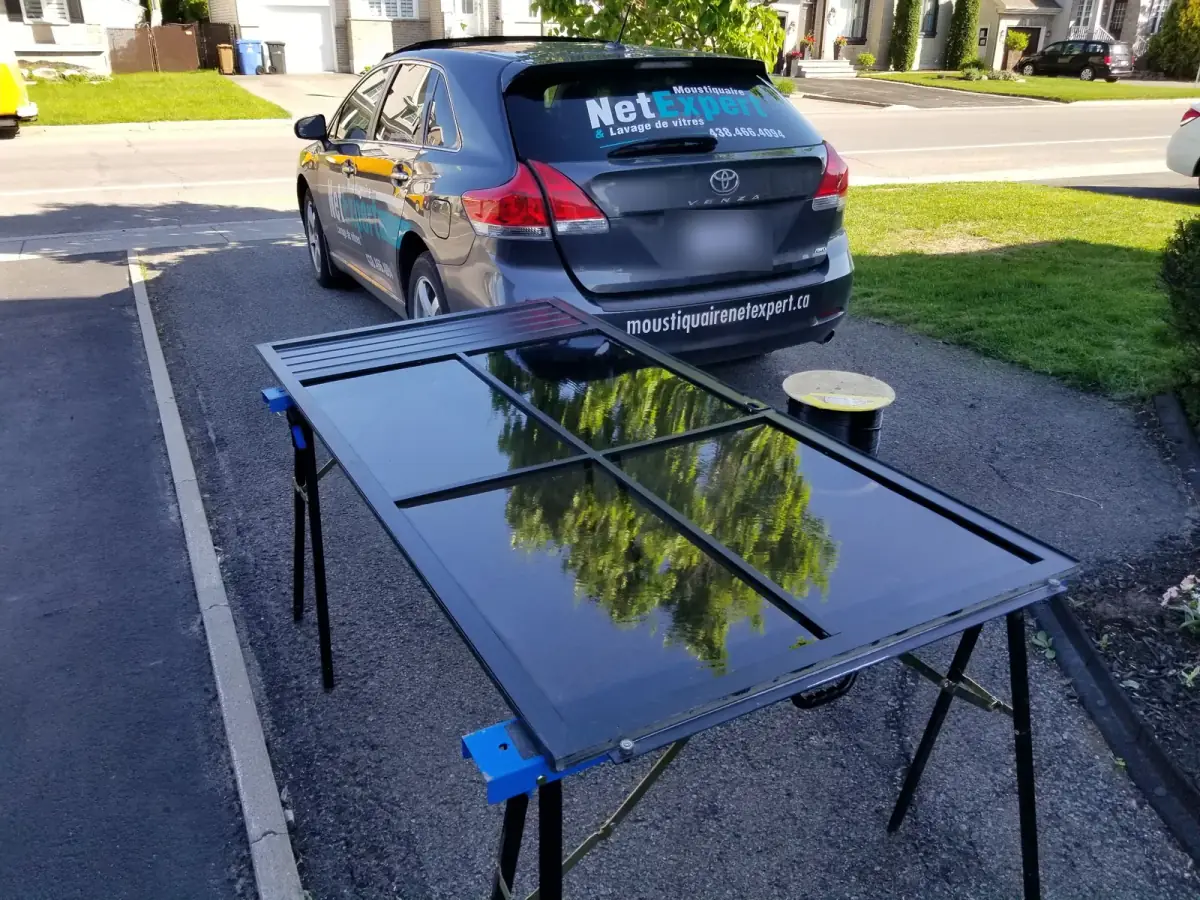
From Brossard, across Greater Montréal
Mobile on-site service in Laval and nearby. Mesh, rollers, frames, patio doors.
Three questions are enough to start. The official measurement is taken on site.
Six services, one trade
One trade, done properly. We don’t sell windows — we repair window screens, and that is all we do.
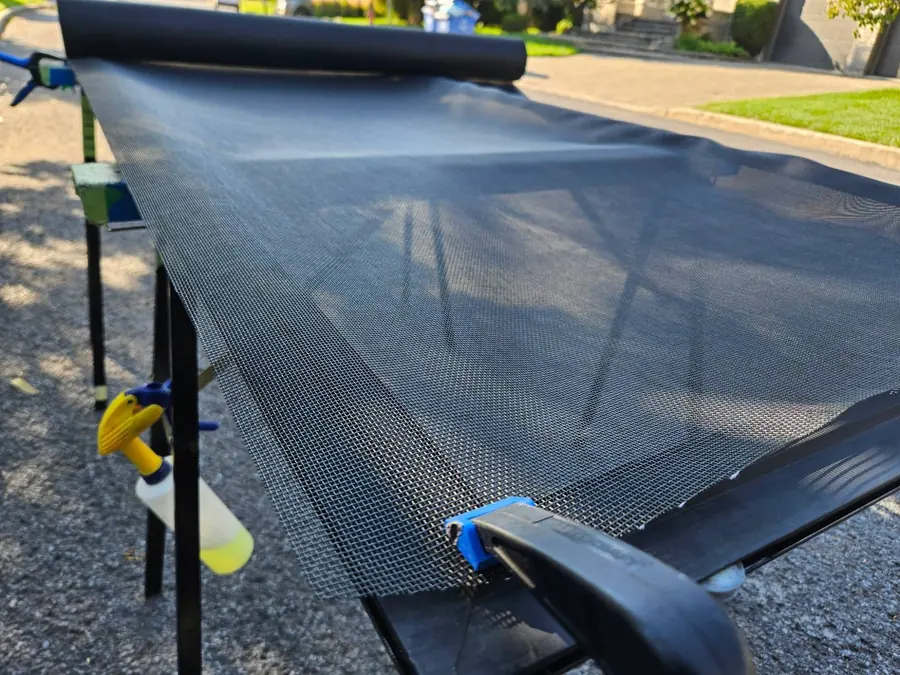 Repair
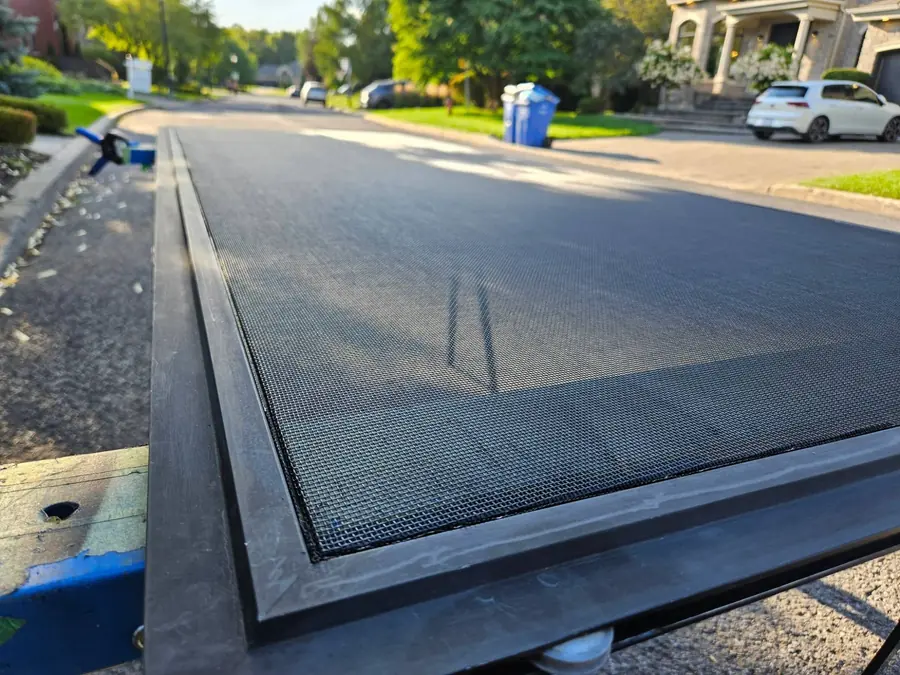
Torn, punctured or sagging mesh, replaced in your existing frame.
 Repair
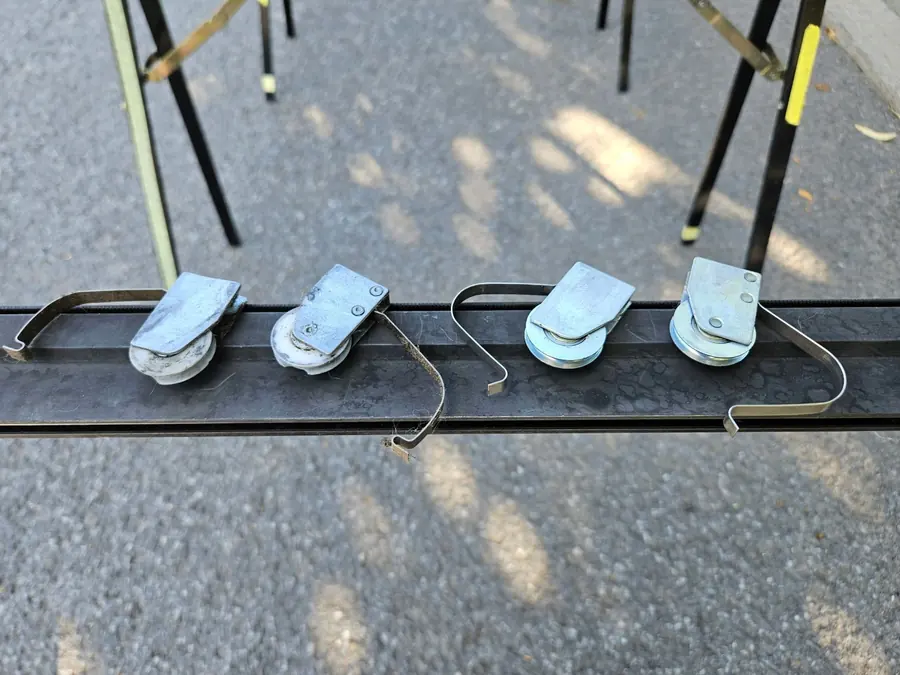
A screen that sticks, jumps the track or no longer closes.
 Repair
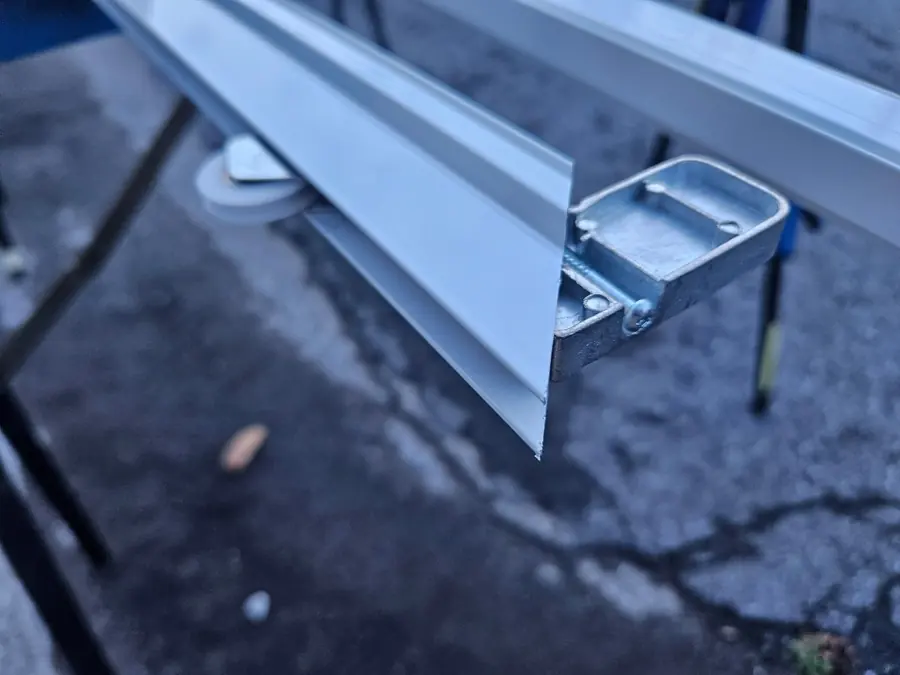
Bent frame, separated corner, split moulding.
 Repair
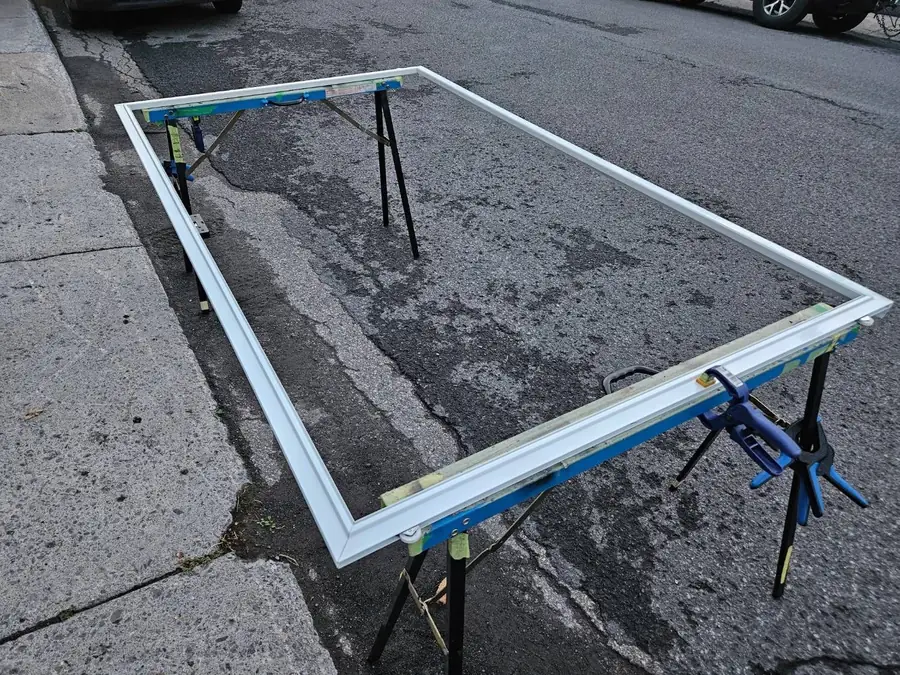
A missing screen, or an opening with no original to copy.
 Patio door
The part that breaks most often, and gets used most.
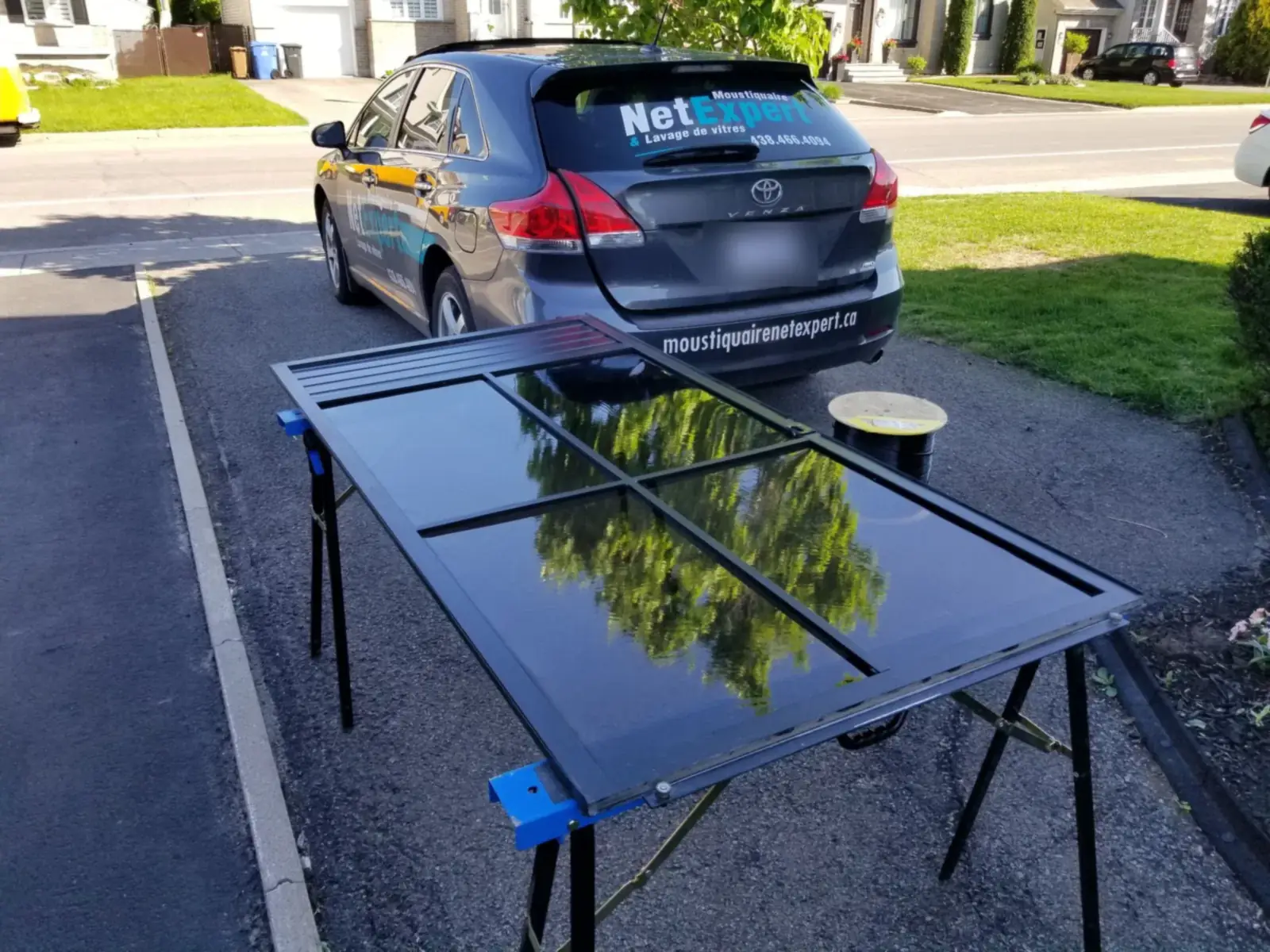 Gazebo · MICA
Screen panels and clear MICA vinyl, replaced on site.
Clear prices
Most companies in this trade publish no prices at all. Here are ours, as starting prices — the exact amount depends on size, mesh type and how many units per visit; the free quote sets it.
From$30per screen
From$30per screen
From$40per screen
From$120per screen
From$500per door
The price depends on the panel count and the vinyl: set on site.
A $125 travel fee applies to every visit, whatever the number of screens — it is shared across all your items, which is why grouping them pays.
$125
Grouping several screens in one visit brings the price of each one down: the travel fee is shared. An exact quote is free and reaches you promptly.
1-year warranty on fabrication and installation. Damage caused by the client is not covered. Payment: Visa, MasterCard, Interac, Bank transfer.
Any price provided is strictly a summary estimate. If work must be added once on site, prices will be adjusted — and always explained before we start.
Not all mesh is equal, and the right one depends on your window, your pets and your surroundings. We carry all four types in the vehicle — the choice happens at your home, not in a store.
Ten kinds of damage, one answer
If your screen looks like any of these, it can be repaired. Tap one to request a quote for that exact damage. We rarely replace a whole frame — in most cases only the mesh needs redoing.
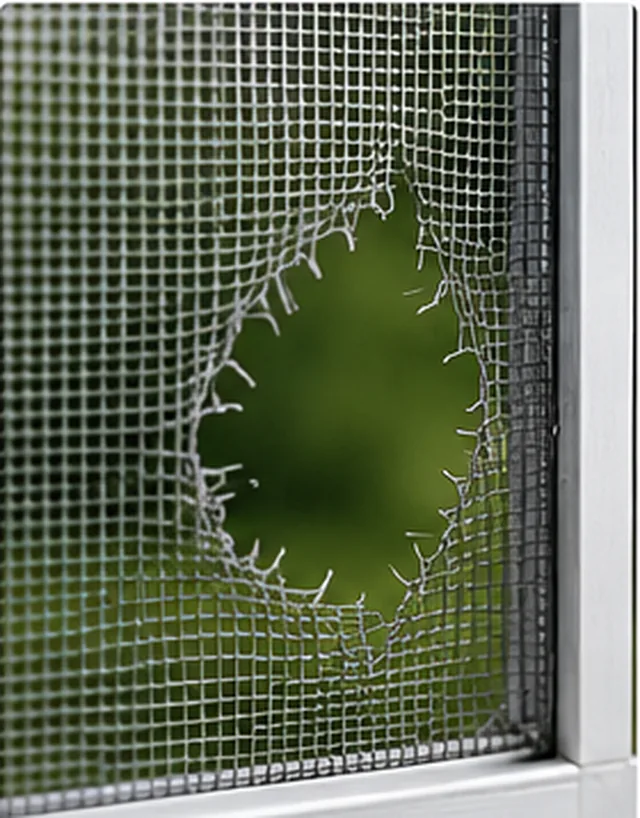 Mesh
Mesh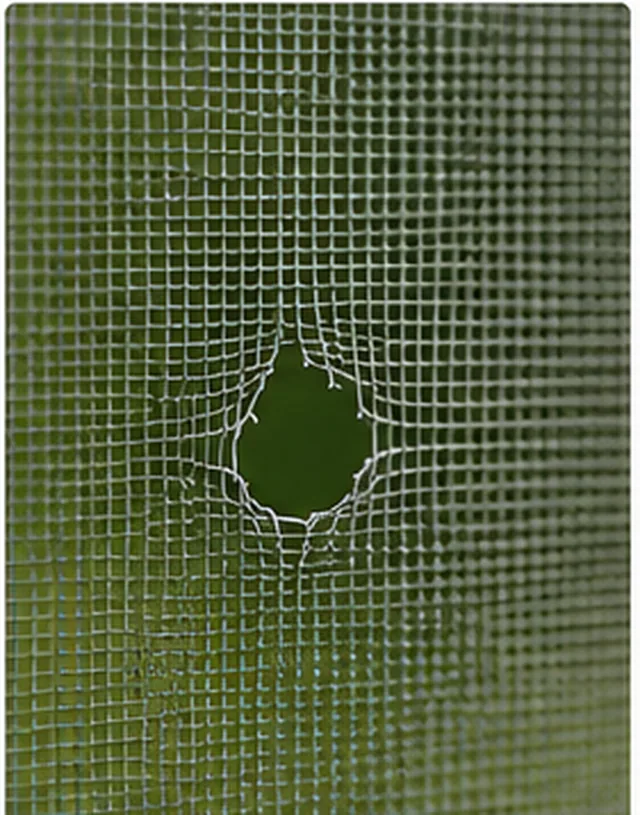 Mesh
Mesh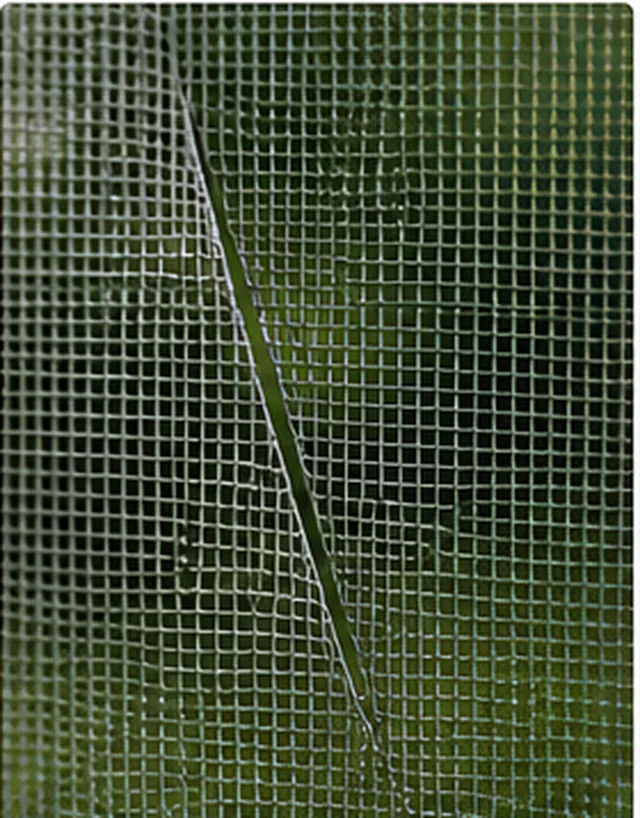 Mesh
Mesh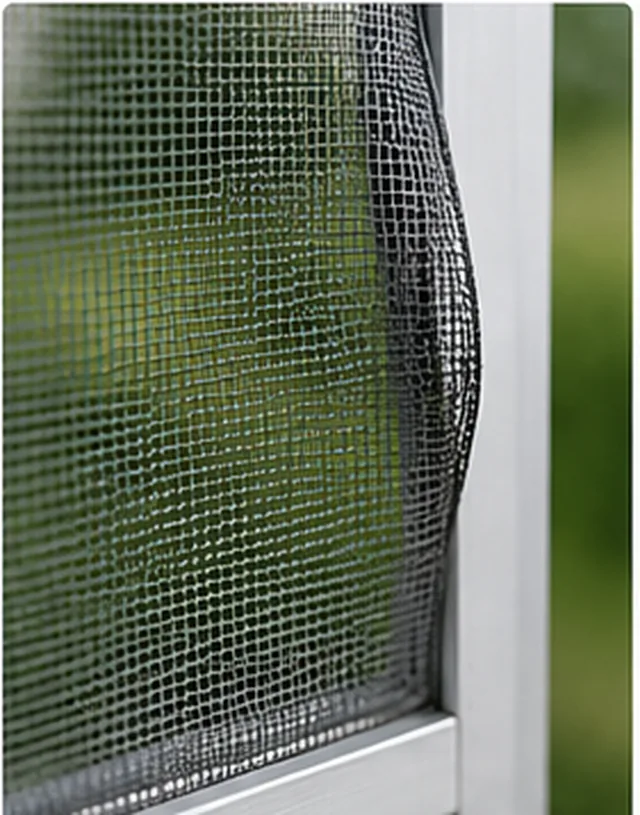 Mesh
Mesh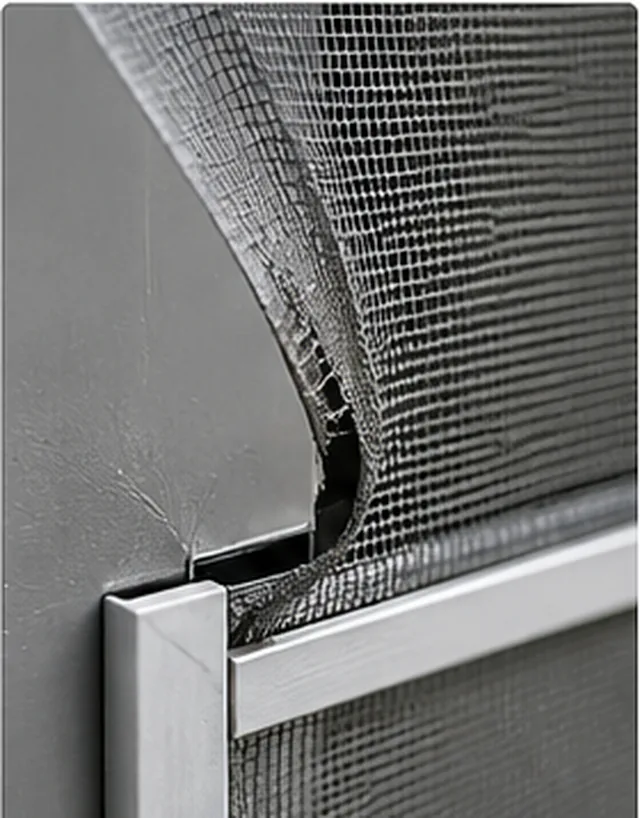 Mesh
Mesh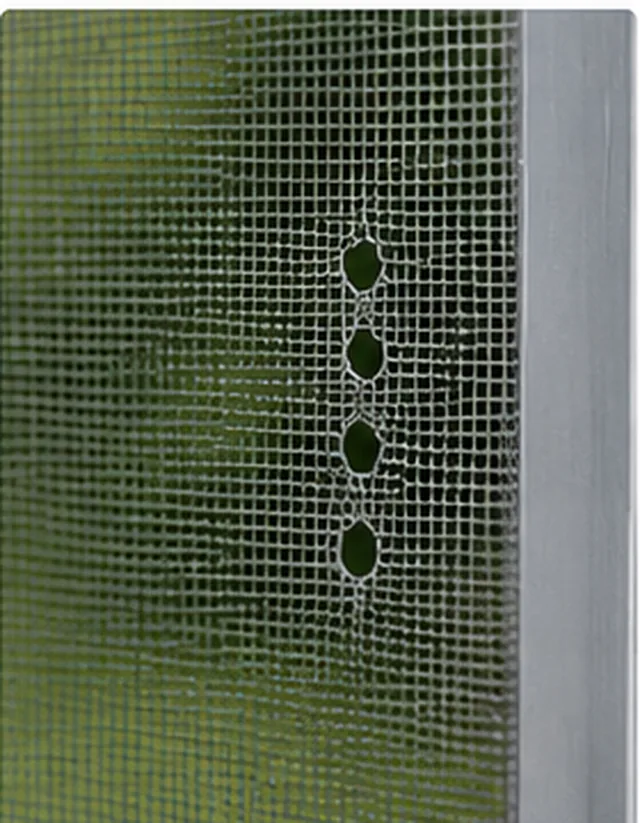 Mesh
Mesh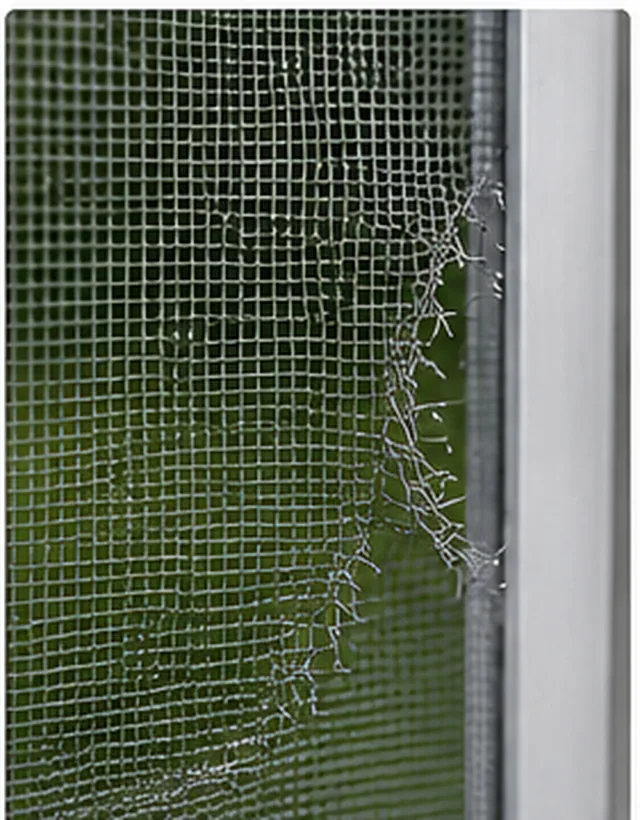 Mesh
Mesh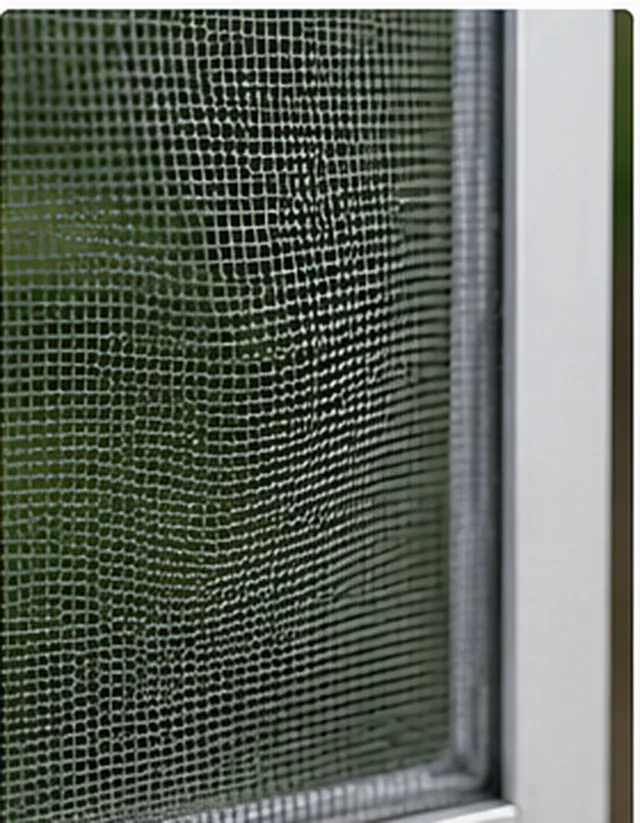 Mesh
Mesh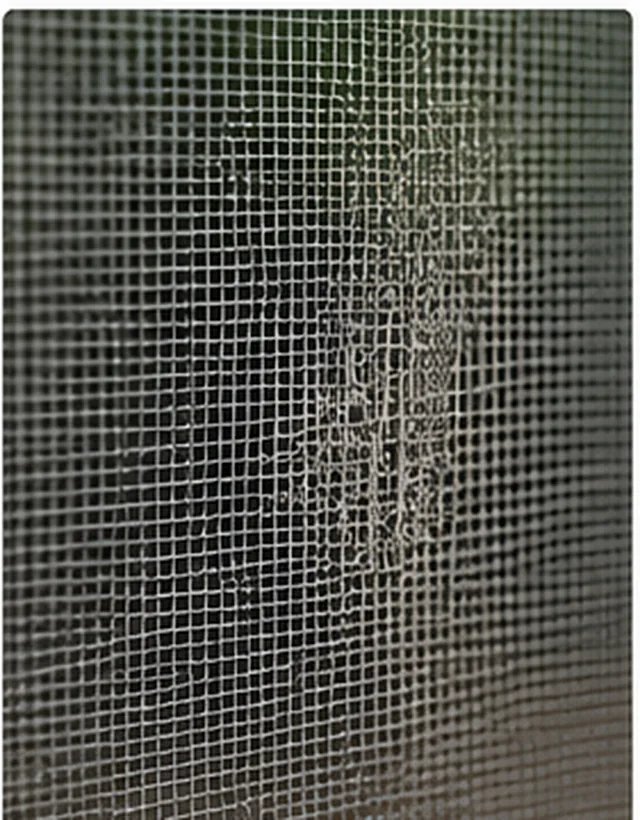 Mesh
Mesh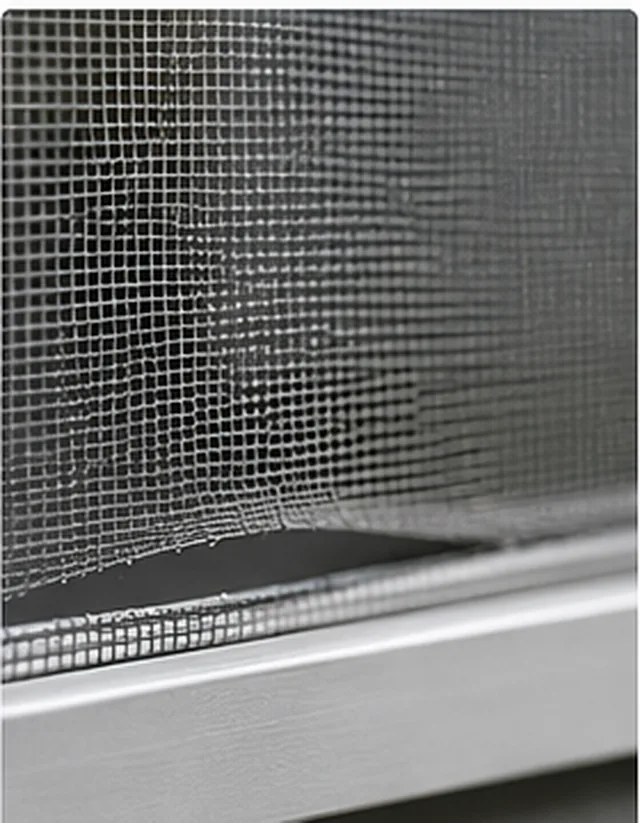 Frame
FrameThree steps
By phone or through the form. A photo helps but is not required.
We give you a time window for Laval, not a whole day.
We remove, repair and reinstall. You pay once you have seen and approved the work.
Do you manage a building or a business in Laval?
Why us
The workshop is in the vehicle: no trips to a store.
5.0from 143 Google reviews
Public and verifiable, on our Google listing.
No windows or doors to sell: we repair what you own.
6 a.m. to 8 p.m., April to October, in French and English.
7+years in the trade
Mesh taut without a ripple, frame square, rollers set.
1 yrwritten warranty
Workmanship and installation. If our work fails, we come back.
« Ludovic replaced my screen in record time. Professional, and with a great sense of humour. I recommend his services — don’t hesitate to contact him, he’ll come to your home and do beautiful work. »
« Excellent service. Clear explanations of the work to be done. I really appreciated his dedication: despite the rain he insisted on finishing the job, soaked through and still smiling. The work was very well done. »
« Great service! He was at my neighbour’s and agreed to fix my back screen even though we had no appointment. Very successful repair, and inexpensive! »
Straight answers
Rarely. On those houses what failed is the mesh, not the frame — the aluminum of that era is thin, but it has stayed square. We rescreen the units in their original frames, squaring up any corners that have opened along the way. That costs far less than having that many new frames built to the same dimensions.
No. A casement screen comes off from inside by its latches and is rescreened in its own frame, like any other. The builder isn't the only source, and waiting on a stock part often costs more and takes longer than putting new mesh in on site.
Yes, but not a standard one. In older construction the openings have shifted, and a perfectly rectangular frame leaves a gap on one side. We measure the opening on site, at several points, and build the frame to those dimensions. This is the textbook case for custom fabrication rather than a catalogue size.
Yes. We are a mobile business: we come to your home in Laval, remove the screens, repair them on site and reinstall them before we leave.
Replacing the mesh of a window screen, in its existing frame, starts from $30. The exact amount depends on size, mesh type and how many units you have, and the quote sets it. The more screens in the same visit, the lower the price of each. A $125 travel fee applies to every visit, whatever the number of screens — it is shared across all your items, which is why grouping them pays.
Yes: one year on fabrication and installation. If our work fails, we come back at no charge. Damage caused afterwards is not covered.
Written for Laval
Few cities in Greater Montreal ask for as many different versions of the same trade as Laval does. Spread across an entire island, it takes you in minutes from an old village core to a street of 1970s bungalows to a townhouse development from the past few years. The old cores of Sainte-Rose and Saint-Vincent-de-Paul carry the most demanding building stock: older houses whose openings have shifted over the decades and are no longer square. On that kind of window a standard-size screen never closes properly — a gap stays open on one side, and that's where everything gets in. The only honest answer is custom fabrication, with measurements taken on site, opening by opening, because two neighbouring windows in the same house don't necessarily share the same dimensions. Nothing about that kind of work can be quoted from a size chart.
The bulk of Laval's housing is elsewhere: in the vast sectors built between 1960 and 1980, in Chomedey, Duvernay and Vimont. Those bungalows and cottages went up in the same period, from the same suppliers, and their screens reach the end of their life at roughly the same time. The narrow aluminum profile of those years is no longer sold anywhere, which sends owners hunting for a replacement part that doesn't exist. The frame, meanwhile, is still there and still square. Finally, the recent townhouse and condo developments bring a third and much simpler profile: casement windows and patio doors in common sizes, parts available, and a repair that is done in the same visit, with no part to order. One address can therefore call for three approaches depending on the neighbourhood, and knowing which of the three a house belongs to is most of the diagnosis.
In newer Laval the casement window dominates. Its screen is interior: it comes off by latches from inside the house, which settles the question of height on a second floor. It is rescreened in its own frame, with no need to take the window apart. It's the fastest repair in the trade, and yet the one most often replaced for nothing: plenty of owners of newer homes assume the screen is a manufacturer's part to be ordered through the builder, when the mesh can be changed in the existing frame like any other. The patio doors on those same houses arrive with the usual set of symptoms: mesh gone slack along the bottom, flattened rollers, a track full of grit. On the casement units themselves standard fibreglass is plenty: set back in the depth of the opening, they never take the constant rubbing a hung window does.
In the 1960s-to-1980s sectors it's mostly sliders and hung sashes. On a slider the screen runs sideways on a track: rollers wear out before the mesh, the screen jams, you force it, and the mesh pays for it. Replacing the hardware at the same time as the mesh keeps you from doing the job again two years later. On a hung window the screen covers only the operating half and works every time the sash moves — that's the case where stiffer aluminum mesh is worth the extra. And in the old village cores, when the original frame is too twisted or too far gone to save, we build a new frame to measurements taken at the house, never to catalogue sizes. Those hung windows are fewer here than in Montreal proper, but they exist on the oldest streets, and they come apart the same way: from inside, with no ladder.
Laval's challenge is first of all a question of distance. The territory is large and the neighbourhoods are far apart; a visit that handles a single screen is expensive in travel for everybody. The right move is to walk the house before calling and count every damaged unit, including the bedroom windows nobody opens and the patio door you've quietly stopped using: they all get handled in the same visit, on site. The second difficulty is the variety of sizes. On a 1970 bungalow it's common for the openings of one house not to share the same dimensions. So each unit gets measured individually rather than inferred from its neighbour — a screen a few millimetres short won't hold in its frame.
Laval is bordered by two rivers, and houses near the water don't experience the same summer as those in the middle of the island. Along the Rivière des Mille Îles and the Rivière des Prairies alike, insect pressure starts early and includes no-see-ums, small enough to pass through standard fibreglass mesh. At those addresses tight-weave mesh earns its place, accepting that it passes slightly less air. Elsewhere in the city standard fibreglass is plenty — unless a cat regularly leans on the screen, in which case pet-resistant mesh saves you from redoing the same unit every spring.