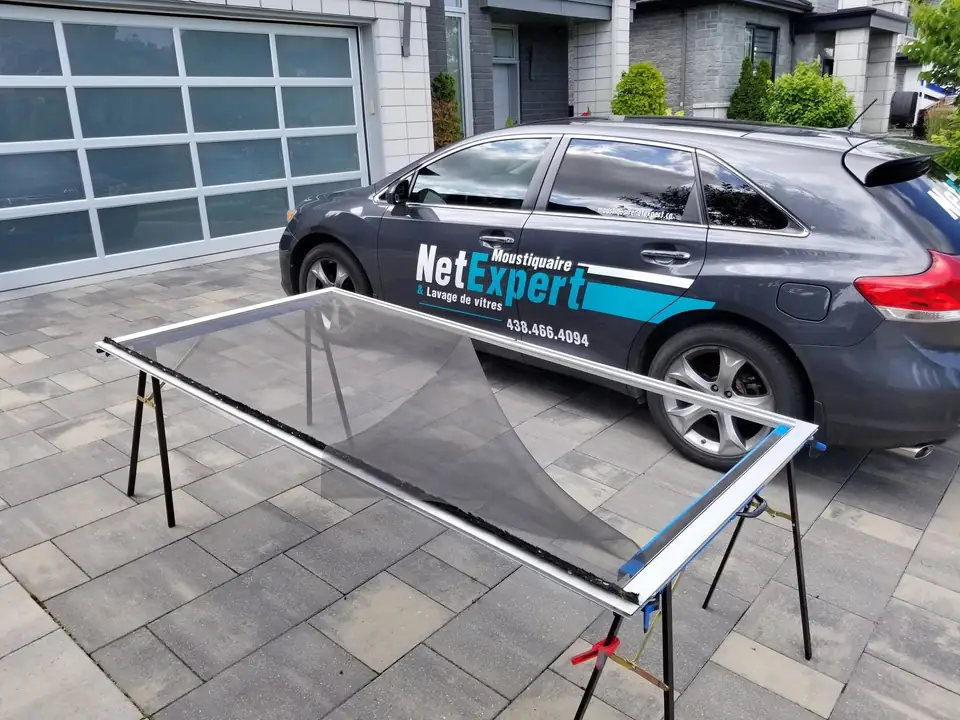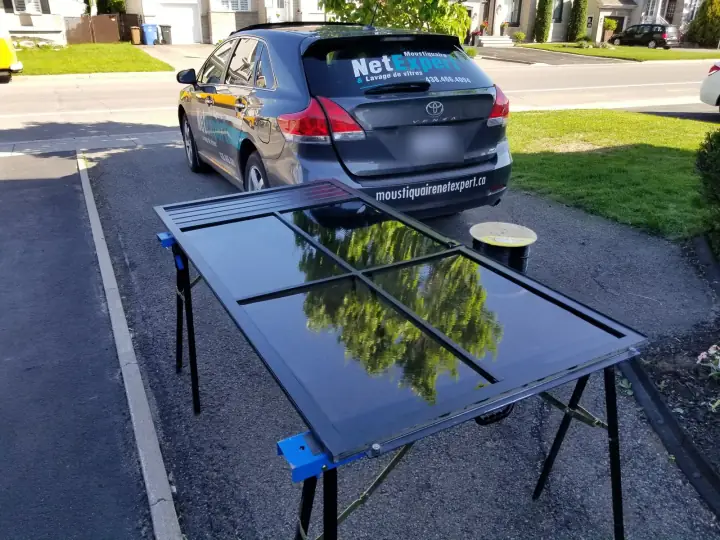
Screen rescreening (window)
From$30per screen
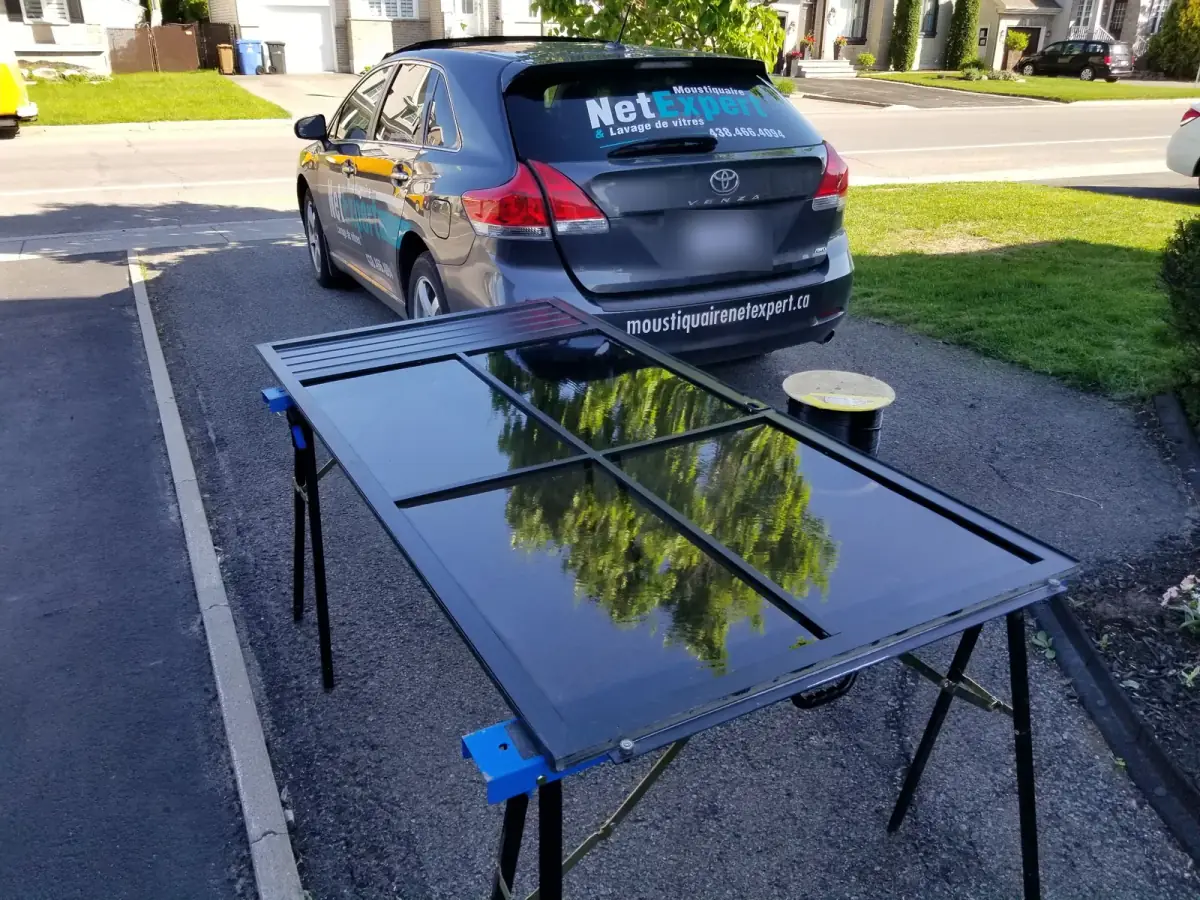
From Brossard, across Greater Montréal
Mobile on-site service in Terrebonne and nearby. Mesh, rollers, frames, patio doors.
Three questions are enough to start. The official measurement is taken on site.
Six services, one trade
One trade, done properly. We don’t sell windows — we repair window screens, and that is all we do.
 Repair
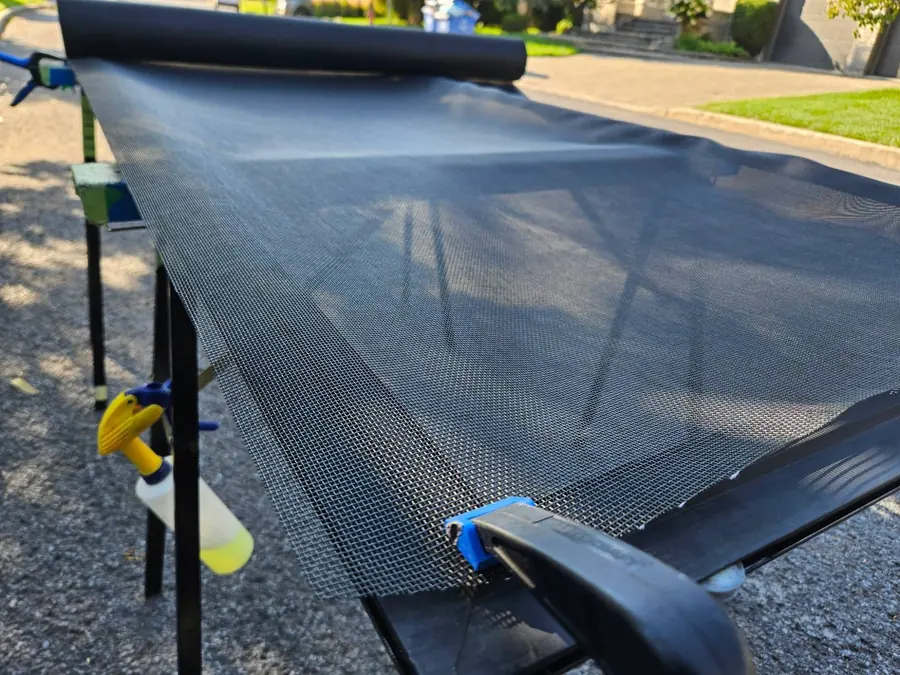
Torn, punctured or sagging mesh, replaced in your existing frame.
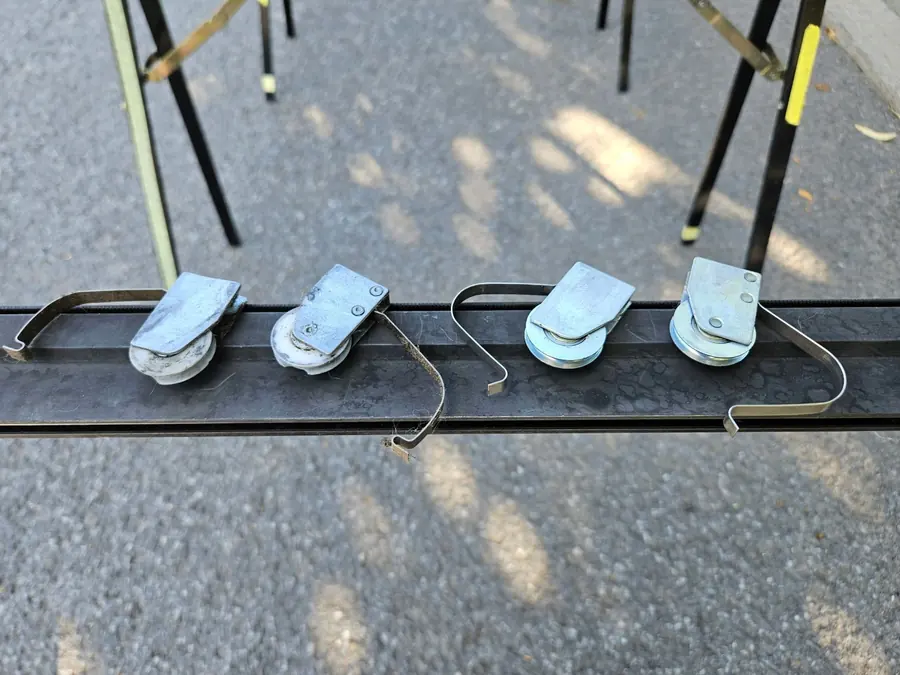 Repair
A screen that sticks, jumps the track or no longer closes.
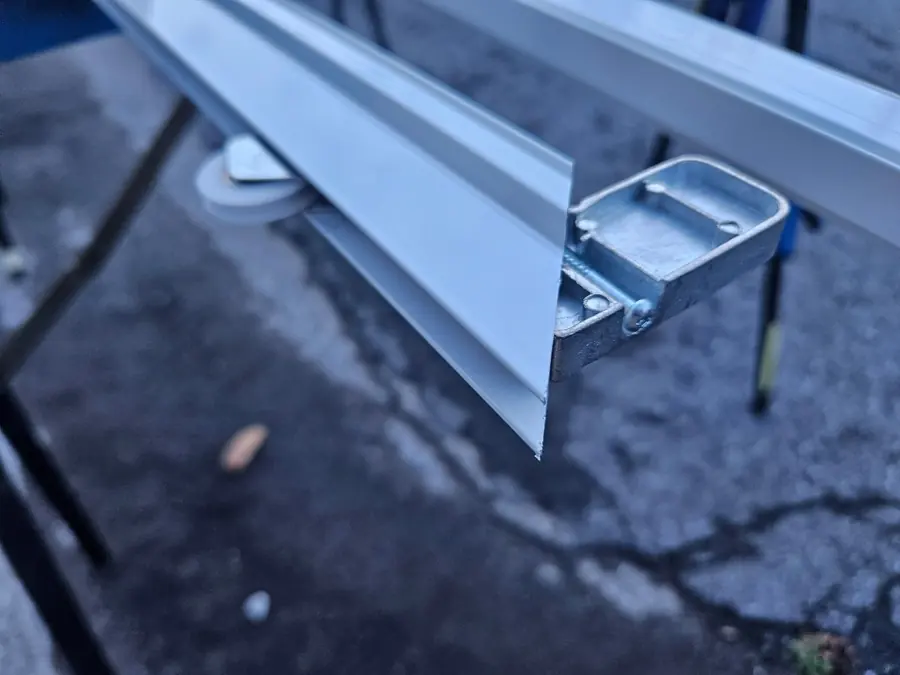 Repair
Bent frame, separated corner, split moulding.
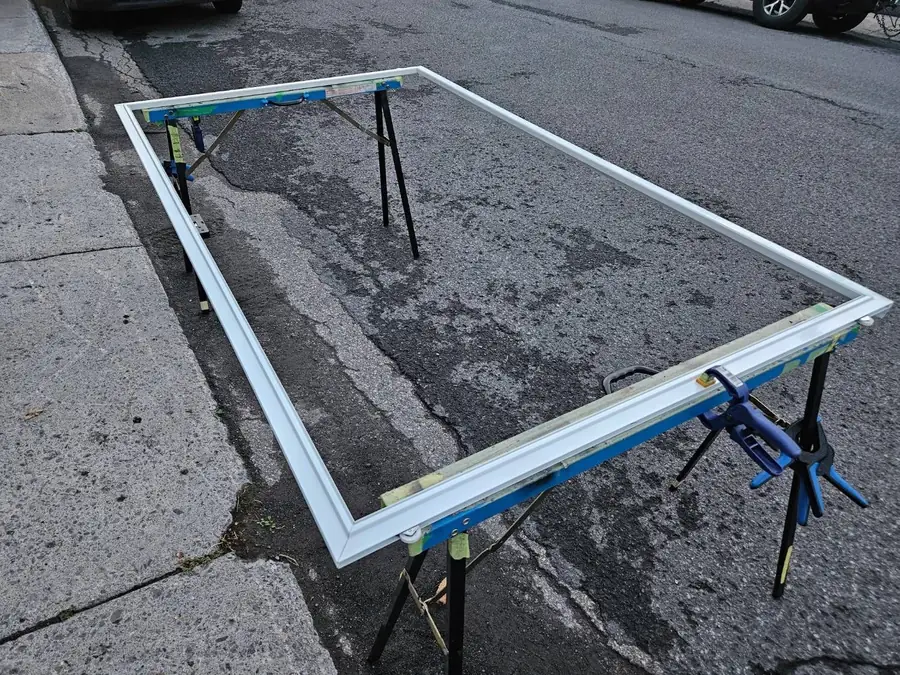 Repair
A missing screen, or an opening with no original to copy.
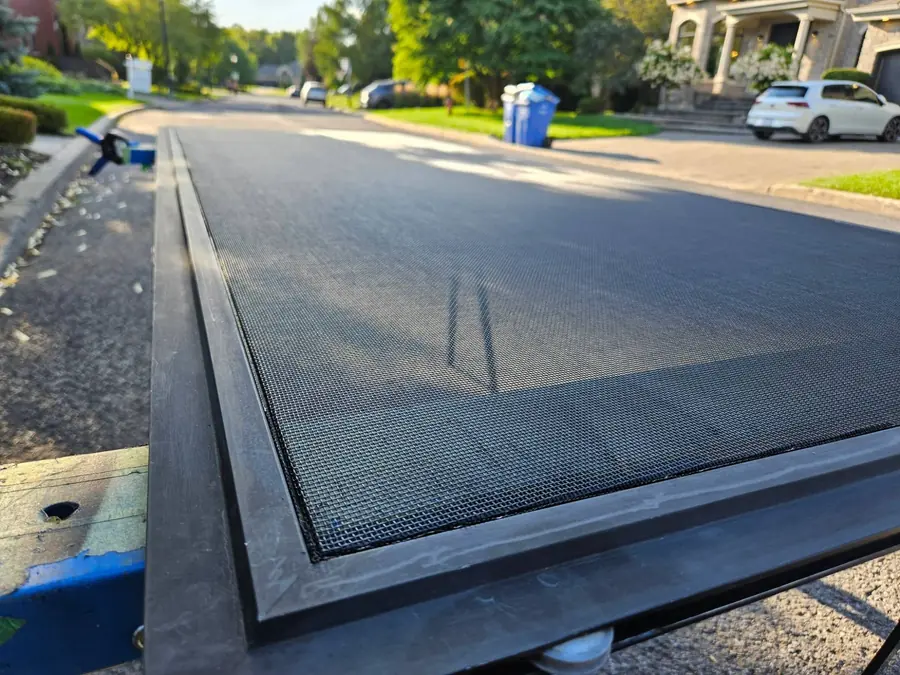 Patio door
The part that breaks most often, and gets used most.
 Gazebo · MICA
Screen panels and clear MICA vinyl, replaced on site.
Clear prices
Most companies in this trade publish no prices at all. Here are ours, as starting prices — the exact amount depends on size, mesh type and how many units per visit; the free quote sets it.
From$30per screen
From$30per screen
From$40per screen
From$120per screen
From$500per door
The price depends on the panel count and the vinyl: set on site.
A $125 travel fee applies to every visit, whatever the number of screens — it is shared across all your items, which is why grouping them pays.
$125
Grouping several screens in one visit brings the price of each one down: the travel fee is shared. An exact quote is free and reaches you promptly.
1-year warranty on fabrication and installation. Damage caused by the client is not covered. Payment: Visa, MasterCard, Interac, Bank transfer.
Any price provided is strictly a summary estimate. If work must be added once on site, prices will be adjusted — and always explained before we start.
Not all mesh is equal, and the right one depends on your window, your pets and your surroundings. We carry all four types in the vehicle — the choice happens at your home, not in a store.
Ten kinds of damage, one answer
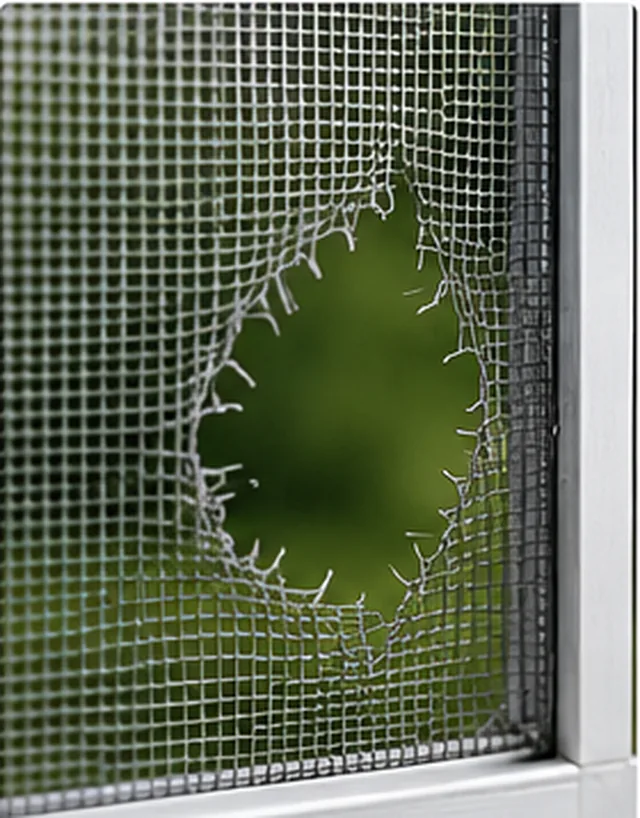
If your screen looks like any of these, it can be repaired. Tap one to request a quote for that exact damage. We rarely replace a whole frame — in most cases only the mesh needs redoing.
 Mesh
Mesh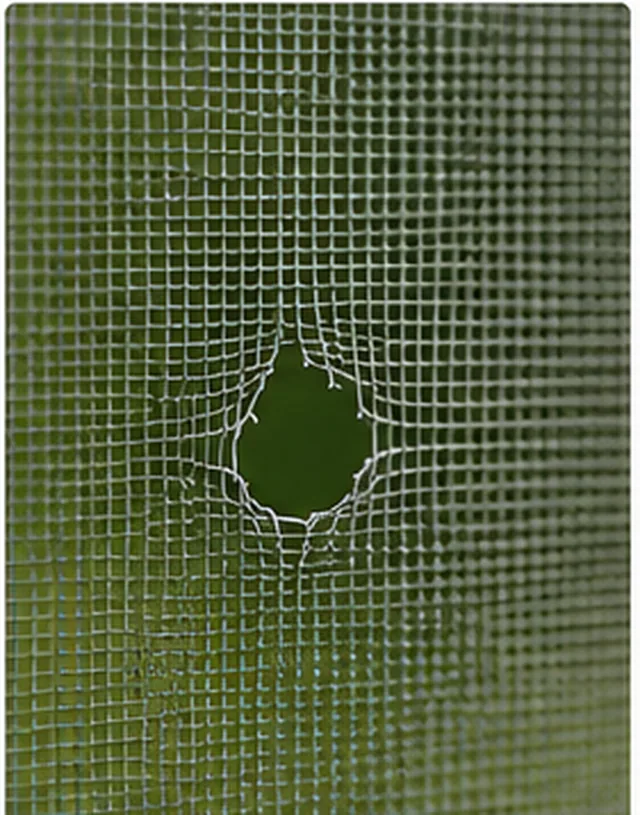 Mesh
Mesh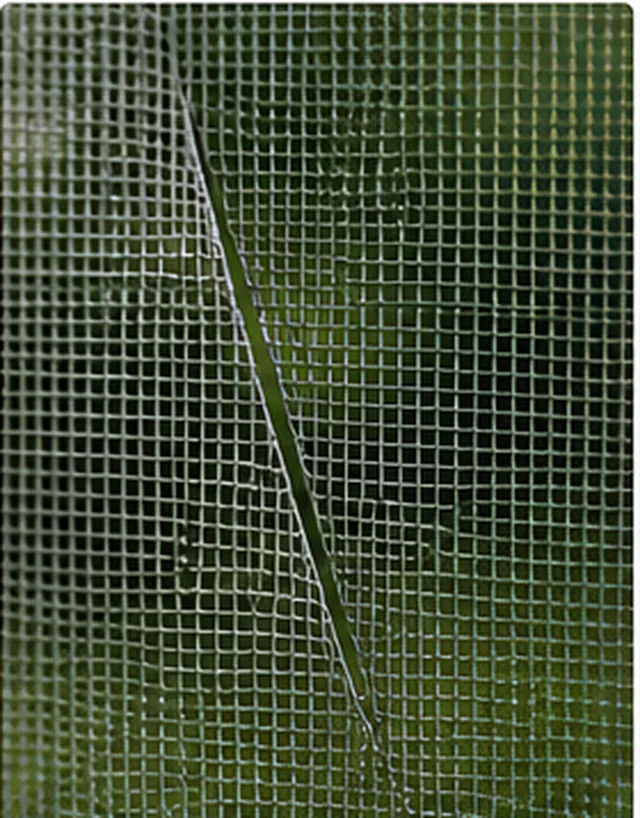 Mesh
Mesh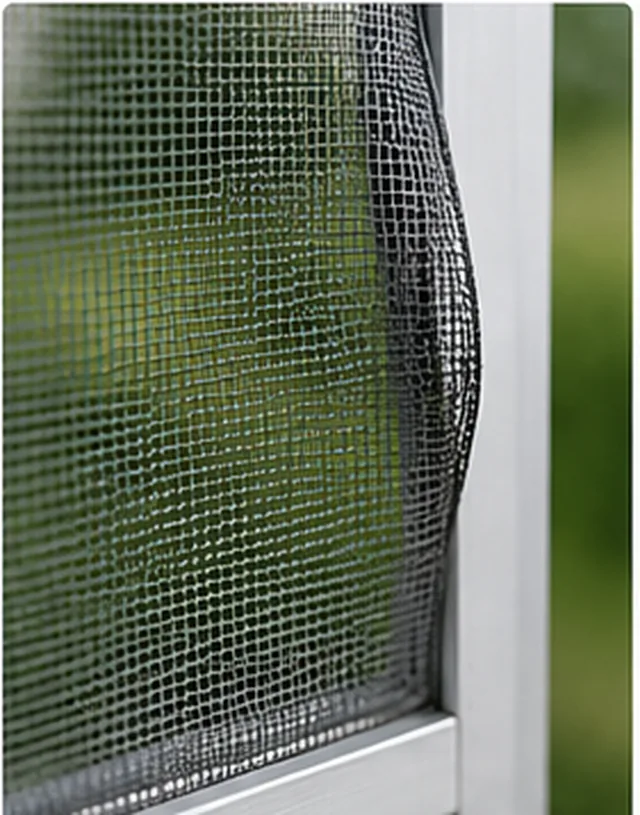 Mesh
Mesh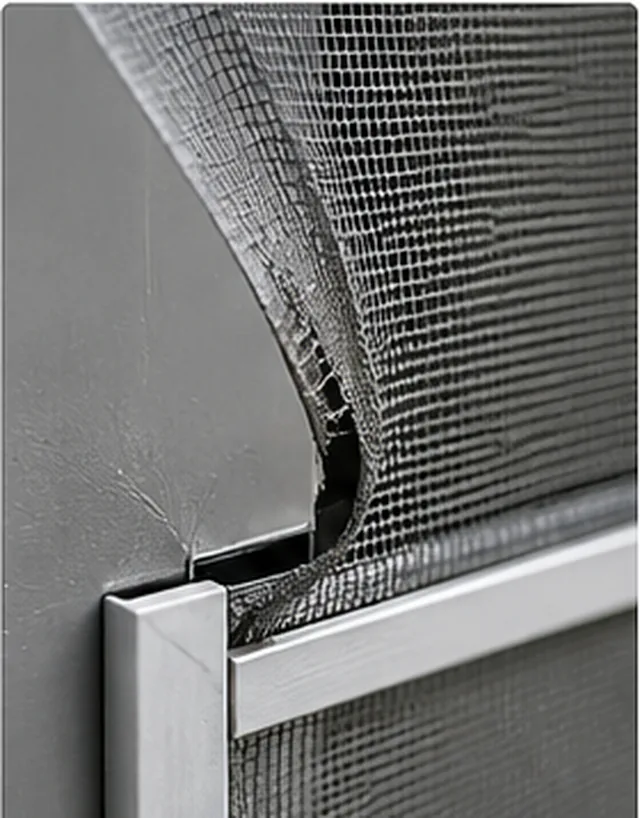 Mesh
Mesh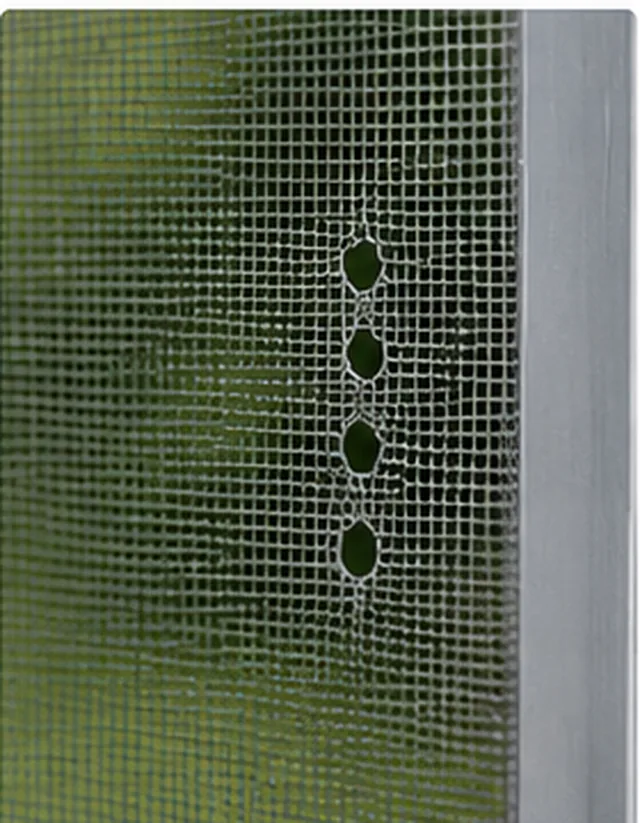 Mesh
Mesh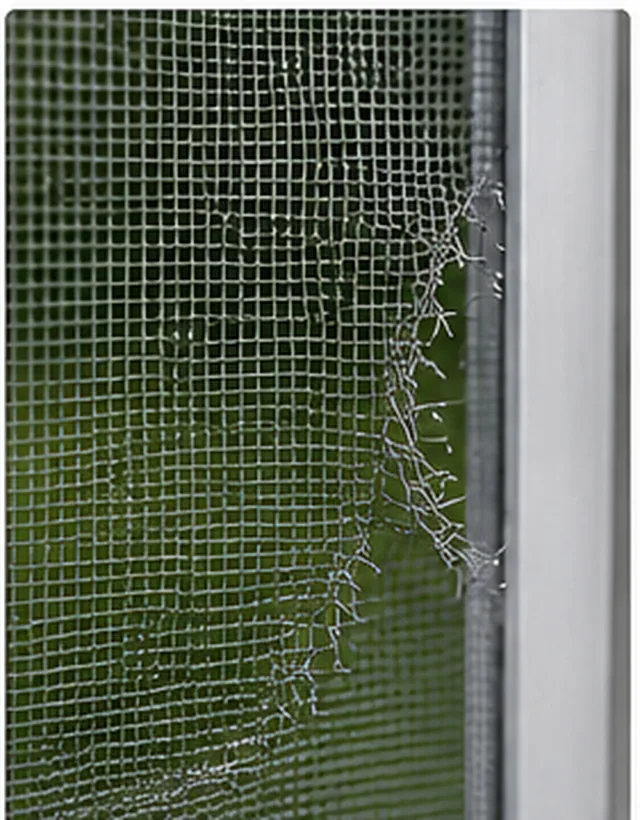 Mesh
Mesh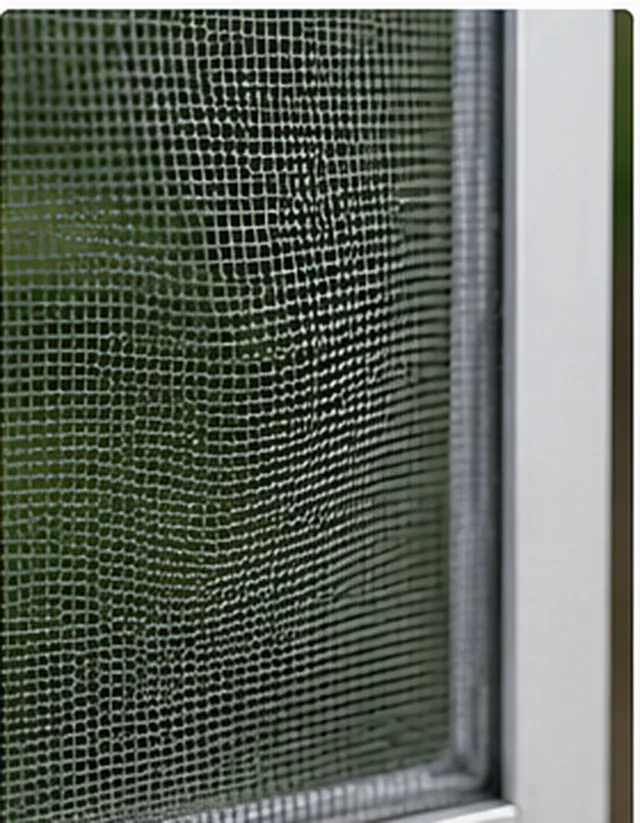 Mesh
Mesh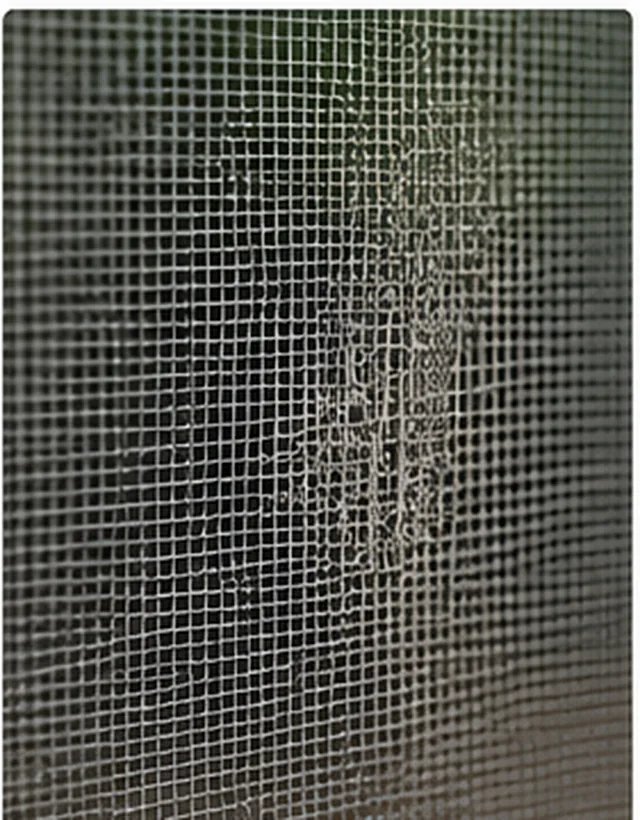 Mesh
Mesh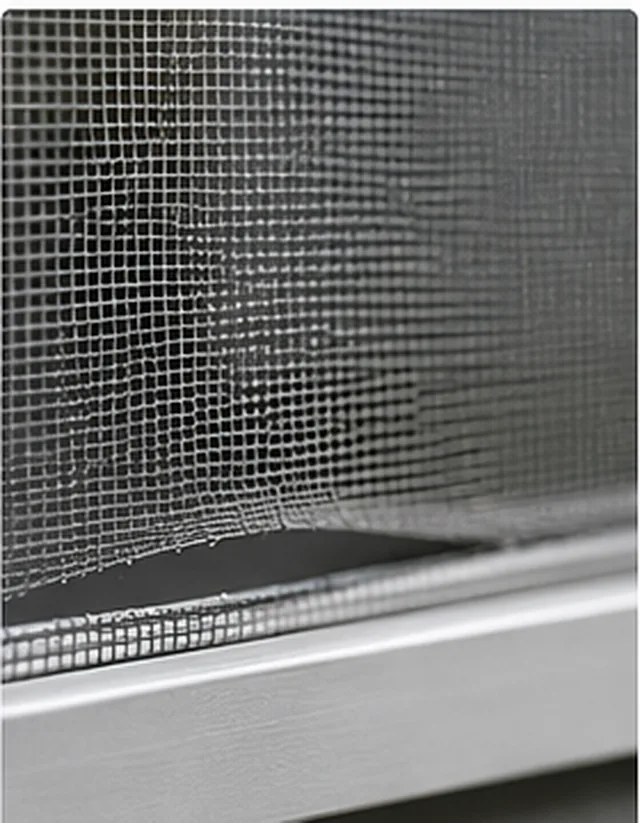 Frame
FrameThree steps
By phone or through the form. A photo helps but is not required.
We give you a time window for Terrebonne, not a whole day.
We remove, repair and reinstall. You pay once you have seen and approved the work.
Do you manage a building or a business in Terrebonne?
Why us
The workshop is in the vehicle: no trips to a store.
5.0from 143 Google reviews
Public and verifiable, on our Google listing.
No windows or doors to sell: we repair what you own.
6 a.m. to 8 p.m., April to October, in French and English.
7+years in the trade
Mesh taut without a ripple, frame square, rollers set.
1 yrwritten warranty
Workmanship and installation. If our work fails, we come back.
« Excellent service. Clear explanations of the work to be done. I really appreciated his dedication: despite the rain he insisted on finishing the job, soaked through and still smiling. The work was very well done. »
« Great service! He was at my neighbour’s and agreed to fix my back screen even though we had no appointment. Very successful repair, and inexpensive! »
« Ludovic replaced my screen in record time. Professional, and with a great sense of humour. I recommend his services — don’t hesitate to contact him, he’ll come to your home and do beautiful work. »
Straight answers
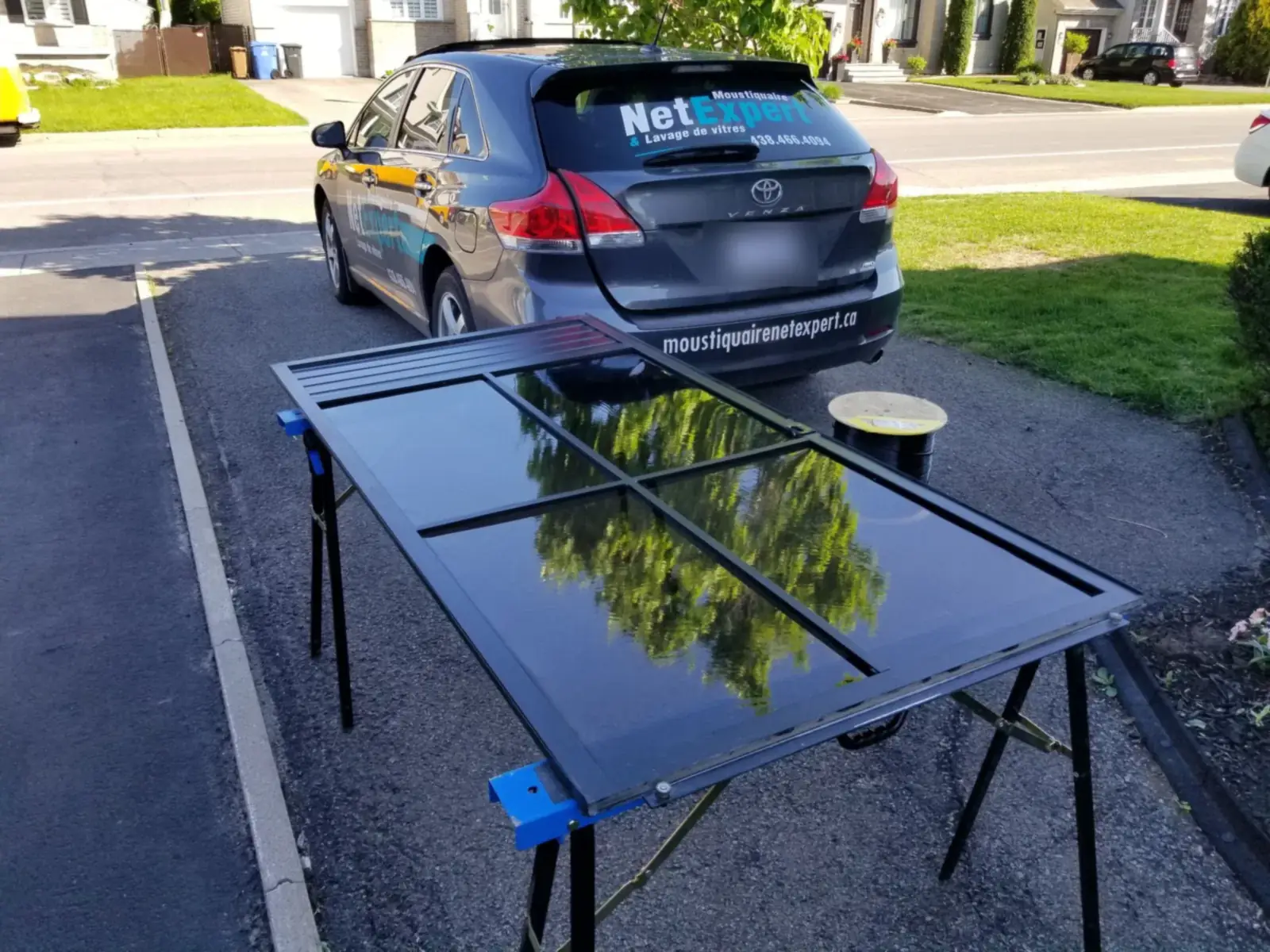
No, but it is worth mentioning when the appointment is set. The repair happens on site and the frames have to be laid flat somewhere: a corner of the deck, a driveway, a garage. On casement windows the screen comes off from inside the house, which makes the rear and upper-floor units much simpler to handle.
Often, within a few millimetres — the plans repeat from one unit to the next in post-1980 developments. But each frame still gets measured: a unit facing due south has taken more ultraviolet and more expansion than one on a north wall, and it may have twisted slightly. The measuring goes quickly, but it does happen.
That is the goal. On 19th-century stone and wood walls, nothing is square and nothing is standard: the screen is built to dimensions taken on site. The thinnest possible profile in a dark shade disappears into the reveal, whereas a wide, pale frame pulls the eye across the whole facade.
Yes. We are a mobile business: we come to your home in Terrebonne, remove the screens, repair them on site and reinstall them before we leave.
Replacing the mesh of a window screen, in its existing frame, starts from $30. The exact amount depends on size, mesh type and how many units you have, and the quote sets it. The more screens in the same visit, the lower the price of each. A $125 travel fee applies to every visit, whatever the number of screens — it is shared across all your items, which is why grouping them pays.
Yes: one year on fabrication and installation. If our work fails, we come back at no charge. Damage caused afterwards is not covered.
Written for Terrebonne
Terrebonne is the largest city in the Les Moulins RCM, and its housing stock spans more than a century and a half. On one side, the Vieux-Terrebonne with its 19th-century stone and wood houses — thick walls, deep reveals, and openings that never knew a standard size. On the other, Lachenaie and La Plaine, where most of the building is post-1980: two-storey houses, semi-detached homes and townhouses with PVC casement windows and patio doors. Between the two, almost nothing in common. At an address in the old town, a screen is built from dimensions taken in front of each window; a few kilometres away, in a Lachenaie semi, it is rescreened in a common-size PVC frame, with no part to order. One city that in practice asks for two different trades.
The post-1980 districts are now reaching the age where their original screens give out. Fibreglass mesh does not fail suddenly: ultraviolet light stiffens it, it loses its give, then it splits at a corner or works free of its groove — and since the houses in one development share an age and an exposure, they get there at roughly the same time. In semis and townhouses there is an advantage: the plans repeat, so the openings do too. One unit's dimensions usually turn up next door, within a few millimetres. That does not remove the need to measure each frame — a south-facing unit has not aged like one on a north wall — but it makes the work fast once someone is on site.
In Lachenaie and La Plaine, two openings carry almost the whole load. First the PVC casement: its screen is on the inside, it releases from its latches from inside the room, it is rescreened in its own frame and goes back with no outside work — even on the second floor. Then the patio door, near-universal in these developments — and in a semi or a townhouse it opens onto the hardest yard to reach. Three kinds of wear stack up: mesh stretched by pushing the panel in the middle, flattened rollers that make it drag, a track full of grit off the yard. Replacing the mesh without touching the rollers is a false economy — the panel keeps binding and the new mesh goes slack again the same season.
Vieux-Terrebonne asks for the opposite. The 19th-century stone and wood houses have openings that moved with the building: half an inch of difference between the top and the bottom of the same opening is unremarkable, and no store size fits it. Screens there are built to measure, window by window, from dimensions taken on site. The deep reveals of stone walls also settle where the unit sits and how it is held in place. And because these facades get looked at, profile and colour are not a detail: on an older house, a wide, pale frame draws more attention than the torn mesh it replaced. Discreet beats new and obvious.
The most frequent practical constraint in Terrebonne comes from semis and townhouses. In those plans the back yard is often reachable only through a narrow passage between units, or straight through the house — and the back is exactly where the patio door and the busiest windows are. Since the repair happens on site, there has to be a flat spot to lay frames down and a way to carry them there. It takes one sentence when the appointment is set, and it goes better settled beforehand than after. In Vieux-Terrebonne the constraint changes shape: limited parking, facades close to the street, and the concern not to spoil an older house with a screen that announces itself.
Terrebonne stretches from the rivière des Mille Îles in the south to the more wooded parts of La Plaine in the north — two settings that do not call for the same mesh. Near the water and along streets lined with mature trees, insects come out early and the smallest ones cross an ordinary weave: that is where the tighter no-see-um mesh earns its keep. In the newer developments on open lots, standard fibreglass is plenty. A third case arises in houses with a deck: an animal pushing against the patio panel. Pet-resistant mesh stands up to that better than ordinary fibreglass. The repair season runs from April through October.