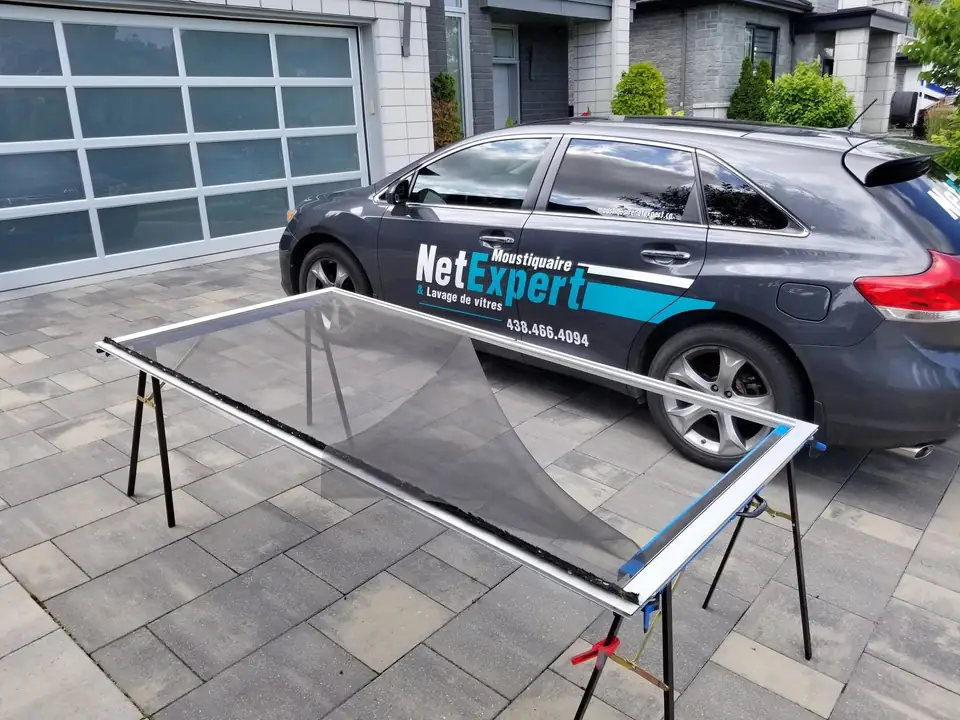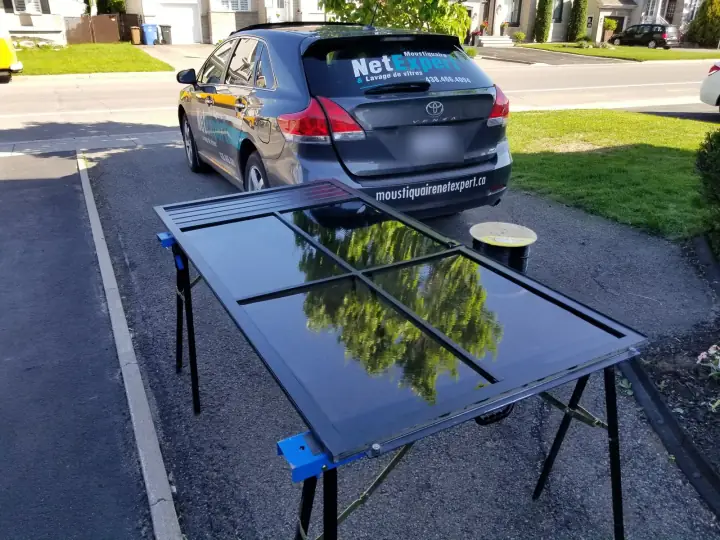
Screen rescreening (window)
From$30per screen
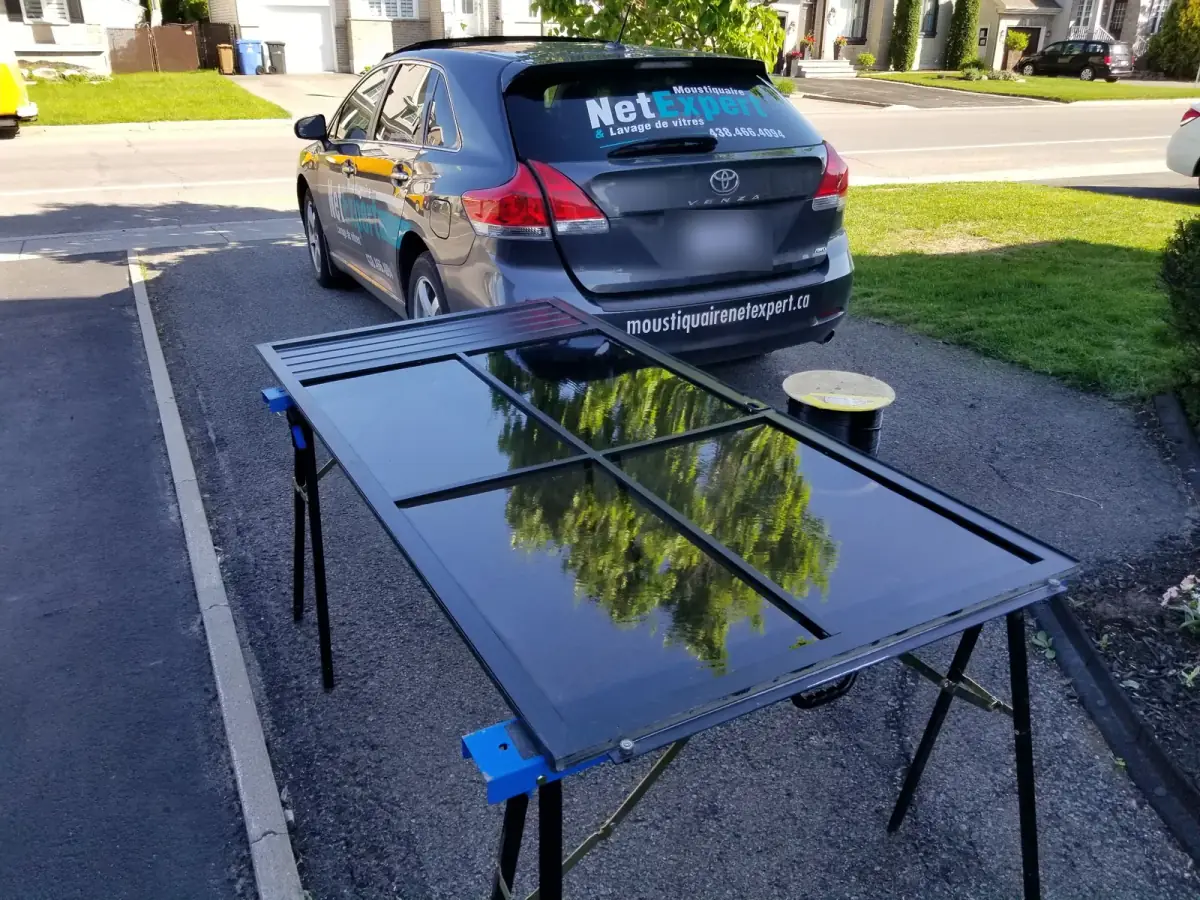
From Brossard, across Greater Montréal
Mobile on-site service in Granby and nearby. Mesh, rollers, frames, patio doors.
Three questions are enough to start. The official measurement is taken on site.
Six services, one trade
One trade, done properly. We don’t sell windows — we repair window screens, and that is all we do.
 Repair
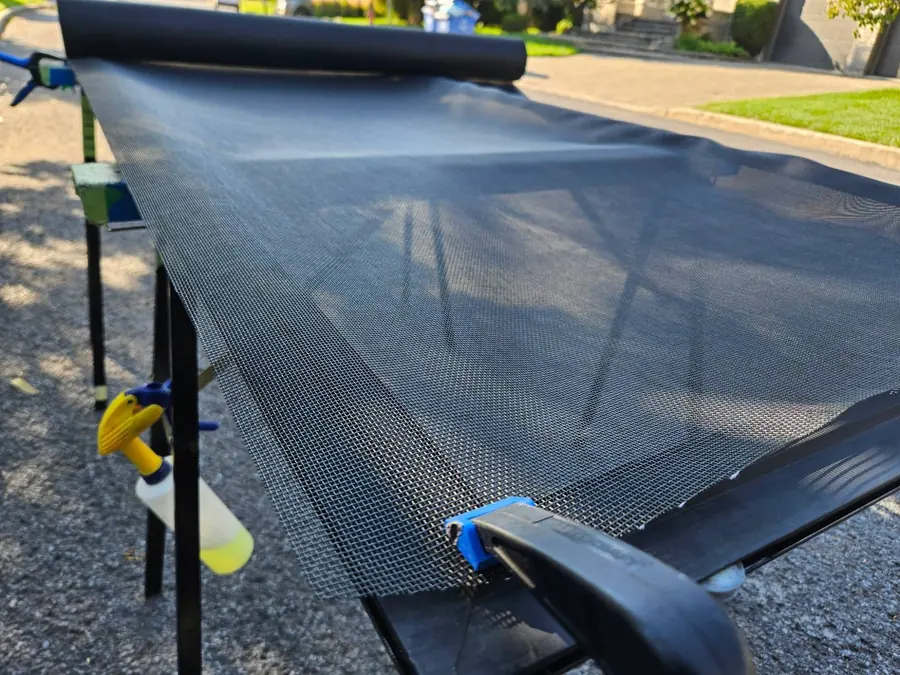
Torn, punctured or sagging mesh, replaced in your existing frame.
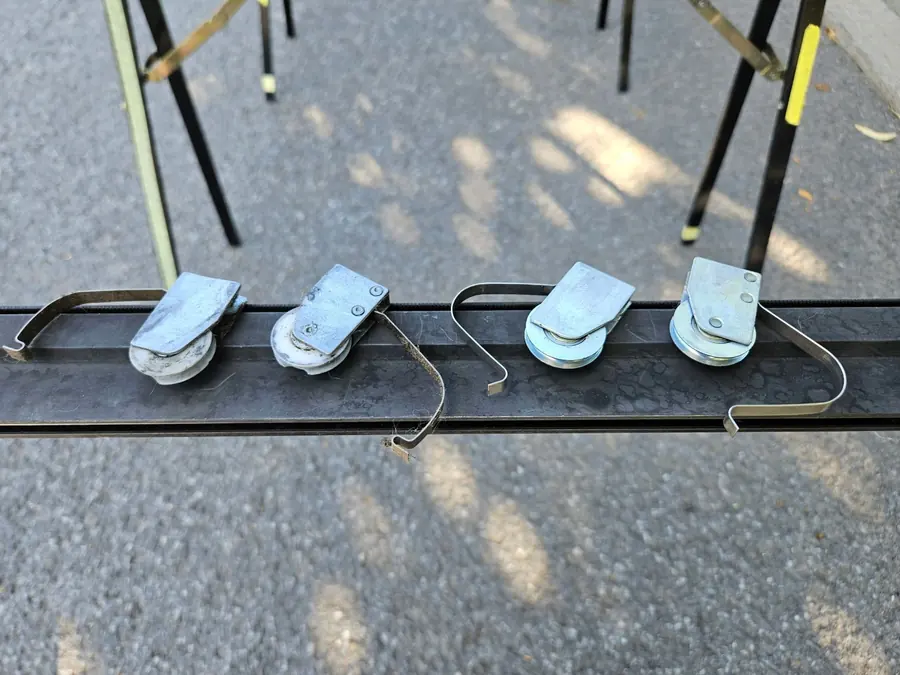 Repair
A screen that sticks, jumps the track or no longer closes.
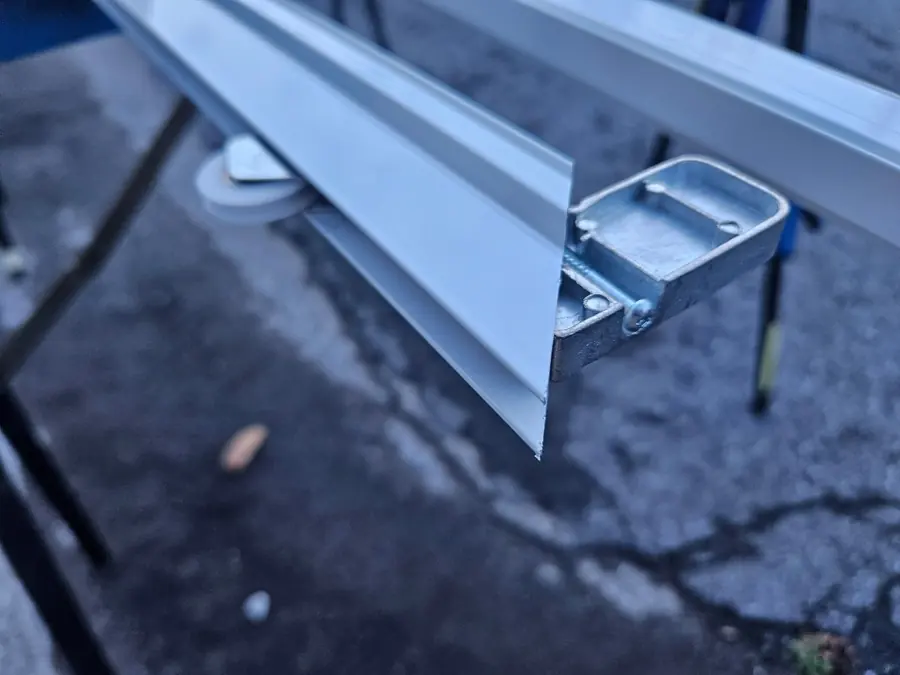 Repair
Bent frame, separated corner, split moulding.
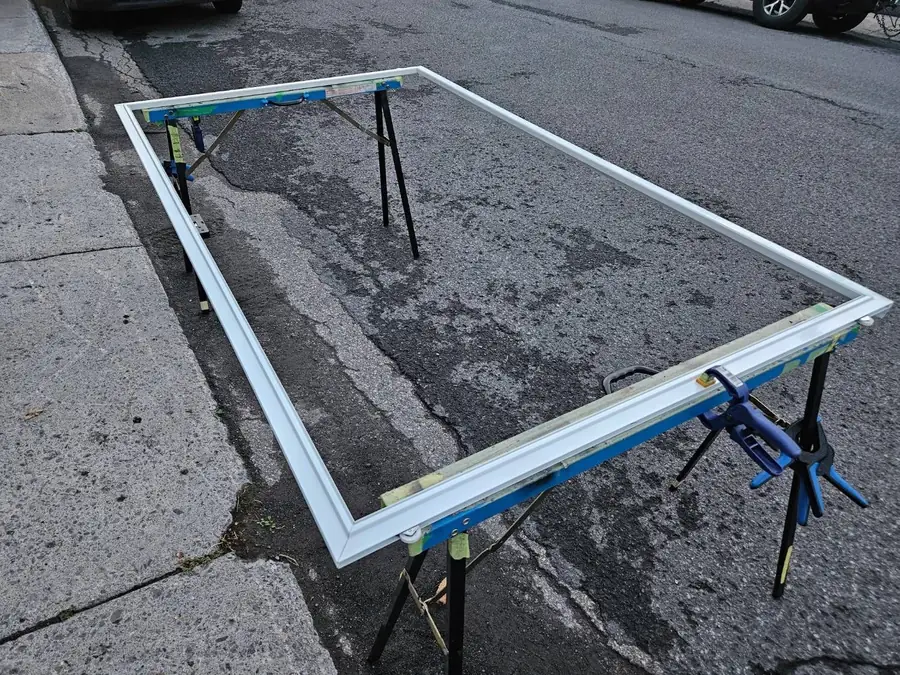 Repair
A missing screen, or an opening with no original to copy.
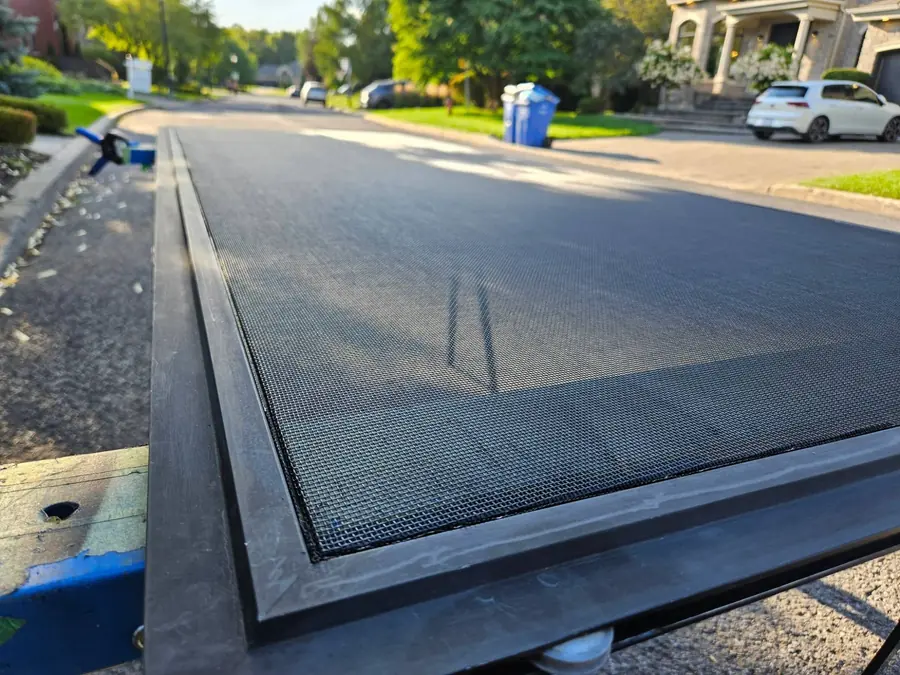 Patio door
The part that breaks most often, and gets used most.
 Gazebo · MICA
Screen panels and clear MICA vinyl, replaced on site.
Clear prices
Most companies in this trade publish no prices at all. Here are ours, as starting prices — the exact amount depends on size, mesh type and how many units per visit; the free quote sets it.
From$30per screen
From$30per screen
From$40per screen
From$120per screen
From$500per door
The price depends on the panel count and the vinyl: set on site.
A $125 travel fee applies to every visit, whatever the number of screens — it is shared across all your items, which is why grouping them pays.
$125
Grouping several screens in one visit brings the price of each one down: the travel fee is shared. An exact quote is free and reaches you promptly.
1-year warranty on fabrication and installation. Damage caused by the client is not covered. Payment: Visa, MasterCard, Interac, Bank transfer.
Any price provided is strictly a summary estimate. If work must be added once on site, prices will be adjusted — and always explained before we start.
Not all mesh is equal, and the right one depends on your window, your pets and your surroundings. We carry all four types in the vehicle — the choice happens at your home, not in a store.
Ten kinds of damage, one answer
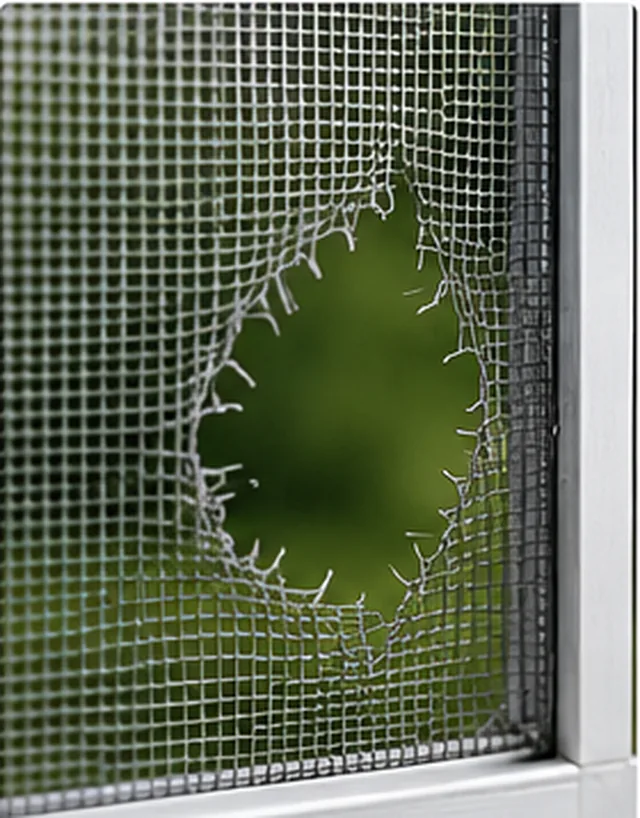
If your screen looks like any of these, it can be repaired. Tap one to request a quote for that exact damage. We rarely replace a whole frame — in most cases only the mesh needs redoing.
 Mesh
Mesh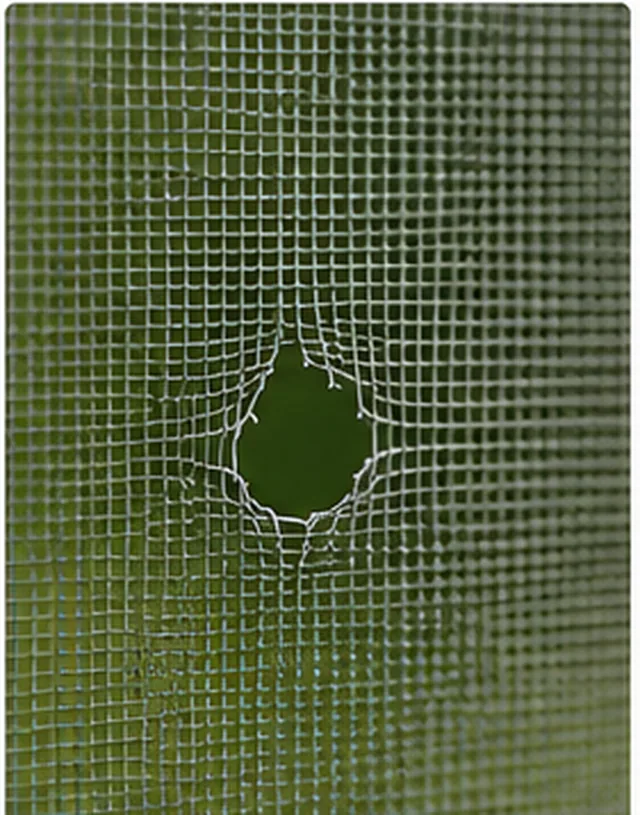 Mesh
Mesh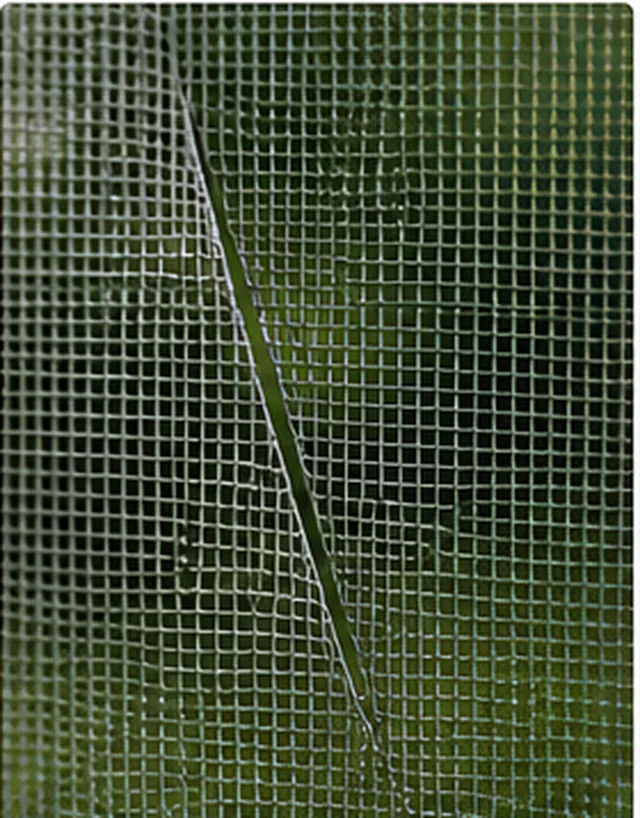 Mesh
Mesh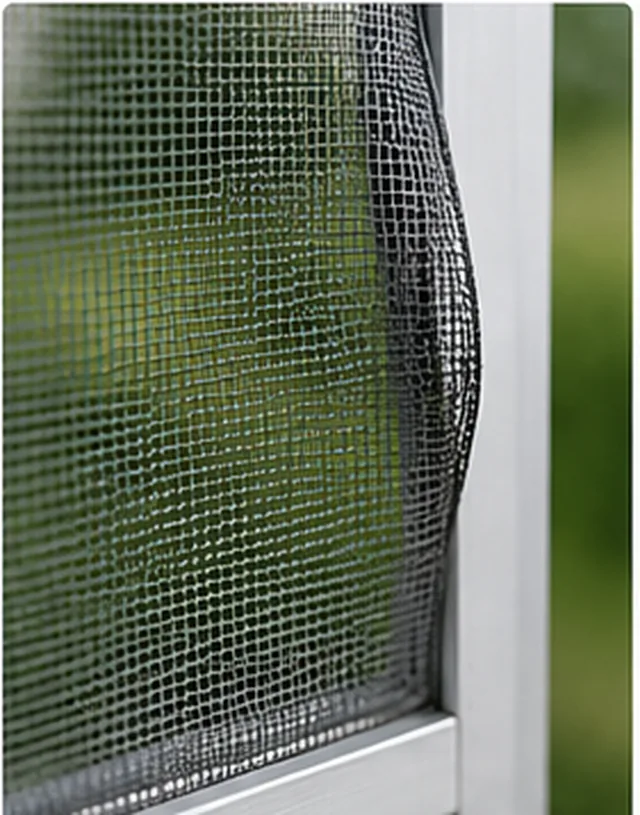 Mesh
Mesh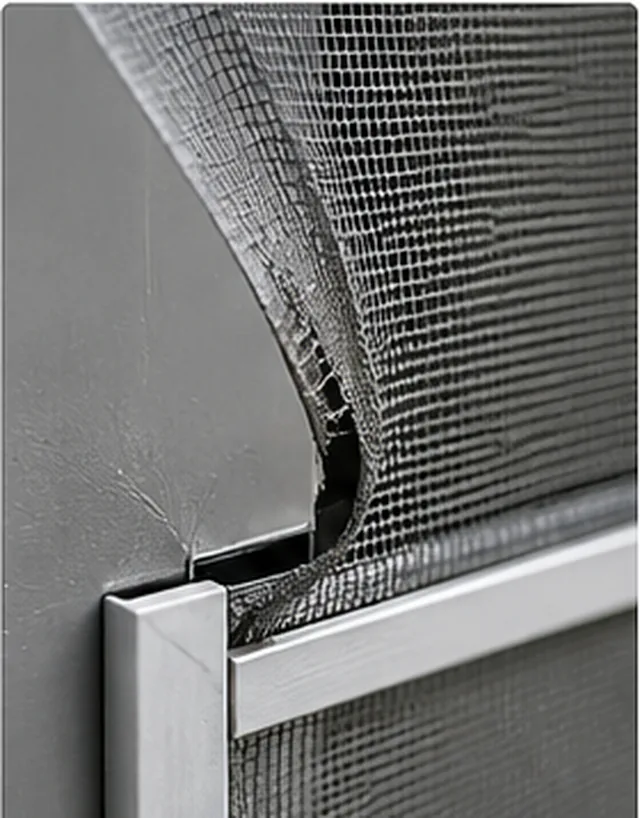 Mesh
Mesh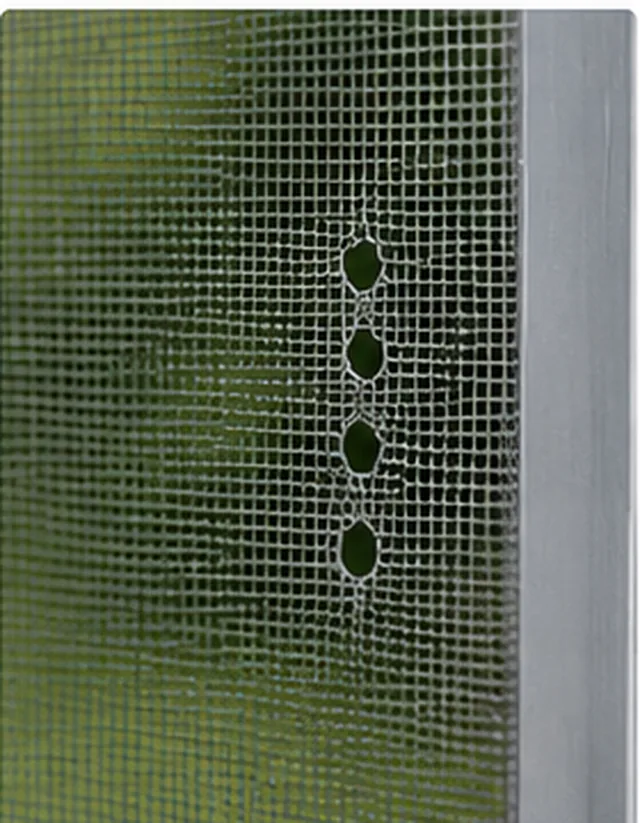 Mesh
Mesh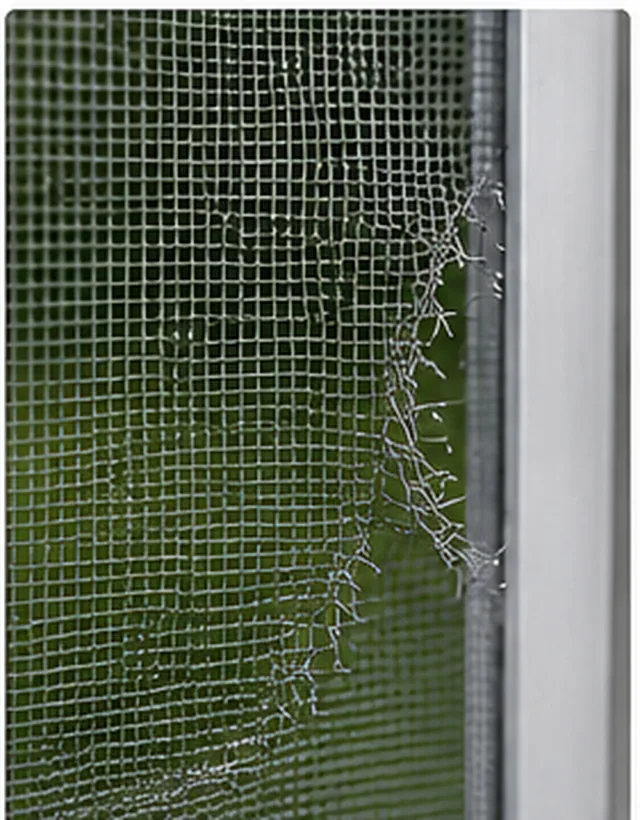 Mesh
Mesh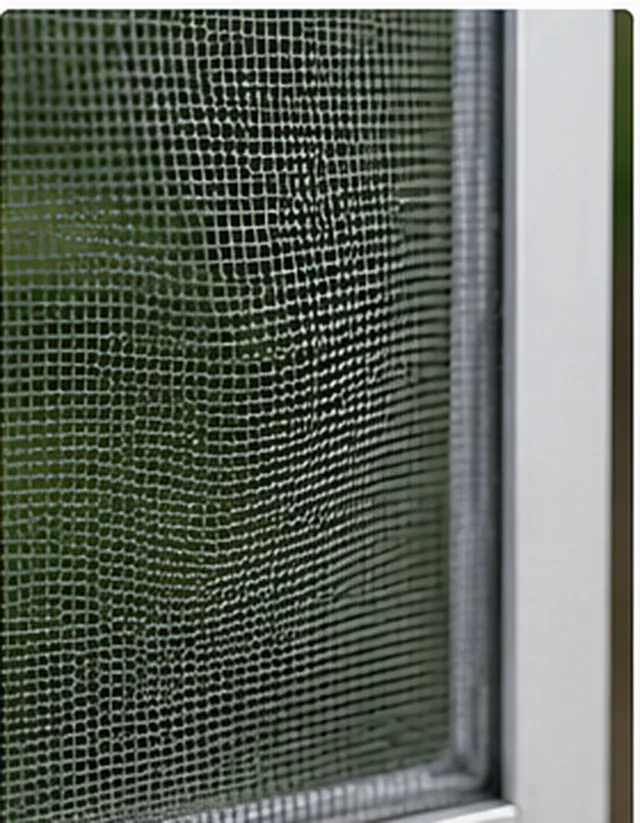 Mesh
Mesh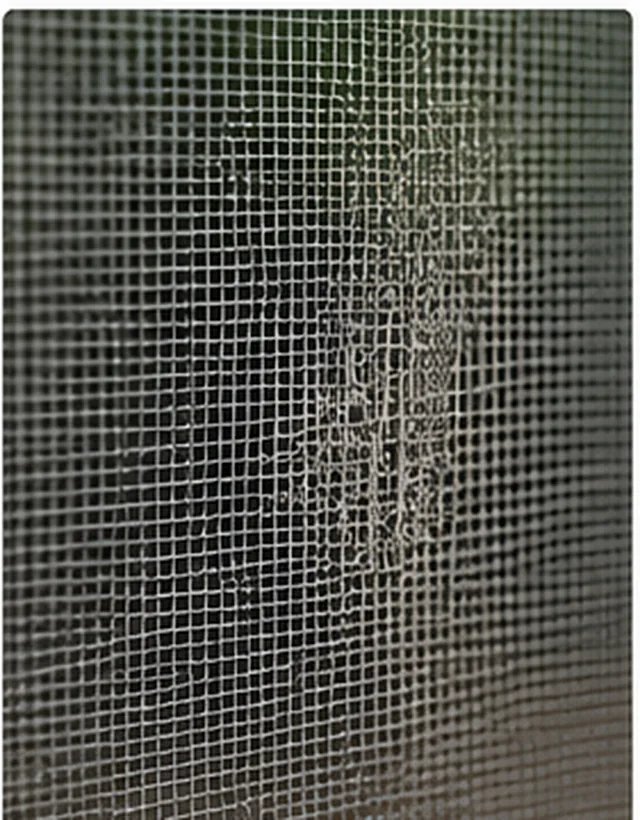 Mesh
Mesh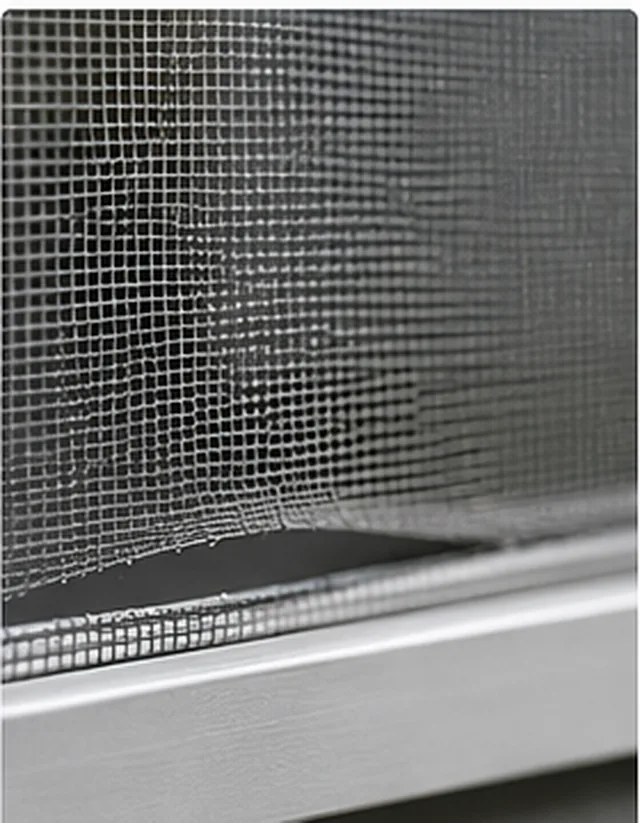 Frame
FrameThree steps
By phone or through the form. A photo helps but is not required.
We give you a time window for Granby, not a whole day.
We remove, repair and reinstall. You pay once you have seen and approved the work.
Do you manage a building or a business in Granby?
Why us
The workshop is in the vehicle: no trips to a store.
5.0from 143 Google reviews
Public and verifiable, on our Google listing.
No windows or doors to sell: we repair what you own.
6 a.m. to 8 p.m., April to October, in French and English.
7+years in the trade
Mesh taut without a ripple, frame square, rollers set.
1 yrwritten warranty
Workmanship and installation. If our work fails, we come back.
« Excellent service. Clear explanations of the work to be done. I really appreciated his dedication: despite the rain he insisted on finishing the job, soaked through and still smiling. The work was very well done. »
« Great service! He was at my neighbour’s and agreed to fix my back screen even though we had no appointment. Very successful repair, and inexpensive! »
« Ludovic replaced my screen in record time. Professional, and with a great sense of humour. I recommend his services — don’t hesitate to contact him, he’ll come to your home and do beautiful work. »
Straight answers
No. The service is mobile: the repair is done at your place, in the driveway or the garage, and the panels never leave the property. Because Granby is in the Eastern Townships, away from the island, trips are planned by sector. That is why it is worth listing everything to be done ahead of time — windows, patio door, gazebo — and having the whole set handled in one visit.
Yes, but through custom fabrication rather than an off-the-shelf size. In workers' houses of that era the openings have shifted and have often been altered, so each one is measured individually, on site. The frame is then built to those figures. It is also why we never rely on the measurement of the window next door, even when the two look identical.
Yes, and it is the quickest case of all. On a PVC casement the screen unclips from inside on its latches and is rescreened in its own frame; the frame is in good shape and the hardware is still available. A unit like that is among the quickest to handle, and there is no reason to pay for a whole new panel because of torn mesh.
Yes. We are a mobile business: we come to your home in Granby, remove the screens, repair them on site and reinstall them before we leave.
Replacing the mesh of a window screen, in its existing frame, starts from $30. The exact amount depends on size, mesh type and how many units you have, and the quote sets it. The more screens in the same visit, the lower the price of each. A $125 travel fee applies to every visit, whatever the number of screens — it is shared across all your items, which is why grouping them pays.
Yes: one year on fabrication and installation. If our work fails, we come back at no charge. Damage caused afterwards is not covered.
Written for Granby
Granby is not a suburb: it is an industrial town that became the hub of the Haute-Yamaska MRC, and its housing stock carries the mark of every one of its eras. Near the centre, the workers' houses and duplexes from the early 20th century have openings that have been altered several times in a hundred years — windows swapped, openings enlarged or filled in, walls that have shifted. Nothing in that sector is square, and it is the one part of town where a screen bought off a shelf has no chance of closing properly. Measurements are taken opening by opening, on site, and the frame is built to those figures. That is not needless fuss: in housing like this, two windows that look identical can differ by half an inch, and half an inch is enough to let in everything you meant to keep out.
The large 1960s-to-1980s districts of bungalows and two-storeys present the opposite problem: everything there is standardized, but with parts nobody makes any more. The original screens have thin aluminum frames no retailer carries, and that is exactly where rescreening beats replacement — the frame is still straight, it still closes, only the mesh has run its course. The newer developments, meanwhile, were built with PVC casement windows: common sizes, available hardware, an interior screen that unclips from latches. A unit like that is the simplest and quickest case in the trade. Three parts of Granby, three different answers — and the walk-around before starting is what tells you which one applies.
The PVC casement window, dominant in the newer developments, is the most straightforward case in this trade: the screen sits inside, unclips from its latches without anyone stepping outdoors, and gets rescreened in its own frame. The frame is sound, the hardware is still available, and there are no surprises. In the older workers' houses downtown, the same casement exists in a period version, but the screen frame has often been replaced by something improvised: a wooden panel, mesh stapled on, a strip nailed over it. Those assemblies hold as long as nobody touches them and come apart the moment they are handled. Building a proper frame to the measurements of the opening lasts longer than patching one more time.
In the bungalows and two-storeys from the 1960s to the 1980s, the horizontal slider dominates, with its screen on a side track. The diagnosis is nearly always the same: the mesh has yellowed and sagged, but what actually irritates the owner is the rollers. They harden, split, jump the track, and the panel jams on an angle. Changing the rollers and clearing the track fixes the travel; re-tensioning fresh mesh in the existing profile fixes the insects. Both get done in the same visit, on site, with no need to take the window apart. This is also the part of town where a single house carries the largest number of identical screens, which makes working through them in sequence worthwhile.
What is particular about Granby starts with where it is: the town sits in the Eastern Townships, in Haute-Yamaska, a fair distance from the Island of Montréal. The trip is therefore planned by sector rather than one item at a time, which is all the more reason to walk the whole house before the visit — windows, patio doors, gazebo — instead of reporting a single screen and discovering five more once we are there. The second constraint is physical and concerns the old centre: in a century-old workers' house the openings are neither square nor identical to one another, and a frame built from the measurement of the window next door will not fit. Every opening is measured for itself, without exception, which is why everything is recorded before anything is cut.
The setting is nothing like the island. Granby is surrounded by farmland, woodlots and water: the Yamaska River, which gives the MRC its name, and the lakes of neighbouring municipalities such as Roxton Pond and Waterloo. Spring brings black flies and no-see-ums small enough to pass through a standard weave without piercing it, so a brand-new, perfectly intact screen can still let them in. This is the textbook case for no-see-um mesh, with its much tighter weave, rather than ordinary fibreglass. For a gazebo or a veranda at the edge of a treed lot, it is the default choice. The season runs April through October.