
Summer UV
Sun yellows and clouds the vinyl. Film that crackles to the touch is at end of life.
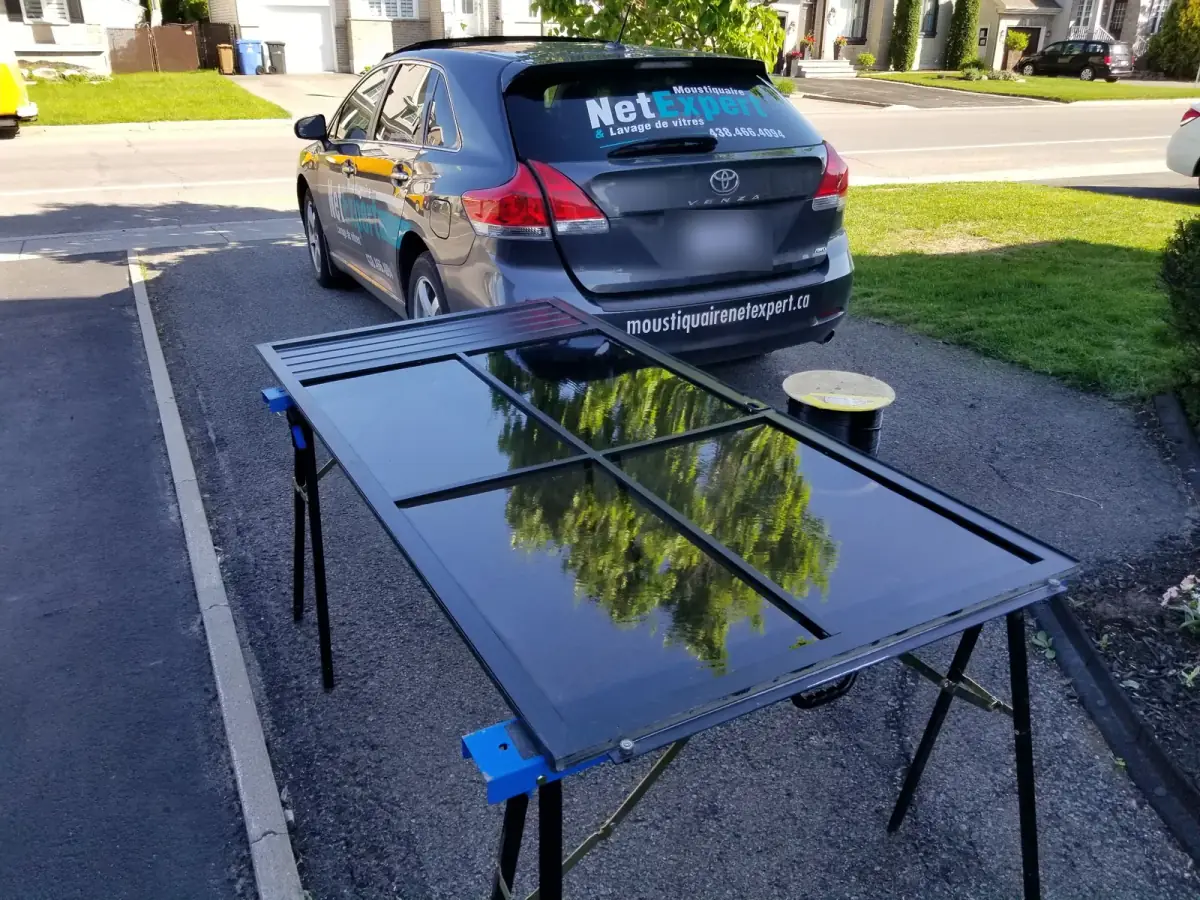
Gazebo and sun shelter specialty
Clear vinyl yellowed or torn? Replaced at your home in Granby, in the original frames — gazebos and sun shelters.
Three questions are enough to start. The official measurement is taken on site.
Whatever your retailer calls it — MICA film, clear vinyl, clear plastic, sun-shelter transparent fabric — it is the same material, and we replace it in Granby in your existing panels.
Sun yellows and clouds the vinyl. Film that crackles to the touch is at end of life.
Below freezing, MICA turns brittle — one handling or one gust splits it outright.
Slack vinyl flaps like a sail and eventually tears at the seams.
In Granby the gazebo changes character from one sector to the next. On the streets of early-20th-century workers' houses and duplexes near the centre, yards are short and often shared: the gazebo is rarely original, and where there is one it is a small retail model on a wooden deck, or a pergola added by an owner who wanted one more room in summer. In the broad sectors of 1960s-to-1980s bungalows and cottages, it is high season for the boxed gazebo: a good-sized yard, a deck, an aluminum or steel frame in a standard format, whose original film has usually outlived its usefulness.
The recent developments, the ones that went up with PVC casement windows, produce a third case. Lots are narrower, houses taller and closer together, and the gazebo is a compact model that takes wind funnelled between neighbouring houses rather than wind off an open field. What ties the three sectors together is the Eastern Townships climate rather than the island's: harder winters, snow that loads gazebo roofs left up, and springs when film stiffened by frost gives way in the first windy thaw. Here, a gazebo that spends the winter outdoors untouched has a good chance of showing a split film in April.
On these gazebos, the first thing to go is almost always the clear vinyl (MICA film): yellowed on the sunny side, brittle after a few winters, split at the corner of a pane or along the door zipper. The screen mesh follows, more slowly — a corner that lets go, mesh that slackens and hums, a spline that works out of its groove after a winter of freeze and thaw. The work is done in your yard: each panel comes down off the structure, the worn film or mesh comes out, and new material is cut to the pane's dimensions and stretched in the original frame. On a wooden pergola added behind a downtown duplex, it is battens rather than a spline, and every opening is measured separately.
Granby's challenge is the variety of structures rather than their number: between the wooden pergola behind a downtown duplex, the boxed gazebo of a 1970s bungalow and the compact model of a recent development, three different ways of holding the material meet in one town. Before we drive out, it helps to count the panels, photograph the gazebo so we can recognize the type of structure and the state of the film, and say whether it is a boxed gazebo or a wooden structure. On site, the retail gazebo comes apart panel by panel at ground level; the wooden pergola against an older house takes more measuring and sometimes a ladder, because its tall panels are not standard formats.
Exposure varies more than in the city. If your lot backs onto open space, wind hits the gazebo with nothing in the way and the film splits sooner; in the newer neighbourhoods, it is the corridor wind between houses that sets the exposed side beating. The Townships sun yellows film at the same pace as anywhere, but the harsher winters stiffen it more. So it goes on early, pulled tight, and comes off in spring if the gazebo stays up for summer. For the screen, the choice is decided sector by sector: on a compact gazebo squeezed between two houses in a recent development, it is the face in the wind corridor that needs the stiffer mesh, while a pergola against a duplex wall has only one exposed face.
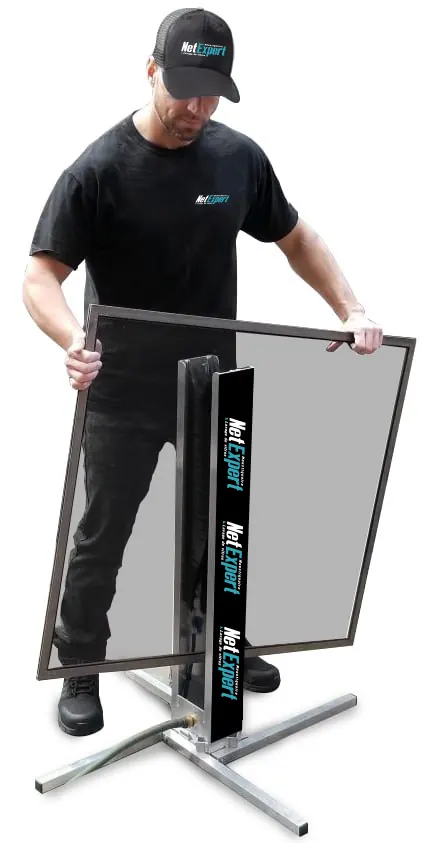
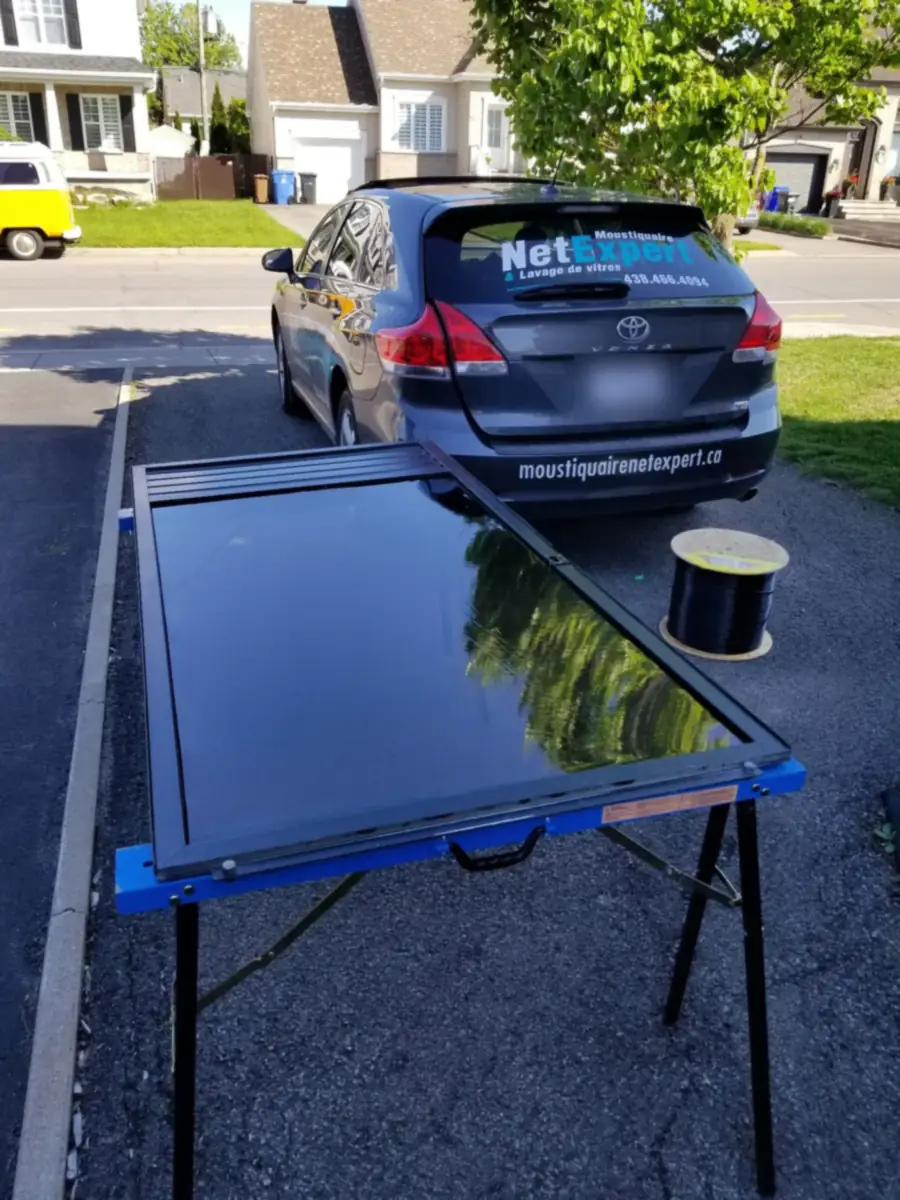
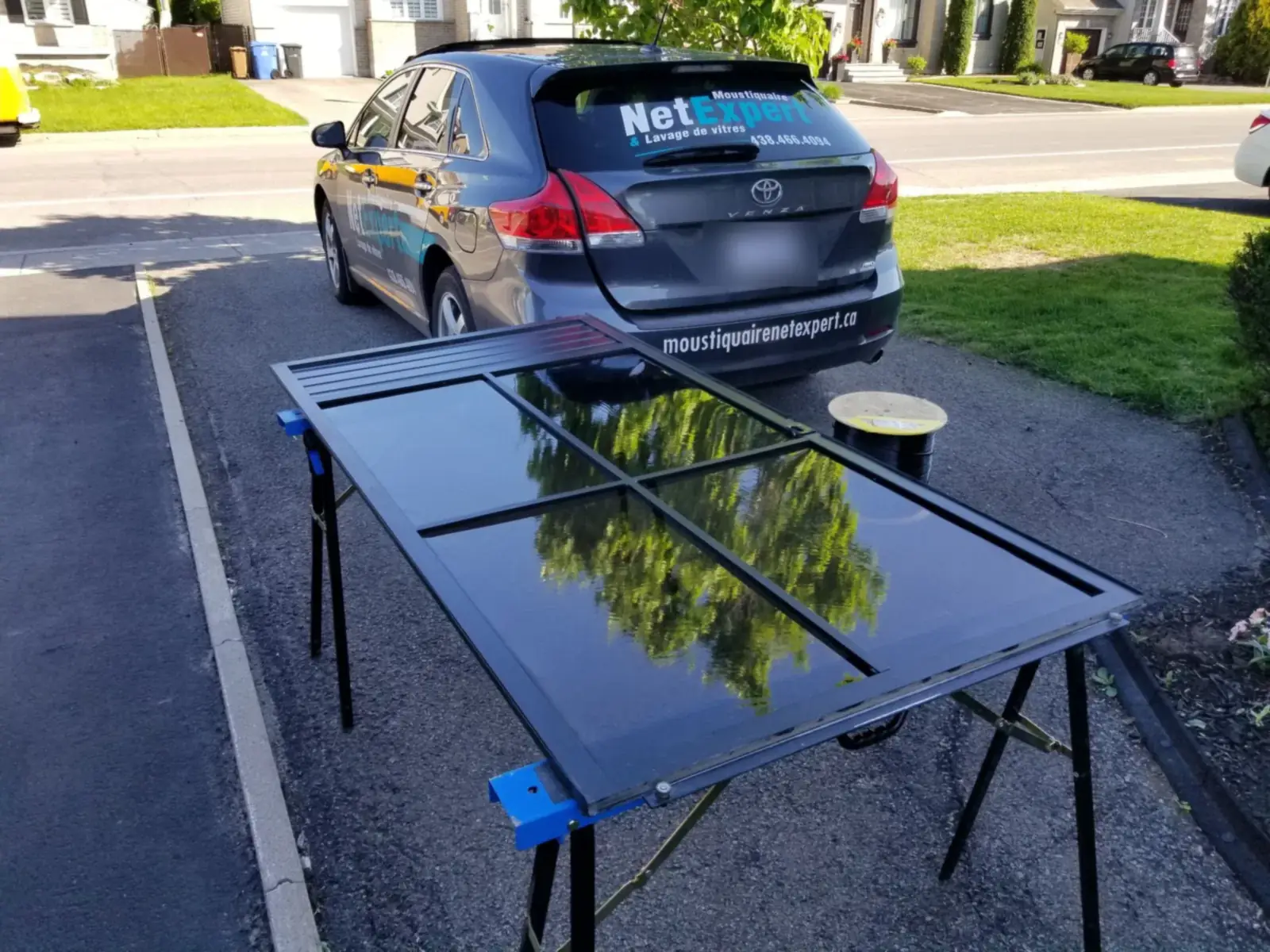
This job was not in Granby — it shows our method, the same everywhere: panels down, new vinyl pane by pane, panels back up.
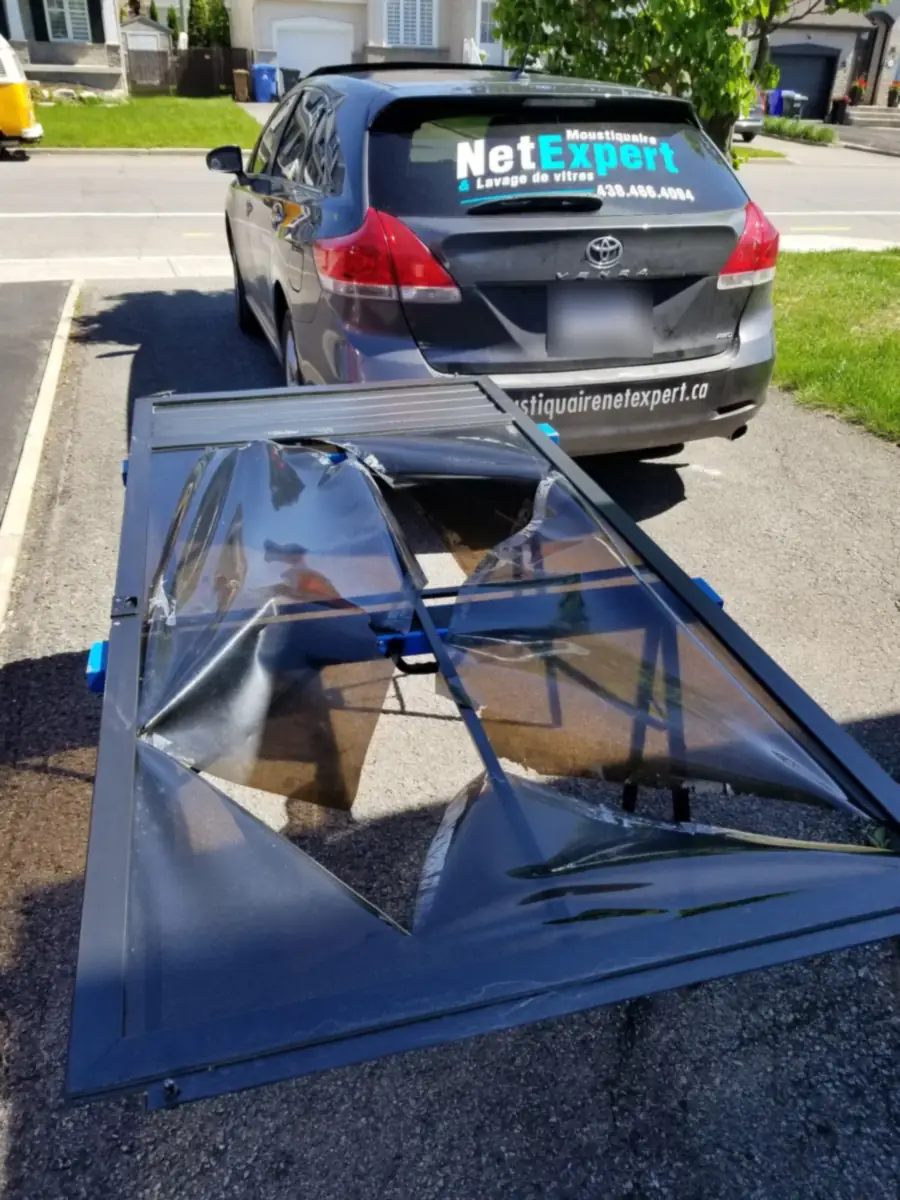
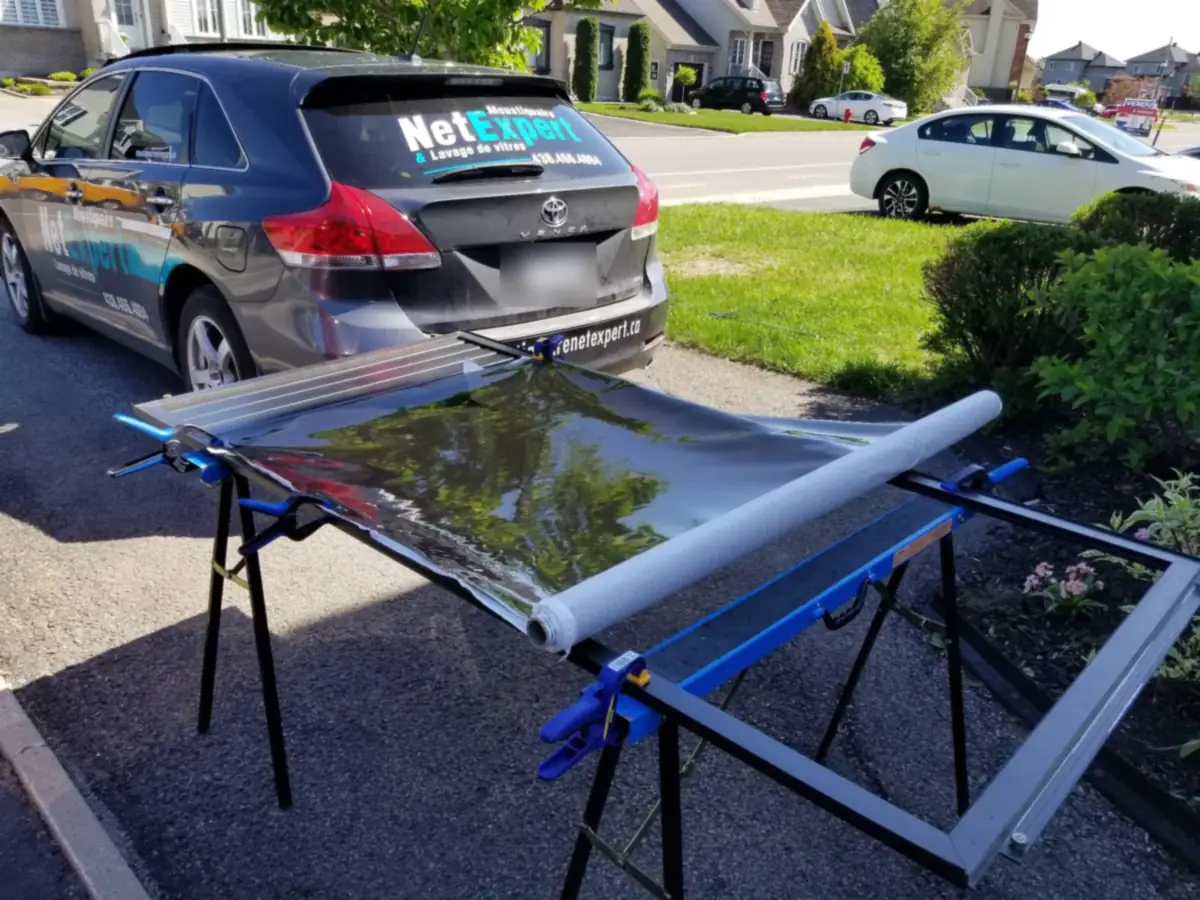
« Ludovic replaced my screen in record time. Professional, and with a great sense of humour. I recommend his services — don’t hesitate to contact him, he’ll come to your home and do beautiful work. »
« Excellent service. Clear explanations of the work to be done. I really appreciated his dedication: despite the rain he insisted on finishing the job, soaked through and still smiling. The work was very well done. »
« Great service! He was at my neighbour’s and agreed to fix my back screen even though we had no appointment. Very successful repair, and inexpensive! »
Straight answers
Yes. Film stiffened by frost has had its day, but the panel's aluminum or steel frame is usually intact. We pull the old film out of its groove, cut the new one to the exact dimensions of the pane and secure it with a new spline. The panel comes back with its own frame, its own corners and its own fittings; what is new is only what has been stretched across it.
A few photos of the gazebo, close up and from a distance: they tell us whether it is a retail structure or a wooden one, how many panels and panes it has, and what state the film and mesh are in. Count the sides to be redone too, and tell us whether the door is zippered. That lets us arrive with the right material and aim for a single visit.
No, it is the rule on any structure an owner added: each opening is measured on site, panel by panel, and the mesh or film is cut to that size. The battens holding the material are lifted off and replaced if they have dried out. The pergola itself is not altered.
Yes, at your home. We travel to Granby, remove the panels, replace the MICA vinyl in the original frames and put everything back — the gazebo structure is never touched. It is one of our specialties.
Yes. Depending on the retailer it is called MICA film, clear vinyl, clear plastic or transparent fabric — the same flexible material that cuts wind and holds warmth. We replace it on gazebos and sun shelters alike.
Yes. The vinyl is replaced pane by pane, in the existing frame — no need to redo the whole panel for one tear. If several panes have yellowed, doing them together gives a uniform result.
On assessment: the price depends on the number of panels and their dimensions. The quote is free, and a photo is often enough to price without a visit. Fabrication and installation guaranteed one year.
Do you manage a building or a business in Granby?