
Summer UV
Sun yellows and clouds the vinyl. Film that crackles to the touch is at end of life.
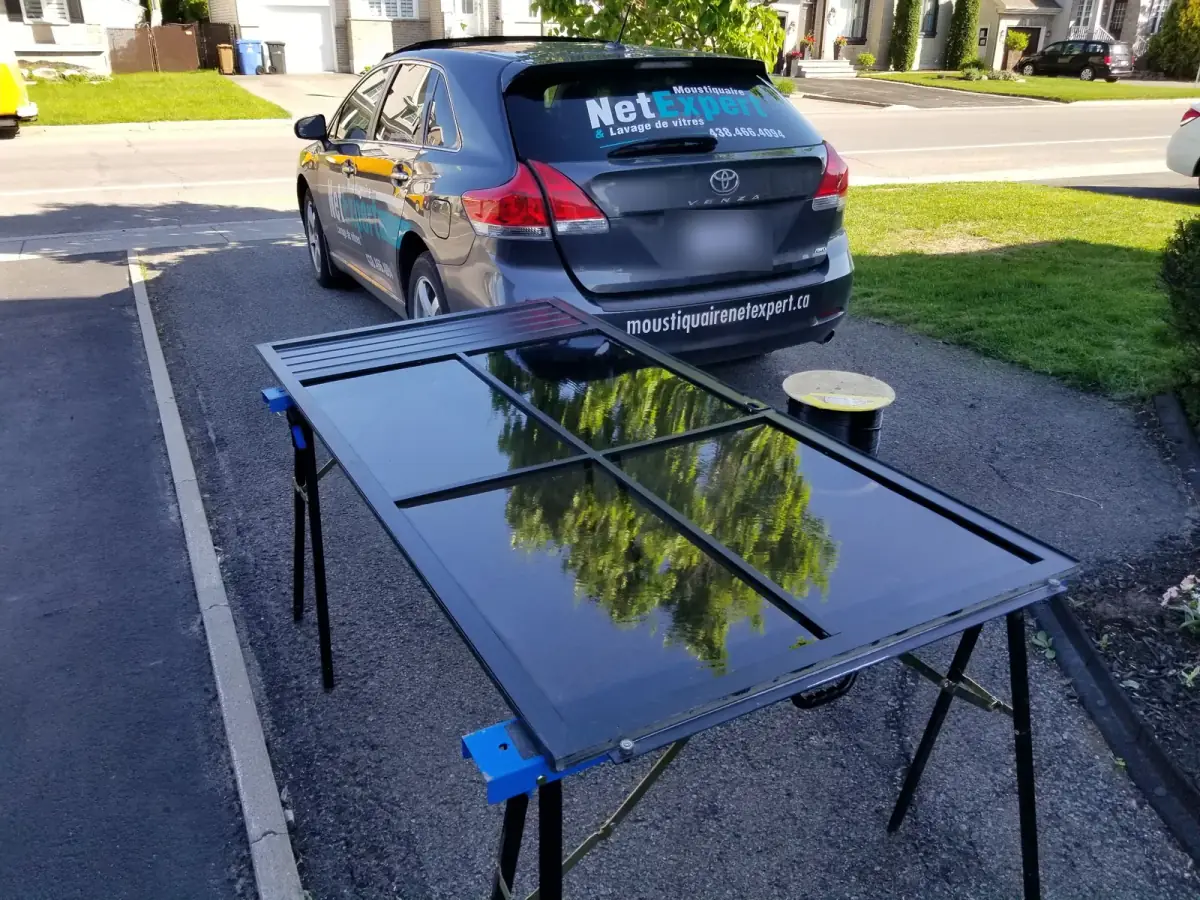
Gazebo and sun shelter specialty
Clear vinyl yellowed or torn? Replaced at your home in Saint-Césaire, in the original frames — gazebos and sun shelters.
Three questions are enough to start. The official measurement is taken on site.
Whatever your retailer calls it — MICA film, clear vinyl, clear plastic, sun-shelter transparent fabric — it is the same material, and we replace it in Saint-Césaire in your existing panels.
Sun yellows and clouds the vinyl. Film that crackles to the touch is at end of life.
Below freezing, MICA turns brittle — one handling or one gust splits it outright.
Slack vinyl flaps like a sail and eventually tears at the seams.
In Saint-Césaire the postwar bungalow neighbourhoods offer the kind of yard a retailer gazebo is typically set in. A decent-sized back yard, lawn, a slab or a deck, and the retailer structure set on it: aluminum or steel, standard panels, original screen panels and clear vinyl (MICA film). These yards are partly sheltered by the neighbouring houses and by the trees planted back then, which spreads the wear out instead of concentrating it. The film ages slowly but evenly, and the moment it gives out shows less as an accident than as a general stiffening: it snaps instead of rippling, and it will no longer fold without creasing.
The old village core and the concession roads have nothing in common with that. At the centre, the brick and wood houses from the turn of the 20th century carry their veranda at the front and keep the yard behind, where the gazebo is almost always an added wood structure cut to fit the space available. Out on a rang it is the opposite: the gazebo stands in the middle of ground wide open to the farmland, with nothing in front of it. The wind arrives unobstructed, and the film gets grimy on the exposed side long before it gives way on another.
On gazebos exposed to the open plain, the film does its job until the vinyl hardens; after that one gust is enough, and the split almost always starts at a corner or a fastening point rather than in the middle of the panel. On the sheltered models in the bungalow neighbourhoods, sun wins out over time: yellowing, loss of clarity, then stiffness. The screen panels follow their own path — slack mesh that flaps, a torn corner, spline working out of its groove. Either way the panel comes out, the film is recut to the dimensions of that opening or the frame is rescreened, and it goes back up. The gazebo itself is not modified.
The two families of structure are not prepared the same way. On a retailer model the sizes repeat and disassembly is straightforward; on a wood structure built against an old veranda the panels are one of a kind and sometimes come out by way of a narrow staircase, which is worth mentioning ahead of time. On a farm along a concession road the gazebo often stands well away from the buildings, out on the lawn, and the panels cross the property by hand. Neither case is complicated, provided we know how many panels are coming out and by which route.
On a gazebo the question of weave is not the window question: the panel is chosen for a room where the whole evening is spent, and the smallest insect that crosses the mesh decides what the room is good for. Wind off the plain penalizes fibreglass on the large panels, which eventually ripples; aluminum keeps its tension. And out on a rang the film goes up before the autumn wind settles in: installed supple, it takes the tension of its opening instead of pulling on its fastenings alone.
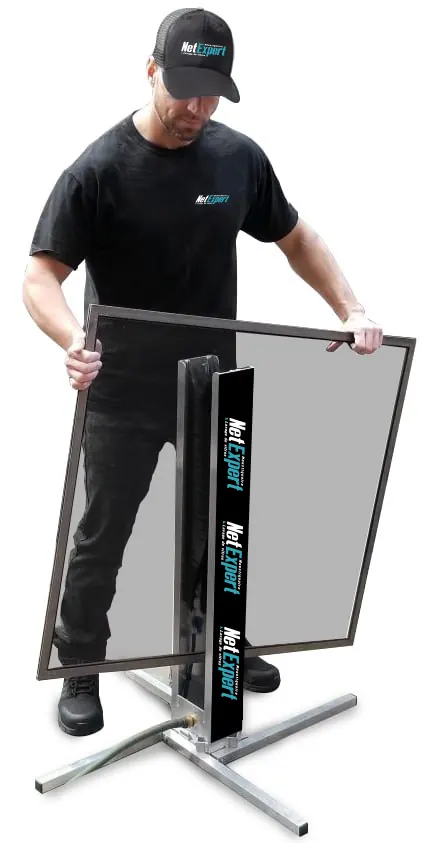
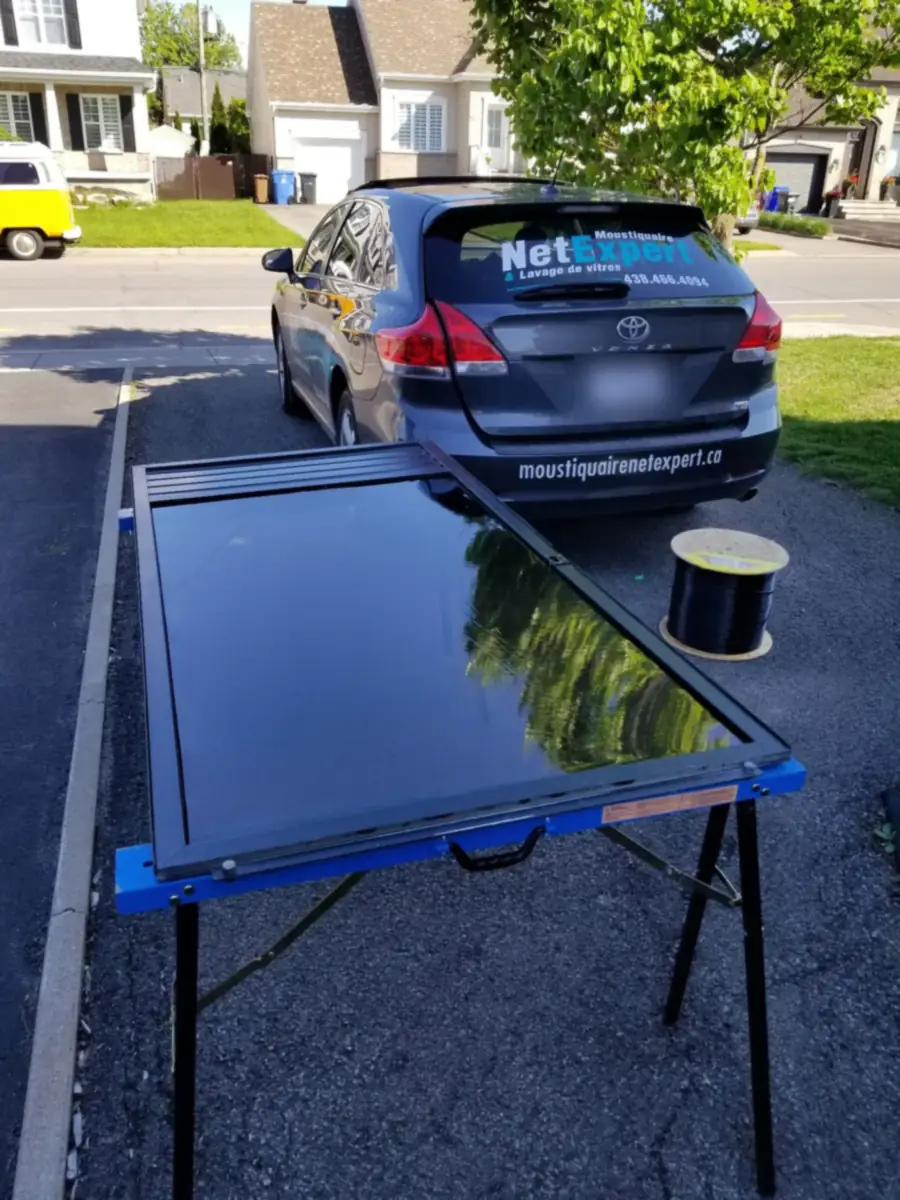
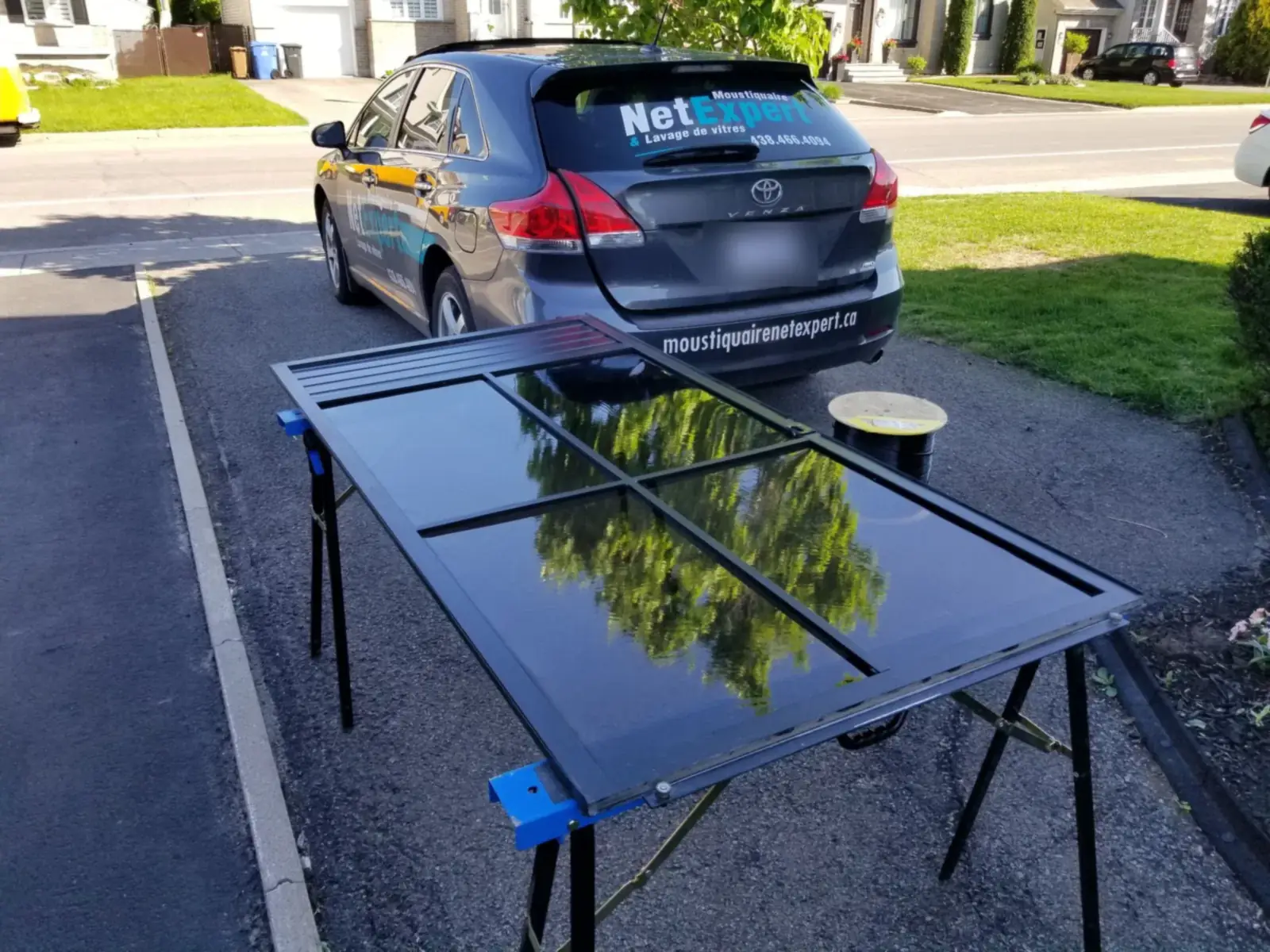
This job was not in Saint-Césaire — it shows our method, the same everywhere: panels down, new vinyl pane by pane, panels back up.
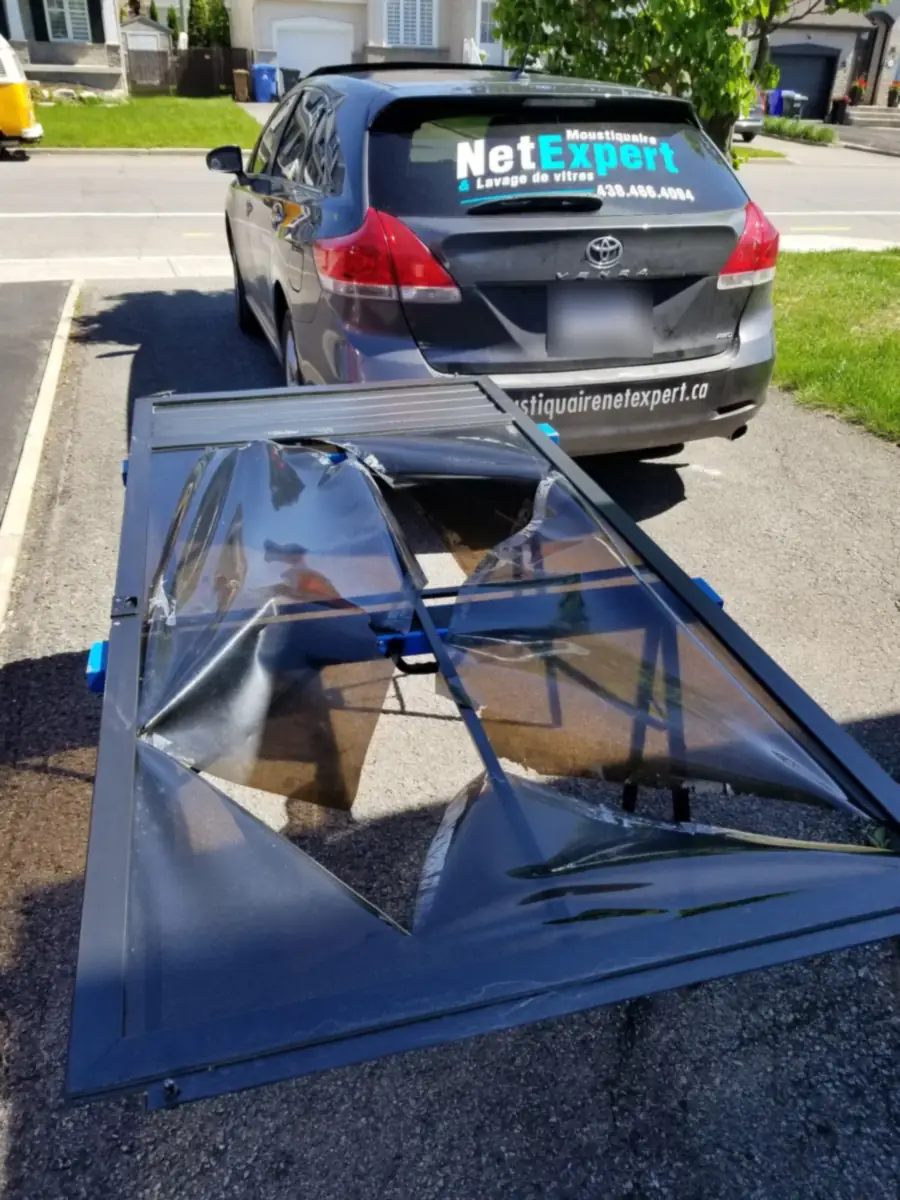
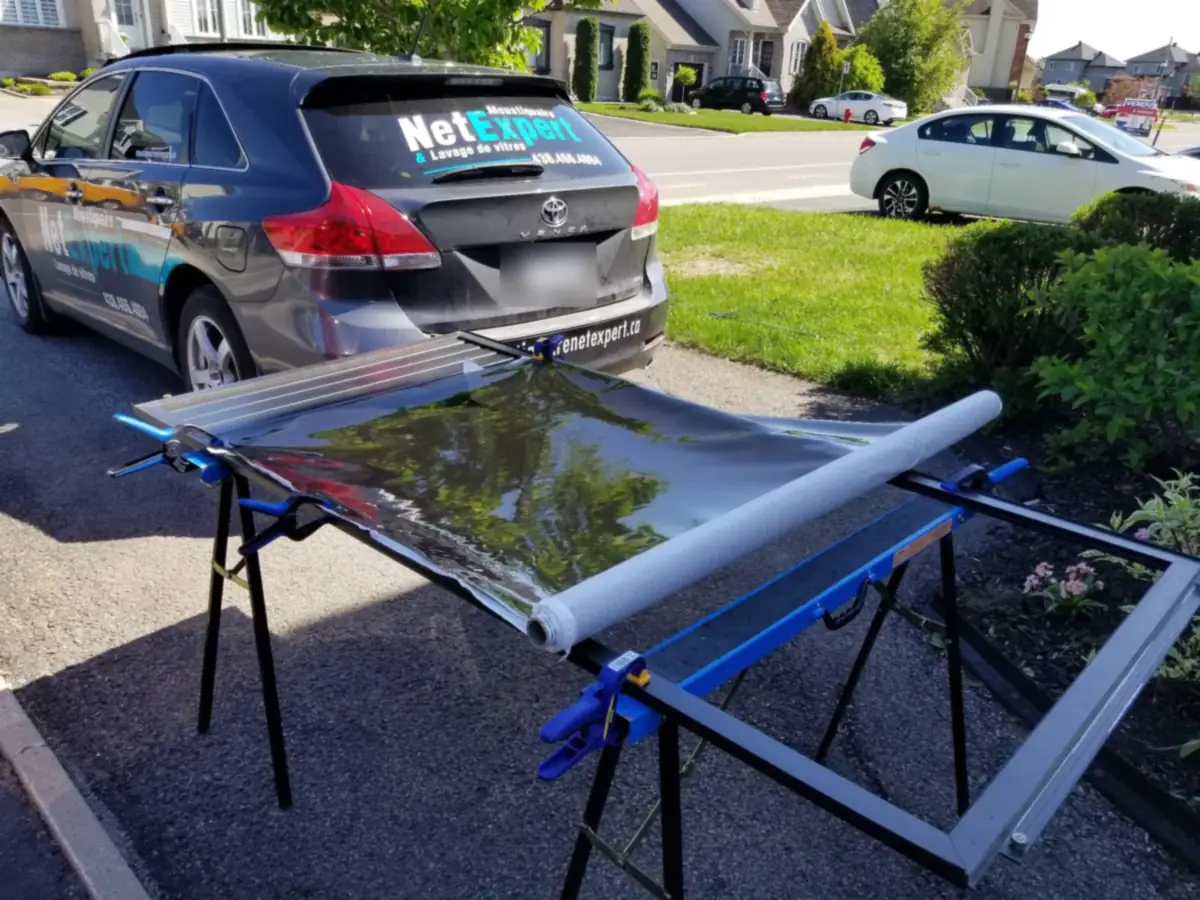
« Excellent service. Clear explanations of the work to be done. I really appreciated his dedication: despite the rain he insisted on finishing the job, soaked through and still smiling. The work was very well done. »
« Great service! He was at my neighbour’s and agreed to fix my back screen even though we had no appointment. Very successful repair, and inexpensive! »
« Ludovic replaced my screen in record time. Professional, and with a great sense of humour. I recommend his services — don’t hesitate to contact him, he’ll come to your home and do beautiful work. »
Straight answers
On open ground, film takes constant wind pressure and ages faster than in a sheltered yard: the panel facing the prevailing wind goes first. What helps is installing it while it is still supple and cutting it to the exact dimensions of the opening, so it works across its whole surface rather than only at its fastening points.
Rarely. Slack mesh is mesh that has lost its tension, not a frame that has failed. The panel comes out, the old mesh comes off, and new mesh is retensioned in the same frame with new spline. A frame gets replaced only if it is warped or cracked, which is obvious the moment it comes apart.
Dust alone does not puncture anything, but it scratches over time if you wipe it dry, and scratched film loses clarity with no way to bring it back. A gentle rinse beats a dry cloth. Once the clarity is gone, it is a panel replacement, not a cleaning.
Yes, at your home. We travel to Saint-Césaire, remove the panels, replace the MICA vinyl in the original frames and put everything back — the gazebo structure is never touched. It is one of our specialties.
Yes. Depending on the retailer it is called MICA film, clear vinyl, clear plastic or transparent fabric — the same flexible material that cuts wind and holds warmth. We replace it on gazebos and sun shelters alike.
Yes. The vinyl is replaced pane by pane, in the existing frame — no need to redo the whole panel for one tear. If several panes have yellowed, doing them together gives a uniform result.
On assessment: the price depends on the number of panels and their dimensions. The quote is free, and a photo is often enough to price without a visit. Fabrication and installation guaranteed one year.
Do you manage a building or a business in Saint-Césaire?