
Summer UV
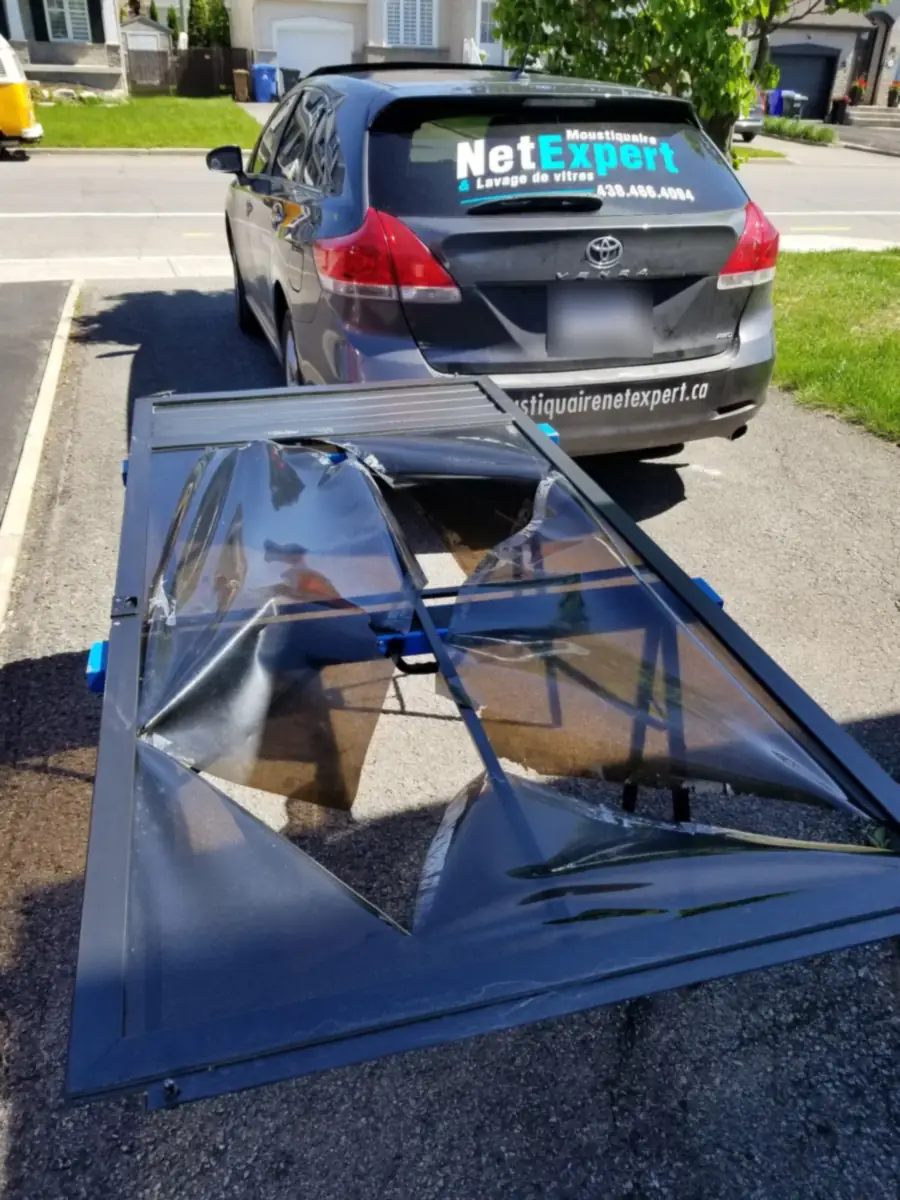
Sun yellows and clouds the vinyl. Film that crackles to the touch is at end of life.
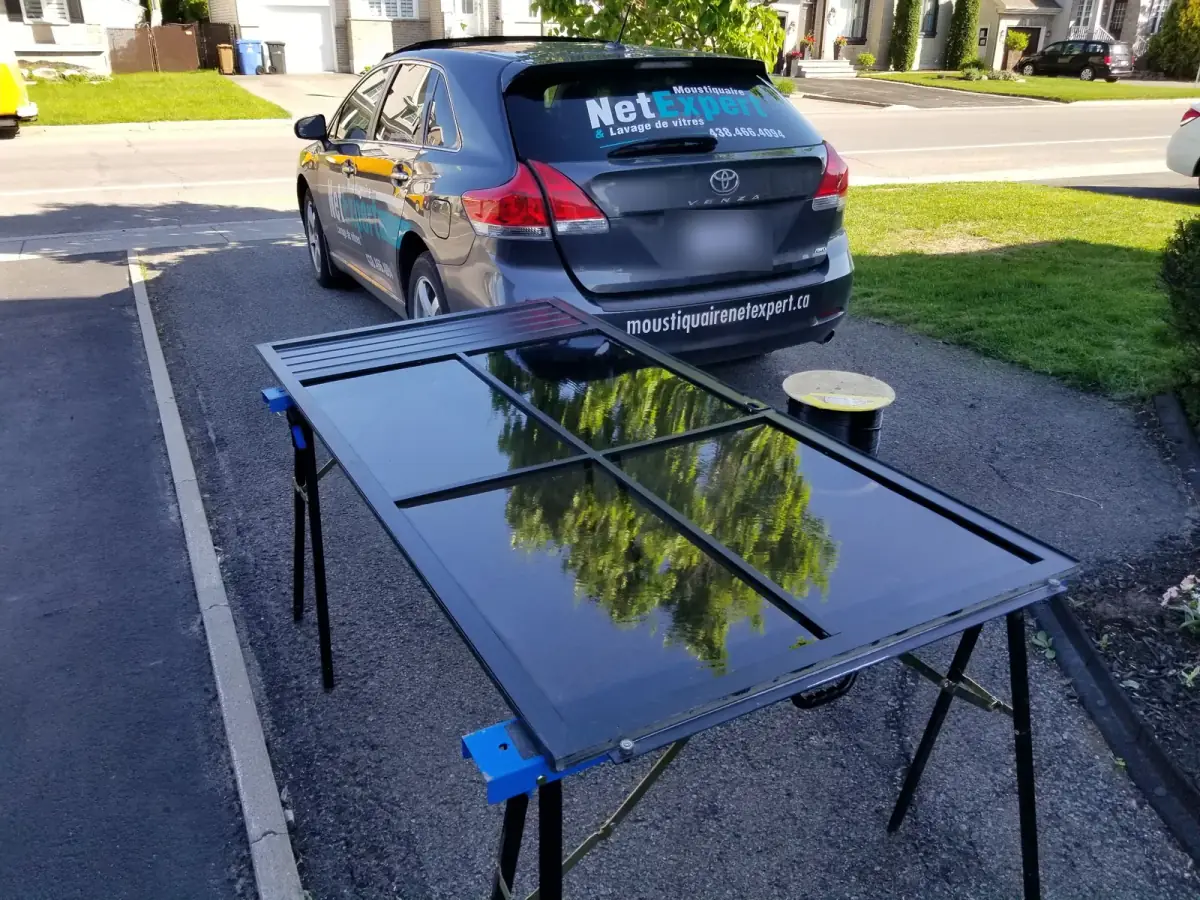
Gazebo and sun shelter specialty
Clear vinyl yellowed or torn? Replaced at your home in Otterburn Park, in the original frames — gazebos and sun shelters.
Three questions are enough to start. The official measurement is taken on site.
Whatever your retailer calls it — MICA film, clear vinyl, clear plastic, sun-shelter transparent fabric — it is the same material, and we replace it in Otterburn Park in your existing panels.
Sun yellows and clouds the vinyl. Film that crackles to the touch is at end of life.
Below freezing, MICA turns brittle — one handling or one gust splits it outright.
Slack vinyl flaps like a sail and eventually tears at the seams.
Otterburn Park was a summer resort before it was a town, and its yards still look the part: wooded lots, mature trees over the house, the Richelieu River close by. It is exactly the kind of yard where a covered space earns its keep, and both families of gazebo turn up here. Many of the 1960s-to-1980s bungalows have a retailer model set on the back patio: aluminum or steel frame, standard pane sizes, assembled by the owner. The former summer cottages converted to year-round homes tend instead to have a wood structure, built at the same time as a veranda or a deck, with openings closed in on site by hand.
The tree cover changes everything that follows. A gazebo under mature trees collects rain-pasted leaves, twigs, keys and sap all season long, and both the roof and the upper panels carry that weight without anyone thinking about it. Shade holds moisture against the frames, wood ones especially, and a panel that stays damp every second week does not age like a panel that dries in the sun. The more open yards nearer the river get the opposite treatment — unscreened sun — and there it is the film that suffers. Two wear patterns in one town, sometimes on the same street.
Under trees, clear vinyl (MICA film) rarely fails from sun alone. What finishes it is the combination: vinyl already stiffened by a few winters, a pane that has developed slack, and a load of wet snow or a branch on top. It opens along a fold or at a fastener, and it gets replaced pane by pane at the original frame's dimensions. The screening suffers something else: mesh loaded with damp debris goes slack, and the spline eventually lifts out of its groove at a corner. That gets rescreened in its own frame. On the low panels the real adversary is load: a pane that takes everything sliding off the roof all winter deforms at the bottom of its frame, and that corner has to be reset before anything is tensioned back into it.
On a retailer gazebo screwed to the patio, taking it apart is simple on paper: the panes come off one at a time and the structure stays up. On a wooded lot the difficulty is elsewhere — the ground stays soft and leaf-covered, trees take up the space around the structure, and there is not always a flat surface to lay a panel on. So the work happens near the vehicle, at the mobile workshop, and the panels make the round trip. On the wood structures of the former cottages, the fasteners have spent several winters in damp air: they get handled gently, and a screw that refuses gets replaced rather than snapped off in its hole.
Two pressures cross here, and they do not call for the same mesh. Here the pressure changes side with the hour: in the shade of the canopy, damp stays against the wood frames and the insects come out early; on the open side, it is the low late-day sun that stiffens the film. On a gazebo you spend evenings in, a tight weave earns its place even though it cuts some of the breeze. The wind, meanwhile, slips between the trunks in irregular bursts rather than as a steady front: film that is properly tensioned and properly fastened takes those hits, while film with slack in it splits at the first windy autumn.
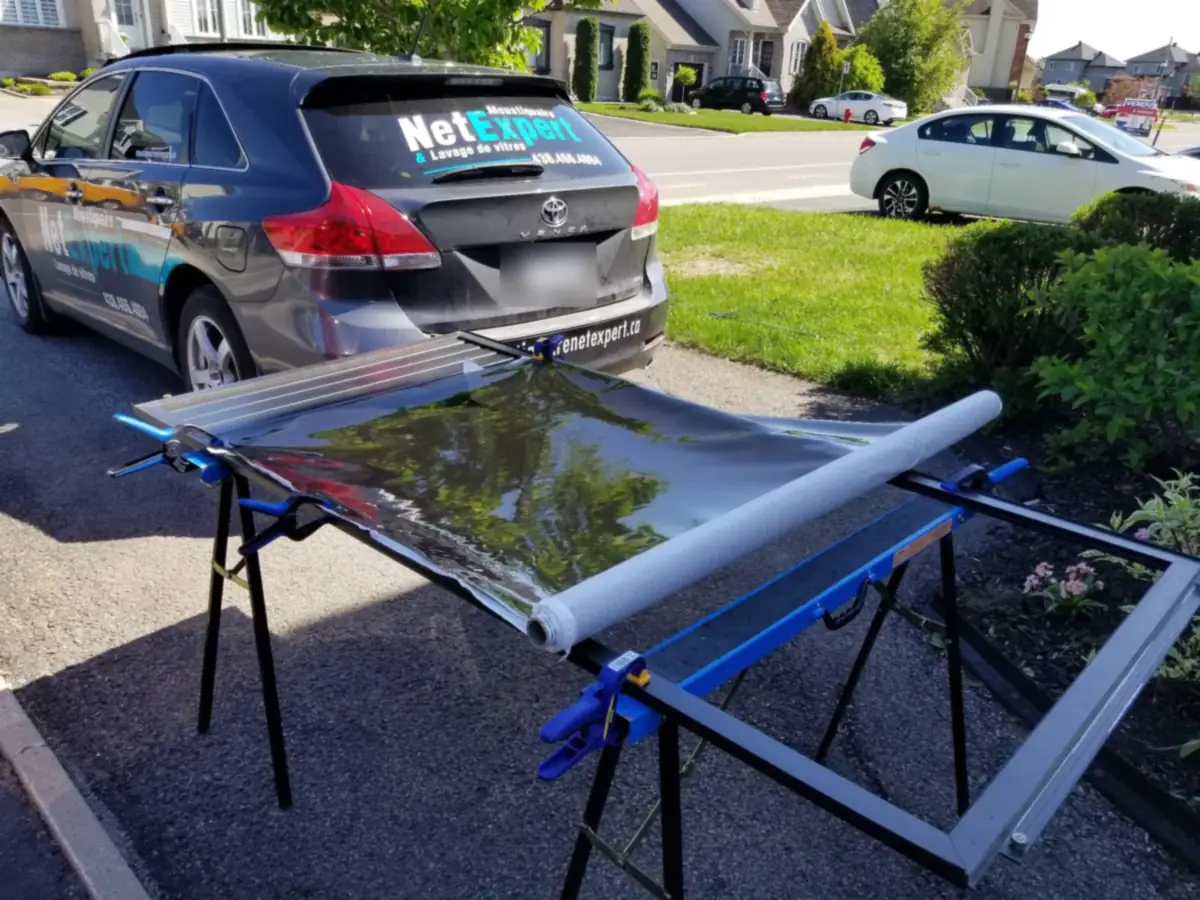
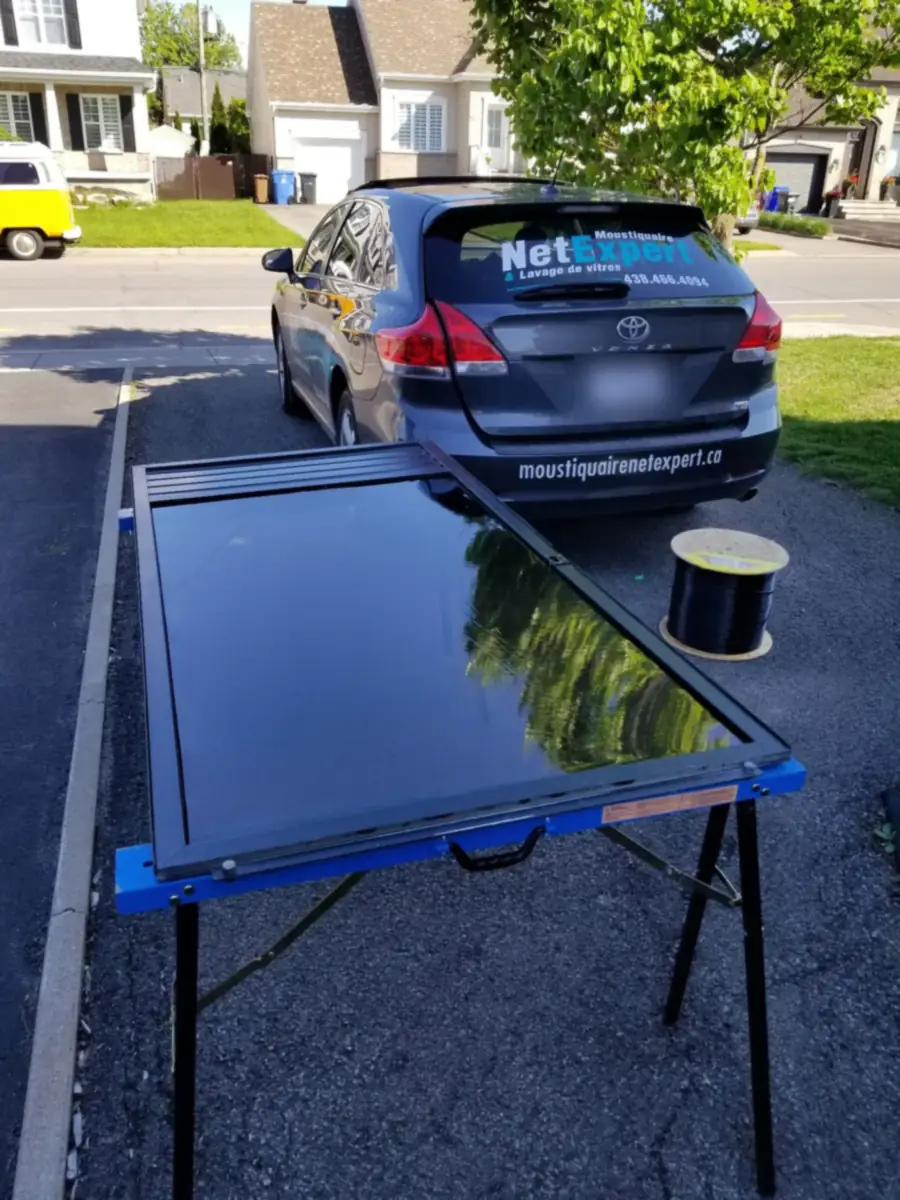
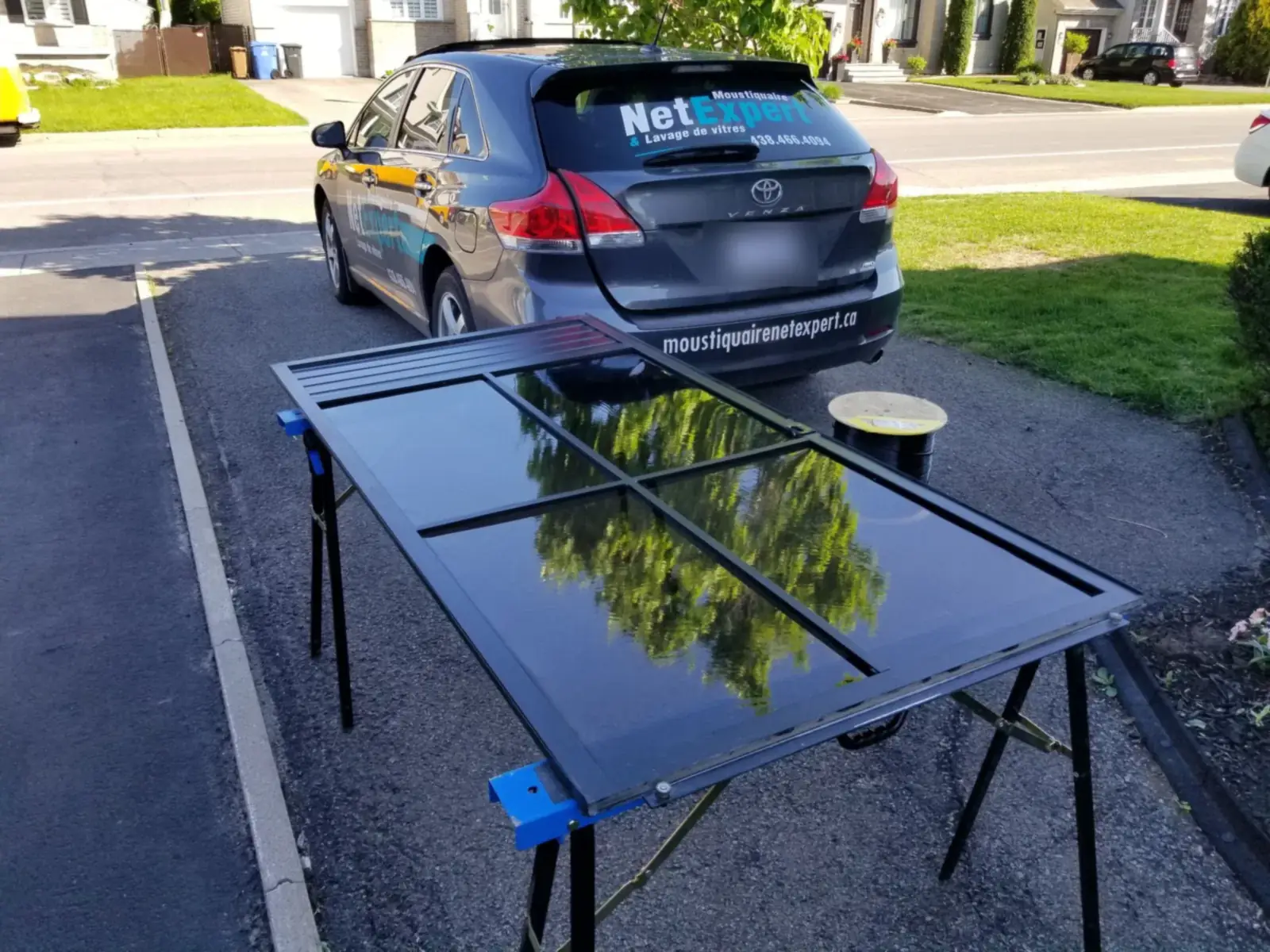
This job was not in Otterburn Park — it shows our method, the same everywhere: panels down, new vinyl pane by pane, panels back up.
« Ludovic replaced my screen in record time. Professional, and with a great sense of humour. I recommend his services — don’t hesitate to contact him, he’ll come to your home and do beautiful work. »
« Excellent service. Clear explanations of the work to be done. I really appreciated his dedication: despite the rain he insisted on finishing the job, soaked through and still smiling. The work was very well done. »
« Great service! He was at my neighbour’s and agreed to fix my back screen even though we had no appointment. Very successful repair, and inexpensive! »
Straight answers
The film closes the sides, not the roof: it is not what carries the snow load. What damages it is whatever slides or drops off the roof onto a pane already stiffened by cold. A properly tensioned pane takes that far better than one with slack in it, and the tear almost always starts at a fastener that had already worked loose before winter.
A gazebo pane is not a catalogue part, it is a frame plus an infill. On a model this age the frame has spent its winters under trees: we first check that it is still square and that its corners hold, reset them if needed, and only then tension new film or screening into it. A discontinued model changes nothing in that sequence.
Usually, yes. A wood frame that has stayed damp works at its joints: the corners move, screws lose their bite, and the panel stops sitting square. As long as the wood is sound, the corners get reset and refastened before any new screening or film goes in — fitting fresh mesh into a frame that is no longer square would not last the season.
Yes, at your home. We travel to Otterburn Park, remove the panels, replace the MICA vinyl in the original frames and put everything back — the gazebo structure is never touched. It is one of our specialties.
Yes. Depending on the retailer it is called MICA film, clear vinyl, clear plastic or transparent fabric — the same flexible material that cuts wind and holds warmth. We replace it on gazebos and sun shelters alike.
Yes. The vinyl is replaced pane by pane, in the existing frame — no need to redo the whole panel for one tear. If several panes have yellowed, doing them together gives a uniform result.
On assessment: the price depends on the number of panels and their dimensions. The quote is free, and a photo is often enough to price without a visit. Fabrication and installation guaranteed one year.
Do you manage a building or a business in Otterburn Park?