
Summer UV
Sun yellows and clouds the vinyl. Film that crackles to the touch is at end of life.
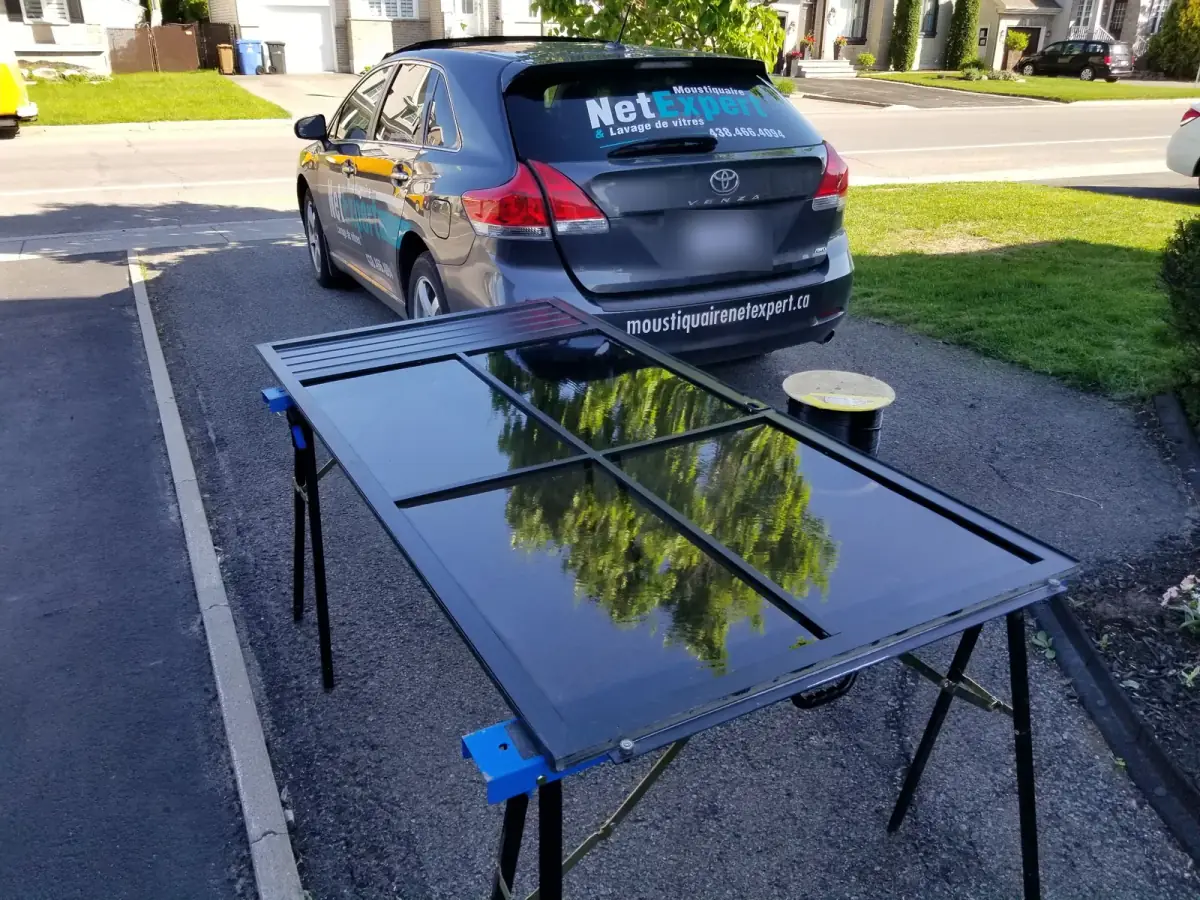
Gazebo and sun shelter specialty
Clear vinyl yellowed or torn? Replaced at your home in McMasterville, in the original frames — gazebos and sun shelters.
Three questions are enough to start. The official measurement is taken on site.
Whatever your retailer calls it — MICA film, clear vinyl, clear plastic, sun-shelter transparent fabric — it is the same material, and we replace it in McMasterville in your existing panels.
Sun yellows and clouds the vinyl. Film that crackles to the touch is at end of life.
Below freezing, MICA turns brittle — one handling or one gust splits it outright.
Slack vinyl flaps like a sail and eventually tears at the seams.
The layout of old McMasterville was set by the CIL explosives plant, which housed its workers next door: short lots and shallow yards. The old core still shows it in small workers' houses on compact lots, and that shows up in the gazebos: when the yard is tight, so is the structure standing in it. A small-format retailer gazebo, tucked near a fence, with four or six panes a side, is the logical answer to that kind of yard. Those panels see less wind than they would on a large lot, but they sit closer to everything: planting, furniture, daily traffic. Clear vinyl (MICA film) at shoulder height snags, scratches and punctures where a panel in the middle of a big lot would simply have aged in the sun.
Around the commuter rail station the town changes generation: recent semi-detached homes and condos, with balconies and terraces instead of yards. That is where the other situation appears — a gazebo or pergola set on a terrace, sometimes above ground level, whose panels have to come down a stairwell to be redone. Formats there are almost always standard, which simplifies fabrication, but logistics replaces measurement as the main difficulty. A tight workers' yard on one side, a raised terrace on the other: the panel gets redone the same way either way, but it does not come out the same side or by the same route.
In both cases the clear film goes first. It yellows, it stiffens, it splits where the frame pinches it — and on a raised terrace the wind curling around a building works it harder than it would at ground level. We replace it pane by pane, to the dimensions of the original frame, without touching the structure or its anchors. Screen panels ask for something else: mesh torn at a corner, a spline lifted out of its groove, a centre sagging enough to let through what it should be stopping. Each panel comes down, gets redone at the mobile shop, then goes back on its clips. In a tight workers' yard, the low panels also deserve tougher mesh, since they sit within reach of everything that passes.
The particular constraint here is getting panels out. On a condo or newer semi-detached terrace, a gazebo panel comes down the stairwell or through the unit: it is handled flat, stairwells and door frames get protected, and the return trip is planned before anything comes apart. What sets the schedule is the order of removal: panels come out on the clearest side of the terrace and go back in reverse, so a tall panel never has to pivot on a landing. In the old workers' core it is the reverse: the route is short but narrow, between the house and the neighbour's fence.
Two very different exposures in one municipality. A workers' yard boxed in by buildings and fences catches little wind: film there ages mostly from sun and from contact. A raised terrace near the station gets the opposite — wind curls around, film flutters, and the tension it was installed with decides how long it lasts. For screens, aluminum mesh holds better across large exposed panes, while a tighter weave earns its place mainly when the gazebo gets used in the evening and fine insects become the real subject.
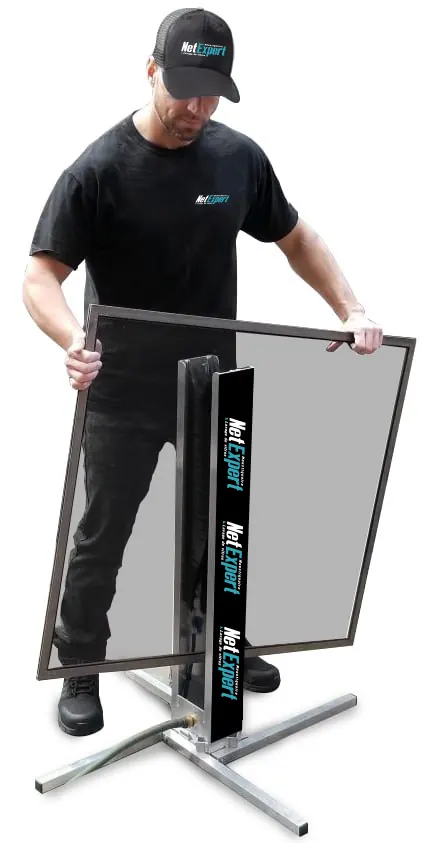
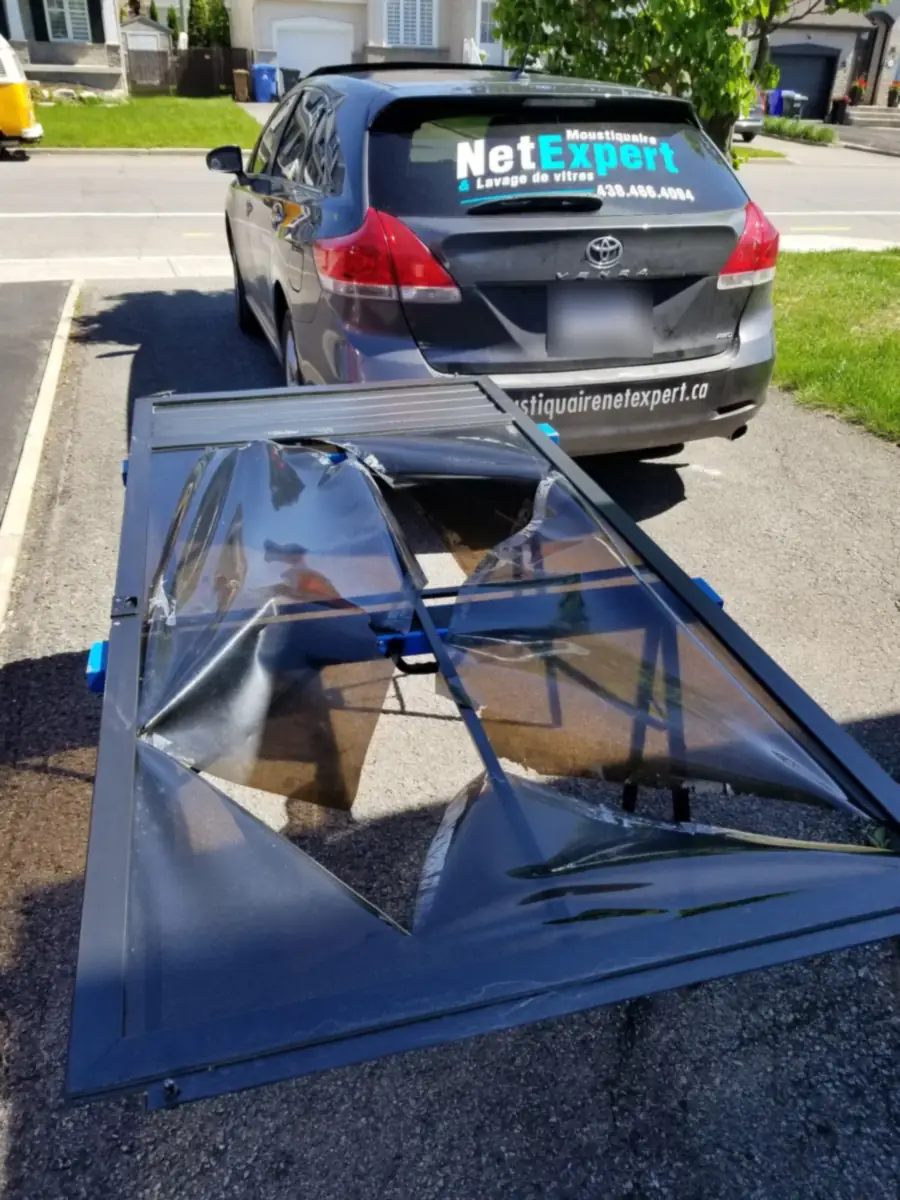
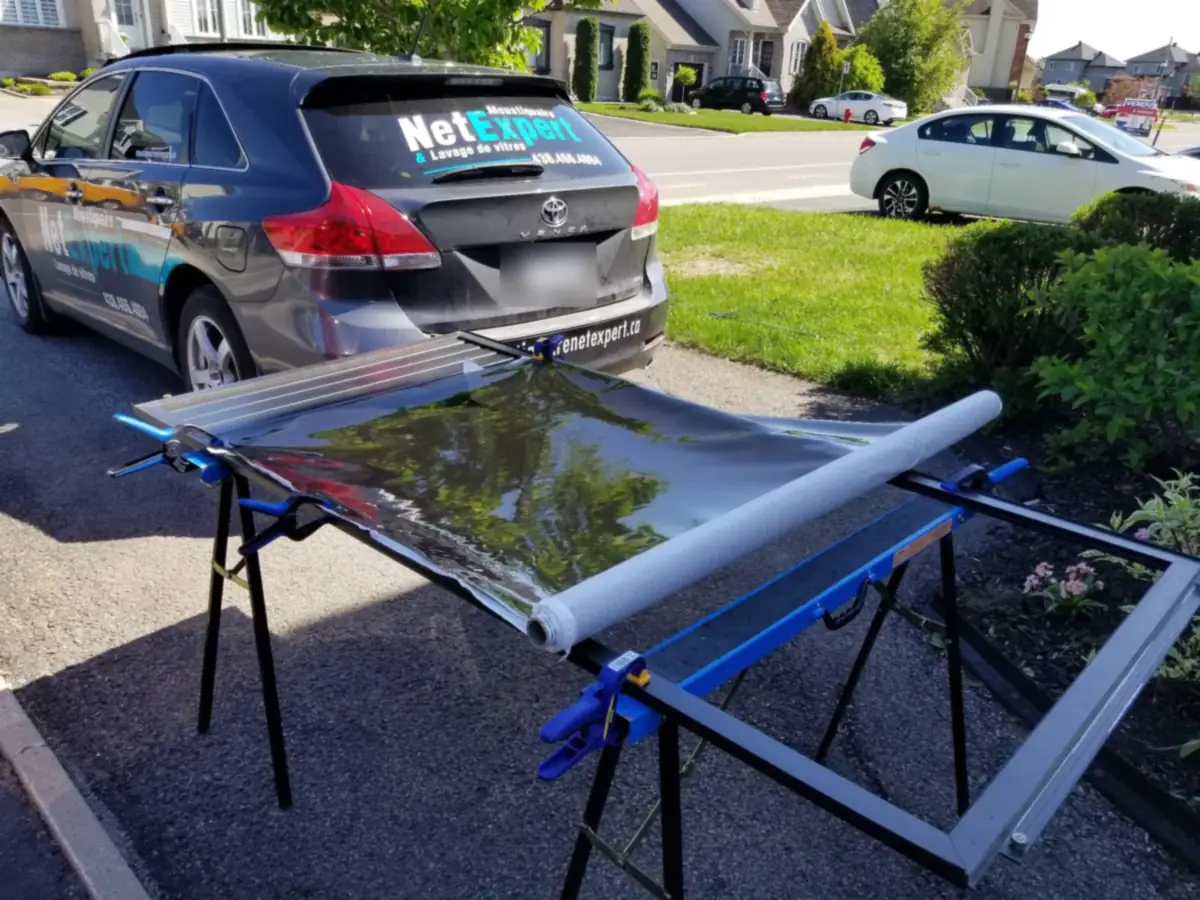
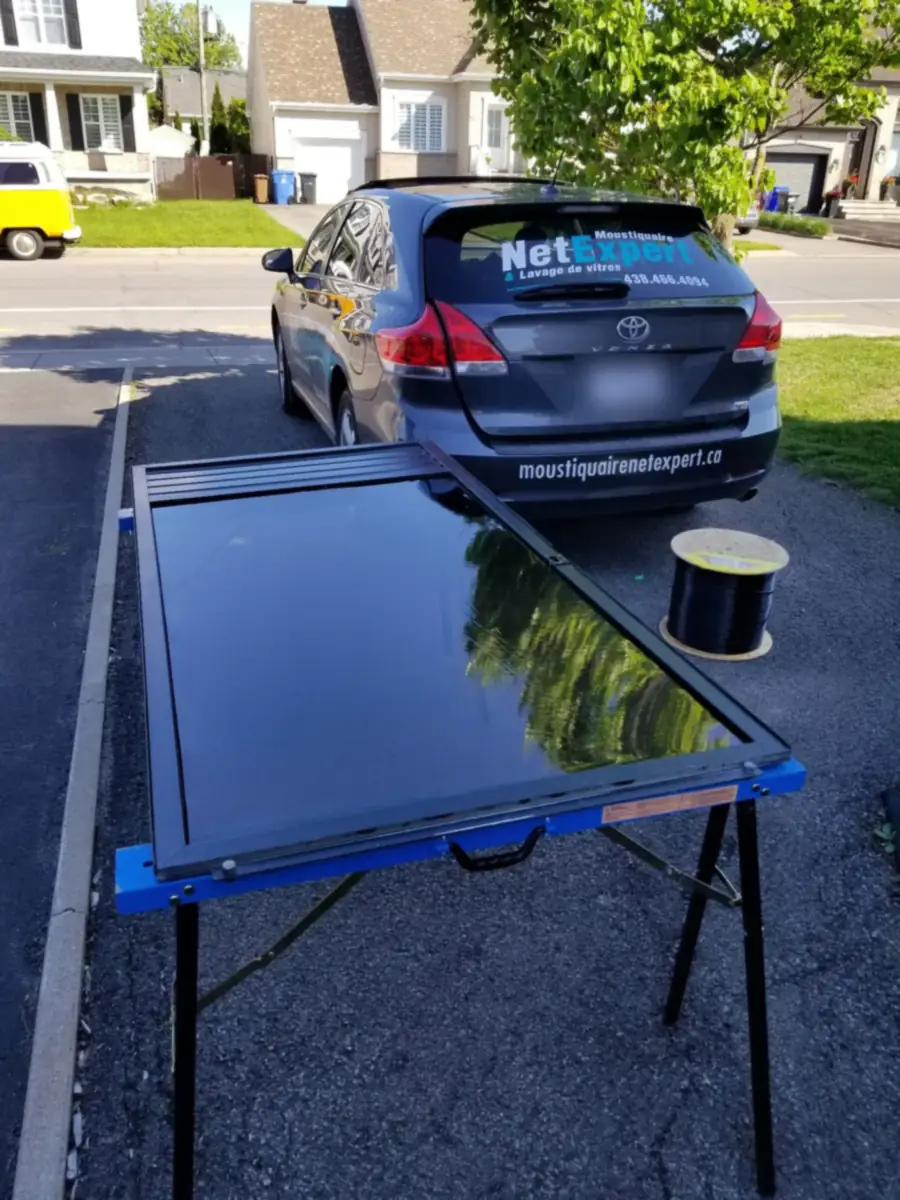
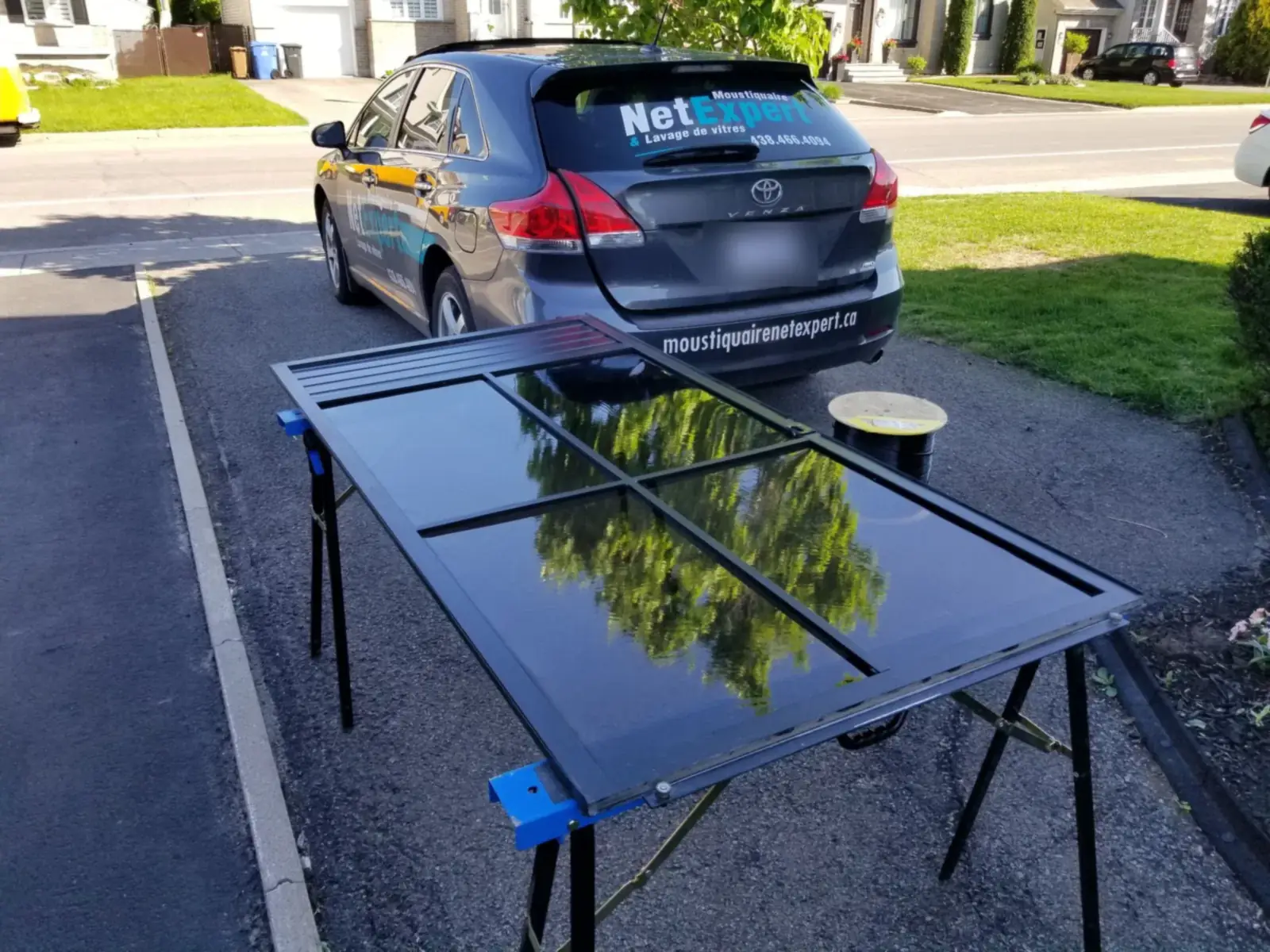
This job was not in McMasterville — it shows our method, the same everywhere: panels down, new vinyl pane by pane, panels back up.
« Ludovic replaced my screen in record time. Professional, and with a great sense of humour. I recommend his services — don’t hesitate to contact him, he’ll come to your home and do beautiful work. »
« Excellent service. Clear explanations of the work to be done. I really appreciated his dedication: despite the rain he insisted on finishing the job, soaked through and still smiling. The work was very well done. »
« Great service! He was at my neighbour’s and agreed to fix my back screen even though we had no appointment. Very successful repair, and inexpensive! »
Straight answers
Yes. They come off on the terrace, travel down the stairwell or through the unit lying flat, and return after a stop at the mobile shop. What gets planned is the route: clearance in the stairwell, protection on door frames, and an order of removal that avoids pivoting a tall panel on a narrow landing. The structure itself stays put.
It depends what changes. Redoing the film or mesh in the original frame alters neither the profile, nor the colour, nor anything visible from outside: the appearance stays identical. A new part in a different profile or shade, on the other hand, may fall under the building's by-laws — worth checking before ordering rather than after.
Rarely. A panel is pulled inward, into the gazebo, rather than outward, which settles the clearance question against a fence. The point to watch is elsewhere: a low panel within reach of daily traffic wears faster, and tougher mesh or film pinched tight all the way around earns its keep in that position.
Yes, at your home. We travel to McMasterville, remove the panels, replace the MICA vinyl in the original frames and put everything back — the gazebo structure is never touched. It is one of our specialties.
Yes. Depending on the retailer it is called MICA film, clear vinyl, clear plastic or transparent fabric — the same flexible material that cuts wind and holds warmth. We replace it on gazebos and sun shelters alike.
Yes. The vinyl is replaced pane by pane, in the existing frame — no need to redo the whole panel for one tear. If several panes have yellowed, doing them together gives a uniform result.
On assessment: the price depends on the number of panels and their dimensions. The quote is free, and a photo is often enough to price without a visit. Fabrication and installation guaranteed one year.
Do you manage a building or a business in McMasterville?