
Summer UV
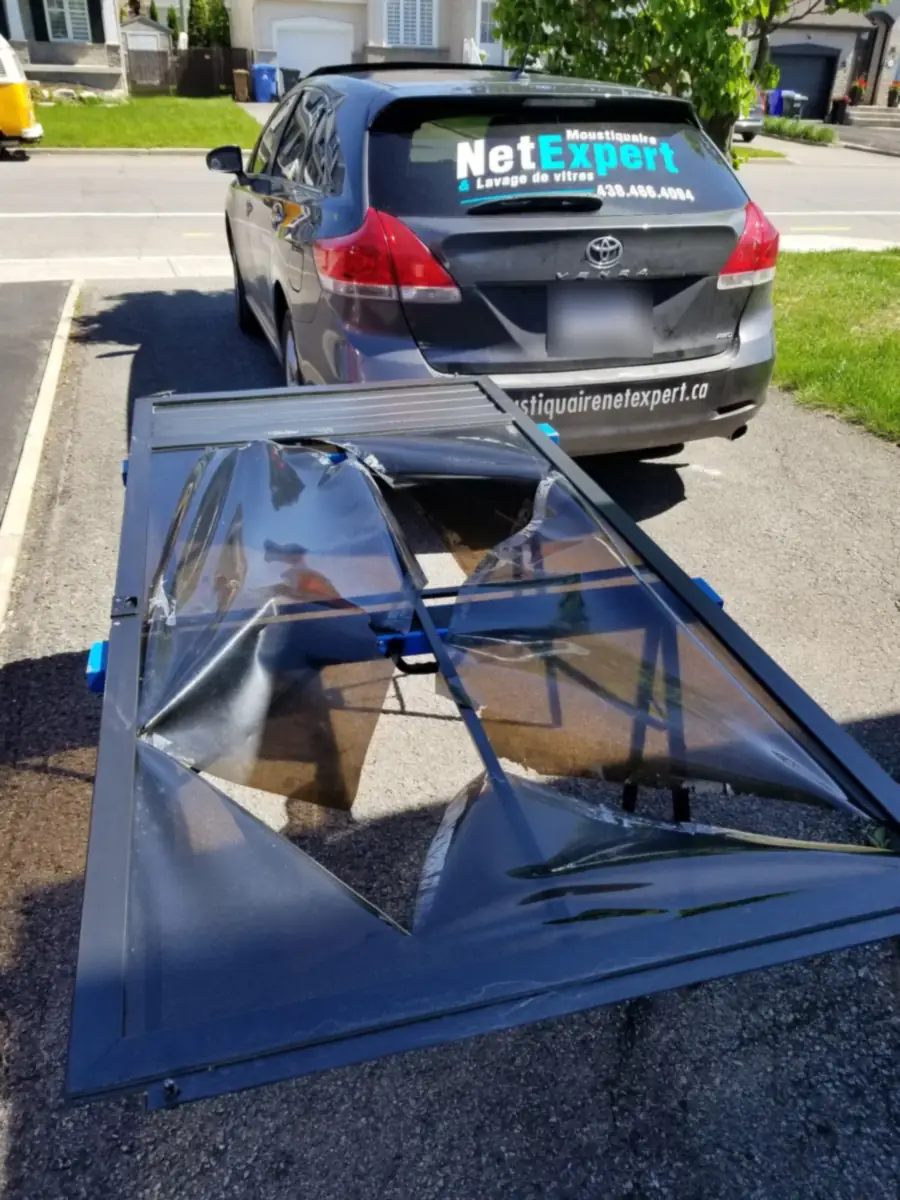
Sun yellows and clouds the vinyl. Film that crackles to the touch is at end of life.
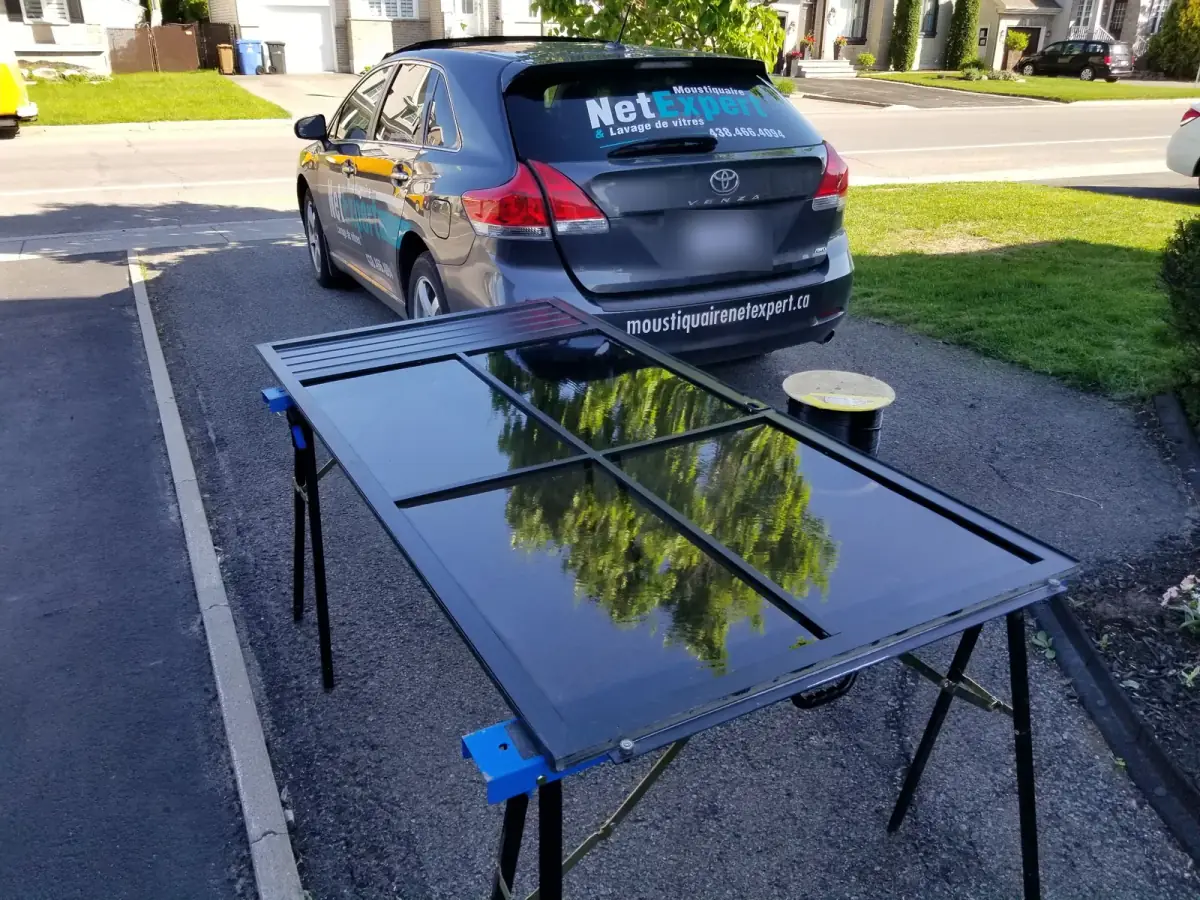
Gazebo and sun shelter specialty
Clear vinyl yellowed or torn? Replaced at your home in Carignan, in the original frames — gazebos and sun shelters.
Three questions are enough to start. The official measurement is taken on site.
Whatever your retailer calls it — MICA film, clear vinyl, clear plastic, sun-shelter transparent fabric — it is the same material, and we replace it in Carignan in your existing panels.
Sun yellows and clouds the vinyl. Film that crackles to the touch is at end of life.
Below freezing, MICA turns brittle — one handling or one gust splits it outright.
Slack vinyl flaps like a sail and eventually tears at the seams.
Along the concession roads of Carignan, the gazebo is almost never a store model. At a rang house or a hobby farm, the shelter is a structure built on site, in wood, often near the house or between two buildings, with bays whose dimensions were settled by whoever built it and by nobody else. These lots are open, with nothing to break the wind that crosses the fields, and that one fact governs everything else: clear film works much harder there than it does in a sheltered suburban yard, and it goes on tight or it does not survive the winter.
The large new neighbourhoods built since 2005 give the opposite picture, but only in appearance. The yards are smaller, the shelters come from a retailer, the panels are standard sizes — yet the trees planted when the houses were handed over still cut neither sun nor wind. A recent gazebo set down there gets none of the shelter that an older, planted yard provides. In these yards the diagnosis is usually unambiguous: the structure has not had time to age, the screens follow it, and the film has absorbed the whole difference. The difference between the two halves of town is not the age of the shelters, it is how much the ground protects them, or does not.
Film on a bay facing open wind rarely fails in the middle: it starts at a fastening point, where the vinyl has beaten relentlessly against the edge of the frame, and the split runs from there. On a wooden structure built to measure, every bay gets its own piece, cut to measurements taken at that precise opening and set back into the original frame. On a retailer shelter the sizes repeat, but they are checked anyway. The screen panels ask for the same care with tension: mesh left too loose on a windy lot balloons, pulls at its corners and pushes the spline out. We rescreen in the frame, tension it properly, and put the panel back.
A wooden structure that has spent fifteen or twenty years outdoors is not necessarily square any more: the ground moves, the posts shift, and a perfectly rectangular bay no longer fits an opening that has gone slightly diamond-shaped. So every bay is measured as it is today, at all four corners, and the panels are labelled so they go back exactly where they belong. Out on the rangs there is the other reality: space, secondary buildings, sometimes more than one structure on the same lot. A rang shelter usually carries more bays than a suburban yard does, and a partial survey is paid for in pieces that will not close: the bays are counted before one comes off.
Wind off open ground is the dominant factor, and it goes after the film before anything else: with no tension it snaps, wears at the edge of the frame and splits from there. On a lot with nothing to break the wind, the four faces of one shelter do not wear at anything like the same rate: the one taking the prevailing wind is surveyed apart from the other three. With no hedge or building to break the run of the wind, it is field dust that packs the panel rebates, and a panel put back into a clogged seat does not seat straight. And on a lot with no shade, July sun yellows vinyl far faster than elsewhere: the south face is often the one that sets the schedule.
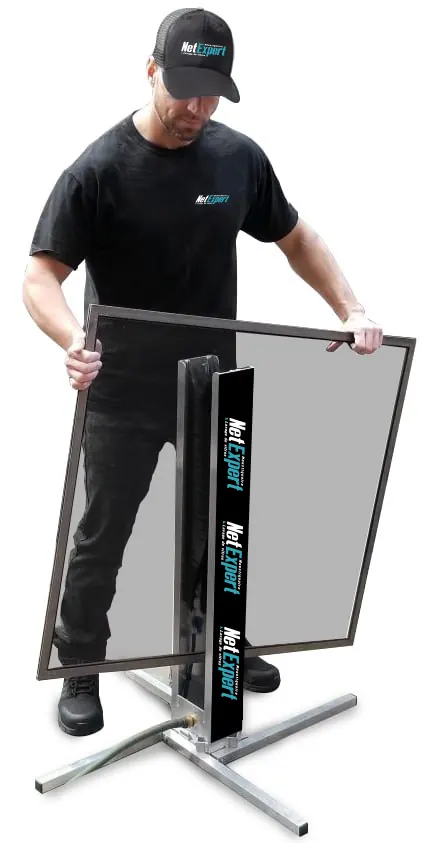
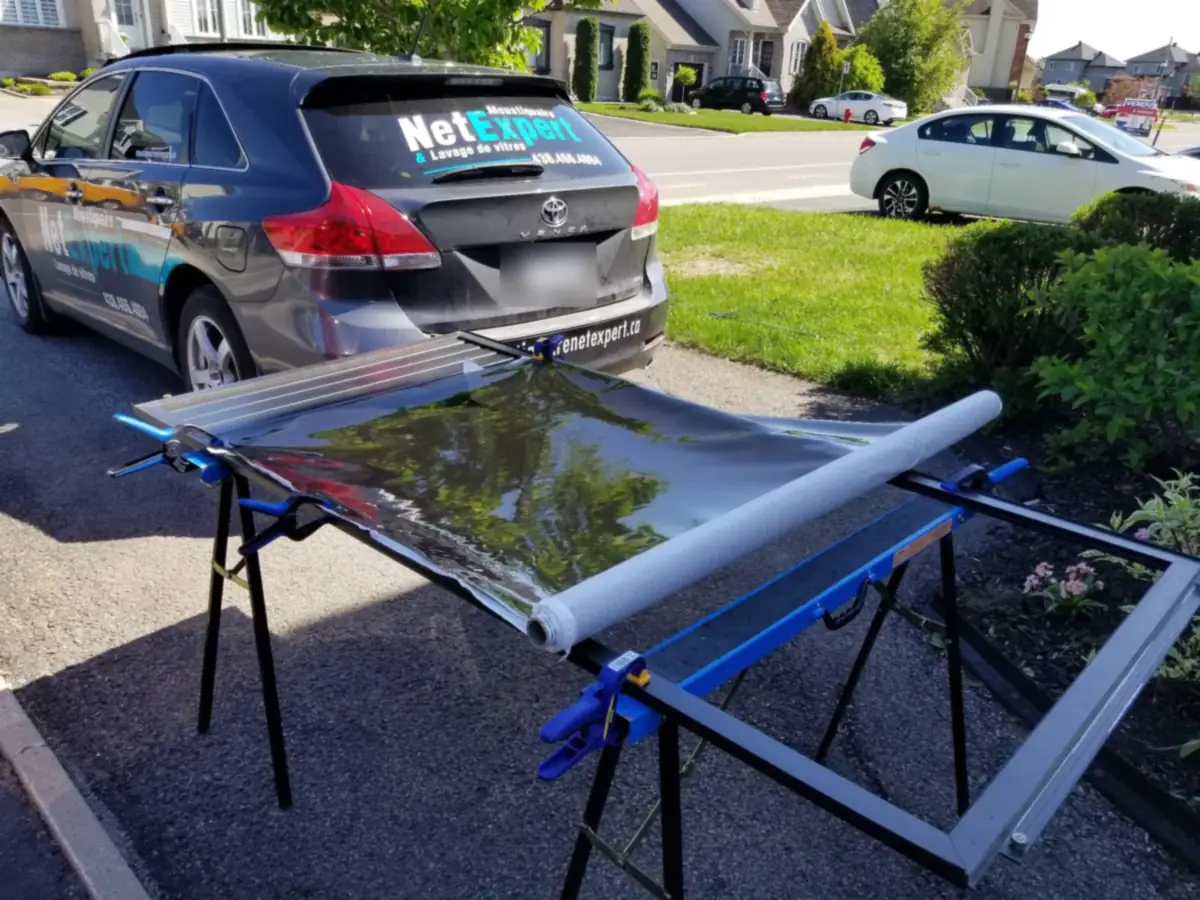
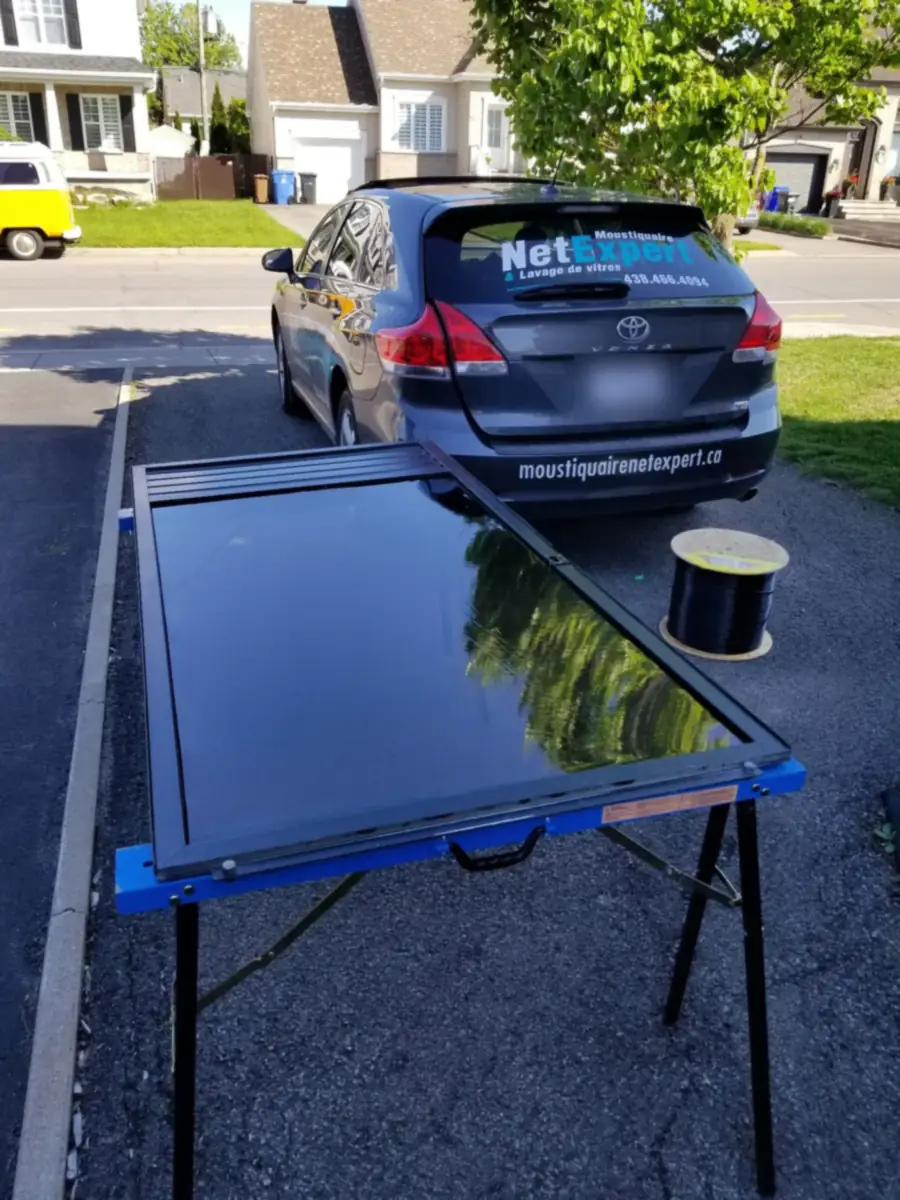
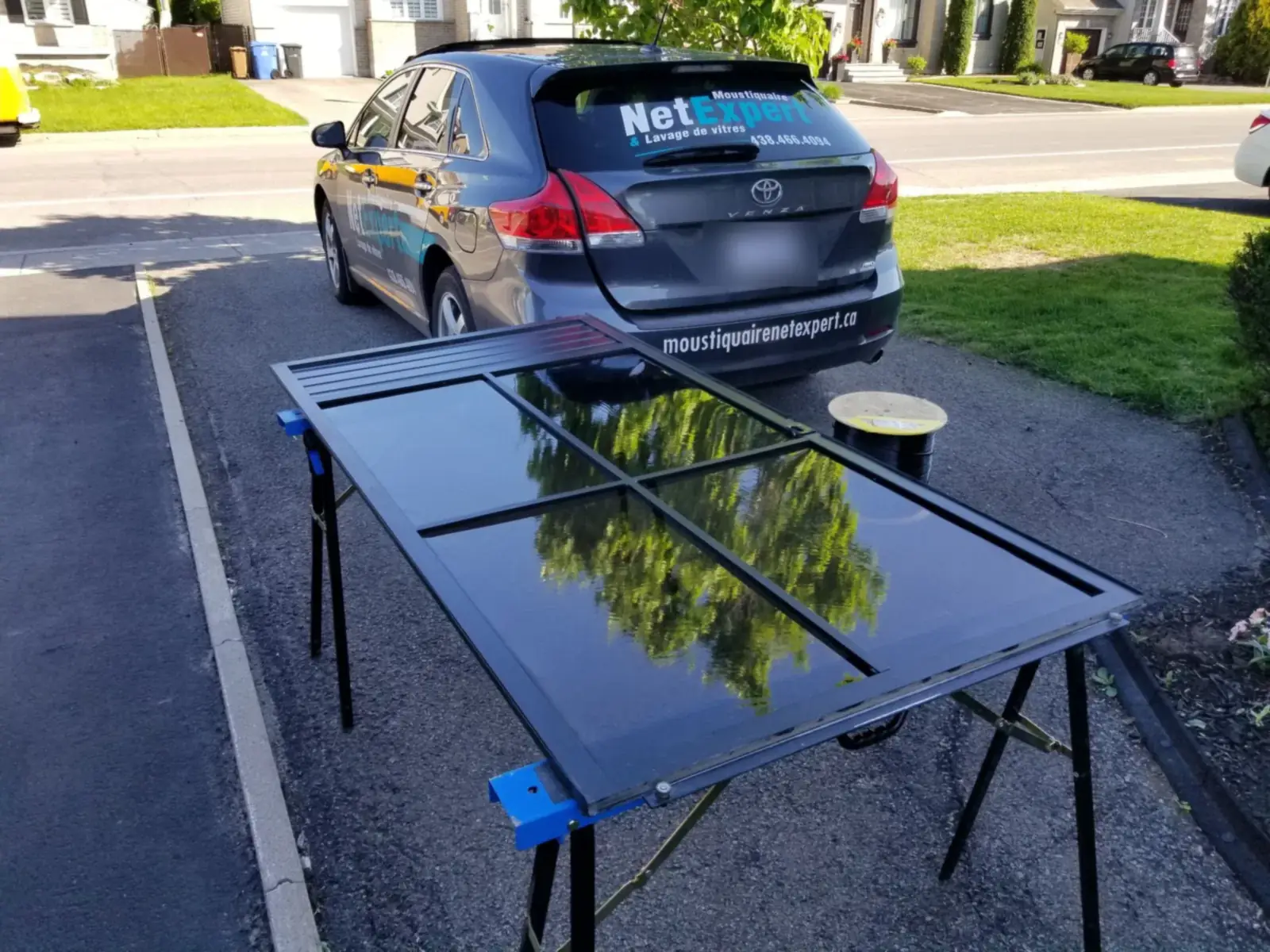
This job was not in Carignan — it shows our method, the same everywhere: panels down, new vinyl pane by pane, panels back up.
« Ludovic replaced my screen in record time. Professional, and with a great sense of humour. I recommend his services — don’t hesitate to contact him, he’ll come to your home and do beautiful work. »
« Excellent service. Clear explanations of the work to be done. I really appreciated his dedication: despite the rain he insisted on finishing the job, soaked through and still smiling. The work was very well done. »
« Great service! He was at my neighbour’s and agreed to fix my back screen even though we had no appointment. Very successful repair, and inexpensive! »
Straight answers
Wind is not the whole story: slack is. Vinyl fitted loose beats against the edge of its frame with every gust, wears at that exact spot and finally splits from there. Cut to the exact size of the bay and fitted with no give, the same film takes the gusts of an open lot far better. On the most exposed faces, aluminum mesh is also worth a look for the screen panels.
That is expected after fifteen or twenty years outdoors. So a bay is not measured against the original plan but as it stands today, at all four corners, which gives pieces that follow the real outline of the opening. Panels are labelled as they come off: on a structure that has moved, a bay put back in the wrong opening will not close, even if it looks identical to its neighbour.
On a new lot where the trees cast no shade yet, that adds up. The vinyl takes direct sun all day and wind with nothing to slow it; it yellows and hardens faster than a shelter of the same age standing in a protected yard. The screen panels, on the other hand, are often still fine. So we redo what is finished and leave what still holds.
Yes, at your home. We travel to Carignan, remove the panels, replace the MICA vinyl in the original frames and put everything back — the gazebo structure is never touched. It is one of our specialties.
Yes. Depending on the retailer it is called MICA film, clear vinyl, clear plastic or transparent fabric — the same flexible material that cuts wind and holds warmth. We replace it on gazebos and sun shelters alike.
Yes. The vinyl is replaced pane by pane, in the existing frame — no need to redo the whole panel for one tear. If several panes have yellowed, doing them together gives a uniform result.
On assessment: the price depends on the number of panels and their dimensions. The quote is free, and a photo is often enough to price without a visit. Fabrication and installation guaranteed one year.
Do you manage a building or a business in Carignan?