
Summer UV
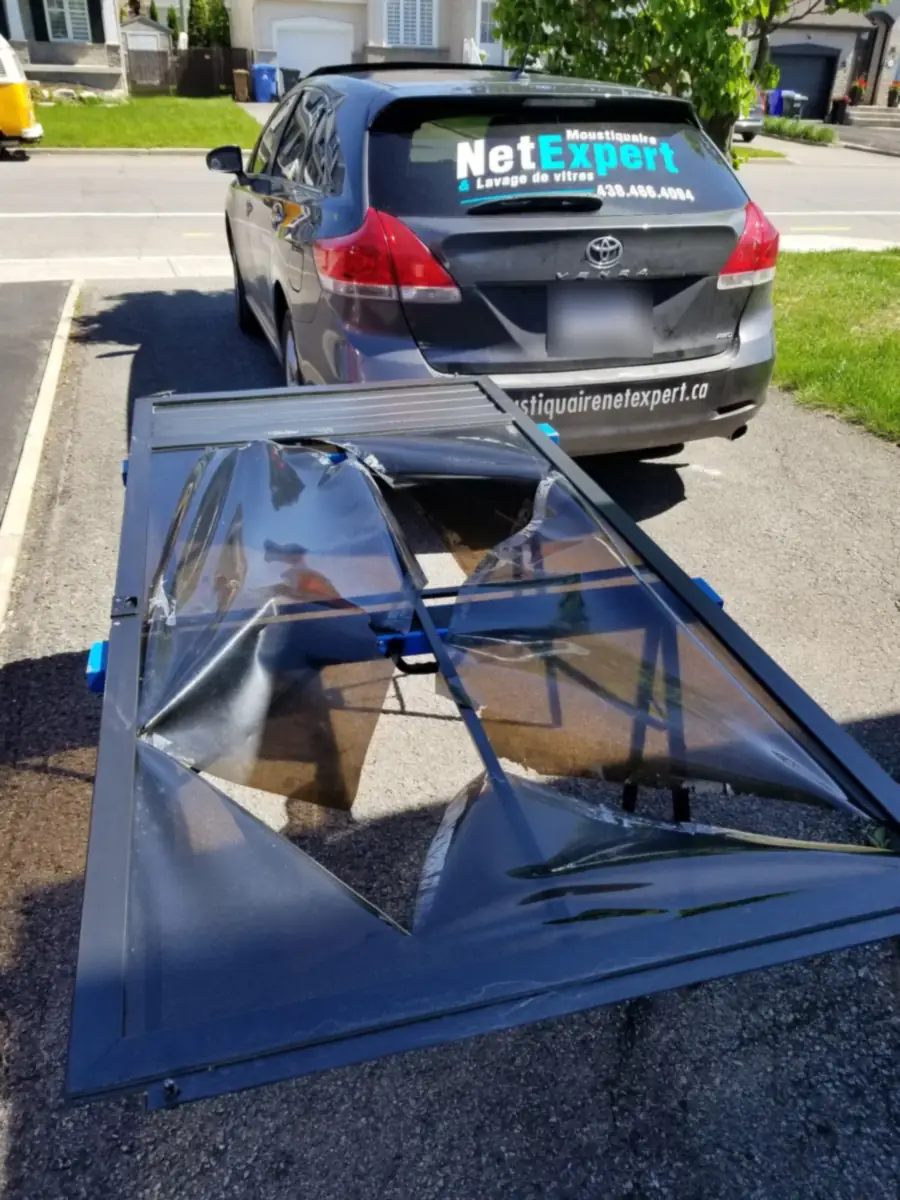
Sun yellows and clouds the vinyl. Film that crackles to the touch is at end of life.
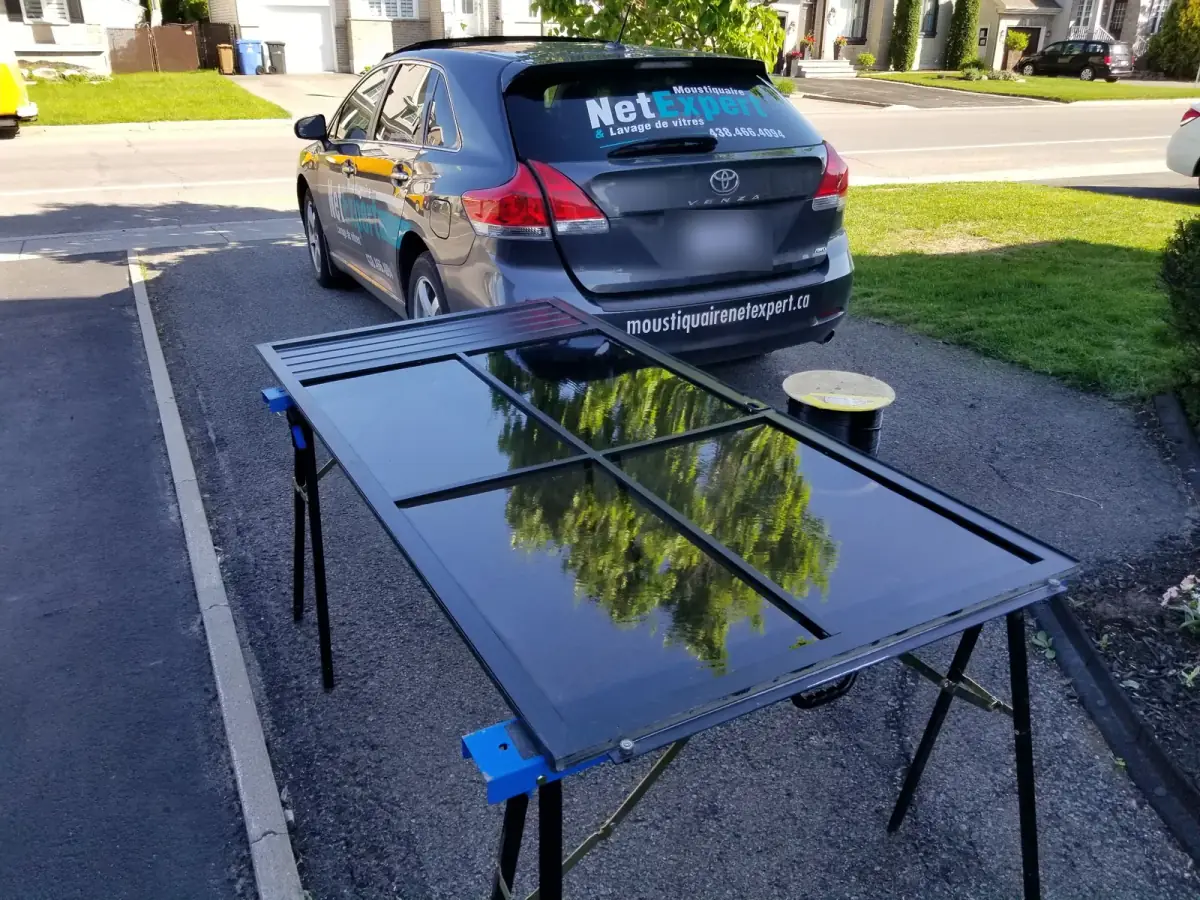
Gazebo and sun shelter specialty
Clear vinyl yellowed or torn? Replaced at your home in Saint-Bruno-de-Montarville, in the original frames — gazebos and sun shelters.
Three questions are enough to start. The official measurement is taken on site.
Whatever your retailer calls it — MICA film, clear vinyl, clear plastic, sun-shelter transparent fabric — it is the same material, and we replace it in Saint-Bruno-de-Montarville in your existing panels.
Sun yellows and clouds the vinyl. Film that crackles to the touch is at end of life.
Below freezing, MICA turns brittle — one handling or one gust splits it outright.
Slack vinyl flaps like a sail and eventually tears at the seams.
In Saint-Bruno-de-Montarville, the gazebo has room. The bungalows and cottages of the 1960s to 1985 sit on large wooded lots at the foot of Mont Saint-Bruno, and the backyard has the depth for a good-sized retail gazebo — set, where there is a pool or a spa, right beside it, where summer evenings are spent. When the structure is a retail gazebo in aluminum or steel, with standard panels, here it lives under mature trees, and that changes how it ages: less direct sun on the clear vinyl (MICA film), but tree debris that collects in the grooves and holds moisture against the spline and the mesh. The frame stays good; it is the panel we rebuild.
Saint-Bruno’s other gazebo belongs to owners who had one built: a permanent wooden structure, made to measure at the back of a wooded lot or extending a sunroom or glassed-in porch added after the house was built. These gazebos have one-of-a-kind panels, often tall, cut for that structure and no other. When the mesh slackens or the vinyl splits, no store carries the panel: we measure each opening on site and rescreen the mesh or replace the vinyl in the original wooden frame. On a house that has already gained a sunroom and a patio door after the fact, a gazebo built on site is a fourth addition of the same kind — from another era, with its own dimensions, and so its own way of being measured.
Under trees, screen panels age through damp more than sun: the spline swells and works loose, the fibreglass holds stains and slackens, and the clear vinyl, less yellowed than in open country, still stiffens in frost and splits when a gust comes down off the mountain. On the wooden structures the panes are bigger and the vinyl flaps more if it has any slack. In both cases we strip the tired mesh, clean the accumulated debris out of the groove, stretch new mesh with a fresh spline, and fit vinyl cut to the opening’s exact format, locked into the panel frame. On the faces toward the trees the vinyl goes on last, once the groove has been emptied: a scrap left under the spline will pierce the film from the inside before winter is out.
A large wooded lot means a gazebo that is often far from the driveway: the panels travel to the mobile workshop on foot, along the side of the house or down a path, and we plan that before starting. The retail gazebo comes apart panel by panel and gets inspected first — if an upright has bowed under vinyl gone rigid, new mesh is not what will straighten it. The wooden structure needs more care: panels screwed in or held by turn-buttons, all different, tagged one by one so each returns exactly where it was. When the gazebo extends a sunroom or glassed-in porch, we check that the shared openings have not shifted. The wood of the structure is never touched.
At the foot of the mountain, among mature trees, wind arrives in gusts rather than steadily, and that pattern is what splits vinyl stiffened by frost: film stretched to the pane and locked into the frame withstands it, floating film does not. The shade of the woods spares the vinyl from UV but keeps the damp, and the insect season is long there: no-see-ums in spring, mosquitoes late into summer evenings. On a gazebo the mesh never works alone: it is what backs the vinyl when the film goes on over it, and mesh already slackened by a season under the trees no longer holds it. Here the calendar follows the trees as much as the thermometer: the vinyl goes on once the leaves are down and the grooves are cleared, and comes off before spring sap can stick to it.
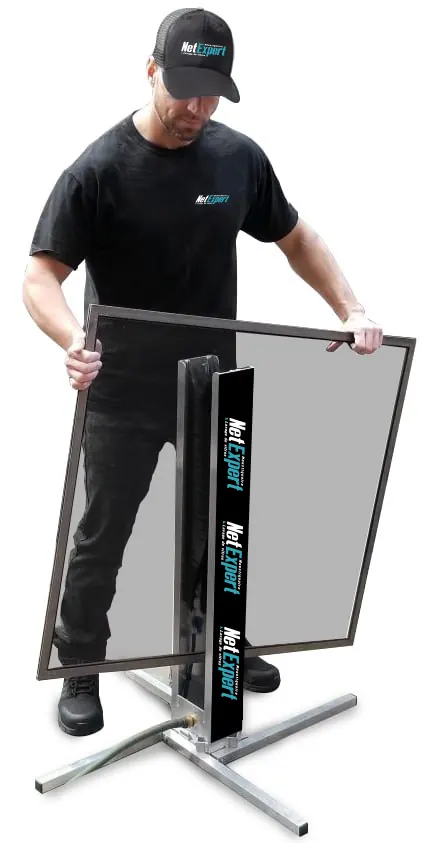
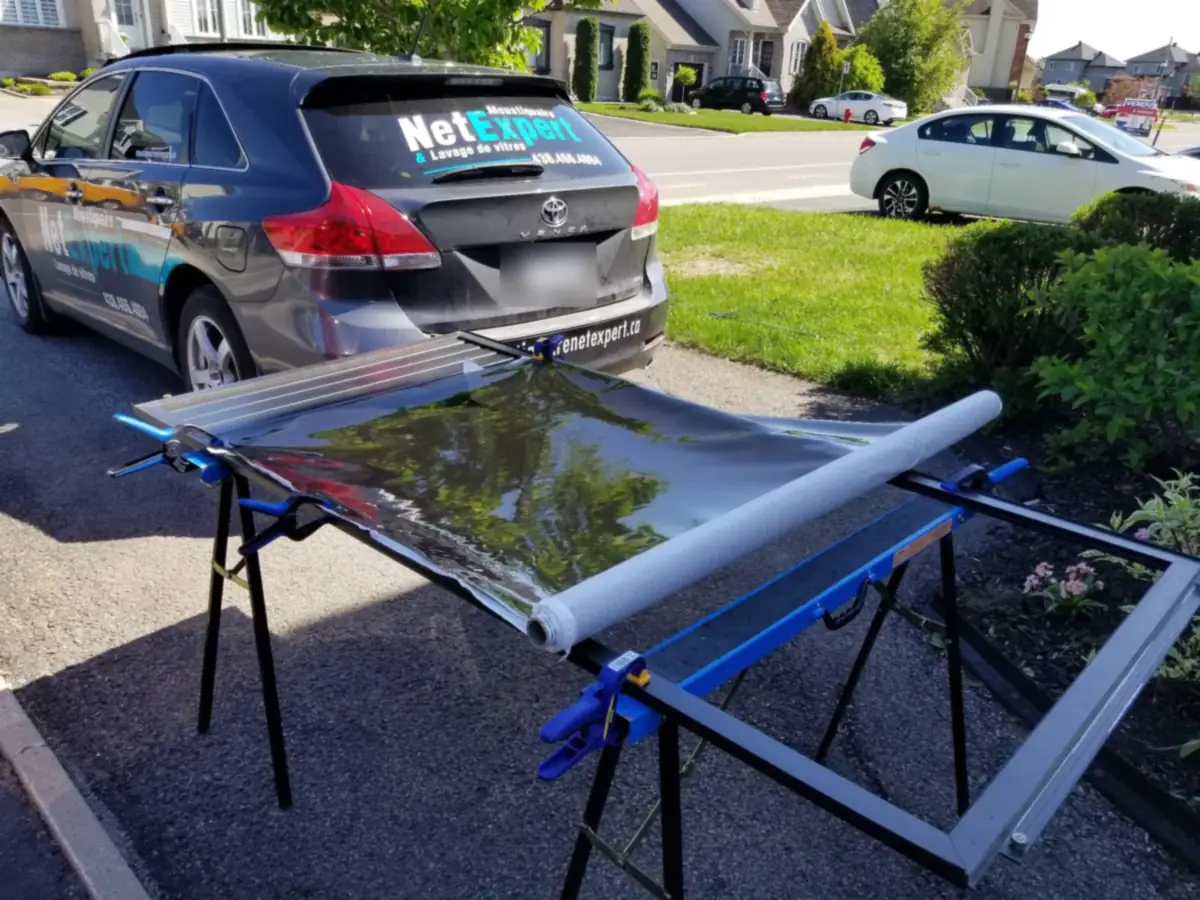
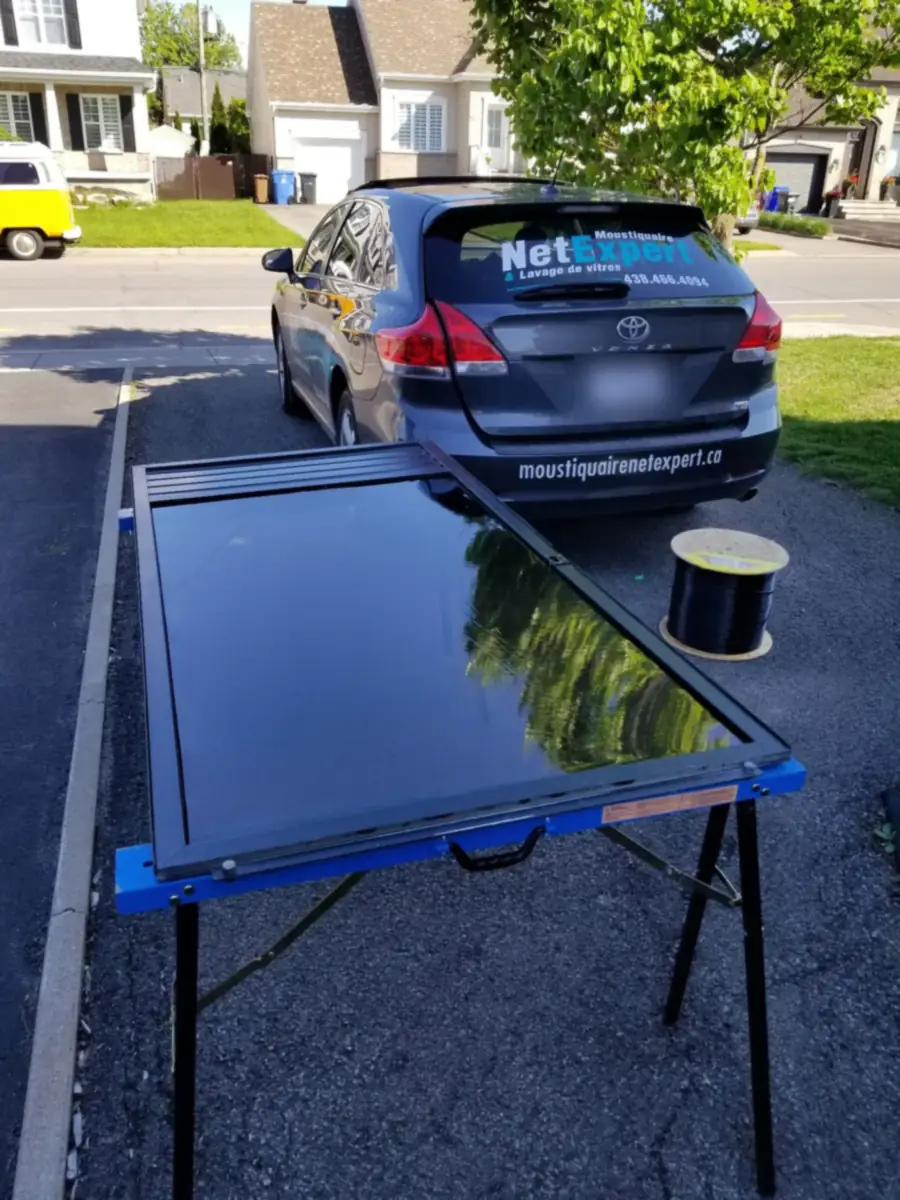
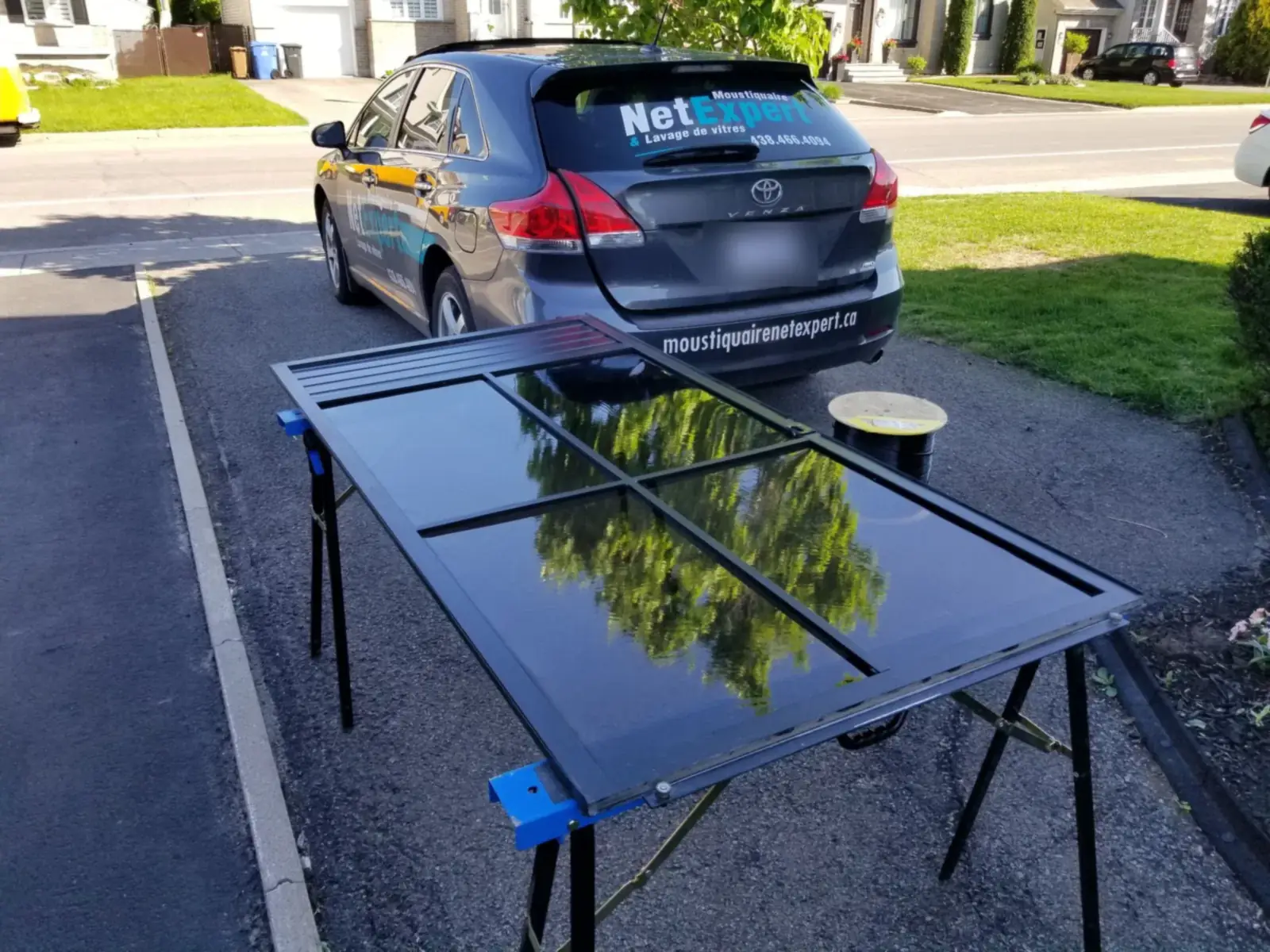
This job was not in Saint-Bruno-de-Montarville — it shows our method, the same everywhere: panels down, new vinyl pane by pane, panels back up.
« Excellent service. Clear explanations of the work to be done. I really appreciated his dedication: despite the rain he insisted on finishing the job, soaked through and still smiling. The work was very well done. »
« Great service! He was at my neighbour’s and agreed to fix my back screen even though we had no appointment. Very successful repair, and inexpensive! »
« Ludovic replaced my screen in record time. Professional, and with a great sense of humour. I recommend his services — don’t hesitate to contact him, he’ll come to your home and do beautiful work. »
Straight answers
Over time, yes. Debris trapped in the groove holds moisture against the spline, which swells and works loose, and the mesh slackens with nothing holding it. We clean every groove thoroughly before seating the new spline and retensioning the mesh; a panel redone over a dirty groove does not last a season. A quick brush through the grooves each spring then keeps the work going.
Yes, in their wooden frames. Each opening is measured on site, because these panels were cut for this structure and none has a twin; the mesh or the vinyl is redone to the measured dimensions, and the panel goes back exactly where it belongs. We also check that the openings shared with the porch have not shifted. The structure itself is not altered.
Yes: the clear vinyl goes on over the screen mesh, which stays in place and backs it up — which is exactly what helps against the gusts coming down off the mountain. We cut it to the size of each pane and lock it into the panel frame. In spring we take it down to get the airflow back; on a gazebo used late in the season, that is the simplest way to have both.
Yes, at your home. We travel to Saint-Bruno-de-Montarville, remove the panels, replace the MICA vinyl in the original frames and put everything back — the gazebo structure is never touched. It is one of our specialties.
Yes. Depending on the retailer it is called MICA film, clear vinyl, clear plastic or transparent fabric — the same flexible material that cuts wind and holds warmth. We replace it on gazebos and sun shelters alike.
Yes. The vinyl is replaced pane by pane, in the existing frame — no need to redo the whole panel for one tear. If several panes have yellowed, doing them together gives a uniform result.
On assessment: the price depends on the number of panels and their dimensions. The quote is free, and a photo is often enough to price without a visit. Fabrication and installation guaranteed one year.
Do you manage a building or a business in Saint-Bruno-de-Montarville?