
Summer UV
Sun yellows and clouds the vinyl. Film that crackles to the touch is at end of life.
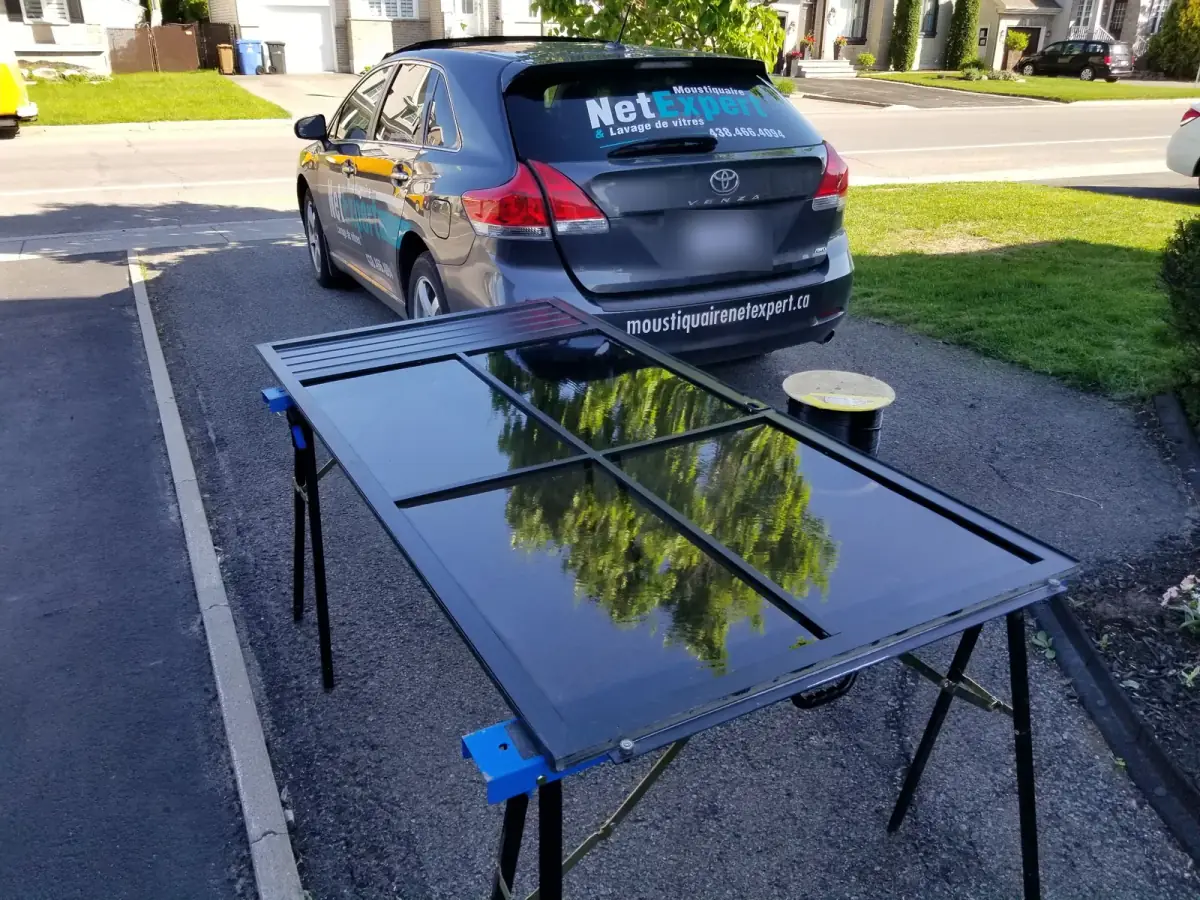
Gazebo and sun shelter specialty
Clear vinyl yellowed or torn? Replaced at your home in La Prairie, in the original frames — gazebos and sun shelters.
Three questions are enough to start. The official measurement is taken on site.
Whatever your retailer calls it — MICA film, clear vinyl, clear plastic, sun-shelter transparent fabric — it is the same material, and we replace it in La Prairie in your existing panels.
Sun yellows and clouds the vinyl. Film that crackles to the touch is at end of life.
Below freezing, MICA turns brittle — one handling or one gust splits it outright.
Slack vinyl flaps like a sail and eventually tears at the seams.
In Old La Prairie, a gazebo almost never came with the house. The 18th-century stone homes sit on yards that have been redrawn many times since, and when a screened structure stands there, it was added later: a wooden frame built to fit one corner of the yard, a shelter extending a summer kitchen, a pergola closed in after the fact. In a heritage district anything added to a yard gets noticed, and the structure was generally chosen not to clash with the house. Its panels are one of a kind. No catalogue size fits, every opening is measured on site, and the clear vinyl (MICA film), if one goes on for the fall, is cut pane by pane to those exact dimensions.
All around, the belt of bungalows and cottages from the 1970s to the 1990s is true retail-gazebo country. Regular backyards, a wood deck or a concrete slab, and on top an aluminum or steel structure bought at a big-box store, with standard-sized panels. Many of these gazebos are fifteen years old or more, and their original panels are wearing out: the film has yellowed and stiffened, the screening has gone slack. The newer, denser developments change the scale: shorter yards, fences close together, small gazebos with narrower panels, yet exposed to the wind that funnels between two houses built side by side. Before any talk of mesh or film, one thing gets checked in all three cases: the condition of the frames that carry the panels.
On a La Prairie retail gazebo that has seen a few winters, the film gives out first. Vinyl that yellowed in the July sun and stiffened in the January frost does not survive a March gust: it splits along a fold or tears away from its edging. The screening is more patient, but it eventually rips at a panel corner or lets its spline pop out of the groove. In both cases the aluminum frame is nearly always intact. We take it down, strip the old mesh or film, stretch new screening or cut clear film to the exact size of the pane, and the panel goes back where it was. On a wooden structure in the old district the principle is the same, with frames measured one at a time.
A retail gazebo comes apart easily: its panels clip or screw into the uprights and are redone at the mobile workshop, in the driveway. The real obstacle in the cottage neighbourhoods is often the path to the yard — a fence with no gate wide enough, a hedge, a shed pushed up against the gazebo. In the newer developments the yard is reachable but tight: panels are laid flat wherever there is room, sometimes on the deck itself. In Old La Prairie, a permanent wooden structure asks for more care: its panels are screwed or set in mouldings, and we free them without stressing the frame, which we never alter.
A La Prairie bungalow yard is usually wide open, with direct sun hitting the gazebo from midday to evening. That sun is what yellows the film and weakens fibreglass. On the sides most exposed to wind, aluminum screening holds its tension better than fibreglass. For late-evening insects, standard mesh is enough in most yards; a tighter weave only makes sense at the edge of open ground. The film goes on before the first cold nights and, in a yard where the gazebo doubles as winter storage, it can stay in place come spring.
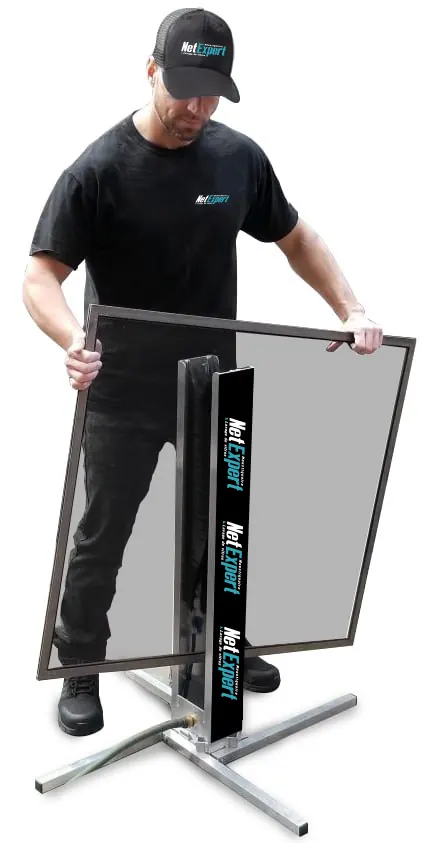
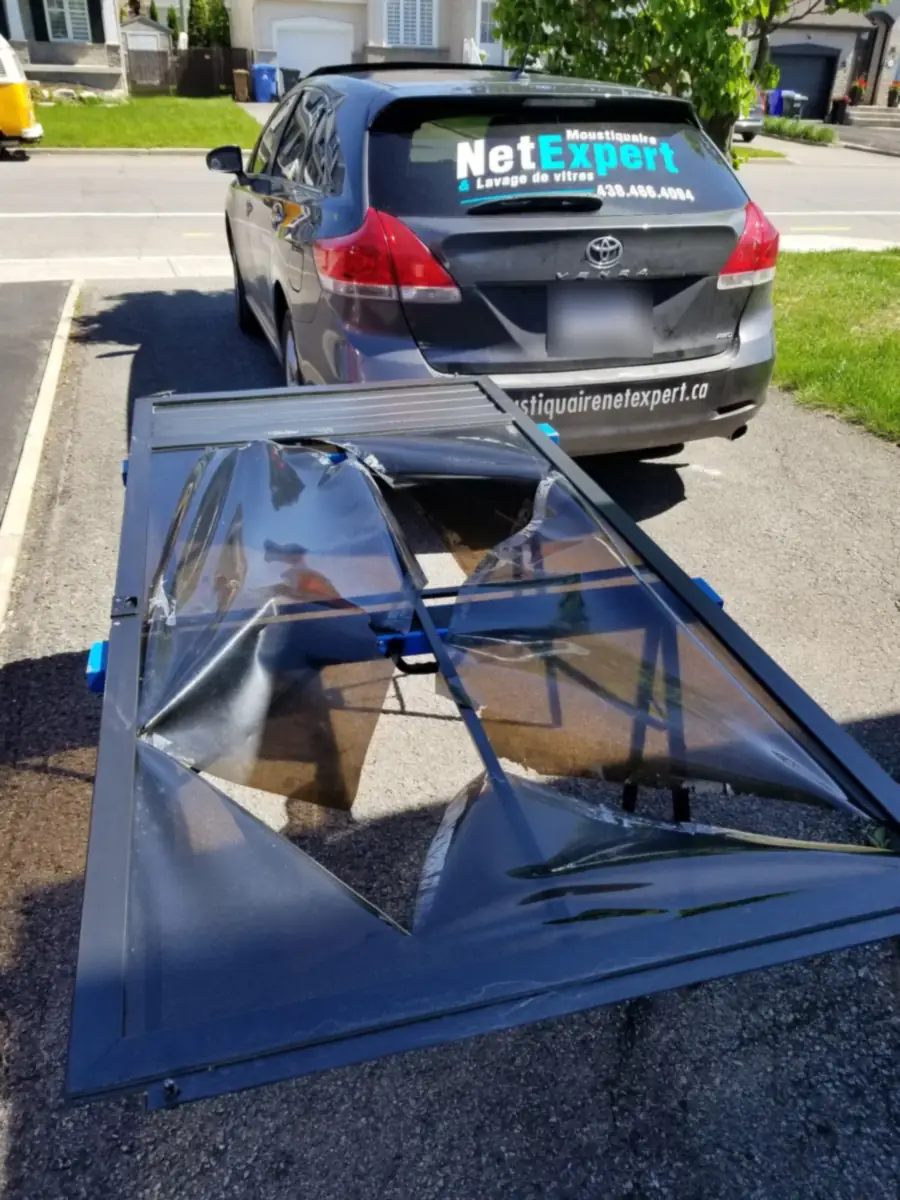
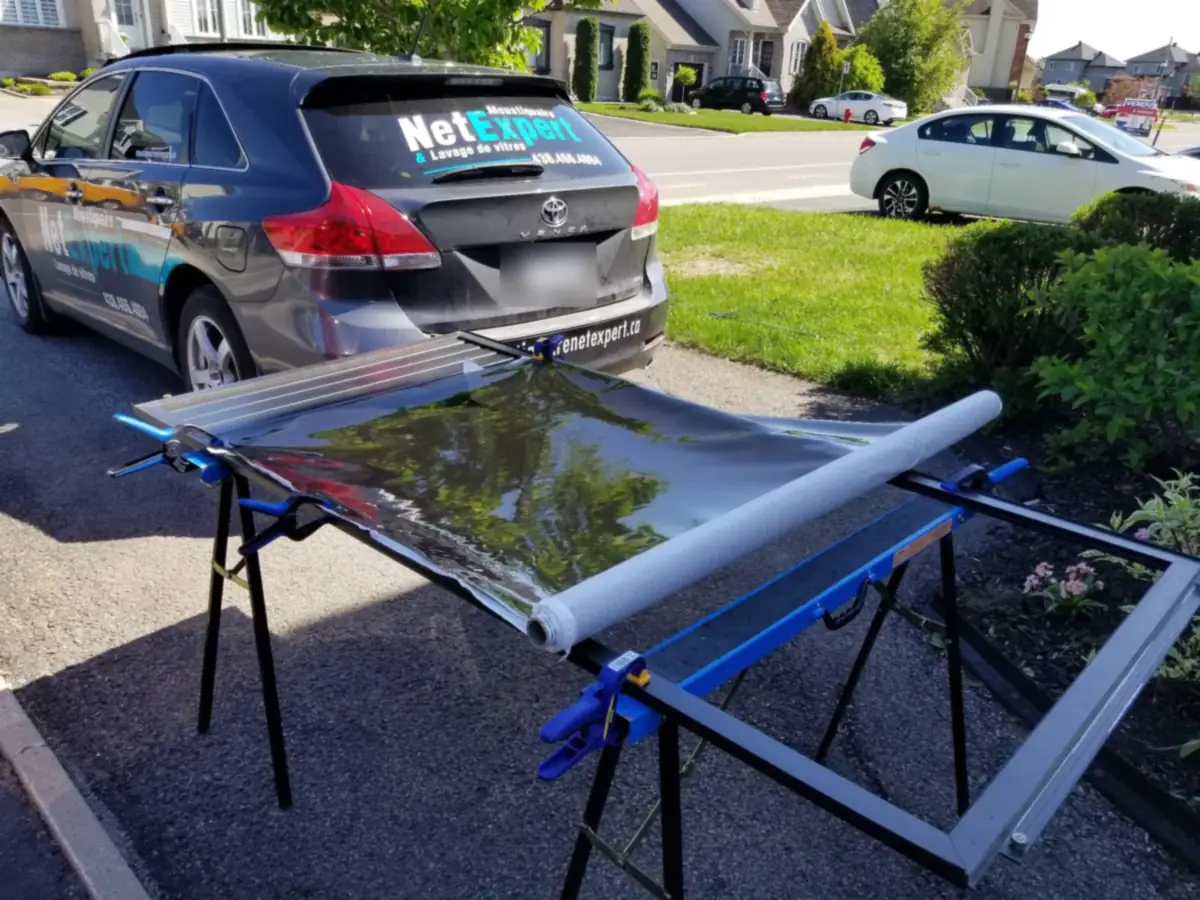
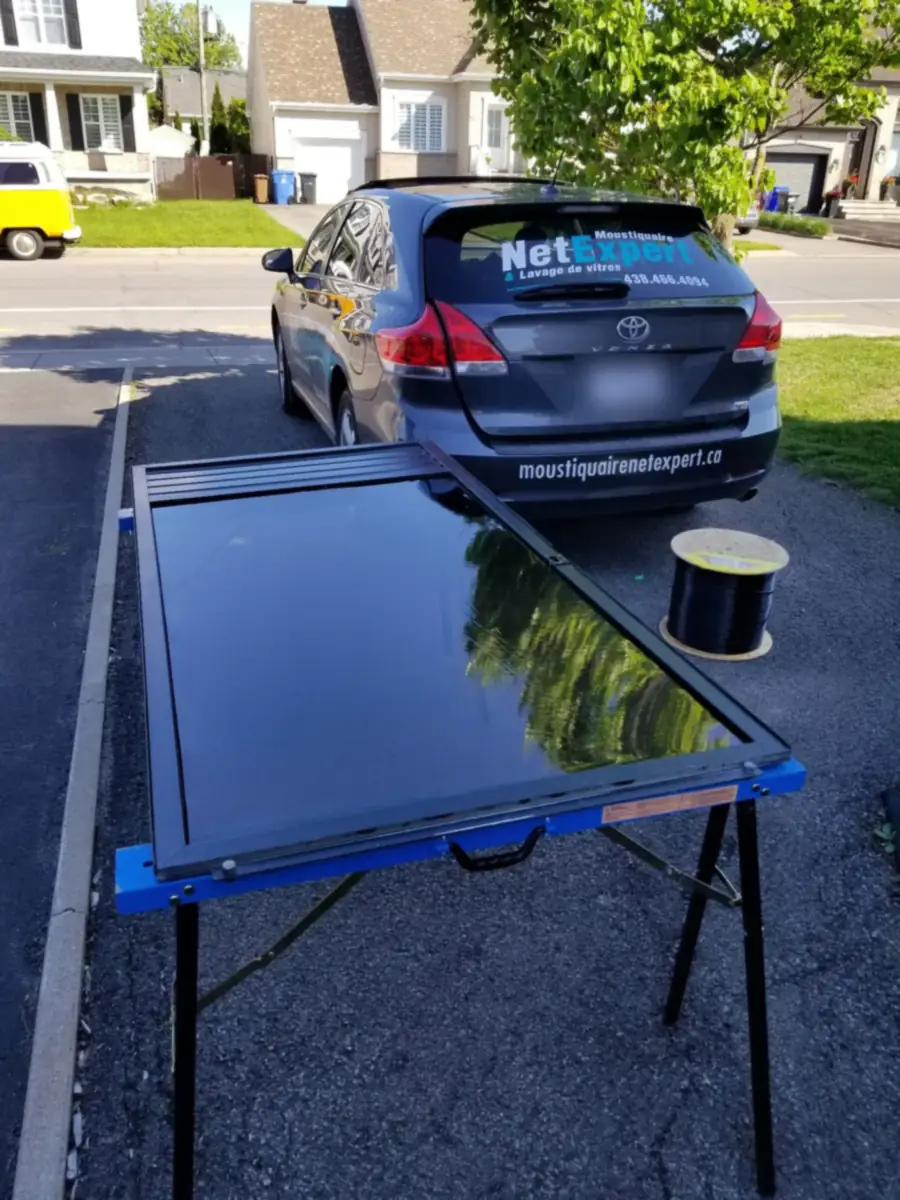
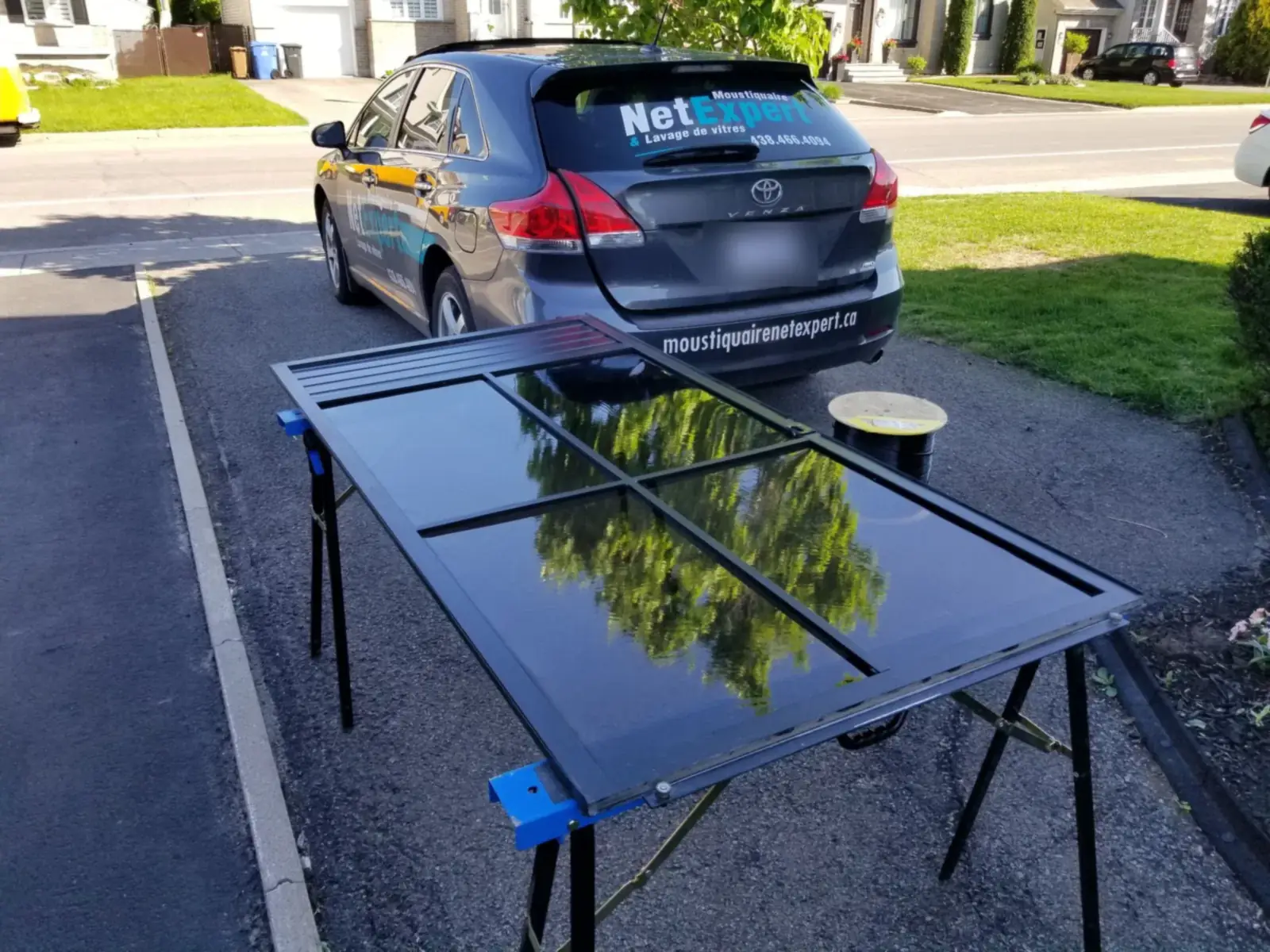
This job was not in La Prairie — it shows our method, the same everywhere: panels down, new vinyl pane by pane, panels back up.
« Ludovic replaced my screen in record time. Professional, and with a great sense of humour. I recommend his services — don’t hesitate to contact him, he’ll come to your home and do beautiful work. »
« Excellent service. Clear explanations of the work to be done. I really appreciated his dedication: despite the rain he insisted on finishing the job, soaked through and still smiling. The work was very well done. »
« Great service! He was at my neighbour’s and agreed to fix my back screen even though we had no appointment. Very successful repair, and inexpensive! »
Straight answers
Redo what sits inside the frame. A retail gazebo panel is an aluminum frame with mesh or film stretched across it. The maker may have dropped the model, but the frame is still straight in most cases. We rescreen it or fit new clear film to the exact dimensions, and the panel goes back into the original structure.
Yellowed film has already lost its flexibility: the next strong wind or the first frost will split it along a fold. Replacing it while it still holds avoids finding an open pane in the middle of fall. The replacement goes into the same frame, pane by pane, and nothing about the structure changes.
Yes, provided every opening is measured on site: a hand-built wooden structure has no two identical bays, and its squareness may have shifted with the seasons. Panels are made to those dimensions, in mesh or clear film depending on use, and fastened into the frame without modifying it.
Yes, at your home. We travel to La Prairie, remove the panels, replace the MICA vinyl in the original frames and put everything back — the gazebo structure is never touched. It is one of our specialties.
Yes. Depending on the retailer it is called MICA film, clear vinyl, clear plastic or transparent fabric — the same flexible material that cuts wind and holds warmth. We replace it on gazebos and sun shelters alike.
Yes. The vinyl is replaced pane by pane, in the existing frame — no need to redo the whole panel for one tear. If several panes have yellowed, doing them together gives a uniform result.
On assessment: the price depends on the number of panels and their dimensions. The quote is free, and a photo is often enough to price without a visit. Fabrication and installation guaranteed one year.
Do you manage a building or a business in La Prairie?