
Summer UV
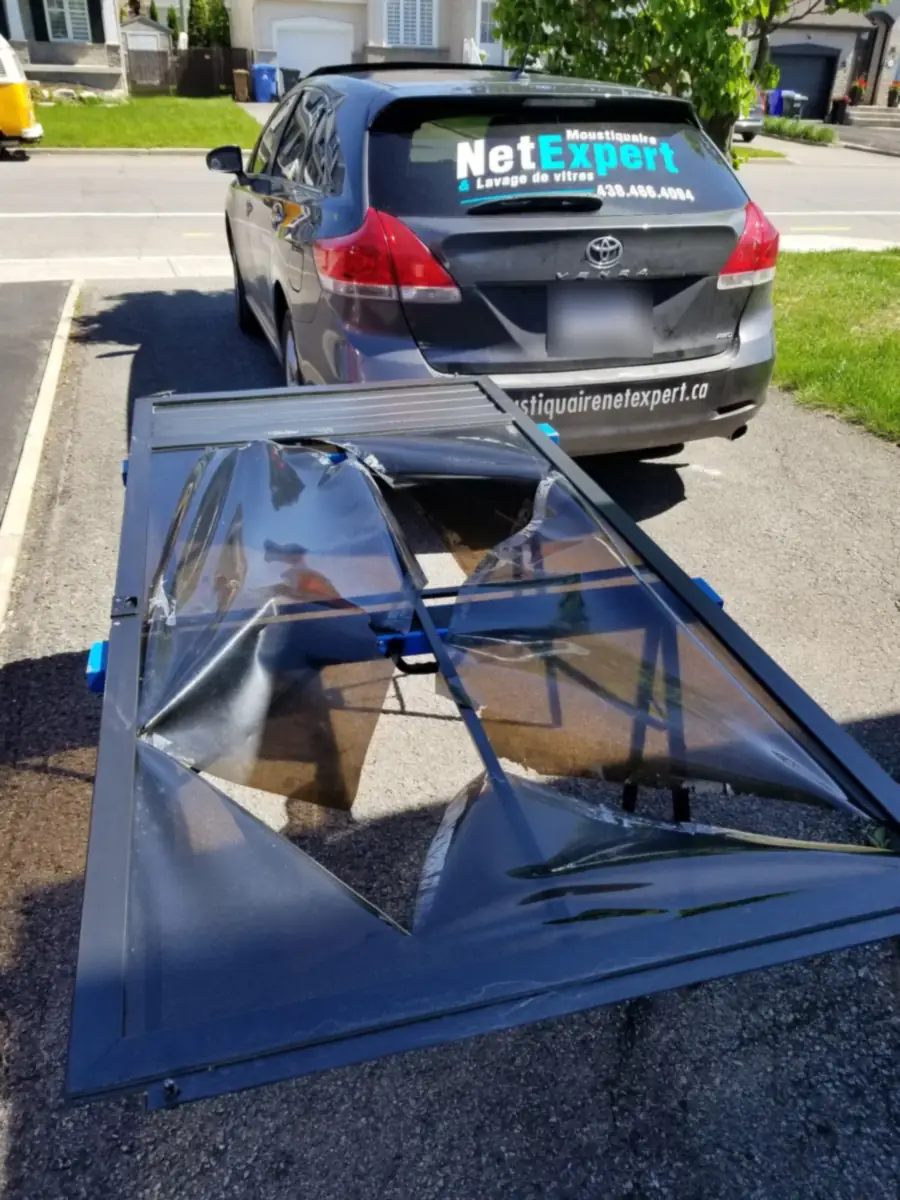
Sun yellows and clouds the vinyl. Film that crackles to the touch is at end of life.
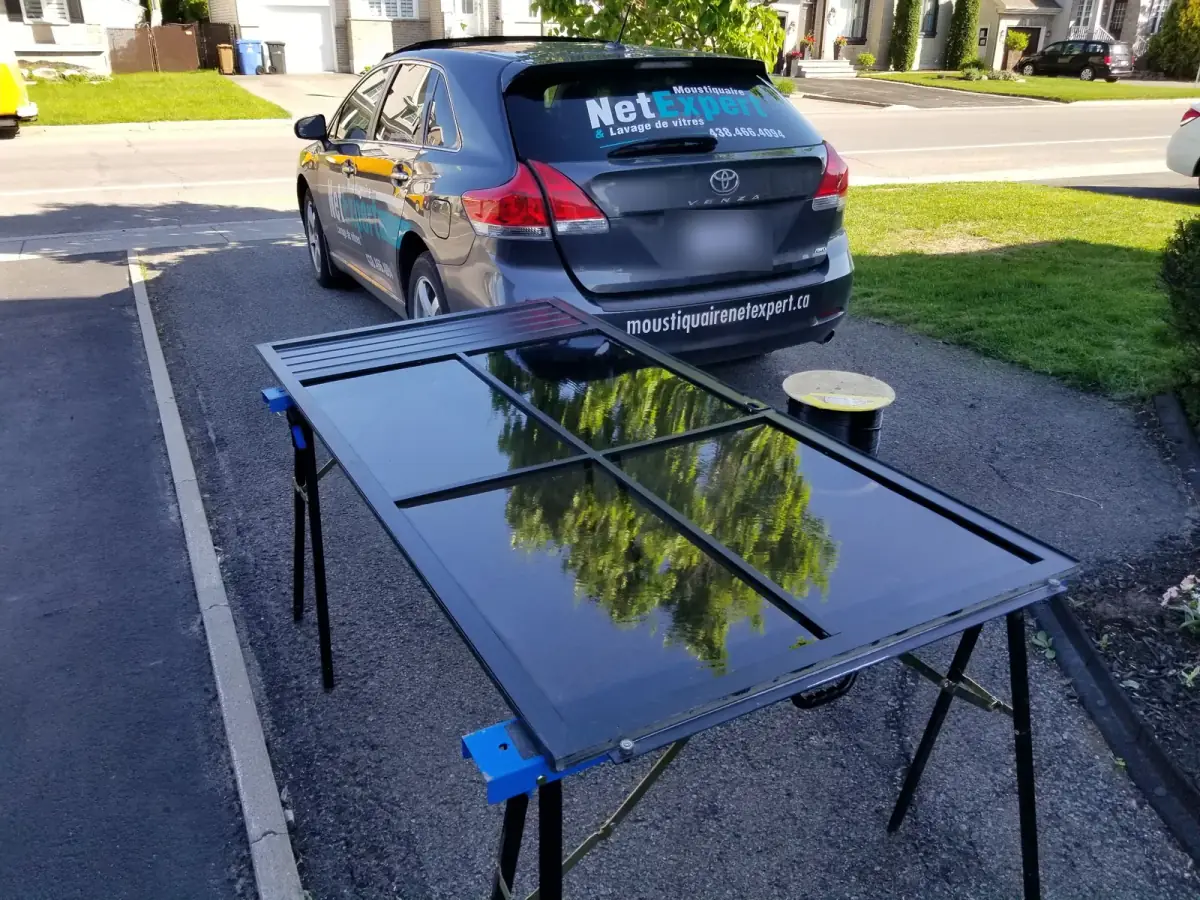
Gazebo and sun shelter specialty
Clear vinyl yellowed or torn? Replaced at your home in Saint-Constant, in the original frames — gazebos and sun shelters.
Three questions are enough to start. The official measurement is taken on site.
Whatever your retailer calls it — MICA film, clear vinyl, clear plastic, sun-shelter transparent fabric — it is the same material, and we replace it in Saint-Constant in your existing panels.
Sun yellows and clouds the vinyl. Film that crackles to the touch is at end of life.
Below freezing, MICA turns brittle — one handling or one gust splits it outright.
Slack vinyl flaps like a sail and eventually tears at the seams.
Saint-Constant was built in waves, and each wave left a different kind of backyard. Behind the bungalows and cottages of the 1970s to 1990s in the older neighbourhoods, the lot runs deep enough for a retail gazebo: an aluminum or steel frame set on the patio or a slab, standard-size screen panels, and often a set of clear vinyl (MICA film) bought at the same time to stretch the season. A gazebo like that seldom arrives with the house; it goes up later, once the yard starts to matter. In time, though, the original film yellows and stiffens, and the screen panels, in the sun from morning to night, start letting go at the corners — how soon depends on how exposed the yard is, not on a fixed count of summers.
The newer subdivisions of semi-detached houses and townhouses tell a different story. The yard is short, hemmed in by shared fences, and the gazebo that fits there is a small retail model chosen to sit between the patio door and the back fence. It is also more exposed: the trees are not yet tall enough to break the wind, and gusts funnel between the houses. In the small old village core it is the other way around — irregular lots, houses far older than any gazebo sold in a store, and so, when there is one, a custom-built wooden structure whose every panel has its own dimensions and its own way of holding the mesh.
On a retail gazebo, the clear film almost always fails before the screening does. It yellows in the sun, turns brittle at the first frost, then splits along a fold or a fastener in the first serious gust. Each pane is measured in its own frame before anything is cut, and the structure never moves — in a townhouse row where the same model repeats from yard to yard, a neighbour’s panel is still never used as the template. The screen panels tear at the corner where the mesh is tightest, sag in the middle, and let their spline work out of the groove. We rescreen them in their own frames: old mesh out, new mesh tensioned, new spline in. On a wooden structure in the village core the approach is the same, but each panel is measured on its own, because no two are alike.
A retail gazebo has the advantage of repeated formats, but models change nearly every year and replacement parts vanish fast, so we work from the frame in hand, never from a catalogue reference. In a townhouse, the yard is too short to lay panels flat: they come down one at a time, are rebuilt in the mobile workshop out front, and go back up — the yard is only ever the place they are unhooked from. On a wooden structure, panels are screwed or stapled rather than clipped, and taking them down calls for more care so the wood does not split.
In the newer sectors the yard is wide open: sun hits the film all day and wind moves freely between the houses. On a gazebo like that, aluminum mesh holds its tension better than fibreglass, and the film has to go on tight so it does not flap. In the older neighbourhoods, mature trees give shade, which spares the film, but drop leaves and sap onto the mesh. Everywhere, the film goes on before the first cold snaps, while the vinyl is still supple; forced on in deep cold, it cracks at the corners.
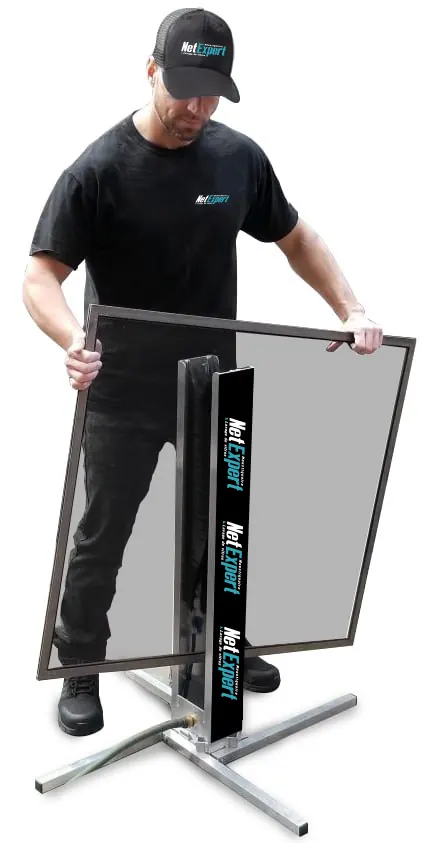
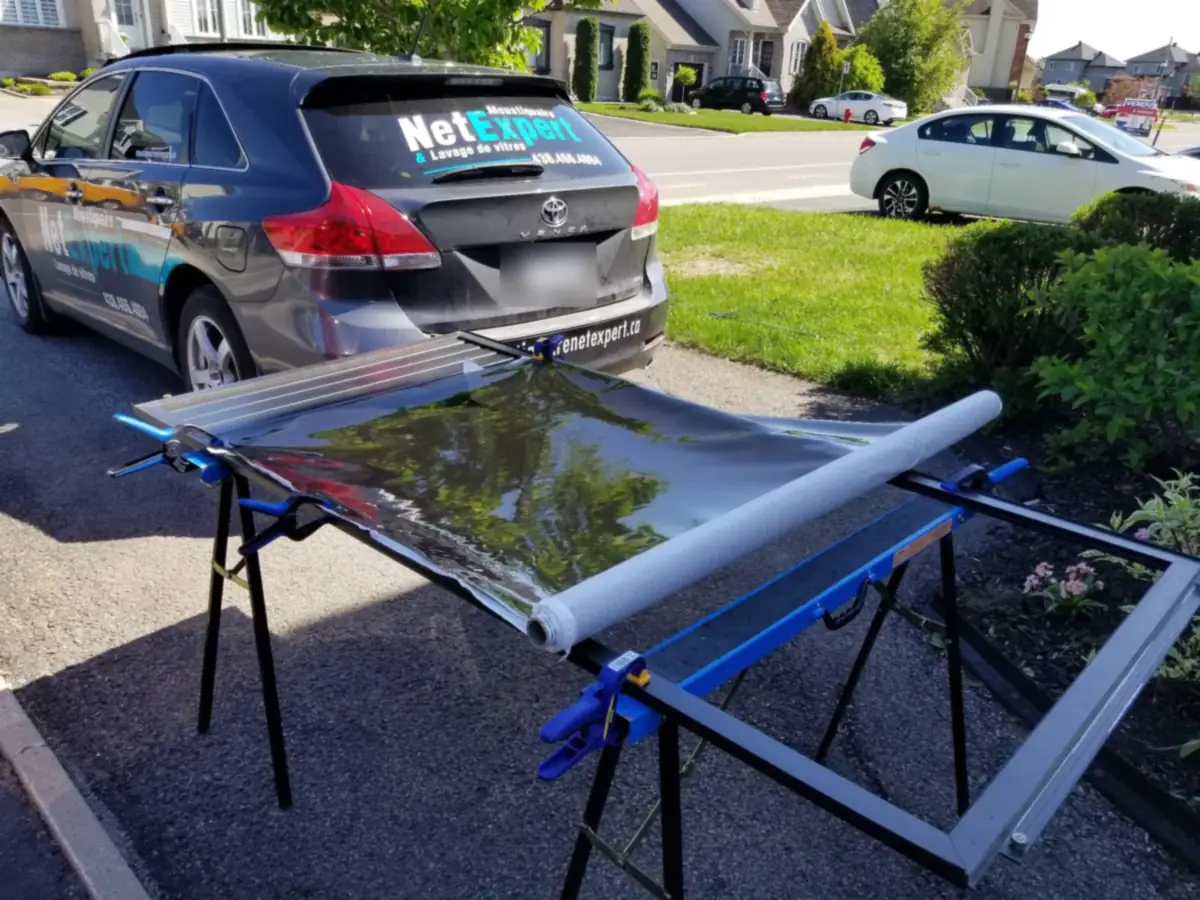
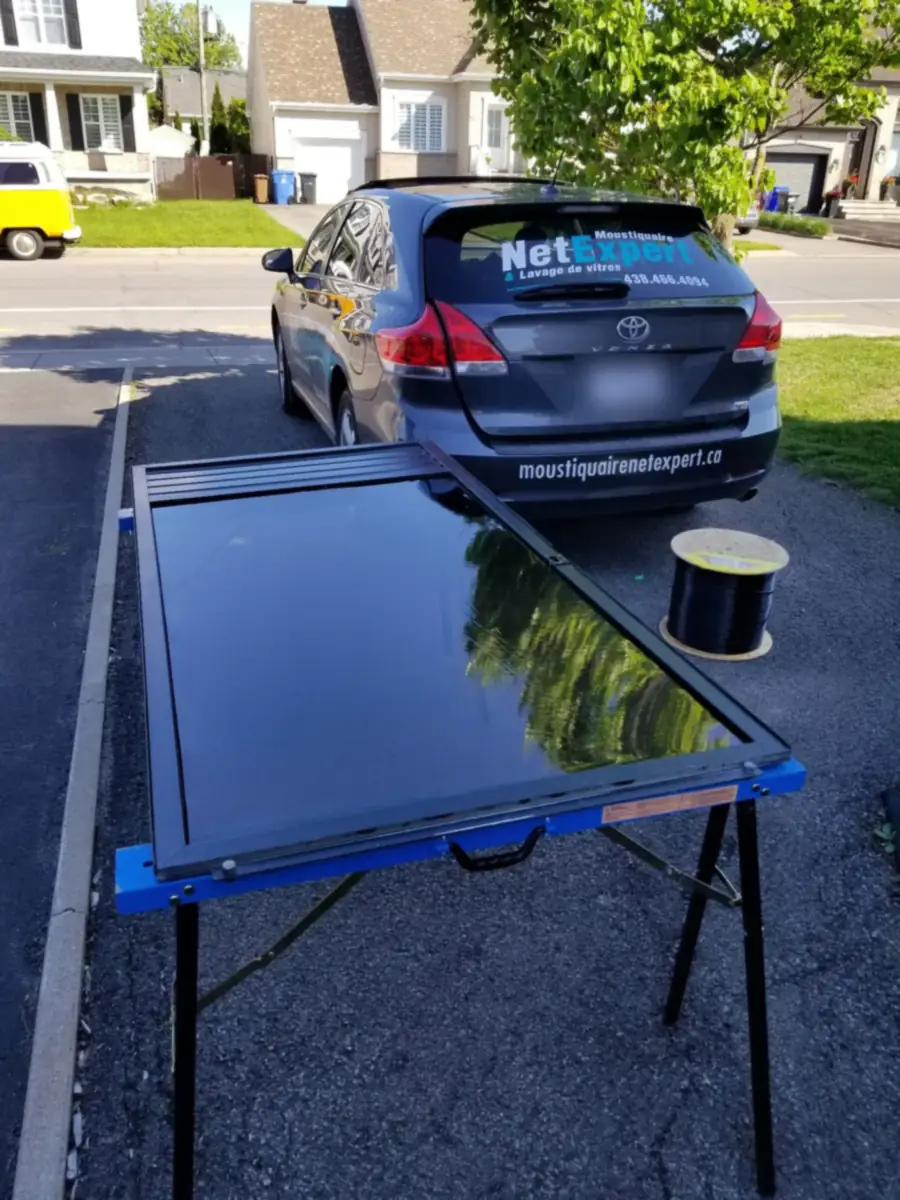
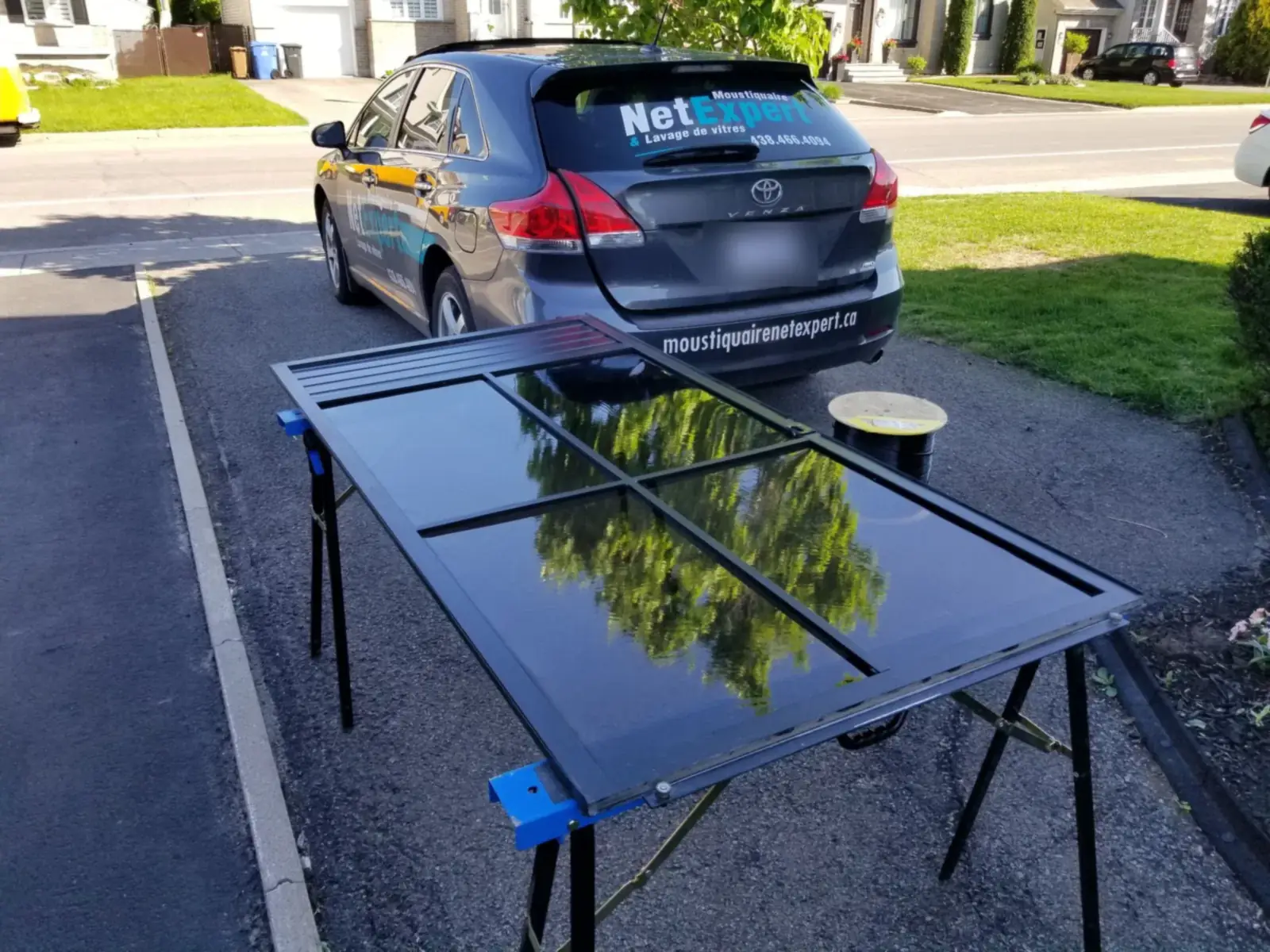
This job was not in Saint-Constant — it shows our method, the same everywhere: panels down, new vinyl pane by pane, panels back up.
« Great service! He was at my neighbour’s and agreed to fix my back screen even though we had no appointment. Very successful repair, and inexpensive! »
« Ludovic replaced my screen in record time. Professional, and with a great sense of humour. I recommend his services — don’t hesitate to contact him, he’ll come to your home and do beautiful work. »
« Excellent service. Clear explanations of the work to be done. I really appreciated his dedication: despite the rain he insisted on finishing the job, soaked through and still smiling. The work was very well done. »
Straight answers
No. The panel frames are almost always still straight; it is the film or the mesh that has given out. We rescreen the panel in its original frame and cut new film to the exact size of each pane, whether or not the model is still in the catalogue. The gazebo itself does not have to move an inch.
Yes. The panels come down one by one, are rebuilt in the mobile workshop parked out front, and go back up. Nothing needs to be spread out in the yard, and nothing passes through the house except the panels themselves. All we need is access to the yard, through the house or the gate, arranged when the appointment is set.
In an open yard like the ones in the newer subdivisions, yes, unless you need it against the wind: direct sun from June to August is what yellows and stiffens the vinyl fastest. Stored flat and in the shade, the film ages far more slowly than it does left up all summer. If the gazebo doubles as a windbreak in summer, leave it up and accept replacing it sooner.
Yes, at your home. We travel to Saint-Constant, remove the panels, replace the MICA vinyl in the original frames and put everything back — the gazebo structure is never touched. It is one of our specialties.
Yes. Depending on the retailer it is called MICA film, clear vinyl, clear plastic or transparent fabric — the same flexible material that cuts wind and holds warmth. We replace it on gazebos and sun shelters alike.
Yes. The vinyl is replaced pane by pane, in the existing frame — no need to redo the whole panel for one tear. If several panes have yellowed, doing them together gives a uniform result.
On assessment: the price depends on the number of panels and their dimensions. The quote is free, and a photo is often enough to price without a visit. Fabrication and installation guaranteed one year.
Do you manage a building or a business in Saint-Constant?