
Summer UV
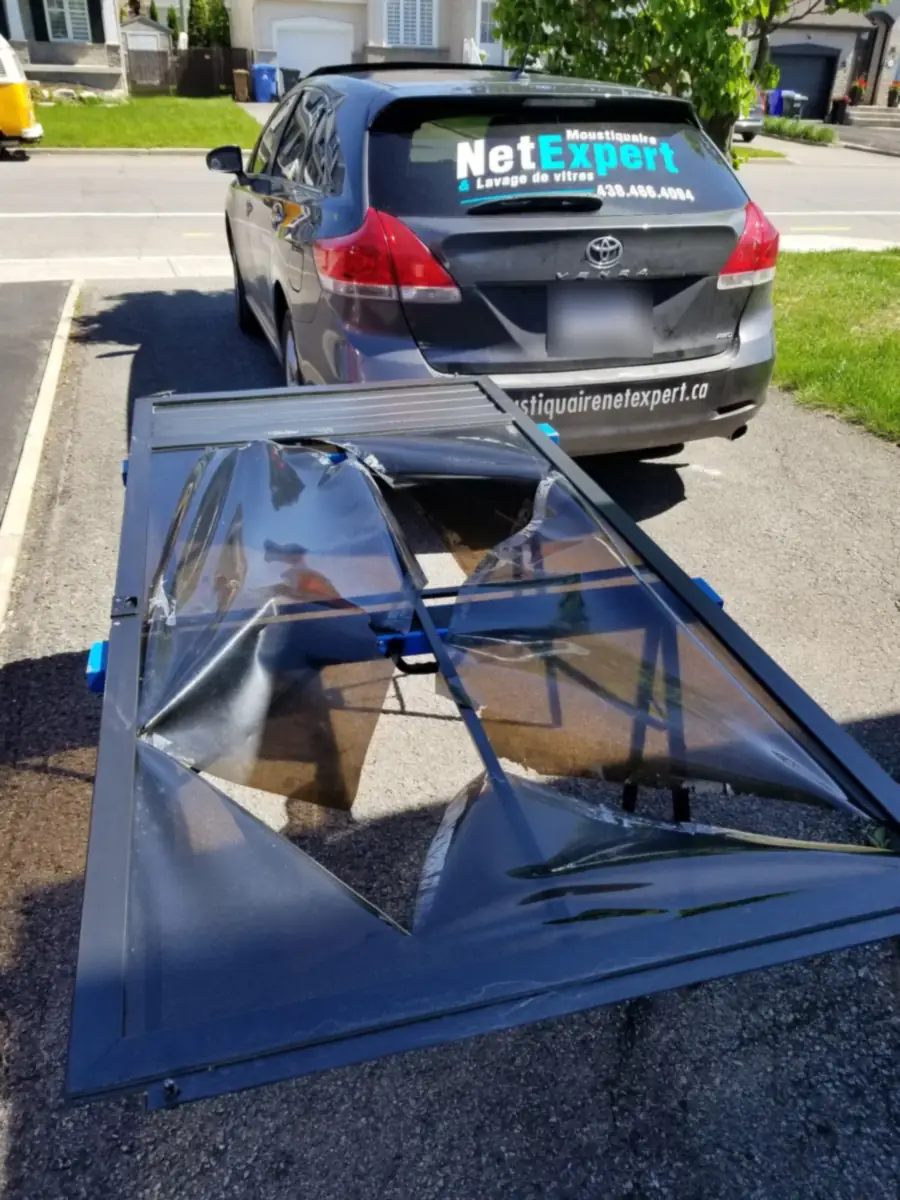
Sun yellows and clouds the vinyl. Film that crackles to the touch is at end of life.
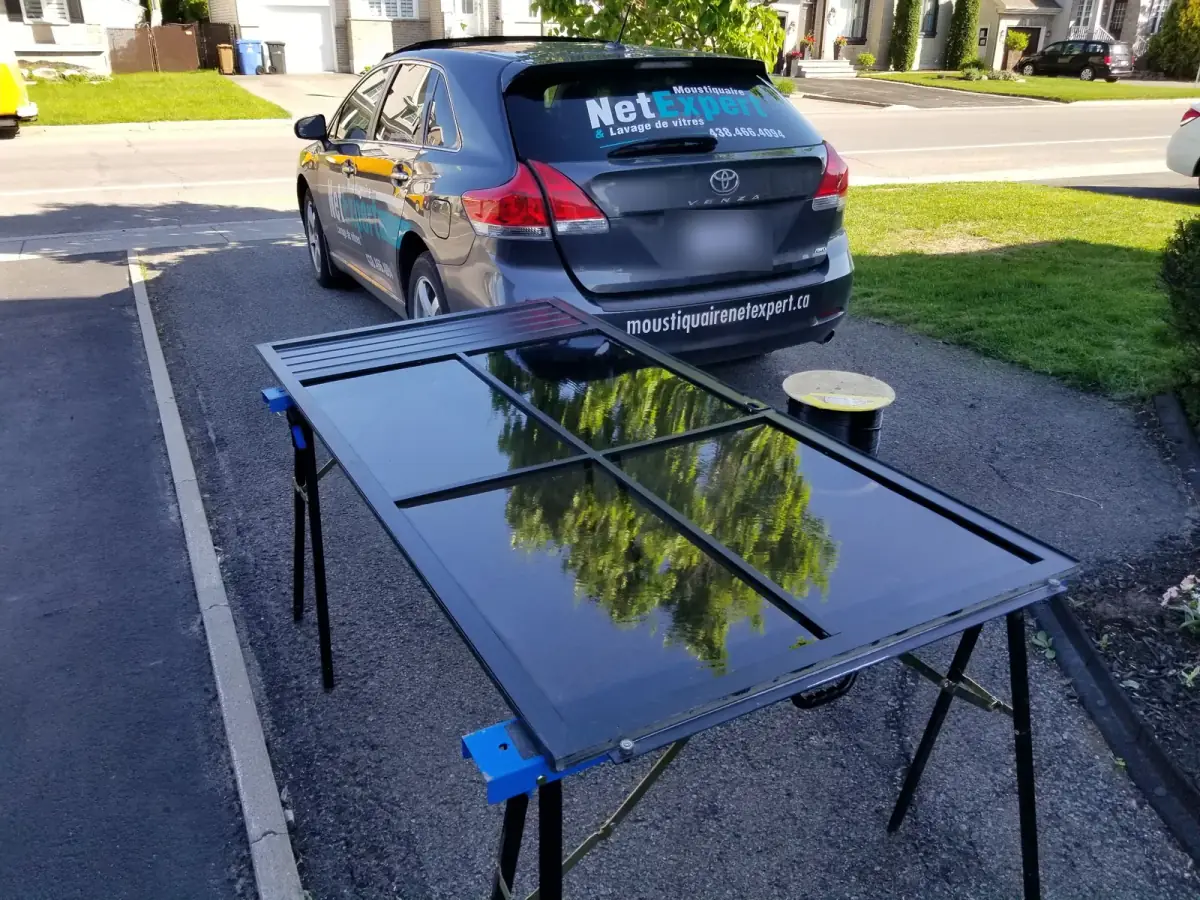
Gazebo and sun shelter specialty
Clear vinyl yellowed or torn? Replaced at your home in Kahnawake, in the original frames — gazebos and sun shelters.
Three questions are enough to start. The official measurement is taken on site.
Whatever your retailer calls it — MICA film, clear vinyl, clear plastic, sun-shelter transparent fabric — it is the same material, and we replace it in Kahnawake in your existing panels.
Sun yellows and clouds the vinyl. Film that crackles to the touch is at end of life.
Below freezing, MICA turns brittle — one handling or one gust splits it outright.
Slack vinyl flaps like a sail and eventually tears at the seams.
Kahnawake stretches along the river, and its housing tells a straightforward story: single-storey family homes built from the 1960s onward, often owner-built, then extended over time. The same hands that framed an addition rarely bought a garden shelter in a box: on these lots, a permanent wood structure raised on site fits perfectly, with panels made to the size of the opening the day they went in. Alongside it, in the newer or more open yards, the retailer gazebo in aluminum or steel, with standard panels, fills the same role using an entirely different kind of part, and a different way of holding its panes in place.
The river is the second factor, and there is no working around it. A lot facing the water, or close to it, has nothing to slow the wind, and a screened shelter there is a sail stretched on four sides. Around the old stone core near the mission, lots are older and more crowded with buildings, so better sheltered; as you move toward the areas built later, yards open up and exposure rises. The same model of shelter therefore does not wear at the same rate from one end of the community to the other, and it is the panels facing the prevailing wind that call for replacement first.
On a shelter built on site, the film is seldom held in a clean groove: more often it is stapled under a wood moulding or pinched by a screwed-on batten. River wind sets it flapping, the flapping works that line of staples, and the tear starts there — never in the middle of the pane. We rebuild the pane to measured dimensions, in the existing frame, and redo the fastening where it let go. Screen panels on an exposed shelter show the same pattern: the mesh stretches, takes a belly, and the spline or staple gives at the leeward corner. Rescreening happens in the original frame, with mesh that holds its tension.
On a retailer gazebo the mechanics differ but the order is the same: the film goes before the screening. It yellows first, stiffens next, then splits from a grommet on a gusty day. Those panels call for no woodwork at all: they unclip or unscrew and are worked flat while the framing stays standing. When several panes share an age and an exposure, they finish together: taking a whole side at once costs less than picking the panes off one at a time, season after season.
A structure built on site has no catalogue dimensions, and that is the one genuine difficulty of the work here. Two panes on the same side can differ by half an inch, a deck extension may have been added ten years after the shelter with openings framed by another hand, and a panel cut to a neighbour's measurement binds on reinstallation. Every pane is therefore measured on its own and marked before it leaves its place. Then there is the takedown: panels screwed into wood, sometimes painted over, come off methodically rather than by force, or the frame pays for it.
River wind decides nearly everything on open lots: film fitted with slack will flap, and film that flaps does not survive the autumn. It is the tension at installation, not the thickness of the vinyl, that makes the difference. Unobstructed sun speeds yellowing on the exposed side, so a shelter can have one flank at the end of its life and another still sound. In the evening, being close to the water brings insects small enough to cross ordinary mesh: that is the case for a tight weave, at least on the panels facing the water.
Prefer English? We serve you in whichever language you choose, in Kahnawake as everywhere else.
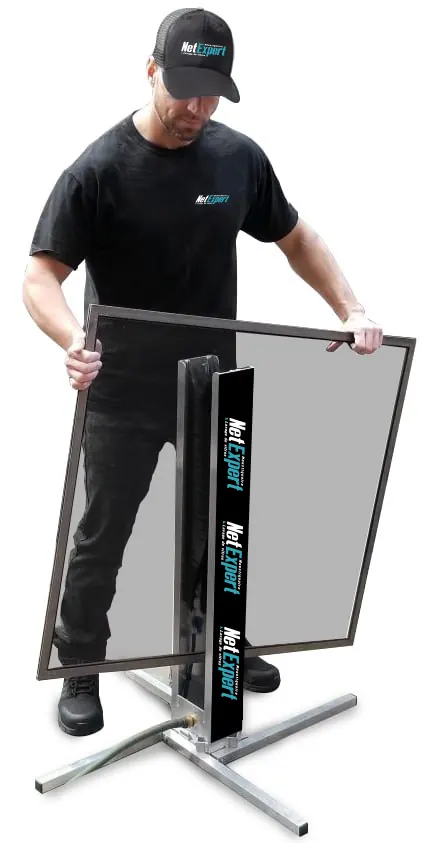
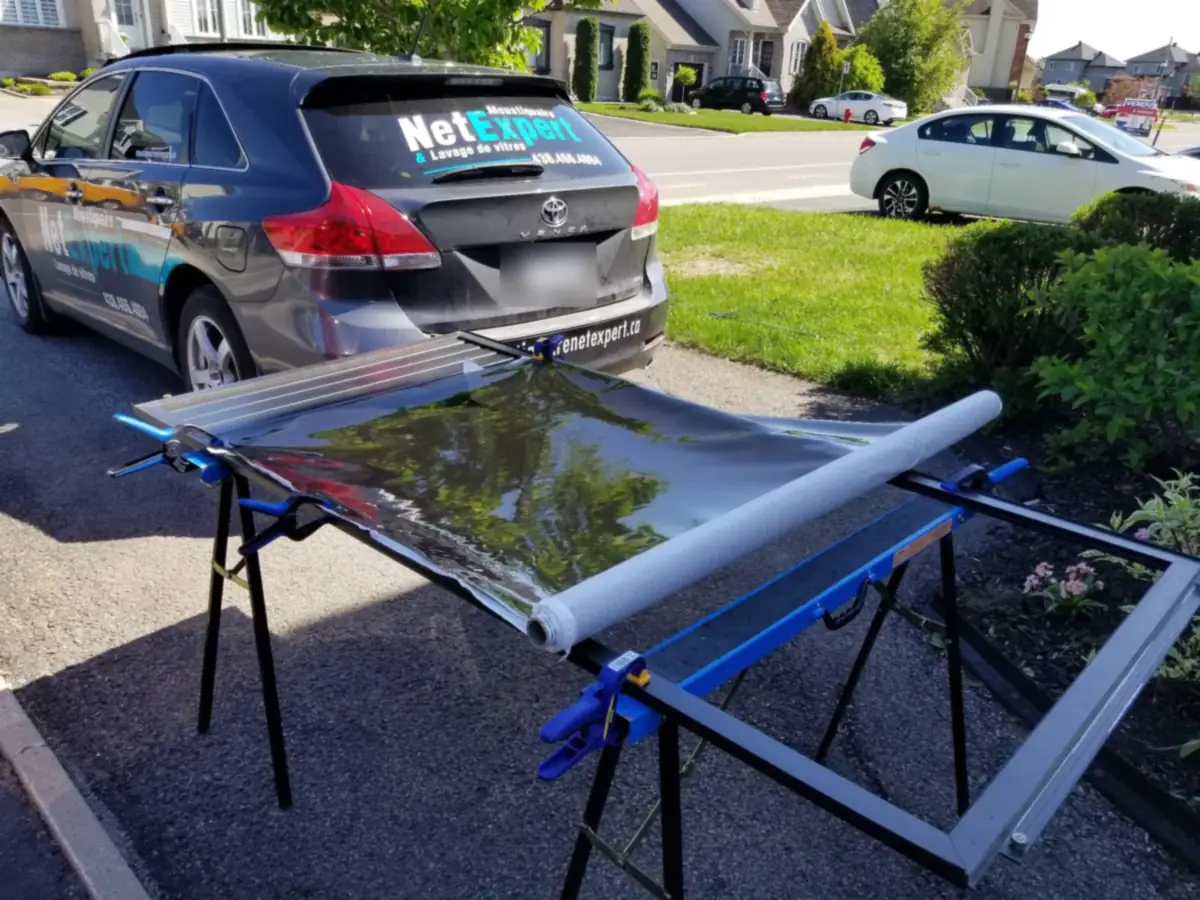
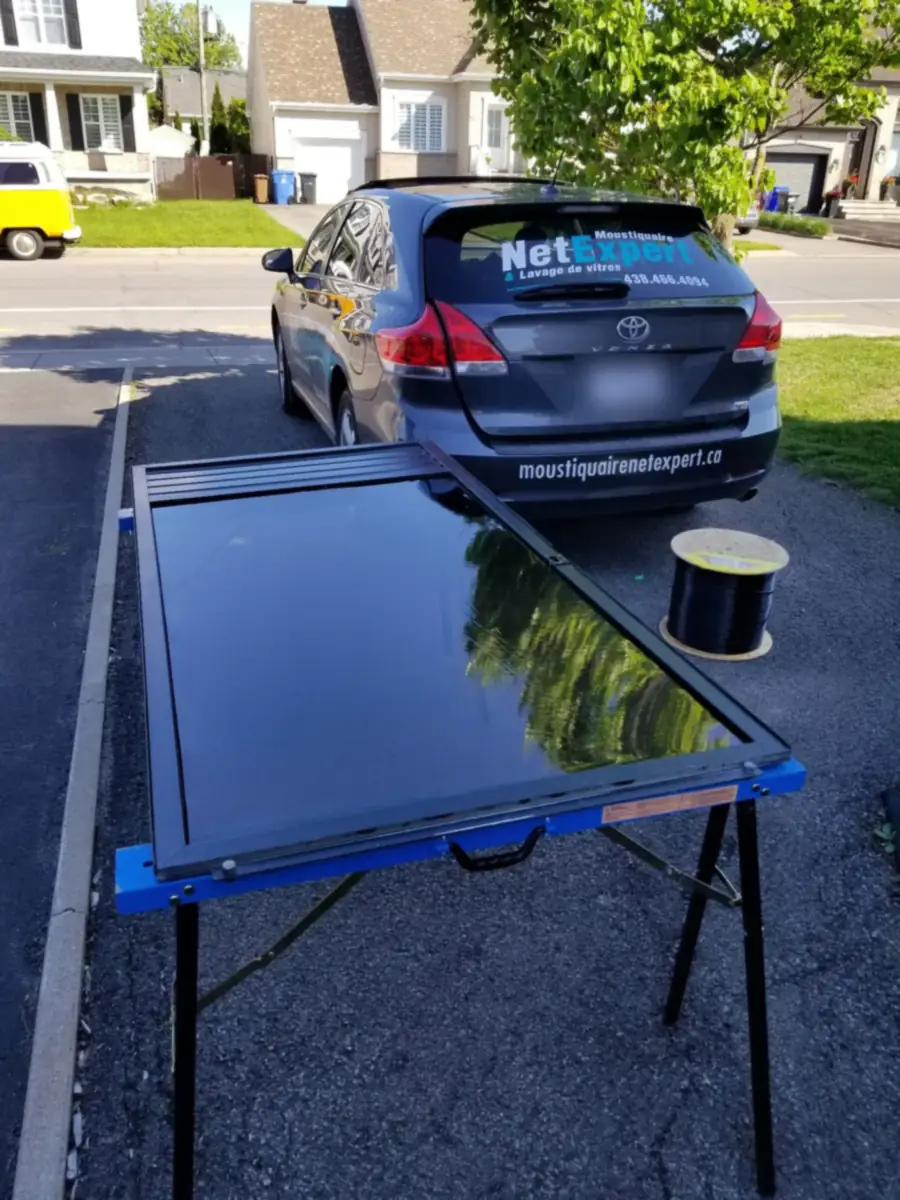
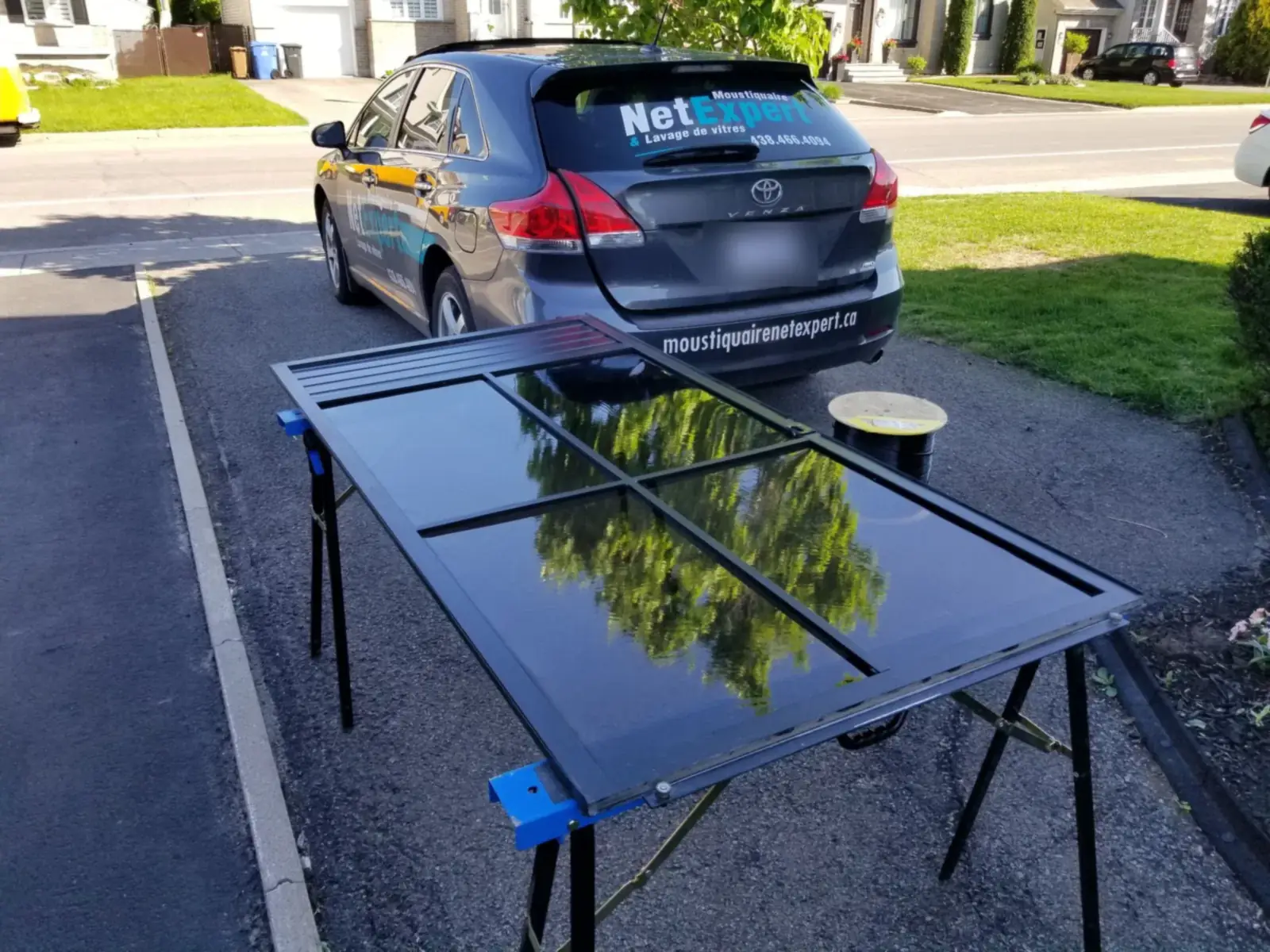
This job was not in Kahnawake — it shows our method, the same everywhere: panels down, new vinyl pane by pane, panels back up.
« Great service! He was at my neighbour’s and agreed to fix my back screen even though we had no appointment. Very successful repair, and inexpensive! »
« Ludovic replaced my screen in record time. Professional, and with a great sense of humour. I recommend his services — don’t hesitate to contact him, he’ll come to your home and do beautiful work. »
« Excellent service. Clear explanations of the work to be done. I really appreciated his dedication: despite the rain he insisted on finishing the job, soaked through and still smiling. The work was very well done. »
Straight answers
Yes: the existing frame is the template, not a commercial size. Each pane is measured separately, marked so it returns to its own opening, then rebuilt to its own dimension. An owner-built shelter is handled exactly like a retailer model, with one difference: nothing is assumed identical until it has been measured.
Not necessarily. A tear at the fastening comes from flapping, not from the moulding itself. If the batten or moulding is sound, it comes off, new film goes on taut, and the fastening is redone cleanly over it. If the wood is split by the screws or rotten at the bottom of the pane, that gets addressed first, or the new film will fail in the same place.
Yes, and it is common on an exposed lot: the side taking the prevailing wind and full sun wears out well before the others. We redo the affected panes and inspect their neighbours, since they share the same age. There is no obligation to touch the sound sides, which will go on serving their seasons.
Yes, at your home. We travel to Kahnawake, remove the panels, replace the MICA vinyl in the original frames and put everything back — the gazebo structure is never touched. It is one of our specialties.
Yes. Depending on the retailer it is called MICA film, clear vinyl, clear plastic or transparent fabric — the same flexible material that cuts wind and holds warmth. We replace it on gazebos and sun shelters alike.
Yes. The vinyl is replaced pane by pane, in the existing frame — no need to redo the whole panel for one tear. If several panes have yellowed, doing them together gives a uniform result.
On assessment: the price depends on the number of panels and their dimensions. The quote is free, and a photo is often enough to price without a visit. Fabrication and installation guaranteed one year.
Do you manage a building or a business in Kahnawake?