
Summer UV
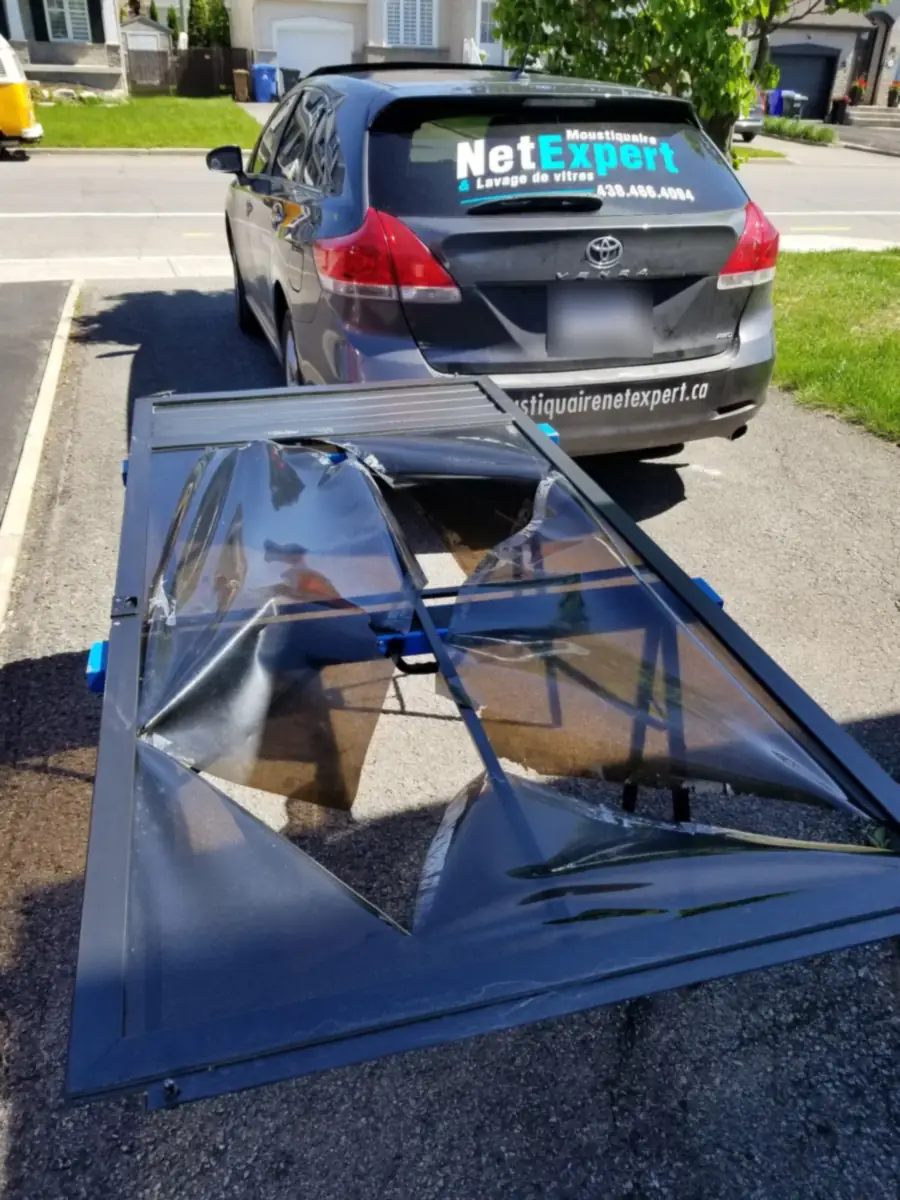
Sun yellows and clouds the vinyl. Film that crackles to the touch is at end of life.
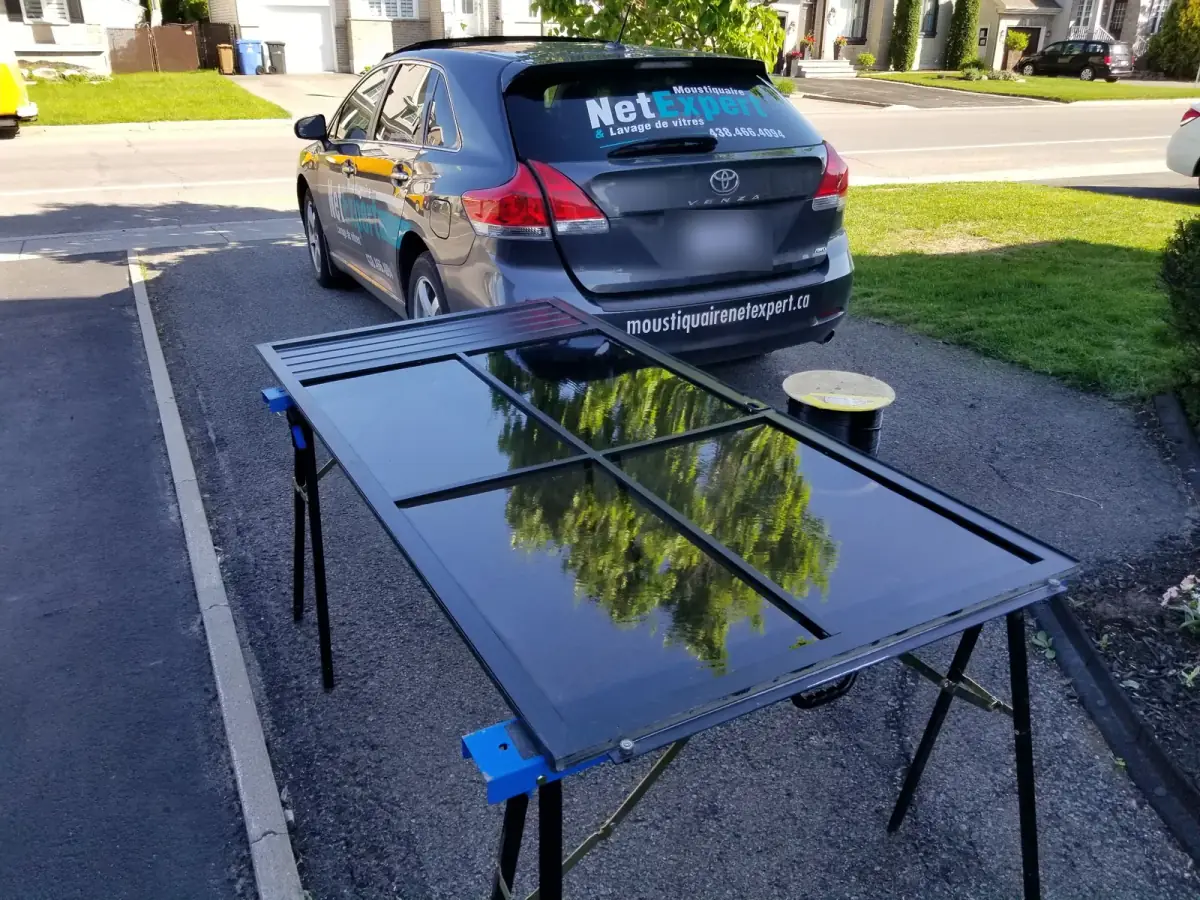
Gazebo and sun shelter specialty
Clear vinyl yellowed or torn? Replaced at your home in Saint-Philippe, in the original frames — gazebos and sun shelters.
Three questions are enough to start. The official measurement is taken on site.
Whatever your retailer calls it — MICA film, clear vinyl, clear plastic, sun-shelter transparent fabric — it is the same material, and we replace it in Saint-Philippe in your existing panels.
Sun yellows and clouds the vinyl. Film that crackles to the touch is at end of life.
Below freezing, MICA turns brittle — one handling or one gust splits it outright.
Slack vinyl flaps like a sail and eventually tears at the seams.
Saint-Philippe gained whole neighbourhoods of single-family and semi-detached homes built between 2010 and 2020 in just a few years, and those yards share one trait: they are new. The trees are not yet big enough to cast real shade, the lots are measured tight, and two neighbouring houses sit close together. The gazebo that goes up there is almost always a small retailer model — aluminum frame, standard panels — set on the back deck or on pavers. It is chosen to fit the space available, and it lives in full sun from morning to night because there is nothing around to shield it.
The old village core tells a different story. Lots there are larger and better planted, and the gazebo you find is often a permanent wooden structure raised on site, with panels that match no size sold in a store. The municipality stayed agricultural all around, and a yard on the edge of the fields behaves like a country yard: nothing breaks the wind, and exposure is total. A semi's yard, a planted lot in the old village and an open yard along the farmland each call for different preparation, while the work on the panels itself does not change.
In a new neighbourhood with no shade, the film pays for the full sun. It yellows first, losing clarity evenly, then stiffens; at that point a single gust funnelling between two houses is enough to split a pane, almost always starting from a crease set during storage. Screening lasts longer, but the same wind slackens it, and on a low panel the corner goes first. The work does not change from one situation to the next: each pane gets its own film, cut to the reading taken off its frame, and each screen panel goes back rescreened in its own. The gazebo structure never enters the operation, which is what makes it possible to redo only the affected faces.
In the recent developments, the difficulty is the passage. Between two semis the side corridor comes down to a gate and the width of a walking passage, and that is where every panel has to travel to reach the mobile workshop; a raised back deck adds a few steps to the trip. None of it is a problem, provided panels come off one at a time and the route is known beforehand. In the old village and along the fields the problem reverses: space is not the issue, but the panels of a wooden structure are one-offs and get measured individually, with no standard size to fall back on.
A new yard is an exposed yard. With no mature tree, sun hits all day and it is the sun that decides how long the film lasts; alongside it, wind accelerating between two closely spaced houses sets poorly tensioned panes flapping. On the most exposed faces, aluminum mesh holds tension better than fibreglass. The farmland still bordering the municipality also keeps mosquitoes active in the evening, which justifies a tight weave on whichever side you sit, and film installed before the first cold snaps if the gazebo gets used into the fall.
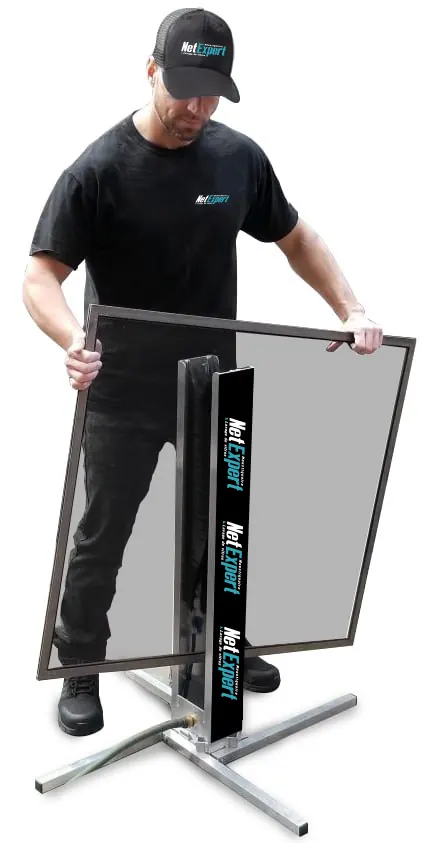
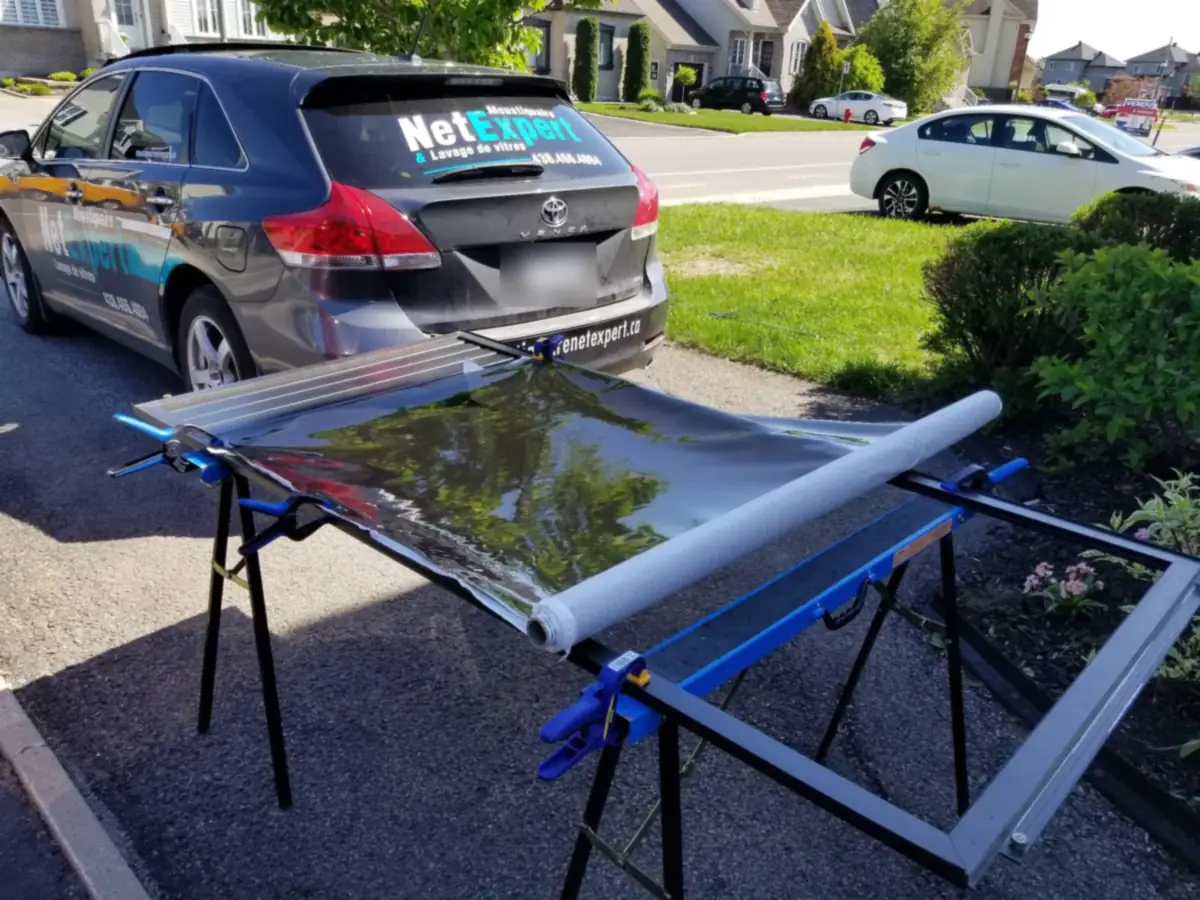
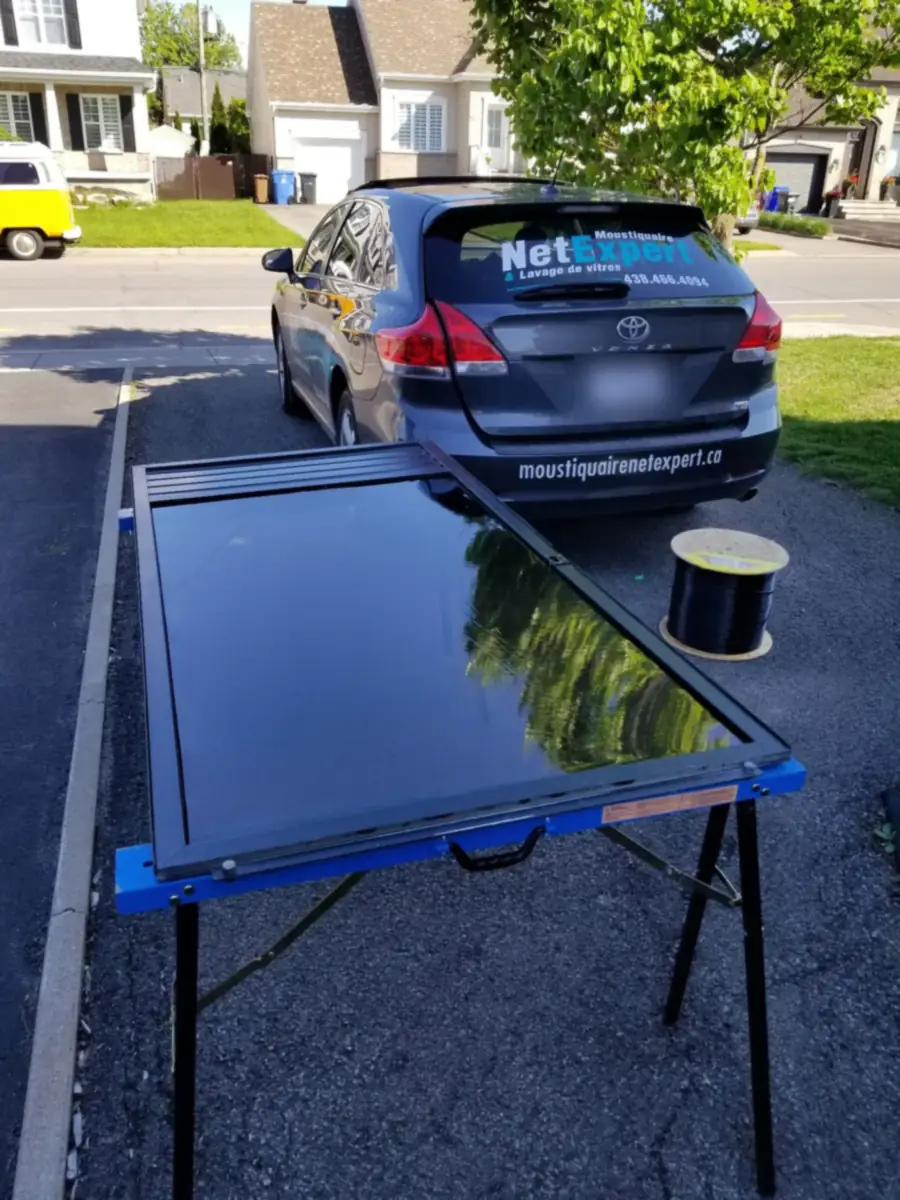
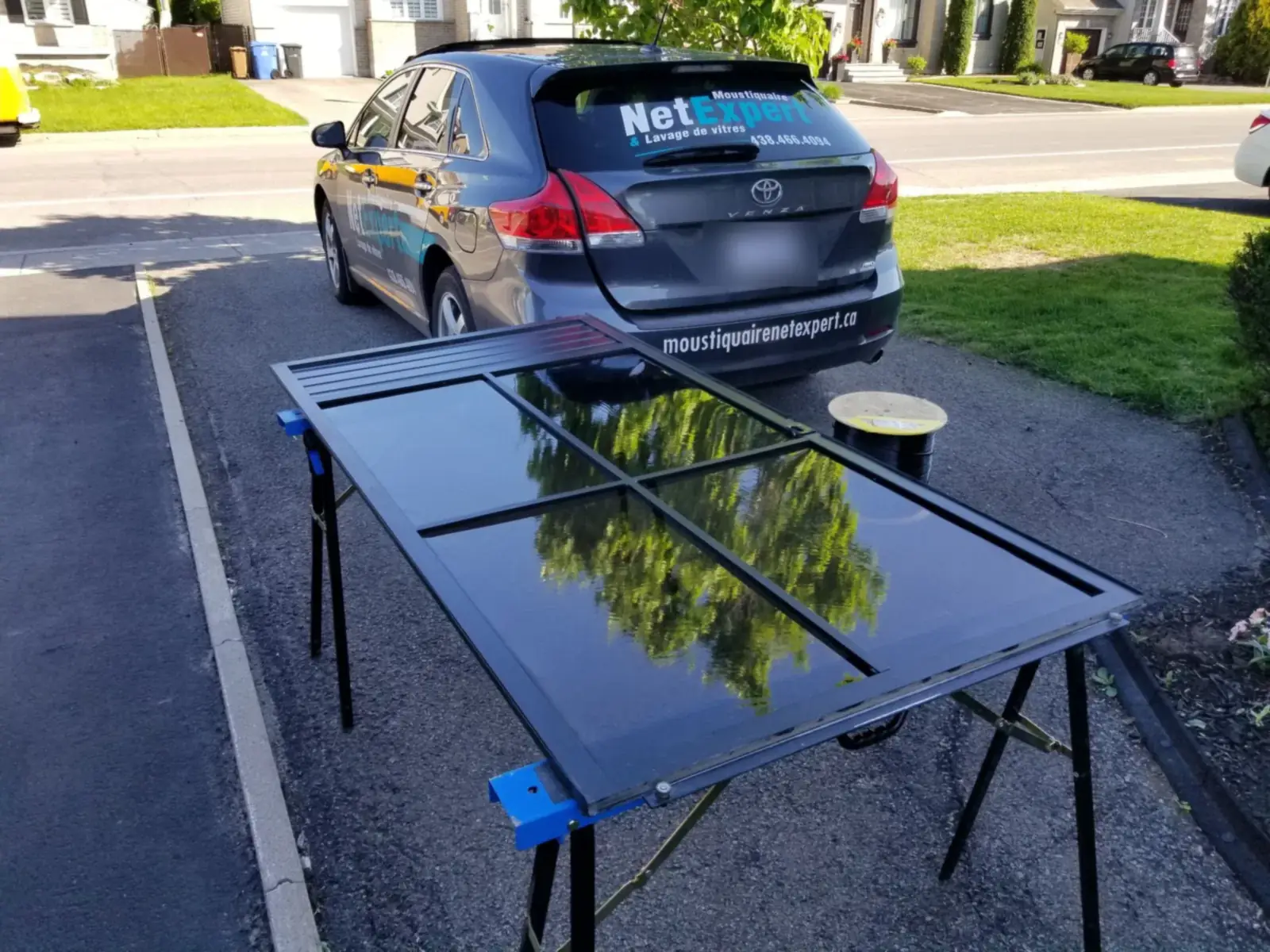
This job was not in Saint-Philippe — it shows our method, the same everywhere: panels down, new vinyl pane by pane, panels back up.
« Great service! He was at my neighbour’s and agreed to fix my back screen even though we had no appointment. Very successful repair, and inexpensive! »
« Ludovic replaced my screen in record time. Professional, and with a great sense of humour. I recommend his services — don’t hesitate to contact him, he’ll come to your home and do beautiful work. »
« Excellent service. Clear explanations of the work to be done. I really appreciated his dedication: despite the rain he insisted on finishing the job, soaked through and still smiling. The work was very well done. »
Straight answers
No, because we do not depend on the maker. Film and mesh are cut from measurements taken off your own frames, then fitted back into those same frames — the structure and frames are what we keep, not a replacement part to order. A discontinued model is redone exactly like a current one.
Yes, one at a time. Retailer gazebo panels are modest in size and go through a side corridor or a gate without being forced. We check the route before starting, remove panels as we go rather than all at once, and the structure stays standing throughout.
It is mostly the exposure. In a neighbourhood where the trees have not grown in yet, a gazebo takes sun from morning to night with no cover at all, and vinyl responds to that dose. The film is replaced pane by pane; the creases set during storage are avoided by rolling it rather than folding it away.
Yes, at your home. We travel to Saint-Philippe, remove the panels, replace the MICA vinyl in the original frames and put everything back — the gazebo structure is never touched. It is one of our specialties.
Yes. Depending on the retailer it is called MICA film, clear vinyl, clear plastic or transparent fabric — the same flexible material that cuts wind and holds warmth. We replace it on gazebos and sun shelters alike.
Yes. The vinyl is replaced pane by pane, in the existing frame — no need to redo the whole panel for one tear. If several panes have yellowed, doing them together gives a uniform result.
On assessment: the price depends on the number of panels and their dimensions. The quote is free, and a photo is often enough to price without a visit. Fabrication and installation guaranteed one year.
Do you manage a building or a business in Saint-Philippe?