
Summer UV
Sun yellows and clouds the vinyl. Film that crackles to the touch is at end of life.
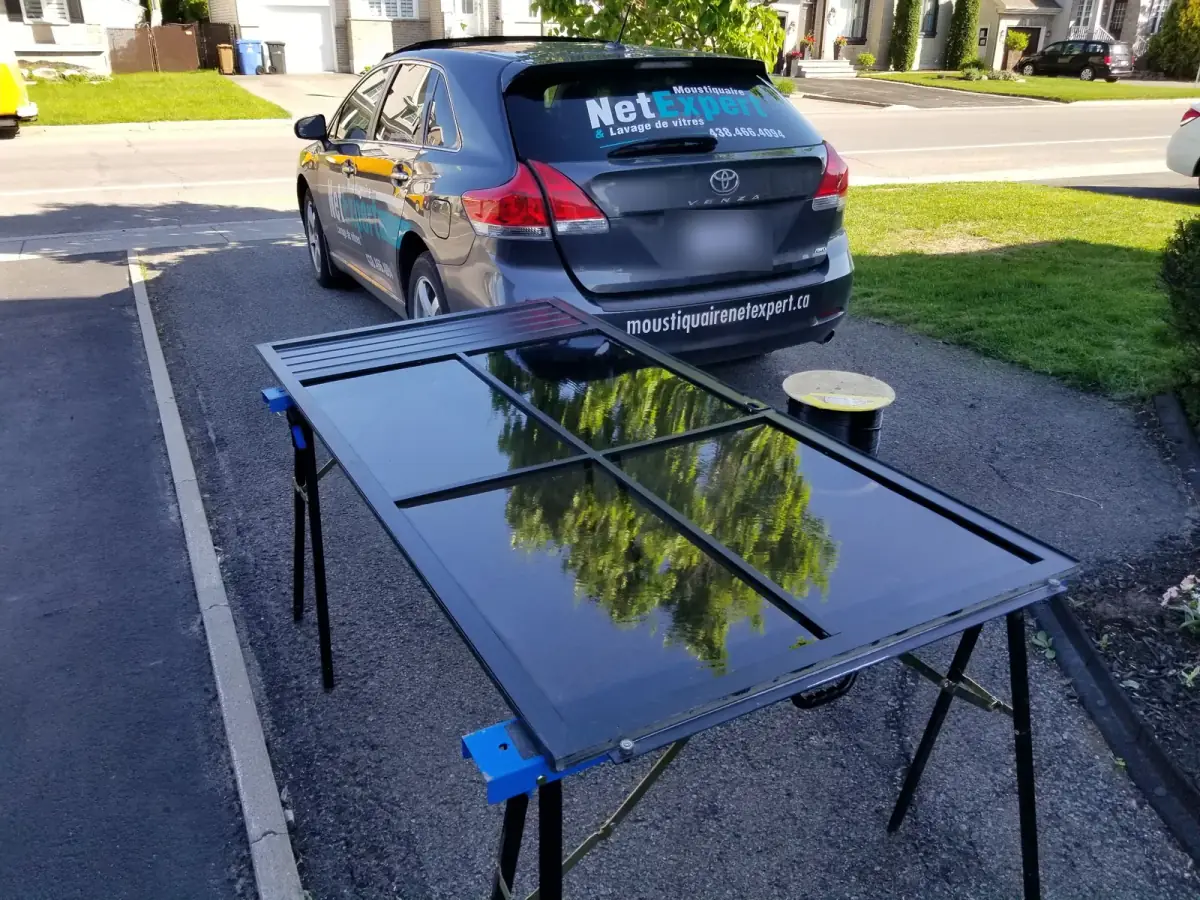
Gazebo and sun shelter specialty
Clear vinyl yellowed or torn? Replaced at your home in Varennes, in the original frames — gazebos and sun shelters.
Three questions are enough to start. The official measurement is taken on site.
Whatever your retailer calls it — MICA film, clear vinyl, clear plastic, sun-shelter transparent fabric — it is the same material, and we replace it in Varennes in your existing panels.
Sun yellows and clouds the vinyl. Film that crackles to the touch is at end of life.
Below freezing, MICA turns brittle — one handling or one gust splits it outright.
Slack vinyl flaps like a sail and eventually tears at the seams.
In Varennes, the retailer gazebo has its natural territory in the suburban belt, the largest of the town’s three building eras. Fenced back yard, slab or wood deck, an aluminum or steel structure bought at a store: that is the most common setup, and it repeats from street to street with a regularity that helps a great deal. Panels come in common sizes, the clear vinyl (MICA film) and the mesh seat in a groove, and the wear follows a predictable schedule. A gazebo put up around the turn of the 2000s in one of those yards is reaching the end of its original film now.
The town’s two other building eras change the picture. Toward Highway 30, the newer developments have narrower yards, with young trees and houses close together: the gazebo there is more compact, but the lack of any screening leaves it more exposed than it looks, because wind picks up speed between two houses. In the old core near the basilica, with its stone and wood houses, the gazebo is never original: it is a wood structure added into an enclosed yard, fitted to the space available, with panels that match no production size at all.
On the retailer gazebos of the subdivision belt, the order of failure is almost always the same. The clear vinyl (MICA film) yellows and stiffens through the summer sun, then splits at the first strong wind, usually at the corner of a light. The screens follow: slack mesh that bulges, spline lifting out of its groove, a torn corner where the panel bears. We redo both inside the original frames, to measurements taken panel by panel — even on a structure sold in standard sizes, two neighbouring lights do not always match. The gazebo structure itself is never taken apart: we touch only the panels, and they go back exactly where they came from.
Here it is access that shapes the visit. A fenced back yard in a subdivision does not always have a side passage wide enough for a gazebo panel, and the panels then have to travel through the house. A gazebo built on a raised deck adds a stairway to the route: a large panel does not come down on an angle, it comes down flat and two-handed. In the old core the constraint is different — enclosed yards, little room to work, and a wood structure whose panels are sometimes screwed into the framing. We then open the minimum, and the framing stays intact.
Three factors weigh on the choice. Sun first: in an open subdivision yard, the south face of a gazebo takes the whole day, and that is the face where the film goes first. Then wind, stronger than people expect in the newer developments toward Highway 30, where it funnels between closely spaced houses — on large exposed panels, aluminum holds its tension better. And animals: the back yard is where the dog and the cat go out, so pet-resistant mesh earns its place on the lower panels.
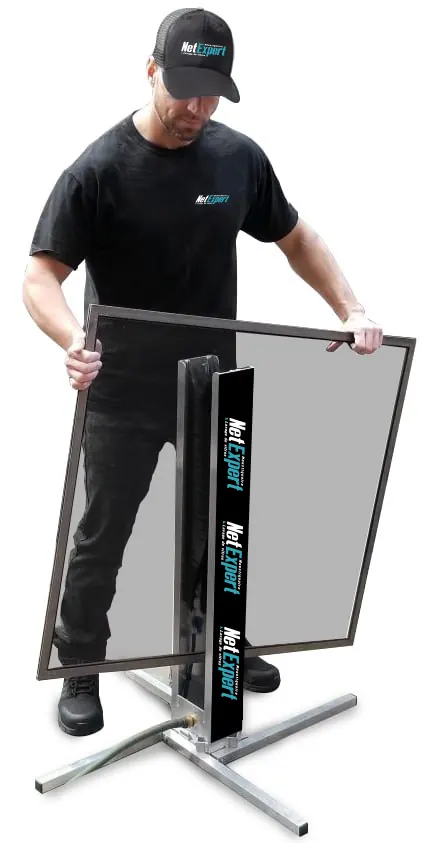
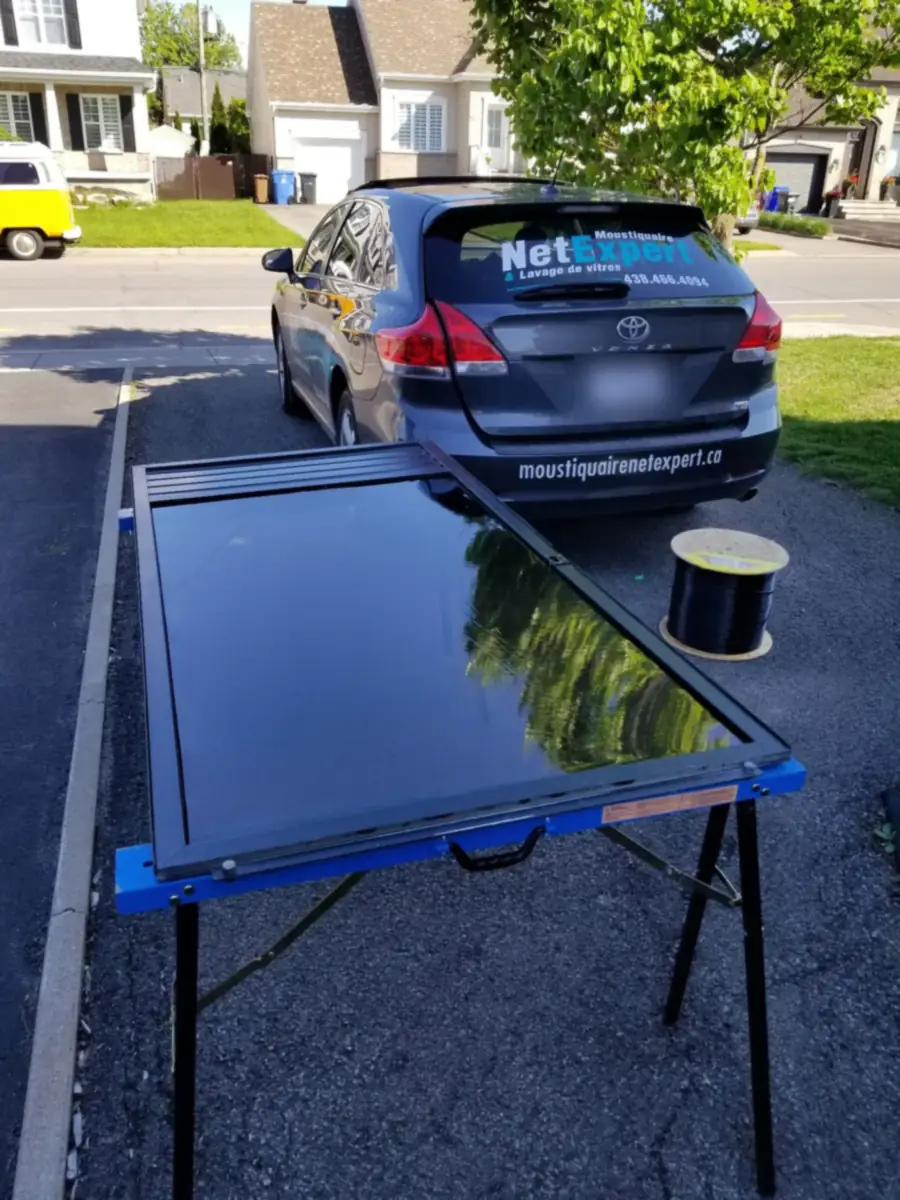
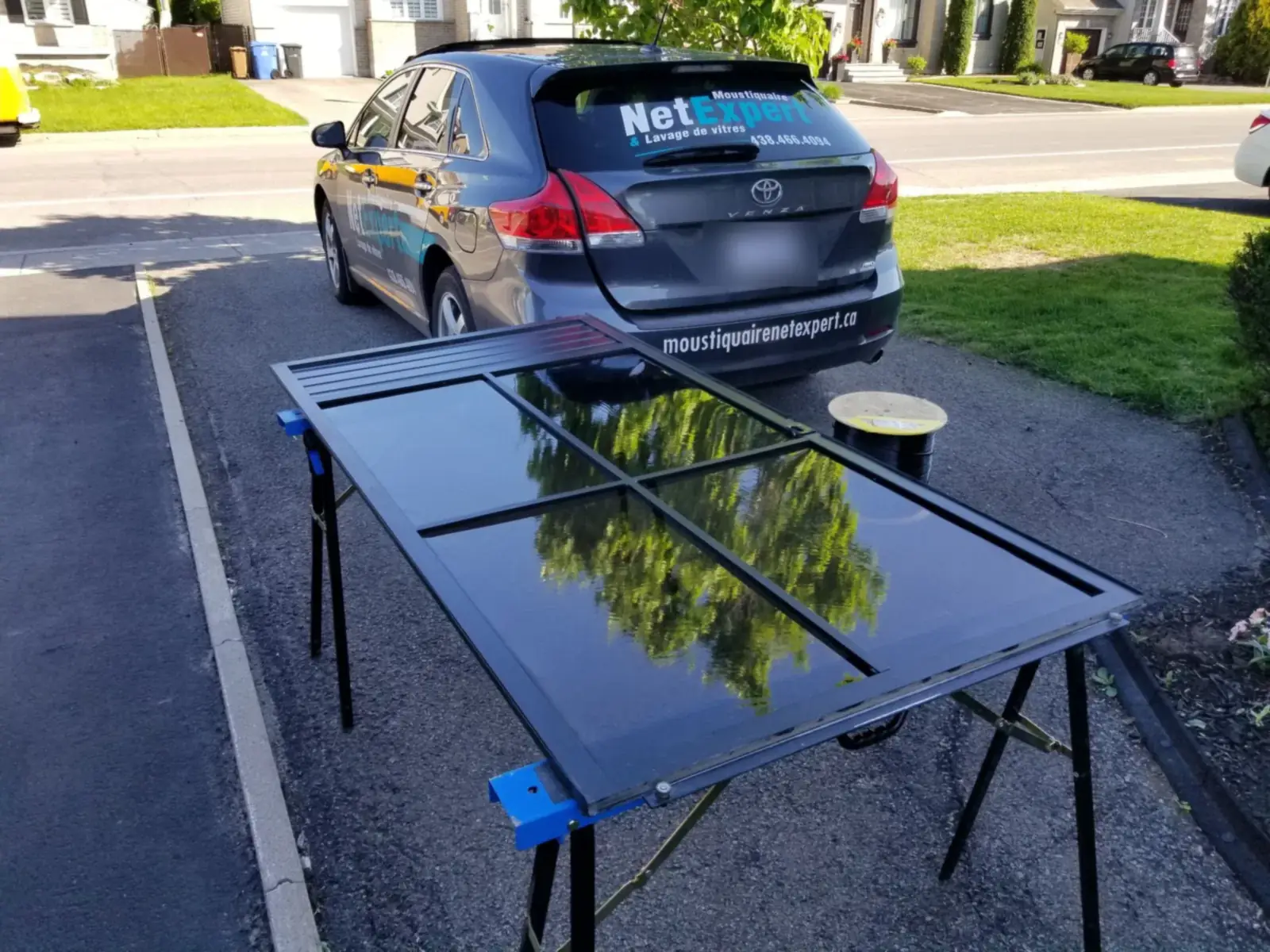
This job was not in Varennes — it shows our method, the same everywhere: panels down, new vinyl pane by pane, panels back up.
« Excellent service. Clear explanations of the work to be done. I really appreciated his dedication: despite the rain he insisted on finishing the job, soaked through and still smiling. The work was very well done. »
« Great service! He was at my neighbour’s and agreed to fix my back screen even though we had no appointment. Very successful repair, and inexpensive! »
« Ludovic replaced my screen in record time. Professional, and with a great sense of humour. I recommend his services — don’t hesitate to contact him, he’ll come to your home and do beautiful work. »
Straight answers
Yes. It is not the panel that gets replaced but its mesh or film, re-tensioned in the frame the maker left behind. That is precisely what makes a gazebo with no parts still available repairable. As long as the frame is straight and the groove still holds spline, the structure and its panels keep serving without depending on a catalogue that no longer exists.
Almost always, but the route is planned. A panel comes down flat and two-handed, never angled through a narrow stairway. If the side passage is too tight, panels travel through the house instead. It helps to mention this when you call, along with roughly how many panels are involved: it shapes how the visit is organized.
Yes, pet-resistant mesh, considerably tougher than ordinary fibreglass. We usually keep it to the lower panels, the ones at animal height, and leave regular mesh above, where clarity and airflow matter more. Rescreening an already-holed panel with the same material gives you the same hole in the same place.
Yes, at your home. We travel to Varennes, remove the panels, replace the MICA vinyl in the original frames and put everything back — the gazebo structure is never touched. It is one of our specialties.
Yes. Depending on the retailer it is called MICA film, clear vinyl, clear plastic or transparent fabric — the same flexible material that cuts wind and holds warmth. We replace it on gazebos and sun shelters alike.
Yes. The vinyl is replaced pane by pane, in the existing frame — no need to redo the whole panel for one tear. If several panes have yellowed, doing them together gives a uniform result.
On assessment: the price depends on the number of panels and their dimensions. The quote is free, and a photo is often enough to price without a visit. Fabrication and installation guaranteed one year.
Do you manage a building or a business in Varennes?