
Summer UV
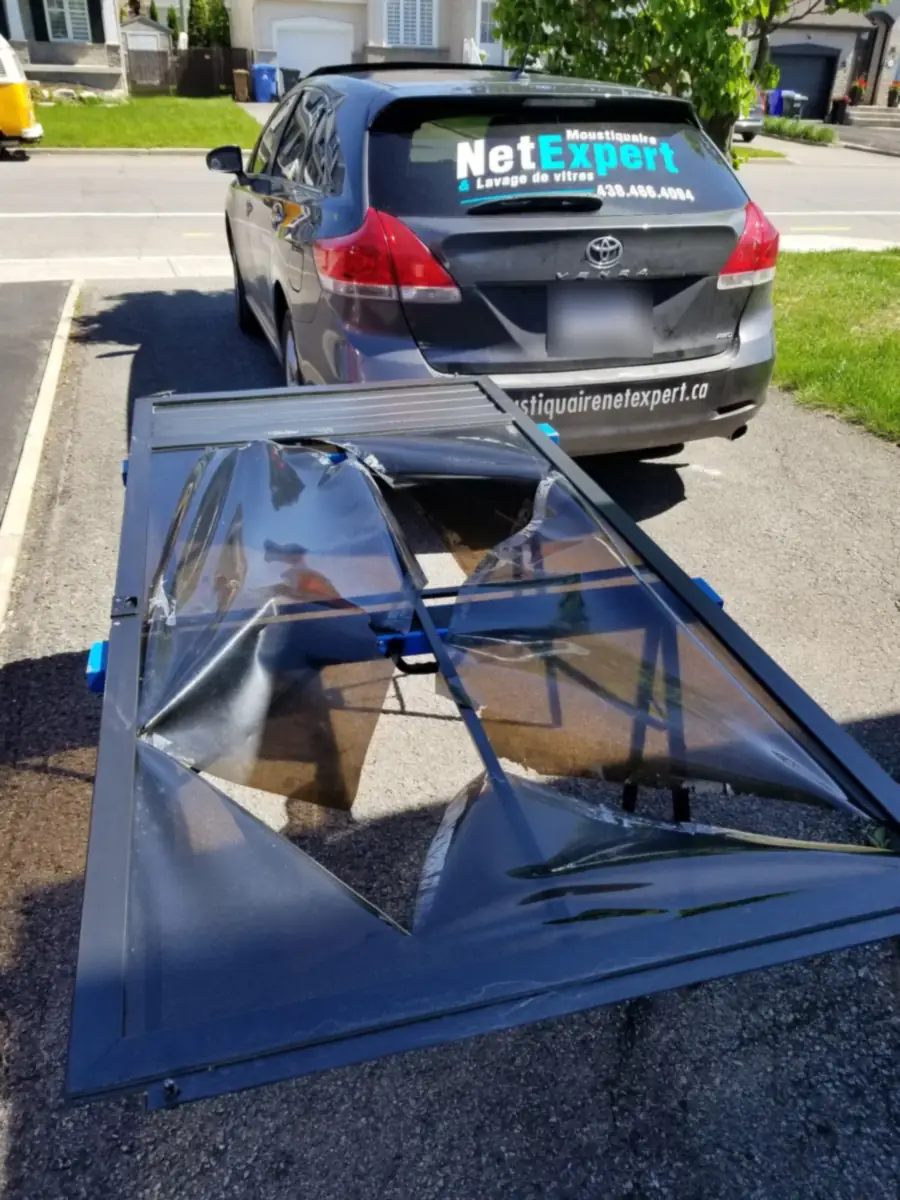
Sun yellows and clouds the vinyl. Film that crackles to the touch is at end of life.
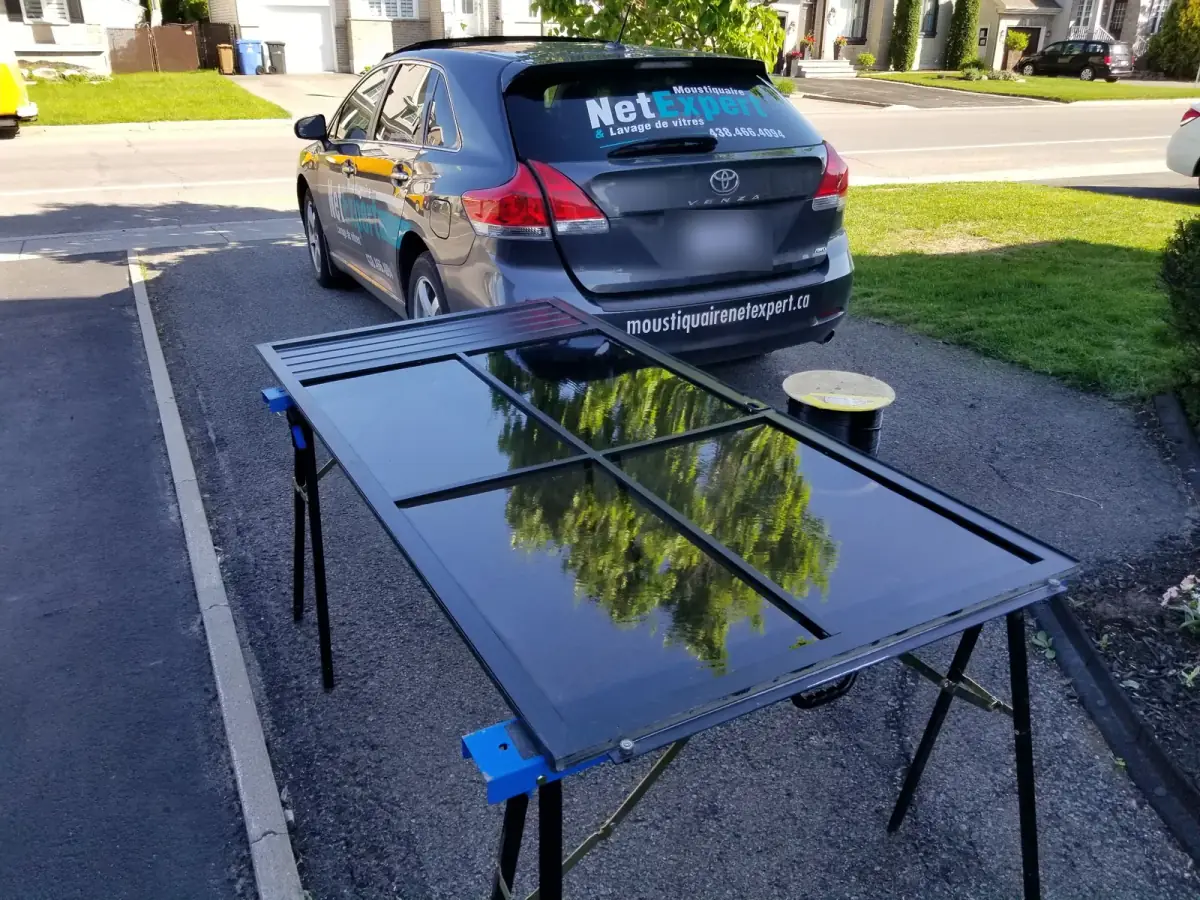
Gazebo and sun shelter specialty
Clear vinyl yellowed or torn? Replaced at your home in Mont-Saint-Hilaire, in the original frames — gazebos and sun shelters.
Three questions are enough to start. The official measurement is taken on site.
Whatever your retailer calls it — MICA film, clear vinyl, clear plastic, sun-shelter transparent fabric — it is the same material, and we replace it in Mont-Saint-Hilaire in your existing panels.
Sun yellows and clouds the vinyl. Film that crackles to the touch is at end of life.
Below freezing, MICA turns brittle — one handling or one gust splits it outright.
Slack vinyl flaps like a sail and eventually tears at the seams.
In Mont-Saint-Hilaire, the back yard is rarely flat. The residential streets terraced along the mountainside follow the slope, and the landscaping follows with them: the yard steps down in levels, with a wood deck making up the difference between the house and the ground. That deck is where the gazebo sits, almost never on the ground itself. On these larger properties a permanent wood structure is common — built at the same time as the deck, its panels cut to fit, nothing matching a catalogue size. Lower down, toward the old village and the Richelieu, the lots flatten out and the retailer gazebo takes over: aluminum frame, standard panel sizes. Same mountain, two ways of living on it, two kinds of panels to rebuild.
The orchard slopes give a third situation. Houses there sit far apart, the land drops away, and tree cover starts just past the lawn. A gazebo in that setting spends more of its day in moving shade than in full sun, and it collects whatever the trees drop all year: leaves pasted on by rain, twigs, sap on the upper panels. In the heritage village the picture changes again — small lots, older buildings that never had a gazebo to begin with, and whatever exists was added behind the house, often in wood so it does not argue with the façade. Knowing which of the three a yard belongs to changes how its panels are approached.
On a wood structure built to measure, no two panels are twins: each opening was closed at whatever dimension the carpenter had in front of him, and both the clear vinyl (MICA film) and the screening were cut by hand to suit. The film is what goes first. It yellows under the late-day sun, stiffens in the cold, and a gust running down the slope eventually opens it along a fold or at a fastener. We replace it pane by pane, at dimensions taken on site, in the original frame. The screening follows a different calendar: on a hand-cut panel the wood frame's joint moves before the mesh does, and the spline lets go on the stile that shifted. The frame is brought back square, then rescreened in place. The structure — posts, roof, railings — is never touched.
The slope dictates the access. A deck standing two or three feet above grade is easy enough to work around, but a gazebo on an upper level means carrying each panel down the deck stairs, one at a time, to the mobile workshop, then back up the same way. On a wood structure the panels are larger and heavier than a retailer model's — sometimes a two-person lift, and always a clear path. On a retailer gazebo screwed to the deck, taking panels off is more direct, though the fasteners have spent winters outdoors and deserve some patience. Either way the structure stays standing and the space stays usable in between.
On sloping ground the wind does not come from where you would expect: it runs down the flank and hits the gazebo on its open side, and that repeated flapping wears the film out long before the cold does. On the wide pane of a wood structure it is the spacing of the fastening points that decides: set too far apart, the film picks up slack within one season, and that is where the downslope gust gets in. For screening, aluminum holds tension across the wide panels of a wood structure where fibreglass would belly out. The orchards and the wooded mountainside bring the spring black flies; on a gazebo you sit in through the evening, a tight weave earns its place, even if only on two sides.
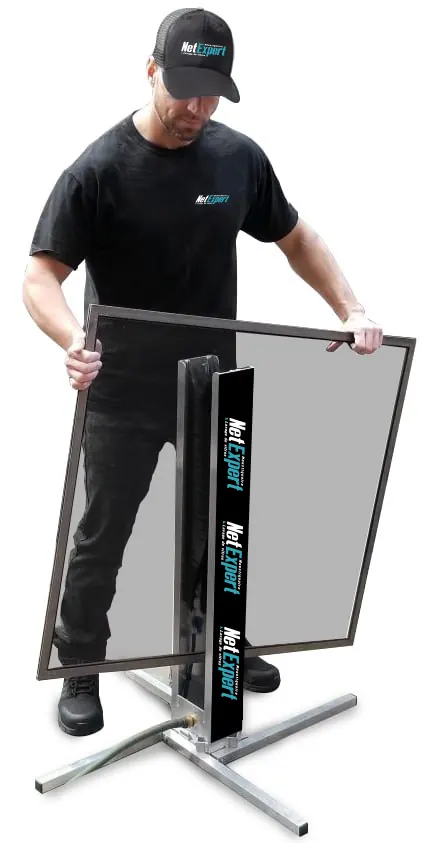
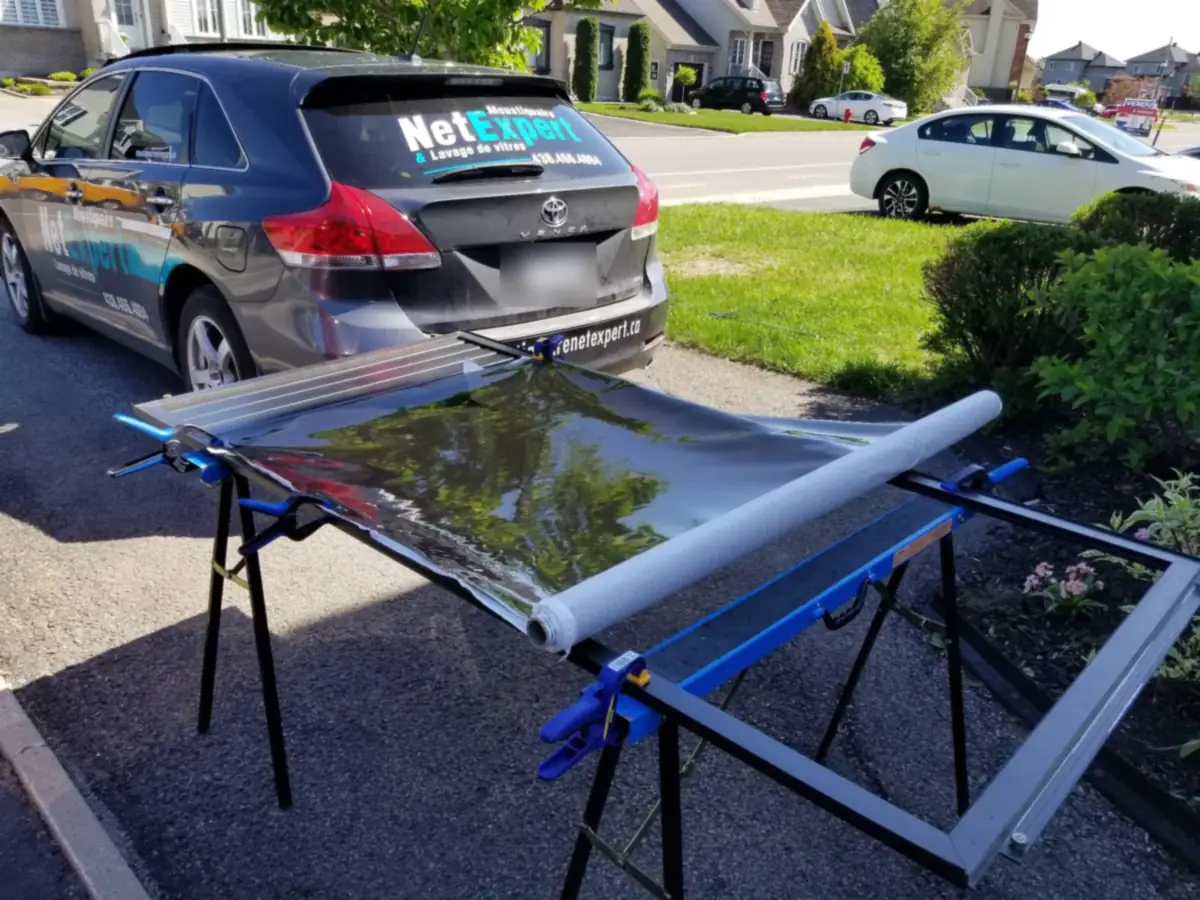
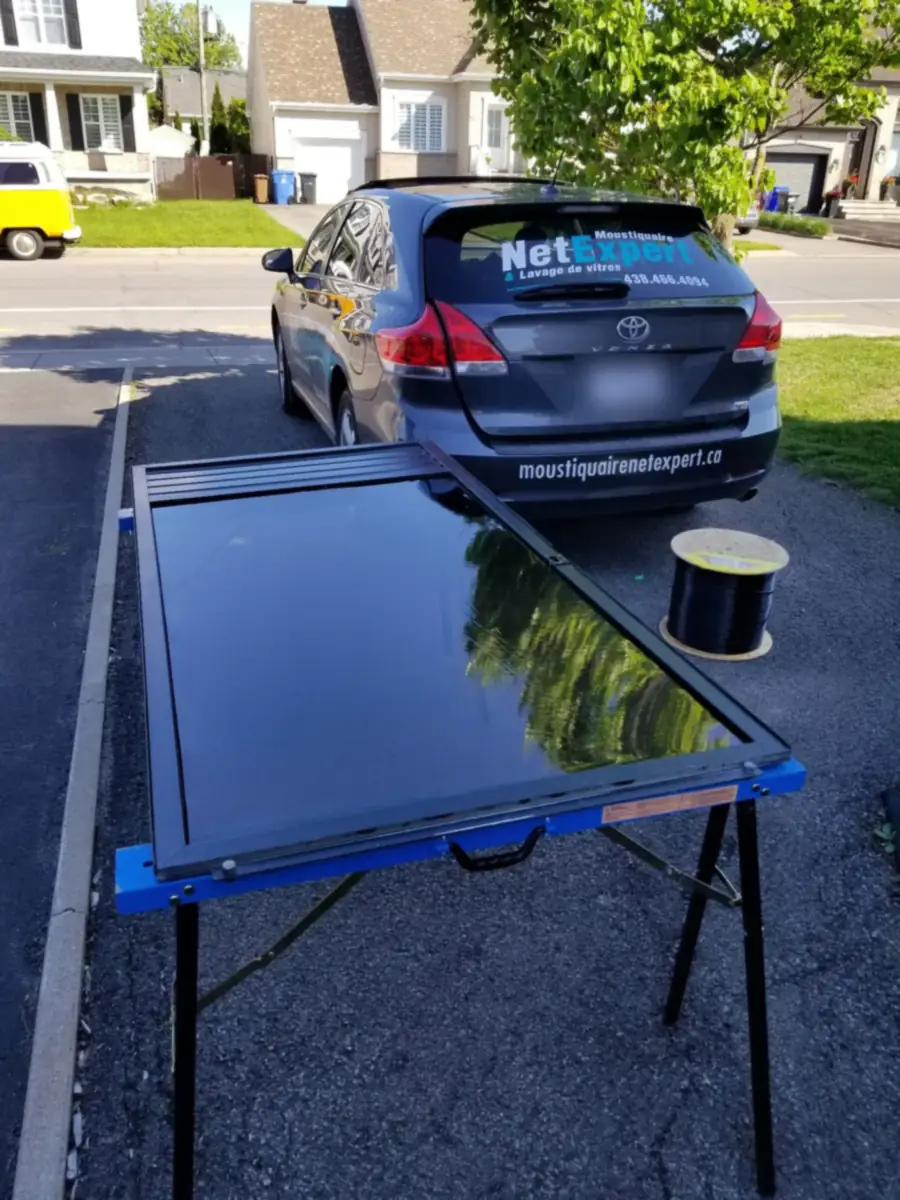
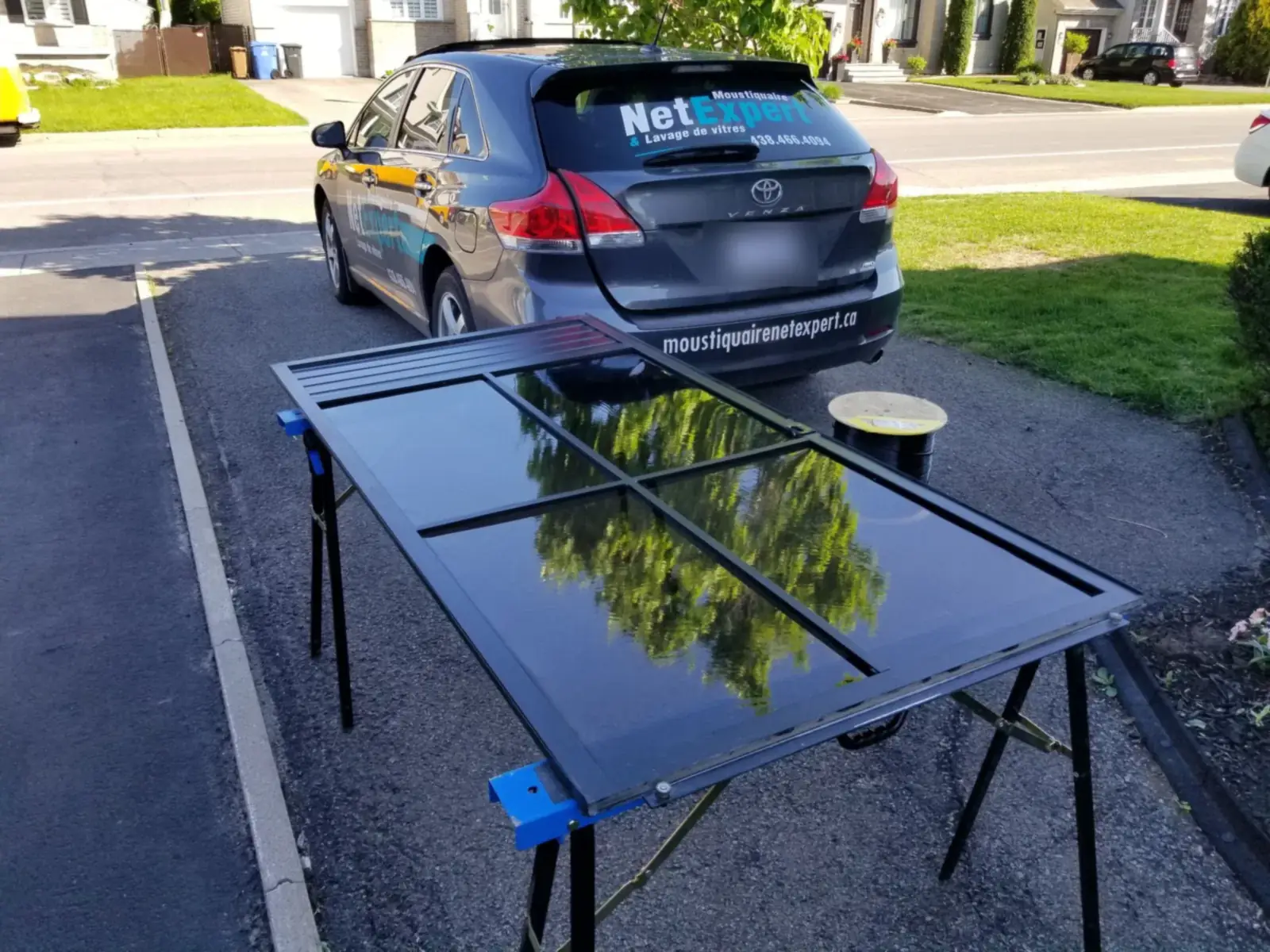
This job was not in Mont-Saint-Hilaire — it shows our method, the same everywhere: panels down, new vinyl pane by pane, panels back up.
« Great service! He was at my neighbour’s and agreed to fix my back screen even though we had no appointment. Very successful repair, and inexpensive! »
« Ludovic replaced my screen in record time. Professional, and with a great sense of humour. I recommend his services — don’t hesitate to contact him, he’ll come to your home and do beautiful work. »
« Excellent service. Clear explanations of the work to be done. I really appreciated his dedication: despite the rain he insisted on finishing the job, soaked through and still smiling. The work was very well done. »
Straight answers
No. Only the panels come off, one at a time, and the structure stays standing. Each panel goes down the deck stairs to the mobile workshop, where the film or the screening is rebuilt in its original frame, then back up the same way. What needs planning is a clear path along the house and somewhere to park the vehicle.
It is the norm on a structure built to measure, which is exactly why nothing gets ordered ahead. On a structure raised at the same time as the deck, the openings follow the level rather than a drawing: each pane is recorded as it comes off, dimensions and diagonals, because a wood frame that has moved is no longer quite rectangular. The real trap would be assuming two neighbouring openings match: on a frame put together by hand, they rarely do.
Yes, and it comes down to tension and fastening points. A pane with slack in it creases along a fold and then splits, almost always starting at a fastener. Reinstalling the film properly tensioned in its frame, with the fastening points redone where they have worked loose, stops the flapping. On the side taking the downslope gust, what gets tightened is mainly the spacing of the fasteners: on a pane that wide, two points set too far apart let the film pick up slack before the season is out.
Yes, at your home. We travel to Mont-Saint-Hilaire, remove the panels, replace the MICA vinyl in the original frames and put everything back — the gazebo structure is never touched. It is one of our specialties.
Yes. Depending on the retailer it is called MICA film, clear vinyl, clear plastic or transparent fabric — the same flexible material that cuts wind and holds warmth. We replace it on gazebos and sun shelters alike.
Yes. The vinyl is replaced pane by pane, in the existing frame — no need to redo the whole panel for one tear. If several panes have yellowed, doing them together gives a uniform result.
On assessment: the price depends on the number of panels and their dimensions. The quote is free, and a photo is often enough to price without a visit. Fabrication and installation guaranteed one year.
Do you manage a building or a business in Mont-Saint-Hilaire?