
Summer UV
Sun yellows and clouds the vinyl. Film that crackles to the touch is at end of life.
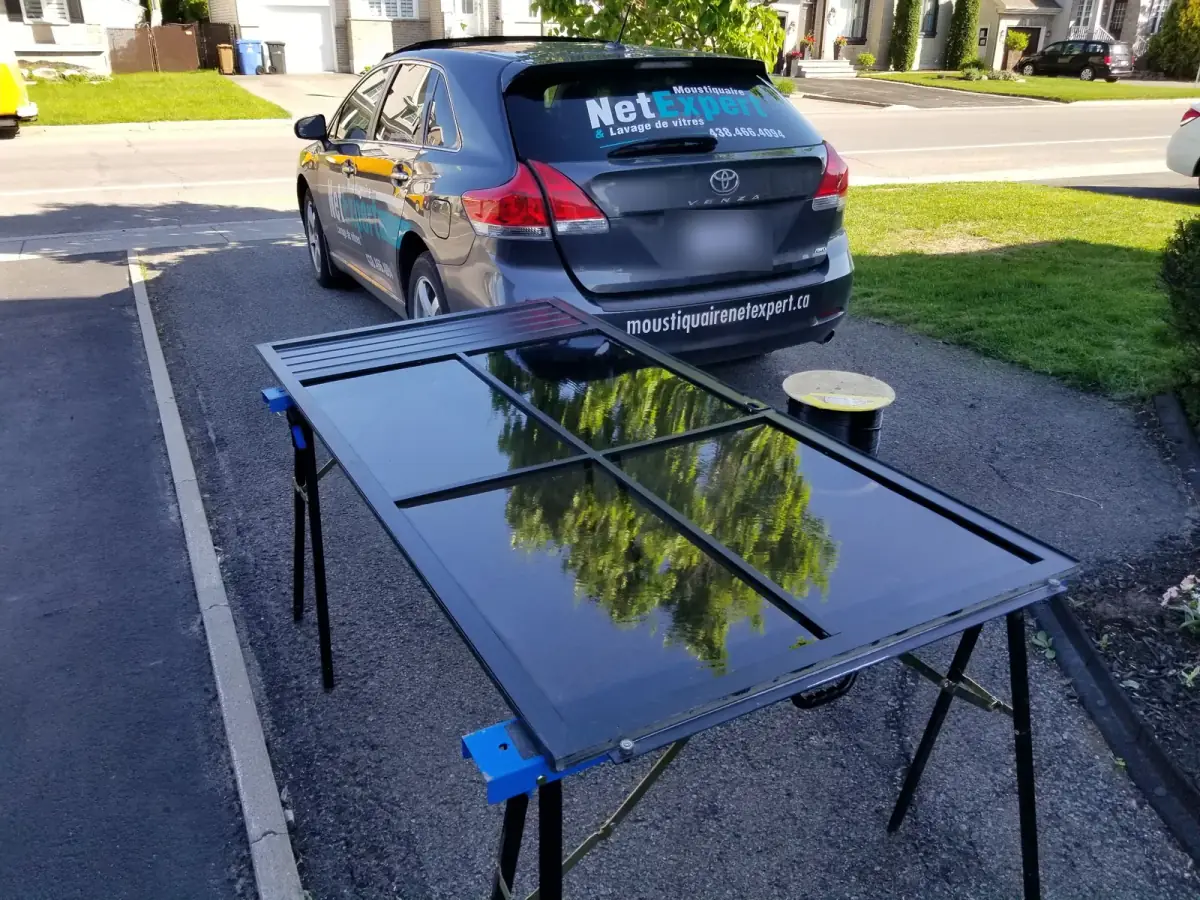
Gazebo and sun shelter specialty
Clear vinyl yellowed or torn? Replaced at your home in Sainte-Marie-Madeleine, in the original frames — gazebos and sun shelters.
Three questions are enough to start. The official measurement is taken on site.
Whatever your retailer calls it — MICA film, clear vinyl, clear plastic, sun-shelter transparent fabric — it is the same material, and we replace it in Sainte-Marie-Madeleine in your existing panels.
Sun yellows and clouds the vinyl. Film that crackles to the touch is at end of life.
Below freezing, MICA turns brittle — one handling or one gust splits it outright.
Slack vinyl flaps like a sail and eventually tears at the seams.
Sainte-Marie-Madeleine wraps around the village of Sainte-Madeleine, and that ring shape translates very concretely on the ground: the farmhouses and rang residences sit in the middle of open fields, exposed on every side at once. A gazebo out there does not take wind from a single direction, the way it would beside a waterway or between two village houses: it takes it from all around in turn, depending on the season and the weather. That is why wear spreads out instead of concentrating, and why a rang shelter reaches the end of its life on all its panes at roughly the same time.
On these large lots the permanent wood structure is common: built on site, often near the house or beside an existing building, with one-of-a-kind panes and large surfaces to cover. The few streets of bungalows and newer houses close to the core bring the other family — the retail gazebo, aluminum or steel frame with standard-format panels, in noticeably smaller yards. Both are repairable, but not at the same pace: with standard formats everything comes off and gets rebuilt quickly; on a wood structure every pane is measured, and some do not lift out at all.
On open ground, clear vinyl (MICA film) leads a hard life. It closes the shelter in when the wind rises or evenings turn cool, but it spends the summer in sun with no tree to filter it and the winter in frost: it yellows, it loses its flex, and it splits on a gust, usually from a corner or an old perforation. Replacement happens in the original frame, pane by pane, to measurements taken on site — a large pane forgives an approximate cut even less than a small one, because the slightest slack sets it drumming.
Screen panels slacken first: the mesh ripples, catches the wind like a sail, and eventually tears in a corner or lets its spline lift. Those get rescreened in the existing frame, with nothing done to the gazebo structure. On the large surfaces of a wood structure, tension matters as much as the choice of mesh: badly tensioned, it bellies out in the first squall and the whole panel has to be redone. That is also why aluminum mesh, being stiffer, holds up better than fibreglass on a wide, exposed pane.
On these properties the logistics matter as much as the work. The panes of a wood structure are large, sometimes taller than a door, and they are carried by two people and set down flat: that calls for clear working room beside the shelter, not just a route to walk through. After rain, rang ground stays soft for a long time and a panel laid on it picks up dirt — so a clean surface gets planned, a slab or a trailer. On the retail gazebos near the core, none of this applies: the panels are light and come apart quickly.
With no windbreak, a rang shelter takes everything. Wind off the fields pulls the mesh out of tension and makes the film snap; on large exposed panes, aluminum mesh holds its tension far longer than fibreglass. Sun, with nothing in its way, yellows vinyl faster than it would under tree cover. And because the shelter is exposed on every side at once, a tight weave cannot be kept for one face alone: the choice is made for the whole shelter — field insects on one hand, airflow held back on the other.
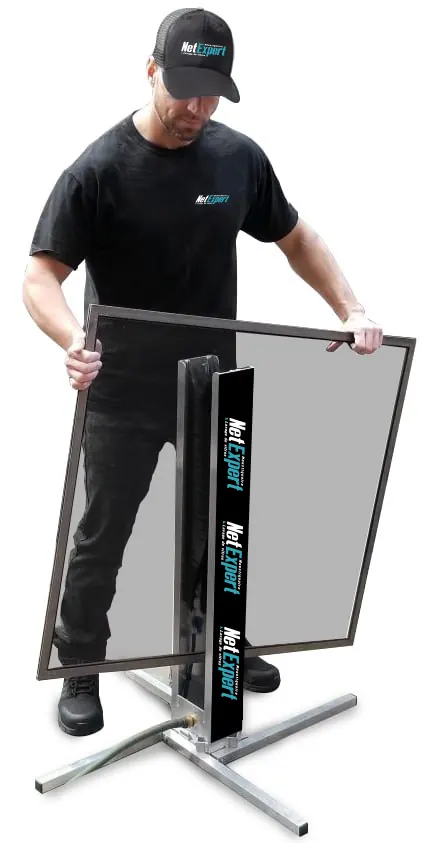
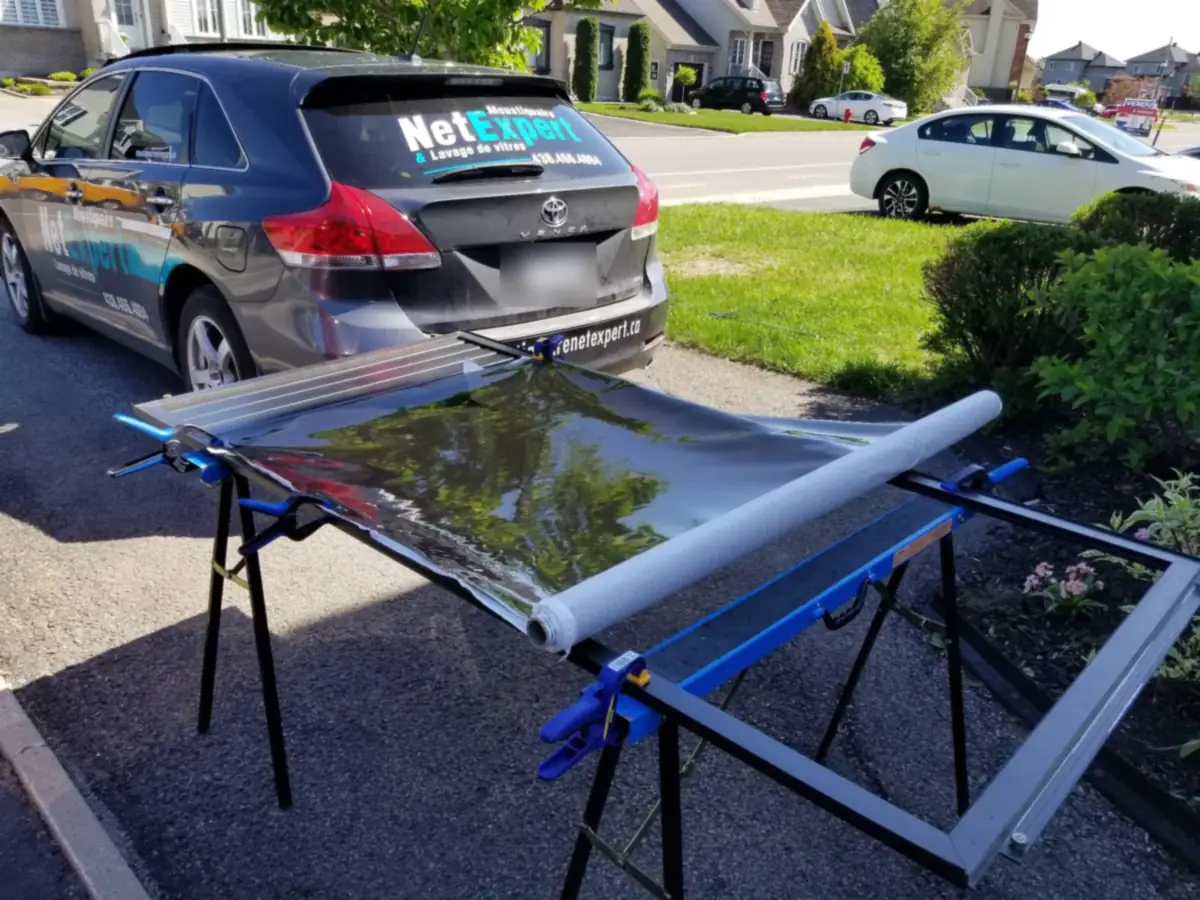
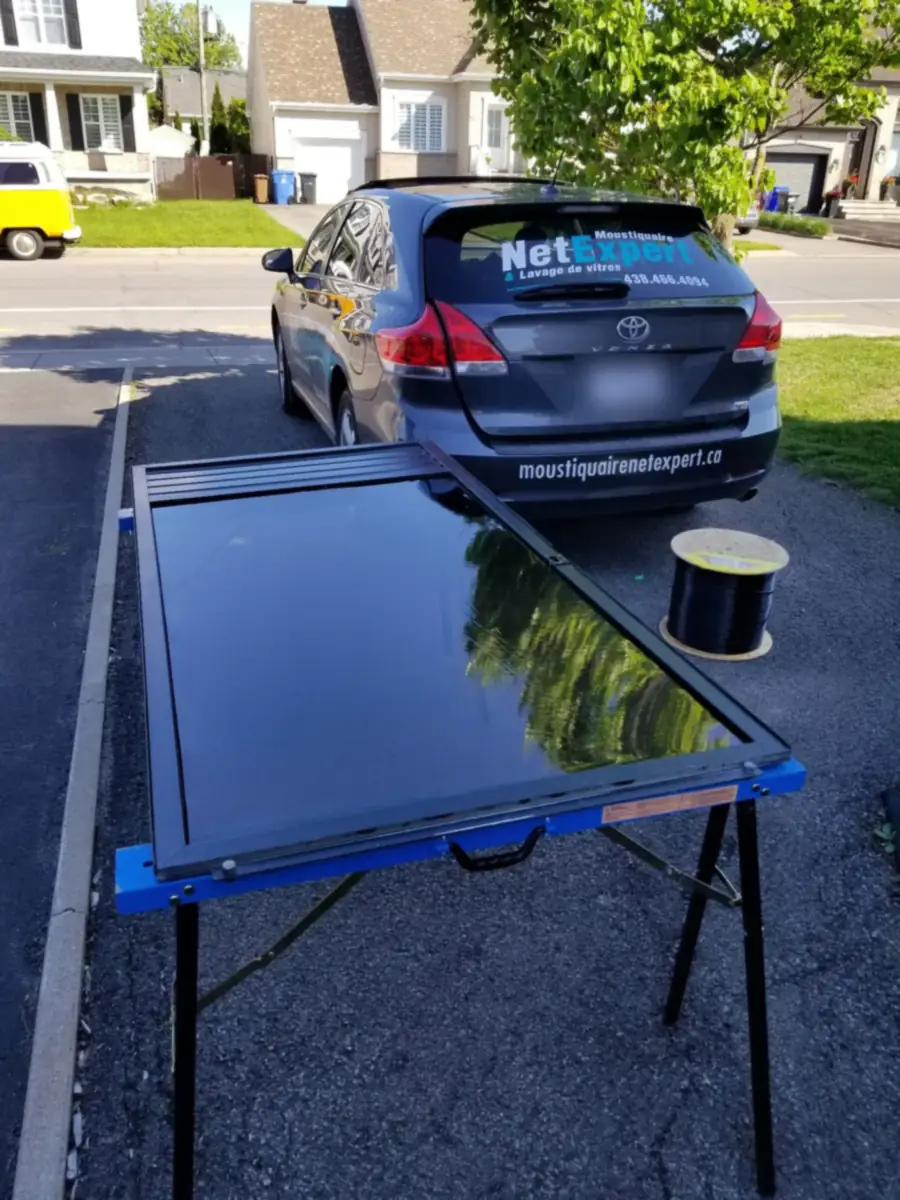
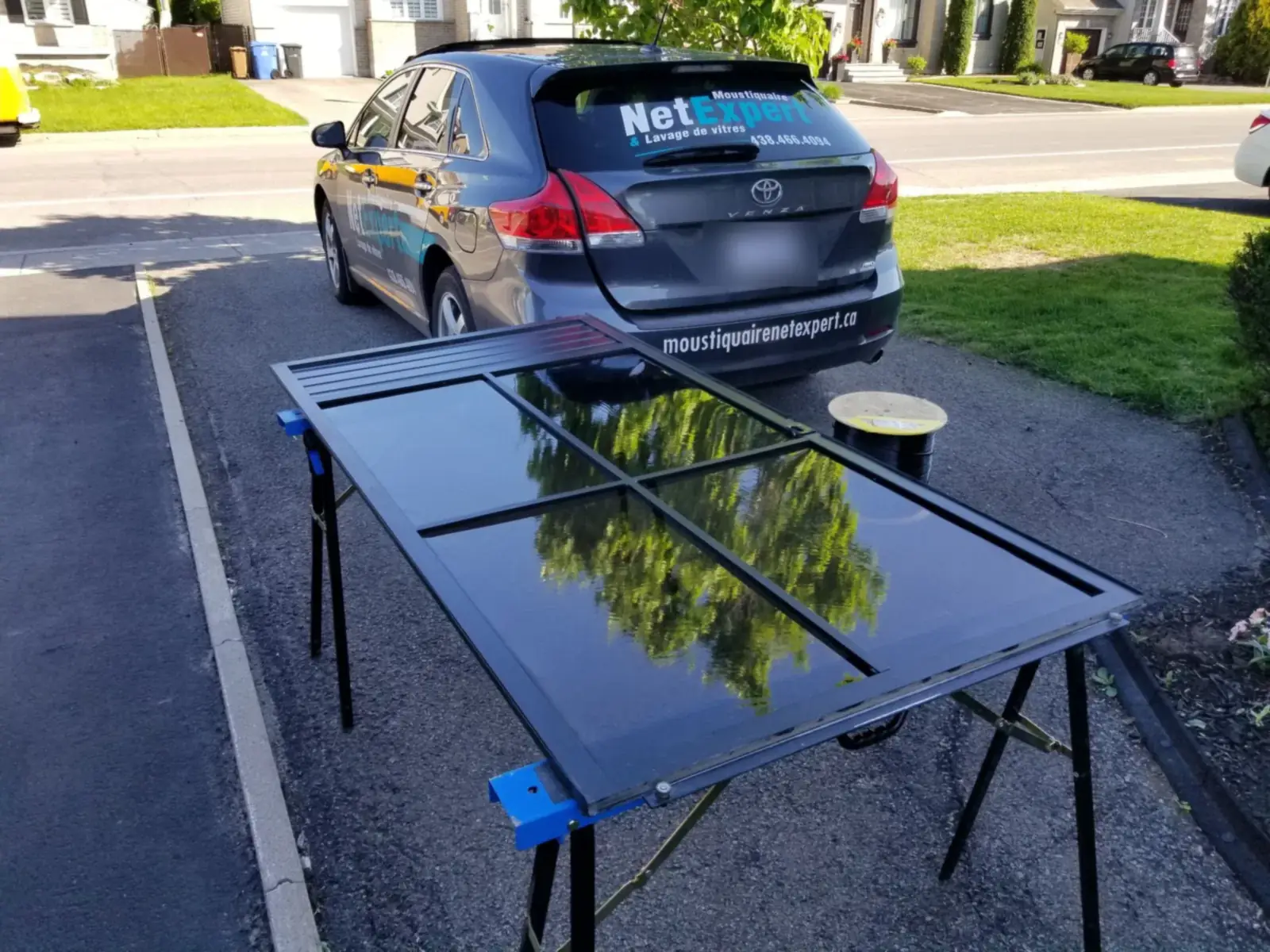
This job was not in Sainte-Marie-Madeleine — it shows our method, the same everywhere: panels down, new vinyl pane by pane, panels back up.
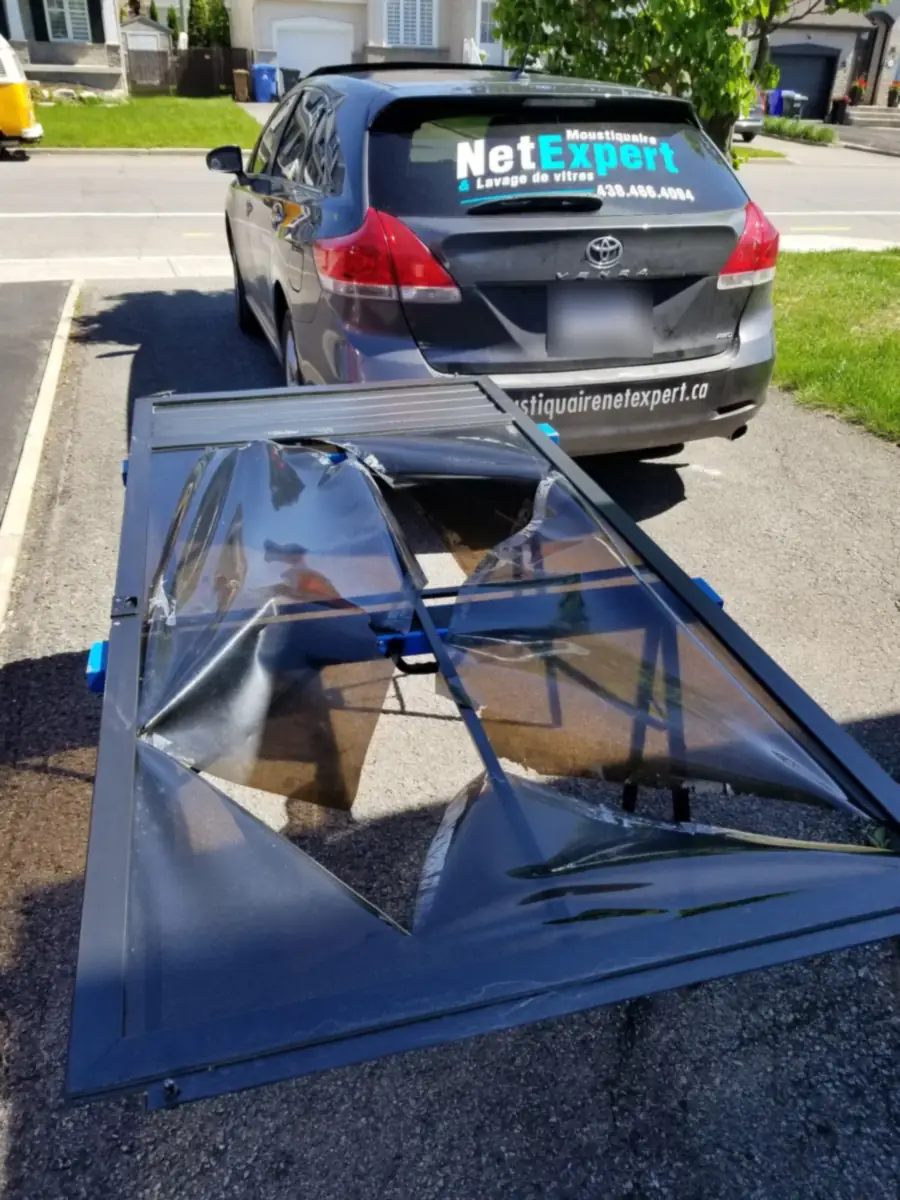
« Great service! He was at my neighbour’s and agreed to fix my back screen even though we had no appointment. Very successful repair, and inexpensive! »
« Ludovic replaced my screen in record time. Professional, and with a great sense of humour. I recommend his services — don’t hesitate to contact him, he’ll come to your home and do beautiful work. »
« Excellent service. Clear explanations of the work to be done. I really appreciated his dedication: despite the rain he insisted on finishing the job, soaked through and still smiling. The work was very well done. »
Straight answers
Yes, provided it is cut true and fastened all the way around. Large surfaces are exactly where an approximate cut shows up: vinyl with slack in it starts drumming in the wind, and drumming vinyl always ends up splitting at a fastener. So dimensions are taken on site, pane by pane, rather than working from a drawing.
No, we handle the panels: the mesh and the film in their frames. The gazebo structure itself is never touched. If a pane’s frame is split or rotted to the point where it can no longer hold tensioned mesh, we say so before installing anything â tensioning new mesh into a frame that no longer holds is the same as throwing it away.
On open ground, yes. Where wind and sun arrive from every side over the course of a year, wear spreads instead of concentrating on one face, and the shelter ages as a block. We still check each pane: a face sheltered by the house or by an outbuilding sometimes has a season or two left in it.
Yes, at your home. We travel to Sainte-Marie-Madeleine, remove the panels, replace the MICA vinyl in the original frames and put everything back — the gazebo structure is never touched. It is one of our specialties.
Yes. Depending on the retailer it is called MICA film, clear vinyl, clear plastic or transparent fabric — the same flexible material that cuts wind and holds warmth. We replace it on gazebos and sun shelters alike.
Yes. The vinyl is replaced pane by pane, in the existing frame — no need to redo the whole panel for one tear. If several panes have yellowed, doing them together gives a uniform result.
On assessment: the price depends on the number of panels and their dimensions. The quote is free, and a photo is often enough to price without a visit. Fabrication and installation guaranteed one year.
Do you manage a building or a business in Sainte-Marie-Madeleine?