
Summer UV
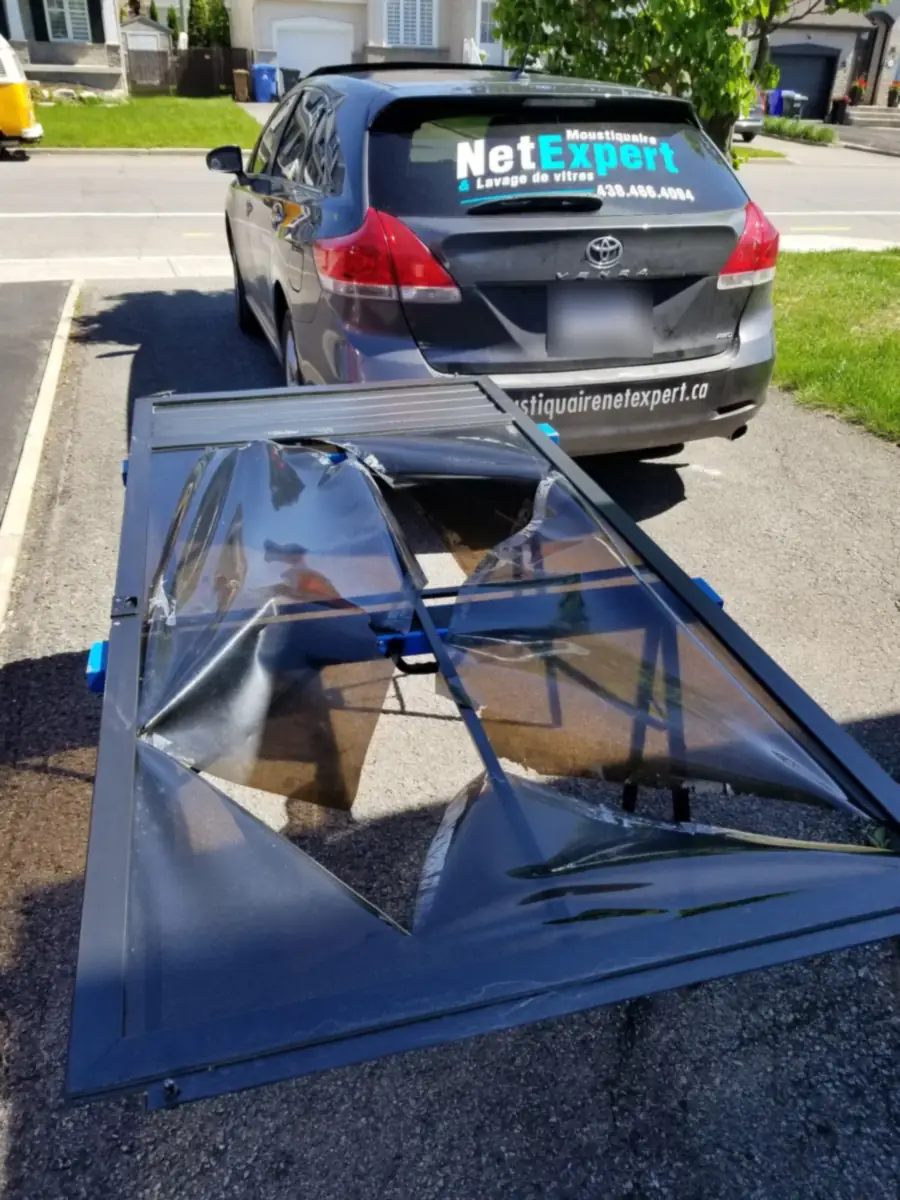
Sun yellows and clouds the vinyl. Film that crackles to the touch is at end of life.
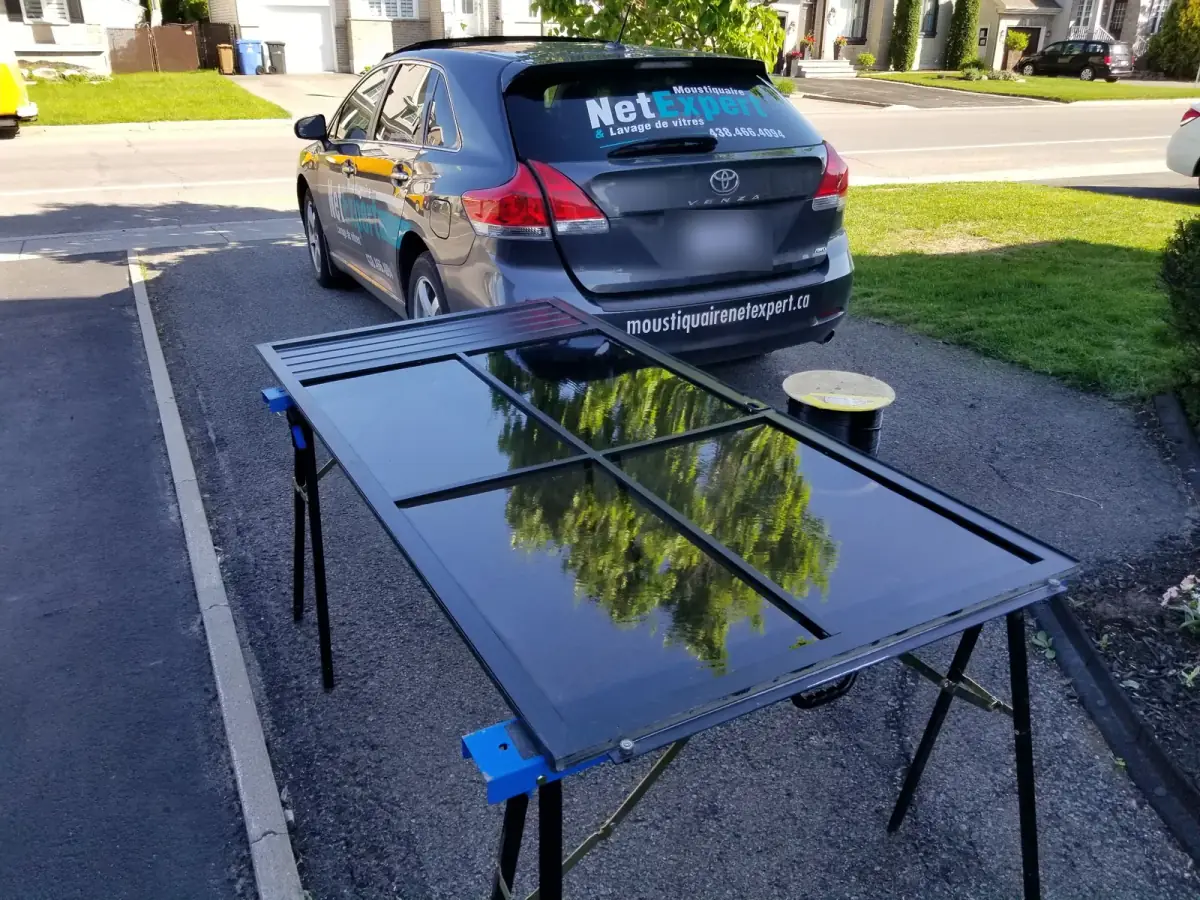
Gazebo and sun shelter specialty
Clear vinyl yellowed or torn? Replaced at your home in Saint-Hyacinthe, in the original frames — gazebos and sun shelters.
Three questions are enough to start. The official measurement is taken on site.
Whatever your retailer calls it — MICA film, clear vinyl, clear plastic, sun-shelter transparent fabric — it is the same material, and we replace it in Saint-Hyacinthe in your existing panels.
Sun yellows and clouds the vinyl. Film that crackles to the touch is at end of life.
Below freezing, MICA turns brittle — one handling or one gust splits it outright.
Slack vinyl flaps like a sail and eventually tears at the seams.
Saint-Hyacinthe reads in three rings when the subject is gazebos. The first is the belt of postwar bungalows: mature yards, often planted with trees now fifty or sixty years old, and a back patio where a retail gazebo eventually took its place. There, the film’s enemy is not just the sun: it is the branches, the leaves stuck on in autumn, the sap and droppings that stain clear vinyl and tempt you to scrub too hard. The screen panels on these gazebos are often a generation old as well, their spline dried out to the point of no longer holding the mesh in the groove.
The second ring is the old core around rue des Cascades: brick houses and plexes where the yard shrinks to a strip of ground or a deck. The gazebo there is smaller, or replaced by a pergola with panels, set on a wooden deck, sometimes upstairs, and its panels come down the staircase when they need redoing. The third ring is the recent sectors of semi-detached houses and condos: short yards, slab patios, small retail gazebos in standard formats, exposed to the wind that slips between houses too new to have tall hedges. Three yards, three ways for the same film to age.
In the postwar belt, a film that has spent its autumns under trees is stained and scratched before it even yellows; each pane is measured in its frame before it is cut, and the gazebo gets its clarity back with nothing done to the structure. The screening tears at a corner or sags in the middle, and the dried spline rides up out of its groove: rescreening in the existing frame, new spline, mesh pulled taut. On a plex, the panels of a deck pergola tend to be narrower and more numerous; each is redone on its own and returns to its place without touching the posts. On the small gazebos of the newer sectors, the standard format makes everything simpler, but fibreglass mesh flaps there in the wind: aluminum holds its tension better between closely spaced houses.
On a postwar bungalow, the slab or patio under the gazebo has often shifted with the winters and the frame is no longer quite square: a panel remade to catalogue dimensions will not fit, so we measure the actual opening. In the old core the constraint is access — the panels of an upstairs deck go down the staircase or through the unit, one at a time, and are rebuilt in the mobile workshop on the street. In a condo, the gazebo sits on a deck slab that nothing gets drilled into: the panels come off and go back exactly as they were, with not one fastener added to the floor. In every case the structure stays put: only the panels move.
In the shade of the tall trees of the postwar belt, film ages slowly but dirties fast; it is a vinyl to be washed gently, never scraped, or it scratches and turns milky. On a plex or condo deck it is the reverse: unobstructed sun, film yellowing within a few seasons, and wind that swirls around the buildings and slaps the panes. The mosquitoes of an ordinary summer evening are handled by standard mesh; fibreglass is enough under the trees, aluminum earns its place on an exposed gazebo. The film goes up early in the fall, before it stiffens.
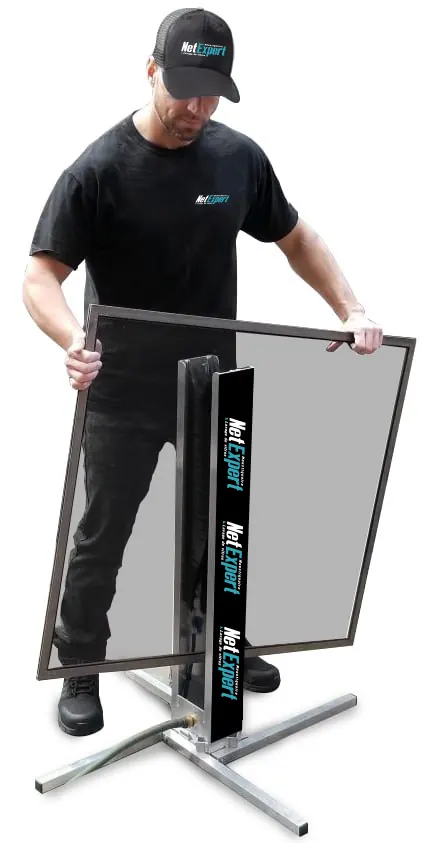
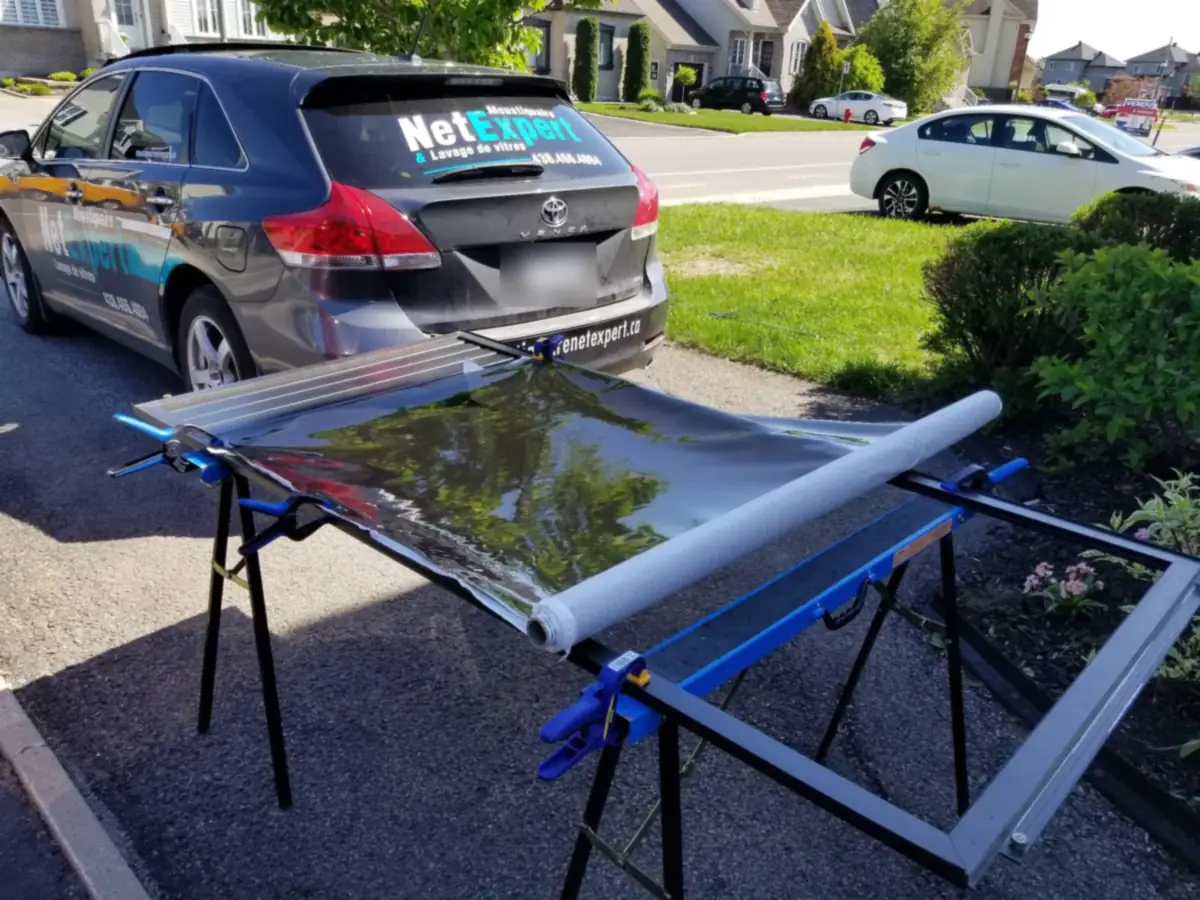
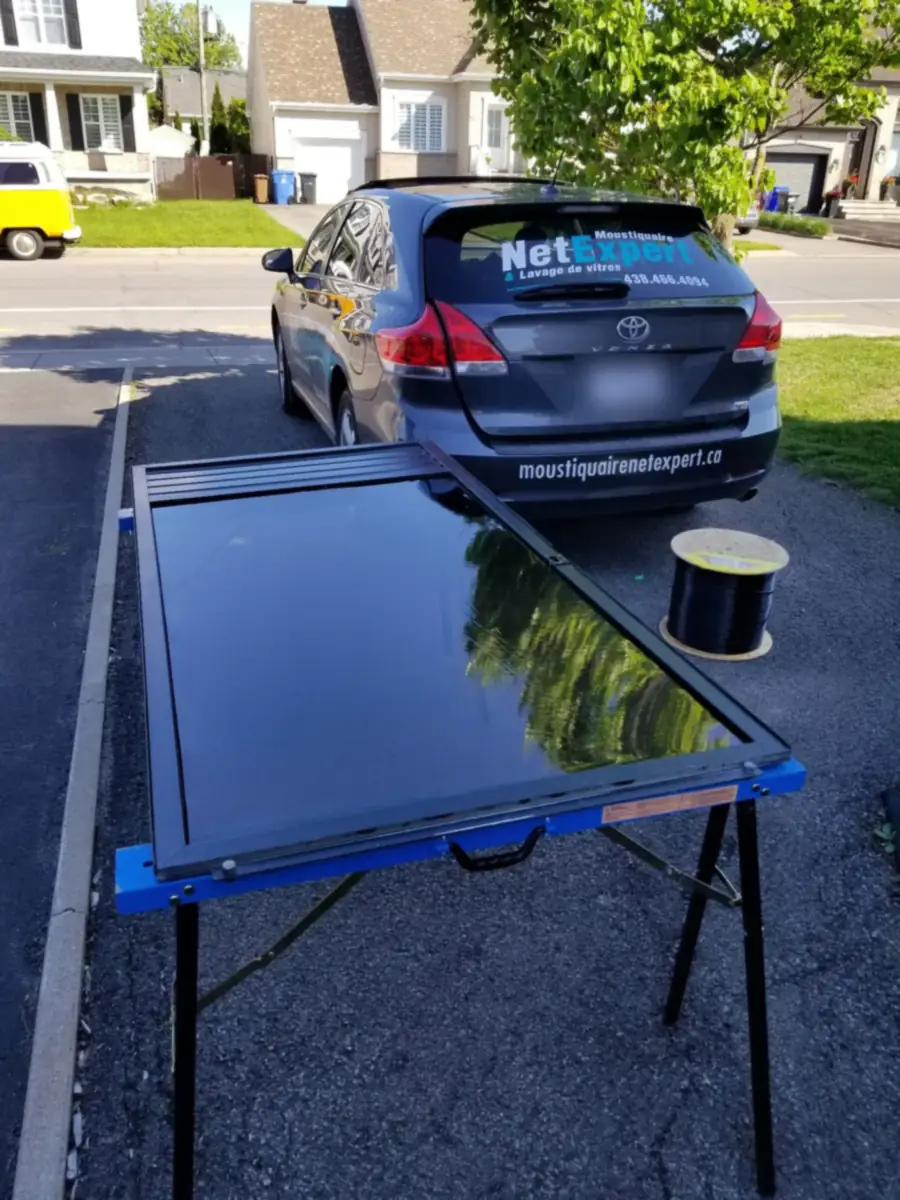
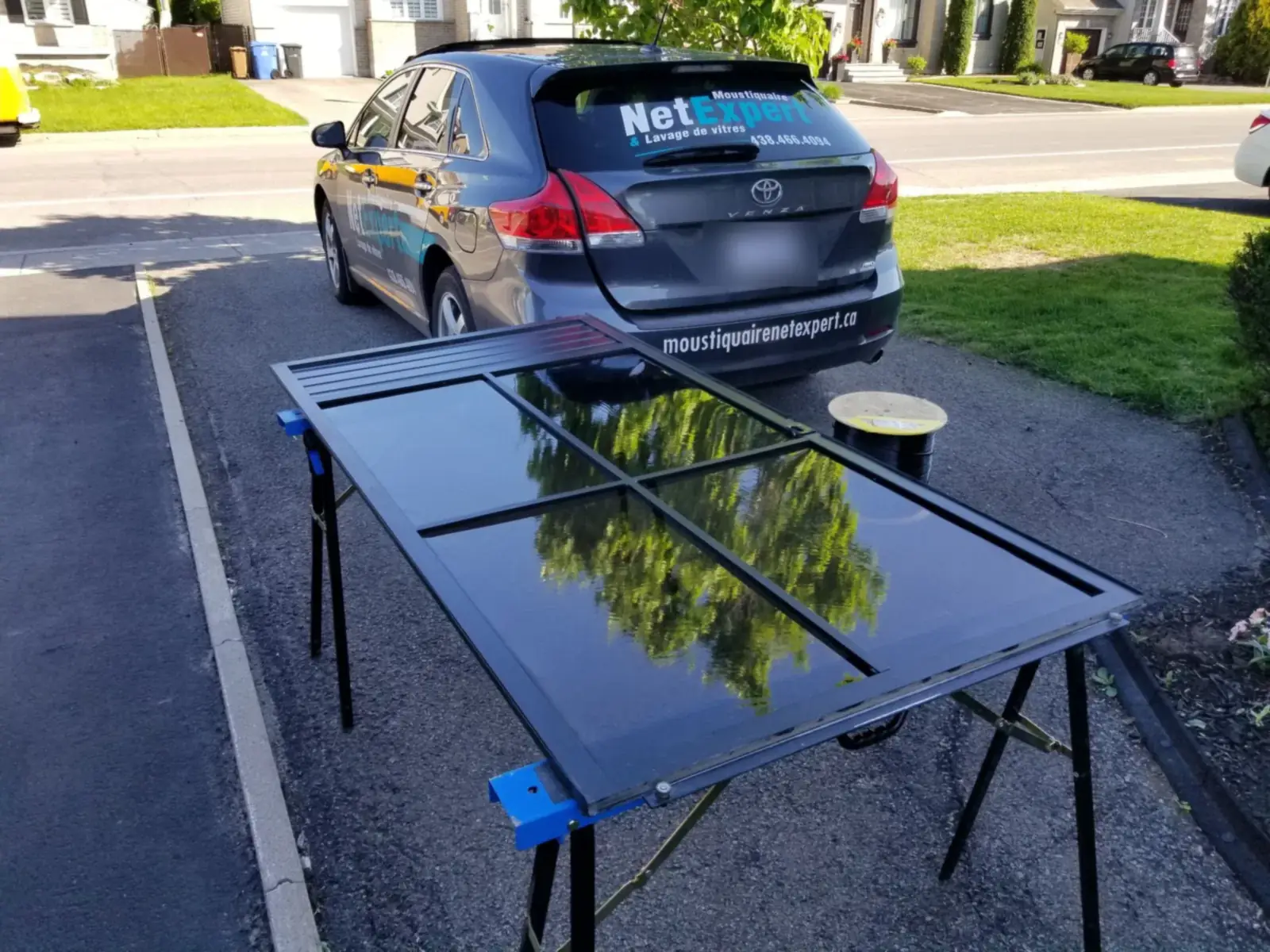
This job was not in Saint-Hyacinthe — it shows our method, the same everywhere: panels down, new vinyl pane by pane, panels back up.
« Excellent service. Clear explanations of the work to be done. I really appreciated his dedication: despite the rain he insisted on finishing the job, soaked through and still smiling. The work was very well done. »
« Great service! He was at my neighbour’s and agreed to fix my back screen even though we had no appointment. Very successful repair, and inexpensive! »
« Ludovic replaced my screen in record time. Professional, and with a great sense of humour. I recommend his services — don’t hesitate to contact him, he’ll come to your home and do beautiful work. »
Straight answers
One panel at a time. We unhook them from the pergola, carry them down the staircase or through the unit, rescreen them in the mobile workshop in front of the building, then put them back. The pergola itself does not move. Access to the unit or the staircase needs to be arranged when the appointment is set, and bear in mind that deck panels are usually more numerous than those of a ground-level gazebo.
That is common in a postwar yard: the slab has moved with the winters and the frame followed. Rather than a catalogue-format panel, we redo the mesh or film in the existing frame, fitted to the opening as it is today. If a frame was forced and has warped, we true it before tensioning new mesh.
Yes, and it is often the right compromise in a semi-detached sector where the wind always comes from the same side: film on the two exposed faces, screening alone on the others to keep air and view. Each pane is independent, so nothing requires covering all four sides. We keep the uncovered screen panels well tensioned, otherwise they flap.
Yes, at your home. We travel to Saint-Hyacinthe, remove the panels, replace the MICA vinyl in the original frames and put everything back — the gazebo structure is never touched. It is one of our specialties.
Yes. Depending on the retailer it is called MICA film, clear vinyl, clear plastic or transparent fabric — the same flexible material that cuts wind and holds warmth. We replace it on gazebos and sun shelters alike.
Yes. The vinyl is replaced pane by pane, in the existing frame — no need to redo the whole panel for one tear. If several panes have yellowed, doing them together gives a uniform result.
On assessment: the price depends on the number of panels and their dimensions. The quote is free, and a photo is often enough to price without a visit. Fabrication and installation guaranteed one year.
Do you manage a building or a business in Saint-Hyacinthe?