
Summer UV
Sun yellows and clouds the vinyl. Film that crackles to the touch is at end of life.
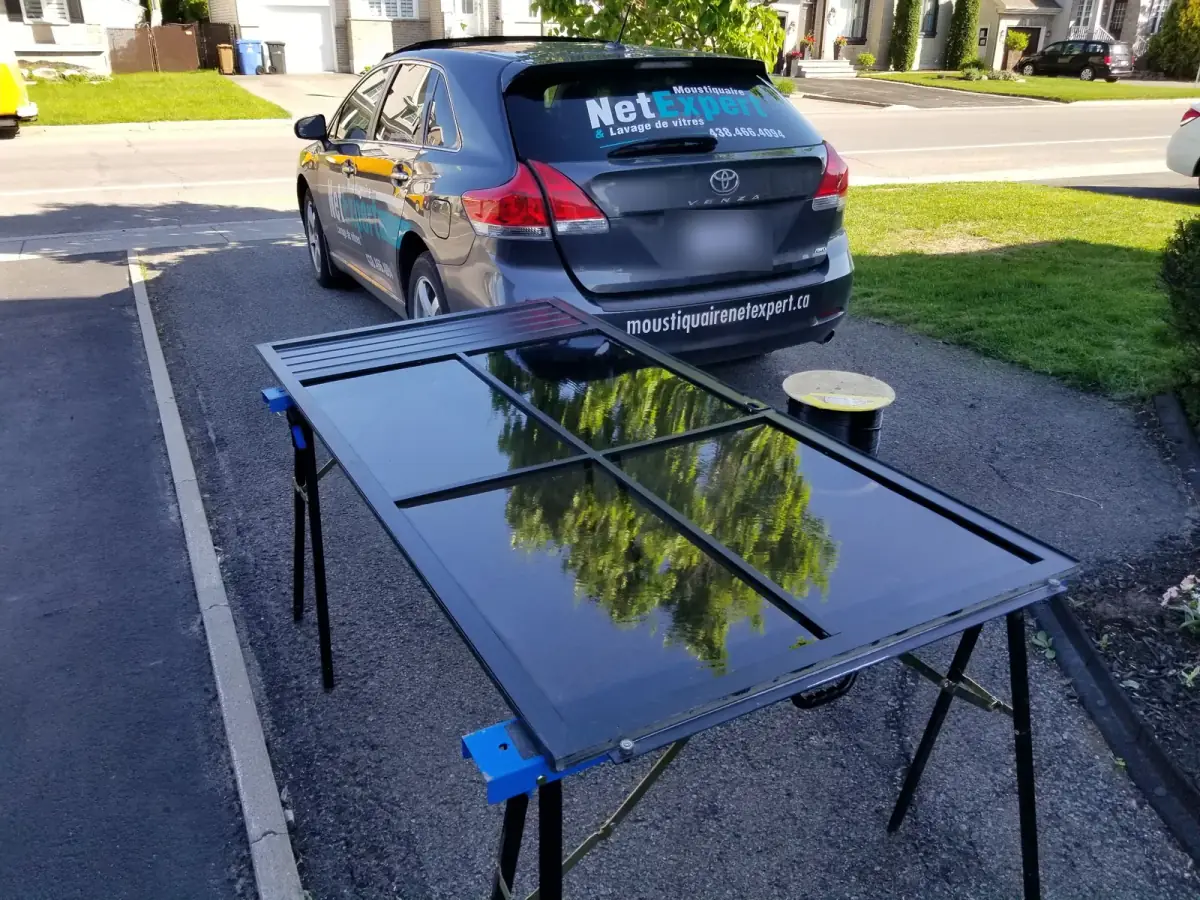
Gazebo and sun shelter specialty
Clear vinyl yellowed or torn? Replaced at your home in Saint-Denis-sur-Richelieu, in the original frames — gazebos and sun shelters.
Three questions are enough to start. The official measurement is taken on site.
Whatever your retailer calls it — MICA film, clear vinyl, clear plastic, sun-shelter transparent fabric — it is the same material, and we replace it in Saint-Denis-sur-Richelieu in your existing panels.
Sun yellows and clouds the vinyl. Film that crackles to the touch is at end of life.
Below freezing, MICA turns brittle — one handling or one gust splits it outright.
Slack vinyl flaps like a sail and eventually tears at the seams.
In the village of Saint-Denis-sur-Richelieu, on the east bank, the back yards of the 19th-century stone and brick houses hold gazebos that are not old at all. Most are retailer structures bought and assembled long after the house: an aluminum or steel frame, standard-sized panels, screen panels backed by clear vinyl (MICA film) for the cold season. Where one sits depends on the room available in a village-core yard: depending on the lot, the structure ends up against the house or at the far end, and the visit is what settles it — not an assumption made in advance.
Outside the village, the large farm properties of the Maskoutaine plain offer the opposite: open space, and nothing standing between the gazebo and the weather. A gazebo out there takes wind off the plain on all four faces, with one clearly dominant direction, and sun from sunrise to sunset. It is also the kind of property that lends itself to wood structures built on site, cut to the measure of an existing veranda or deck, with openings that do not repeat. The same work applies, but every opening has its own dimensions and nothing can be inferred from one panel to the next.
On an exposed gazebo the four sides never wear at the same rate: the face taking the prevailing wind gives out first, and it is common for a single sheet of film to be split while the others are still clear. That is exactly why the vinyl is replaced panel by panel, to the exact dimensions of each opening, in the original frame — redoing what is still holding serves no one. The screen panels follow the same logic: mesh retensioned in its own frame when it has gone slack or torn, spline reseated when it has crept out. The panel comes out, is rebuilt in the mobile workshop and goes back up; the structure stays as it is.
Two situations, two kinds of preparation. In a village yard closed in by outbuildings the way through is narrow and the number of panels coming out is counted before anything starts; on a farm the gazebo is far from the driveway and the panels cross the lawn. Wood structures built on site call for one more thing: every opening measured separately, and every panel marked as it comes out — a sheet cut for the north face will not fit on the other side, even when the two look alike.
On a gazebo the screening and the film do not serve the same season: the mesh panel carries the summer, and its weave — tight or standard — is what decides whether the evening is spent inside it or indoors. For the rest, wind is in charge. On ground with no windbreak a large panel holds its tension better in aluminum mesh, and the film goes up before the first hard cold, cut close enough that it does not flap — film that flaps wears out through its fastenings rather than through the sun.
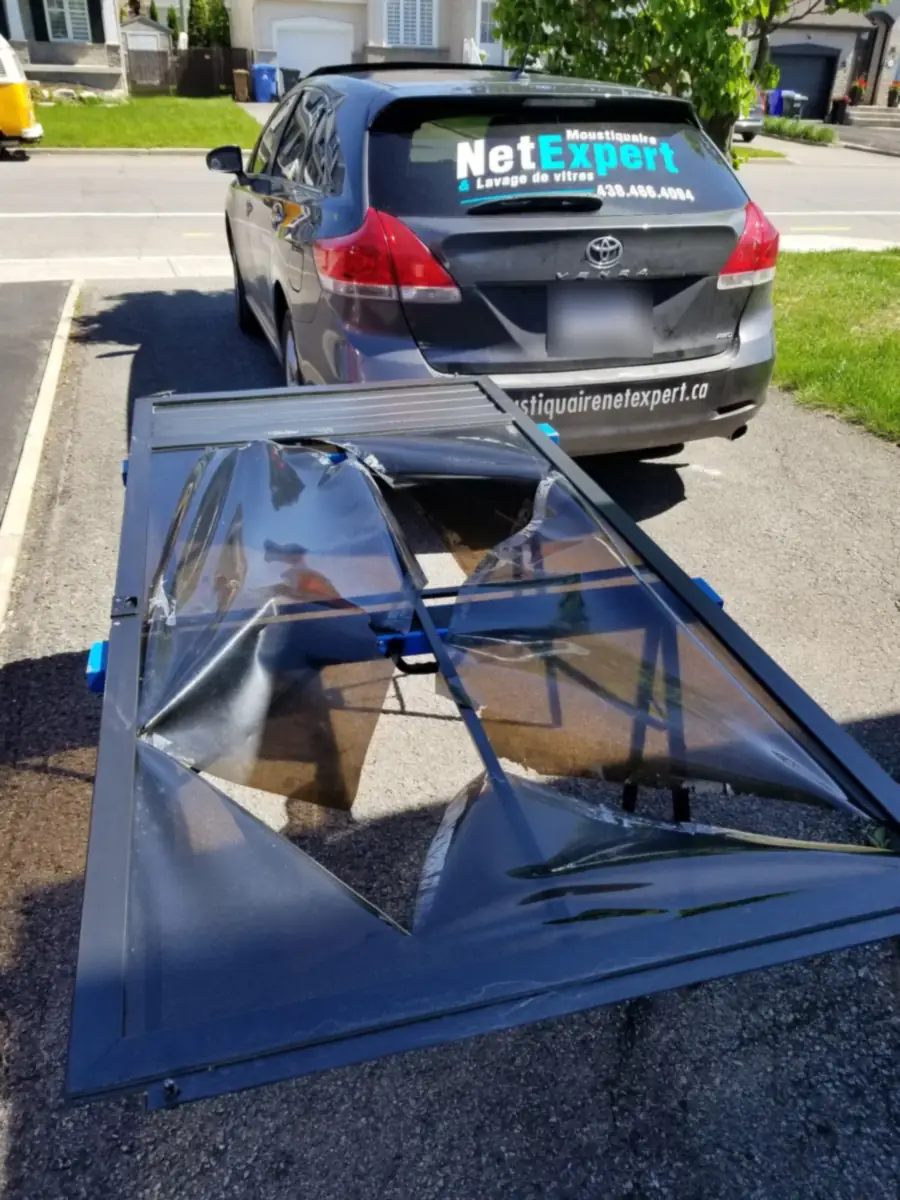
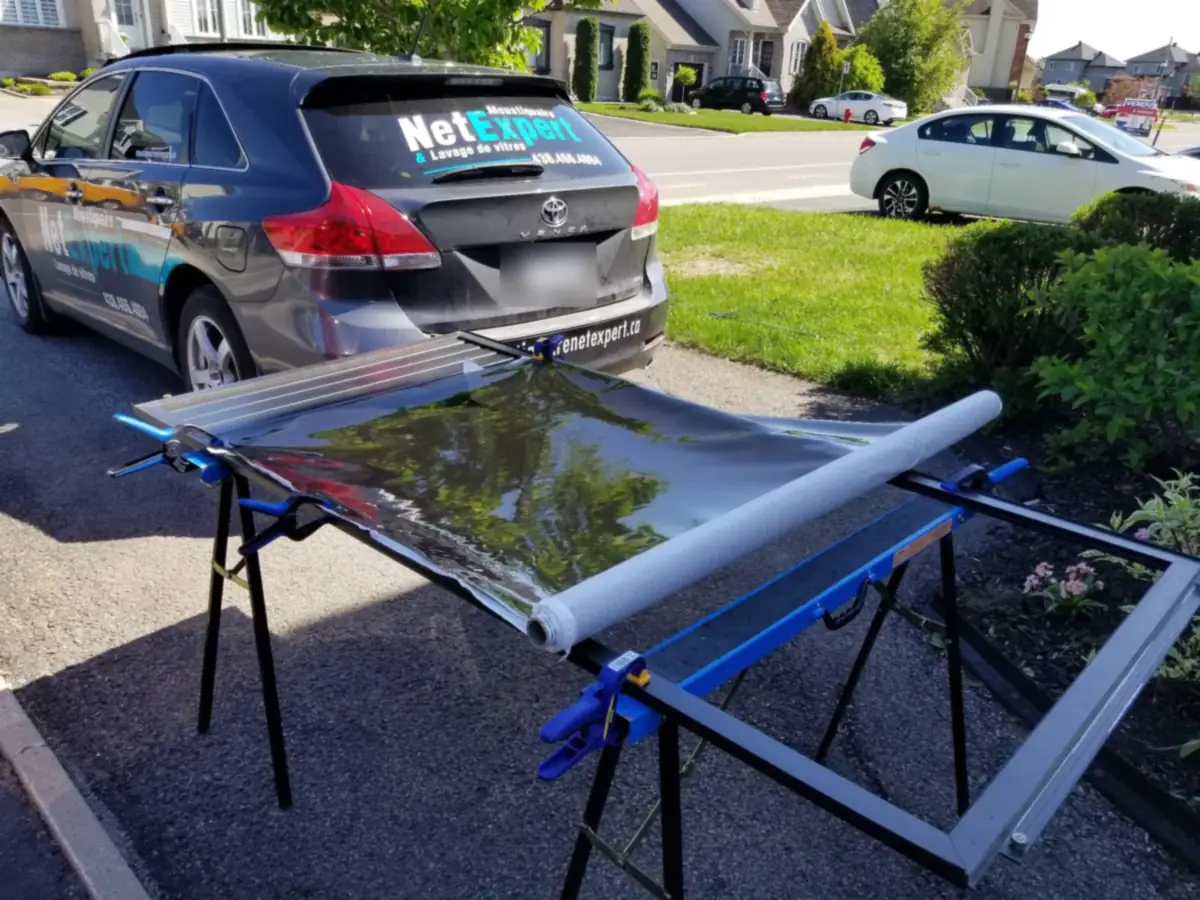
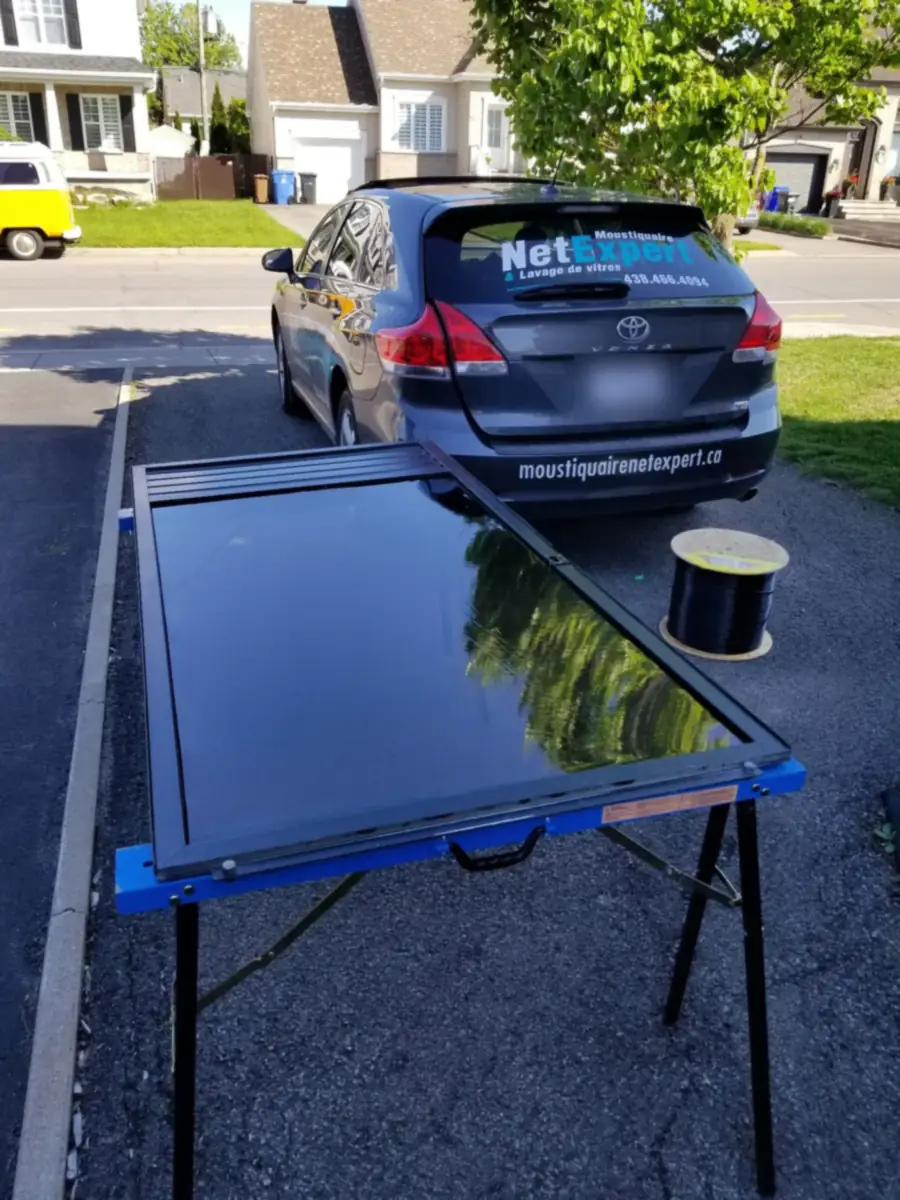
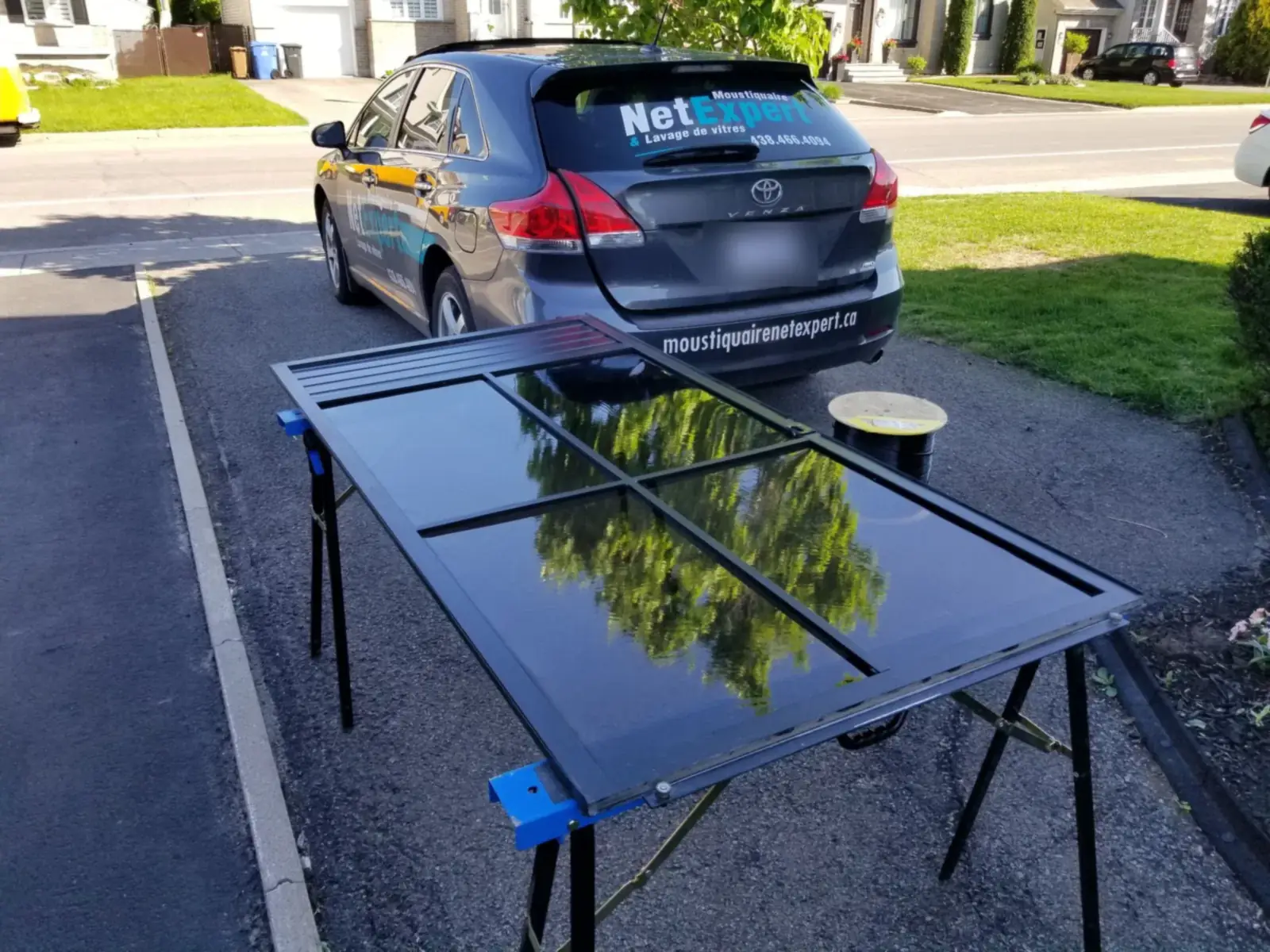
This job was not in Saint-Denis-sur-Richelieu — it shows our method, the same everywhere: panels down, new vinyl pane by pane, panels back up.
« Excellent service. Clear explanations of the work to be done. I really appreciated his dedication: despite the rain he insisted on finishing the job, soaked through and still smiling. The work was very well done. »
« Great service! He was at my neighbour’s and agreed to fix my back screen even though we had no appointment. Very successful repair, and inexpensive! »
« Ludovic replaced my screen in record time. Professional, and with a great sense of humour. I recommend his services — don’t hesitate to contact him, he’ll come to your home and do beautiful work. »
Straight answers
No. The film is replaced panel by panel, to the dimensions of the opening in question. On exposed ground it is normal for one face to go before the others, and there is no need to touch panels that are still clear and supple. We do look at the others while we are there, so we can say which ones are getting close.
Only the logistics. The panels come out on site and travel to the mobile workshop, then go back into their exact positions. What helps to know beforehand is how many panels there are and the route to reach them — lawn, gravel, a change in grade — so the visit is scheduled with the right amount of time.
No, it is also what wears it out. The flapping works the fastening points, lifts the spline and opens the way to a tear at the first stronger gust. Film cut to the real dimensions of the opening and installed with clean tension moves noticeably less, and it lasts longer for that reason alone.
Yes, at your home. We travel to Saint-Denis-sur-Richelieu, remove the panels, replace the MICA vinyl in the original frames and put everything back — the gazebo structure is never touched. It is one of our specialties.
Yes. Depending on the retailer it is called MICA film, clear vinyl, clear plastic or transparent fabric — the same flexible material that cuts wind and holds warmth. We replace it on gazebos and sun shelters alike.
Yes. The vinyl is replaced pane by pane, in the existing frame — no need to redo the whole panel for one tear. If several panes have yellowed, doing them together gives a uniform result.
On assessment: the price depends on the number of panels and their dimensions. The quote is free, and a photo is often enough to price without a visit. Fabrication and installation guaranteed one year.
Do you manage a building or a business in Saint-Denis-sur-Richelieu?