
Summer UV
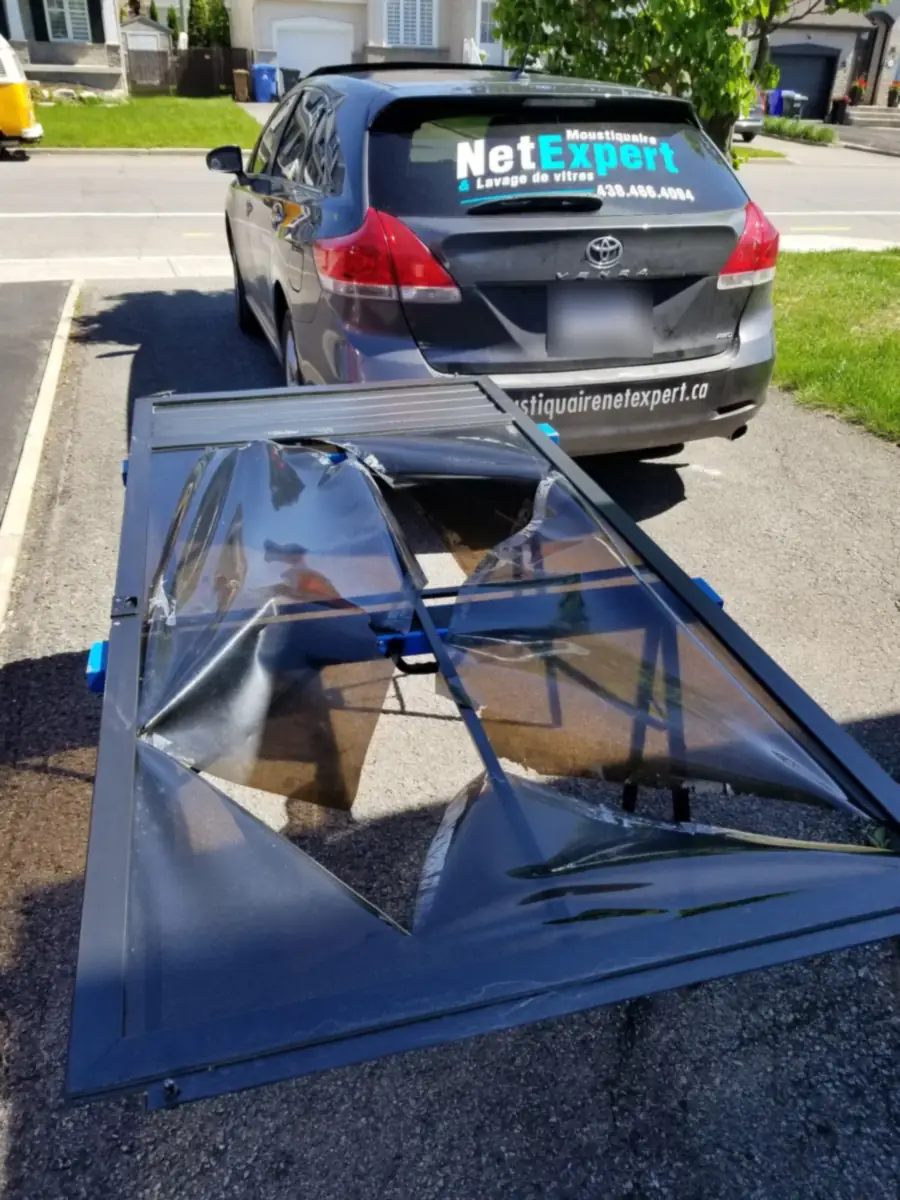
Sun yellows and clouds the vinyl. Film that crackles to the touch is at end of life.
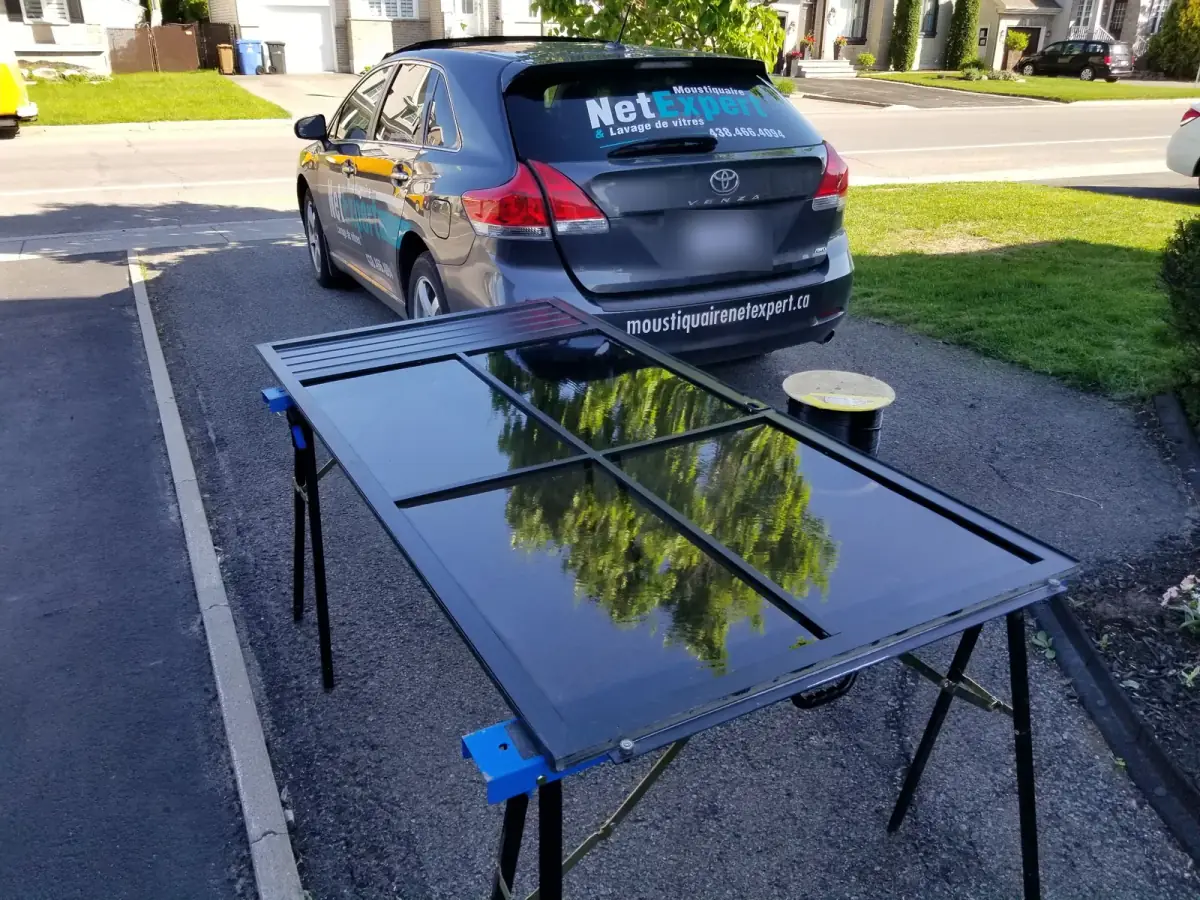
Gazebo and sun shelter specialty
Clear vinyl yellowed or torn? Replaced at your home in Belœil, in the original frames — gazebos and sun shelters.
Three questions are enough to start. The official measurement is taken on site.
Whatever your retailer calls it — MICA film, clear vinyl, clear plastic, sun-shelter transparent fabric — it is the same material, and we replace it in Belœil in your existing panels.
Sun yellows and clouds the vinyl. Film that crackles to the touch is at end of life.
Below freezing, MICA turns brittle — one handling or one gust splits it outright.
Slack vinyl flaps like a sail and eventually tears at the seams.
In the Belœil neighbourhoods built between 1970 and 1995, the garden shelter is not the age of the house: it was added to the yard long afterwards, and it is the date of that addition, not the date of the street, that decides the state of the film. Whole streets of bungalows and then of two-storey homes, lots of comparable size, and in a good share of those yards a retailer gazebo — aluminum or steel structure, standard-size panels — put up by an earlier generation of owners. They are not all from the same year, but they belong to the same family of products and they wear the same way: the clear film first, the screen panels after. It is the most common profile in town, and by far the simplest to work on.
The old village core, near the church and the Richelieu river, gives the other picture. The lots are laid out differently, often longer and more planted, and the garden shelter there is more often a permanent wooden structure, built to measure, with bays that do not repeat. The new developments round out the set: shorter yards, young trees that cut neither wind nor sun yet, recent gazebos in standard sizes whose film takes everything with nothing in the way. A retailer shelter is surveyed by size, a wooden structure bay by bay: it is that distinction, not the age of the street, that changes the visit.
On these retailer shelters the film has often been redone once already, by hand, with a roll cut roughly and fastened over the frame. It holds for a season, then the vinyl starts working, pulls on each of its fastening points and tears in a star around every one of them. Putting it right means going back to the original principle: one piece per bay, cut to exact size, held the way the frame was designed to hold it. The screen panels on the same shelter are handled alongside — mesh that has lost its tension, an open corner, spline out of its groove — and rescreened in their frames. A gazebo bay is tensioned lying down, never upright: what sets the length of the visit is the flat ground available beside the structure, not the size of the yard.
In a neighbourhood built all at once the arithmetic is different: a shelter bought in one go does not have one tired bay, it has a whole set of the same age, and it is that set that has to be surveyed. The survey is still done panel by panel, because a retailer gazebo may advertise standard sizes while two neighbouring bays differ depending on where they sit in the structure. In the old core, access needs more attention: longer lots, hedges, fences, and sometimes a wooden structure with panels wider than the yard gate. We check the way out before unhooking the first one.
The Richelieu and the planted lots of the old core mean spring is fought against very small biting flies, the ones that go through an ordinary mesh as if it were not there. On a gazebo the mesh is only half the question: split film lets through as much as a holed panel, and both are surveyed together or the shelter stays unusable. In the newer neighbourhoods the problem changes: young trees, open yards, full afternoon sun on the same face all season. That face is the one that yellows first, and it is the one that decides when the film has to be redone.
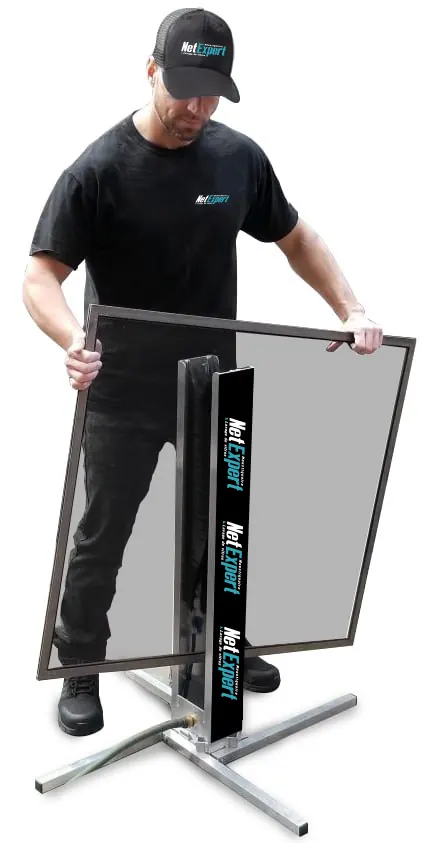
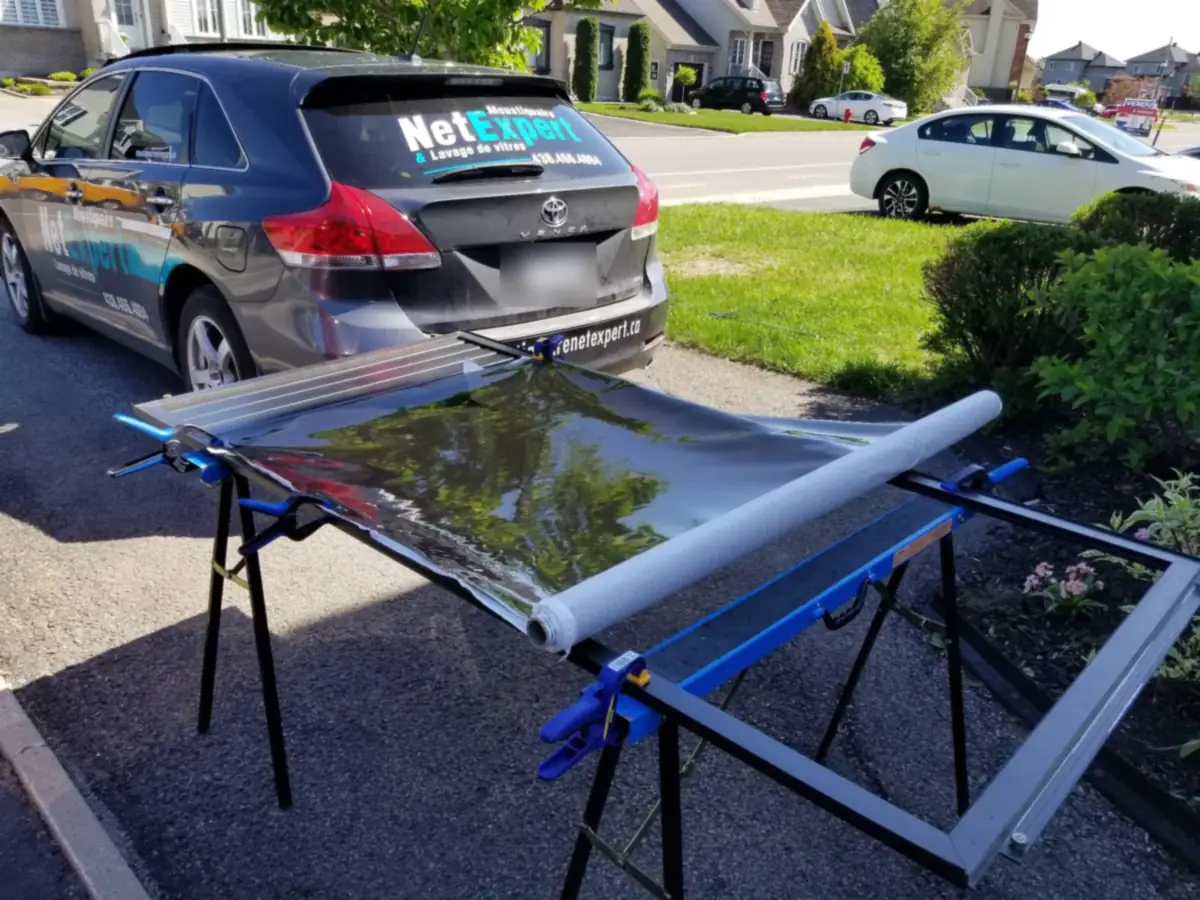
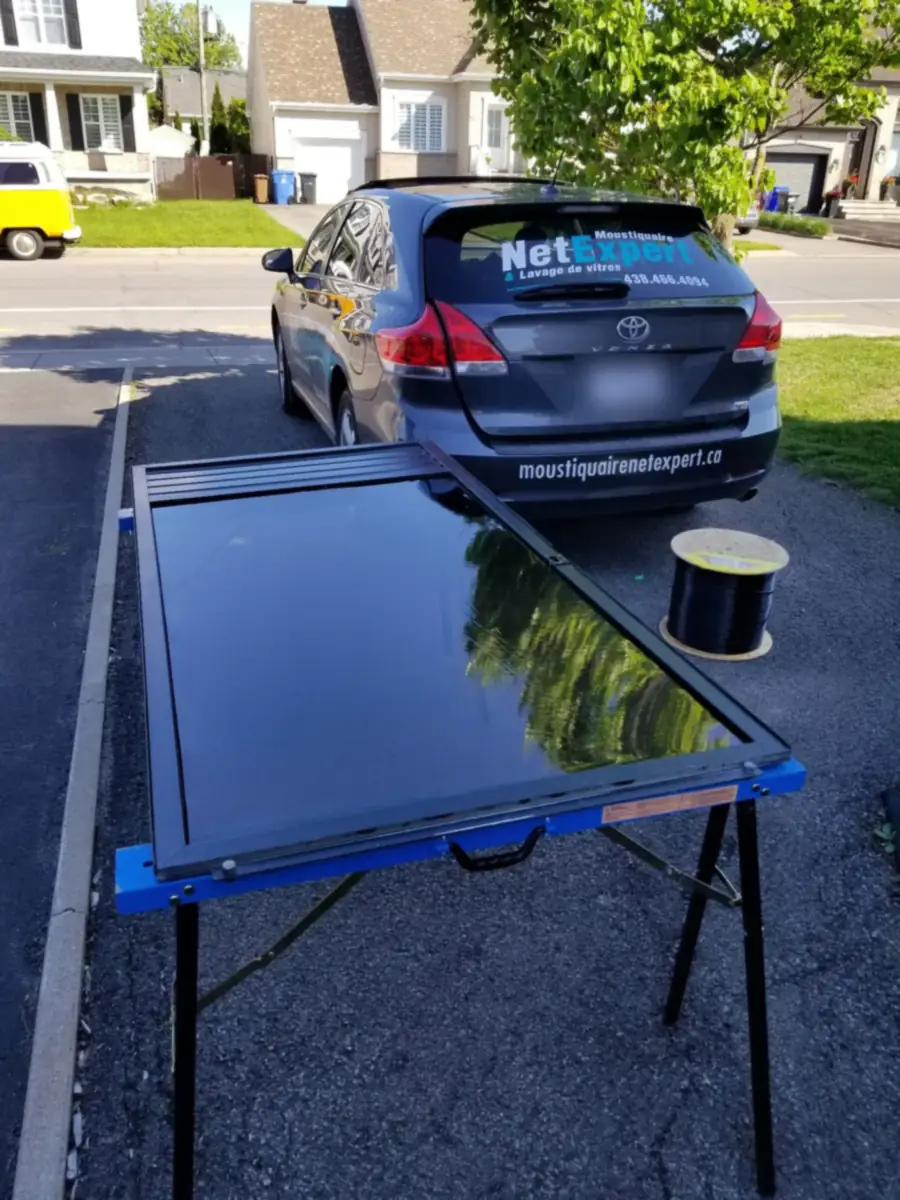
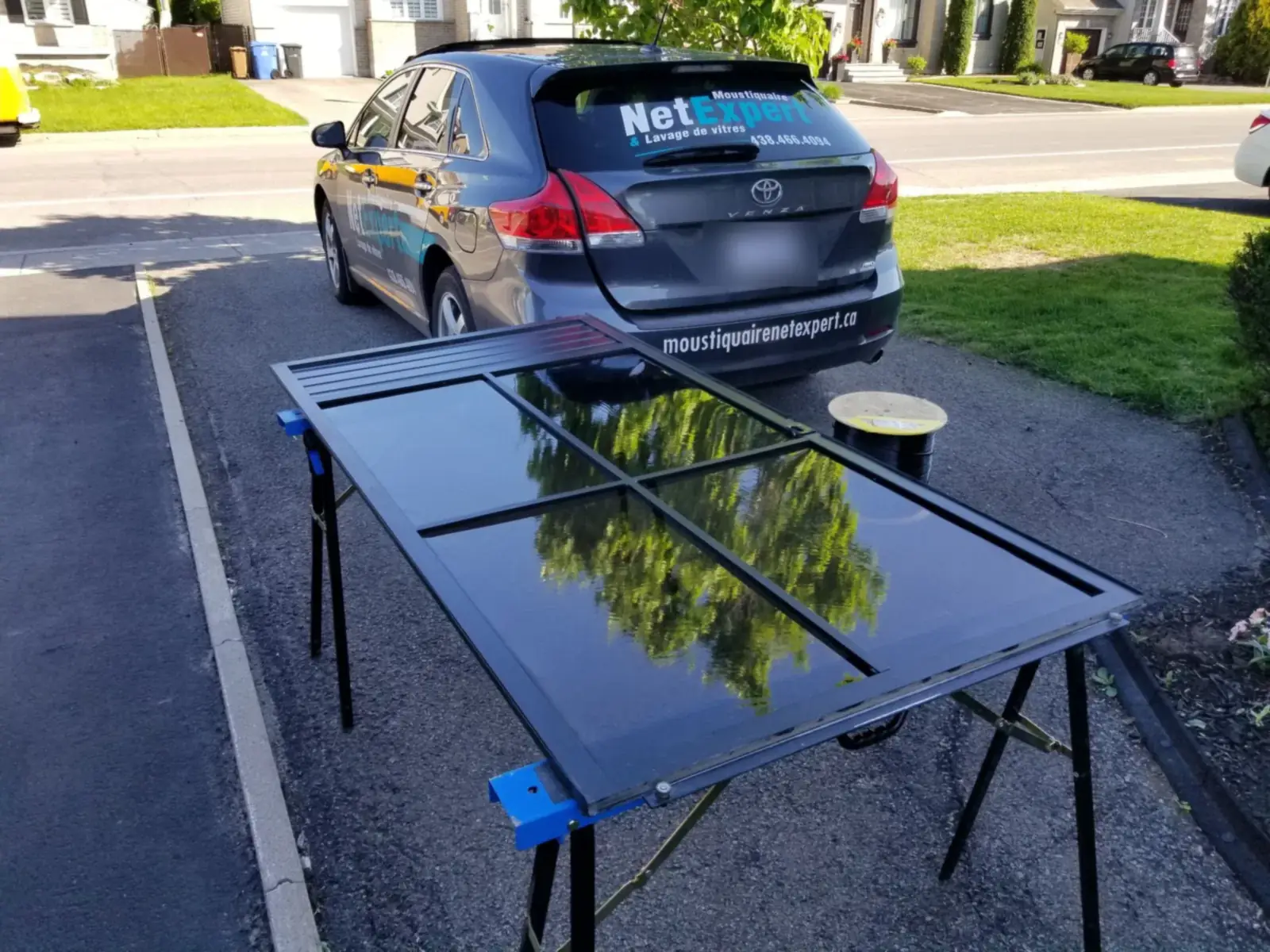
This job was not in Belœil — it shows our method, the same everywhere: panels down, new vinyl pane by pane, panels back up.
« Great service! He was at my neighbour’s and agreed to fix my back screen even though we had no appointment. Very successful repair, and inexpensive! »
« Ludovic replaced my screen in record time. Professional, and with a great sense of humour. I recommend his services — don’t hesitate to contact him, he’ll come to your home and do beautiful work. »
« Excellent service. Clear explanations of the work to be done. I really appreciated his dedication: despite the rain he insisted on finishing the job, soaked through and still smiling. The work was very well done. »
Straight answers
Yes, and it is common in neighbourhoods built all at once. A shelter bought in one go gets the same film and the same mesh everywhere, exposed to the same seasons, so they reach their end together, give or take a few months. We still survey panel by panel, because a sheltered bay lasts longer than one taking wind and sun, and a bay that is still good does not get replaced.
We work from the frame instead. Film laid over the frame and fastened roughly pulls on its fastening points as soon as it starts working, and tears in a star around each one. Putting it right means going back to one piece per bay, cut to exact size and held the way the frame was designed to hold it. That is what decides whether the film works against its frame or with it.
That is worth checking before anything comes down, and it is quickly done. On these lots, a bay from a permanent structure is often wider than the fence gate or than the gap between the house and the hedge. We measure the panel, we measure the route, and then we decide: out through the yard, out through the house, or the work done on the spot beside the structure.
Yes, at your home. We travel to Belœil, remove the panels, replace the MICA vinyl in the original frames and put everything back — the gazebo structure is never touched. It is one of our specialties.
Yes. Depending on the retailer it is called MICA film, clear vinyl, clear plastic or transparent fabric — the same flexible material that cuts wind and holds warmth. We replace it on gazebos and sun shelters alike.
Yes. The vinyl is replaced pane by pane, in the existing frame — no need to redo the whole panel for one tear. If several panes have yellowed, doing them together gives a uniform result.
On assessment: the price depends on the number of panels and their dimensions. The quote is free, and a photo is often enough to price without a visit. Fabrication and installation guaranteed one year.
Do you manage a building or a business in Belœil?