
Slack or torn mesh
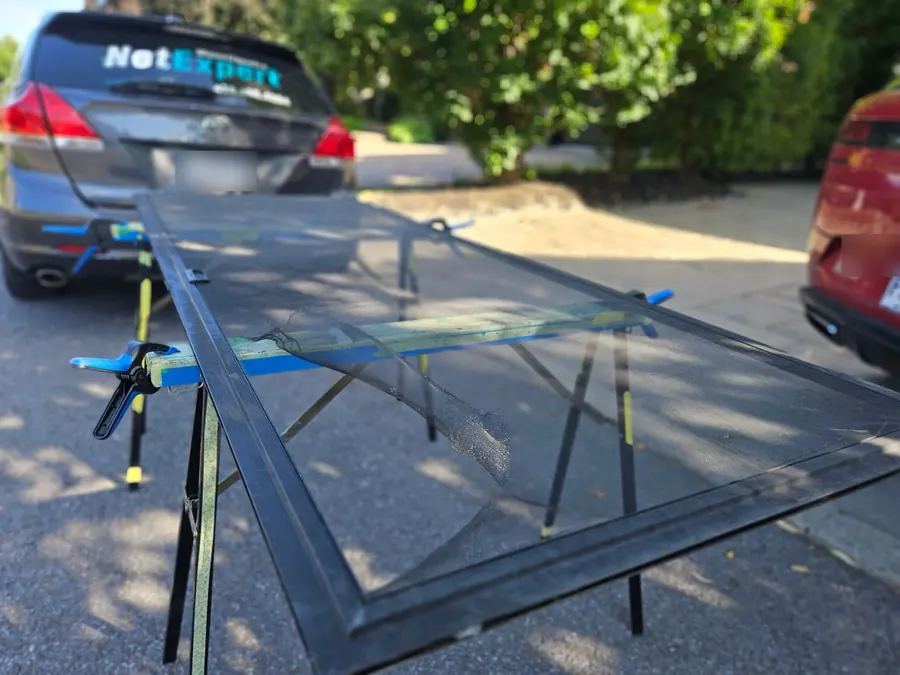
The mesh pulls out of the spline, billows in the wind or tore at the bottom — the classic. Re-meshed in your frame, fibreglass or reinforced.
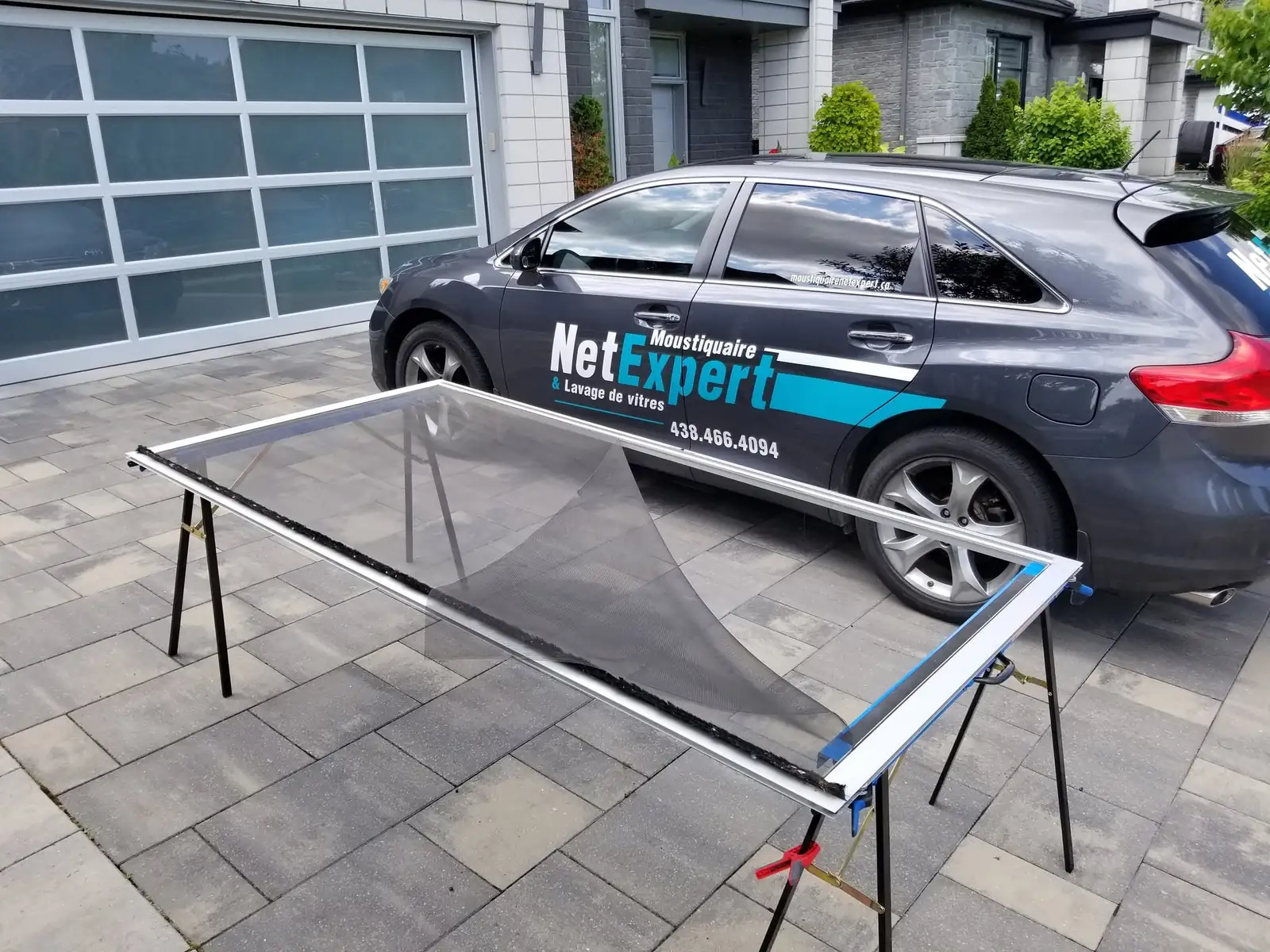
Patio door screens
Mesh, rollers, track, hardware: your screen door repaired at home in Sainte-Marie-Madeleine, usually in a single visit.
Three questions are enough to start. The official measurement is taken on site.
It is the most used screen in the house — opened and closed thousands of times a season. Four failures come up constantly, and all four are repaired on site.
The mesh pulls out of the spline, billows in the wind or tore at the bottom — the classic. Re-meshed in your frame, fibreglass or reinforced.
The door drags, jumps the track or scrapes. We replace the rollers and adjust the height — the most requested repair.
Sand, pet hair and debris jam the rolling. Cleaning, lubrication, light track straightening when needed.
The door no longer locks or the handle hangs loose. Hardware replaced, latch adjusted.
The parish rings the village of Sainte-Madeleine, and its building stock changes the whole picture: farmhouses and rang residences set in the middle of open lots, with a few streets of bungalows and newer houses near the core. A farmhouse was not built with a sliding glass door. Where it has one, it came with an addition, a sunroom or a kitchen opened toward the back, and it gives onto a deck that looks out over the fields. It is often a large door, in an opening made to measure, with a screen panel taller and wider than average — more exposed to the wind, and harder to keep under tension.
Open ground is what really separates these doors from the ones in the village. Nothing stops the wind between two rang roads: it hits the panel square on, sets it humming in its track and works the mesh continuously from spring to fall. The ground does the rest. A farmyard supplies its own dust: what the machinery lifts off the rang roads ringing the village, what the wind carries back off the ploughed fields; it climbs to the bottom of the door and packs into the track groove. Nearer the core, the streets of bungalows and newer houses return to ordinary conditions: common sizes, hardware that can still be sourced, and the normal wear of a back-yard door on a street where the houses shelter one another.
On a large rang door, two failures travel together. The mesh, worked by the wind, loses its tension and starts to snap; mesh that snaps pulls on its groove and eventually lifts out at a corner. And the rollers, packed with gravel, stop rolling: the door gets stiff and gets pushed on mesh that is already loose. Taking one without the other does not hold up. Rollers and mesh are therefore done in the same visit, the track emptied to the bottom and lubricated, the frame straightened if it has bowed under the pushing. A tall panel also needs its height set carefully, otherwise it lifts out of its upper guide at the first gust.
Distance dictates the preparation. There are kilometres between two rang residences, and the truck does not come back for something forgotten: it is better to say in advance how many patio doors the house has — addition, sunroom, basement walkout — and roughly how tall they are. A large panel comes off by tilting outward, so the deck needs clearance, and on these houses it is often raised and furnished. And since the parish surrounds the village, grouping addresses on the same side shortens the route: the exact address is given when the visit is booked, not on arrival.
On open ground, aluminum is the default on a large door: stiffer, it holds its tension over the full height of a panel that field wind pushes without let-up, where standard fibreglass eventually bellies out and starts to snap. If a house dog or a barn cat goes through that door several times a day, pet-resistant mesh belongs at that spot and nowhere else. And on a door sheltered by a sunroom or by the wall of an addition, standard fibreglass is plenty, and easier to see through.
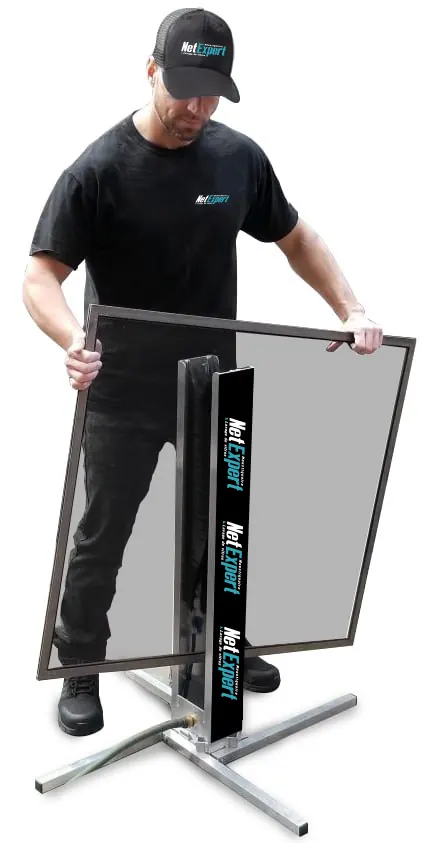
A patio door opens and closes more often than every window in the house combined — and it is the one the dog noses open and the cat climbs. Standard fibreglass mesh suits a lightly used door; for the others, we fit reinforced mesh, about seven times stronger, or pet-resistant mesh built for claws.
The extra cost is measured in tens of dollars; the yearly replacement it prevents, in hundreds. We carry both types in the vehicle — the decision can happen on the spot, with the door off its track in front of you.
Ten kinds of damage, one answer
If your screen looks like any of these, it can be repaired. Tap one to request a quote for that exact damage. We rarely replace a whole frame — in most cases only the mesh needs redoing.
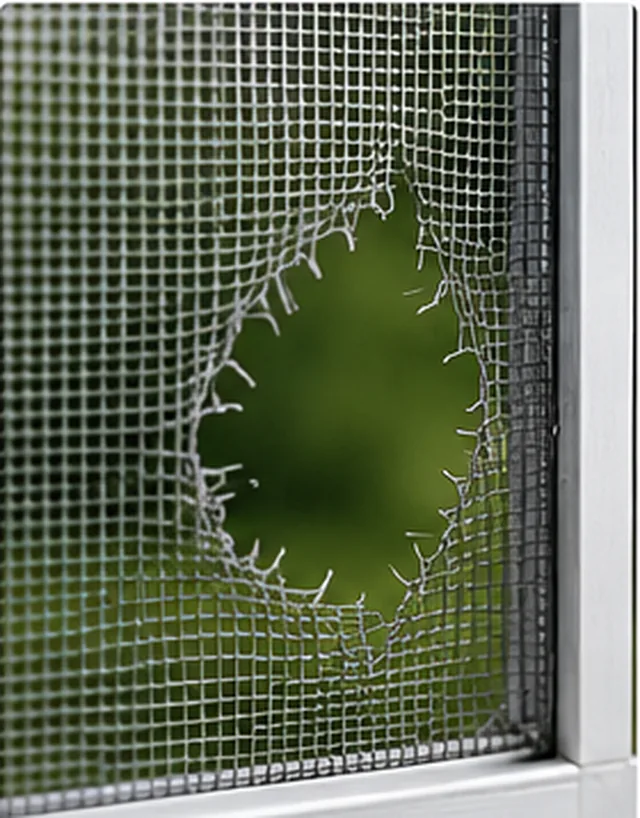 Mesh
Mesh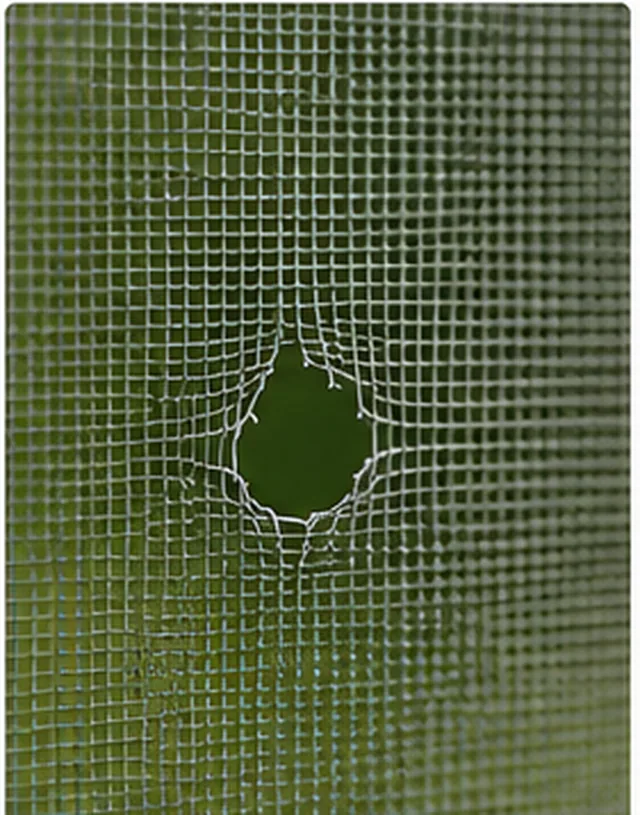 Mesh
Mesh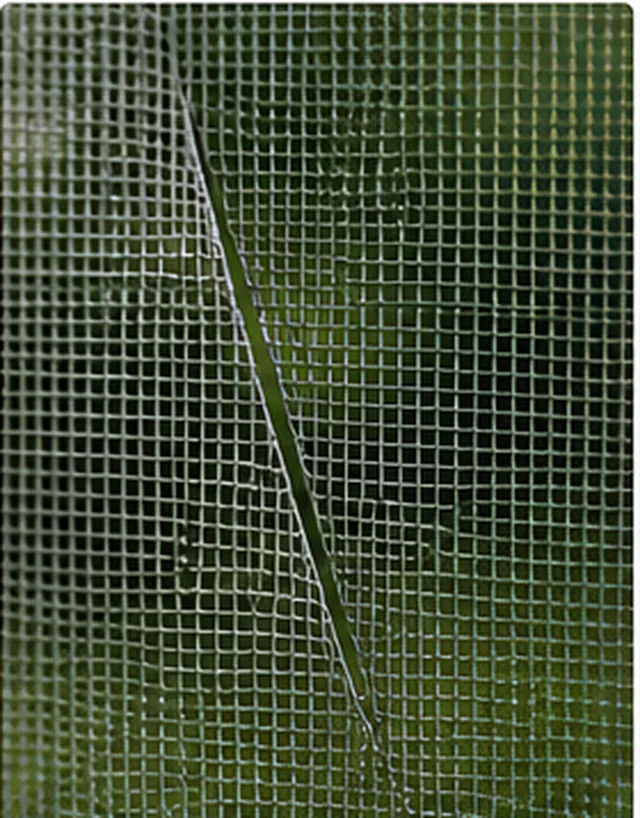 Mesh
Mesh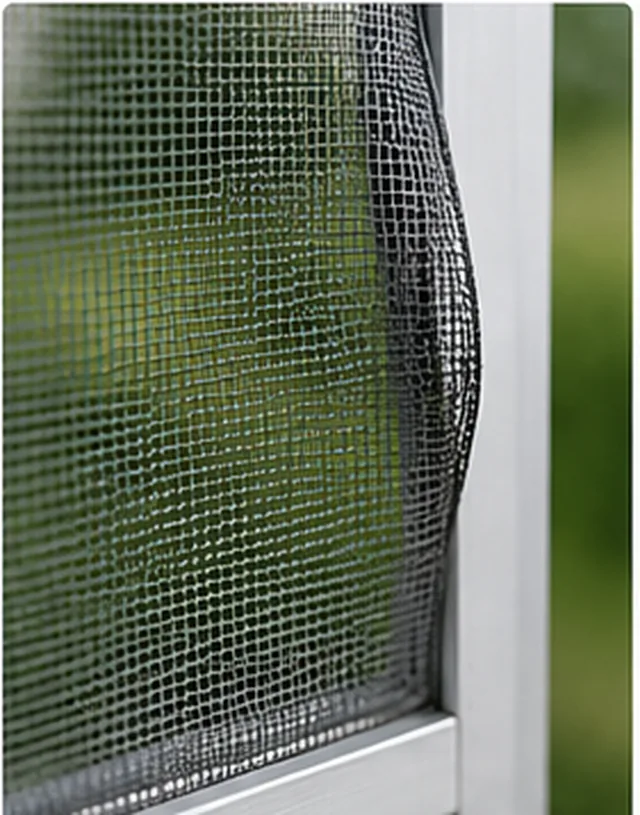 Mesh
Mesh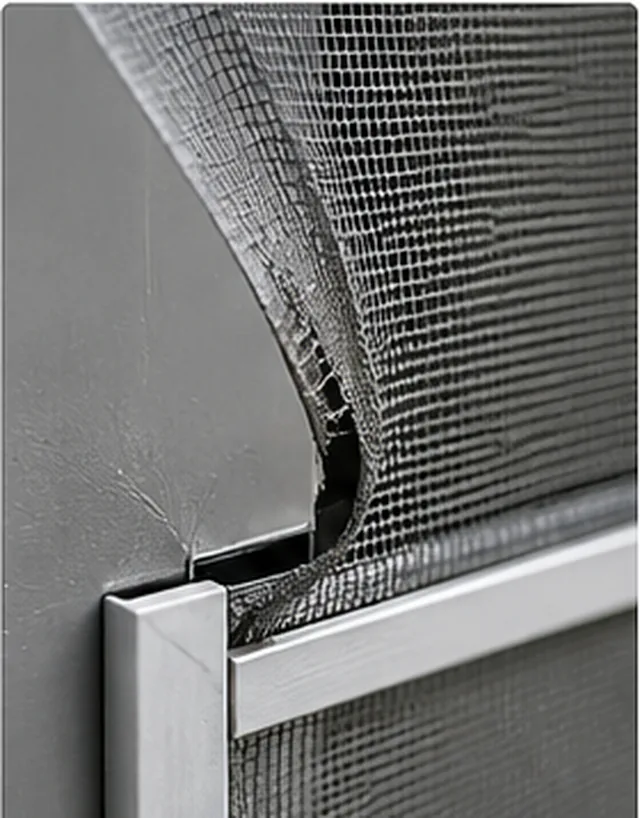 Mesh
Mesh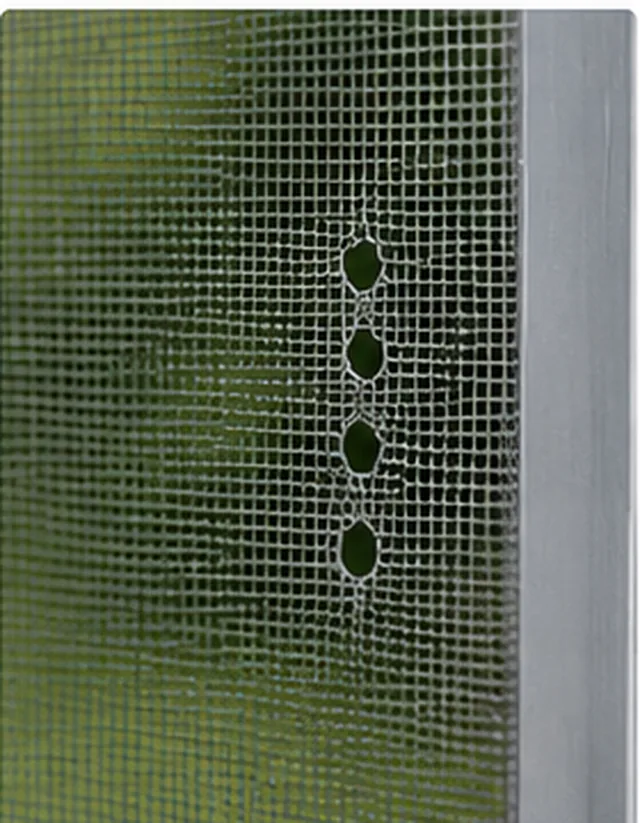 Mesh
Mesh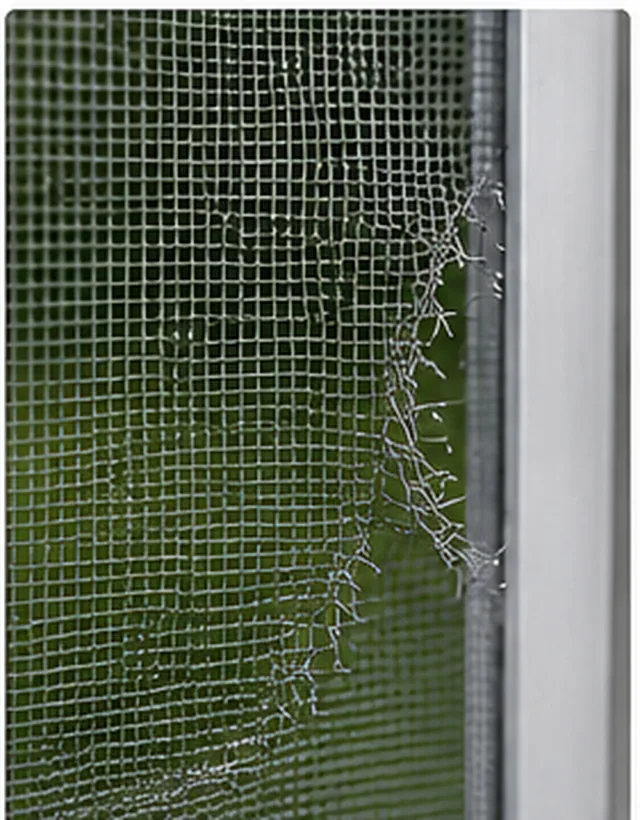 Mesh
Mesh Mesh
Mesh Mesh
Mesh Frame
FrameThis job was not in Sainte-Marie-Madeleine — it shows our method, the same everywhere: door off its track, new rollers, new mesh, frame squared up.
 1
1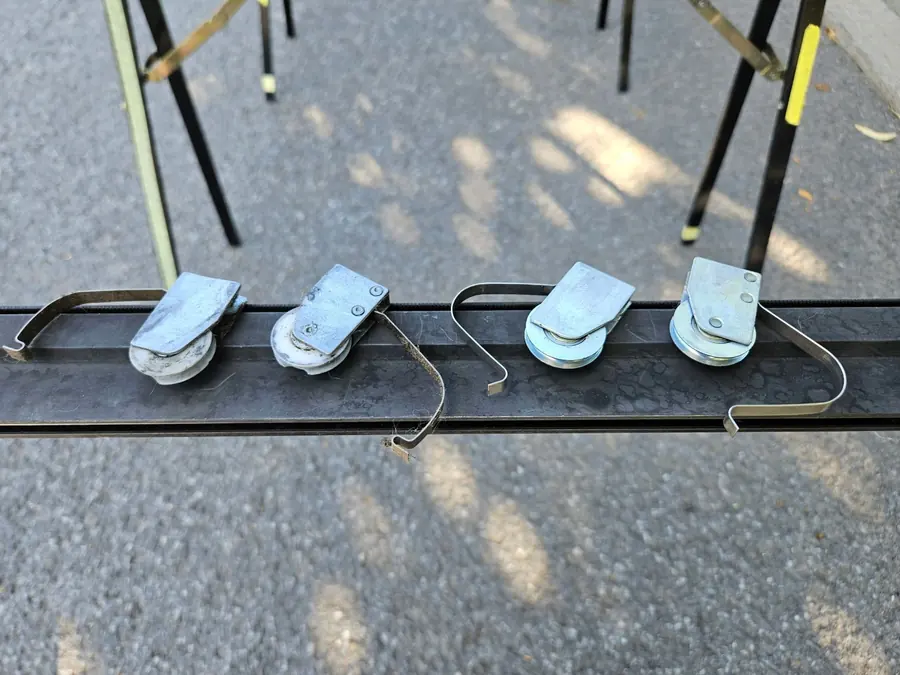 2
2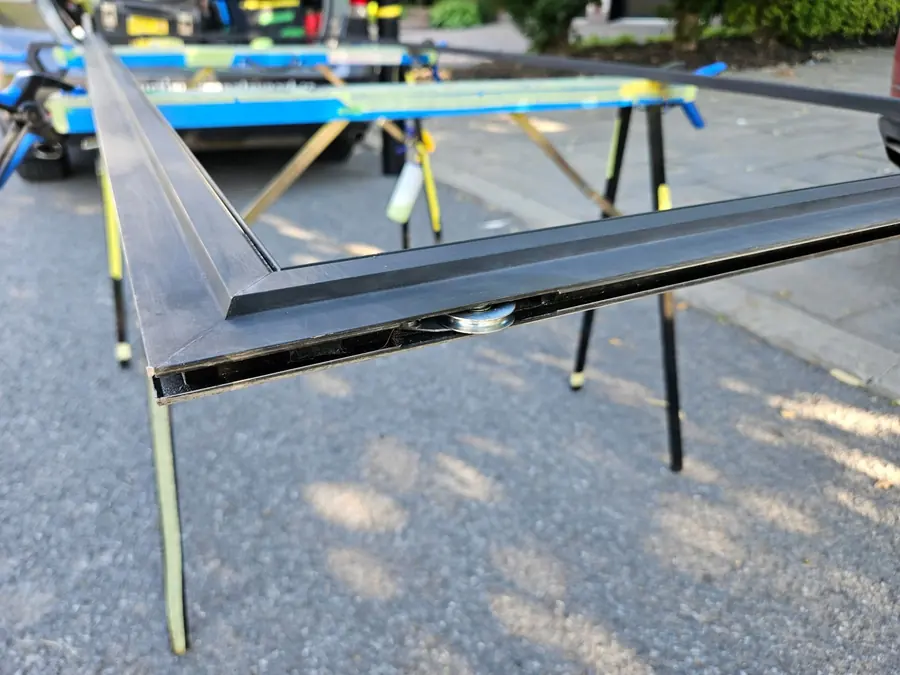 3
3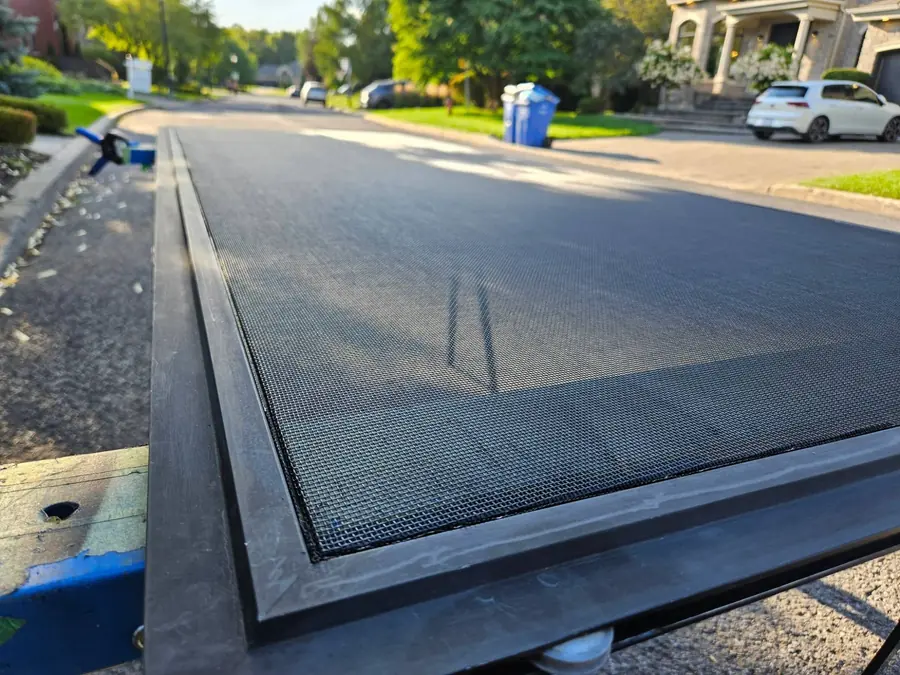 4
4« Excellent service. Clear explanations of the work to be done. I really appreciated his dedication: despite the rain he insisted on finishing the job, soaked through and still smiling. The work was very well done. »
« Great service! He was at my neighbour’s and agreed to fix my back screen even though we had no appointment. Very successful repair, and inexpensive! »
« Ludovic replaced my screen in record time. Professional, and with a great sense of humour. I recommend his services — don’t hesitate to contact him, he’ll come to your home and do beautiful work. »
Straight answers
On a tall, wide panel, standard fibreglass always gives in to tension in the end: it is soft, and the wind works it across the whole surface. Aluminum is stiffer and keeps its shape far longer at that size. The tension at installation matters as much as the mesh chosen: badly tensioned, even a stiff mesh will ripple at the first sustained wind.
Put pet-resistant mesh on that door, without touching the rest of the house. Its weave takes the claws and the push of an animal treating the door as a route through, where ordinary mesh tears within the same season. It is also the door where tension gets checked: loose mesh offers a grip, properly tensioned mesh offers far less to hook into.
Rarely. A panel left standing that long almost always has rollers locked with dried soil and a track filled to the brim: both get cleaned, and whatever is worn gets replaced. The frame is only replaced when it is twisted or split, which shows as soon as you lay it flat. A door that has not been used is not a finished door, it is a fouled one.
Yes, at your home. We remove the screen door, replace the mesh or rollers on site, clean and lubricate the track, then reinstall it — usually in a single visit to Sainte-Marie-Madeleine.
Almost always the rollers: they wear out before the mesh and push the door off its track. We replace them and clean the track in the same intervention — forcing a derailing door eventually bends the frame, a costlier repair.
Rollers and hardware: from $30. A complete custom-built screen door: from $500, depending on format. The mesh alone on a door is priced on quote, from its dimensions. An exact quote is free.
One year on fabrication and installation — mesh, fitted rollers, built frames. Damage caused afterwards, by a pet or an impact, is not covered; for a dog, pet-resistant mesh is the real answer.
Pet-resistant mesh: about seven times stronger than standard fibreglass. On a patio door used daily, it is the difference between replacing the mesh yearly and being done with it for seasons.
Do you manage a building or a business in Sainte-Marie-Madeleine?