
Slack or torn mesh
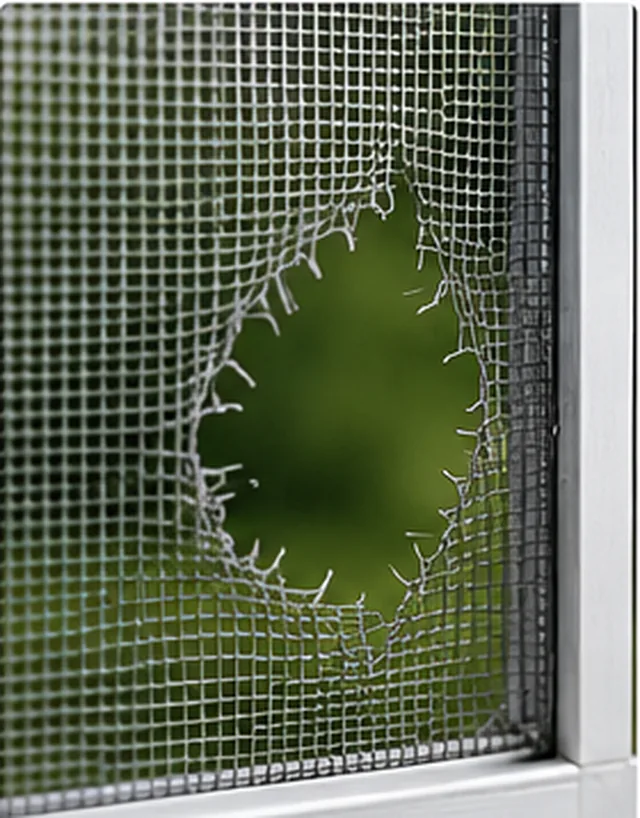
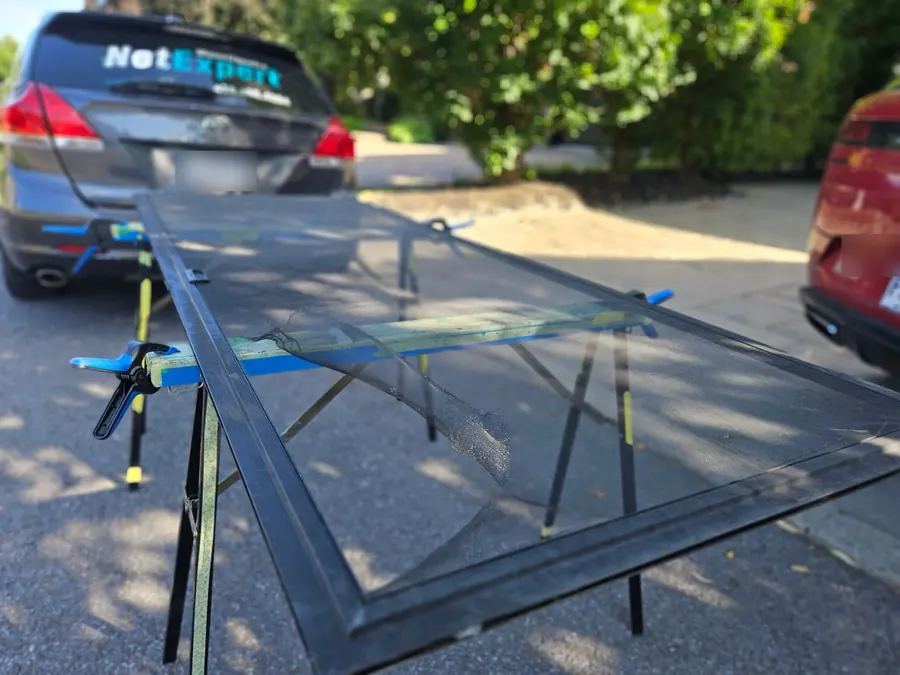
The mesh pulls out of the spline, billows in the wind or tore at the bottom — the classic. Re-meshed in your frame, fibreglass or reinforced.
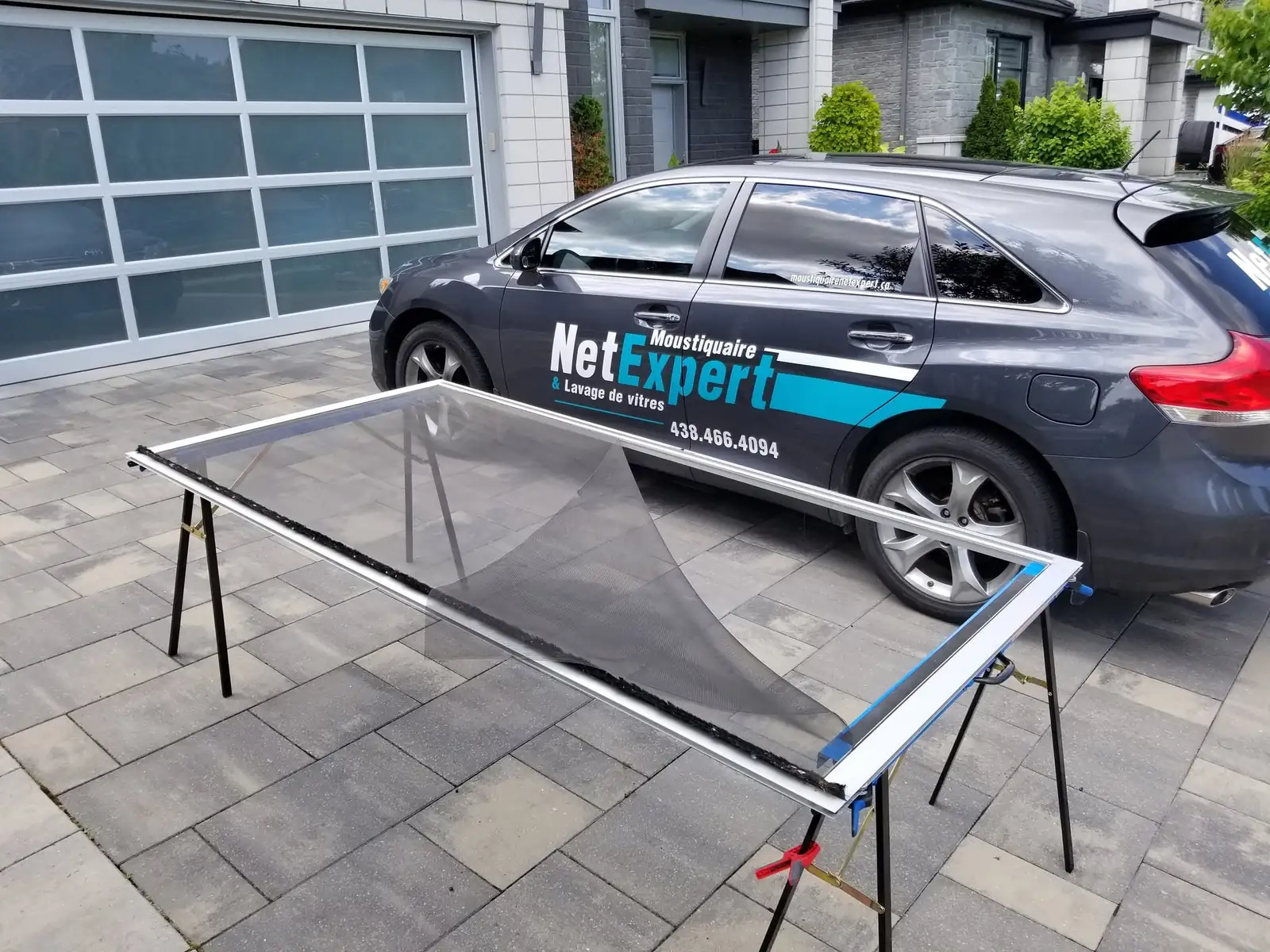
Patio door screens
Mesh, rollers, track, hardware: your screen door repaired at home in Mont-Saint-Hilaire, usually in a single visit.
Three questions are enough to start. The official measurement is taken on site.
It is the most used screen in the house — opened and closed thousands of times a season. Four failures come up constantly, and all four are repaired on site.
The mesh pulls out of the spline, billows in the wind or tore at the bottom — the classic. Re-meshed in your frame, fibreglass or reinforced.
The door drags, jumps the track or scrapes. We replace the rollers and adjust the height — the most requested repair.
Sand, pet hair and debris jam the rolling. Cleaning, lubrication, light track straightening when needed.
The door no longer locks or the handle hangs loose. Hardware replaced, latch adjusted.
In Mont-Saint-Hilaire, the patio door is not just another opening: in the upscale streets terraced along the mountainside, it is the one facing the view, so it is the one that gets used. These houses sit on ground that falls away, and the back deck often ends up on posts, a full storey above grade. The door leading out there opens and closes from morning to night as soon as the season allows, and the sliding screen absorbs every one of those passes. The roller model is not read off an invoice or over the phone: it is identified from the part, panel out, and that reading says whether an equivalent still exists or a near model has to be adapted to the same housing.
The heritage village along the Richelieu and the houses on the slopes near the orchards tell another story. On those buildings the patio door is almost never original: it arrived with an addition, an enlarged kitchen or an enclosed sunroom, and it was cut into the back wall, out of sight from the street. Two practical consequences. First, the panel is chosen for how it holds up mechanically rather than for its effect on the façade, which is not true of the front windows. Second, an opening cut later into an old wall has not necessarily kept its plumb: a sill that has dropped a few millimetres will make a door bind even when its rollers are sound. Dimensions get taken on site, diagonals included.
The order of failure is almost always the same, and it starts at the bottom. The rollers carry the full weight of the panel; they wear, they pack with sand and deck grit, and a wheel with a flat spot lets the panel drop until it drags on the track. People force it, lift it, reseat it — and that is when the frame racks into a lozenge. We take the panel out, measure its diagonals, straighten the frame when it is merely racked, and replace it only when it is twisted or split. The track is emptied along its whole length, cleaned and lubricated. Rollers and mesh are done in the same visit: splitting the two jobs means coming back in two years for the other half of the work.
The terrain dictates the access. On ground that falls away, the back opening cannot be worked from below, and it is the handling of the panel, not the repair itself, that changes because of it. Setting a ladder on a wooded slope to reach a two-metre panel is neither safe nor necessary — a patio door screen lifts out toward the inside, gets rescreened flat, and goes back the same way. What remains is handling: a large panel takes two hands and needs somewhere to lie flat. In the older village houses, where the back rooms are smaller, the deck itself often makes the better workbench.
Three meshes, three uses. Standard fibreglass suits a sheltered door in an enclosed yard. Aluminum, being stiffer, holds tension better on a large exposed panel — a raised deck on the mountain side, or an open elevation toward the orchards, catches wind, and mesh that bellies out eventually pulls free of its spline groove. Pet-resistant mesh, noticeably heavier, is the only sensible choice when a cat or dog crosses the door several times a day: a claw goes straight through standard fibreglass the first time.
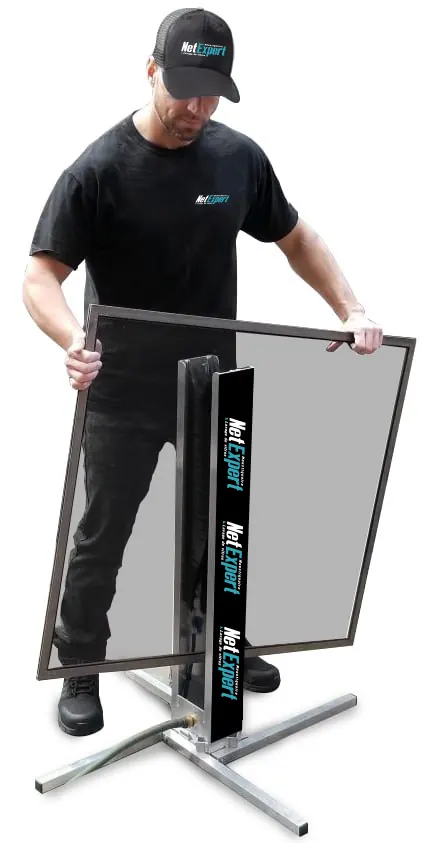
A patio door opens and closes more often than every window in the house combined — and it is the one the dog noses open and the cat climbs. Standard fibreglass mesh suits a lightly used door; for the others, we fit reinforced mesh, about seven times stronger, or pet-resistant mesh built for claws.
The extra cost is measured in tens of dollars; the yearly replacement it prevents, in hundreds. We carry both types in the vehicle — the decision can happen on the spot, with the door off its track in front of you.
Ten kinds of damage, one answer
If your screen looks like any of these, it can be repaired. Tap one to request a quote for that exact damage. We rarely replace a whole frame — in most cases only the mesh needs redoing.
 Mesh
Mesh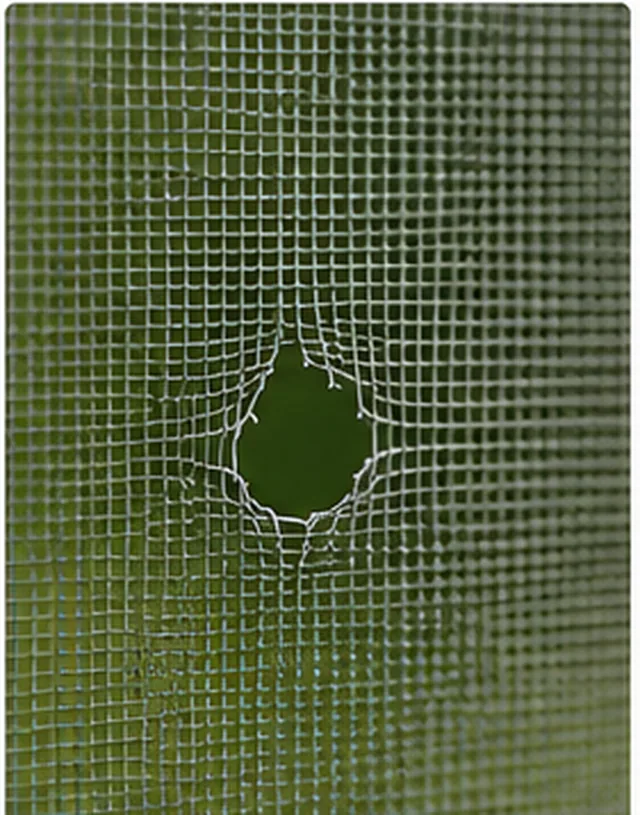 Mesh
Mesh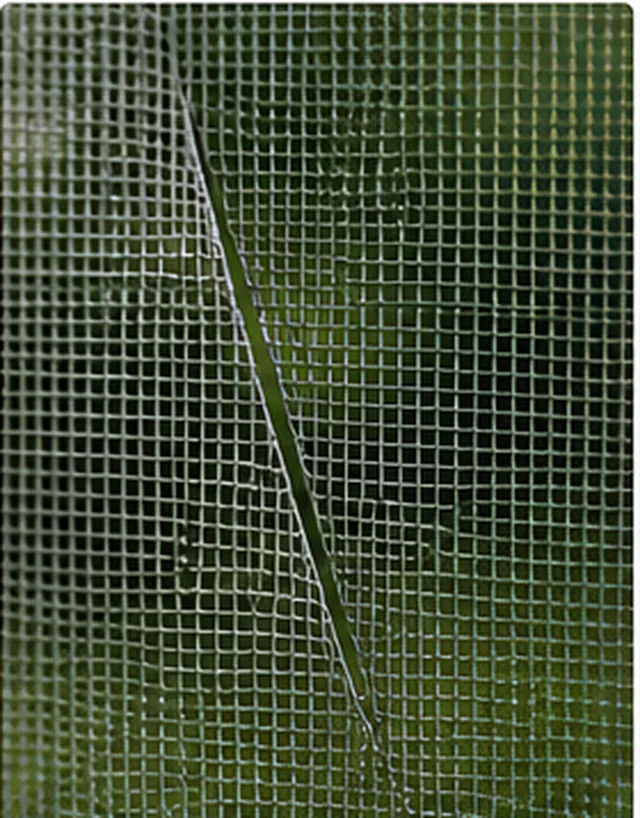 Mesh
Mesh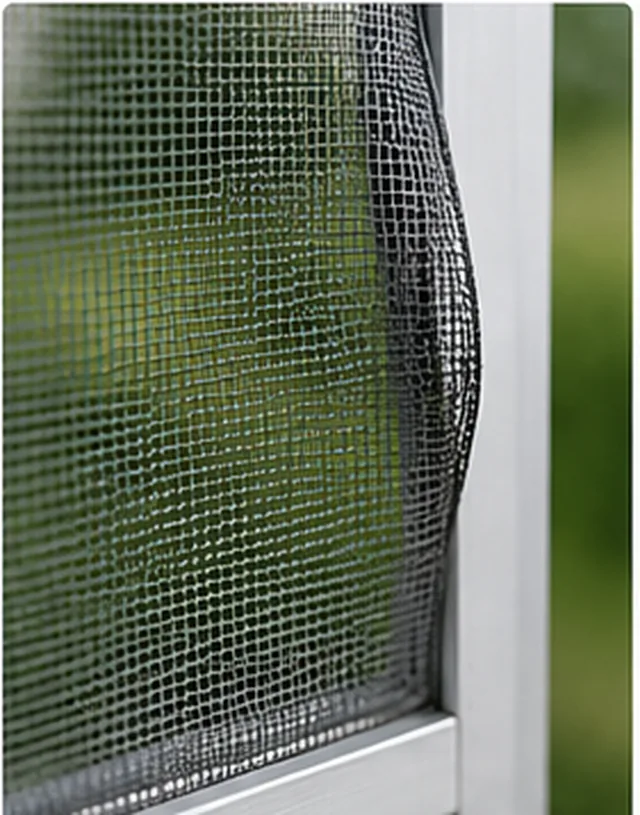 Mesh
Mesh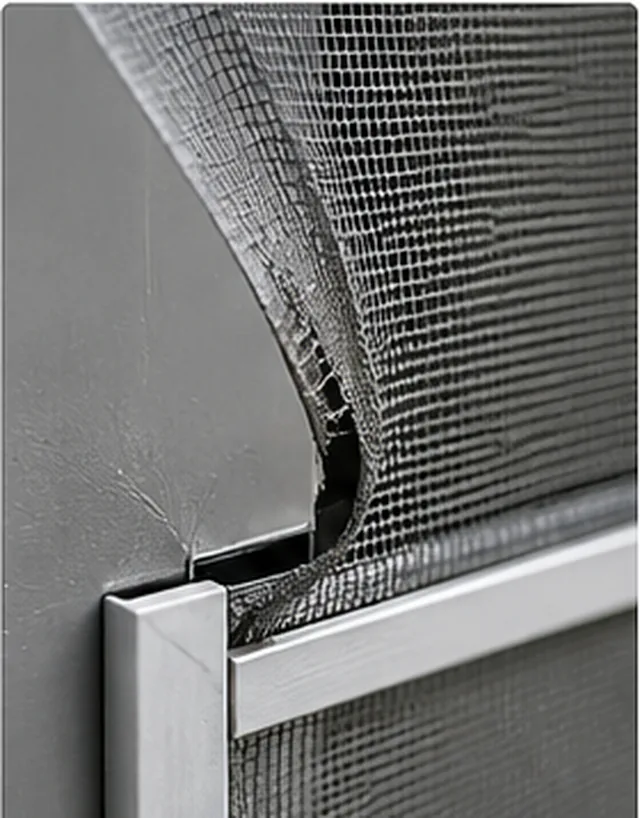 Mesh
Mesh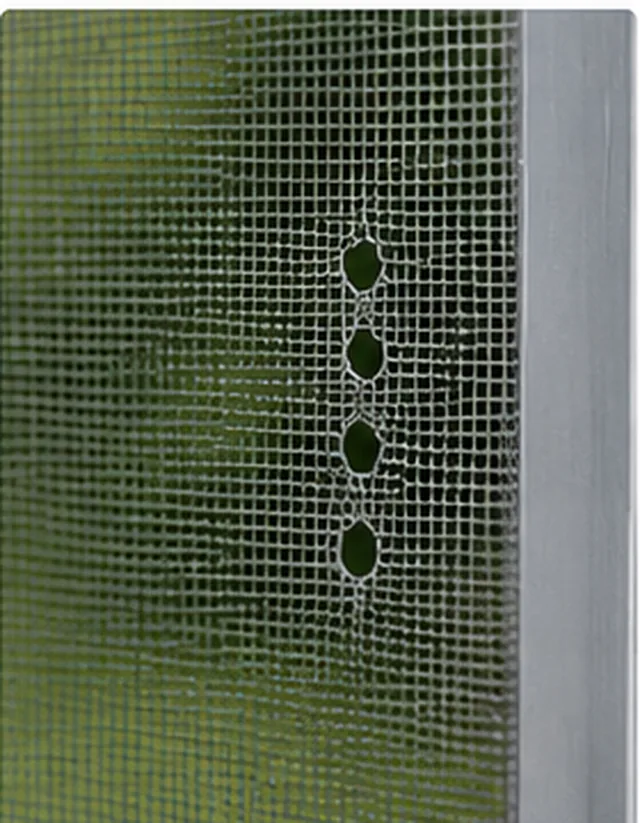 Mesh
Mesh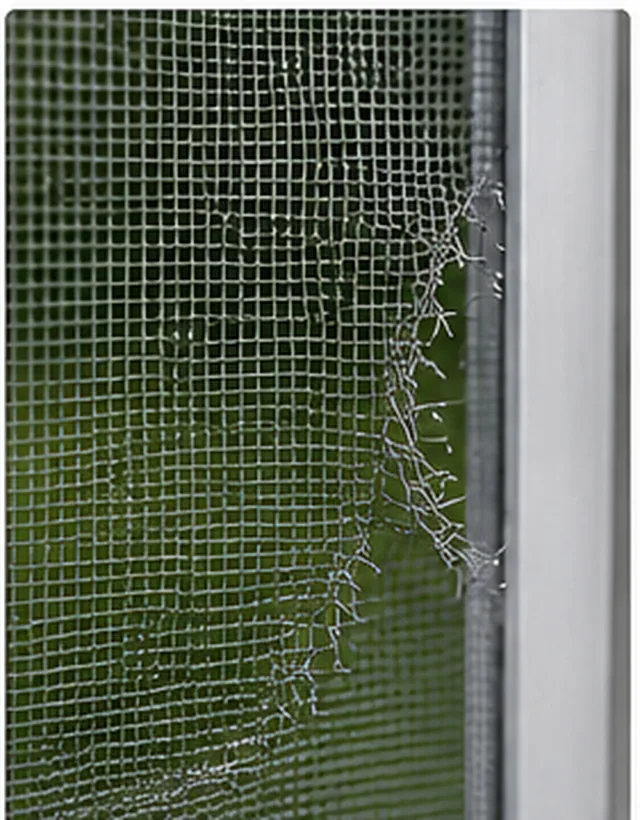 Mesh
Mesh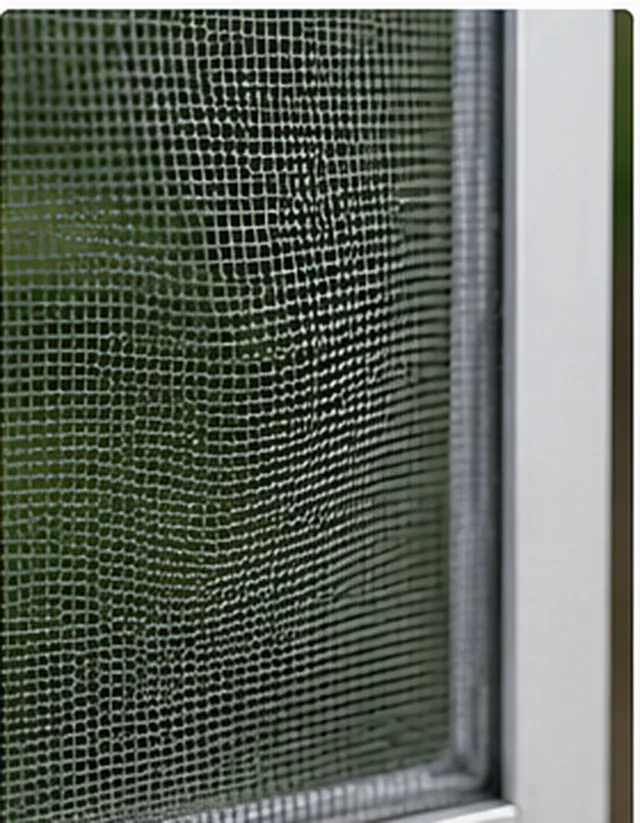 Mesh
Mesh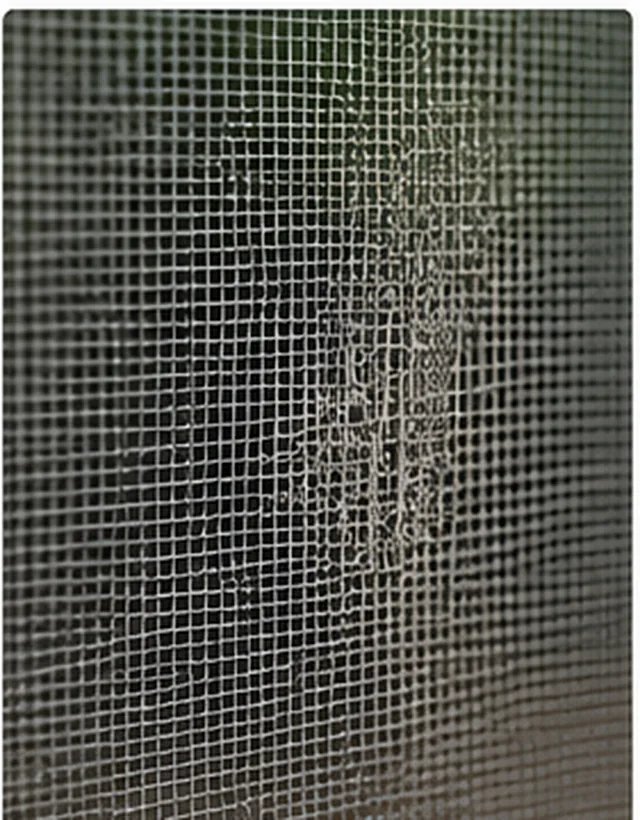 Mesh
Mesh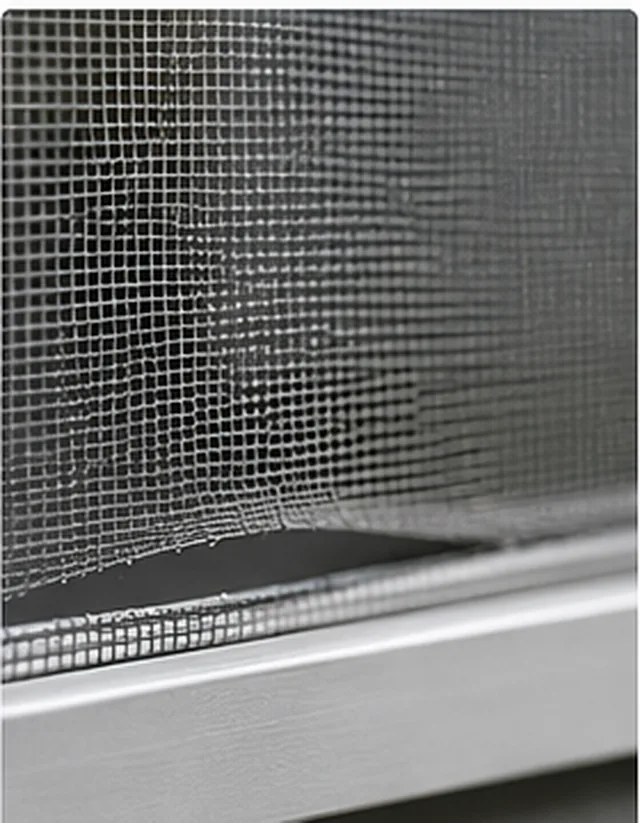 Frame
FrameThis job was not in Mont-Saint-Hilaire — it shows our method, the same everywhere: door off its track, new rollers, new mesh, frame squared up.
 1
1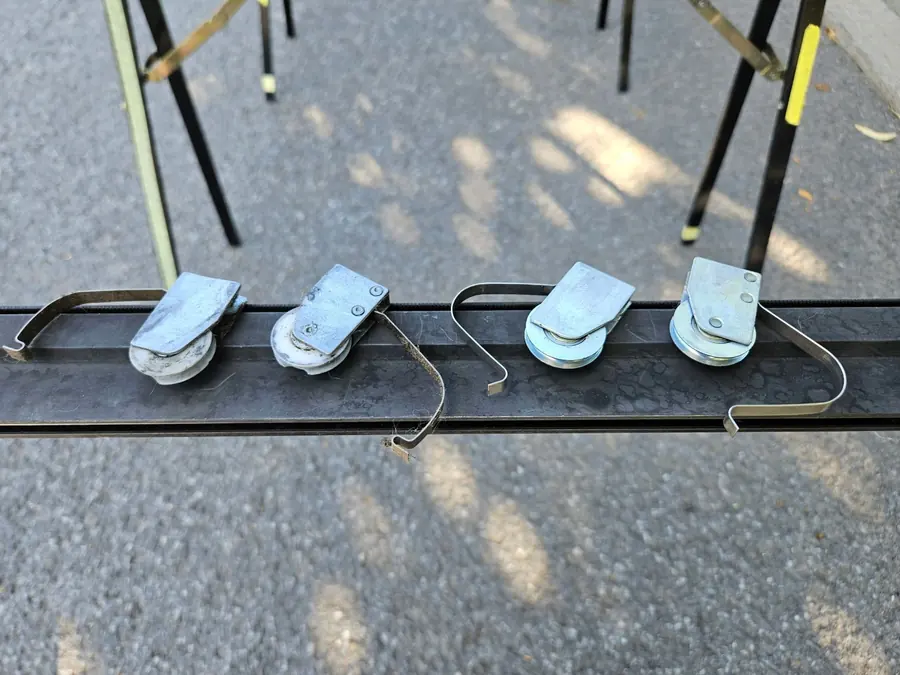 2
2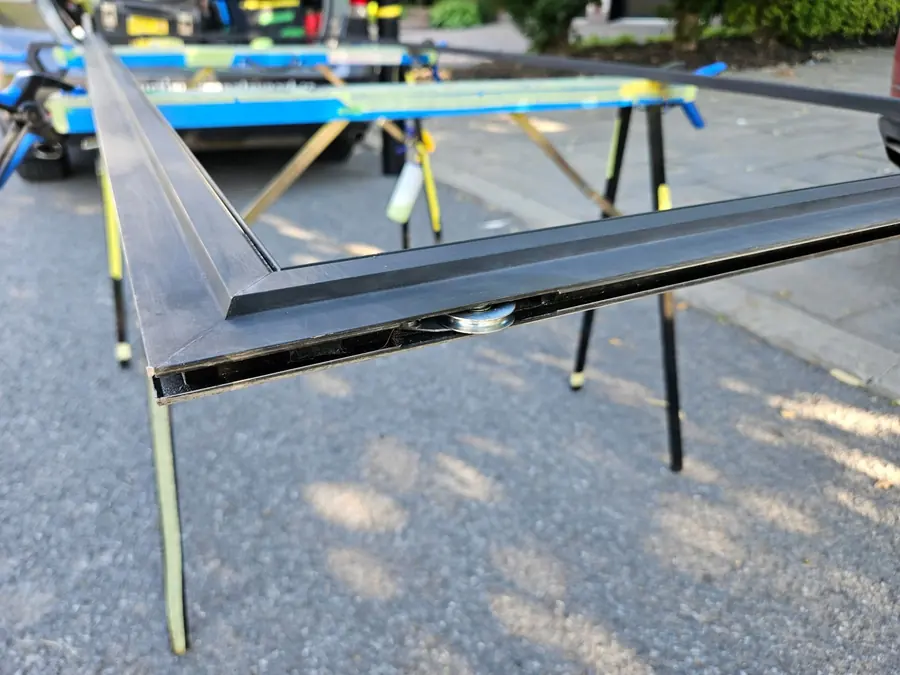 3
3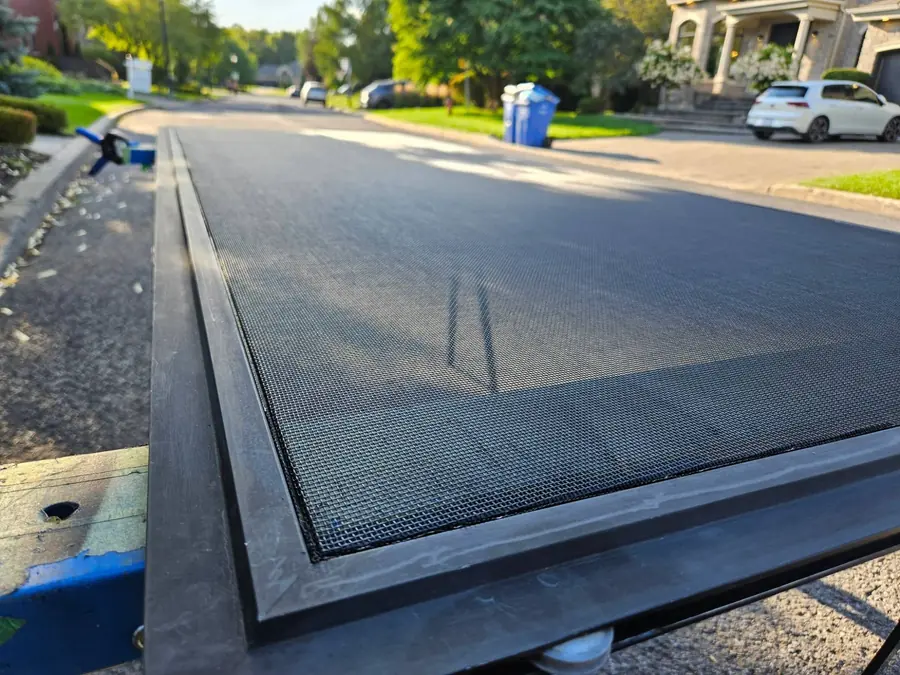 4
4« Excellent service. Clear explanations of the work to be done. I really appreciated his dedication: despite the rain he insisted on finishing the job, soaked through and still smiling. The work was very well done. »
« Great service! He was at my neighbour’s and agreed to fix my back screen even though we had no appointment. Very successful repair, and inexpensive! »
« Ludovic replaced my screen in record time. Professional, and with a great sense of humour. I recommend his services — don’t hesitate to contact him, he’ll come to your home and do beautiful work. »
Straight answers
Yes, and it happens in the same visit. Two doors installed the same year on the same house carry the same hardware and have seen the same number of seasons. The one not complaining yet usually has rollers worn to a similar degree; the difference simply reflects which door gets used more. Inspecting both does not mean rebuilding both.
Not for the screen. The sliding panel lifts and clears toward the inside of the house, so nobody has to work from outside or set a ladder on a slope. Rescreening is done flat, on site, and the panel goes back in its track the same visit. What deserves a look up there is the track itself: it collects everything the deck drops into it.
For appearance, no: at the back the frame profile is not visible from the street, so the panel is chosen for stiffness. For measuring, yes. An opening cut into an old wall has rarely kept perfect plumb, and the jamb follows the building's movement. We take the real dimensions, diagonals included, before deciding whether the frame is straightened or rebuilt.
Yes, at your home. We remove the screen door, replace the mesh or rollers on site, clean and lubricate the track, then reinstall it — usually in a single visit to Mont-Saint-Hilaire.
Almost always the rollers: they wear out before the mesh and push the door off its track. We replace them and clean the track in the same intervention — forcing a derailing door eventually bends the frame, a costlier repair.
Rollers and hardware: from $30. A complete custom-built screen door: from $500, depending on format. The mesh alone on a door is priced on quote, from its dimensions. An exact quote is free.
One year on fabrication and installation — mesh, fitted rollers, built frames. Damage caused afterwards, by a pet or an impact, is not covered; for a dog, pet-resistant mesh is the real answer.
Pet-resistant mesh: about seven times stronger than standard fibreglass. On a patio door used daily, it is the difference between replacing the mesh yearly and being done with it for seasons.
Do you manage a building or a business in Mont-Saint-Hilaire?