
Slack or torn mesh
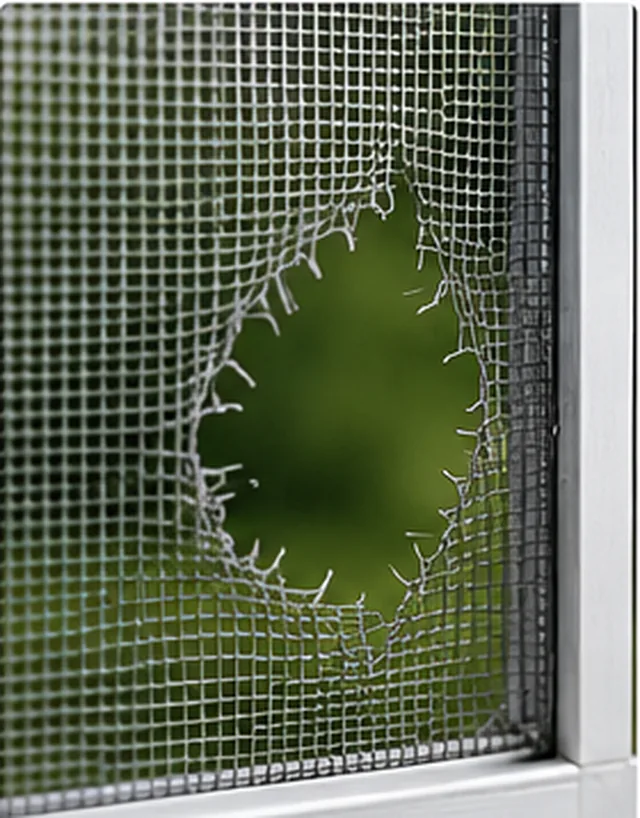
The mesh pulls out of the spline, billows in the wind or tore at the bottom — the classic. Re-meshed in your frame, fibreglass or reinforced.
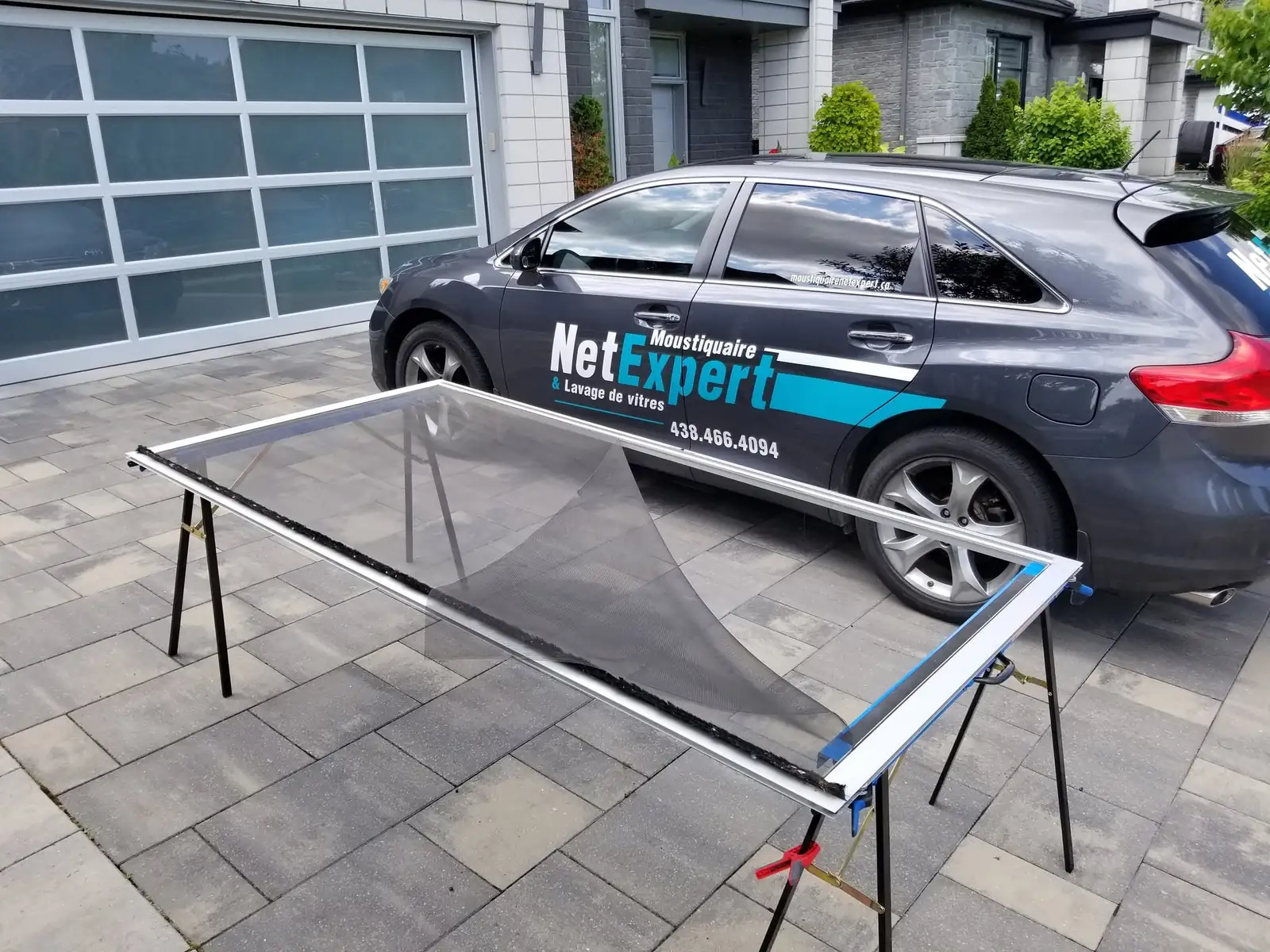
Patio door screens
Mesh, rollers, track, hardware: your screen door repaired at home in Sainte-Madeleine, usually in a single visit.
Three questions are enough to start. The official measurement is taken on site.
It is the most used screen in the house — opened and closed thousands of times a season. Four failures come up constantly, and all four are repaired on site.
The mesh pulls out of the spline, billows in the wind or tore at the bottom — the classic. Re-meshed in your frame, fibreglass or reinforced.
The door drags, jumps the track or scrapes. We replace the rollers and adjust the height — the most requested repair.
Sand, pet hair and debris jam the rolling. Cleaning, lubrication, light track straightening when needed.
The door no longer locks or the handle hangs loose. Hardware replaced, latch adjusted.
Sainte-Madeleine is a compact village stretched along Route 116 and the old rail line, and its building stock produces three quite distinct patio-door situations. The early-twentieth-century wooden village houses had none to begin with: where one exists today, it came with a back addition or a porch closed in, and it carries the age of that renovation rather than the age of the house. The postwar bungalows carry theirs with the sizes and hardware of their own period, narrow aluminum frames and period rollers included. And the small rental buildings line up balcony doors that are all alike, installed the same year and worn out together. Three situations, three ways of preparing the visit.
On a century-old wooden house, the thing to watch is not the panel but what carries it. An addition grafted onto an old structure has not always settled at the same rate: the patio door sill can be a few millimetres out of level, and a perfectly square screen panel will then rub at one end while leaving a gap at the other. That is not fixed with new mesh, it is fixed at the rollers, by taking up the height difference from one side to the other. On the bungalows and in the rental buildings, the problem is more mechanical and more straightforward: heavily used doors, finished rollers, tracks never cleaned since installation.
Wear always takes the same road. The track fills — here, dust off Route 116 and winter sand contribute as much as soil from the yard — the rollers flatten, the door gets stiff, and people end up pushing on the mesh. From there the mesh slackens at the push point, lifts out of its groove at a corner, and the frame bows if anyone keeps forcing. It all gets taken back in one visit, and in that order: the track groove is emptied before the panel is even touched, new rollers go in, the frame is straightened if it has bent, fresh mesh is tensioned, and the height is set last, until the panel stays caught in its upper guide. The frame is only replaced when it is twisted or split — on these doors, the exception rather than the rule.
Rental buildings change the logistics more than the technique. In a small building the balcony doors come from one order and reach the end together: they are taken one after another in a single visit, on the same hardware — provided the owner has secured entry to the units before we come. For upper-floor balconies, the panel comes off and is rescreened on the balcony when there is room, indoors otherwise; a metre and a half of clearance is enough, but it has to be planned. In a village house, the constraint is more often a narrow back yard.
On a rental unit’s patio door, standard fibreglass does the job and is easy to repeat from one apartment to the next. On a house door a cat or a dog goes through, pet-resistant mesh avoids starting over every summer. And on a large addition door exposed to the wind that runs along Route 116 and the fields behind the village, aluminum holds tension better than a soft mesh over the full height of the panel. The choice is made door by door, based on who opens it and how often.
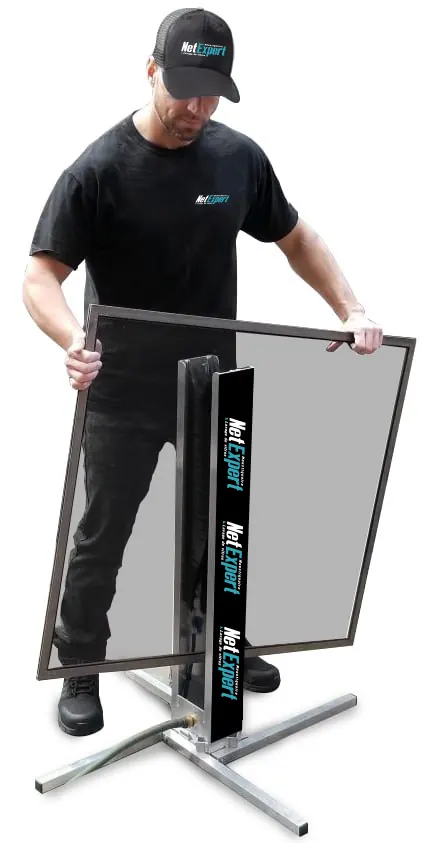
A patio door opens and closes more often than every window in the house combined — and it is the one the dog noses open and the cat climbs. Standard fibreglass mesh suits a lightly used door; for the others, we fit reinforced mesh, about seven times stronger, or pet-resistant mesh built for claws.
The extra cost is measured in tens of dollars; the yearly replacement it prevents, in hundreds. We carry both types in the vehicle — the decision can happen on the spot, with the door off its track in front of you.
Ten kinds of damage, one answer
If your screen looks like any of these, it can be repaired. Tap one to request a quote for that exact damage. We rarely replace a whole frame — in most cases only the mesh needs redoing.
 Mesh
Mesh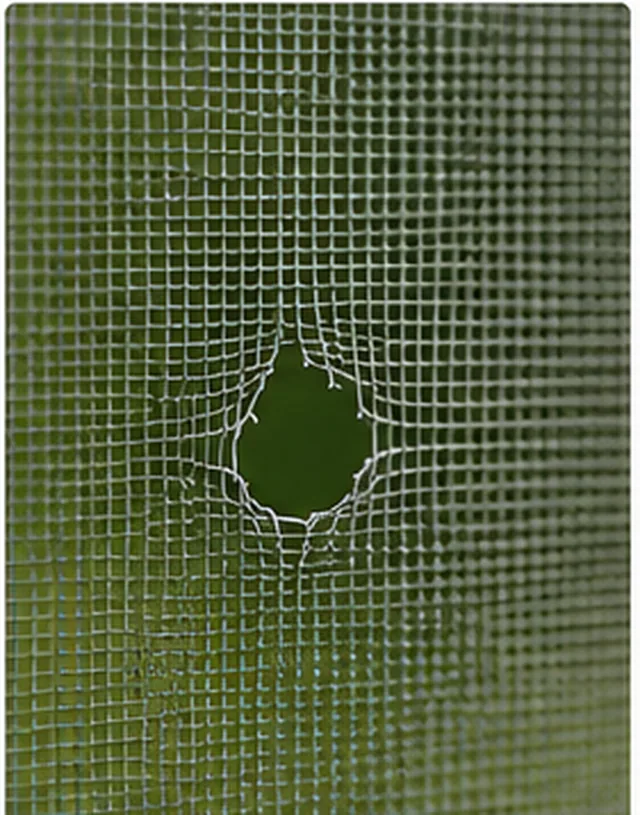 Mesh
Mesh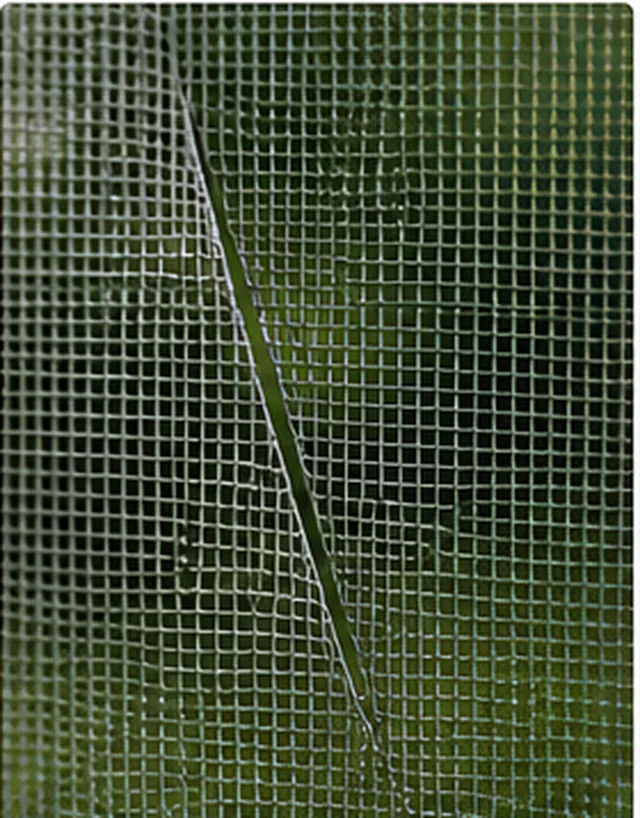 Mesh
Mesh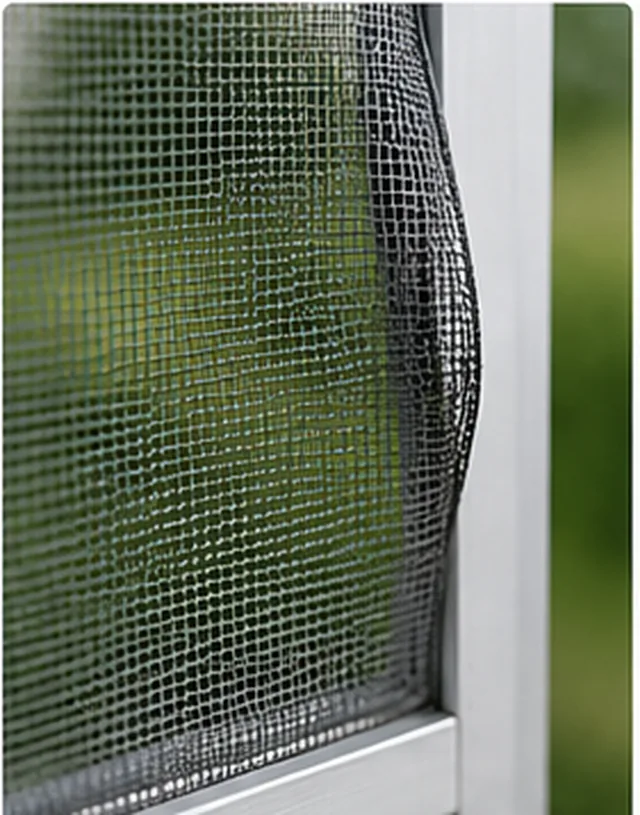 Mesh
Mesh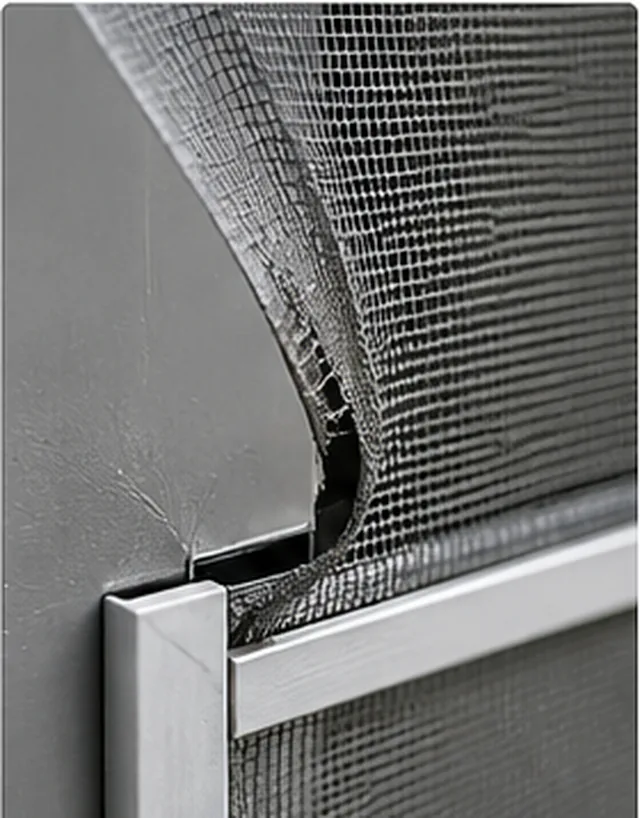 Mesh
Mesh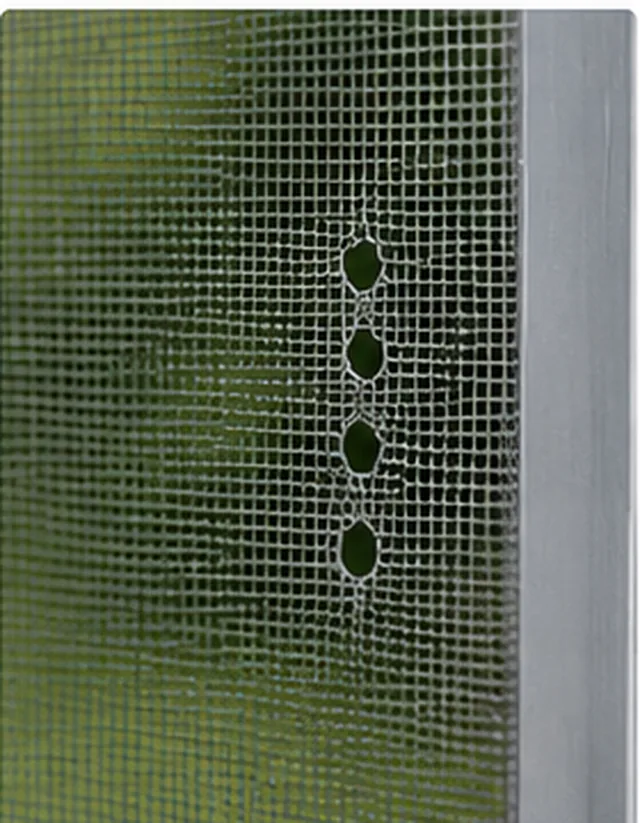 Mesh
Mesh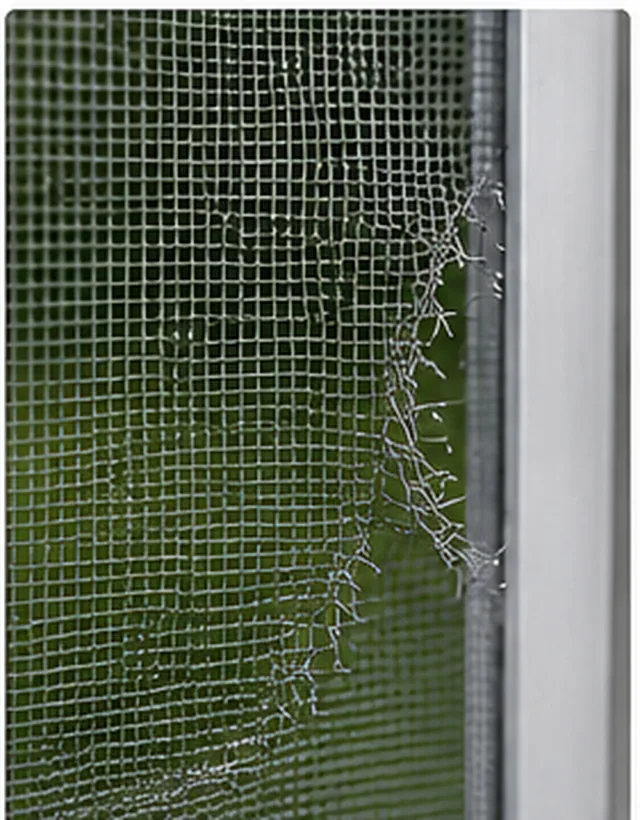 Mesh
Mesh Mesh
Mesh Mesh
Mesh Frame
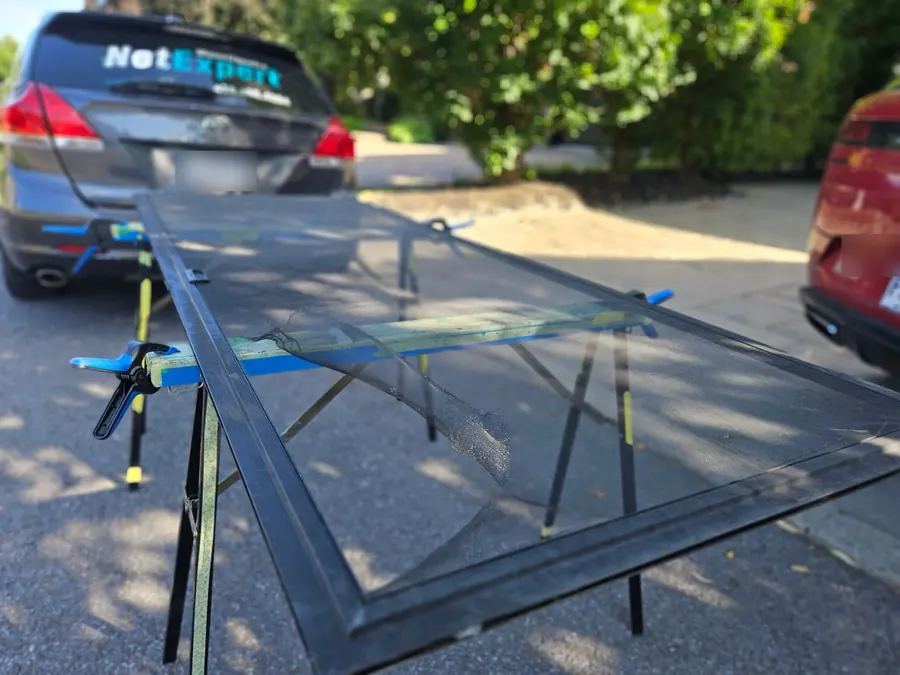
FrameThis job was not in Sainte-Madeleine — it shows our method, the same everywhere: door off its track, new rollers, new mesh, frame squared up.
 1
1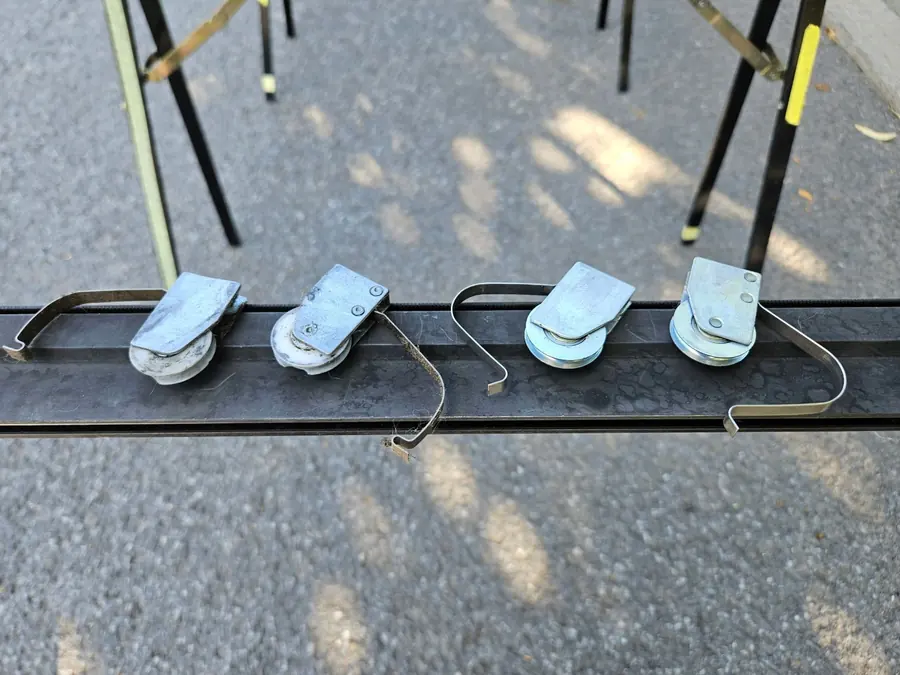 2
2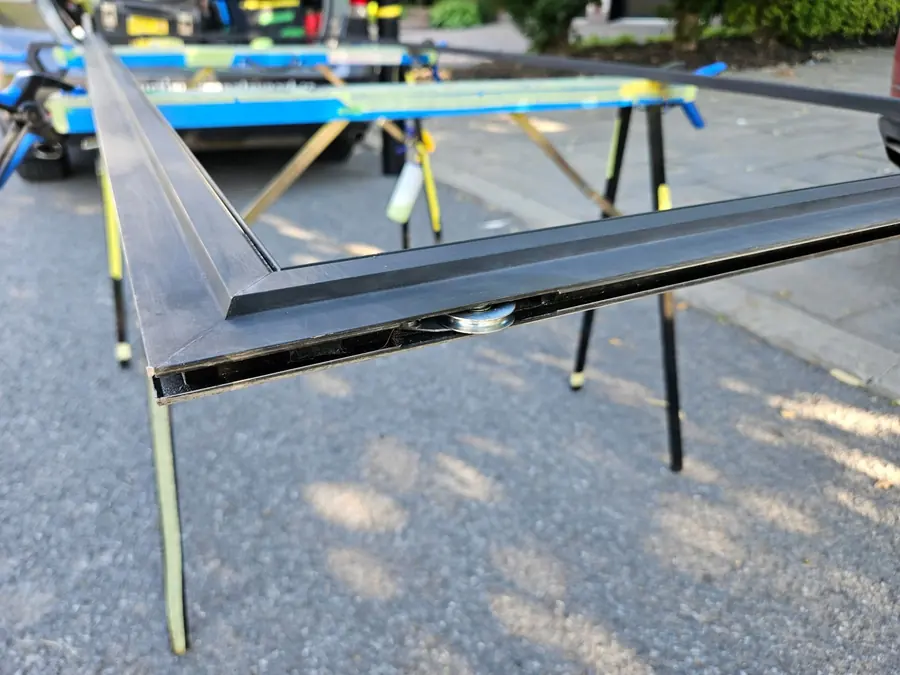 3
3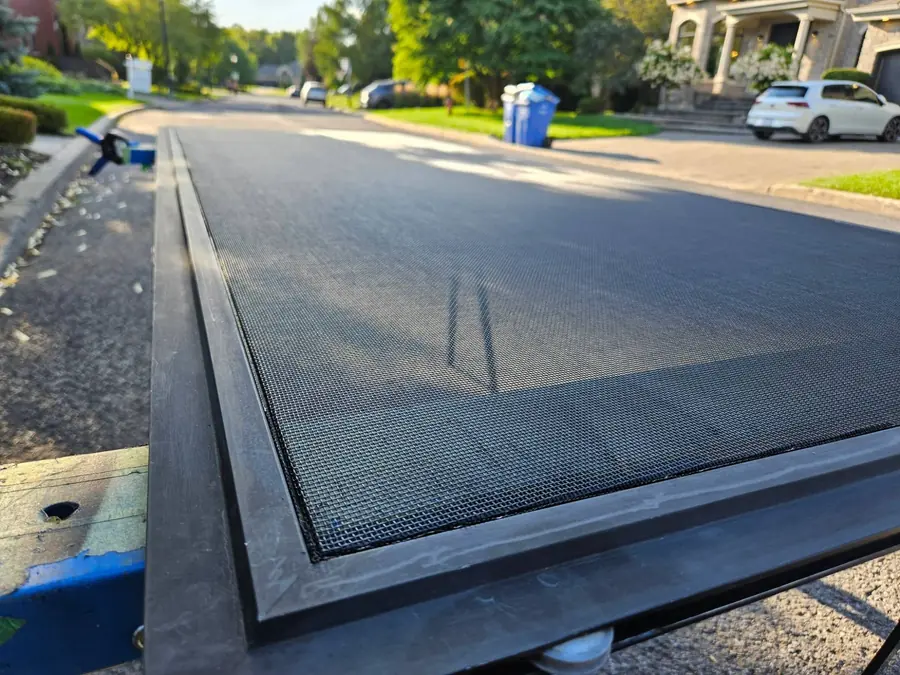 4
4« Excellent service. Clear explanations of the work to be done. I really appreciated his dedication: despite the rain he insisted on finishing the job, soaked through and still smiling. The work was very well done. »
« Great service! He was at my neighbour’s and agreed to fix my back screen even though we had no appointment. Very successful repair, and inexpensive! »
« Ludovic replaced my screen in record time. Professional, and with a great sense of humour. I recommend his services — don’t hesitate to contact him, he’ll come to your home and do beautiful work. »
Straight answers
Yes, though rarely by replacing the doors. Balcony panels of the same model wear the same way: a packed track, flattened rollers, mesh gone slack at handle height. The tracks are emptied, the rollers changed and each panel rescreened in its own frame, one apartment after another — no panel leaves the building, and each is back on its track before the next door is opened.
That is taken up at the rollers. On most panels each roller adjusts independently: we raise the side that rubs and drop the other until the panel closes square over its full height. New mesh would have done nothing about that fault, and a panel that rubs eventually wears its own frame at the contact point.
The panel comes off and is worked flat: outside when the yard or the balcony is clear, indoors otherwise. It needs about a metre and a half of open space and an unobstructed path to carry it. Nothing leaves the property — we take it off, rescreen it on site, and hang it back in the same visit.
Yes, at your home. We remove the screen door, replace the mesh or rollers on site, clean and lubricate the track, then reinstall it — usually in a single visit to Sainte-Madeleine.
Almost always the rollers: they wear out before the mesh and push the door off its track. We replace them and clean the track in the same intervention — forcing a derailing door eventually bends the frame, a costlier repair.
Rollers and hardware: from $30. A complete custom-built screen door: from $500, depending on format. The mesh alone on a door is priced on quote, from its dimensions. An exact quote is free.
One year on fabrication and installation — mesh, fitted rollers, built frames. Damage caused afterwards, by a pet or an impact, is not covered; for a dog, pet-resistant mesh is the real answer.
Pet-resistant mesh: about seven times stronger than standard fibreglass. On a patio door used daily, it is the difference between replacing the mesh yearly and being done with it for seasons.
Do you manage a building or a business in Sainte-Madeleine?