
Summer UV
Sun yellows and clouds the vinyl. Film that crackles to the touch is at end of life.
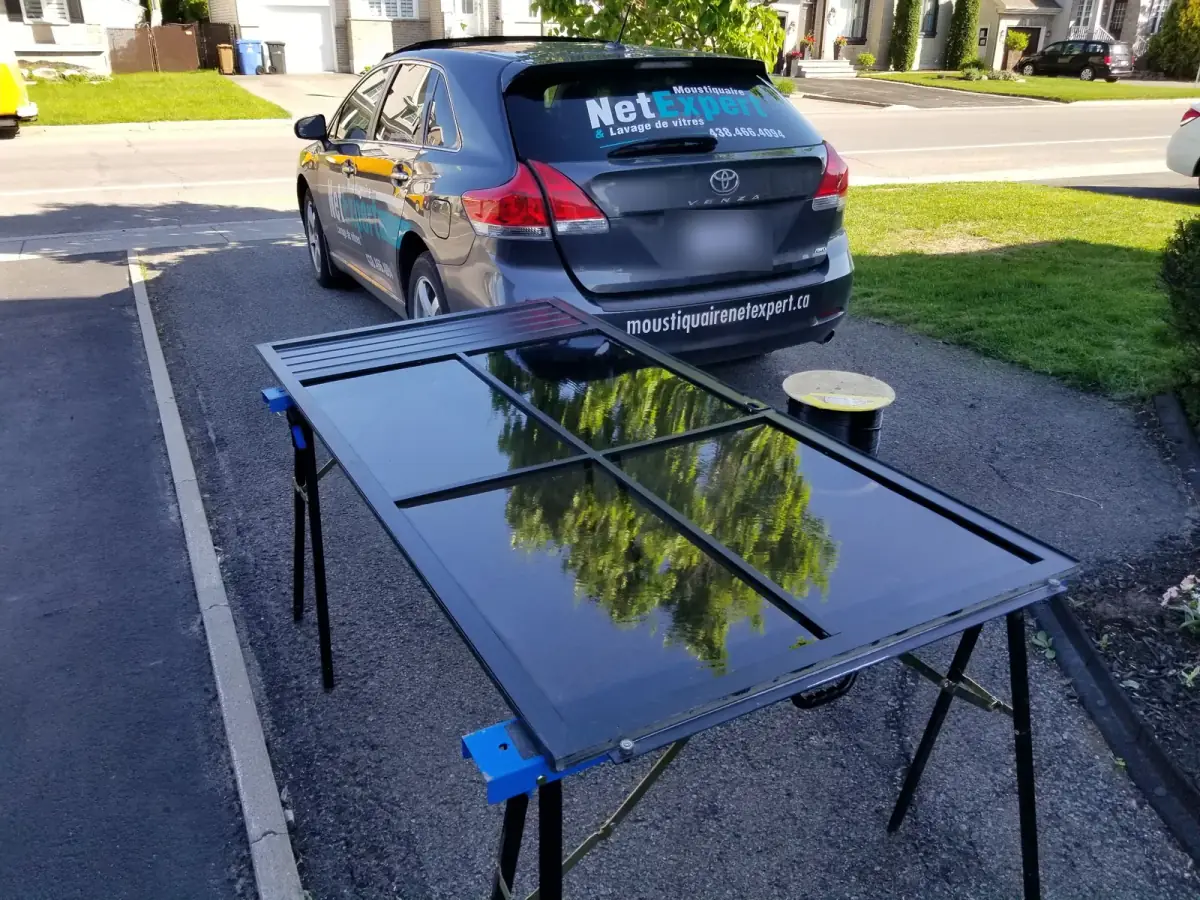
Gazebo and sun shelter specialty
Clear vinyl yellowed or torn? Replaced at your home in Farnham, in the original frames — gazebos and sun shelters.
Three questions are enough to start. The official measurement is taken on site.
Whatever your retailer calls it — MICA film, clear vinyl, clear plastic, sun-shelter transparent fabric — it is the same material, and we replace it in Farnham in your existing panels.
Sun yellows and clouds the vinyl. Film that crackles to the touch is at end of life.
Below freezing, MICA turns brittle — one handling or one gust splits it outright.
Slack vinyl flaps like a sail and eventually tears at the seams.
Downtown Farnham is made of late-19th-century wooden workers' houses, packed onto narrow lots, with a covered veranda at the front. Behind, the yard is small and cut up: a shed, a driveway, a shared fence, and often a retailer gazebo set in the one clear rectangle that was left. That kind of siting costs you twice. The gazebo is very close to a wall or a fence on one side, so that side takes almost nothing; the other takes everything. And there is no room around it to lay a panel flat, which changes how the work is done far more than the model of gazebo does.
The post-war bungalow neighbourhoods offer the space downtown does not have. Regular backyards, trees grown to full size, retailer gazebos set out on the lawn or against the deck: this is the simplest group to work on, with common panel sizes. The newer construction on the outskirts brings exposure back to the front of the picture. The lot is new, the plantings are young, nothing breaks the air, and a gazebo out there ends up in the same conditions as one in an open field. Three sectors, then, and three different reasons why a film reaches end of life. What the three have in common is that the structure itself almost never fails; it is the film and the mesh that mark the seasons.
The clear vinyl (MICA film) almost always gives out first. It yellows in summer, stiffens in winter, and stiffened vinyl no longer stretches: one gust is enough, the split starts at a corner or a grommet, and from there it lengthens with every blow. We redo the pane new, to measurements taken from your own panel, inside the original frame. On the screen side it is mostly slack mesh that ripples, corner nicks that open up, and splines lifted out of their groove — three failures settled by rescreening the panel on site. The gazebo structure is never dismantled: we touch only what the frame carries.
In a downtown yard the constraint is not the structure, it is clearance. A gazebo panel comes down inward, is carried flat and worked flat; if there is only a metre between the gazebo and the fence, everything happens from inside the gazebo or from the driveway. So we look at the way out before starting, and bring down only the panels being redone. On a retailer model those panels release from their clips without special tools; on a wooden structure added behind the house, the mouldings have to come off first, without splitting.
On the tight downtown lots, wind passes between buildings and always arrives from the same side: the film on that face drums, stretches at its fastening points and fails there, while the other panes age quietly. On the outskirts it is the reverse — no obstacle, shifting wind and full sun, so wear is spread out but fast, and aluminum mesh holds tension better than fibreglass. Come evening, it is the most sheltered face of the gazebo that stays in mesh: on a downtown lot, that is the one along the shared fence.
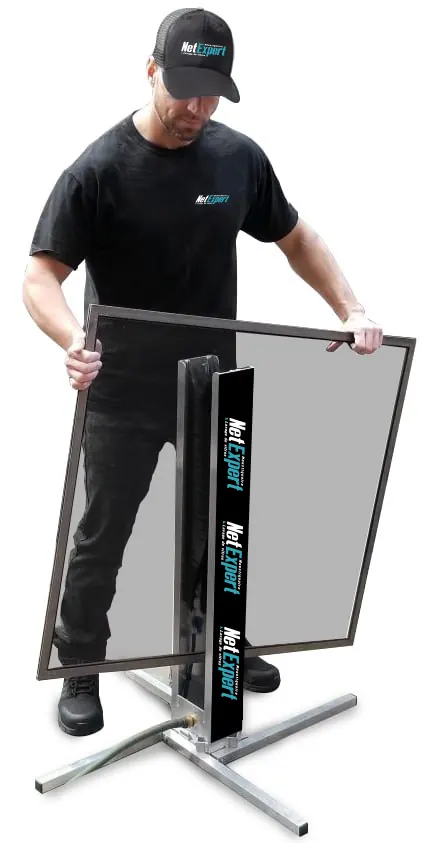
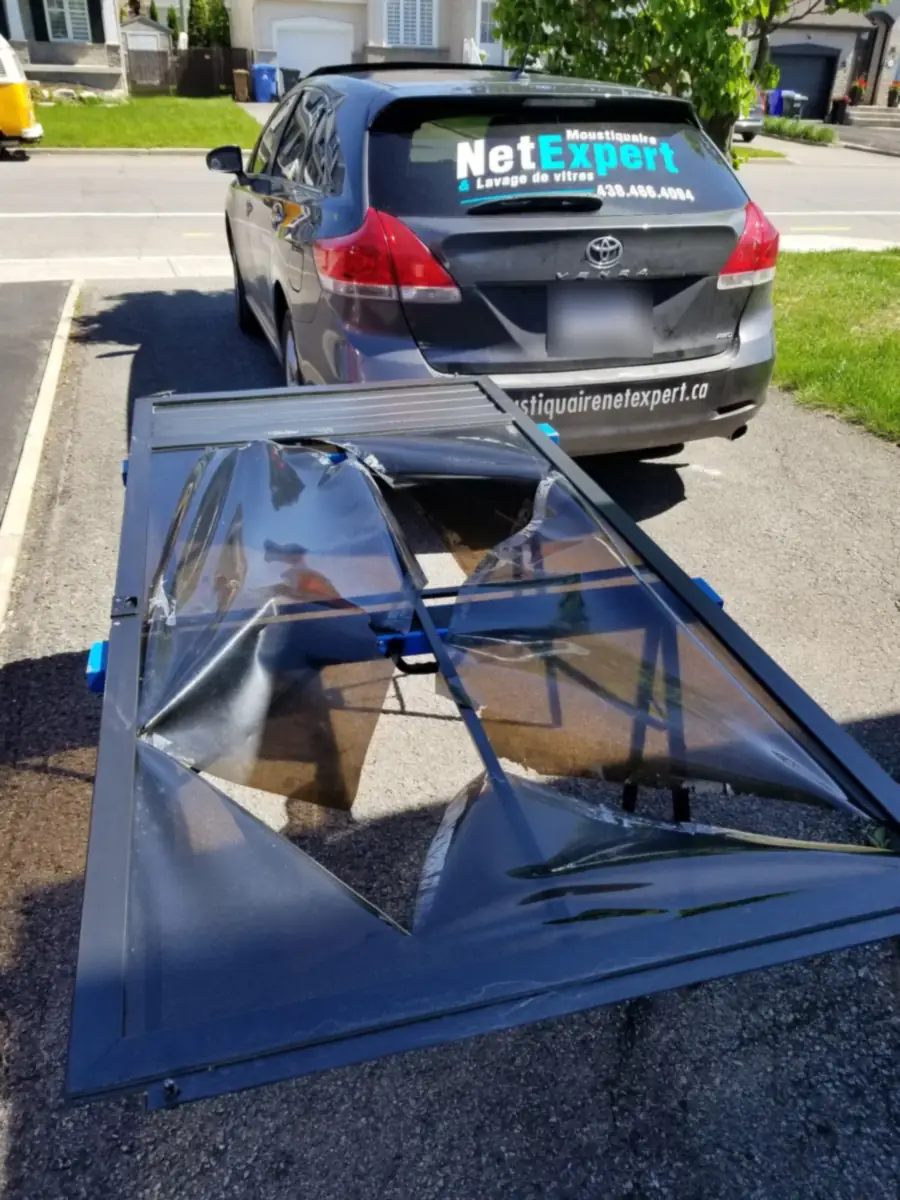
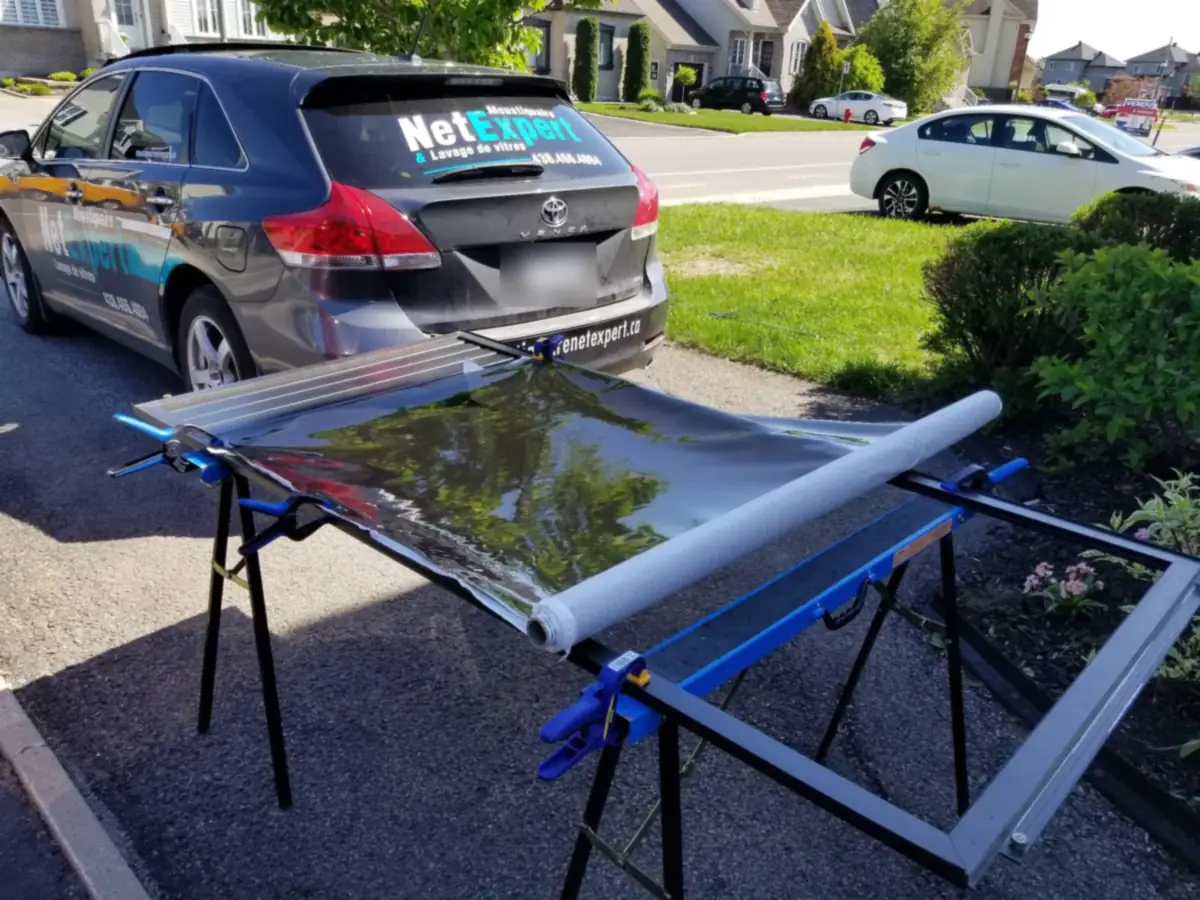
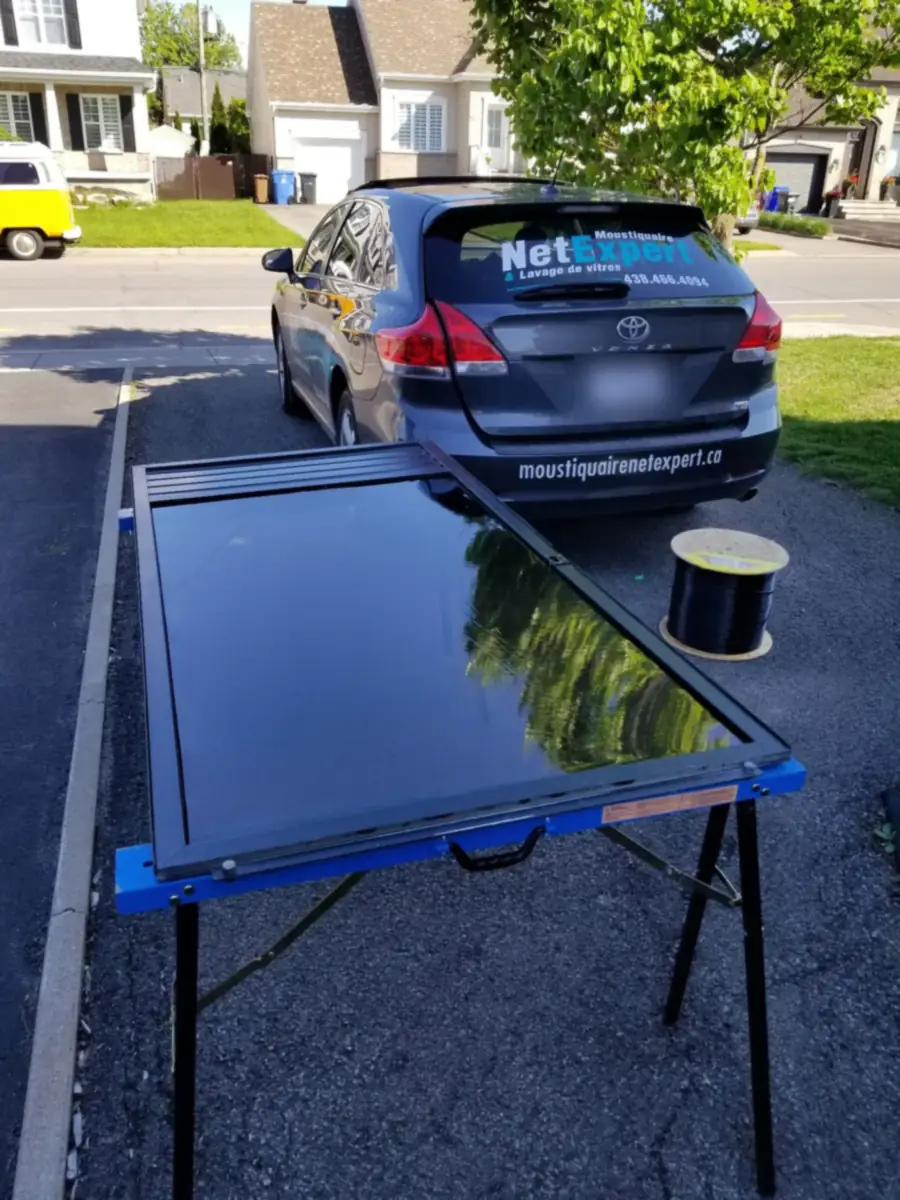
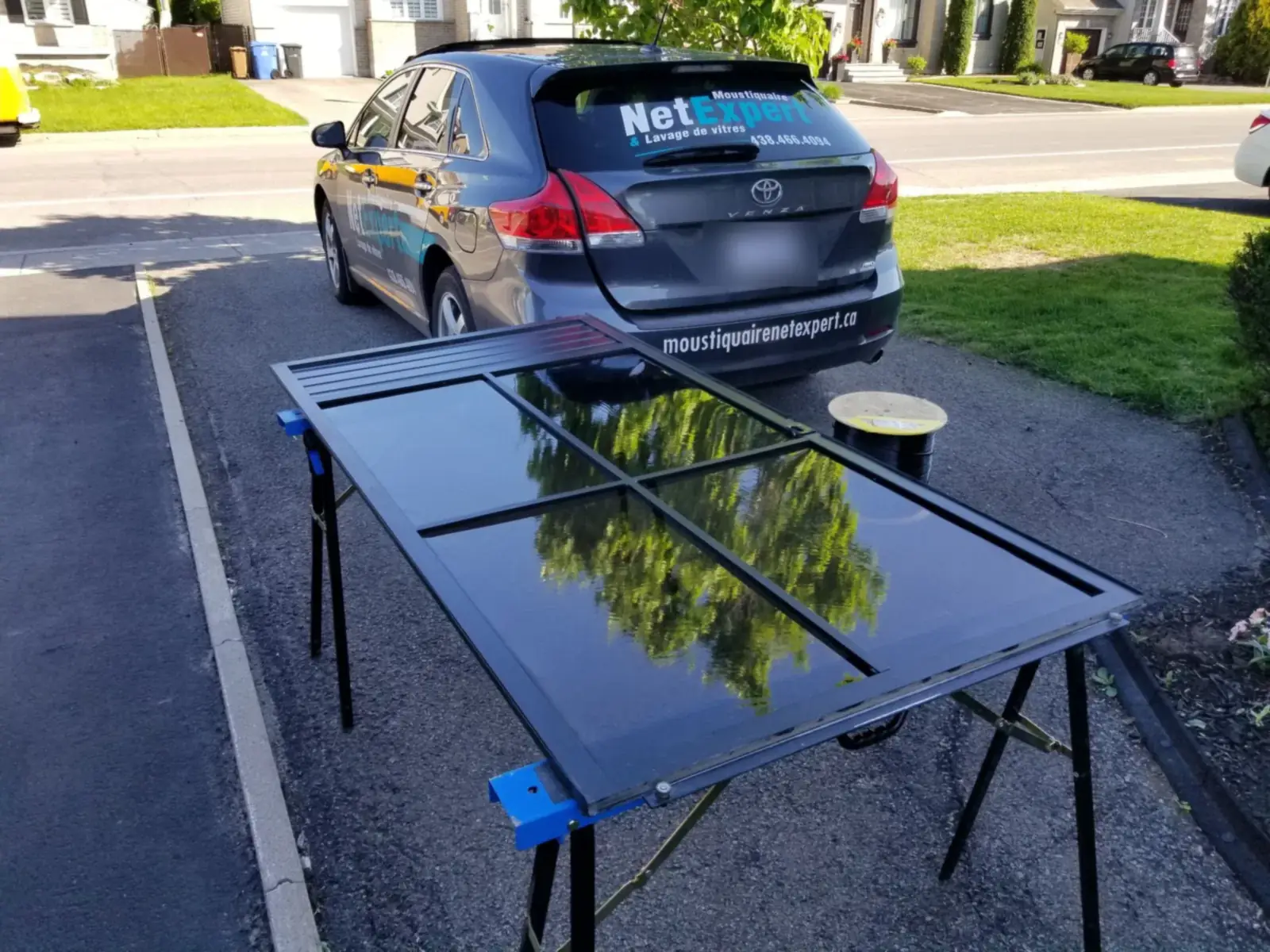
This job was not in Farnham — it shows our method, the same everywhere: panels down, new vinyl pane by pane, panels back up.
« Ludovic replaced my screen in record time. Professional, and with a great sense of humour. I recommend his services — don’t hesitate to contact him, he’ll come to your home and do beautiful work. »
« Excellent service. Clear explanations of the work to be done. I really appreciated his dedication: despite the rain he insisted on finishing the job, soaked through and still smiling. The work was very well done. »
« Great service! He was at my neighbour’s and agreed to fix my back screen even though we had no appointment. Very successful repair, and inexpensive! »
Straight answers
Yes. Panels come down inward and are worked flat: what is needed is clear space, not necessarily space around the gazebo. A driveway, a deck, or even the inside of the gazebo with the furniture moved out will do. We identify that route on arrival, before touching the first pane.
On that side, yes: the fence breaks the wind and shades part of the day, so the film keeps its flexibility longer. That is precisely why all four faces are not always redone in the same year. Sheltered panes can be several seasons ahead of the others.
No, it is common. The lower panels come down easily once released; the upper ones are handled by two people so the frame is not strained on the way out. The only thing to check ahead is whether there is room on the deck to lay a panel flat rather than leaning it against a railing.
Yes, at your home. We travel to Farnham, remove the panels, replace the MICA vinyl in the original frames and put everything back — the gazebo structure is never touched. It is one of our specialties.
Yes. Depending on the retailer it is called MICA film, clear vinyl, clear plastic or transparent fabric — the same flexible material that cuts wind and holds warmth. We replace it on gazebos and sun shelters alike.
Yes. The vinyl is replaced pane by pane, in the existing frame — no need to redo the whole panel for one tear. If several panes have yellowed, doing them together gives a uniform result.
On assessment: the price depends on the number of panels and their dimensions. The quote is free, and a photo is often enough to price without a visit. Fabrication and installation guaranteed one year.
Do you manage a building or a business in Farnham?